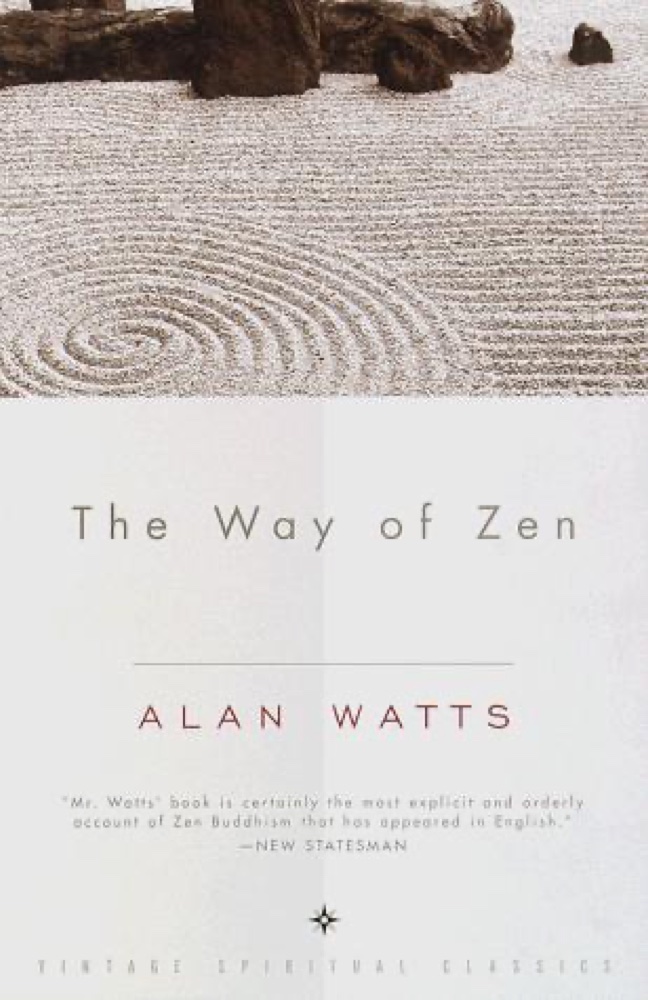
 The Way of Zen
Quotes from the Book
Great power is worry, and total power is boredom, such that even God renounces it and pretends, instead, that he is people and fish and insects and plants: the myth of the king who goes wandering among his subjects in disguise.
21
This may be illustrated by the Taoist story of a farmer whose horse ran away. That evening the neighbors gathered to commiserate with him since this was such bad luck. He said, “May be.” The next day the horse returned, but brought with it six wild horses, and the neighbors came exclaiming at his good fortune. He said, “May be.” And then, the following day, his son tried to saddle and ride one of the wild horses, was thrown, and broke his leg. Again the neighbors came to offer their sympathy for the misfortune. He said, “May be.” The day after that, conscription officers came to the village to seize young men for the army, but because of the broken leg the farmer’s son was rejected. When the neighbors came in to say how fortunately everything had turned out, he said, “May be.
17
Trust in human nature is acceptance of the good-and-bad of it, and it is hard to trust those who do not admit their own weakness.
11
Taoists do not look upon meditation as 'practice,' except in the sense that a doctor 'practices' medicine. They have no design to subjugate or alter the universe by force or willpower, for their art is entirely to go along with the flow of things in an intelligent way.
9
[T]he art of life is more like navigation than warfare, for what is important is to understand the winds, the tides, the currents, the seasons, and the principles of growth and decay, so that one's actions may use them and not fight them.
7
Confucians, along with Hebrew, Islamic, and Catholic scholastics, as well as Protestant fundamentalists, are like tourists who study guidebooks and maps instead of wandering freely and looking at the view. Speech and writing are undoubtedly marvelous, but for this very reason they have a hypnotic and fascinating quality which can lead to the neglect of nature itself until they become too much of a good thing.
7
Chao-Chou asked, “What is the Tao?” The master [Nan-ch’üan] replied, “Your ordinary consciousness is the Tao.” “How can one return into accord with it?” “By intending to accord you immediately deviate.” “But without intention, how can one know the Tao?” “The Tao,” said the master, “belongs neither to knowing nor to not knowing. Knowing is false understanding; not knowing is blind ignorance. If you really understand the Tao beyond doubt, it’s like the empty sky. Why drag in right and wrong?”2 [56b]
6
The highest good is like water, for the good of water is that it nourishes everything without striving. It occupies the place which all men think bad [i.e., the lowest level].17 [102d] It is thus that Tao in the world is like a river going down the valley to the ocean.18 [102e] The most gentle thing in the world overrides the most hard.19 [102g] How do coves and oceans become kings of a hundred rivers? Because they are good at keeping low— That is how they are kings of the hundred rivers.20 [102f] Nothing in the world is weaker than water, But it has no better in overcoming the hard.21 [101a]
5
[T]he natural universe is not a linear system. It involves an infinitude of variables interacting simultaneously, so that it would take incalculable aeons to translate even one moment of its operation into linear, alphabetic language.
4
As Chuang-tzu says, “It may be attained but not seen,” or, in other words, felt but not conceived, intuited but not categorized, divined but not explained. In a similar way, air and water cannot be cut or clutched, and their flow ceases when they are enclosed. There is no way of putting a stream in a bucket or the wind in a bag. Verbal
4
The human organism has the same kind of innate intelligence as the ecosystems of nature, and the wisdom of the nerves and senses must be watched with patience and respect.
3
When it comes down to it, government is simply an abandonment of responsibility on the assumption that there are people, other than ourselves, who really know how to manage things. But the government, run ostensibly for the good of the people, becomes a self-serving corporation. To keep things under control it proliferates laws of ever-increasing complexity and unintelligibility, and hinders productive work by demanding so much accounting on paper that the record of what has been done becomes more important than what has actually been done. The Taoist moral is that people who mistrust themselves and one another are doomed.
3
[T]he chances of survival are best when there is no anxiety to survive, and [...] the greatest power is available to those who do not seek power and who do not use force. To be anxious to survive is to wear oneself out, and to seek power and to use force is to overstrain one's system. One is best preserved by floating along without stress.
2
The man of perfect virtue in repose has no thoughts, in action no anxiety. He recognizes no right, nor wrong, nor good, nor bad. Within the Four Seas, when all profit—that is his repose. Men cling to him as children who have lost their mothers; they rally around him as wayfarers who have missed their road. He has wealth to spare, but he knows not whence it comes. He has food and drink more than sufficient, but knows not who provides it…. In an age of perfect virtue, good men are not appreciated; ability is not conspicuous. Rulers are mere beacons, while the people are as free as the wild deer. They are upright without being conscious of duty to their neighbors. They love one another without being conscious of charity. They are true without being conscious of loyalty. They are honest without being conscious of good faith. They act freely in all things without recognizing obligations to anyone. Thus, their deeds leave no trace; their affairs are not handed down to posterity.5 [62a]
2
We do not easily grasp the point that the void is creative, and that being comes from nonbeing as sound from silence and light from space.
1
The Tao that can be Tao-ed is not the Tao.
1
[W]hen "the rule of law" becomes absolutized and everything is done by the book or the computer, people call out in desperation for the intervention of a reasonable human being.
1
The senses, feelings, and thoughts must be allowed to be spontaneous in the faith that they will then order themselves harmoniously. To try to control the mind forcefully is like trying to flatten out waves with a board, and can only result in more and more disturbance.
1
[T]he world as described is included in but is not the same as the world as it is. As a way of contemplation, it is being aware of life without thinking about it, and then carrying this on even while one is thinking, so that thoughts are not confused with nature.
1
The yin-yang view of the world is serenely cyclic. Fortune and misfortune, life and death, whether on small scale or vast, come and go everlastingly without beginning or end, and the whole system is protected from monotony by the fact that, in just the same way, remembering alternates with forgetting.
1
[T]here is some other way of understanding and getting along with the process of nature than by translating it into words. After all, the brain, the very organ of intelligence, defies linguistic description by even the greatest neurologists.
1
When water is still, it is like a mirror, reflecting the beard and the eyebrows. It gives the accuracy of the water-level, and the philosopher makes it his model. And if water thus derives lucidity from stillness, how much more the faculties of the mind? The mind of the Sage being in repose becomes the mirror of the universe, the speculum of all creation.22 [59a] The fluidity of water is not the result of any effort on the part of the water, but is its natural property. And the virtue of the perfect man is such that even without cultivation there is nothing which can withdraw from his sway. Heaven is naturally high, the earth is naturally solid, the sun and moon are naturally bright. Do they cultivate these attributes?23 [63b]
1
[W]hat is ordinarily felt as the wayward, unpredictable, dangerous, and even hostile world - including one's capricious emotions and inner feelings - is actually one's own being and doing. The very sense that this is not so is, in turn, part of its being so,
[S]een as a whole the universe is a harmony or symbiosis of patterns which cannot exist without each other.
[I]n trying to figure out the brain, the obstacle is that we have no finer instrument than the brain itself for the purpose. The greatest hindrance to objective knowledge is our own subjective presence.
Watch on YouTube
About Alan W. Watts
We have collected 144 quotes from 6 books by Alan W. Watts on BookQuoters.
More about the author →
About the book
A lucid discussion of Taoism and the Chinese language . . . profound, reflective, and enlightening. --Boston Globe
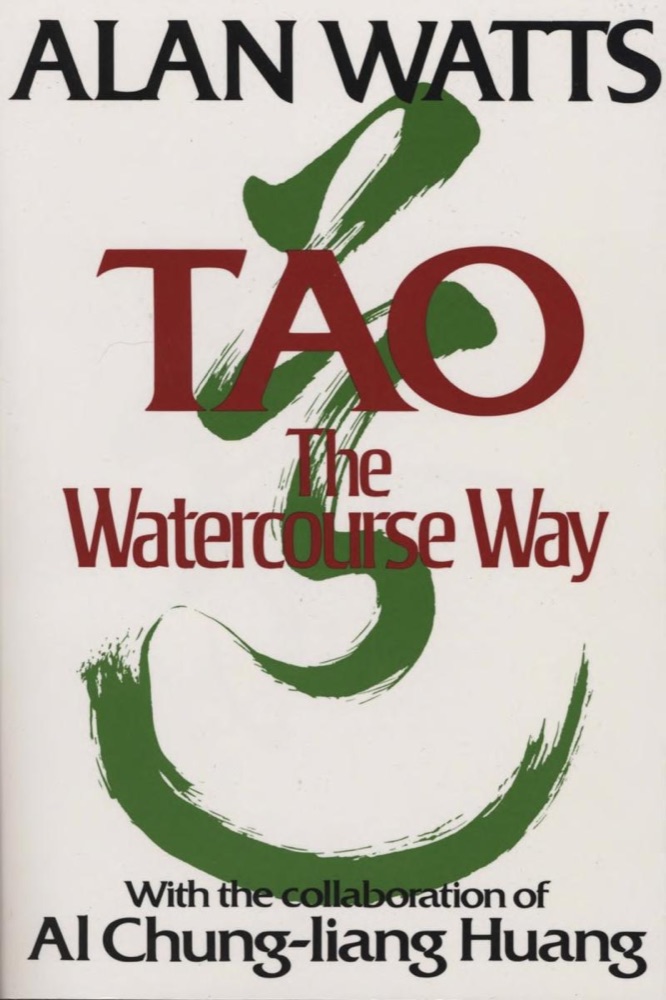
According to Deepak Chopra, Watts was a spiritual polymatch, the first and possibly greatest. Drawing on ancient and modern sources, Watts treats the Chinese philosophy of Tao in much the same way as he did Zen Buddhism in his classic The Way of Zen. Critics agree that this last work stands as a perfect monument to the life and literature of Alan Watts.
Perhaps the foremost interpreter of Eastern disciplines for the contemporary West, . . . Watts begins with scholarship and intellect and proceeds with art and eloquence to the frontiers of the spirit.--Los Angeles Times
Book details
- First published
- 1975
- Author
- Alan W. Watts
- Genre
- Philosophy
- Goodreads rating
- 4.18 (7k ratings)
Keep reading
The Way of Zen
 Myths to Live By
 The Book of Chuang Tzu
 The Perennial Philosophy
 The I Ching or Book of Changes
 The Book: On the Taboo Against Knowing Who You Are
 Maps of Meaning: The Architecture of Belief
 The Occult
 365 Tao: A Study of Taoist Wisdom for Daily Life
 What the Buddha Taught
 Man and His Symbols
 The World's Religions
 The Big Picture: On the Origins of Life, Meaning, and the Universe Itself
 Buddhism Plain & Simple: The Practice of Being Aware, Right Now, Every Day
 Freedom from the Known
 Chuang Tzu: Basic Writings
 Zen and the Art of Motorcycle Maintenance
 The Yoga Sutras of Patanjali
 The Path: What Chinese Philosophers Can Teach Us About the Good Life
 The Varieties of Religious Experience
 The Science of Mind
 An Essay Concerning Human Understanding
 Think: A Compelling Introduction to Philosophy
 The Master and His Emissary: The Divided Brain and the Making of the Western World
 Tao Te Ching
 The Intellectual Life: Its Spirit, Conditions, Methods
 The Convoluted Universe, Book 1
 The Will to Power
 The Upanishads
 Untimely Meditations
 The Book of Secrets
 The Socrates Express: In Search of Life Lessons from Dead Philosophers
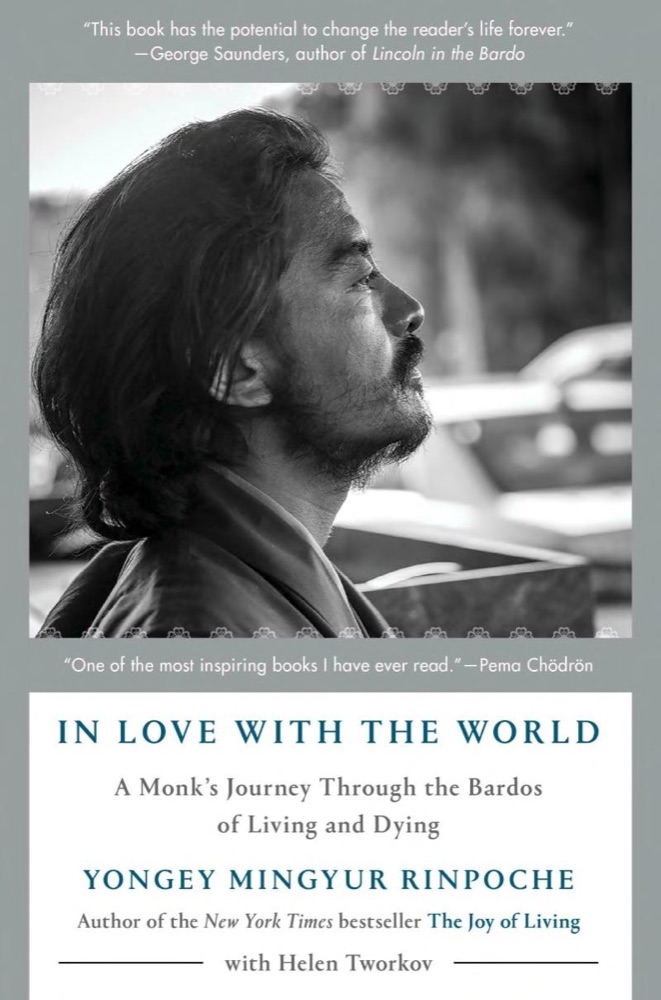 In Love with the World: A Monk's Journey Through the Bardos of Living and Dying
 The Wisdom of Life
 Confession of a Buddhist Atheist
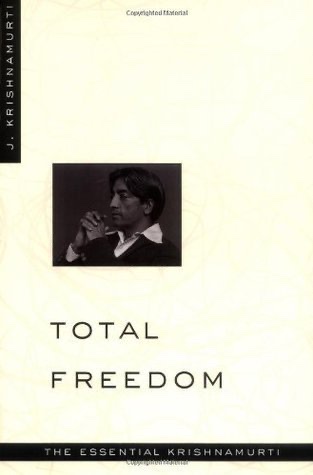 Total Freedom: The Essential Krishnamurti
 The World as Will and Representation, Vol 1
 Striking Thoughts: Bruce Lee's Wisdom for Daily Living
 The Gay Science
 The Mind of the Maker: Dorothy L. Sayers' Witty Classic on the Trinity, Christianity, and Human Creativity
 Cutting Through Spiritual Materialism
 Irrational Man: A Study in Existential Philosophy
 The Wise Heart: A Guide to the Universal Teachings of Buddhist Psychology
 The Glass Bead Game
 The Book of Secrets: Unlocking the Hidden Dimensions of Your Life
 The Myth of Sisyphus
 No Self, No Problem: How Neuropsychology Is Catching Up to Buddhism
 Modern Man in Search of a Soul
 The Book of Wisdom
 The Tibetan Book of Living and Dying
 The Discovery of India
 Dialogues Concerning Natural Religion
 Buddhism: A Very Short Introduction
 Awakening the Buddha Within
 An Enquiry Concerning Human Understanding
 Drive Your Plow Over the Bones of the Dead
 21 Lessons for the 21st Century