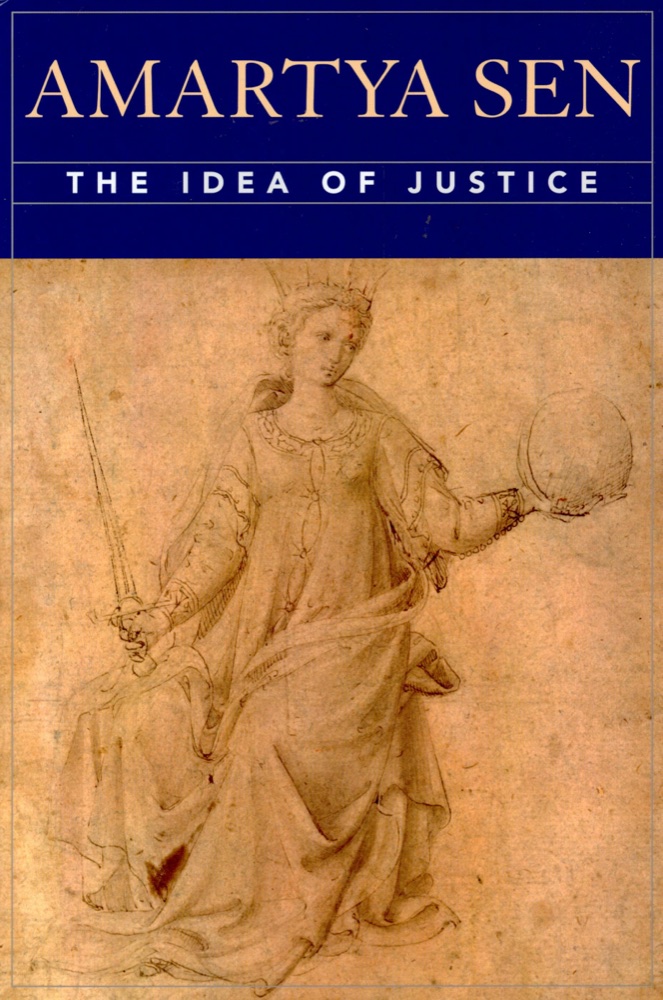
 The Idea of Justice
Quotes from the Book
the identity of an individual is essentially a function of her choices, rather than the discovery of an immutable attribute
77
While we cannot live without history, we need not live within it either.
24
Nor let us be resentful when others differ from us. For all men have hearts, and each heart has its own leanings. Their right is our wrong, and our right is their wrong.
19
Just consider how terrible the day of your death will be. Others will go on speaking, and you will not be able to argue back.
8
Ashoka supplemented this general moral and political principle by a dialectical argument based on enlightened self-interest: ‘For he who does reverence to his own sect while disparaging the sects of others wholly from attachment to his own sect, in reality inflicts, by such conduct, the severest injury on his own sect.
4
Where the mind is without fear and the head is held high; Where knowledge is free; Where the world has not been broken up into fragments by narrow domestic walls; … Where the clear stream of reason has not lost its way into the dreary desert sand of dead habit; … Into that heaven of freedom, my Father, let my country awake.
3
Prolixity is not alien to us in India. We are able to talk at some length.
2
Important as history is, reasoning has to go beyond the past.
1
It is not often realized that even the word ‘Mandarin’, standing as it does for a central concept in Chinese culture, is derived from a Sanskrit word, Mantrī, which went from India to China via Malaya.
1
It is also interesting to note that the greatest grammarian in Sanskrit (indeed possibly in any language), namely Pāṇini, who systematized and transformed Sanskrit grammar and phonetics around the fourth century BCE, was of Afghan origin (he describes his village on the banks of the river Kabul).
1
Silence is a powerful enemy of social justice.
1
The case for doing what one sees as one’s duty must be strong, but how can we be indifferent to the consequences that may follow from our doing what we take to be our just duty?
1
Bengali poem by Ram Mohun Roy which bears on the subject matter of this essay.* Roy explains what is really dreadful about death: Just consider how terrible the day of your death will be. Others will go on speaking, and you will not be able to argue back.
1
one must go through war to reach peace.
1
there are two principal approaches to secularism, focusing respectively on (1) neutrality between different religions, and (2) prohibition of religious associations in state activities.
1
An epistemic methodology that sees the pursuit of knowledge as entirely congruent with the search for power is a great deal more cunning than wise. It can needlessly undermine the value of knowledge in satisfying curiosity and interest; it significantly weakens one of the profound characteristics of human beings.
1
defeated argument that refuses to be obliterated can remain very alive.
1
He wrote extensively on how schools should be made more attractive to boys and girls and thus more productive. His own co-educational school at Santiniketan had many progressive features. The emphasis here was on self-motivation rather than on discipline, and on fostering intellectual curiosity rather than competitive excellence.
1
In my view the imposing tower of misery which today rests on the heart of India has its sole foundation in the absence of education. Caste divisions, religious conflicts, aversion to work, precarious economic conditions – all centre on this single factor.
1
Finally, no country has as much stake as India in having a prosperous and civilian democracy in Pakistan. Even though the Nawaz Sharif government was clearly corrupt in many ways, India’s interests are not well served by the undermining of civilian rule in Pakistan, to be replaced by activists and military leaders. Also, the encouragement of cross-border terrorism, which India accuses Pakistan of, is likely to be dampened rather than encouraged by Pakistan’s economic prosperity and civilian politics. It is particularly important in this context to point to the dangerousness of the argument, often heard in India, that the burden of public expenditure [of developing nuclear weapons] would be more unbearable for Pakistan, given its smaller size and relatively stagnant economy, than it is for India. This may well be the case, but the penalty that could visit India from an impoverished and desperate Pakistan, in the present situation of massive insecurity, could be quite catastrophic. Strengthening of Pakistan’s stability and enhancement of its well-being has prudential importance for India, in addition to its obvious ethnical significance. That central connection - between the moral and prudential - must be urgently grasped. [India’s ability to make bombs is still very costly for India with “it being estimated that the additional costs of providing elementary education for every child with neighbourhood schools at every location in the country would cost roughly the same amount of money (as making nukes)”.
It is the True. It is the Self, and thou, O Svetaketu, art it... And just in case thou art not all that, we will fix it with a bit of cleverness in reconstructing reality!
When a Bengali Hindu does religious ceremonies according to the local calendar, he or she may not be quite aware that the dates that are invoked in the calendrical accompaniment of the Hindu practices are attuned to commemorating Muhammad’s journey from Mecca to Medina, albeit in a mixed lunar-solar representation.
It is the interactive presence of these two features of deprivation – being low class and being female – that can massively impoverish women from the less privileged classes.
Effective elementary education has in practice ceased to be free in substantial parts of the country, which of course is a violation of a basic right.
It is hard to escape the general conclusion that economic performance, social opportunity and political voice are deeply interrelated.
It is, however, important to avoid the much-aired simplification that argues that all India needs to do to achieve fast economic growth and speedy reduction of poverty is greater reliance on the global market and on international trade.
Though Buddhism is a religion like any other, it began with at least two specific characteristics that were quite unusual, to wit, its foundational agnosticism and its commitment to public communication and discussion.
But that reflects a basic misunderstanding of how science proceeds and why the borders of scientific knowledge are not drawn along geographical lines.
We all seem to be affected by desire, anger, fear, sorrow, worry, hunger, and labour; how do we have caste differences then?
Watch on YouTube
About Amartya Sen
We have collected 34 quotes from 2 books by Amartya Sen on BookQuoters.
More about the author →More by Amartya Sen
The Idea of Justice
About the book
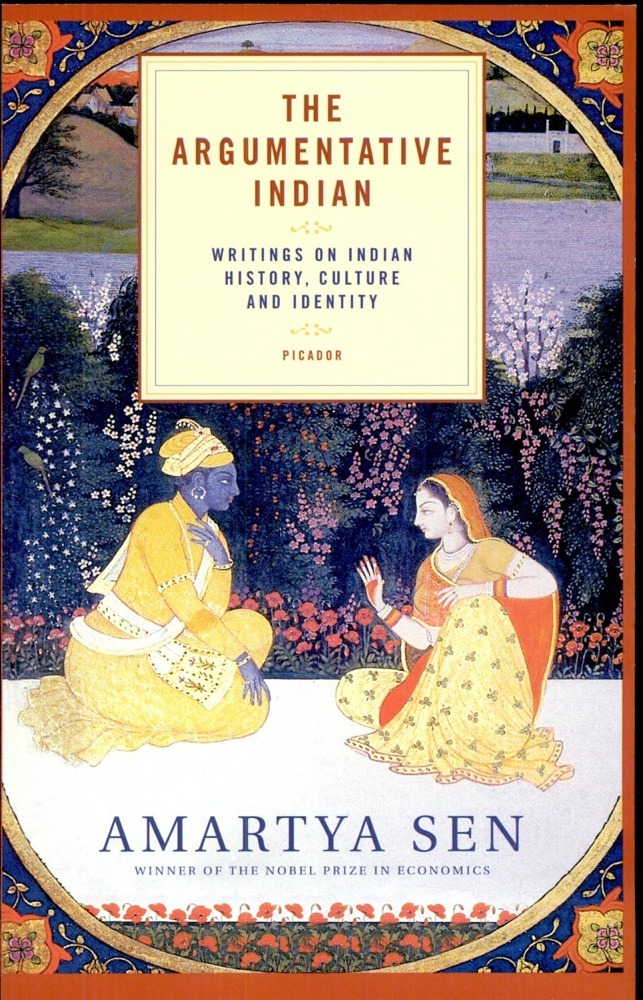
In sixteen linked essays, Nobel Prize--winning economist Amartya Sen discusses India's intellectual and political heritage and how its argumentative tradition is vital for the success of its democracy and secular politics. The Argumentative Indian is "a bracing sweep through aspects of Indian history and culture, and a tempered analysis of the highly charged disputes surrounding these subjects--the nature of Hindu traditions, Indian identity, the country's huge social and economic disparities, and its current place in the world" (Sunil Khilnani, Financial Times, U.K.).
Book details
- First published
- 2005
- Author
- Amartya Sen
- Genre
- History
- Goodreads rating
- 3.83 (9k ratings)
Keep reading
 The Discovery of India
 From Dawn to Decadence: 500 Years of Western Cultural Life, 1500 to the Present
 Annihilation of Caste
 What Young India Wants
 The Immortals of Meluha
 Anthills of the Savannah
 In the Light of What We Know
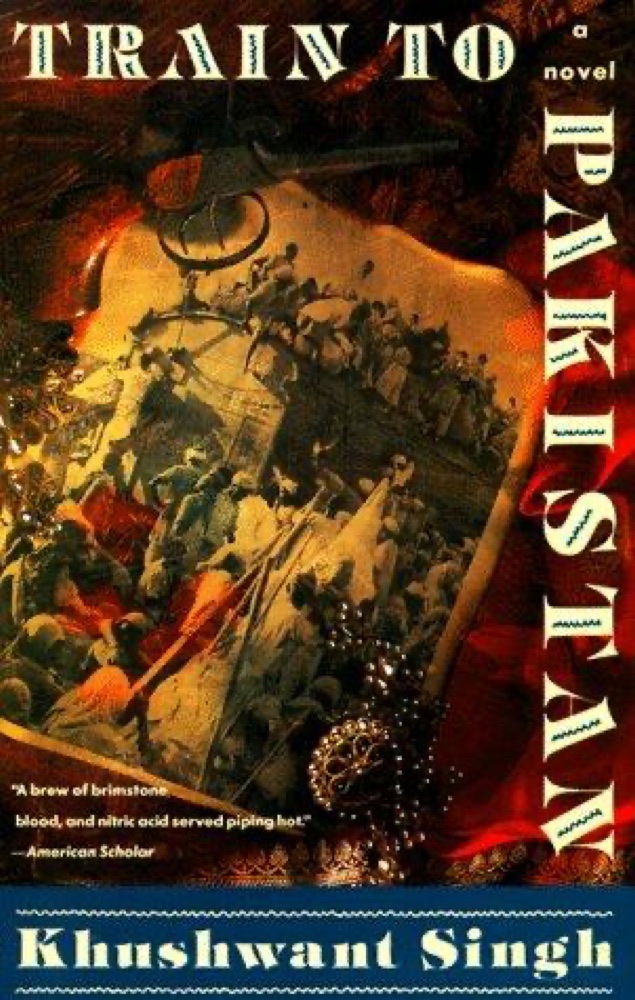 Train to Pakistan
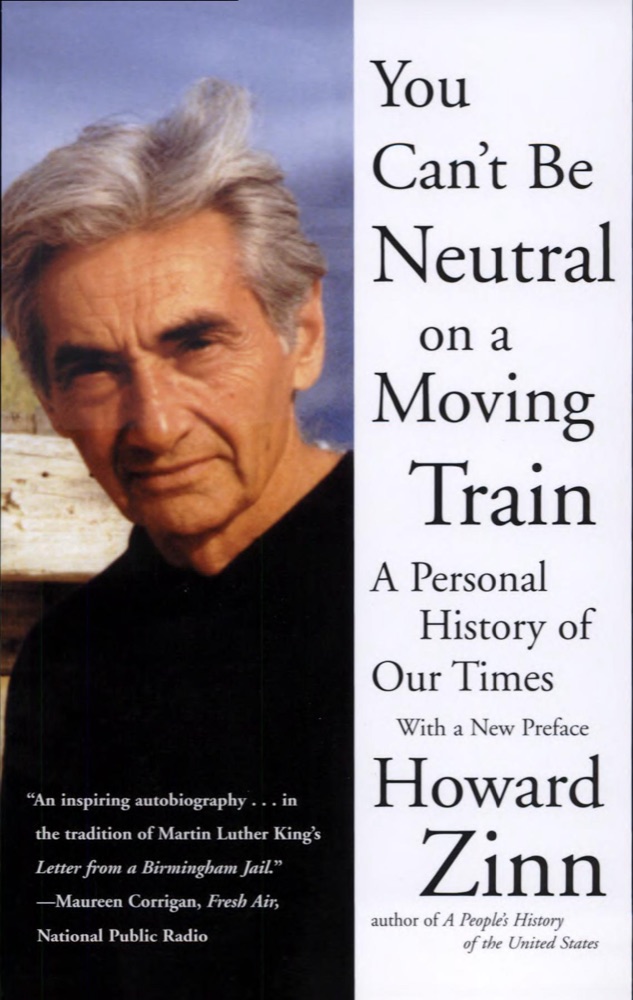 You Can't Be Neutral on a Moving Train: A Personal History of Our Times
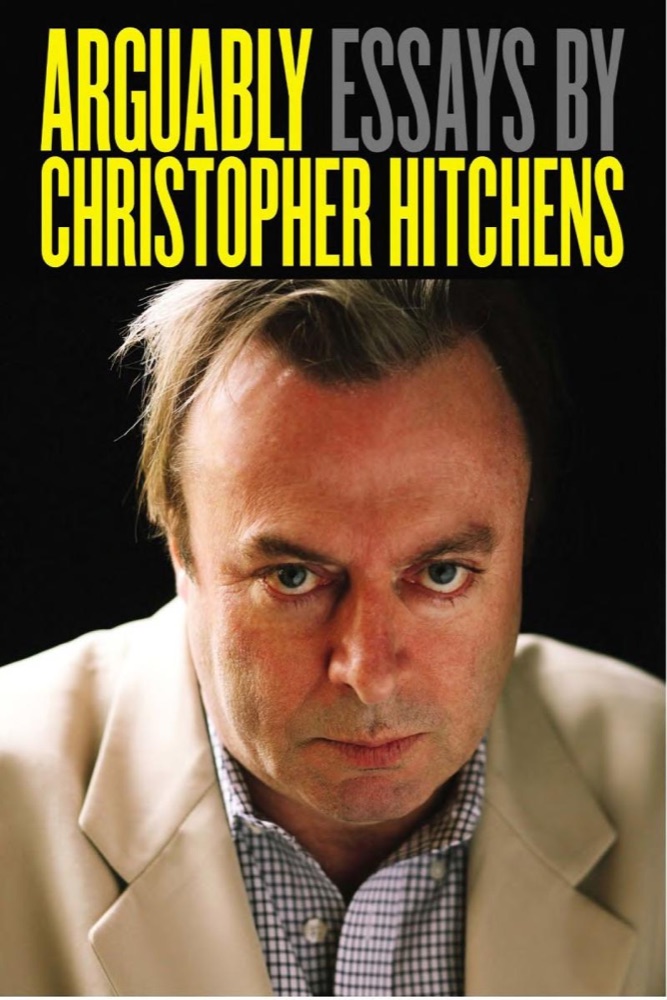 Arguably: Selected Essays
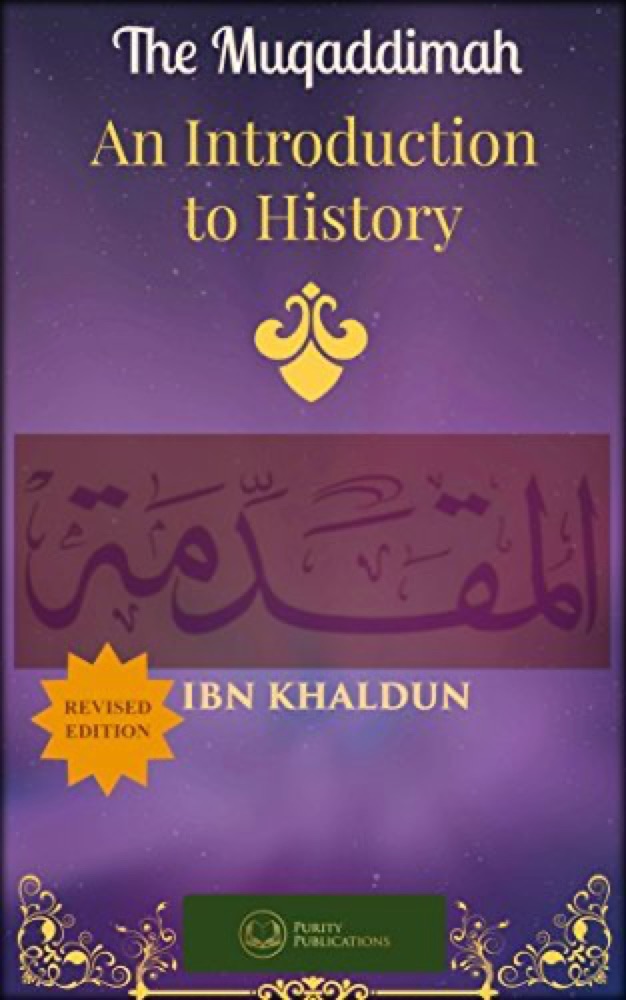 The Muqaddimah: An Introduction to History
 The Source of Self-Regard: Selected Essays, Speeches, and Meditations
 The Lessons of History
 Children of Dune
 The Story of My Experiments With Truth
 Elements of the Philosophy of Right
 The Message
 When I Was a Child I Read Books
 Ill Fares the Land
 The Lives of Others
 The Great Indian Novel
 The Republic
 After Virtue
 Scion of Ikshvaku
 Small Is Beautiful: Economics as if People Mattered
 The Free Voice: On Democracy, Culture and the Nation
 Human, All Too Human
 Sita: Warrior of Mithila
 The Closing of the American Mind
 Human Action: A Treatise on Economics
 Sita: An Illustrated Retelling of the Ramayana
 Twilight of the Idols
 The Difficulty of Being Good: On the Subtle Art of Dharma
 Daybreak: Thoughts on the Prejudices of Morality
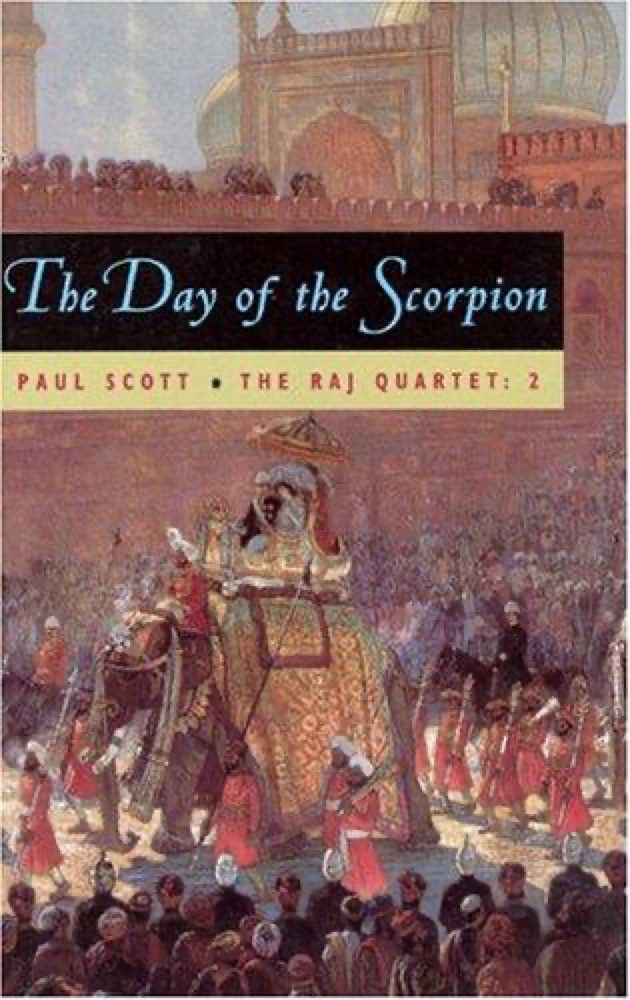 The Day of the Scorpion
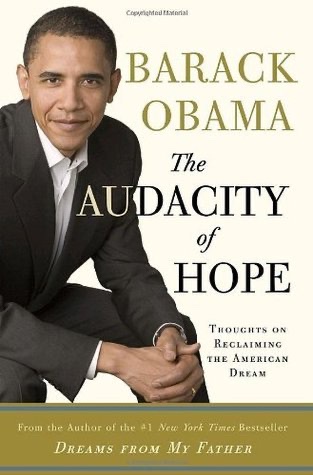 The Audacity of Hope: Thoughts on Reclaiming the American Dream
 Independent Study
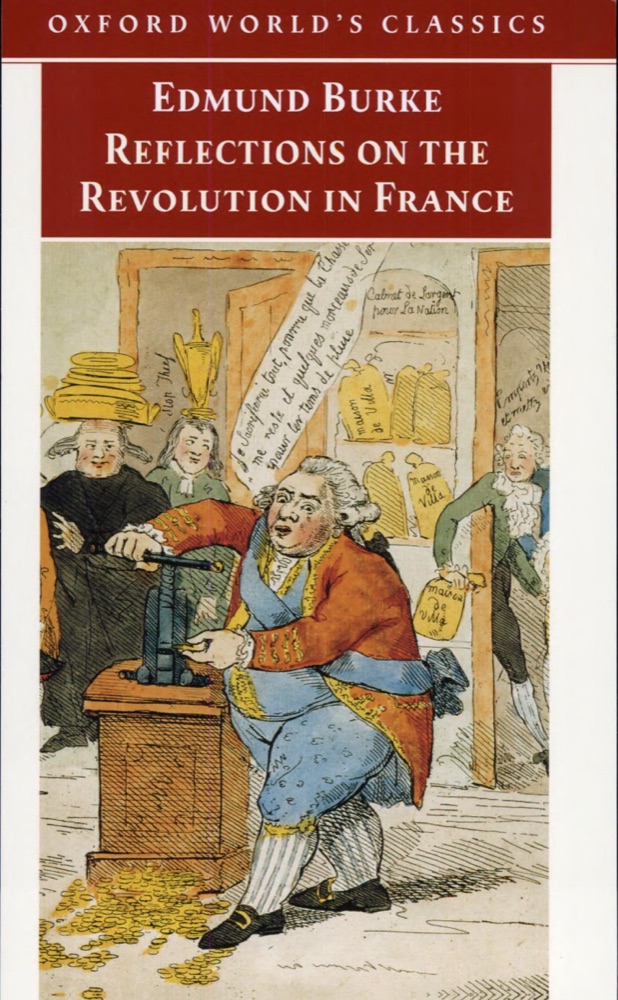 Reflections on the Revolution in France
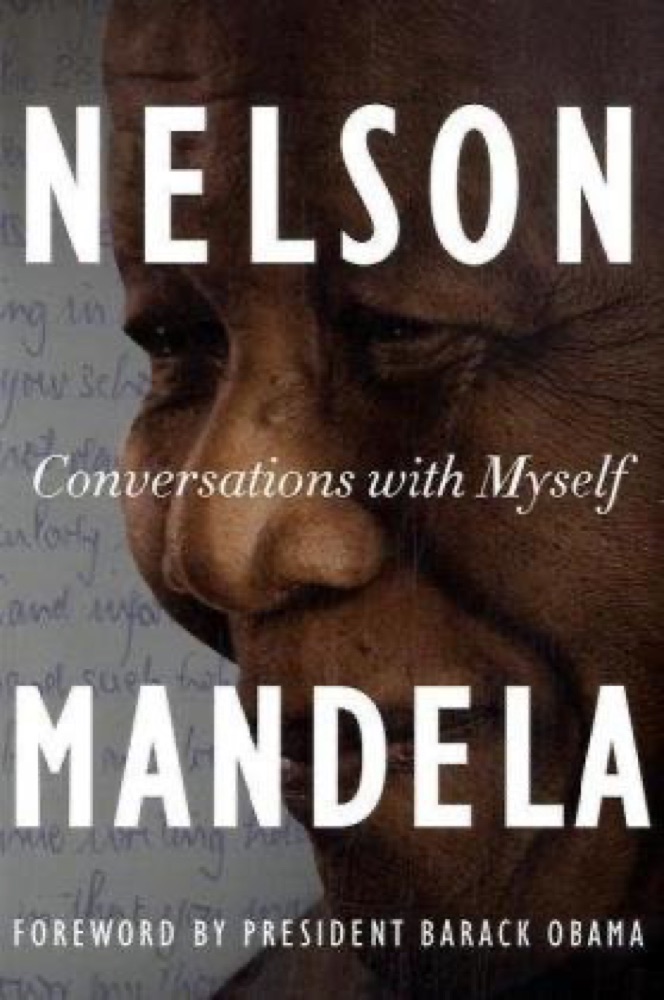 Conversations With Myself
 On Liberty
 Resistance, Rebellion and Death: Essays
 Genesis
 Rules for Radicals: A Pragmatic Primer for Realistic Radicals
 Justice: What's the Right Thing to Do?
 World Order
 Think: A Compelling Introduction to Philosophy
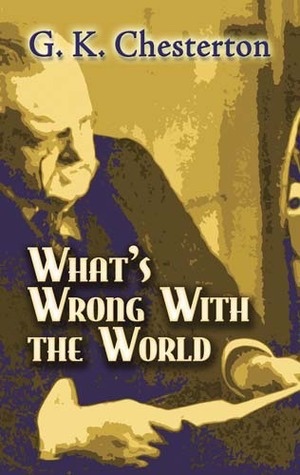 What's Wrong with the World
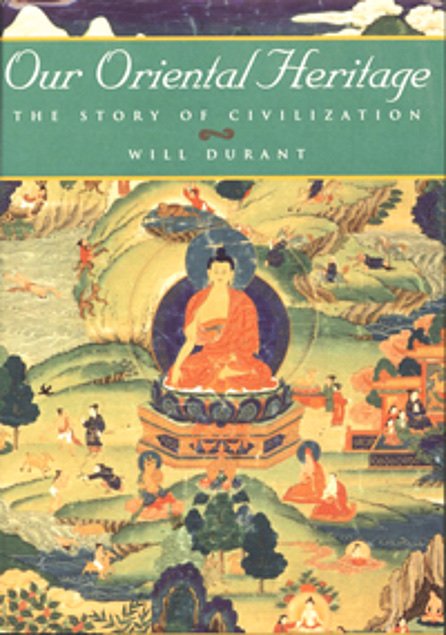 Our Oriental Heritage
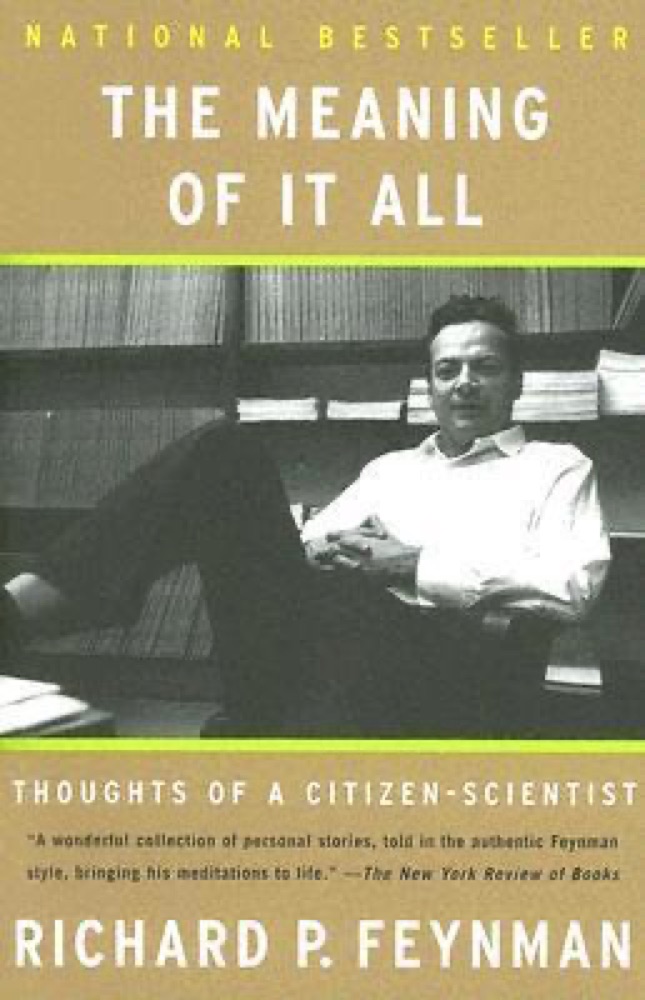 The Meaning of It All: Thoughts of a Citizen-Scientist
 Myths to Live By
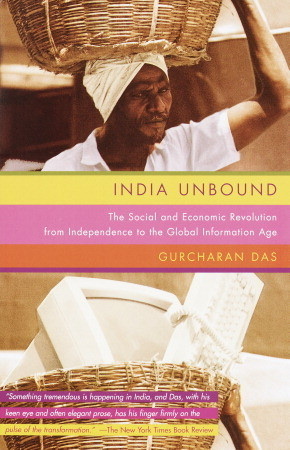 India Unbound: The Social and Economic Revolution from Independence to the Global Information Age
 Enlightenment Now: The Case for Reason, Science, Humanism, and Progress
 Aavarana - The Veil
 A Passage to India
 Philosophical Dictionary
 The Education of Henry Adams
 The Wretched of the Earth
 The Autobiography of Martin Luther King, Jr.
 Heretics
 Parasitic Mind: How Infectious Ideas Are Killing Common Sense