
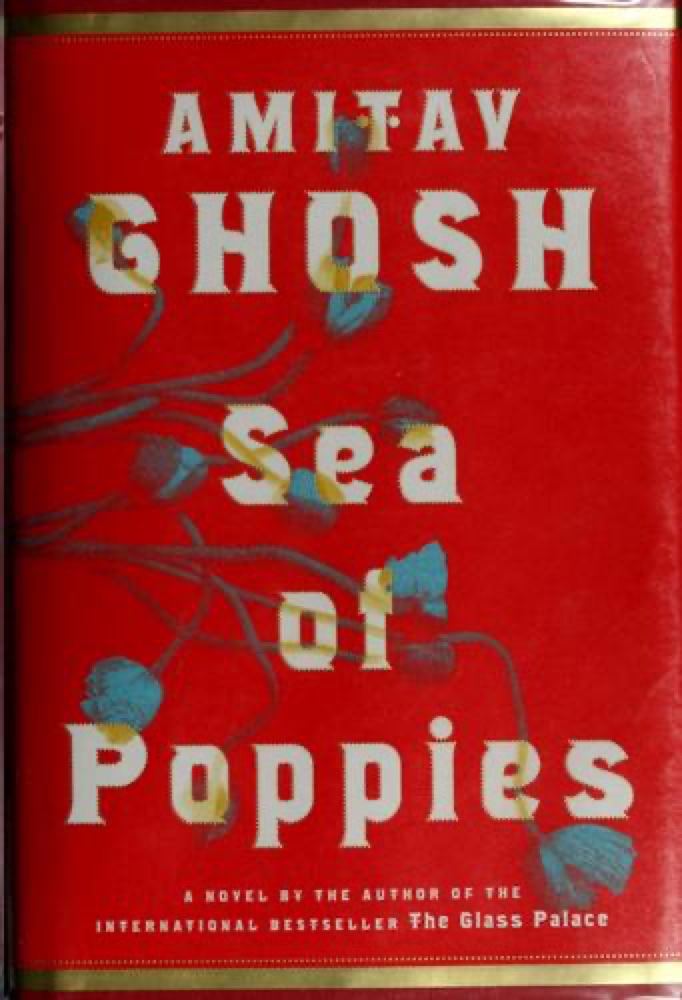
 Sea of Poppies
Quotes from the Book
If the charter of your liberties entails death and despair for untold multitudes, then it is nothing but a license for slaughter.
10
The absence of food doesn't make a man forsake hunger-it only makes him hungrier .
8
Democracy is a wonderful thing, Mr Burnham,’ he said wistfully. ‘It is a marvellous tamasha that keeps the common people busy so that men like ourselves can take care of all matters of importance. I hope one day India will also be able to enjoy these advantages—and China too, of course.
6
Is it not amazing, Puggly dear, that whenever we begin to congratulate ourselves on the breadth of our knowledge of the world, we discover that there are multitudes of people, in every corner of the earth, who have seen vastly more than we can ever hope to?
6
(...) an instance when Fate had conspired with Nature to give them a sign that theirs was no ordinary journey.
5
To her father who had taught her what she knew of botany, the love of Nature had been a kind of religion, a form of spiritual striving: he had believed that in trying to comprehend the inner vitality of each species, human beings could transcend the mundane world and its artificial divisions. If botany was the Scripture of this religion, then horticulture was its form of worship: tending a garden was, for Pierre Lambert, no mere matter of planting seeds and pruning branches--it was a spiritual discipline, a means of communicating with forms of life that were necessarily mute and could be understood only through a careful study of their own modes of expression--the languages of efflorescence, growth and decay: only thus, he taught Paulette, could human beings apprehend the vital energies that constitute the Spirit of the Earth.
2
(...) it seemed to me exceedingly peculiar that a man should love flowers as well as opium - and yet I see now that there is no contradiction in this, for are they not perhaps both a means to a kind of intoxication ? Could it not even be said that one might lead inevitably to the other ?
2
(...)- for it does take greatness, I think, to stand resolutely against your own people, especially when you are alone, and especially when you that even history will not be kind to you, since you will have forever given the lie all the claims with which the High and the Mighty will try to exonerate themselves.
2
And to no one is this state more attractive than to those whom it is consistently denied.
2
Oh shame on you, who call yourself a Christian! Do you not see that it is the grossest idolatry to speak of the market as though it were the rival of God?
2
Was it possible that some men possessed so great a force of character that they could stamp themselves upon their words such that no matter where they were read, or when, or in what language, their own distinctive tones would always be heard?
2
we are happy we soar very high and when we are not we fall into the depths of an abyss.
2
We must be the willow, not the oak, in the lowering storm.
2
Stars and planets, after all, travelled on predictable orbits - but the wind, nobody knew where the wind would choose to go.
1
... not one of them had ever imagined, or could believe, that it might be possible to look at the world through the eye of a storm.
1
The Tang went into decline and people became discontented. There was hunger and unrest, and as is common at such times, the troublemakers looked to place the blame on the foreigners.
1
Mere shame couldn't, after all, be counted on to provide the escape of death.
1
From the older ox the younger learns to plough.
1
that he was no stranger to budmashing, barnshooting
1
The more time we spent together, the more curious we became about one another’s artistic inclinations; no length of time seemed excessive if it extended our understanding of each other’s methods and equipment. Why, even to place our hands upon each other’s brushes – at once so familiar and so different – was to experience the thrill of discovery! Never had we imagined, Puggly dear, that we had so much yet to learn about these beloved tools of ours: every minute seemed well-used if it furthered our knowledge of the subtle variations of their hairs and bristles; not a minute felt wasted if it was spent in exploring the feel of their slender but sturdy shafts; not an hour was begrudged that was expended in learning how to coax out the wondrous luminosities that lie hidden within them.
1
I am amazed to think of all the flowers it has sent out into the world: chrysanthemums, peonies, tiger lilies, wisteria, rhododendrons, azaleas, asters, gardenias, begonias, camellias, hydrangeas, primroses, heavenly bamboo, a juniper, a cypress, climbing tea-roses and roses that flower many times over – these and many more.
is exactly what the foreigners want, even though they speak endlessly of bringing Freedom and Religion to China. When confronted with evidence of their smuggling, they resort to the most absurd subterfuges, thinking the Chinese will be deceived and they never are.
Since the middle years of the last century, the demand for Chinese tea has grown at such a pace in Britain and America that it is now the principal source of profit for the East India Company. The taxes on it account for fully one-tenth of Britain’s revenues. If one adds to this such goods as silk, porcelain and lacquerware it becomes clear that the European demand for Chinese products is insatiable. In China, on the other hand, there is little interest in European exports – the Chinese are a people who believe that their own products, like their food and their own customs, are superior to all others. In years past this presented a great problem for the British, for the flow of trade was so unequal that there was an immense outpouring of silver from Britain. This indeed was why they started to export Indian opium to China. Glancing over his shoulder, the General raised an eyebrow: Started? Commencé? You mean this trade has not always existed? No, Majesty – the trade was a mere trickle until about sixty years ago, when the East India Company adopted it as a means of rectifying the outflow of bullion. They succeeded so well that now the supply can barely keep pace with the demand. The flow of silver is now completely reversed, and it pours away from China to Britain, America and Europe.
and such being the case, everyone who spoke the jargon was at an equal disadvantage, which was considered a great benefit to all. It was, moreover, a simple tongue, not hard to master, and for those who did not know it, there existed a whole class of interpreters,
Nowhere on earth, I suspect, is the importance of portals as well understood as in China. In this country, gateways are not merely entrances and exits – they are tunnels between different dimensions of existence.
Mr Karabedian says that as a student at Edinburgh Mr Dent came under the influence of some obscure doctrine concerning the wealth of nations; he is now both a disciple and apostle of it and seeks to impose it on everything and everyone he encounters. Repellent though he is, I confess I feel a twinge of pity for him sometimes: can you imagine a more horrible fate than to be enslaved to a doctrine of trade and economy? It is as if a tailor had come to be convinced that nothing exists that does not fit the measure of his tape.
If there is any nation that can match the English in their arrogance and obstinacy, it is surely the Chinese.
They are also charged with the upkeep of the buildings in which we live, the Thirteen Factories. Zadig had said the last three words in English, and one of them caught the General’s attention: Ah! ‘Factory’. Is the word the same as our factorerie? This was a subject that Zadig had inquired into and he was not at a loss for an answer: No, Your Majesty. ‘Factory’ comes from a word that was first used by the Venetians and then by the Portuguese, in Goa. The word is feitoria and it refers merely to a place where agents and factors reside and do business. In Canton, the factories are also spoken of as ‘hongs’.
Bahram smiled to himself as he listened: the arguments were marvellously simple yet irrefutable. Really, there was no language like English for turning lies into legalisms.
Watch on YouTube
About Amitav Ghosh
We have collected 128 quotes from 7 books by Amitav Ghosh on BookQuoters.
More about the author →More by Amitav Ghosh
All books by Amitav Ghosh →


About the book
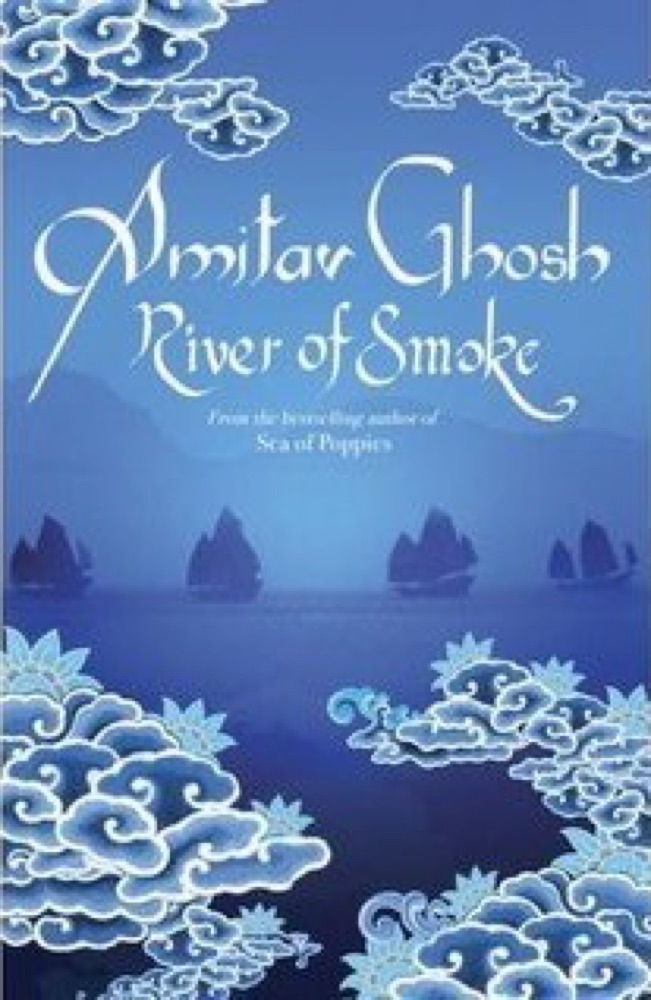
In September 1838, a storm blows up on the Indian Ocean and the Ibis, a ship carrying a consignment of convicts and indentured laborers from Calcutta to Mauritius, is caught up in the whirlwind. River of Smoke follows its storm-tossed characters to the crowded harbors of China. There, despite efforts of the emperor to stop them, ships from Europe and India exchange their cargoes of opium for boxes tea, silk, porcelain and silver. Among them are Bahram Modi, a wealthy Parsi opium merchant out of Bombay, his estranged half-Chinese son Ah Fatt, the orphaned Paulette and a motley collection of others whose pursuit of romance, riches and a legendary rare flower have thrown together. All struggle to cope with their losses—and for some, unimaginable freedoms—in the alleys and crowded waterways of 19th-century Canton.
Book details
- First published
- 2011
- Author
- Amitav Ghosh
- Genre
- Historical
- Goodreads rating
- 3.98 (11k ratings)
Keep reading
Sea of Poppies
 The Day of the Scorpion
 The Innocents Abroad
 Mason & Dixon
 The Jewel in the Crown
 The Enchantress of Florence
 Black Lamb and Grey Falcon
 Lost Horizon
 A Bend in the River
 Following the Equator: A Journey Around the World
 The Fall of Babel
 Quicksilver
 Gun Island
 Under Western Eyes
 The Bedlam Stacks
 Bleak House
 Interesting Times
 Too Like the Lightning
 The Mysterious Island
 Hard Times
 A Passage to India
 Allan Quatermain
 Toll the Hounds
 Independent People
 Walden & Civil Disobedience
 The Years of Rice and Salt
 The Lives of Others
 Erewhon
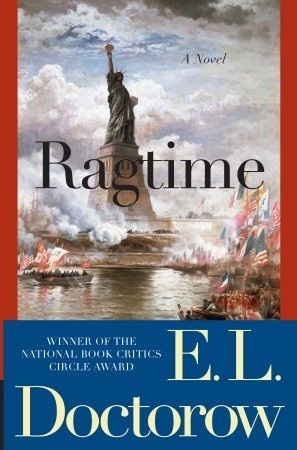 Ragtime
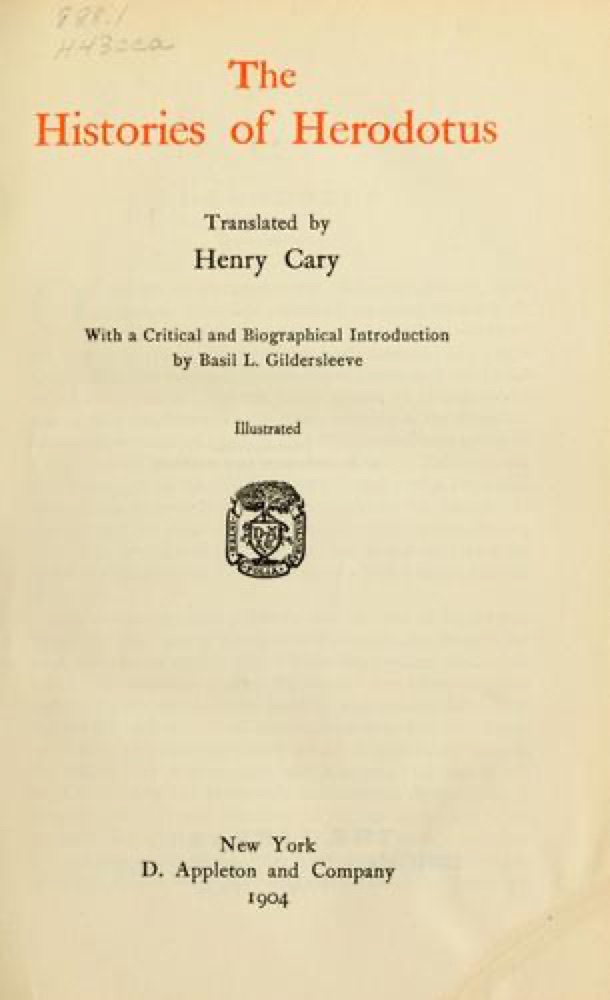 The Histories
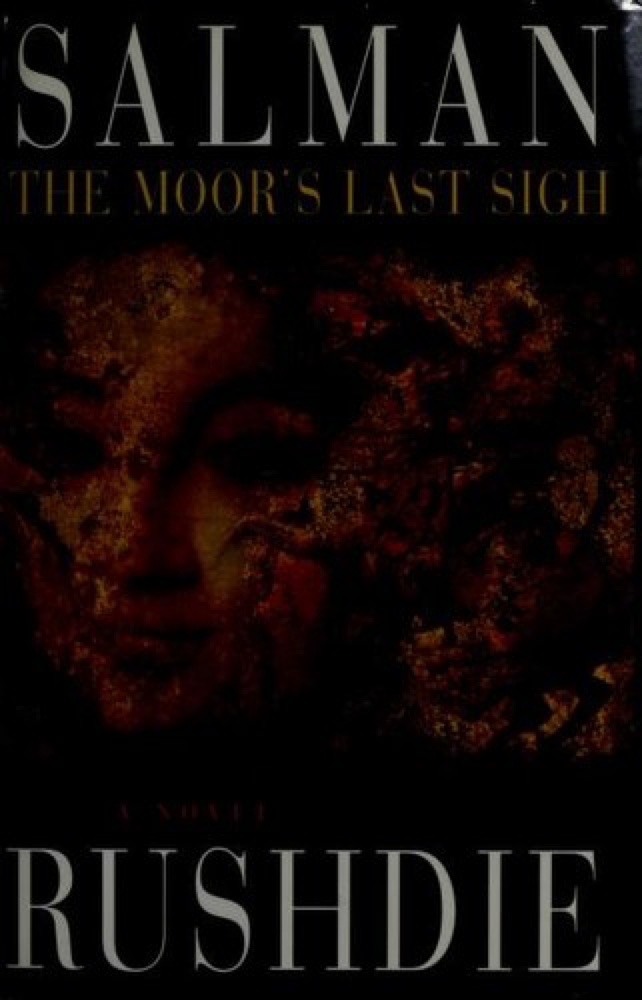 The Moor's Last Sigh
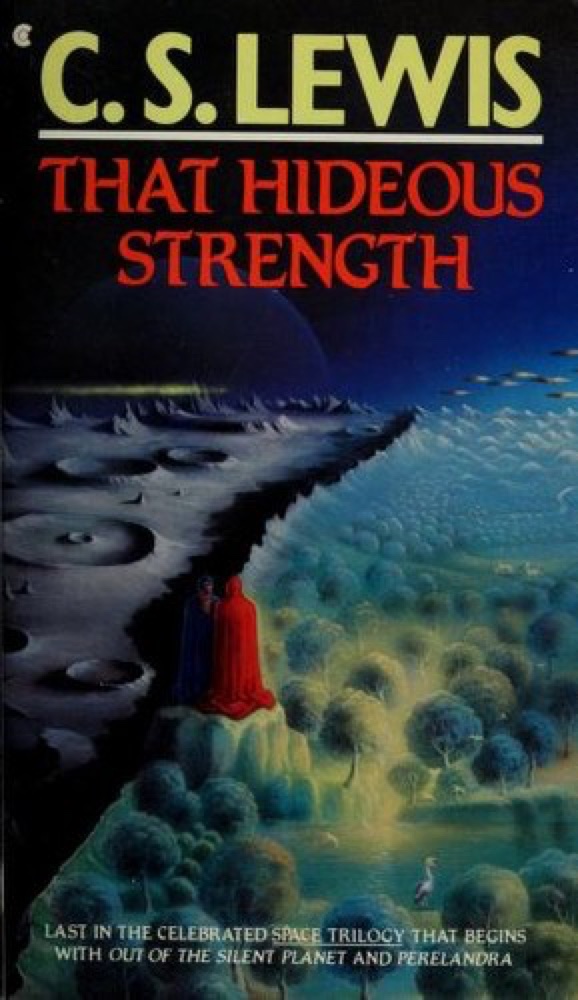 That Hideous Strength
 The Cat's Table
 Consider Phlebas
 Out of Oz
 Villa Incognito
 Hawaii
 Roughing It
 Anthills of the Savannah
 The Hexologists
 The Confusion
 Essays of E.B. White
 Barkskins
 Red Mars
 The Napoleon of Notting Hill
 Senlin Ascends
 Persian Letters
 Foundation and Empire
 The Secret Agent
 Songs of Distant Earth
 Nostromo
 Dead Souls
 The Accursed
 TransAtlantic
 The Nutmeg of Consolation
 The Far Pavilions
 The Wall of Storms
 Antic Hay
 Armadale
 Eifelheim