
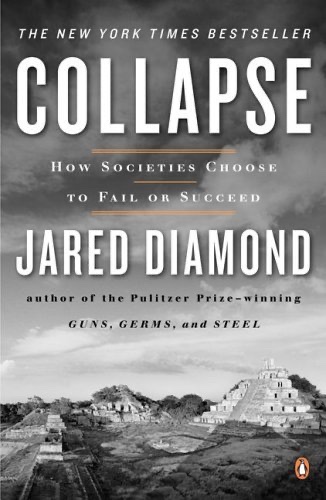
 Collapse: How Societies Choose to Fail or Succeed
Quotes from the Book
Those who study just one country end up understanding no country.
12
Rigidity or inflexibility can be the result of a previous history of abuse or trauma, or of an upbringing that offered a child no permission to experiment or to deviate from the family norms. Flexibility can come from the freedom of having been allowed to make one’s own choices as one was growing up.
11
Finland’s crisis (Chapter 2) exploded with the Soviet Union’s massive attack upon Finland on November 30, 1939. In the resulting Winter War, Finland was virtually abandoned by all of its potential allies and sustained heavy losses, but nevertheless succeeded in preserving its independence against the Soviet Union, whose population outnumbered Finland’s by 40 to 1. I spent a summer in Finland 20 years later, hosted by veterans and widows and orphans of the Winter War. The war’s legacy was conspicuous selective change that made Finland an unprecedented mosaic, a mixture of contrasting elements: an affluent small liberal democracy, pursuing a foreign policy of doing everything possible to earn the trust of the impoverished giant reactionary Soviet dictatorship. That policy was considered shameful and denounced as “Finlandization” by many non-Finns who failed to understand the historical reasons for its adoption. One of the most intense moments of my summer in Finland unfolded when I ignorantly expressed similar views to a Winter War veteran, who replied by politely explaining to me the bitter lessons that Finns had learned from being denied help by other nations.
11
It’s neither possible nor desirable for individuals or nations to change completely, and to discard everything of their former identities. The challenge, for nations as for individuals in crisis, is to figure out which parts of their identities are already functioning well and don’t need changing, and which parts are no longer working and do need changing.
10
success is not guaranteed to well-intentioned decent people, nor necessarily denied to evil people.
9
What doesn’t kill us makes us stronger.” Winston Churchill’s corresponding quip was “Never let a good crisis go to waste!” A
8
Nations and individuals accept national and individual responsibility to take action to solve the problem, or else deny responsibility by self-pity, blaming others, and assuming the role of victim.
7
niche information.” When I was a teenager, cable TV didn’t exist; the first TV program of any sort didn’t come to my city of Boston until 1948; and for years thereafter, we Americans got our news from just three big TV networks, three major weekly newsmagazines, and newspapers. Most Americans shared those same sources of information, none of which was clearly identified with conservative or liberal views, and none of which slanted its information heavily. Now, with the rise of cable TV, news websites, and Facebook, and with the decline of broad-market weekly print newsmagazines, Americans choose their source of information according to their pre-existing views.
6
The first, and also in my opinion the most ominous, of the fundamental problems now threatening American democracy is our accelerating deterioration of political compromise. As I previously
6
Individuals in crisis often receive help from friends, just as nations in crisis may recruit help from allied nations. Individuals in crisis may model their solutions on ways in which they see other individuals addressing similar crises; nations in crisis may borrow and adapt solutions already devised by other nations facing similar problems. Individuals in crisis may derive self-confidence from having survived previous crises; so do nations.
6
The slaughter at Gallipoli symbolized the national pride of Australians, now fighting for their British motherland as Australians, not as Victorians or Tasmanians or South Australians—and the emotional dedication with which Australians publicly identified themselves as loyal British subjects.
5
write these pages, Japan and the U.S. are still practicing widespread selective denial of major problems. Japan currently acknowledges some problems (its large government debt and aging population), and incompletely acknowledges the issue of Japanese women’s role. But Japan still denies other problems: its lack of accepted alternatives to immigration for solving its demographic difficulties; the historical causes of Japan’s tense relations with China and Korea; and denial that Japan’s traditional policy of seeking to grab overseas natural resources rather than to help manage them sustainably is now outdated. The U.S., as I write, is still in widespread denial of our own major problems: political polarization, low voter turnout, obstacles to voter registration, inequality, limited socio-economic mobility, and decreasing government investment in public goods.
5
All of these arenas of American life are facets of the same widely discussed phenomenon: the decline of what is termed “social capital.” As defined by political scientist Robert Putnam in his book Bowling Alone, “… social capital refers to connections among individuals—social networks and the norms of reciprocity and trustworthiness that arise from them. In that sense social capital is closely related to what some have called ‘civic virtue.’” It’s the trust, friendships, group affiliations, helping, and expectation of being helped built up by actively participating in and being a member of all sorts of groups, ranging from book clubs, bowling clubs, bridge clubs, church groups, community organizations, and parent-teacher associations to political organizations, professional societies, rotary clubs, town meetings, unions, veterans associations, and others.
5
Finland is world-famous for its architects and decorators, who know how to produce beautiful effects in simple ways. On my first visit to Finland, I remember being invited into the living room of one of my host’s homes, and immediately thinking to myself, “This is the most beautiful room that I’ve ever seen!” On reflection, I then wondered why I found it so beautiful, because the room was a nearly-empty cubicle with just a few pieces of simple furniture. But the materials and form of the room, and those few pieces of furniture, were typically Finnish in their simplicity and beauty
5
Britain never regained its naval and economic dominance over the world, and it remains notoriously conflicted (“Brexit”) about its role in Europe. But Britain is still among the world’s six richest nations, is still a parliamentary democracy under a figurehead monarch, is still a world leader in science and technology, and still maintains as its currency the pound sterling rather than the euro
5
For example, the great Italian Jewish author Primo Levi, who did survive Auschwitz, said afterwards, “The experience of Auschwitz for me was such as to sweep away whatever legacies of my religious education that I had retained. There is Auschwitz, therefore God cannot exist. I haven’t found a solution to that dilemma.
5
Ego strength includes being able to tolerate strong emotions, to keep focused under stress, to express yourself freely, to perceive reality accurately, and to make sound decisions.
4
In the workplace, Japanese women have low participation and low pay. Participation declines steeply with increasing level of responsibility. Whereas women account for 49% of Japanese university students and 45% of entry-level job holders, they account for only 14% of university faculty positions (versus 33%–44% in the U.S., United Kingdom, Germany, and France), 11% of middle-level to senior management positions, 2% of positions on boards of directors, 1% of business executive committee members, and less than 1% of CEOs. At those higher levels Japan lags behind all major industrial countries except (again) South Korea.
4
Yet we promise developing countries that, if they will only adopt good policies, like honest government and free market economies, they too can become like the First World today. That promise is utterly impossible, a cruel hoax. We are already having difficulty supporting a First World lifestyle even now, when only 1 billion people out of the world’s 7.5 billion people enjoy it.
4
Consequences are that heavy TV viewers trust other people less, and join fewer voluntary organizations, than do people who are not heavy TV viewers. Before blaming TV-viewing for those behaviors, one might object: which is the cause and which is the result, or are the two sets of phenomena just correlated without either being the cause of the other?
3
To understand the fundamental benefits of an immigrant population, imagine that you could divide the population into two groups: one consisting on the average of the youngest, healthiest, boldest, most risk-tolerant, most hard-working, ambitious, and innovative people; the other consisting of everyone else. Transplant the first group to another country, and leave the second group in their country of origin. That selective transplanting approximates the decision to emigrate and its successful accomplishment. Hence it comes as no surprise that more than one-third of American Nobel Prize winners are foreign-born, and over half are either immigrants themselves or else the children of immigrants. That's because Nobel Prize-winning research demands those same qualities of boldness, risk-tolerance, hard work, ambition, and innovativeness.
2
Great-Man” view of the British historian Thomas Carlyle (1795–1881), who asserted that history is dominated by the deeds of great men, such as Oliver Cromwell and Frederick the Great.
2
One explanation that Putnam and many others have suggested for social capital’s decline in the U.S. is the rise in non-face-to-face communication at the expense of direct communication
2
When you look at a map you’ll be struck by the fact that Chile is the longest and thinnest country in the world. While averaging only slightly more than 100 miles wide from west to east, it’s nearly 3,000 miles long from north to south: almost as long as the U.S. is wide. Geographically, Chile is isolated from other countries by the high chain of the Andes in the east separating it from Argentina, and by the world’s most barren desert in the north separating it from Bolivia and Peru.
2
Flexibility can come from the freedom of having been allowed to make one’s own choices as one was growing up.
1
Watch on YouTube
About Jared Diamond
We have collected 97 quotes from 4 books by Jared Diamond on BookQuoters.
More about the author →More by Jared Diamond
Collapse: How Societies Choose to Fail or Succeed
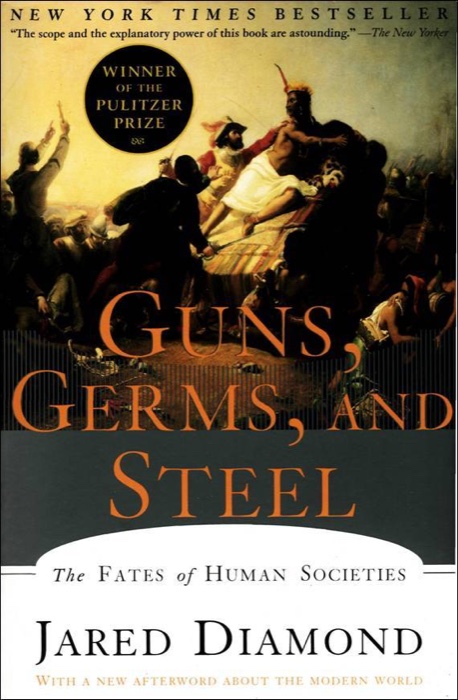 Guns, Germs, and Steel: The Fates of Human Societies
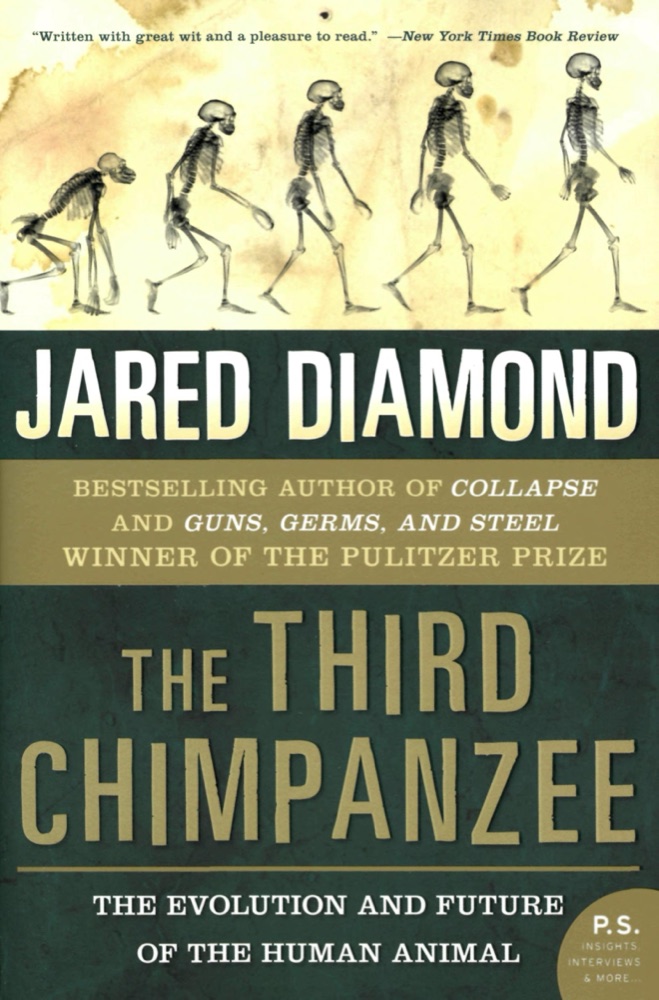 The Third Chimpanzee: The Evolution and Future of the Human Animal
About the book
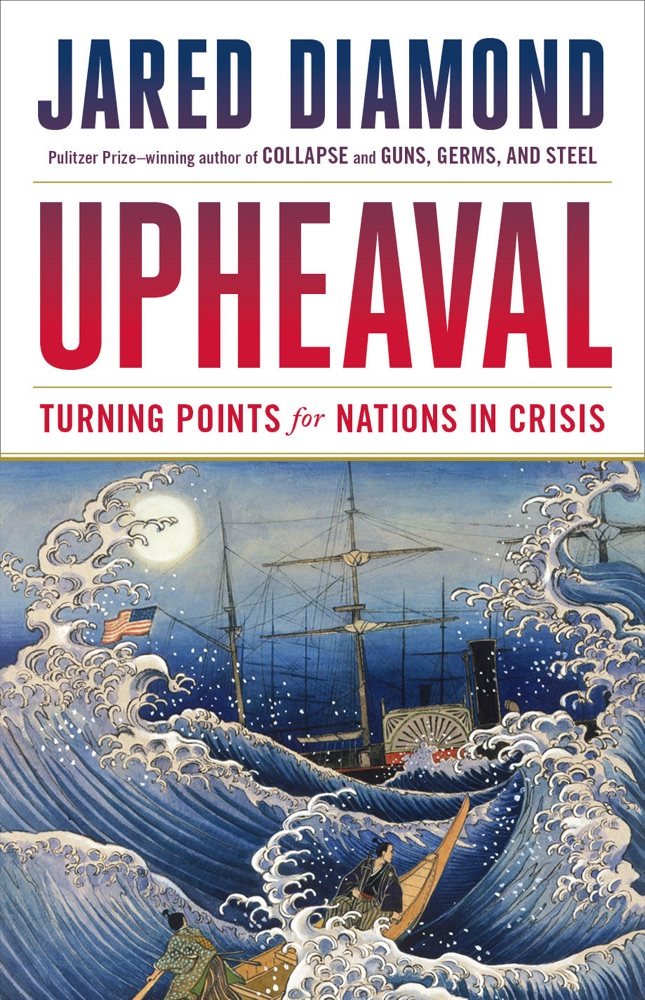
In his international bestsellers Guns, Germs and Steel and Collapse, Jared Diamond transformed our understanding of what makes civilizations rise and fall. Now, in his third book in this monumental trilogy, he reveals how successful nations recover from crises while adopting selective changes -- a coping mechanism more commonly associated with individuals recovering from personal crises.Diamond compares how six countries have survived recent upheavals -- ranging from the forced opening of Japan by U.S. Commodore Perry's fleet, to the Soviet Union's attack on Finland, to a murderous coup or countercoup in Chile and Indonesia, to the transformations of Germany and Australia after World War Two. Because Diamond has lived and spoken the language in five of these six countries, he can present gut-wrenching histories experienced firsthand. These nations coped, to varying degrees, through mecha
Book details
- First published
- 2019
- Author
- Jared Diamond
- Genre
- History
- Goodreads rating
- 3.90 (12k ratings)
The buzz
- The Washington PostReview in The Washington Postprofessional review (via Book Marks)
- The Wall Street JournalReview in The Wall Street Journalprofessional review (via Book Marks)
- The GuardianReview in The Guardianprofessional review (via Book Marks)
- NPRReview in NPRprofessional review (via Book Marks)
- The Times Literary SupplementReview in The Times Literary Supplementprofessional review (via Book Marks)
- The Boston GlobeReview in The Boston Globeprofessional review (via Book Marks)
Keep reading
 Principles for Dealing with the Changing World Order: Why Nations Succeed and Fail
Collapse: How Societies Choose to Fail or Succeed
Principles for Dealing with the Changing World Order: Why Nations Succeed and Fail
Collapse: How Societies Choose to Fail or Succeed
 The World Is Flat: A Brief History of the Twenty-first Century
 The Strange Death of Europe: Immigration, Identity, Islam
 Flashpoints: The Emerging Crisis in Europe
 World Order
 The Evolution of Everything: How New Ideas Emerge
 Coming Apart: The State of White America, 1960-2010
 Understanding Power: The Indispensable Chomsky
 The Next 100 Years: A Forecast for the 21st Century
 Ill Fares the Land
 Boomerang: Travels in the New Third World
 Power Systems: Conversations on Global Democratic Uprisings and the New Challenges to U.S. Empire
 Humankind: A Hopeful History
 The Audacity of Hope: Thoughts on Reclaiming the American Dream
 Conspirators' Hierarchy: The Story of the Committee of 300
 America Alone: The End of the World As We Know It
 You Can't Be Neutral on a Moving Train: A Personal History of Our Times
 What's Our Problem?: A Self-Help Book for Societies
 Civilization: The West and the Rest
 Revenge of the Tipping Point
 A People's History of the United States
 Wealth, Poverty and Politics: An International Perspective
 The Next Decade: Where We've Been . . . and Where We're Going
 Tribe: On Homecoming and Belonging
 Walden Two
 David and Goliath: Underdogs, Misfits, and the Art of Battling Giants
 The Autobiography of Eleanor Roosevelt
 The Small and the Mighty: Twelve Unsung Americans Who Changed the Course of History, from the Founding to the Civil Rights Movement
 Endgame, Vol. 1: The Problem of Civilization
 The Spirit Level: Why More Equal Societies Almost Always Do Better
 The Lessons of History
 The View From Flyover Country: Essays by Sarah Kendzior
 The Wizard and the Prophet: Two Remarkable Scientists and Their Dueling Visions to Shape Tomorrow's World
 On Tyranny: Twenty Lessons from the Twentieth Century
 Modern Times: The World from the Twenties to the Nineties
 Enlightenment Now: The Case for Reason, Science, Humanism, and Progress
Guns, Germs, and Steel: The Fates of Human Societies
Enlightenment Now: The Case for Reason, Science, Humanism, and Progress
Guns, Germs, and Steel: The Fates of Human Societies
 Homo Deus: A History of Tomorrow
 Postwar: A History of Europe Since 1945
 A Short History of Progress
 Independent Study
 Dead Fall
 Political Order and Political Decay: From the Industrial Revolution to the Globalization of Democracy
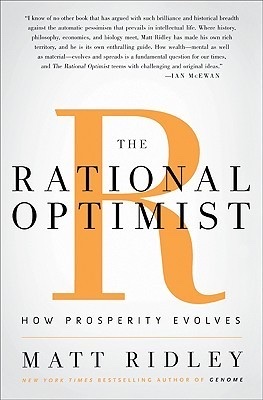 The Rational Optimist: How Prosperity Evolves
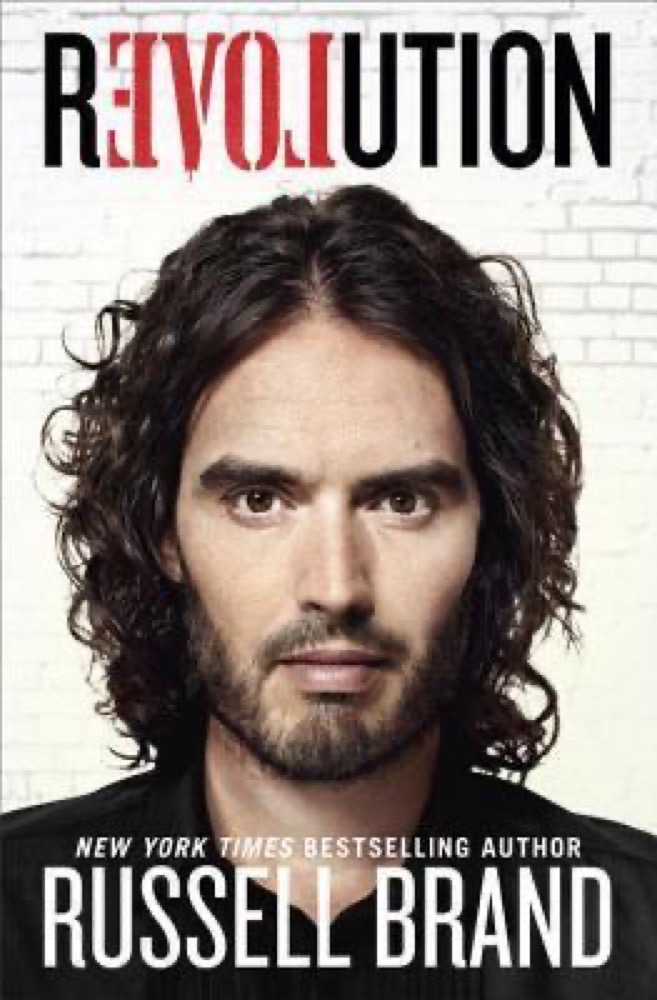 Revolution
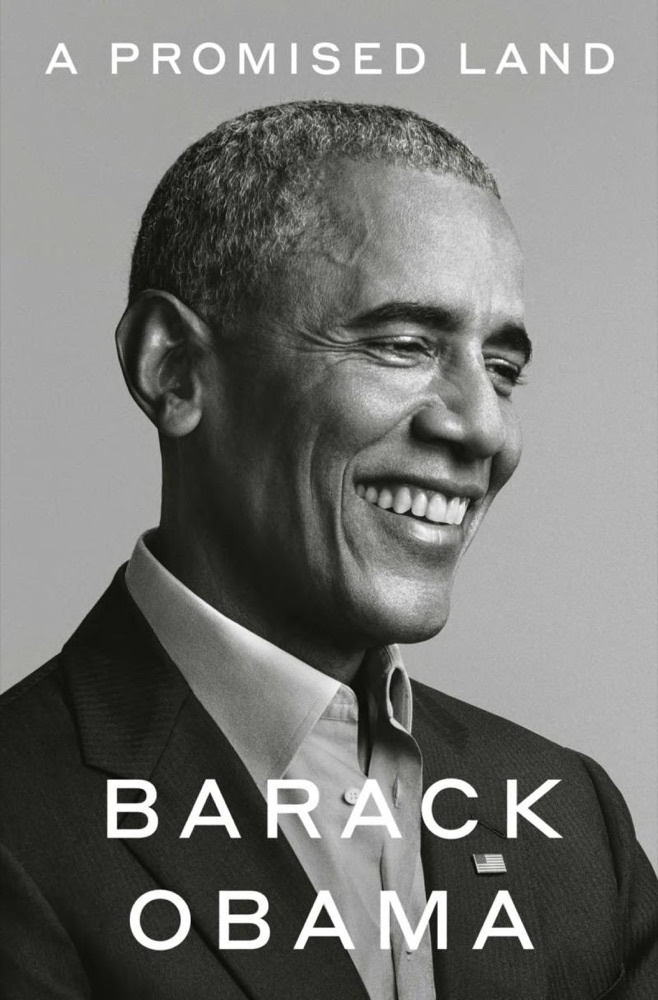 A Promised Land
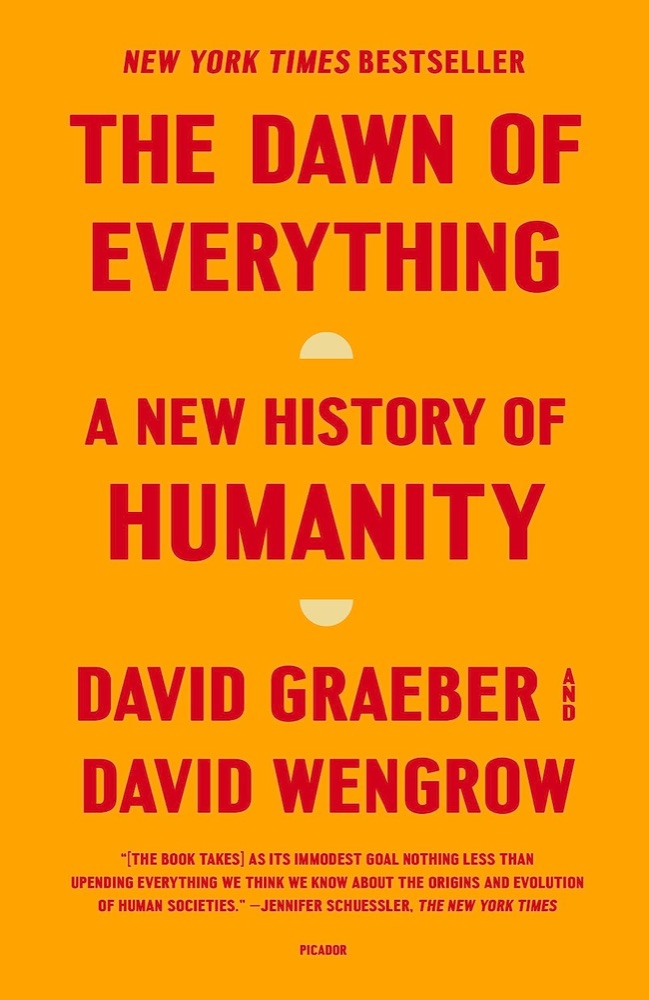 The Dawn of Everything: A New History of Humanity
 United: Thoughts on Finding Common Ground and Advancing the Common Good
 The Untold History of The United States
 The Almost Nearly Perfect People: Behind the Myth of the Scandinavian Utopia
 Leadership : Six Studies in World Strategy
 Imperial Ambitions: Conversations on the Post-9/11 World
 First As Tragedy, Then As Farce
 What Unites Us: Reflections on Patriotism
 The Better Angels of Our Nature: Why Violence Has Declined
 Utopia for Realists: How We Can Build the Ideal World
 The Shock Doctrine: The Rise of Disaster Capitalism
 Brave New World Revisited
 Human Action: A Treatise on Economics