
 Principles: Life and Work
Quotes from the Book
no system of government, no economic system, no currency, and no empire lasts forever, yet almost everyone is surprised and ruined when they fail.
13
History has shown that we shouldn’t rely on governments to protect us financially. On the contrary, we should expect most governments to abuse their privileged positions as the creators and users of money and credit for the same reasons that you might commit those abuses if you were in their shoes.
9
Having a reserve currency is great while it lasts because it gives a country exceptional borrowing and spending power and significant power over who else in the world gets the money and credit needed to buy and sell internationally. However, having a reserve currency typically sows the seeds of a country ceasing to be a reserve currency country. That is because it allows the country to borrow more than it could otherwise afford to borrow, and the creation of lots of money and credit to service the debt debases the value of the currency and causes the loss of its status as a reserve currency. The loss of its reserve currency status is a terrible thing because having a reserve currency is one of the greatest powers a country can have because it gives the country enormous buying power and geopolitical power.
8
I believe that the reason people typically miss the big moments of evolution coming at them in life is because they experience only tiny pieces of what’s happening. We are like ants preoccupied with our jobs of carrying crumbs in our very brief lifetimes instead of having a broader perspective of the big-picture patterns and cycles, the important interrelated things driving them, where we are within the cycles, and what’s likely to transpire.
7
stronger education leads to stronger technological innovation, which leads to increased productivity and increased shares of trade, greater wealth, more military power, and eventually the establishment of a reserve currency. Further, having strong leaders, a population that is well-educated and civil with each other, a system that efficiently allocates capital and other resources, access to natural resources, and favorable geography all help a lot, and when they decline, they tend to decline together.
5
debt eats equity but central banks can feed debt by printing money instead.
5
As I studied history, I saw that it typically transpires via relatively well-defined life cycles, like those of organisms, that evolve as each generation transitions to the next.
4
when people are willing to die for their country, their country will be more likely to be protected than if the individual self is more important, in which case individuals will run from deadly combat.
4
Taoism teaches that it is of paramount importance to live in harmony with the laws of nature.
3
There is an old saying that “gold is the only financial asset that isn’t someone else’s liability.
2
money and credit are stimulative when they’re given out and depressing when they have to be paid back. That’s what normally makes money, credit, and economic growth so cyclical.
2
Traditional Chinese military philosophy teaches that the ideal way to win a war is not by fighting but by quietly developing one’s power to the point that simply displaying it will cause an opponent to capitulate.
2
Marx’s most important theory/system is called “dialectical materialism.” “Dialectical” refers to how opposites interact to produce change, and “materialism” means that everything has a material (i.e., physical) existence that interacts with other things in a mechanical way. In a nutshell, dialectical materialism is a system for producing change by observing and influencing the “contradictions” of “opposites” that produce “struggles” that, when resolved, produce progress. Marx meant it to apply to everything. The conflict and struggle between the classes that is manifest in the conflict between capitalism and communism is just one of many such examples.
2
Adolf Hitler, the leading populist/fascist, tapped into the mood of national humiliation to build a nationalistic furor, casting the Treaty of Versailles and the countries that imposed it as the enemy. He created a 25-point nationalistic program and rallied support around it.
2
the decline of China from around 1840 to 1949, known as the “Century of Humiliation,” came about because the Western powers and Japan exploited China.
2
In war one’s ability to withstand pain is even more important than one’s ability to inflict pain.
2
using the market values of what one owns to measure one’s wealth gives an illusion of changes in wealth that don’t really exist.
1
Stage 2: People and Their Countries Are Rich but Still Think of Themselves as Poor. Because people who grew up with financial insecurity typically don’t lose their financial cautiousness, people in this stage still work hard, sell a lot to foreigners, have pegged exchange rates, save a lot, and invest efficiently in real assets like real estate, gold, and local bank deposits, and in bonds of the reserve currency countries. Because they have a lot more money, they can and do invest in the things that make them more productive—e.g., human capital development, infrastructure, research and development, etc. This generation of parents wants to educate their children well and get them to work hard to be successful. They also improve their resource-allocation systems, including their capital markets and their legal systems. This is the most productive phase of the cycle. Countries in this stage experience rapidly rising income growth and rapidly rising productivity growth at the same time. The productivity growth means two things: 1) inflation is not a problem and 2) the country can become more competitive. During this stage, debts typically do not rise significantly relative to incomes and sometimes they decline. This is a very healthy period and a terrific time to invest in a country if it has adequate property rights protections. You can tell countries in this stage from those in the first stage because they have gleaming new cities next to old ones, high savings rates, rapidly rising incomes, and, typically, rising foreign exchange reserves. I call countries in this stage “late-stage emerging countries.” While countries of all sizes can go through this stage, when big countries go through it, they are typically emerging into great world powers.
1
I consider the conflicts between the classes (i.e., the “haves” and the “have-nots”) to be among the main drivers of the rise and decline of empires, and hence the progress of history, with those drivers being the three big cycles—money and credit, internal order/disorder, and external order/disorder—discussed earlier in this book.
1
Americans are more interested in telling you what they think.
1
Americans hold the individual above all else while the Chinese put the family and the collective above everything.
1
I’m not saying that they don’t have political and other challenges that lead to disagreements, including some brutal fights over what should be done, because they do (in private). What I am saying is that the Chinese have much longer-term and historically based perspectives and planning horizons, which they break down into shorter-term plans and ways of operating, and they have done an excellent job of achieving what they have set out to do by following this approach.
1
Its ultimate goal is to make the Chinese economy about twice the size of the US’s and to have the benefits of its growth broadly shared.
1
Americans are impulsive and tactical; they fight for what they want in the present. Most Chinese are strategic; they plan for how they can get what they want in the future.
1
There is a significant chance that the US would lose wars against China and Russia in their geographic areas of strength—or at least would be unacceptably harmed—and it could also be unacceptably harmed by some second-tier powers too. This is not the good ol’ days of right after 1945 when the US was the sole dominant power.
1
Before we had them, nobody could have imagined them—e.g., the telephone (1876), the electric light bulb (1879), the internal combustion powered vehicle (1885), the radio (1895), movies (1895), the airplane (1903), television (1926), antibiotics (1928), the computer (1939), nuclear weapons (1945), nuclear power plants (1951), GPS (1973), digital cameras (1975), online shopping (1979), the internet (1983), online search (1990), online banking (1995), social media (1997), Wi-Fi (1998), the iPhone (2007), CRISPR gene editing (2012),
1
This never-ending process of learning, building, using, and refining in partnership with computers describes what I do,
1
I also know from experience that if I wait to learn enough to be satisfied with what I know before acting or sharing, I’d never be able to use or convey what I have learned.
1
Wealth Decline = Power Decline. There isn’t an individual, organization, country, or empire that hasn’t failed when it lost its buying power. To be successful one must earn an amount that is at least equal to the amount one spends.
1
Watch on YouTube
About Ray Dalio
We have collected 58 quotes from 2 books by Ray Dalio on BookQuoters.
More about the author →More by Ray Dalio
Principles: Life and Work
About the book
From legendary investor Ray Dalio, author of the #1 New York Times bestseller Principles, who has spent half a century studying global economies and markets, Principles for Dealing with the Changing World Order examines history’s most turbulent economic and political periods to reveal why the times ahead will likely be radically different from those we’ve experienced in our lifetimes—and to offer practical advice on how to navigate them well.
A few years ago, Ray Dalio noticed a confluence of political and economic conditions he hadn’t encountered before. They included huge debts and zero or near-zero interest rates that led to massive printing of money in the world’s three major reserve currencies; big political and social conflicts within countries, especially the US, due to the largest wealth, political, and values disparities in more than 100 years; and the rising of a world power
Book details
- First published
- 2021
- Author
- Ray Dalio
- Genre
- Nonfiction
- Goodreads rating
- 4.26 (18k ratings)
Keep reading
 The Price of Tomorrow: Why Deflation is the Key to an Abundant Future
 Upheaval: Turning Points for Nations in Crisis
 The World Is Flat: A Brief History of the Twenty-first Century
 The Rational Optimist: How Prosperity Evolves
 The Next Decade: Where We've Been . . . and Where We're Going
 The Evolution of Everything: How New Ideas Emerge
 Debt: The First 5,000 Years
 Talking to My Daughter About the Economy: or, How Capitalism Works—and How It Fails
 Small Is Beautiful: Economics as if People Mattered
 The Shock Doctrine: The Rise of Disaster Capitalism
 The Next 100 Years: A Forecast for the 21st Century
 Human Action: A Treatise on Economics
 World Order
 The Creature from Jekyll Island: A Second Look at the Federal Reserve
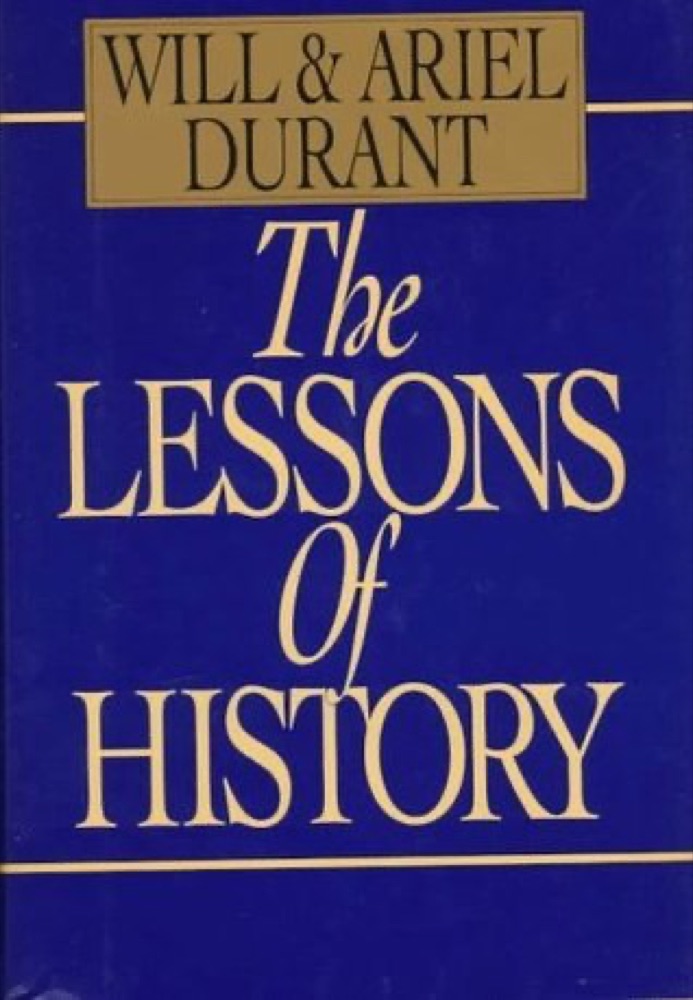 The Lessons of History
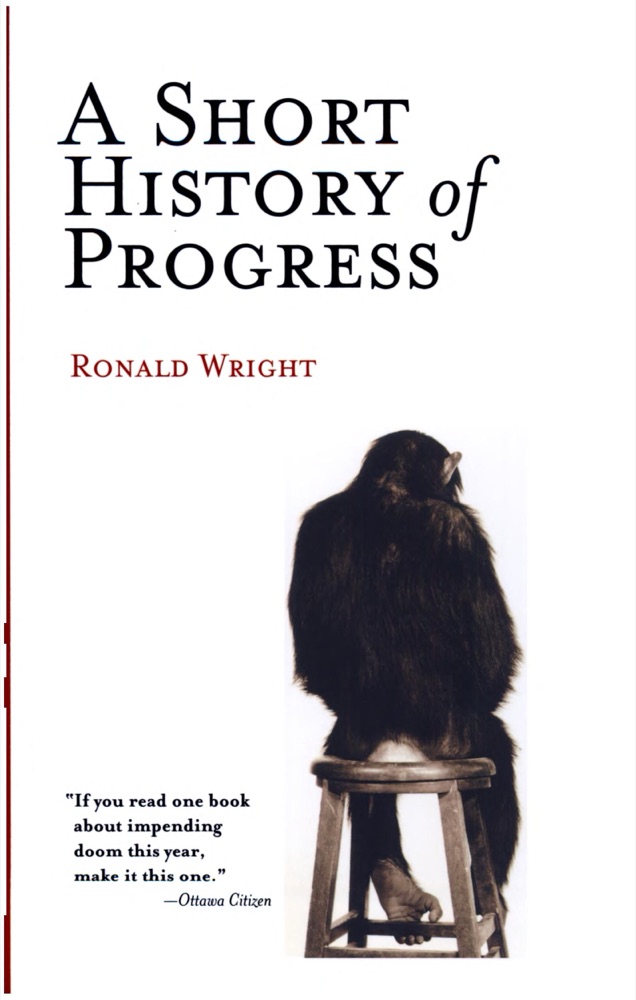 A Short History of Progress
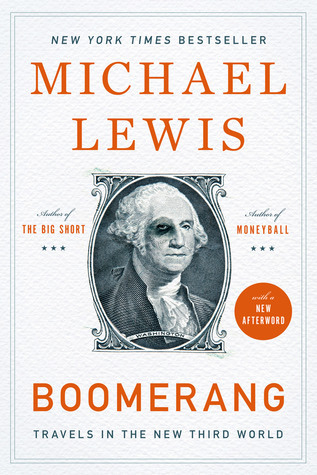 Boomerang: Travels in the New Third World
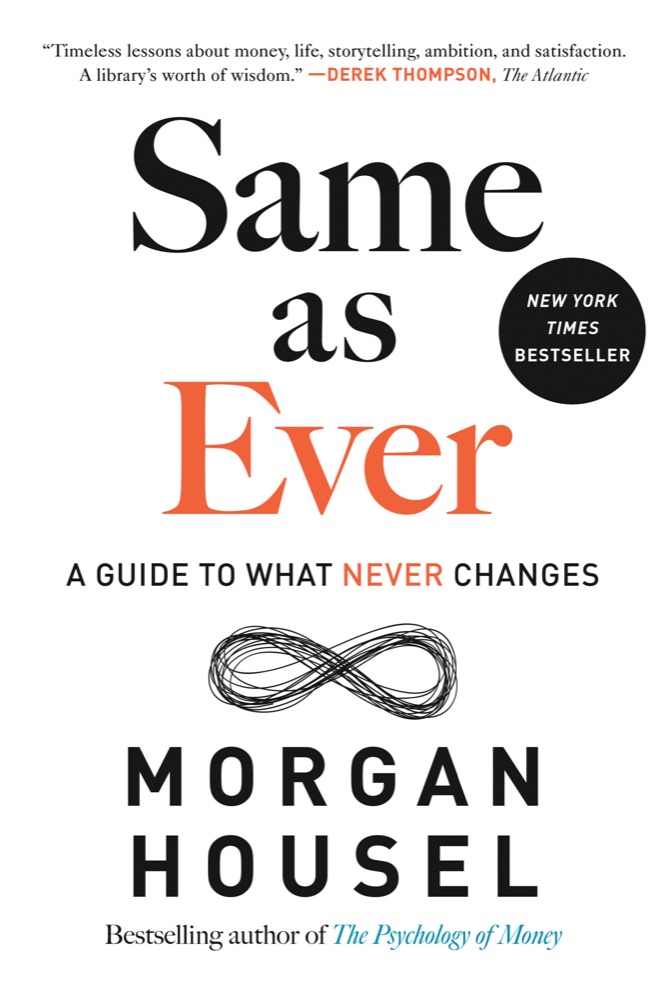 Same as Ever: A Guide to What Never Changes
 Collapse: How Societies Choose to Fail or Succeed
 Naked Economics: Undressing the Dismal Science
 Poor Economics: A Radical Rethinking of the Way to Fight Global Poverty
 Behold a Pale Horse
 Utopia for Realists: How We Can Build the Ideal World
 India Unbound: The Social and Economic Revolution from Independence to the Global Information Age
 David and Goliath: Underdogs, Misfits, and the Art of Battling Giants
 Occupy
 Power Systems: Conversations on Global Democratic Uprisings and the New Challenges to U.S. Empire
 First As Tragedy, Then As Farce
 23 Things They Don't Tell You About Capitalism
 The Prize: The Epic Quest for Oil, Money, and Power
 The Algebra of Wealth: A Simple Formula for Financial Security
 The Snowball: Warren Buffett and the Business of Life
 Why Nations Fail: The Origins of Power, Prosperity, and Poverty
 Wealth, Poverty and Politics: An International Perspective
 Ill Fares the Land
 The Great Crash 1929
 Power and Progress: Our Thousand-Year Struggle Over Technology and Prosperity
 Flashpoints: The Emerging Crisis in Europe
 Capital in the Twenty-First Century
 Basic Economics: A Citizen's Guide to the Economy
 Coming Apart: The State of White America, 1960-2010
 Homo Deus: A History of Tomorrow
 Understanding Power: The Indispensable Chomsky
 SuperFreakonomics: Global Cooling, Patriotic Prostitutes And Why Suicide Bombers Should Buy Life Insurance
 Capital and Ideology
 The Bitcoin Standard: The Decentralized Alternative to Central Banking
 Blue Mars
 Civilization: The West and the Rest
 Four Futures: Life After Capitalism
 Walden Two
 The Wizard and the Prophet: Two Remarkable Scientists and Their Dueling Visions to Shape Tomorrow's World
 Conspirators' Hierarchy: The Story of the Committee of 300
 What's Our Problem?: A Self-Help Book for Societies
 I Survived Capitalism and All I Got Was This Lousy T-Shirt: Everything I Wish I Never Had to Learn About Money
 Rich Dad's Guide to Investing: What the Rich Invest in That the Poor and Middle Class Do Not!
 The Untold History of The United States
 Revolution
 Freakonomics: A Rogue Economist Explores the Hidden Side of Everything
 Sapiens: A Brief History of Humankind