 The Closing of the American Mind
Quotes from the Book
Let us face a pluralistic world in which there are no universal churches, no single remedy for all diseases, no one way to teach or write or sing, no magic diet, no world poets, and no chosen races, but only the wretched and wonderfully diversified human race.
21
It is a noteworthy feature of 20C culture that for the first time in over a thousand years its educated class is not expected to be at least bilingual.
15
The book, like the bicycle, is a perfect form.
13
... in fact any good mind properly taught can think like Euclid and like Walt Whitman. The Renaissance, as we saw, was full of such minds, equally competent as poet and as engineers. The modern notion of "the two cultures," incompatible under one skull, comes solely from the proliferation of specialties in science; but these also divide scientists into groups that do not understand one another, the cause being the sheer mass of detail and the diverse terminologies. In essence the human mind remains one, not 2 or 60 different organs.
10
Except among those whose education has been in the minimalist style, it is understood that hasty moral judgments about people in the past are a form of injustice.
10
The motives behind scientism are culturally significant. They have been mixed, as usual: genuine curiosity in search of truth; the rage for certainty and for unity; and the snobbish desire to earn the label scientist when that became a high social and intellectual rank. But these efforts, even though vain, have not been without harm, to the inventors and to the world at large. The "findings" have inspired policies affecting daily life that were enforced with the same absolute assurance as earlier ones based on religion. At the same time, the workers in the realm of intuition, the gifted finessers - artists, moralists, philosophers, historians, political theorists, and theologians - were either diverted from their proper task, while others were looking on them with disdain as dabblers in the suburbs of Truth.
8
[...] the state is not immoral but amoral; half of it exists outside morality
6
[The prince] dare not let ethics keep him from doing whatever evil must be done to preserve himself and the state.
4
The feeble clavichord did not carry far; the harpsichord was only a little stronger; but Cristofori in Italy was working at these defects; he built a machine he called clavicembalo piano e forte — a keyboard instrument to play "soft and loud." Contrary to all experience, we now call it simply "a soft.
3
Bad writing, it is easily verified, has never kept scholarship from being published.
3
With so much knowledge written down and disseminated and so many ardent workers and eager patrons conspiring to produce the new, it was inevitable that technique and style should gradually turn from successful trial and error to foolproof recipe. The close study of antique remains, especially in architecture, turned these sources of inspiration into models to copy. The result was frigidity—or at best cool elegance. It is a cultural generality that going back to the past is most fruitful at the beginning, when the Idea and not the technique is the point of interest. As knowledge grows more exact, originality grows less; perfection increases as inspiration decreases. In painting, this downward curve of artistic intensity is called by the sug- gestive name of Mannerism. It is applicable at more than one moment in the history of the arts. The Mannerist is not to be despised, even though his high competence is secondhand, learned from others instead of worked out for himself. His art need not lack individual character, and to some connoisseurs it gives the pleasure of virtuosity, the exercise of power on demand, but for the critic it poses an enigma: why should the pleasure be greater when the power is in the making rather than on tap? There may be no answer, but a useful corollary is that perfection is not a necessary characteristic of the greatest art.
2
When all around take fundamental ideas for granted, these must be the truth. For most minds there is no comfort like it.
2
Inquisition as such, that is, apart from methods and severity of results, has remained a live institution. The many dictatorships of the 20C have relied on it and in free countries it thrives ad hoc - Hunting down German sympathizers during the First World War, interning Japanese-Americans during the second, and pursuing Communist fellow-travelers during the Cold War. In the United States at the present time the workings of "political correctness" in universities and the speech police that punishes persons and corporations for words on certain topics quaintly called "sensitive" are manifestations of the permanent spirit of inquisition.
1
Now, analysis, the breaking of the wholes into parts, is fundamental to science, but for judging works of art, the procedure is more uncertain: what are the natural parts of a story, a sonnet, a painting? The maker's aim is to project his vision by creating not a machine made up of parts but the impression of seamless unity that belongs to a living thing. Looking at an early example of systematic criticism by analysis -- say, Dante's comments on his sonnet sequence La Vita Nuova -- one sees that the best he can do is to tell again in prose what the first two lines mean, then the next three, and so on in little chunks through the entire work. We may understand somewhat better his intention here and there, but at the same time we vaguely feel that the exercise was superfluous and inappropriate. Reflection tells us why: those notations taken together do not add up to the meaning of the several poems. In three words: analysis is reductive. Since its patent success in natural sciences, analysis has become a universal mode of dealing not merely with what is unknown or difficult, but also with all interesting things as if they were difficult. Accordingly, analysis is a theme. Depending on the particulars of its effect, it can also be designated reductivism.
1
...institutional self-reform is rare; the conscience is willing, but the culture is rough.
1
The beloved's features too were standardized in certain adjectives of color and shape and likened to natural objects, fruit and flowers especially. As a result, ingenuity in finding fresh ways to follow the pattern was required in addition to actual poetic powers. The challenge was great and it accounts for the quantity of verbal lovemaking in the blue, addressed to the remote or non-existent tribes of Celias and Delias.
1
The obvious part is that the machine makes us its captive servants - by its rhythm, by its convenience, by the cost of stopping it or the drawbacks of not using it. As captives we come to resemble it in our pace, rigidity and uniform expectations. But there is in mechanism a subtler influence. The machine is an agent of abstraction. It is itself an abstraction in that it does one particular task (or at most two or three) and yields identical products. There is no fringe or fancy, no happy error or sudden innovation as in the handworker's performance. That is why machine-made things rarely draw our glance more than the few times when they are new and handy. They induce no subsequent reverie, no speculation, and no love, The robot is a repulsive caricature of Man. When the domestic or public landscape is filled with objects deprived of any aura, it is as if the world of living things had been reduced by abstraction to something emphatically not alive.
Man as scientist has come to know a great deal, but as human being knows and feel intuitively love and ambition, poetry and music. The heart-and-mind reaches deeper than the power of reason alone.
Time, place and nationality have the power to confer or withhold renown.
The one drawback to print is that the uniform finality of black on white leads the innocent to believe that every word so enshrined is true. And when these truths diverge from book to book (for the incentive to write and publish is also increased), the intellectual life is changed. From being more or less a duel, it becomes a free-for-all. The scrimmage makes for a blur of ideas, now accepted as a constant and fondly believed to be, like the free market, the ideal method for sifting truth.
We play fast and loose with the words human and inhuman, flattering ourselves by making human mean only the good things in our makeup or simply what we approve. The historian cannot subscribe to this policy, knowing as he does that cruelty, murder, and massacre are among the most characteristic human acts.
As everybody knows, the Faustian bargain has had a long and rich career. It is not solely an emblem of Humanist pride, it is a great western myth. To "fly among the stars" stands for the restless discontent with mere humanness and for any aspiration so lofty that to fulfill it Man is willing to barter his most precious possession.
Society hardly ever follows its blueprint, a fact that makes comparisons extremely difficult and judgments more than usually fallible.
Unfortunately, the combatants on both sides keep arguing whether the modern mind is harmed - some say victimized - by "too much reason," the attackers holding that science and numbers are not the only truth; the defenders retorting that if reason is given up, intellectual anarchy and wild superstition will reign. The latter are right about reason as an activity - reasoning; the former are right about Rationalism, the dominance of a particular form of reason and its encroachment where it does not belong.
When nothing is revered, irreverence ceases to indicate critical thought.
The Modern Era was to be one of plans and proposals, which is to say futurist to the point of bigotry.
The notion that talent and personality in women were suppressed at all times during our half millennium except the last fifty years is an illusion. Nor were all women previously denied an education or opportunities for self-development. Wealth and position were prerequisite, to be sure, and they still tend to be. The truth is that matters of freedom can never be settled in all-or-nothing fashion and any judgment must be comparative. Individual cases moreover show that what happens in a culture always differs in some degree from what is supposed to happen; possibilities are always greater than custom would dictate.
if one consults reason alone, one cannot assent to the articles of our faith" it was full of mysteries; "we are fools to try to explain them." This makes preaching Christianity not only a hard task but also dangerous. "Had I know, I should never have been a preacher.
A curious leveling takes place: the common people learn words and ideas hitherto not familiar and not interesting and discuss them like intellectuals while others neglect their usual concerns - art, philosophy, scholarship - because there is only one compelling topic, the revolutionary Idea.
Watch on YouTube
About Jacques Barzun
We have collected 29 quotes from 1 book by Jacques Barzun on BookQuoters.
More about the author →About the book
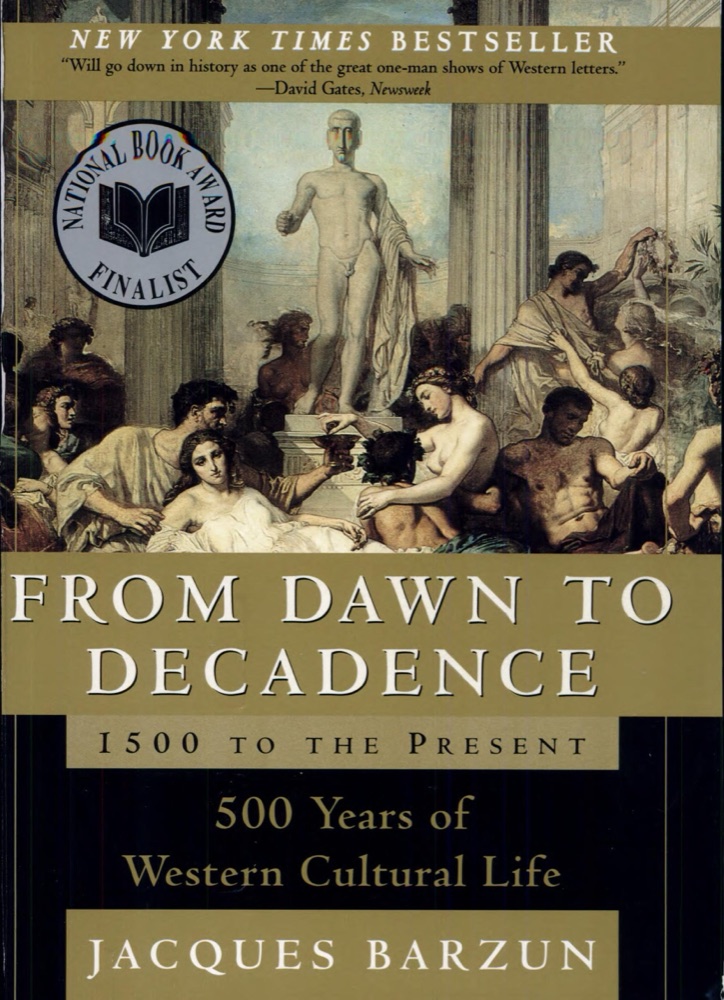
Highly regarded here and abroad for some thirty works of cultural history and criticism, master historian Jacques Barzun has now set down in one continuous narrative the sum of his discoveries and conclusions about the whole of Western culture since 1500.
In this account, Barzun describes what Western Man wrought from the Renaisance and Reformation down to the present in the double light of its own time and our pressing concerns. He introduces characters and incidents with his unusual literary style and grace, bringing to the fore those that have "Puritans as Democrats," "The Monarch's Revolution," "The Artist Prophet and Jester" -- show the recurrent role of great themes throughout the eras.
The triumphs and defeats of five hundred years form an inspiring saga that modifies the current impression of one long tale of oppression by white European males. Women and their deeds are pro
Book details
- First published
- 2000
- Author
- Jacques Barzun
- Genre
- History
- Goodreads rating
- 4.14 (5k ratings)
Keep reading
The Closing of the American Mind
 When I Was a Child I Read Books
 What's Wrong with the World
 Heretics
 The Will to Power
 The Discovery of India
 Daybreak: Thoughts on the Prejudices of Morality
 Human, All Too Human
 After Virtue
 Dialectic of Enlightenment: Philosophical Fragments
 A History of Western Philosophy
 Last and First Men
 The Blank Slate: The Modern Denial of Human Nature
 Enlightenment Now: The Case for Reason, Science, Humanism, and Progress
 How Should We Then Live? The Rise and Decline of Western Thought and Culture
 The Swerve: How the World Became Modern
 Brave New World Revisited
 The Discarded Image: An Introduction to Medieval and Renaissance Literature
 Arguably: Selected Essays
 Philosophical Dictionary
 The Lessons of History
 The Better Angels of Our Nature: Why Violence Has Declined
 Walden Two
 The Republic
 The Occult
 Our Oriental Heritage
 The Crisis of the Modern World
 Too Like the Lightning
 Persian Letters
 Reflections on the Revolution in France
 The Futurological Congress: From the Memoirs of Ijon Tichy
 Irrational Man: A Study in Existential Philosophy
 Erewhon
 Cultural Amnesia: Necessary Memories from History and the Arts
 The Education of Henry Adams
 The Ascent of Man
 The Shock of the New
 The Story of Philosophy: The Lives and Opinions of the World's Greatest Philosophers
 The Everlasting Man
 Lila: An Inquiry Into Morals
 The Magic Mountain
 Genesis
 The Abolition of Man
 The Essays of Ralph Waldo Emerson
 Civilization: The West and the Rest
 The Soul of Man Under Socialism
 A Treatise of Human Nature
 In Praise of Idleness and Other Essays
 Skinny Legs and All
 The Meaning of It All: Thoughts of a Citizen-Scientist
 Complete Works of Oscar Wilde
 The Future of an Illusion
 The Greek Way
 Anti-Intellectualism in American Life
 Life at the Bottom: The Worldview That Makes the Underclass
 Amusing Ourselves to Death: Public Discourse in the Age of Show Business
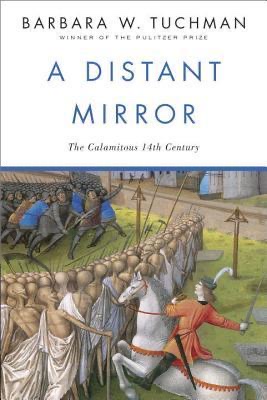 A Distant Mirror: The Calamitous 14th Century
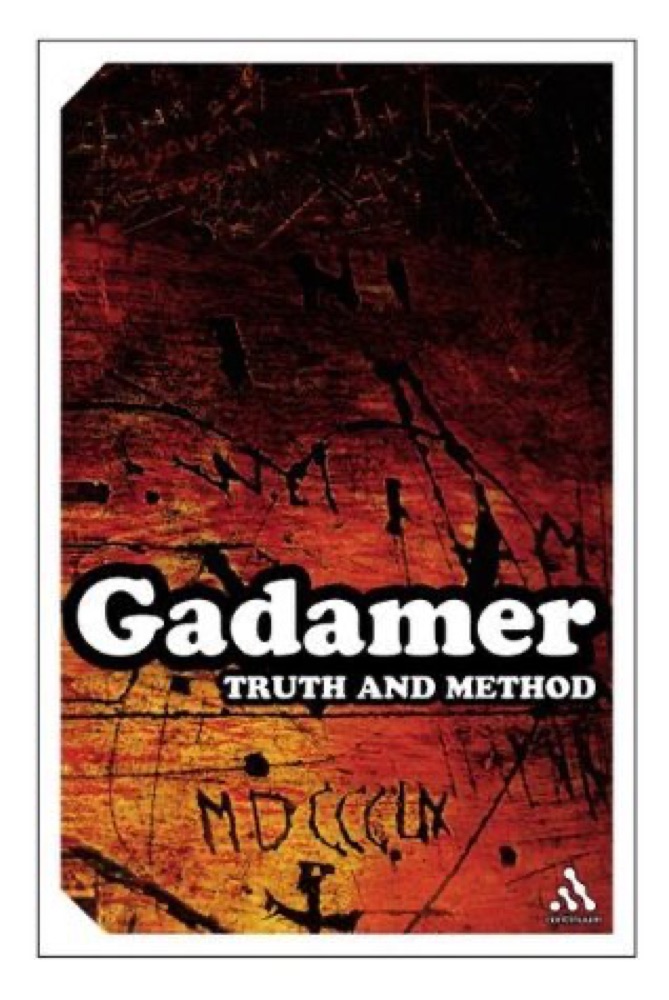 Truth and Method
 Human Action: A Treatise on Economics
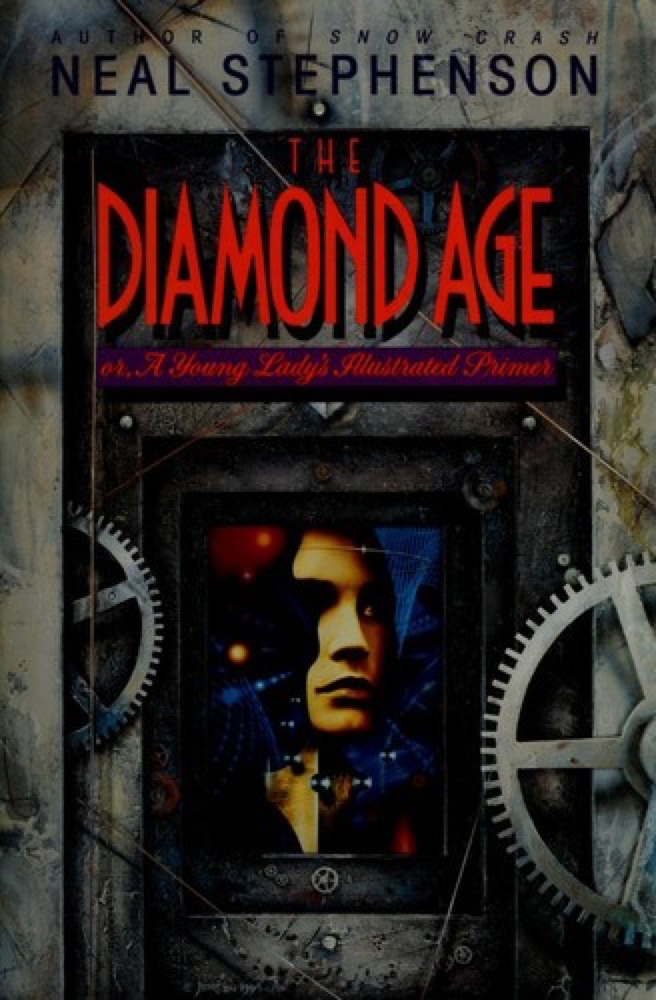 The Diamond Age