
 The Mosquito Coast
Quotes from the Book
Huai’an, which was on the Grand Canal.
Mongols had been Chinese emperors—the Manchus were a Mongol dynasty.
I was happier than I had been since starting this trop on The Iron Rooster. I was driving. I was in charge. I was taking my time; and Tibet was empty. The weather was dramatic-snow on the hills, a high wind, and black clouds piled up on the mountains ahead. I also thought: I didn't die the other day.
I was aware that in handing these pictures out I was breaking the law. But what the hell. They had nuisance value. They made the Tibetans happy.
Nothing is stranger than being in a fairly bad place and being told that another place-your destination-is a great deal worse.
When I considered that it was still illegal for a foreigner to talk at random with any Chinese citizen-the old rule was seldom enforced, but it was a well-known rule nonetheless-I was grateful for this frankness. The healthiest sign in China was this straight talk.
Most intellectuals were sent into the countryside-to farms and into the mountains. They went to the most backward provinces, like Qinghai, Ningxia and Gansu. And Mongolia. Lots of intellectuals ended up in Mongolia. They had to suffer.
Transportation in China is always crowded; it is nearly always uncomfortable; it is often a struggle.
the predominating characteristic of the Chinese was stoicism
Primeval forest,' he said. 'Original forest.' 'Wouldn't you like to build a house here and live alone with your wife?' 'Yes,' he said. 'Have a family and write something-poems and stories.' 'Maybe have four children.' 'It is not permitted,' he said. Then he smiled. 'But this is so far they wouldn't know. It wouldn't matter. Yes, I would like that.
I often had the feeling that it was the old immemorial Confucian family that had kept China orderly. Mao had attacked the family-the Cultural Revolution was intentionally an assault on the family system, when children were told to rat on their bourgeois parents. But that had faltered and failed. The family had endured
Using an extremely clever if somewhat fanciful Chinese technique for ensnaring awkward visitors, they insisted that I was too important to travel alone and so stuck me with Mr. Fang.
It is wrong to see a country in a bad mood: you begin to blame the country for your mood and to draw the wrong conclusions.
He had been sent to nanny me and breathe down my neck. He had been discreet-he had not gotten in my way; but who had asked him to come? Not me.
I told him to tell the truth,' Mr. Fang said. 'It is important to know the truth about the Cultural Revolution. Foreigners must be told. We must face the facts. It was a disaster ...
Xian was one of the few exceptions I found. It was genuinely interesting and pretty, and rather a stately and dignified place
I found my berth and discovered that no one else was going to Xian. The sleeper was empty. This was the rarest situation on a Chinese train, and one to be relished. Such circumstances were almost luxurious and definitely cozy.
The Peace Corps was innocent and inefficient
I could tell he was worried by what I would ask to do next. I spent the rest of the day trying to elude him and his deputy, and at last, in the market, I succeeded. It was late in the afternoon. We were all (Mr. Fang, his deputy, the driver and I) admiring a stack of vegetables, and when I saw they were transfixed by a shaggy mound of blue cabbages I slipped away.
Where are you going, Mr. Paul?' 'For a walk.' Mr. Fang conferred with his Hothot deputy. My walk was given official sanction, and I was driven about a hundred yards to the People's Park and released.
How many Muslims are there here?' I asked a man in a skullcap. 'Thousands.' 'Have any been to Mecca?' 'One,' he said. 'The government sent him last year.
If he doesn't talk to me, and he doesn't walk around with me, and he doesn't travel in the same compartment,' I said, 'I don't understand why he wants to come with me.' 'To make sure you are comfortable. Hospitality. You are our guest ...
Lom mister,' he said, and winked at me. 'It's the CIA, isn't it? You're an agent, you tell people you're a journalist because that's good cover ...
What could be crueler? I suppose the answer was: lots of things-an intellectual forced to shovel chicken shit, a Muslim forced to keep pigs, a physicist ordered to assemble radios, an historian in a dunce cap, a person beaten to death for being a teacher.
It was always like a fire drill, getting on or off a Chinese train, with people panting and pushing
Here at Sudan the students humiliated their teachers,' she said. 'But in the high schools it was not unknown for students to beat their teachers to death.
He said that he believe that Nixon's visit to China had something to do with his release, because some of the people accompanying Nixon in 1972 showed an interest in political prisoners and had asked to visit prisons. 'Usually, we got one thin slice of meat a week. If the wind was strong it blew away. But just before President Nixon's visit we started to get three pieces. The prison guards were afraid that he might visit and ask how we were being treated.
... nothing is more indicative of a war going badly than valiant propaganda ... Anything officially denied was probably a fact.
Chinese blaming is always reserved for the higher-ups: underlings are always innocent. That was how they had been able to cope with the monstrous guilt in the aftermath of the Cultural Revolution.
Watch on YouTube
About Paul Theroux
We have collected 168 quotes from 8 books by Paul Theroux on BookQuoters.
More about the author →More by Paul Theroux
The Mosquito Coast
 The Great Railway Bazaar
 The Old Patagonian Express: By Train Through the Americas
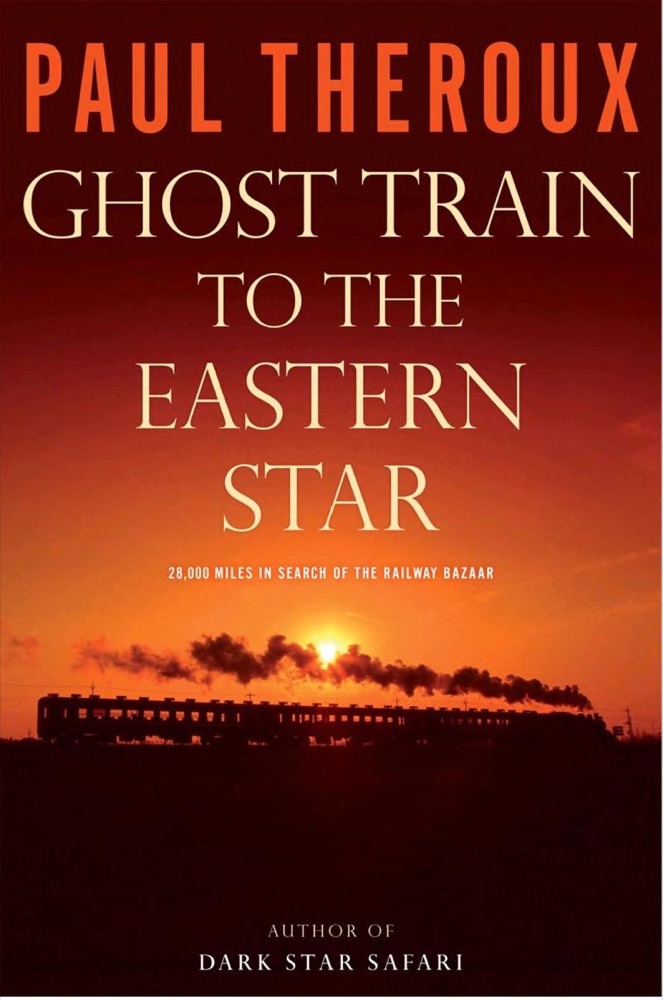 Ghost Train to the Eastern Star
About the book
Paul Theroux invites you to join him on the journey of a lifetime, in the grand romantic tradition, by train across Europe, through the vast underbelly of Asia and in the heart of Russia, and then up to China. Here is China by rail, as seen and heard through the eyes and ears of one of the most intrepid and insightful travel writers of our time.
Book details
- First published
- 1988
- Author
- Paul Theroux
- Genre
- Nonfiction
- Goodreads rating
- 4.04 (10k ratings)
Keep reading
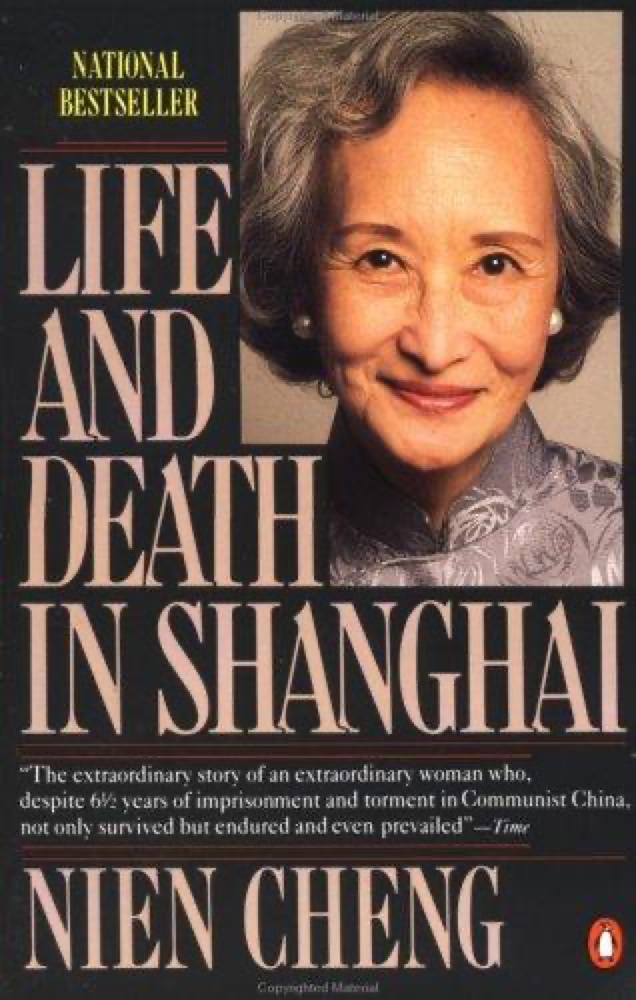 Life and Death in Shanghai
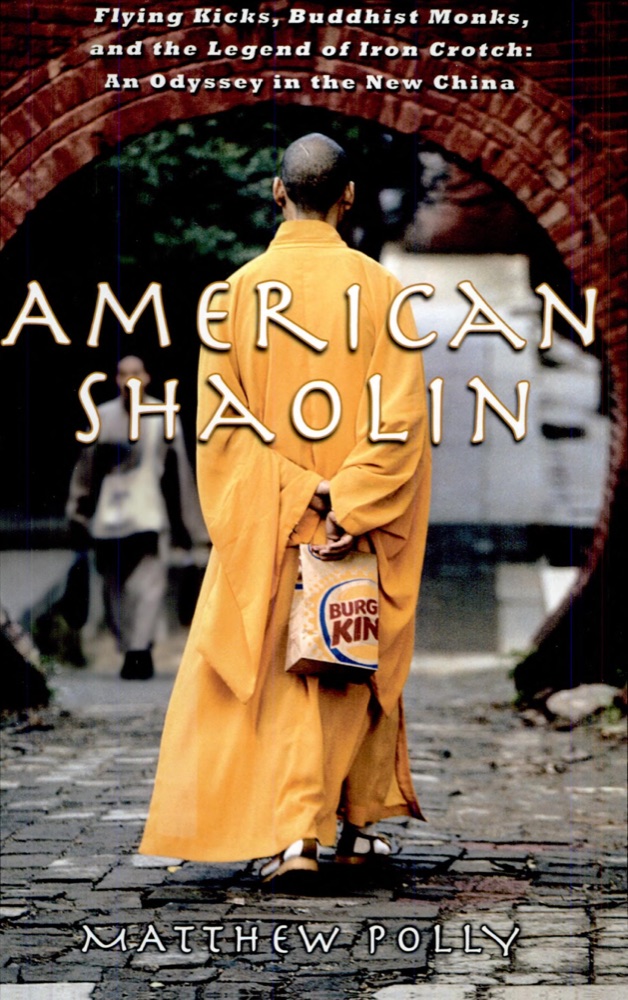 American Shaolin: Flying Kicks, Buddhist Monks, and the Legend of Iron Crotch: An Odyssey in the New China
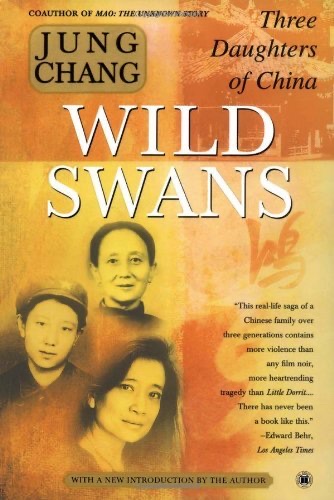 Wild Swans: Three Daughters of China
 River of Smoke
 Twenty Fragments of a Ravenous Youth
 The Girl with Seven Names: A North Korean Defector’s Story
 Guardian: Zhen Hun (Novel) Vol. 3
 Where the Wind Leads: A Refugee Family's Miraculous Story of Loss, Rescue, and Redemption
 Interesting Times
 The Aquariums of Pyongyang: Ten Years in the North Korean Gulag
 Red Dust: A Path Through China
 A Bend in the River
 Reamde
 The Bedlam Stacks
 Another Country
The Great Railway Bazaar
Another Country
The Great Railway Bazaar
 Travels with Myself and Another
 Tigerman
 Neither Here nor There: Travels in Europe
 The White Tiger
Ghost Train to the Eastern Star
The White Tiger
Ghost Train to the Eastern Star
 Without You, There Is No Us: My Time with the Sons of North Korea's Elite
 Roughing It
 The Innocents Abroad
The Old Patagonian Express: By Train Through the Americas
The Innocents Abroad
The Old Patagonian Express: By Train Through the Americas
 Lost Horizon
 The Honourable Schoolboy
 The Beach
 Radio Free Albemuth
 Go
Go
 Stasiland: Stories from Behind the Berlin Wall
 The Long Dark Tea-Time of the Soul
 The Secret Piano: From Mao's Labor Camps to Bach's Goldberg Variations
 Pachinko
 Border: A Journey to the Edge of Europe
 Our Country Friends
 The Hanging Tree
 Strange Beasts of China
 City of Thieves
 The Day of the Scorpion
 The Gulag Archipelago 1918-1956
 The Tainted Cup
 The Accidental Tourist
 Shooting an Elephant
 Embassytown
 A Tramp Abroad
 CryoBurn
 The Shadow Land
 Fragrant Harbor
 The Cat's Table
 The Complete Saki
 The Ghost Bride
 One Day in the Life of Ivan Denisovich
 The Orphan Master's Son
 The Spy Who Came In from the Cold
 The Fat Years
 Raven Stratagem
 The Third Policeman
 The Little Drummer Girl
 The Spirit Catches You and You Fall Down: A Hmong Child, Her American Doctors, and the Collision of Two Cultures