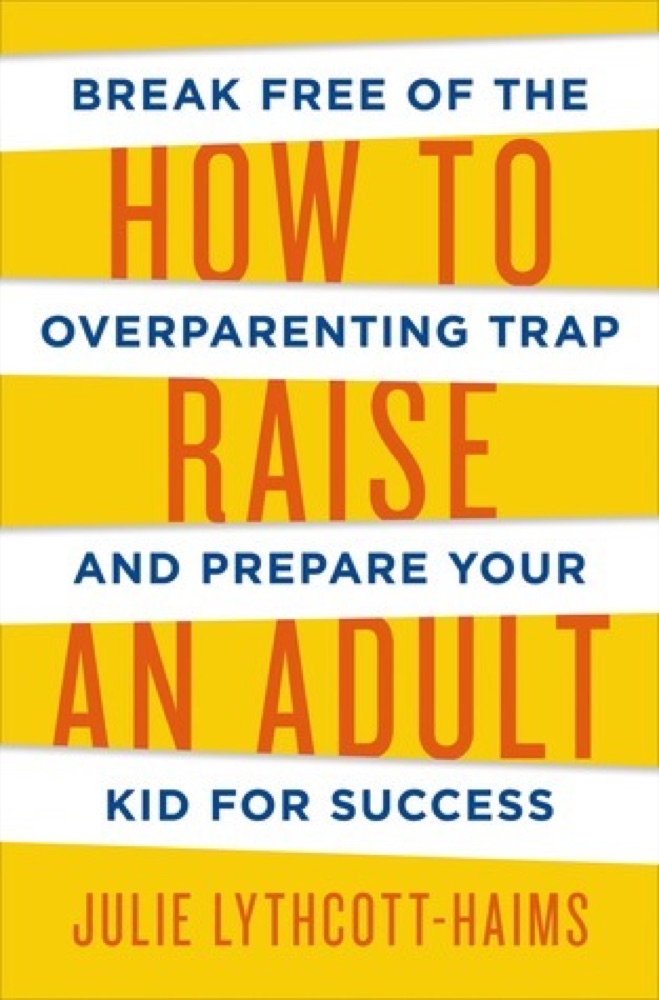
 How to Raise an Adult: Break Free of the Overparenting Trap and Prepare Your Kid for Success
Quotes from the Book
Our children cannot be assumed to follow in our footsteps, assuage our losses, or compensate for our inadequacies.
7
We need to always deal with the child in front of us, not the child of our fantasies.
5
Intrusion and support are two fundamentally different processes: support is about the needs of the child, intrusion is about the needs of the parent. This
Working primarily to please others and to gain their approval takes time and energy away from children’s real job of figuring out their authentic talents, skills, and interests.
the development of a sense of self.
While most research has focused on the value of maternal warmth, there is a growing body of evidence indicating that the warmth and acceptance shown by fathers, who are generally less involved in daily childcare, make a significant contribution to their children’s (especially their teenagers’) well-being. Feeling accepted by Dad appears to be particularly important when it comes to grades and conduct.7 This may be because a child has fewer interactions with Dad, so that each one takes on a heightened meaning, or because father’s approval tends to be more conditional, depending on how well the adolescent has performed. In any event, a father’s warmth and acceptance are strong predictors of academic success, social competence, and a low incidence of conduct problems in adolescence.
The fact that the stakes are higher is all the more reason to provide teenagers with as many opportunities as possible to make their own decisions and learn from the consequences. Just as it was critical for the toddler to fumble with her shoelaces before mastering the art of shoelace tying, so is it critical for the adolescent to fumble with difficult tasks and choices in order to master the art of making independent, healthy, moral decisions that can be called upon in the absence of parents’ directives. We all want our children to put their best foot forward. But in childhood and adolescence, sometimes the best foot is the one that is stumbled on, providing an opportunity for the child to learn how to regain balance, and right himself.
the basis of all true learning.
Children need work experiences to develop a sense that success is a function of their own efforts.
When a subculture is heading in the wrong direction, it is up to the adults of the larger culture to steer it back in the right direction.
Perhaps the single most important ritual a family can observe is having dinner together.
there is an inverse relationship between income and closeness to parents.
It is when a parent’s love is experienced as conditional on achievement that children are at risk for serious emotional problems.
Powersnoop,” as one of my wry young patients calls it,
It is now clear, however, that children of privilege are exhibiting unexpectedly high rates of emotional problems beginning in junior high school and accelerating throughout adolescence.
advantages, they experience among the highest rates of depression, substance abuse, anxiety disorders, somatic complaints, and unhappiness of any group of children in this country.
Researchers, led by Dr. Suniya Luthar of Columbia University’s Teachers College, have found that America has a new group of “at-risk” kids, or, more accurately, a previously unrecognized and unstudied group of at-risk kids. They defy the stereotypes commonly associated with the term “at-risk.” They are not inner-city kids growing up in harsh and unforgiving circumstances. They do not have empty refrigerators in their kitchens, roaches in their homes, metal detectors in their schools, or killings in their neighborhoods. America’s newly identified at-risk group is preteens and teens from affluent, well-educated families. In spite of their economic and social
When we protect our children from excessive control, outsized competition, and persistent academic pressure, and choose instead to commit to nurturing them with warmth, clear limits, firm consequences, and a delight in their potential and uniqueness, then our children are free to return to their essential task—the development of a sense of self, sufficiently robust to weather the inevitable ups and downs of a lifetime.
Adolescents need tremendous support as they go about the task of figuring out their identities, their future selves. Too often what they get is intrusion. Intrusion and support are two fundamentally different processes: support is about the needs of the child, intrusion is about the needs of the parent.
outgrowth of materialism is the notion that there are “winners” and “losers,” the “haves” and the “have-nots.” Parents need to check in with themselves regularly and avoid endorsing values that pit children against each other or suggest that resources are so scarce that children must be in constant competition.
Watch on YouTube
About Madeline Levine
About the book
In this ground-breaking book on the children of affluence, a well-known clinical psychologist exposes the epidemic of emotional problems that are disabling America’s privileged youth, thanks, in large part, to normalized, intrusive parenting that stunts the crucial development of the self. In recent years, numerous studies have shown that bright, charming, seemingly confident and socially skilled teenagers from affluent, loving families are experiencing epidemic rates of depression, substance abuse, and anxiety disorders—rates higher than in any other socioeconomic group of American adolescents. Materialism, pressure to achieve, perfectionism, and disconnection are combining to create a perfect storm that is devastating children of privilege and their parents alike. In this eye-opening, provocative, and essential book, clinical psychologist Madeline Levine explodes one child-rearing myth
Book details
- First published
- 2006
- Author
- Madeline Levine
- Genre
- Nonfiction
- Goodreads rating
- 3.89 (3k ratings)
Keep reading
How to Raise an Adult: Break Free of the Overparenting Trap and Prepare Your Kid for Success
 The Gift of Failure: How the Best Parents Learn to Let Go So Their Children Can Succeed
 The Collapse of Parenting: How We Hurt Our Kids When We Treat Them Like Grown-Ups
 The Danish Way of Parenting: What the Happiest People in the World Know About Raising Confident, Capable Kids
 The Anxious Generation: How the Great Rewiring of Childhood Caused an Epidemic of Mental Illness
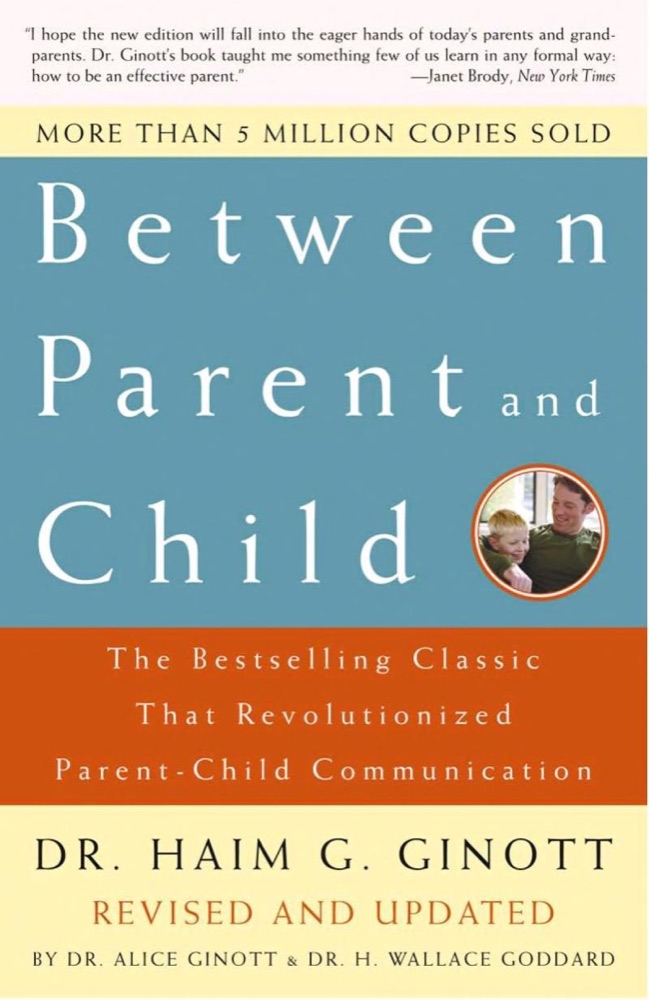 Between Parent and Child
 All Joy and No Fun: The Paradox of Modern Parenthood
 Scattered Minds: The Origins and Healing of Attention Deficit Disorder
 NurtureShock: New Thinking About Children
 Parent Effectiveness Training: The Proven Program for Raising Responsible Children
 Toxic Parents: Overcoming Their Hurtful Legacy and Reclaiming Your Life
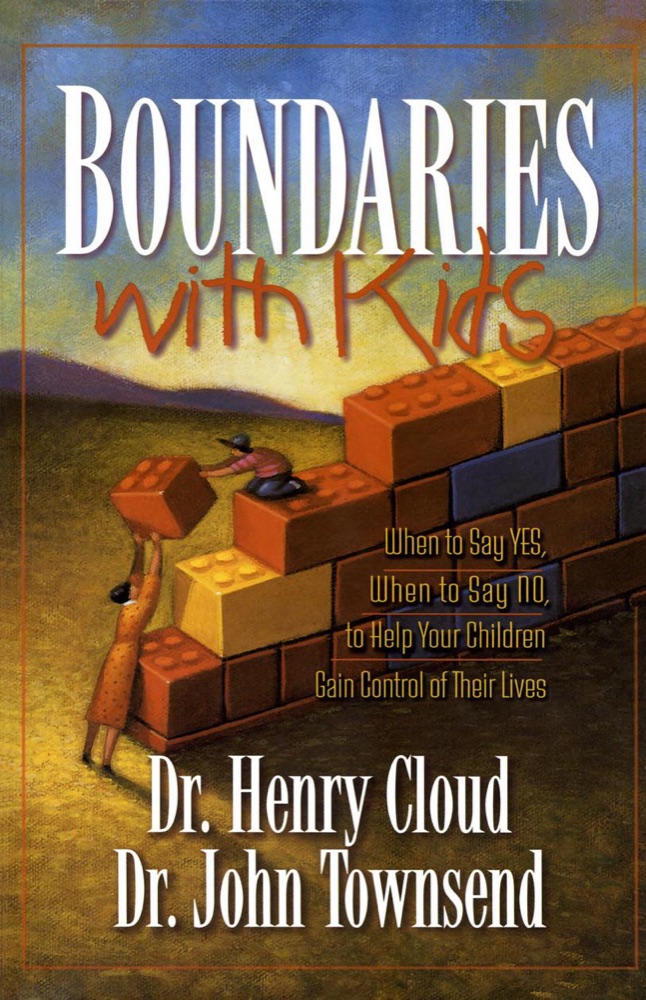 Boundaries with Kids: How Healthy Choices Grow Healthy Children
 The Drama of the Gifted Child: The Search for the True Self
 Coming Apart: The State of White America, 1960-2010
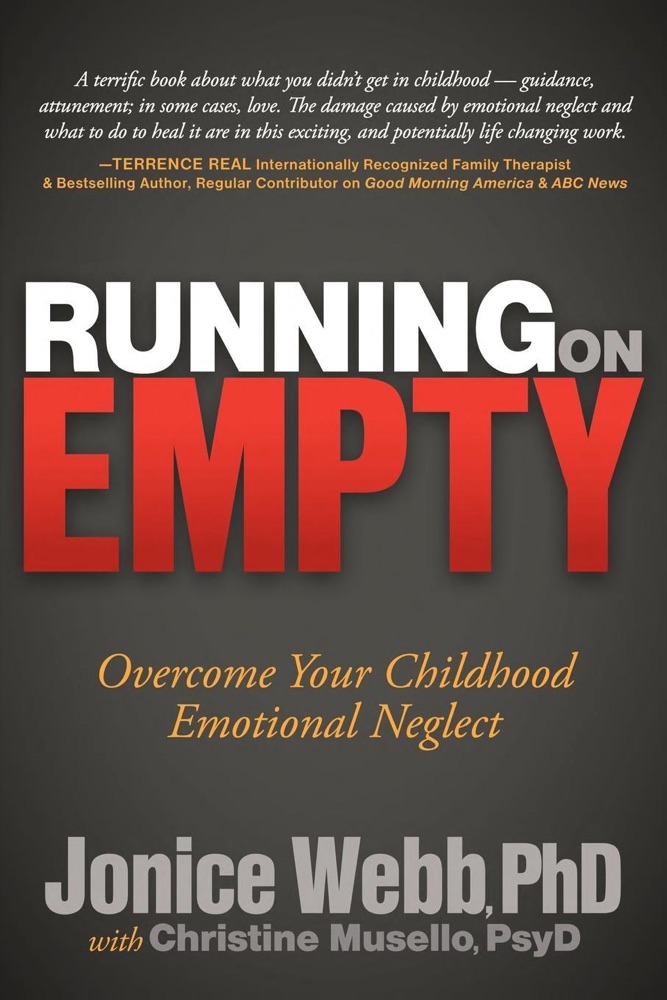 Running on Empty: Overcome Your Childhood Emotional Neglect
![The Book You Wish Your Parents Had Read [and Your Children Will Be Glad That You Did]](/i/book/g/63/the-book-you-wish-your-parents-had-read-and-your-children-will-be-glad-that-you-did.jpg) The Book You Wish Your Parents Had Read [and Your Children Will Be Glad That You Did]
The Book You Wish Your Parents Had Read [and Your Children Will Be Glad That You Did]
 Simplicity Parenting: Using the Extraordinary Power of Less to Raise Calmer, Happier, and More Secure Kids
 The Awakened Family: A Revolution in Parenting
 The Vanishing American Adult: Our Coming-of-Age Crisis—and How to Rebuild a Culture of Self-Reliance
 A Beautiful Day in the Neighborhood: The Poetry of Mister Rogers
 This Is What Inequality Looks Like
 The Boy Who Was Raised as a Dog: And Other Stories from a Child Psychiatrist's Notebook
 For Your Own Good: Hidden Cruelty in Child-Rearing and the Roots of Violence
 The Blessing of a Skinned Knee: Using Jewish Teachings to Raise Self-Reliant Children
 The Social Animal: The Hidden Sources of Love, Character, and Achievement
 Troubled: A Memoir of Foster Care, Family, and Social Class
 The Conscious Parent: Transforming Ourselves, Empowering Our Children
 The Absorbent Mind
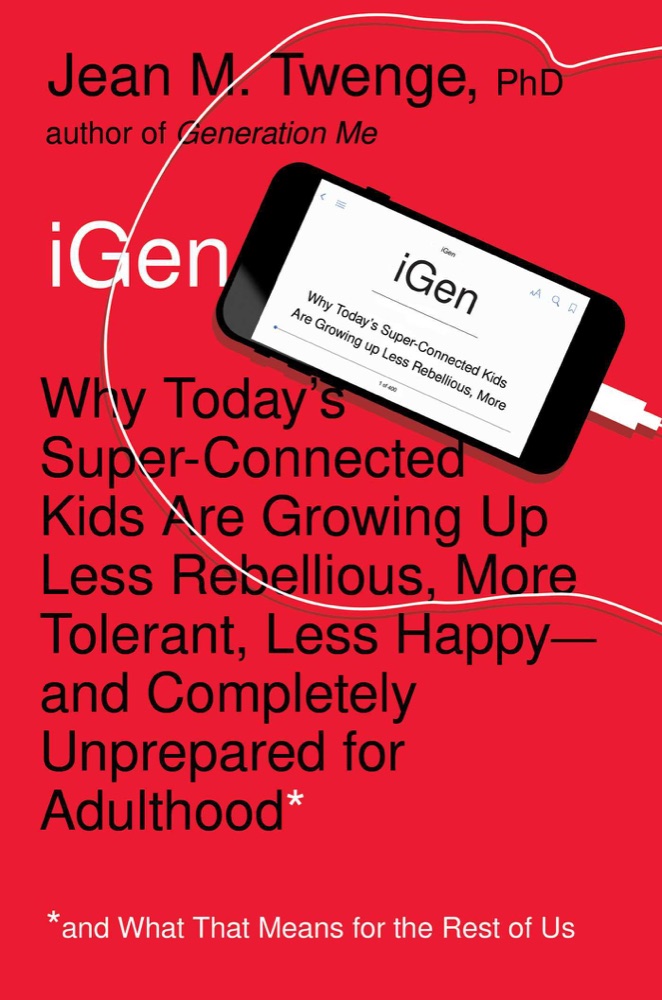 iGen: Why Today’s Super-Connected Kids Are Growing Up Less Rebellious, More Tolerant, Less Happy--and Completely Unprepared for Adulthood--and What That Means for the Rest of Us
 What Made Maddy Run: The Secret Struggles and Tragic Death of an All-American Teen
 The Geeks Shall Inherit the Earth: Popularity, Quirk Theory and Why Outsiders Thrive After High School
 Far from the Tree: Parents, Children, and the Search for Identity
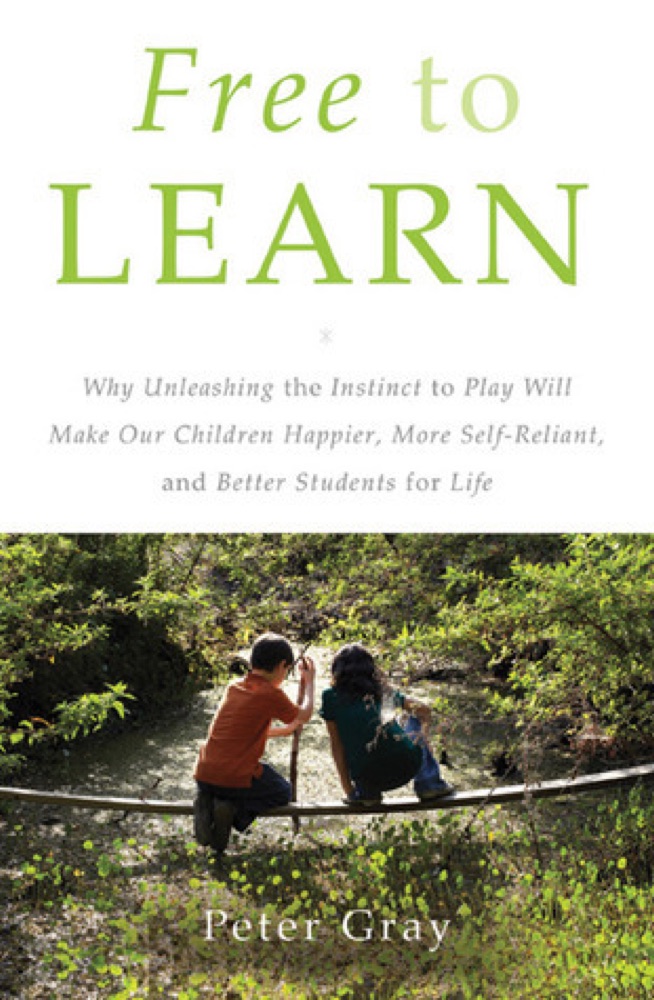 Free to Learn: Why Unleashing the Instinct to Play Will Make Our Children Happier, More Self-Reliant, and Better Students for Life
 Montessori from the Start: The Child at Home, from Birth to Age Three
 Shepherding a Child's Heart
 Punished by Rewards: The Trouble with Gold Stars, Incentive Plans, A's, Praise and Other Bribes
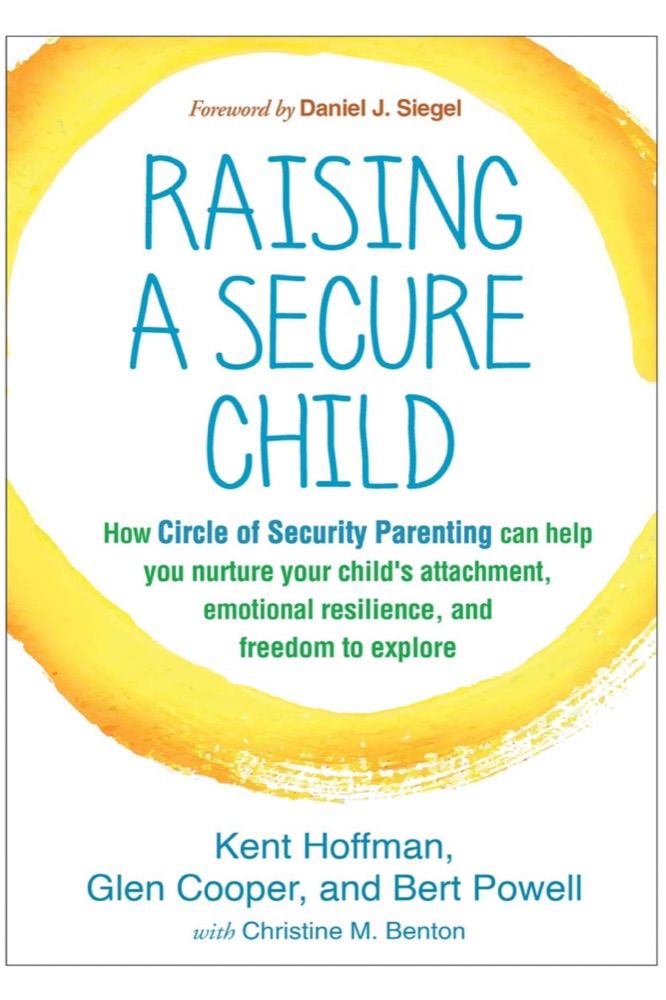 Raising a Secure Child: How Circle of Security Parenting Can Help You Nurture Your Child's Attachment, Emotional Resilience, and Freedom to Explore
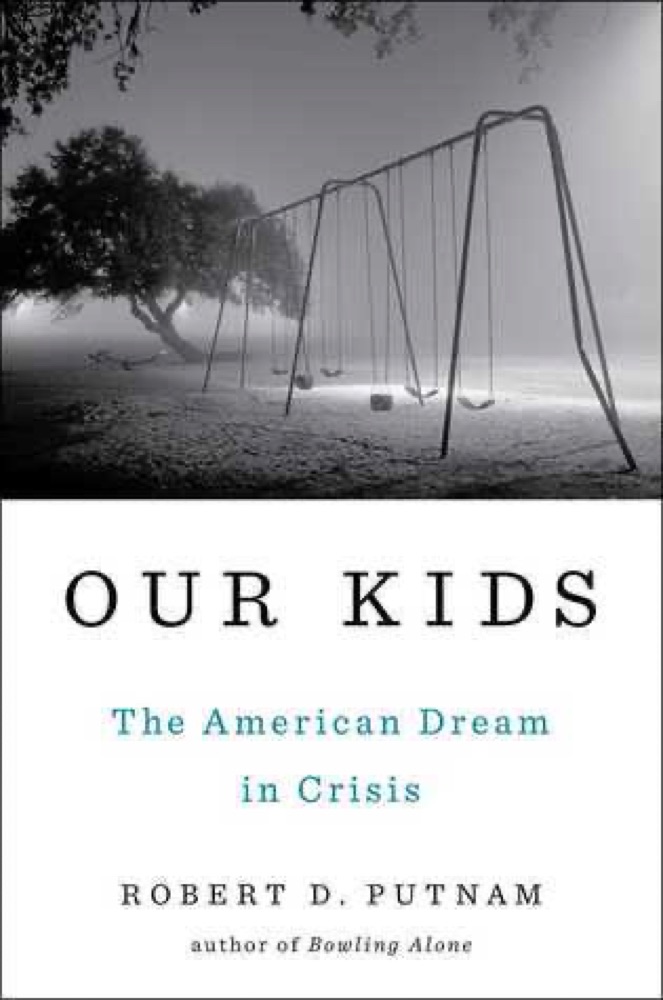 Our Kids: The American Dream in Crisis
 The Brave Learner: Finding Everyday Magic in Homeschool, Learning, and Life
 Excellent Sheep: The Miseducation of the American Elite and the Way to a Meaningful Life
 Social Intelligence: The New Science of Human Relationships
 How to Talk So Little Kids Will Listen: A Survival Guide to Life with Children Ages 2-7
 David and Goliath: Underdogs, Misfits, and the Art of Battling Giants
 Kids These Days: Human Capital and the Making of Millennials
 Dibs in Search of Self
 It Didn't Start with You: How Inherited Family Trauma Shapes Who We Are and How to End the Cycle
 Different, Not Less: A Neurodivergent's Guide to Embracing Your True Self and Finding Your Happily Ever After
 The Coddling of the American Mind: How Good Intentions and Bad Ideas Are Setting up a Generation for Failure
 Social: Why Our Brains Are Wired to Connect
 The Wild and Free Family: Forging Your Own Path to a Life Full of Wonder, Adventure, and Connection
 Momma Cusses
 How to Talk So Kids Will Listen & Listen So Kids Will Talk
 Good Morning, Monster: A Therapist Shares Five Heroic Stories of Emotional Recovery
 All Is Not Forgotten
 Playful Parenting: An Exciting New Approach to Raising Children That Will Help You Nurture Close Connections, Solve Behavior Problems, and Encourage Confidence
 Passages: Predictable Crises of Adult Life
 The Element: How Finding Your Passion Changes Everything
 The Measure of a Man: A Spiritual Autobiography