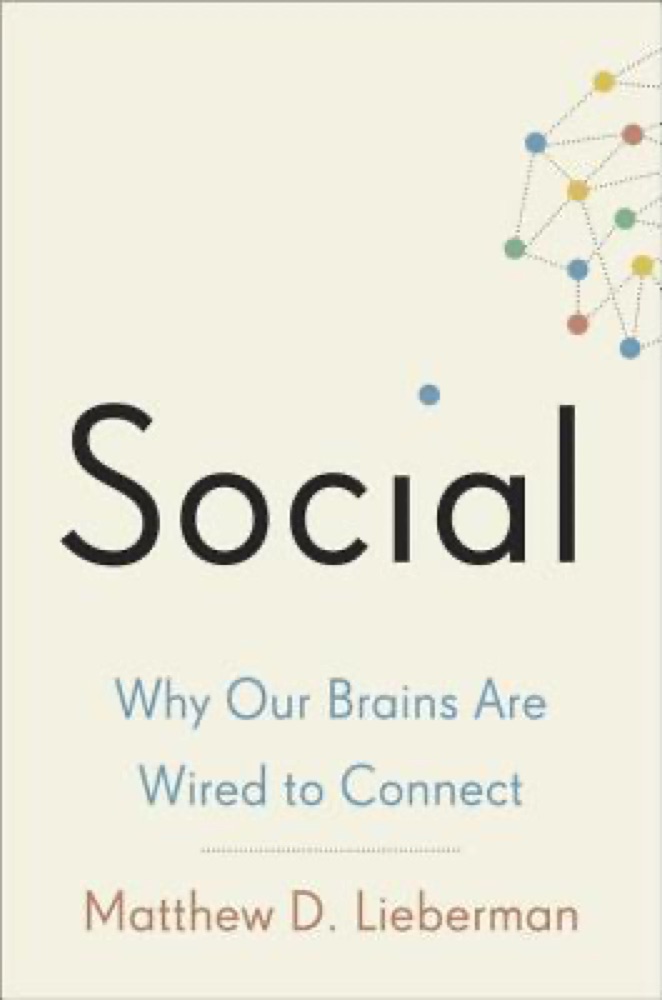

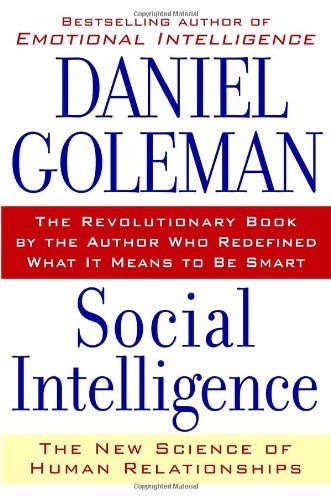
 Social Intelligence: The New Science of Human Relationships
Quotes from the Book
It’s hard to find meaning in what we do if at some level it doesn’t help someone else or make someone happier.
8
Somewhere along the line, the pursuit of happiness got confused with the pursuit of income and career advancement.
7
Although I was deliberately dismissive of this idea at the beginning of the chapter, the real answer is, “Well, yes, sort of.” Nathan DeWall, together with Naomi Eisenberger and other social rejection researchers, conducted a series of studies to test out the idea that over-the-counter painkillers would reduce social pain, not just physical pain. In the first study, they looked at two groups of people. Half of them took 1,000 milligrams a day of acetaminophen (that is, Tylenol), and half of them took equivalently sized placebo pills with no active substances in them. Both groups took their pills every day for three weeks. Each night, the participants answered questions by e-mail regarding the amount of social pain they had felt that day. By the ninth day of the study, the Tylenol group was reporting feeling less social pain than the placebo group.
4
To me the most troubling statistics focus on our friendships. In a survey given in 1985, people were asked to list their friends in response to the question “Over the last six months, who are the people with whom you discussed matters important to you?” The most common number of friends listed was three; 59 percent of respondents listed three or more friends fitting this description. The same survey was given again in 2004. This time the most common number of friends listed was zero. And only 37 percent of respondents listed three or more friends. Back in 1985, only 10 percent indicated that they had zero confidants. In 2004, this number skyrocketed to 25 percent. One out of every four of us is walking around with no one to share our lives with. Being social makes our lives better. Yet every indication is that we are getting less social, not more.
3
Living for others [is] such a relief from the impossible task of trying to satisfy oneself.
2
We intuitively believe social and physical pain are radically different kinds of experiences, yet the way our brains treat them suggests that they are more similar than we imagine.
2
From the perspective of well-being, the government’s interest in increased consumerism is largely a Ponzi scheme—it promises increased happiness but doesn’t deliver.
2
The fact that mammalian crying serves as a cue for maternal support, rather than as a dinner bell, is a major evolutionary difference.
2
In the United States, we spend more on public education (kindergarten through twelfth grade) than nearly any other country (more than $800 billion per year). And yet international comparisons suggest that our students are lagging behind most industrialized nations in math, science, and reading. Out of 34 comparison countries, U.S. students rank twenty-fifth in math, seventeenth in science, and fourteenth in reading. This means that as a country, we are getting a lousy return on our investment in education.
1
As we have said from the beginning, we think people are built to maximize their own pleasure and minimize their own pain. In reality, we are actually built to overcome our own pleasure and increase our own pain in the service of following society’s norms.
1
How many people devote countless hours of effort, requiring deep reservoirs of self-control, in order to get into medical school, where even greater self-control is required to make it through the internships and residencies, only to find out that being a doctor does not make them terribly happy. Fewer than half of the doctors in the United States say they would choose the same career if they had it to do over.
1
socially connected will be a lifelong need, like food and warmth.
1
If a stranger saying we are "dependable" activates the reward system, imagine what praise from a boss, a parent, or even an unaccomplished slightly older graduate student will do. Of course, we all know that praise is a good thing, as long as it isn't too unconditional, but until very recently, we had no idea that praise taps into the same reinforcement system in the brain that enables cheese to help rats learn to solve mazes. And positive social regard is a renewable resource. Rather than having less of something after using it, when we let others know we value them, both parties have more.
1
In Eastern cultures, it is generally accepted that only by being sensitive to what others are thinking and doing can we successfully harmonize with one another so that we may achieve more together than we can as individuals.
The principle of reciprocity is one of the strongest social norms we have. If someone does you a favor, you feel obligated to return the favor at some point, and with strangers we actually feel a bit anxious until we have repaid this debt. This is why car salesmen will always offer you a cup of coffee. By performing a small favor for you, they render you indebted to them, and the only thing you can really do for them in return is buy a car, yielding a commission worth far more than that cup of coffee.
If you are distressed by anything external, the pain is not due to the thing itself but to your estimate of it; and this you have the power to revoke at any moment.” My
Watch on YouTube
About Matthew D. Lieberman
We have collected 16 quotes from 1 book by Matthew D. Lieberman on BookQuoters.
More about the author →About the book
GOOD-to-VERY-GOOD HARDBACK-WITH-DUSTJACKET
Book details
- First published
- 2013
- Author
- Matthew D. Lieberman
- Genre
- Nonfiction
- Goodreads rating
- 4.06 (3k ratings)
Keep reading
Social Intelligence: The New Science of Human Relationships
 Predictably Irrational: The Hidden Forces That Shape Our Decisions
 The Social Animal: The Hidden Sources of Love, Character, and Achievement
 Stumbling on Happiness
 The Happiness Hypothesis: Finding Modern Truth in Ancient Wisdom
 Ethics for the New Millennium
 The Elephant in the Brain: Hidden Motives in Everyday Life
 Bright-Sided: How the Relentless Promotion of Positive Thinking Has Undermined America
 Platonic: How the Science of Attachment Can Help You Make—and Keep—Friends
 Be a People Person
 The Happiness Advantage: The Seven Principles of Positive Psychology That Fuel Success and Performance at Work
 The School of Life: An Emotional Education
 Dopamine Nation: Finding Balance in the Age of Indulgence
 Nonviolent Communication: A Language of Life
 The Subtle Art of Not Giving a F*ck: A Counterintuitive Approach to Living a Good Life
 The World According to Mister Rogers: Important Things to Remember
 Finding Flow: The Psychology of Engagement with Everyday Life
 Status Anxiety
 Selfie: How the West Became Self-Obsessed
 Toward a Psychology of Being
 We Learn Nothing
 Together: Why Social Connection Holds the Key to Better Health, Higher Performance, and Greater Happiness
 Happiness Is a Serious Problem: A Human Nature Repair Manual
 Drive: The Surprising Truth About What Motivates Us
 Flow: The Psychology of Optimal Experience
 The Black Swan: The Impact of the Highly Improbable
 The Age of Magical Overthinking: Notes on Modern Irrationality
 The How of Happiness: A Scientific Approach to Getting the Life You Want
 Tribe: On Homecoming and Belonging
 Atlas of the Heart: Mapping Meaningful Connection and the Language of Human Experience
 A Hunter-Gatherer's Guide to the 21st Century: Evolution and the Challenges of Modern Life
 The Laws of Human Nature
 A Complaint Free World: How to Stop Complaining and Start Enjoying the Life You Always Wanted
 The Art of Happiness
 Notes on a Nervous Planet
 Maybe You Should Talk to Someone: A Therapist, Her Therapist, and Our Lives Revealed
 Barking Up the Wrong Tree: The Surprising Science Behind Why Everything You Know About Success Is (Mostly) Wrong
 Scarcity Brain: Fix Your Craving Mindset and Rewire Your Habits to Thrive with Enough
 Punished by Rewards: The Trouble with Gold Stars, Incentive Plans, A's, Praise and Other Bribes
 Burnout: The Secret to Unlocking the Stress Cycle
 Good Reasons for Bad Feelings: Insights from the Frontier of Evolutionary Psychiatry
 Humankind: A Hopeful History
 The Tipping Point: How Little Things Can Make a Big Difference
 The Antidote: Happiness for People Who Can't Stand Positive Thinking
 How to See Yourself As You Really Are
 Why Has Nobody Told Me This Before?
 Antifragile: Things That Gain from Disorder
 The 7 Habits of Highly Effective People: Personal Workbook
 Lost Connections: Uncovering the Real Causes of Depression - and the Unexpected Solutions
 Build the Life You Want: The Art and Science of Getting Happier
 The Anxious Generation: How the Great Rewiring of Childhood Caused an Epidemic of Mental Illness
 Everything Is F*cked: A Book About Hope
 The Things You Can See Only When You Slow Down: How to Be Calm in a Busy World
 The Moral Animal: Why We Are the Way We Are - The New Science of Evolutionary Psychology
 The Happiness Equation: Want Nothing + Do Anything = Have Everything
 Natural Causes: An Epidemic of Wellness, the Certainty of Dying, and Killing Ourselves to Live Longer
 Even Cowgirls Get the Blues
 A General Theory of Love
 Psych: The Story of the Human Mind