 Simplicity Parenting: Using the Extraordinary Power of Less to Raise Calmer, Happier, and More Secure Kids
Quotes from the Book
Emotional honesty, not perfection, is what children truly need from their parents. Children
9
By not being authentic, you undermine your child’s ability to sense what is true and false. Kids
8
When you substitute "we" for "I" even "illness" becomes "wellness".
6
The best gift you can give your children is to keep yourself emotionally, physically, spiritually and intellectually healthy.
6
Children are constantly focused on their parents and will mirror them. Therefore, what they experience in the home will be crucial for their empathy development. Parents have a big responsibility because they are the primary example of empathy and must practice being empathic themselves.
5
I believe adopting free unstructured play, within an appropriate framework, has rich potential in bringing up happy, well-balanced and resilient children.
5
Resilience isn’t cultivated by avoiding stress, you see, but by learning how to tame and master it.
5
Being aware of yourself and choosing your behavior is the first step towards powerful life change. This is how we become better people. This is how we become better parents.
5
Remember to distinguish the behavior from the child, because here isn't a bad child, just bad behavior.
4
Sometimes we forget that parenting, like love, is a verb.
4
Happy kids grow up to be happy adults who raise happy kids, and so on.
3
Learning to act on intrinsic goals, such as improving relationships or engaging in hobbies you love, rather than on extrinsic goals, such as buying a new car, is what is proven to create true well-being.
3
Teach respect, be respectful and you will be respected
3
Not only do we want to protect our children from stress, but we also want to build their self-confidence and make them feel special. The standard method of doing this is to praise them, sometimes excessively, for insignificant accomplishments. But in our quest to increase confidence and reduce stress, we may actually be setting them up for more stress in the long run. Building confidence rather than self-esteem is like making a nice house with little foundation. We all know what happens when the big bad wolf comes.
3
The language we use is extremely powerful. It is the frame through which we perceive and describe ourselves and our picture of the world.
3
In English it is called the “terrible twos,” whereas in Danish it is called trodsalder (the “boundary age”); children pushing boundaries is normal and welcomed, not annoying and terrible. When you see it that way, it is easier to welcome the misbehavior rather than seeing it as bad and deserving of punishment.
3
Praise is closely connected to how kids view their intelligence. If they are constantly praised for being naturally smart, talented, or gifted (sound familiar?), they develop what is called a “fixed” mind-set (their intelligence is fixed and they have it).
2
Feeling connected to others gives meaning and purpose to our lives.
2
Improve meaningful relationships Try using empathy to patch up some of your own relationships. Having fractured relationships has been proven to cause physical and psychological damage. Empathy and forgiveness activate the same region of the brain, which means the more you hone your empathy skills, the easier it is to forgive and be forgiven. Meaningful friend and family relationships are the most important factors determining true happiness, well above having a lot of money.
2
Talk with your children about how important honesty is in your family. Make it a value. Let them know you put more emphasis on honesty than on the punishment for bad behavior. If you confront your kids accusingly with anger or threats and are punitive when they misbehave, they might become afraid to tell the truth. If you make it safe for them, they will be honest. Remember, it takes a lot to confess or tell the truth for anyone at any age. It doesn’t always come naturally. It’s up to us to teach them to be courageous enough to be honest and vulnerable and confess when necessary. Be nonjudgmental. This kind of honest relationship, if fostered well, will be paramount during the teenage years.
2
We agree to spend “Sunday dinner” in hygge. We all promise to help one another as a team in creating a cozy atmosphere where everyone feels safe and no one needs to have their guard up. We agree to try to . . . Turn off the phones and the iPads. Leave our drama at the door. There are other times to focus on our problems. Hygge is about creating a safe place to relax with others and leave the everyday stressors outside. Not complain unnecessarily.
2
We sometimes think we are helping kids by pushing them to perform or learn faster, but leading them in the right moment of their development will yield much better results—not only because of the learning itself, which will surely be more pleasurable, but because the children will be more assured of the mastery of their skills, since they feel more in charge of acquiring them.
2
Be careful praising for failures or mistakes. Saying things like “Well done!” “You did your best!” “Better luck next time!” can be heard as pity. Focus on what they did accomplish and how it can be worked on—“I know you missed the goal, but it was very close! Let’s get out and practice next week so you’ll get it next time! Remember, practice is the key!” By focusing on the effort involved in learning, we create a growth mind-set.
1
Always think of your child's age. Every age has a "theme" of what can be expected from it. Children are not small adults.
1
Focus on what you can do, not on what you can't.
1
If we change the way we see our children, the way they see themselves will change. Always look for the good.
1
Building confidence rather than self-esteem is like making a nice house with little foundation.
1
Watch on YouTube
About Jessica Joelle Alexander
About the book
What makes Denmark the happiest country in the world--and what are the secrets of Danish parents for raising happy, confident, succesful kids, year after year? This upbeat and practical guide brings together the insights of a licensed psychotherapist and a mom -- a Dane and an American married to a Dane, respectively -- on the habits of the happiest families on earth.The book delivers fresh advice on how to:- Encourage free play- Foster authenticity and confidence - Nurture empathy - Emphasize teamwork over power struggles- Celebrate togetherness Filled with practical takeaways and inspiring examples, The Danish Way of Parenting will help parents from all walks of life raise the happiest, most well-adjusted kids in the world.
Book details
- First published
- 2014
- Author
- Jessica Joelle Alexander
- Genre
- Nonfiction
- Goodreads rating
- 4.08 (19k ratings)
Keep reading
Simplicity Parenting: Using the Extraordinary Power of Less to Raise Calmer, Happier, and More Secure Kids
 Boundaries with Kids: How Healthy Choices Grow Healthy Children
 A Beautiful Day in the Neighborhood: The Poetry of Mister Rogers
![The Book You Wish Your Parents Had Read [and Your Children Will Be Glad That You Did]](/i/book/g/63/the-book-you-wish-your-parents-had-read-and-your-children-will-be-glad-that-you-did.jpg) The Book You Wish Your Parents Had Read [and Your Children Will Be Glad That You Did]
The Book You Wish Your Parents Had Read [and Your Children Will Be Glad That You Did]
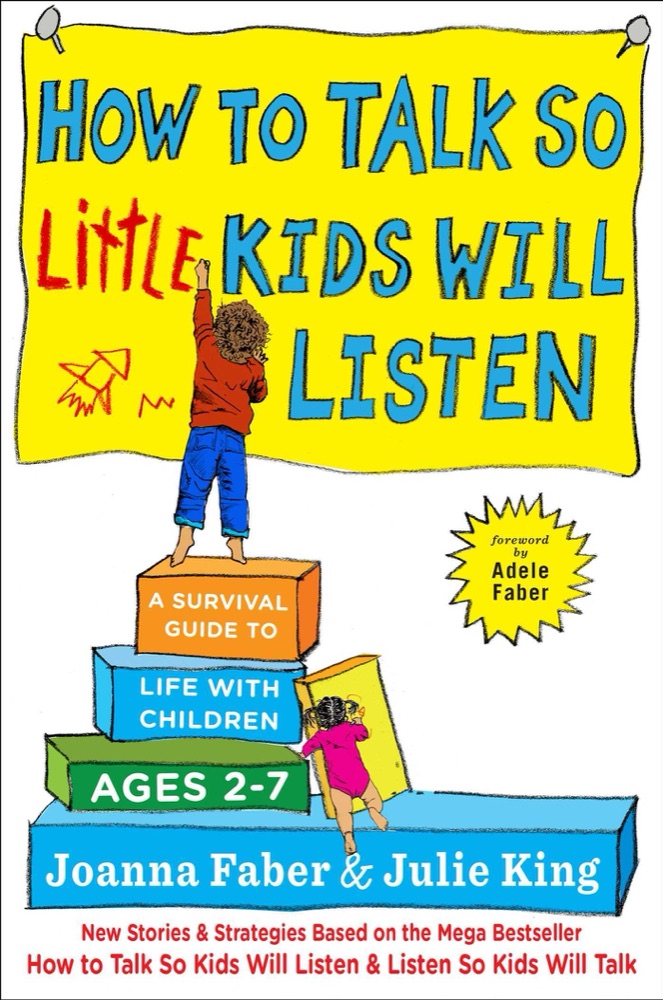 How to Talk So Little Kids Will Listen: A Survival Guide to Life with Children Ages 2-7
 How to Raise an Adult: Break Free of the Overparenting Trap and Prepare Your Kid for Success
 The Conscious Parent: Transforming Ourselves, Empowering Our Children
 Hold On, But Don't Hold Still
 The Awakened Family: A Revolution in Parenting
 The Brave Learner: Finding Everyday Magic in Homeschool, Learning, and Life
 Between Parent and Child
 How to Talk So Kids Will Listen & Listen So Kids Will Talk
 The Collapse of Parenting: How We Hurt Our Kids When We Treat Them Like Grown-Ups
 The Gift of Failure: How the Best Parents Learn to Let Go So Their Children Can Succeed
 Shepherding a Child's Heart
 Momma Cusses
 The Blessing of a Skinned Knee: Using Jewish Teachings to Raise Self-Reliant Children
 Parent Effectiveness Training: The Proven Program for Raising Responsible Children
 The Read-Aloud Family: Making Meaningful and Lasting Connections with Your Kids
 The Wild and Free Family: Forging Your Own Path to a Life Full of Wonder, Adventure, and Connection
 Loving the Little Years: Motherhood in the Trenches
 Us: Getting Past You and Me to Build a More Loving Relationship
 All Joy and No Fun: The Paradox of Modern Parenthood
 Be a People Person
 Raising a Secure Child: How Circle of Security Parenting Can Help You Nurture Your Child's Attachment, Emotional Resilience, and Freedom to Explore
 Montessori from the Start: The Child at Home, from Birth to Age Three
 Becoming Better Grownups: Rediscovering What Matters and Remembering How to Fly
 The World According to Mister Rogers: Important Things to Remember
 Different, Not Less: A Neurodivergent's Guide to Embracing Your True Self and Finding Your Happily Ever After
 The Boy Who Was Raised as a Dog: And Other Stories from a Child Psychiatrist's Notebook
 Playful Parenting: An Exciting New Approach to Raising Children That Will Help You Nurture Close Connections, Solve Behavior Problems, and Encourage Confidence
 The 7 Habits of Highly Effective People: Personal Workbook
 The 7 Habits Of Highly Effective Teens
 Build the Life You Want: The Art and Science of Getting Happier
 The Social Animal: The Hidden Sources of Love, Character, and Achievement
 Scattered Minds: The Origins and Healing of Attention Deficit Disorder
 The Relationship Cure: A 5 Step Guide to Strengthening Your Marriage, Family, and Friendships
 Drama Free: A Guide to Managing Unhealthy Family Relationships
 Some Assembly Required: A Journal of My Son's First Son
 The Measure of a Man: A Spiritual Autobiography
 Thrive: The Third Metric to Redefining Success and Creating a Life of Well-Being, Wisdom, and Wonder
 The Light We Carry: Overcoming in Uncertain Times
 The Magic of Motherhood: The Good Stuff, the Hard Stuff, and Everything In Between
 I Guess I Haven't Learned That Yet: Discovering New Ways of Living When the Old Ways Stop Working
 The Vanishing American Adult: Our Coming-of-Age Crisis—and How to Rebuild a Culture of Self-Reliance
 Bringing Up Bébé: One American Mother Discovers the Wisdom of French Parenting
 Adulting: How to Become a Grown-up in 468 Easy(ish) Steps
 The Perfectionist's Guide to Losing Control: A Path to Peace and Power
 Running on Empty: Overcome Your Childhood Emotional Neglect
 Fall Down 7 Times Get Up 8: A Young Man's Voice from the Silence of Autism
 Excellent Advice for Living: Wisdom I Wish I'd Known Earlier
 The Things You Can See Only When You Slow Down: How to Be Calm in a Busy World
 The School of Life: An Emotional Education
 Free-Range Kids: Giving Our Children the Freedom We Had Without Going Nuts With Worry
 The Happiness Advantage: The Seven Principles of Positive Psychology That Fuel Success and Performance at Work
 Passionate Marriage: Keeping Love and Intimacy Alive in Committed Relationships
 The Algebra of Happiness: Notes on the Pursuit of Success, Love, and Meaning
 Don't Sweat the Small Stuff ... and it's all small stuff: Simple Ways to Keep the Little Things from Taking Over Your Life