
 The Happiness Hypothesis: Finding Modern Truth in Ancient Wisdom
Quotes from the Book
From time to time in the years to come, I hope you will be treated unfairly, so that you will come to know the value of justice. I hope that you will suffer betrayal because that will teach you the importance of loyalty. Sorry to say, but I hope you will be lonely from time to time so that you don’t take friends for granted. I wish you bad luck, again, from time to time so that you will be conscious of the role of chance in life and understand that your success is not completely deserved and that the failure of others is not completely deserved either. And when you lose, as you will from time to time, I hope every now and then, your opponent will gloat over your failure. It is a way for you to understand the importance of sportsmanship. I hope you’ll be ignored so you know the importance of listening to others, and I hope you will have just enough pain to learn compassion. Whether I wish these things or not, they’re going to happen. And whether you benefit from them or not will depend upon your ability to see the message in your misfortunes.
89
A culture that allows the concept of “safety” to creep so far that it equates emotional discomfort with physical danger is a culture that encourages people to systematically protect one another from the very experiences embedded in daily life that they need in order to become strong and healthy.
45
Education should not be intended to make people comfortable; it is meant to make them think.
36
Avoiding triggers is a symptom of PTSD, not a treatment for it.
32
Grant offers the following four rules for productive disagreement:10 Frame it as a debate, rather than a conflict. Argue as if you’re right, but listen as if you’re wrong (and be willing to change your mind). Make the most respectful interpretation of the other person’s perspective. Acknowledge where you agree with your critics and what you’ve learned from them.
28
If only it were so simple! If only there were evil people somewhere insidiously committing evil deeds, and it were necessary only to separate them from the rest of us and destroy them. But the line dividing good and evil cuts through the heart of every human being.
25
There’s an old saying: “Prepare the child for the road, not the road for the child.
24
The notion that a university should protect all of its students from ideas that some of them find offensive is a repudiation of the legacy of Socrates, who described himself as the “gadfly” of the Athenian people. He thought it was his job to sting, to disturb, to question, and thereby to provoke his fellow Athenians to think through their current beliefs, and change the ones they could not defend.
22
If we want to create welcoming, inclusive communities, we should be doing everything we can to turn down the tribalism and turn up the sense of common humanity.
21
Argue as if you're right, but listen as if you're wrong (and be willing to change your mind). Make the most respectful interpretation of the other person's perspective. Acknowledge where you agree with your critics and what you've learned from them.
20
teaching kids that failures, insults, and painful experiences will do lasting damage is harmful in and of itself. Human beings need physical and mental challenges and stressors or we deteriorate.
19
The Untruth of Fragility: What doesn’t kill you makes you weaker. The Untruth of Emotional Reasoning: Always trust your feelings. The Untruth of Us Versus Them: Life is a battle between good people and evil people.
18
Free speech and the ability to tolerate offense are the hallmarks of a free and open society.
18
Whatever your identity, background, or political ideology, you will be happier, healthier, stronger, and more likely to succeed in pursuing your own goals if you do the opposite of what Misoponos advised. That means seeking out challenges (rather than eliminating or avoiding everything that “feels unsafe”), freeing yourself from cognitive distortions (rather than always trusting your initial feelings), and taking a generous view of other people, and looking for nuance (rather than assuming the worst about people within a simplistic us-versus-them morality).
16
The nine in our list are based on a longer list in Robert Leahy, Stephen Holland, and Lata McGinn’s book, Treatment Plans and Interventions for Depression and Anxiety Disorders. For more on CBT—how it works, and how to practice it—please see Appendix 1.) EMOTIONAL REASONING: Letting your feelings guide your interpretation of reality. “I feel depressed; therefore, my marriage is not working out.” CATASTROPHIZING: Focusing on the worst possible outcome and seeing it as most likely. “It would be terrible if I failed.” OVERGENERALIZING: Perceiving a global pattern of negatives on the basis of a single incident. “This generally happens to me. I seem to fail at a lot of things.” DICHOTOMOUS THINKING (also known variously as “black-and-white thinking,” “all-or-nothing thinking,” and “binary thinking”): Viewing events or people in all-or-nothing terms. “I get rejected by everyone,” or “It was a complete waste of time.” MIND READING: Assuming that you know what people think without having sufficient evidence of their thoughts. “He thinks I’m a loser.” LABELING: Assigning global negative traits to yourself or others (often in the service of dichotomous thinking). “I’m undesirable,” or “He’s a rotten person.” NEGATIVE FILTERING: You focus almost exclusively on the negatives and seldom notice the positives. “Look at all of the people who don’t like me.” DISCOUNTING POSITIVES: Claiming that the positive things you or others do are trivial, so that you can maintain a negative judgment. “That’s what wives are supposed to do—so it doesn’t count when she’s nice to me,” or “Those successes were easy, so they don’t matter.” BLAMING: Focusing on the other person as the source of your negative feelings; you refuse to take responsibility for changing yourself. “She’s to blame for the way I feel now,” or “My parents caused all my problems.
12
I don’t want you to be safe ideologically. I don’t want you to be safe emotionally. I want you to be strong. That’s different. I’m not going to pave the jungle for you. Put on some boots, and learn how to deal with adversity. I’m not going to take all the weights out of the gym; that’s the whole point of the gym. This is the gym.
11
there are just two activities that are significantly correlated with depression and other suicide-related outcomes (such as considering suicide, making a plan, or making an actual attempt): electronic device use (such as a smartphone, tablet, or computer) and watching TV. On the other hand, there are five activities that have inverse relationships with depression (meaning that kids who spend more hours per week on these activities show lower rates of depression): sports and other forms of exercise, attending religious services, reading books and other print media, in-person social interactions, and doing homework.
9
In the age of social media, cyber trolls, and fake news, it is a national and global crisis that people so readily follow their feelings to embrace outlandish stories about their enemies. A community in which members hold one another accountable for using evidence to substantiate their assertions is a community that can, collectively, pursue truth in the age of outrage.
6
Safetyism does not help students who suffer from anxiety and depression. In fact, as we argue throughout this book, safetyism is likely to make things even worse for students who already struggle with mood disorders. Safetyism also inflicts collateral damage on the university's culture of free inquiry because it teaches students to see words as violence and to interpret ideas and speakers as safe versus dangers rather than merely as true versus false. That way of thinking about words is likely to promote the intensification of a "call-out culture," which of course gives students one more reason to be anxious.
6
This is an essential part of our story. Americans now bear such animosity toward one another that it’s almost as if many are holding up signs saying, “Please tell me something horrible about the other side, I’ll believe anything!” Americans are now easily exploitable, and a large network of profit-driven media sites, political entrepreneurs, and foreign intelligence agencies are taking advantage of this vulnerability.
6
Education should not be intended to make people comfortable, it is meant to make people think.
5
You cannot teach antifragility directly, but you can give your children the gift of experience—the thousands of experiences they need to become resilient, autonomous adults. The gift begins with the recognition that kids need some unstructured, unsupervised time in order to learn how to judge risks for themselves and practice dealing with things like frustration, boredom, and interpersonal conflict. The most important thing they can do with that time is to play, especially in free play, outdoors, with other kids.
5
Both the physical and the electronic isolation from people we disagree with allow the forces of confirmation bias, groupthink, and tribalism to push us still further apart.
5
In our identitarian age, the bar for offense has been lowered considerably, which makes democratic debate more difficult—citizens are more likely to withhold their true opinions if they fear being labeled as bigoted or insensitive.
5
Human beings need physical and mental challenges and stressors or we deteriorate.
4
Each generation tends to see the one after it as weak, whiny, and lacking in resilience.
4
Trigger warnings are counter-therapeutic because they encourage avoidance of reminders of trauma, and avoidance maintains PTSD.
4
Watch on YouTube
About Jonathan Haidt
We have collected 110 quotes from 4 books by Jonathan Haidt on BookQuoters.
More about the author →More by Jonathan Haidt
The Happiness Hypothesis: Finding Modern Truth in Ancient Wisdom
 The Righteous Mind: Why Good People Are Divided by Politics and Religion
 The Anxious Generation: How the Great Rewiring of Childhood Caused an Epidemic of Mental Illness
About the book
Something is going wrong on many college campuses in the last few years. Rates of anxiety, depression, and suicide are rising. Speakers are shouted down. Students and professors say they are walking on eggshells and afraid to speak honestly. How did this happen?
First Amendment expert Greg Lukianoff and social psychologist Jonathan Haidt show how the new problems on campus have their origins in three terrible ideas that have become increasingly woven into American childhood and what doesn’t kill you makes you weaker; always trust your feelings; and life is a battle between good people and evil people. These three Great Untruths are incompatible with basic psychological principles, as well as ancient wisdom from many cultures. They interfere with healthy development. Anyone who embraces these untruths—and the resulting culture of safetyism—is less likely to become an autonomous adult
Book details
- First published
- 2018
- Author
- Jonathan Haidt
- Genre
- Nonfiction
- Goodreads rating
- 4.22 (59k ratings)
The buzz
- The Washington PostReview in The Washington Postprofessional review (via Book Marks)
- The Wall Street JournalReview in The Wall Street Journalprofessional review (via Book Marks)
- The GuardianReview in The Guardianprofessional review (via Book Marks)
- The TimesReview in The Timesprofessional review (via Book Marks)
- Kirkus ReviewsReview in Kirkus Reviewsprofessional review (via Book Marks)
- ChicagotribuneReview in Chicagotribuneprofessional review (via Book Marks)
Keep reading
 Parasitic Mind: How Infectious Ideas Are Killing Common Sense
 Bright-Sided: How the Relentless Promotion of Positive Thinking Has Undermined America
 Mistakes Were Made (But Not by Me): Why We Justify Foolish Beliefs, Bad Decisions, and Hurtful Acts
 Nonviolent Communication: A Language of Life
 What's Our Problem?: A Self-Help Book for Societies
 12 Rules for Life: An Antidote to Chaos
 The Gift of Fear: Survival Signals That Protect Us from Violence
 The Laws of Human Nature
 Humankind: A Hopeful History
 The Vanishing American Adult: Our Coming-of-Age Crisis—and How to Rebuild a Culture of Self-Reliance
 The Blank Slate: The Modern Denial of Human Nature
The Anxious Generation: How the Great Rewiring of Childhood Caused an Epidemic of Mental Illness
The Blank Slate: The Modern Denial of Human Nature
The Anxious Generation: How the Great Rewiring of Childhood Caused an Epidemic of Mental Illness
 The Person You Mean to Be: How Good People Fight Bias
 Atlas of the Heart: Mapping Meaningful Connection and the Language of Human Experience
 Opinions: A Decade of Arguments, Criticism, and Minding Other People’s Business
 Dare to Lead
 Conflict Is Not Abuse: Overstating Harm, Community Responsibility, and the Duty of Repair
 Radical Honesty : How to Transform Your Life by Telling the Truth
 A Language Older Than Words
 Letters to a Young Contrarian
 Endgame, Vol. 1: The Problem of Civilization
 Antifragile: Things That Gain from Disorder
 How to Stay Sane in an Age of Division
 For Your Own Good: Hidden Cruelty in Child-Rearing and the Roots of Violence
 The Lucifer Effect: Understanding How Good People Turn Evil
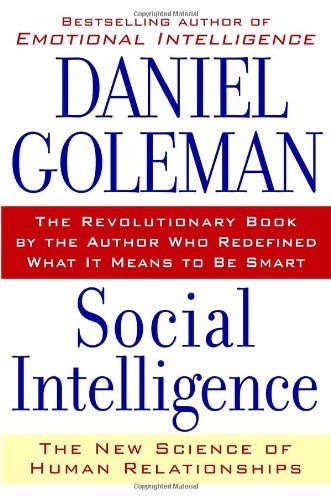 Social Intelligence: The New Science of Human Relationships
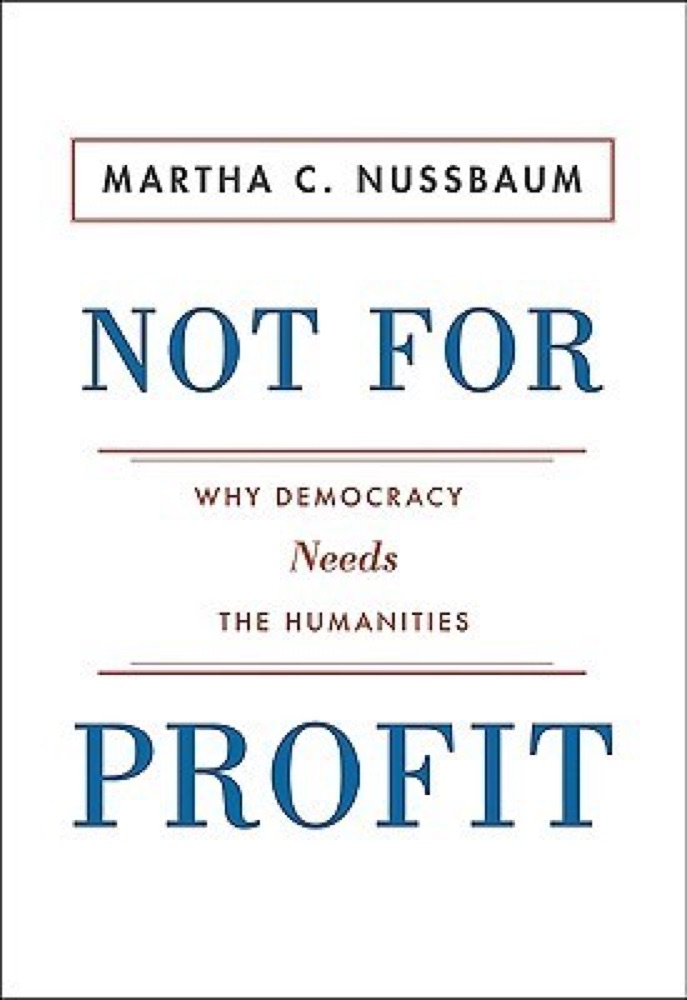 Not for Profit: Why Democracy Needs the Humanities
 Tribe: On Homecoming and Belonging
 The Social Animal: The Hidden Sources of Love, Character, and Achievement
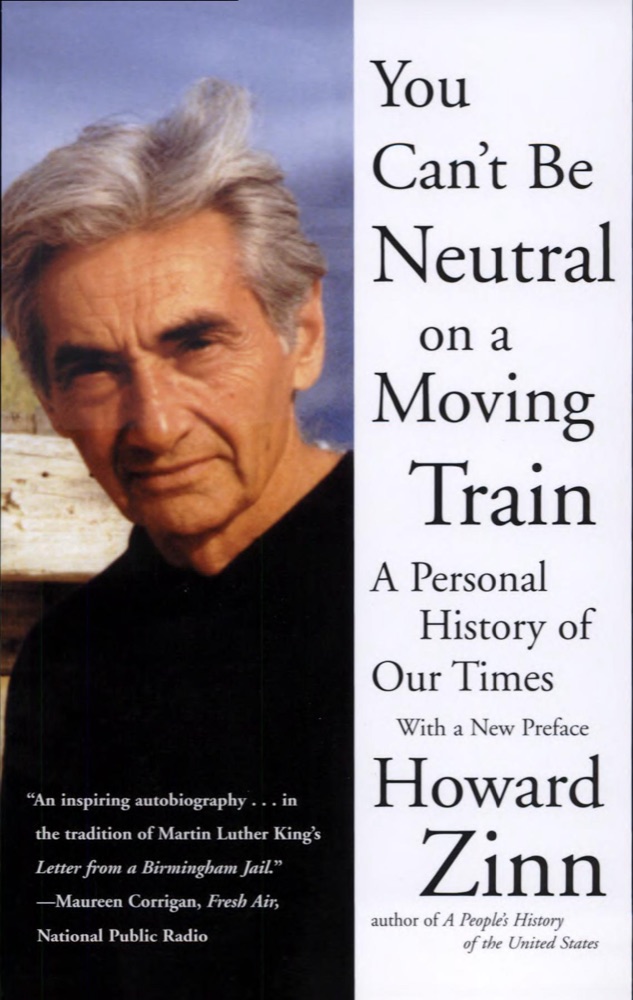 You Can't Be Neutral on a Moving Train: A Personal History of Our Times
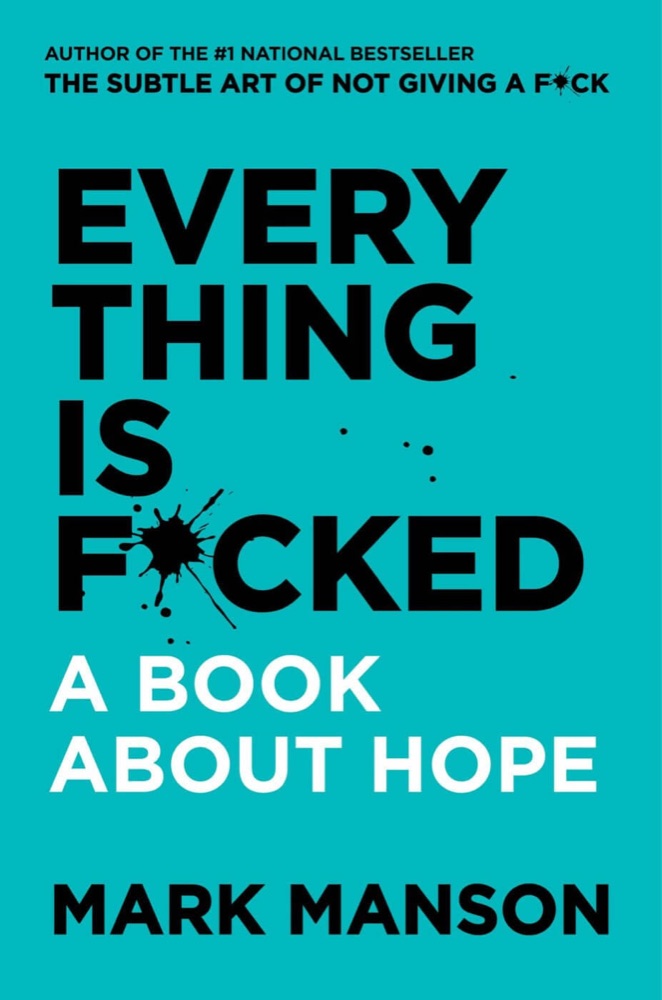 Everything Is F*cked: A Book About Hope
 One Nation: What We Can All Do to Save America's Future
 The View From Flyover Country: Essays by Sarah Kendzior
 The School of Life: An Emotional Education
 High Conflict: Why We Get Trapped and How We Get Out
 Independent Study
 Difficult Conversations: How to Discuss What Matters Most
 The Audacity of Hope: Thoughts on Reclaiming the American Dream
 That Librarian: The Fight Against Book Banning in America
 Psych: The Story of the Human Mind
 On the Other Side of Freedom: The Case for Hope
 Walden Two
 The Influencing Machine: Brooke Gladstone on the Media
 The Age of Magical Overthinking: Notes on Modern Irrationality
 What It is Like to Go to War
 Sister Outsider: Essays and Speeches
 Only Human
 The Anatomy of Peace: Resolving the Heart of Conflict
 The Art of Thinking Clearly
 Think Like a Freak
 Genesis
 United: Thoughts on Finding Common Ground and Advancing the Common Good
 David and Goliath: Underdogs, Misfits, and the Art of Battling Giants
 The Subtle Art of Not Giving a F*ck: A Counterintuitive Approach to Living a Good Life
 The Moral Landscape: How Science Can Determine Human Values
 The Witches Are Coming
 Us: Getting Past You and Me to Build a More Loving Relationship
 We Learn Nothing
 The Source of Self-Regard: Selected Essays, Speeches, and Meditations