
 What My Bones Know
Quotes from the Book
Whatever role we are loved for in our family, we will continue to enact it, despite the toll it takes.
26
powerlessness in a relationship is one of the main causes of stress or anxiety. Making psychological changes also provokes anxiety. It’s very hard to break a habit, especially when you’ve adapted yourself to a particular pattern that, however maladaptive, has kept you alive. The unconscious is powerful, and it will fight to the death to keep an old pattern in place.
25
Anger is not a feeling; it’s a defence. When you can’t acknowledge your true feelings because they’re too excruciating, you defend against them with anger.
24
Workaholism is another compulsion - you work because you feel anxious when you're not working. Some psychologists see it as an addiction, and certainly our modern culture has glorified it. It's not unusual to hear people say proudly that they do nothing but work. Substitute another addiction in that sentence - "I do nothing but drink," say - and it doesn't sound so virtuous.
17
unconscious never cares for the facts.
14
Patients who were rarely praised as children, often distrust the positive things people say about them as adults. A child's concept of self is formed in childhood and it takes a long time with many affirmative examples to turn that self-concept around.
14
When you go from fearing your mother to feeling sorry for her, it usually means you’ve travelled a long way toward recovery.
10
Intimacy is when you’re familiar with your emotions, then share your feelings, your fears, your shame, your hopes and joys with another person.
10
Anger is a defense, not a feeling, ....analyze what feeling the anger was covering.
9
Effective therapy is about lowering your defences so that you can deal with the issues that arise in your life.
8
If a person is continually stressed, the stress uses up the immune system and there’s nothing left to fight cancer. (Research has shown that children who suffer abuse are about 50 percent more likely to get cancer than other children.)
8
People who have PTSD are hyper-alert. Their immune system never rests—it’s seen so much danger that it’s scanning the environment constantly.
7
The second revelation occurred when her unconscious released the idea, or the false belief, that her mother would love her only if she were totally perfect. Of course, that wasn’t true. Her mother was incapable of loving her, and being perfect wouldn’t alter that fact. That insight helped to free Madeline from trying so hard to please her mother.
7
Why have boundaries if everyone is going to drive through them, leaving nothing but rubble? No one’s going to do what I want. Why should they?” Laura had just perfectly defined powerlessness, and powerlessness in a relationship is one of the main causes of stress or anxiety.
7
The ego—one’s sense of self—is an abstract concept; it’s hard to define it concretely. Picture it as a house built brick by brick. It protects you from the stresses of the outside world, providing a metaphorical home to shelter in—a safe place.
5
psychological technique called reframing: taking a concept and relabelling it so as to alter its meaning.
5
One thing I know is that we all do things we’re ashamed of. Shame erupts when you violate some taboo. Anyone who says they haven’t suffered shame either hasn’t lived or else is lying.
5
When people share their feelings, they feel better, less stressed and less anxious. If you plan on having a life partner, it’s emotional intimacy that will be the glue that holds you together long after the physical intimacy fades.
5
Remember, you’re bruised but not broken.
4
True insights happen only when the therapist gets out of the way so that the patient is able to gain his or her own psychological knowledge.
4
In therapy, when pathological defenses start to crumble, the patient lets in more material from their background that they've been defending against. Suddenly, memories emerge that were unavailable at the beginning of the therapy. When Laura had been intent on defending her father, she'd blocked many of her negative memories of him; but now, after two years of therapy, those painful memories began to flow like hot lava.
4
The only thing I do know is that when your mother labels you negatively, you believe her—for who else forms your self-image?
4
Children who are given adult responsibilities when they’re too young to handle them are forever after worried about properly fulfilling their responsibilities; they never seem to accept that they were too young to manage the task but instead internalize their failure to accomplish it.
3
True narcissists, like Charlotte, never think they’re wrong. When they react by lashing out, they’re convinced that they’re simply defending themselves against some nefarious provocation from someone trying to harm them. When they feel threatened, they go into overdrive and retaliate quickly. Narcissism can be described as a trigger-happy defence.
3
Danny used one of the most powerful defences known in psychology: depersonalization. He cut off all his feelings. It was the perfect armour. The only problem with his perfect weapon was that he could barely attach to anyone, or feel life’s pleasures. As he said at the beginning of our work together, “I don’t need joy.” He was right, in a way. Is it better to feel or to maintain your sanity? For many years, he chose the latter.
3
Intimacy is a hard language to learn, especially if it’s been discouraged. But you’ve done it.
3
every time she felt angry she should remember that anger is a defence, not a feeling, and to analyze what feeling the anger was covering.
3
Making psychological changes also provokes anxiety. It’s very hard to break a habit, especially when you’ve adapted yourself to a particular pattern that, however maladaptive, has kept you alive. The unconscious is powerful, and it will fight to the death to keep an old pattern in place.
3
Therapy is a lot like growing a tree. For the first few years there appears to be no major growth, but by the third year, after the roots have established themselves and can support the trunk, the tree shoots upward.
2
Watch on YouTube
About Catherine Gildiner
We have collected 29 quotes from 1 book by Catherine Gildiner on BookQuoters.
More about the author →About the book
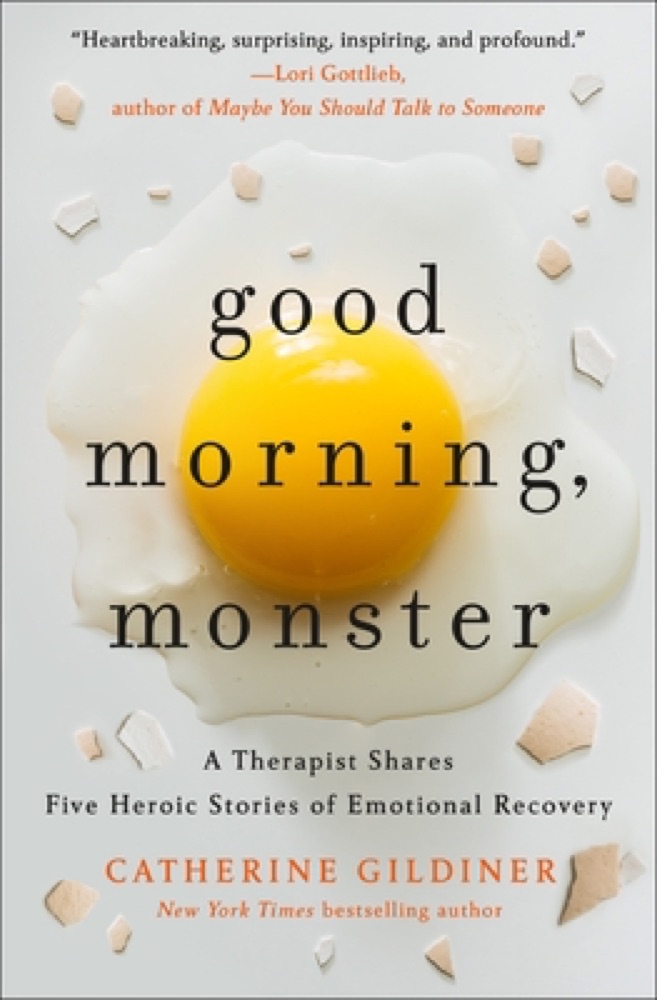
In this fascinating narrative, therapist Catherine Gildiner's presents five of what she calls her most heroic and memorable patients. Among them: a successful, first generation Chinese immigrant musician suffering sexual dysfunction; a young woman whose father abandoned her at age nine with her younger siblings in an isolated cottage in the depth of winter; and a glamorous workaholic whose narcissistic, negligent mother greeted her each morning of her childhood with Good morning, Monster.
Each patient presents a mystery, one that will only be unpacked over years. They seek Gildiner's help to overcome an immediate challenge in their lives, but discover that the source of their suffering has been long buried.
As in such recent classics as The Glass Castle and Educated, each patient embodies self-reflection, stoicism, perseverance, and forgiveness as they work unflinchingly to face th
Book details
- First published
- 2019
- Author
- Catherine Gildiner
- Genre
- Nonfiction
- Goodreads rating
- 4.44 (70k ratings)
Keep reading
What My Bones Know
 Complex PTSD: From Surviving to Thriving
 When the Body Says No: The Cost of Hidden Stress
 Unfuck Your Brain: Using Science to Get Over Anxiety, Depression, Anger, Freak-Outs, and Triggers
 Maybe You Should Talk to Someone: A Therapist, Her Therapist, and Our Lives Revealed
 What Happened To You?: Conversations on Trauma, Resilience, and Healing
 Running on Empty: Overcome Your Childhood Emotional Neglect
 All Is Not Forgotten
 Feeling Good: The New Mood Therapy
 It Didn't Start with You: How Inherited Family Trauma Shapes Who We Are and How to End the Cycle
 Us: Getting Past You and Me to Build a More Loving Relationship
 Letting Go: The Pathway To Surrender
 Stop Walking on Eggshells: Taking Your Life Back When Someone You Care about Has Borderline Personality Disorder
 Atlas of the Heart: Mapping Meaningful Connection and the Language of Human Experience
 The Courage to Heal: A Guide for Women Survivors of Child Sexual Abuse
 In an Unspoken Voice: How the Body Releases Trauma and Restores Goodness
 The Boy Who Was Raised as a Dog: And Other Stories from a Child Psychiatrist's Notebook
 Scattered Minds: The Origins and Healing of Attention Deficit Disorder
 Social Intelligence: The New Science of Human Relationships
 The Silent Patient
 Monkey Mind: A Memoir of Anxiety
 Why Has Nobody Told Me This Before?
 No Bad Parts: Healing Trauma & Restoring Wholeness with the Internal Family Systems Model
 Toxic Parents: Overcoming Their Hurtful Legacy and Reclaiming Your Life
 Mothers Who Can't Love: A Healing Guide for Daughters
 Get Me Out of Here: My Recovery from Borderline Personality Disorder
 The Examined Life: How We Lose and Find Ourselves
 The Drama of the Gifted Child: The Search for the True Self
 Untangle Your Emotions: Naming What You Feel and Knowing What to Do About It
 Codependent No More: How to Stop Controlling Others and Start Caring for Yourself
 The Truth: An Uncomfortable Book About Relationships
 In the Realm of Hungry Ghosts: Close Encounters with Addiction
![[Don't] Call Me Crazy](/i/book/g/b2/dont-call-me-crazy.jpg) [Don't] Call Me Crazy
[Don't] Call Me Crazy
![It's Not OK to Feel Blue [and other lies]](/i/book/g/ed/its-not-ok-to-feel-blue-and-other-lies.jpg) It's Not OK to Feel Blue [and other lies]
It's Not OK to Feel Blue [and other lies]
 The Wisdom of Your Body: Finding Healing, Wholeness, and Connection through Embodied Living
 It's Not Always Depression: Working the Change Triangle to Listen to the Body, Discover Core Emotions, and Connect to Your Authentic Self
 Clarity & Connection
 In Shock: My Journey from Death to Recovery and the Redemptive Power of Hope
 The Center Cannot Hold: My Journey Through Madness
 The Art of Starving
 For Your Own Good: Hidden Cruelty in Child-Rearing and the Roots of Violence
 When Things Fall Apart: Heart Advice for Difficult Times
 Hollywood Park
 The Perfectionist's Guide to Losing Control: A Path to Peace and Power
 Burnout: The Secret to Unlocking the Stress Cycle
 Changes That Heal: How to Understand the Past to Ensure a Healthier Future
 Be Not Afraid of Love: Lessons on Fear, Intimacy, and Connection
 In The Blood
 Welcome Home: A Guide to Building a Home for Your Soul
 In the Dream House
 Advice Not Given: A Guide to Getting Over Yourself
 Healing the Shame that Binds You
 Come as You Are: The Surprising New Science that Will Transform Your Sex Life
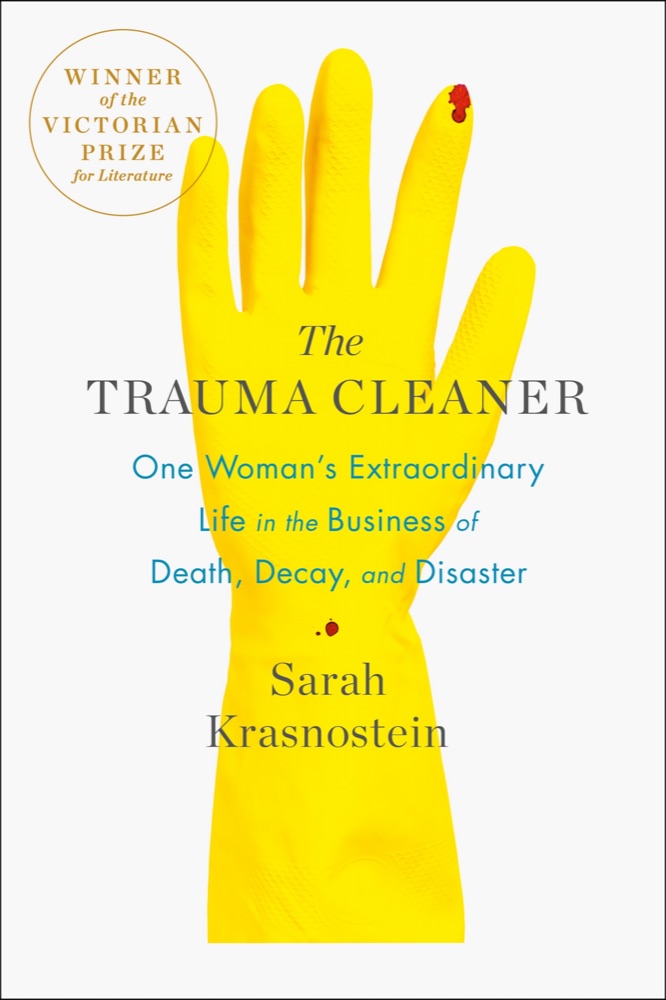 The Trauma Cleaner: One Woman's Extraordinary Life in the Business of Death, Decay, and Disaster
 The Tools: Transform Your Problems into Courage, Confidence, and Creativity
 Life Will Be the Death of Me: . . . and you too!
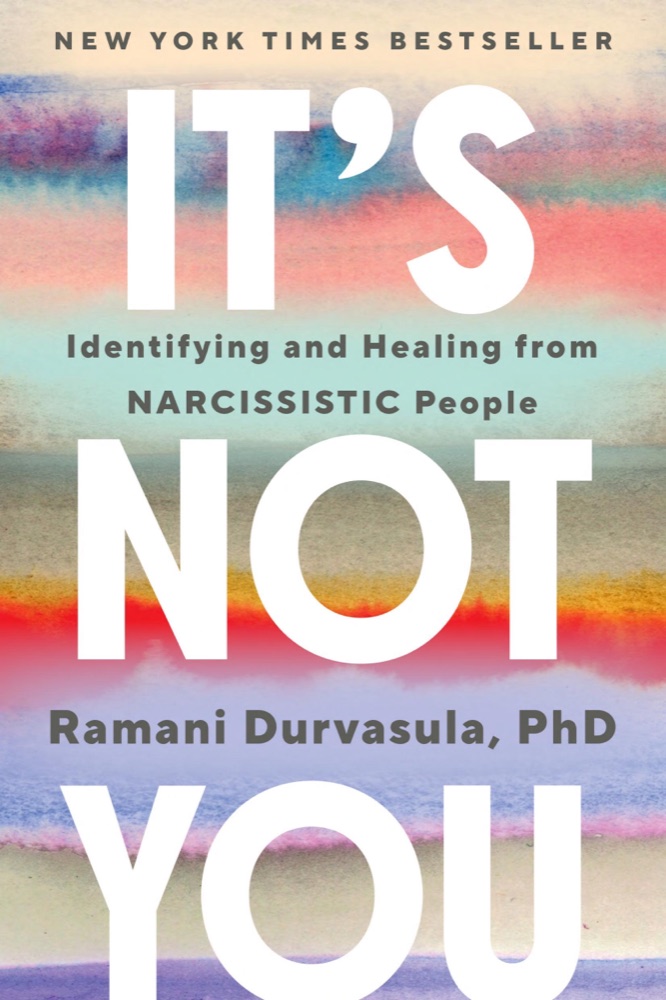 It's Not You: Identifying and Healing from Narcissistic People
 The Color of Everything: A Journey to Quiet the Chaos Within
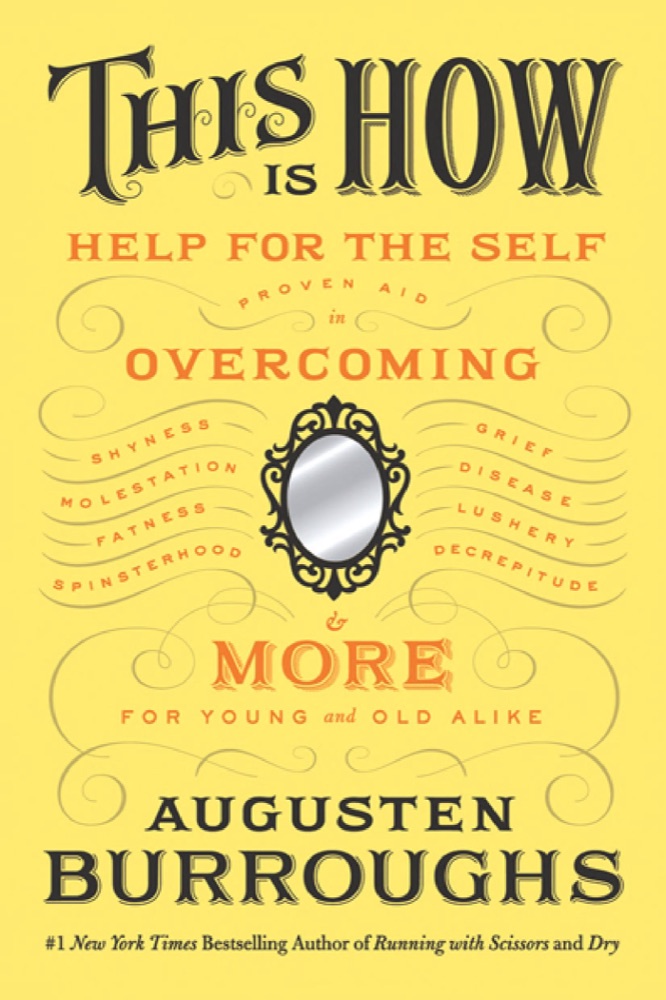 This Is How: Proven Aid in Overcoming Shyness, Molestation, Fatness, Spinsterhood, Grief, Disease, Lushery, Decrepitude & More. For Young and Old Alike.
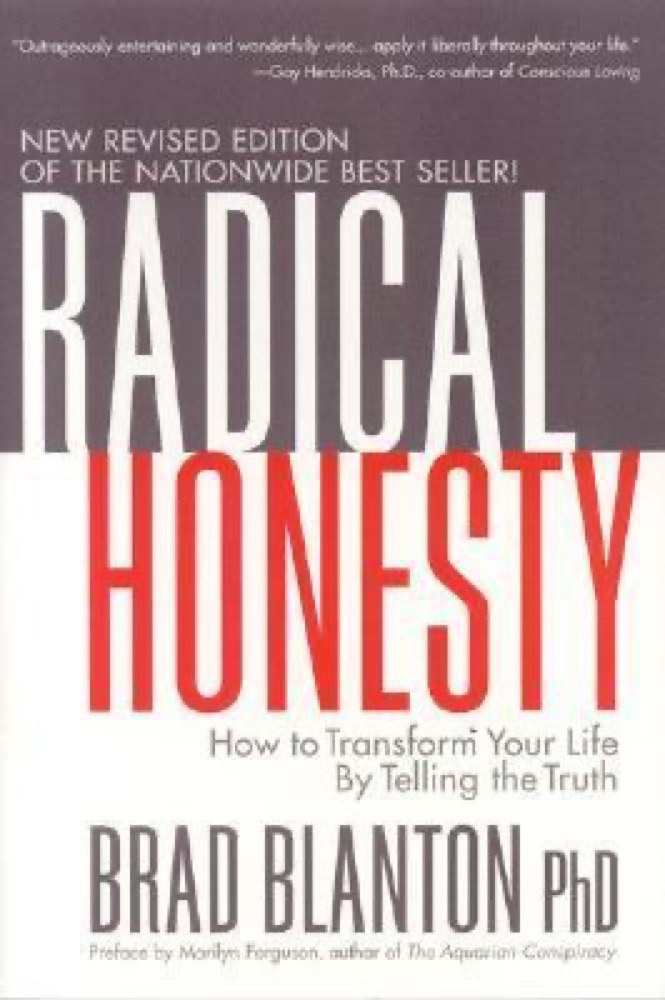 Radical Honesty : How to Transform Your Life by Telling the Truth