 The Social Animal: The Hidden Sources of Love, Character, and Achievement
Quotes from the Book
...there is almost nothing more important we can do for our young than convince them that production is more satisfying than consumption.
10
I believe our entire nation is in the midst of a collective coming-of-age crisis without parallel in our history. We are living in an America of perpetual adolescence. Our kids simply don't know what an adult is anymore - or how to become one. Many don't even see a reason to try. Perhaps more problematic, the older generations have forgotten that we need to plan to teach them. It's our fault more than it is theirs.
6
It is not only the content of a book that changes you but the shared community with those who have read it, discussed it, argued about it.
4
If a free people is going to be reproduced, it will require watering and revivifying and owning anew older traditions and awaking the curiosity in the soul of each citizen. National greatness will not be recovered via a mindless expansion of bureaucratized schooling. Seventy years ago, Dorothy Sayers wrote, 'Sure, we demand another grant of money, we postpone the school leaving age and plan to build bigger and better schools. We demand that teachers further slave conscientiously in and out of school hours. But to what end? I believe,' Sayers lamented, 'all this devoted effort is largely frustrated because we have no definable goal for each child to become a fully formed adult. We have lost the tools of learning, sacrificing them to the piecemeal, subject matter approach of bureaucratized schooling that finally compromises to produce passive rather than active emerging adults. But our kids are not commodities, they are plants. They require a protected environment, and care, and feeding, but most basically, an internal yearning to grow toward the sunlight. What we need is the equipping of each child with those lost tools.
4
America’s Founders understood literacy as a prerequisite for freedom and our form of self-government. Once we know how to read, what we read matters. So let’s build some reading lists of books you plan to wrestle with and be shaped by for the rest of your lifetime. Then,
3
What Orwell feared were those who would ban books. What Huxley feared was that there would be no reason to ban a book, for there would be no one who wanted to read one. Orwell feared those who would deprive us of information. Huxley feared those who would give us so much that we would be reduced to passivity and egoism. —Neil Postman To
3
I'm a conservative but not because I care very much about the marginal tax rates of the richest Americans, rather I'm a market-oriented localist because I believe in cultural pluralism and I believe in the First Amendment, in voluntarism over compulsion whenever possible, and in as much de-centralized decision-making as is conceivably feasible.
2
A hallmark of virtuous adulthood is learning to find freedom in your work rather than freedom from your work, even when work might hurt.
2
Out of the night that covers me, Black as the Pit from pole to pole, I thank whatever gods may be For my unconquerable soul. In the fell clutch of circumstance I have not winced nor cried aloud. Under the bludgeonings of chance My head is bloody, but unbowed. Beyond this place of wrath and tears Looms but the Horror of the shade, And yet the menace of the years Finds, and shall find, me unafraid. It matters not how strait the gate, How charged with punishments the scroll. I am the master of my fate: I am the captain of my soul. Contrary
2
Learning can't be force fed. It needs to come in response to genuinely asked questions by genuinely curious people. Experts can't educate your kids until your kids have the desire to be educated.
1
Living only in the present isn’t freedom. Living only in the present isn’t even human if you think about it. Humans, unlike any other animal on the planet, remember the past. We understand our nature. And we try to build on both of them. We are an aspirational species; we look to the future.
1
Let’s hope that, over time, we’ll develop a bias, when we have an extra free hour, toward shoveling snow from the elderly neighbor lady’s sidewalk over streaming another Netflix sitcom.
1
Could we perhaps be rearing a generation that might not be tough enough to be good Americans? For a good American needs to be tough.
1
Death is the hardest question, and in an age that gives short shrift to the transmission of wisdom from old to young, it is not surprising that death is the single most obvious fact of life from which we constantly insulate our kids. We have, to our detriment, created a cult of denial about our own mortality. Life needs to be lived and prioritized with the understanding that it is limited. An
1
There is almost something perverse about wanting to teach everyone to read but not teach them how to think clearly.
Travel to experience the difference between “need” and “want,
We would never have been crazy enough, insulated enough, bubble-wrapped enough, to think that it was impossible to sleep without it—especially at seventy-two degrees.
This day’s failure wasn’t at all about lacking brains; it was about will. It was about ownership. It was about not having much experience or interest in seeing tasks through to completion.
To paraphrase Robin Williams’s compelling teacher character in Dead Poets Society: We don’t study poetry to get an “A,” to graduate, to get a job, to make money, to meet material needs. Rather, “we read and write poetry because we are members of the human race. And the human race is filled with passion. So medicine, law, business, engineering . . . these are noble pursuits and necessary to sustain life. But poetry, beauty, romance, love . . . these are what we stay alive for.
Algorithms in our search engines and social media platforms shape what we receive based on our previous preferences and choice, confirming our natural inclinations to read things that confirm our beliefs rather than challenge them.
We are necessarily within arm’s length of large questions about whether your kids on their deathbeds will be able to look back on lives oriented toward the good, the true, and the beautiful. This book is not outlining any answers to the grand questions of meaning, but we should acknowledge that adolescents and their parent-guides are inevitably wrestling with the fundamental: What makes a life worth living? From the moment human beings were able
and beyond. Some of this evolution toward more secular, bureaucratic schooling followed necessarily from the Supreme Court decisions prohibiting school prayer and religious instruction in the 1960s. Regardless of whether you believe children should have prayer or study religion in school, the removal of those activities had the unintended consequence of removing existential questions about how the individual fits into the bigger, cosmic picture; about our life’s purpose. The moral hollowing of schooling is also attributable to the erosion of secondary education’s previously secure place and purpose in preparing kids for steady jobs right after graduation. Education historian Paula Fass traces the drift toward the “warehousing” of our young to schools’ loss of their tangible, culminating purpose—to prepare the emerging generation for conclusive entry into adult productivity. Instead, “going to high school became a stop-over during the teen years, with very little to offer beyond academic selection for those who would go on to college . . .” When a diploma was no longer a predictable ticket to a full-time, middle-class job and a set of expectations about adulthood, high schools began to fray. Peer culture metastasized to fill the vacuum of purpose. Instead of learning how to behave from their teachers, who no longer really saw their jobs as moral instruction and instilling wisdom acquired through age and experience, kids were learning how to behave from other kids, with predictable results. Fifth, the protest era of the 1960s saw an atypical amount of conflict about what America means, about whether our experiment in self-governance was really all that special. Some of the struggles—chiefly civil rights—were essential to America’s finally living up to the Declaration of Independence’s vision of universal,
Five decades later, it’s clear that the problem isn’t about race—it is nearly universal. The works of Charles Murray, Robert Putnam, and J. D. Vance show that these tragic developments are not unique to any geographic or ethnic community. The share of white births occurring outside marriage is now roughly three in ten, which is higher than the “emergency” black rate in the 1960s. And although the teen pregnancy rate is down, the Urban Institute’s “Moynihan Report Revisited” pegs the overall share of black births now occurring outside marriage at more than seven in ten. Fourth, we have unhelpfully come to so identify our obligations to teenagers with the institution of secondary schooling that we have lost the collective memory of folks who came of age without schooling as the defining
At one level, happiness is an equation that has "needs met" as the numerator and "presumed total needs" as the denominator. One way to achieve temporary happiness is to invest more energy seeking to fill up the numerator. But another way, a more stable way, is to reflectively guard against the growth of one's denominator of needs, and to cultivate the habit of gratitude at the satisfaction of real and basic needs.
Wealthy societies, for reasons largely well-intentioned but now producing unintended consequences, are making it easier for their teens to avoid the rigors and responsibilities of becoming a grown-up. Arnett calls those years the “self-focused age,” when there are few real responsibilities, few “daily obligations,” limited “commitments to others.” In a stage when young people were once supposed to learn to “stand alone as a self-sufficient person,” they find themselves increasingly paralyzed by over-choice. There are nearly unlimited personal-social options yet too few concrete work-related accomplishments. A
Watch on YouTube
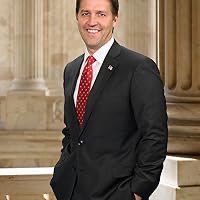
About Ben Sasse
We have collected 25 quotes from 1 book by Ben Sasse on BookQuoters.
More about the author →About the book
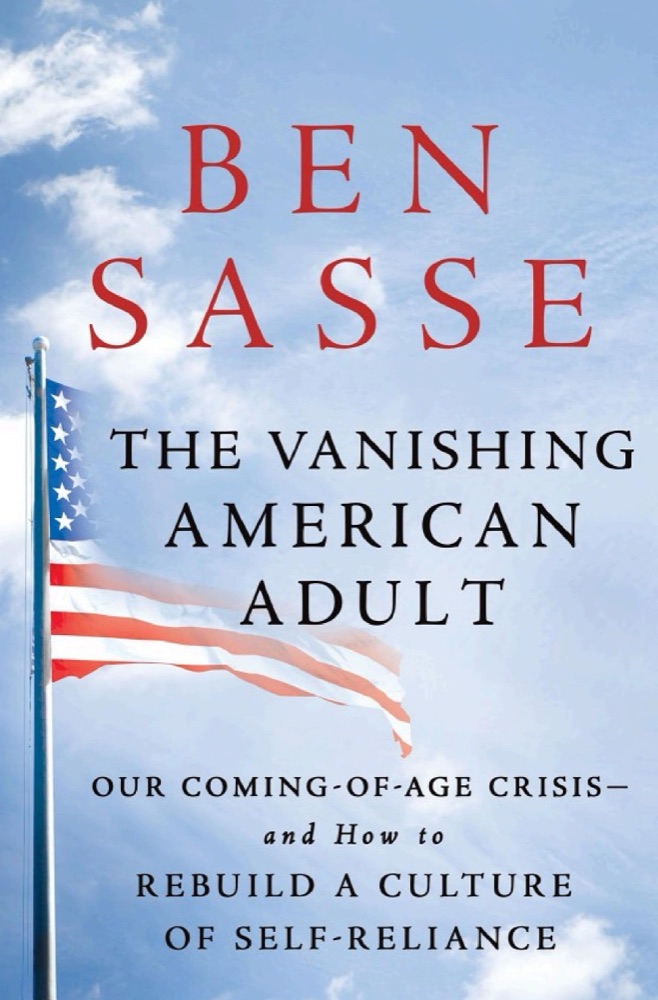
America's youth are in crisis. Raised by well-meaning but overprotective parents and coddled by well-meaning but misbegotten government programs, they are ill-equipped to survive in our highly-competitive global economy.
Many of the coming-of-age rituals that have defined the American experience since the learning the value of working with your hands, leaving home to start a family, becoming economically self-reliant--are being delayed or skipped altogether. The statistics are 30% of college students drop out after the first year, and only 4 in 10 graduate. One in three 18-to-34 year-olds live with their parents.
From these disparate Nebraska Senator Ben Sasse who as president of a Midwestern college observed the trials of this generation up close, sees an existential threat to the American way of life.
In The Vanishing American Adult, Sasse diagnoses the causes of a generation
Book details
- First published
- 2017
- Author
- Ben Sasse
- Genre
- Nonfiction
- Goodreads rating
- 4.03 (6k ratings)
Keep reading
The Social Animal: The Hidden Sources of Love, Character, and Achievement
 Excellent Sheep: The Miseducation of the American Elite and the Way to a Meaningful Life
 Coming Apart: The State of White America, 1960-2010
 All Joy and No Fun: The Paradox of Modern Parenthood
 How to Raise an Adult: Break Free of the Overparenting Trap and Prepare Your Kid for Success
 The Element: How Finding Your Passion Changes Everything
 Walden Two
 The Defining Decade: Why Your Twenties Matter—And How to Make the Most of Them Now
 Shop Class as Soulcraft: An Inquiry Into the Value of Work
 You Learn by Living: Eleven Keys for a More Fulfilling Life
 Troubled: A Memoir of Foster Care, Family, and Social Class
 The Collapse of Parenting: How We Hurt Our Kids When We Treat Them Like Grown-Ups
 Passages: Predictable Crises of Adult Life
 A Circle of Quiet
 A Language Older Than Words
 Unscripted: Life, Liberty, and the Pursuit of Entrepreneurship
 The Freedom Manifesto
 The Second Mountain
 Emile or On Education
 United: Thoughts on Finding Common Ground and Advancing the Common Good
 Finding Flow: The Psychology of Engagement with Everyday Life
 Becoming
 No Time To Spare: Thinking About What Matters
 Walking on Water: Reading, Writing, and Revolution
 Hocus Pocus
 This Is What Inequality Looks Like
 We Make the Road by Walking: Conversations on Education and Social Change
 The Source of Self-Regard: Selected Essays, Speeches, and Meditations
 Dumbing Us Down: The Hidden Curriculum of Compulsory Education
 The World-Ending Fire: The Essential Wendell Berry
 The Coddling of the American Mind: How Good Intentions and Bad Ideas Are Setting up a Generation for Failure
 The Audacity of Hope: Thoughts on Reclaiming the American Dream
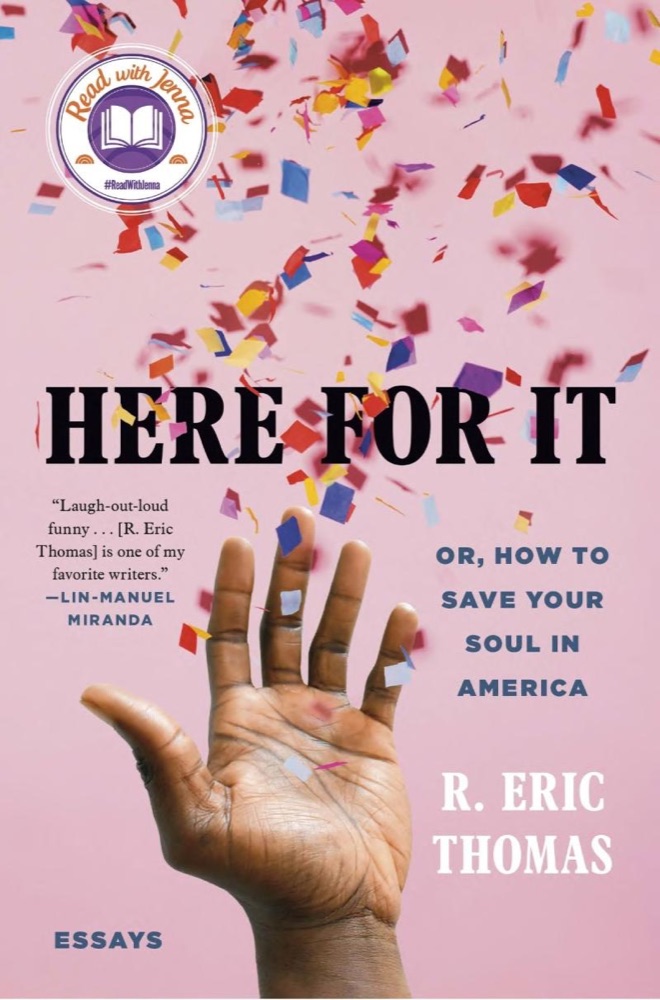 Here for It; Or, How to Save Your Soul in America: Essays
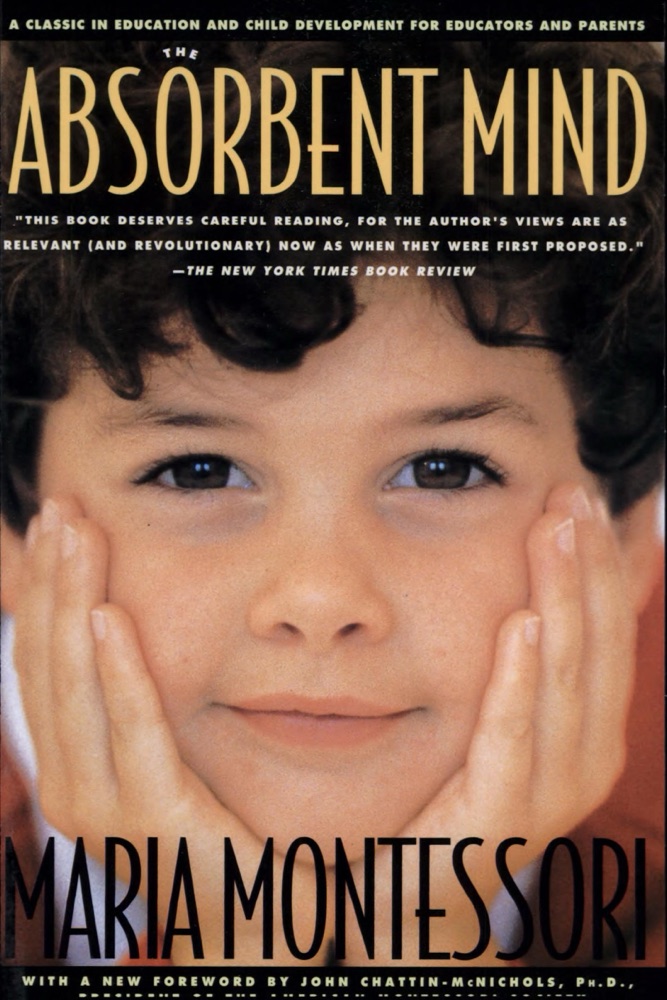 The Absorbent Mind
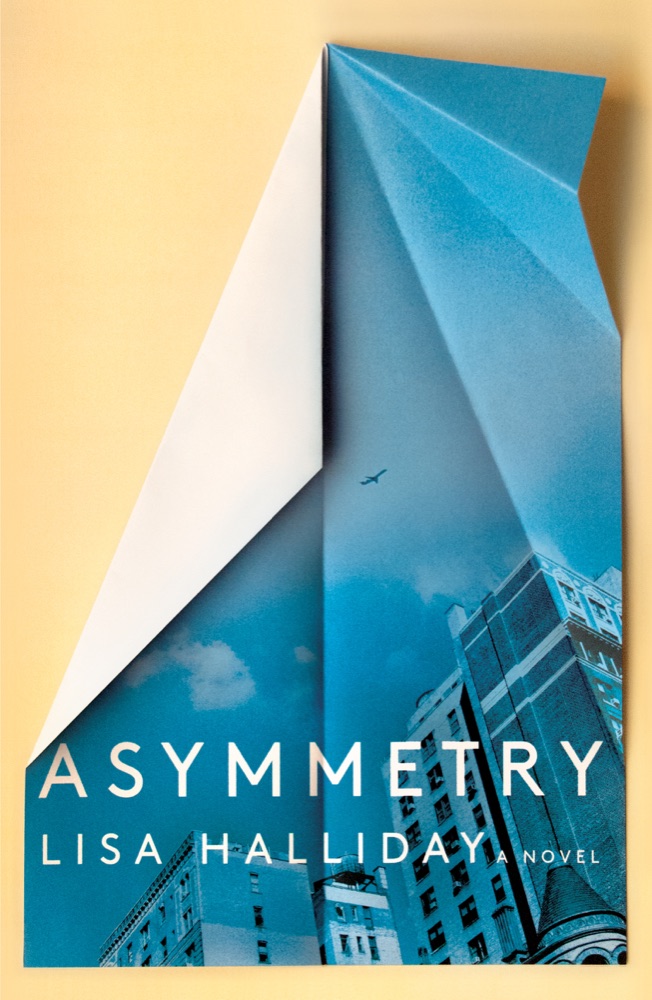 Asymmetry
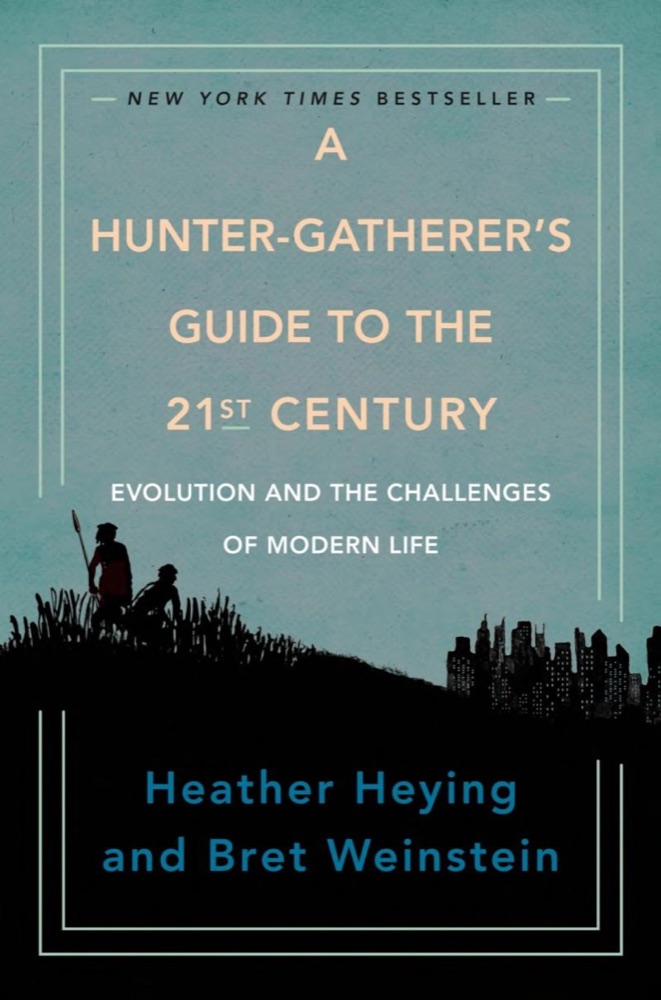 A Hunter-Gatherer's Guide to the 21st Century: Evolution and the Challenges of Modern Life
 Bright-Sided: How the Relentless Promotion of Positive Thinking Has Undermined America
 Revolution
 Finding Meaning in the Second Half of Life: How to Finally, Really Grow Up
 Consider the Lobster and Other Essays
 12 Rules for Life: An Antidote to Chaos
 Overwhelmed: Work, Love, and Play When No One Has the Time
 One Man's Meat
 Notes on a Nervous Planet
 Mastery
 The Measure of a Man: A Spiritual Autobiography
 Humankind: A Hopeful History
 The Closing of the American Mind
 The World Is Flat: A Brief History of the Twenty-first Century
 Very Good Lives: The Fringe Benefits of Failure and the Importance of Imagination
 The Mandibles: A Family, 2029–2047
 The Autobiography of Eleanor Roosevelt
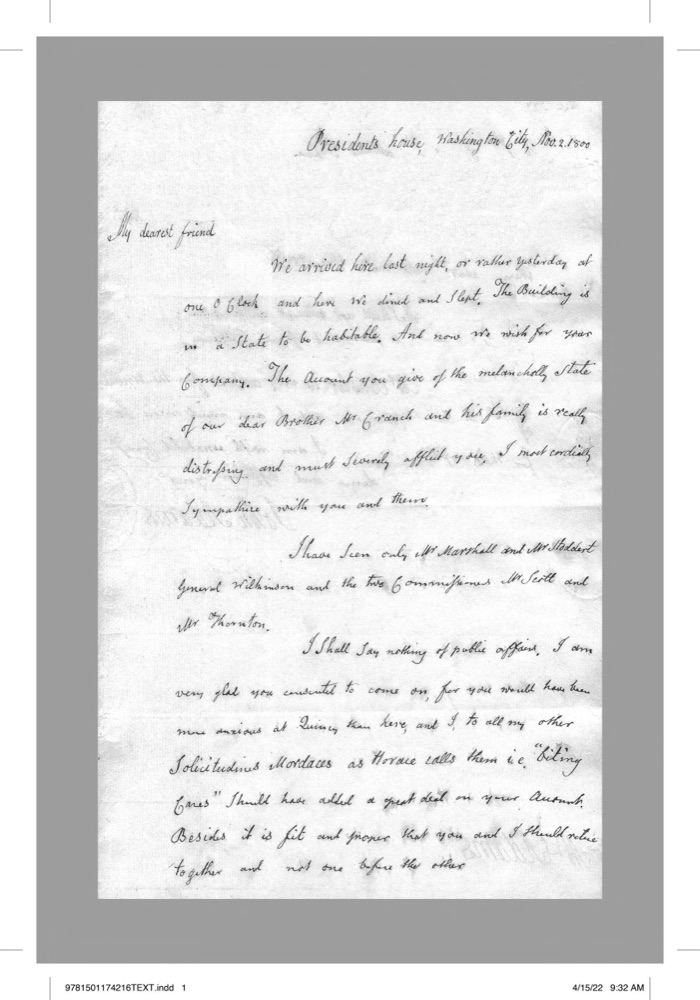 The American Spirit: Who We Are and What We Stand For
 The Anxious Generation: How the Great Rewiring of Childhood Caused an Epidemic of Mental Illness
 My Life on the Road
 When I Was a Child I Read Books
 Across That Bridge: A Vision for Change and the Future of America
 The Art of the Commonplace: The Agrarian Essays
 The Bassoon King: My Life in Art, Faith, and Idiocy
 The Last American Man