

 The Happiness Hypothesis: Finding Modern Truth in Ancient Wisdom
Quotes from the Book
My central claim in this book is that these two trends—overprotection in the real world and underprotection in the virtual world—are the major reasons why children born after 1995 became the anxious generation.
39
People don’t get depressed when they face threats collectively; they get depressed when they feel isolated, lonely, or useless.
38
As the Stoics and Buddhists taught long ago, happiness cannot be reached by eliminating all “triggers” from life; rather, happiness comes from learning to deprive external events of the power to trigger negative emotions in you.
34
This is the great irony of social media: the more you immerse yourself in it, the more lonely and depressed you become.
33
Experience, not information, is the key to emotional development.
33
In my 35 years of studying moral psychology, I have come to see this as one of humanity's greatest problems: we are too quick to anger and too slow to forgive. We are also hypocrites who judge others harshly while automatically justifying our own bad behavior.
22
the two big mistakes we’ve made: overprotecting children in the real world (where they need to learn from vast amounts of direct experience) and underprotecting them online (where they are particularly vulnerable during puberty).
18
The phone-based life makes it difficult for people to be fully present with others when they are with others, and to sit silently with themselves when they are alone.
16
Gen Z became the first generation in history to go through puberty with a portal in their pockets that called them away from the people nearby and into an alternative universe that was exciting, addictive, unstable, and—as I will show—unsuitable for children and adolescents.
12
People can’t really multitask; all we can do is shift attention back and forth between tasks while wasting a lot of it on each shift.[
10
Stress wood is a perfect metaphor for children, who also need to experience frequent stressors in order to become strong adults.
10
We don’t let preteens buy tobacco or alcohol, or enter casinos. The costs of using social media, in particular, are high for adolescents, compared with adults, while the benefits are minimal. Let children grow up on Earth first, before sending them to Mars.
9
Synchronous, face-to-face, physical interactions and rituals are a deep, ancient, and underappreciated part of human evolution.
8
The cost of a thing is the amount of . . . life which is required to be exchanged for it, immediately or in the long run.”[
7
While the reward-seeking parts of the brain mature earlier, the frontal cortex—essential for self-control, delay of gratification, and resistance to temptation—is not up to full capacity until the mid-20s, and preteens are at a particularly vulnerable point in development
7
There is a hole, an emptiness in us all, that we strive to fill. If it doesn’t get filled with something noble and elevated, modern society will quickly pump it full of garbage. That has been true since the beginning of the age of mass media, but the garbage pump got 100 times more powerful in the 2010s. It matters what we expose ourselves to.
5
Our goal in designing the places children play, she says, should be to “keep them as safe as necessary, not as safe as possible.”[
5
even when members of Gen Z are not on their devices and appear to be doing something in the real world, such as sitting in class, eating a meal, or talking with you, a substantial portion of their attention is monitoring or worrying (being anxious) about events in the social metaverse. As the MIT professor Sherry Turkle wrote in 2015 about life with smartphones, “We are forever elsewhere.”[33] This is a profound transformation of human consciousness and relationships,
5
In Walden, his 1854 reflection on simple living, Henry David Thoreau wrote, “The cost of a thing is the amount of . . . life which is required to be exchanged for it, immediately or in the long run.”[
5
Girls in virtual networks are subjected to hundreds of times more social comparison than girls had experienced for all of human evolution. They are exposed to more cruelty and bullying because social media platforms incentivize and facilitate relational aggression. Their openness and willingness to share emotions with other girls espouses them to depression and other disorders. The twisted incentive structures of social media reward the most extreme presentations of symptoms.
5
Neurons that fire together, wire together,’ meaning that activities that repeatedly activate a constellation of neurons cause those neurons to connect more closely, so if a child goes through puberty doing archery, or painting, or video games, or social media. It will cause lasting structural changes in the brain, especially if the activity is rewarding. This is how cultural experience changes the brain, producing a young adult who feels American instead of Japanese, or what is habitually in discover mode as opposed to defend mode.
5
Marcus Aurelius’s advice to himself, in the second century CE: Don’t waste the rest of your time here worrying about other people—unless it affects the common good. It will keep you from doing anything useful. You’ll be too preoccupied with what so-and-so is doing, and why, and what they’re saying, and what they’re thinking, and what they’re up to, and all the other things that throw you off and keep you from focusing on your own mind.[20]
4
The reduction is so severe that we might refer to smartphones and tablets in the hands of children as experience blockers.
4
We are physical, embodied creatures who evolved to use our hands, facial expressions, and head movements as communication channels, responding in real time to the similar movements of our partners. Gen Z is learning to pick emojis instead.
4
Children did not evolve to handle the virality, anonymity, instability, and potential for large-scale public shaming of the virtual world. Even adults have trouble with it.
3
Socially prescribed perfectionism is closely related to anxiety; people who suffer from anxiety are more prone to it. Being a perfectionist also increases your anxiety because you fear the shame of public failure from everything you do. And, as you’d expect by this point in the story, socially prescribed perfectionism began rising, across the Anglosphere nations, in the early 2010s.
3
The designers had not realized that young trees need wind to grow properly. When the wind blows, it bends the tree, which tugs at the roots on the windward side and compresses the wood on the other side. In response, the root system expands to provide a firmer anchor where it is needed, and the compressed wood cells change their structure to become stronger and firmer.
3
In humans (and other highly sociable mammals, such as dogs), the default setting is a major contributor to their individual personality. People (and dogs) who go through life in discover mode (except when directly threatened) are happier, more sociable, and more eager for new experiences. Conversely, people (and dogs) who are chronically in defend mode are more defensive and anxious, and they have only rare moments of perceived safety. They tend to see new situations, people, and ideas as potential threats, rather than as opportunities. Such chronic wariness was adaptive in some ancient environments, and may still be today for children raised in unstable and violent settings. But being stuck in defend mode is an obstacle to learning and growth in the physically safe environments that surround most children in developed nations
3
Children need a great deal of free play to thrive. It’s an imperative that’s evident across all mammal species. The small-scale challenges and setbacks that happen during play are like an inoculation that prepares children to face much larger challenges later.
2
Like young trees exposed to wind, children who are routinely exposed to small risks grow up to become adults who can handle much larger risks without panicking.
2
Did you know?
- The book was published on March 26, 2024, by Penguin Press.
- It spent many consecutive weeks on the New York Times nonfiction bestseller list and topped the list multiple times in 2024.
- Haidt proposes four foundational reforms, including no smartphones before high school and no social media before age 16.
- He identifies four key harms of a phone-based childhood: social deprivation, sleep deprivation, attention fragmentation, and addiction.
- Reuters credited the book's influence in Australia's 2025 law restricting social media access for users under 16.
- The book builds on Haidt's earlier collaboration with Greg Lukianoff, "The Coddling of the American Mind" (2018).
Watch on YouTube
About Jonathan Haidt
Jonathan Haidt (b. 1963) is an American social psychologist and the Thomas Cooley Professor of Ethical Leadership at New York University's Stern School of Business. Known for his work on moral psychology, he is the author of "The Happiness Hypothesis" and "The Righteous Mind" and co-author of "The Coddling of the American Mind."
More about the author →More by Jonathan Haidt
The Happiness Hypothesis: Finding Modern Truth in Ancient Wisdom
 The Righteous Mind: Why Good People Are Divided by Politics and Religion
 The Coddling of the American Mind: How Good Intentions and Bad Ideas Are Setting up a Generation for Failure
About the book
"The Anxious Generation" is social psychologist Jonathan Haidt's argument that childhood was "rewired" beginning in the early 2010s, as smartphones and social media replaced the play-based, independent childhoods that earlier generations enjoyed. Drawing on mental-health data, Haidt contends that this shift coincided with sharp rises in anxiety, depression, and self-harm among adolescents, particularly girls, and lays out what he calls the "great rewiring" of how young people spend their attention and time.
The book organizes its case around the decline of free play and real-world independence on one side and the rise of a "phone-based childhood" on the other. Haidt describes four core harms he attributes to heavy social-media use: social deprivation, sleep deprivation, attention fragmentation, and addiction. He argues for collective action, proposing norms such as no smartphones before high school, no social media before age 16, phone-free schools, and far more unsupervised play and real-world responsibility for children.
The book was a major commercial success, becoming a long-running New York Times bestseller and helping push youth-screen-time policy into mainstream debate; Reuters linked its influence to Australia's 2025 law restricting social media for under-16s. It also drew substantial scholarly and journalistic criticism: researchers including Candice Odgers, Amy Orben, and Andrew Przybylski argued that the evidence for a causal link between smartphones and the mental-health decline is weaker and more contested than Haidt presents, with some critics framing the book as a technological moral panic.
Book details
- First published
- 2024
- Length
- 400 pages
- Reading time
- 6 hours
- Author
- Jonathan Haidt
- Genre
- Nonfiction
- Goodreads rating
- 4.30 (209k ratings)
Critical reception
- Became a long-running New York Times nonfiction bestseller and topped the list multiple times in 2024.
- Developmental psychologist Candice Odgers argued the empirical evidence does not support Haidt's strong causal claims.
- Researchers Amy Orben and Andrew Przybylski have contended the link between smartphones and declining adolescent well-being is weak and contested.
- Some critics characterized the book as echoing earlier technology-driven moral panics.
Keep reading
 iGen: Why Today’s Super-Connected Kids Are Growing Up Less Rebellious, More Tolerant, Less Happy--and Completely Unprepared for Adulthood--and What That Means for the Rest of Us
 The Boy Who Was Raised as a Dog: And Other Stories from a Child Psychiatrist's Notebook
The Coddling of the American Mind: How Good Intentions and Bad Ideas Are Setting up a Generation for Failure
The Boy Who Was Raised as a Dog: And Other Stories from a Child Psychiatrist's Notebook
The Coddling of the American Mind: How Good Intentions and Bad Ideas Are Setting up a Generation for Failure
 The Social Animal: The Hidden Sources of Love, Character, and Achievement
 Social Intelligence: The New Science of Human Relationships
 The Vanishing American Adult: Our Coming-of-Age Crisis—and How to Rebuild a Culture of Self-Reliance
 What Made Maddy Run: The Secret Struggles and Tragic Death of an All-American Teen
 Lost Connections: Uncovering the Real Causes of Depression - and the Unexpected Solutions
 Scattered Minds: The Origins and Healing of Attention Deficit Disorder
 All Joy and No Fun: The Paradox of Modern Parenthood
 Social: Why Our Brains Are Wired to Connect
 A Hunter-Gatherer's Guide to the 21st Century: Evolution and the Challenges of Modern Life
 Good Reasons for Bad Feelings: Insights from the Frontier of Evolutionary Psychiatry
 Scarcity Brain: Fix Your Craving Mindset and Rewire Your Habits to Thrive with Enough
 Irresistible: The Rise of Addictive Technology and the Business of Keeping Us Hooked
 Overwhelmed: Work, Love, and Play When No One Has the Time
 Why Zebras Don't Get Ulcers
 How to Raise an Adult: Break Free of the Overparenting Trap and Prepare Your Kid for Success
 Simplicity Parenting: Using the Extraordinary Power of Less to Raise Calmer, Happier, and More Secure Kids
 The Collapse of Parenting: How We Hurt Our Kids When We Treat Them Like Grown-Ups
 The Defining Decade: Why Your Twenties Matter—And How to Make the Most of Them Now
 How to Break Up with Your Phone: The 30-Day Plan to Take Back Your Life
 Stolen Focus: Why You Can't Pay Attention— and How to Think Deeply Again
 The Age of Magical Overthinking: Notes on Modern Irrationality
 Good Morning, Monster: A Therapist Shares Five Heroic Stories of Emotional Recovery
 Passages: Predictable Crises of Adult Life
 The School of Life: An Emotional Education
 Troubled: A Memoir of Foster Care, Family, and Social Class
 Tribe: On Homecoming and Belonging
 Antifragile: Things That Gain from Disorder
 Natural Causes: An Epidemic of Wellness, the Certainty of Dying, and Killing Ourselves to Live Longer
 Why Has Nobody Told Me This Before?
 The Danish Way of Parenting: What the Happiest People in the World Know About Raising Confident, Capable Kids
 Dopamine Nation: Finding Balance in the Age of Indulgence
 Notes on a Nervous Planet
 Life Reimagined: The Science, Art, and Opportunity of Midlife
 What Happened To You?: Conversations on Trauma, Resilience, and Healing
 Humankind: A Hopeful History
 The Laws of Human Nature
 For Your Own Good: Hidden Cruelty in Child-Rearing and the Roots of Violence
 Atlas of the Heart: Mapping Meaningful Connection and the Language of Human Experience
 Unfuck Your Brain: Using Science to Get Over Anxiety, Depression, Anger, Freak-Outs, and Triggers
 When the Body Says No: The Cost of Hidden Stress
 Homo Deus: A History of Tomorrow
 Running on Empty: Overcome Your Childhood Emotional Neglect
 Monkey Mind: A Memoir of Anxiety
 A Language Older Than Words
 First, We Make the Beast Beautiful: A New Story About Anxiety
 Different, Not Less: A Neurodivergent's Guide to Embracing Your True Self and Finding Your Happily Ever After
 Behave: The Biology of Humans at Our Best and Worst
 Why We Can't Sleep: Women's New Midlife Crisis
 The Burnout Society
 The Lost World
 In the Realm of Hungry Ghosts: Close Encounters with Addiction
 The Tipping Point: How Little Things Can Make a Big Difference
 All Is Not Forgotten
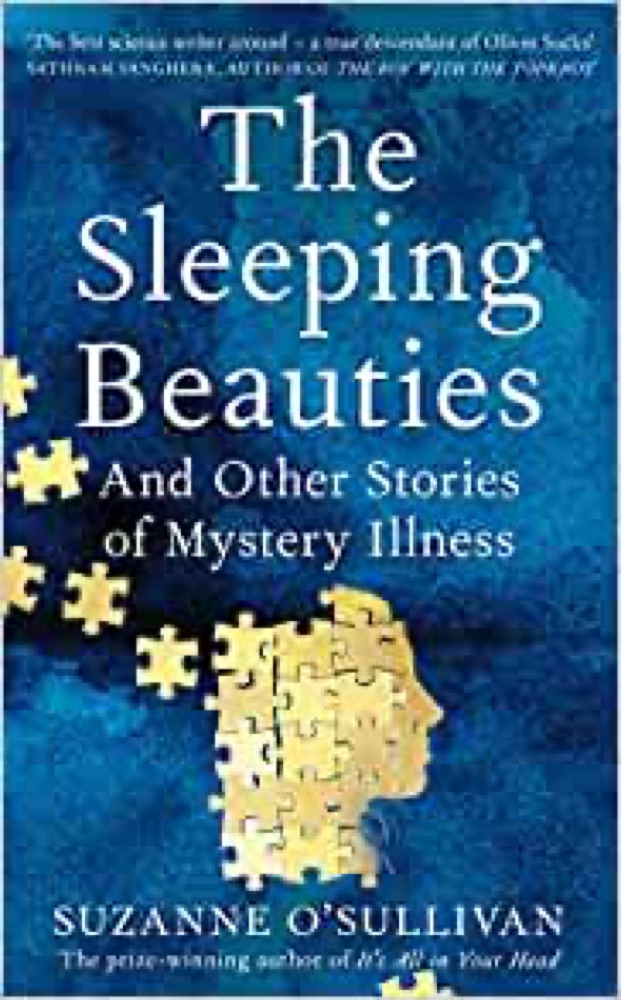 The Sleeping Beauties: And Other Stories of Mystery Illness
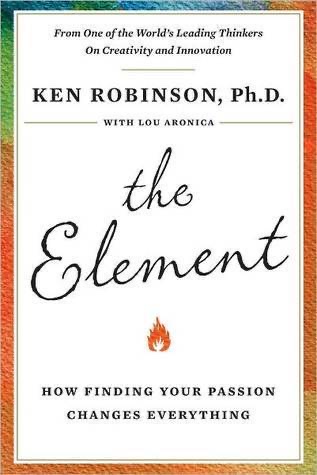 The Element: How Finding Your Passion Changes Everything