
 How Children Fail
Quotes from the Book
Everyone who has ever been to school knows that school is prison, but almost nobody beyond school age says it is. It's not polite. We all tiptoe around the truth because admitting it would make us seem cruel and would point a finger at well-intentioned people doing what they believe to be essential. . . . A prison, according to the common, general definition, is any place of involuntary confinement and restriction of liberty. In school, as in adult prisons, the inmates are told exactly what they must do and are punished for failure to comply. Actually, students in school must spend more time doing exactly what they are told than is true of adults in penal institutions. Another difference, of course, is that we put adults in prison because they have committed a crime, while we put children in school because of their age.
30
The biggest, most enduring lesson of school is that learning is work, to be avoided when possible.
13
Sadly, in many cases, the assumption that children are incompetent, irresponsible, and in need of constant direction and supervision becomes a self-fulfilling prophecy. The children themselves become convinced of their incompetence and irresponsibility, and may act accordingly. The surest way to foster any trait in a person is to treat that person as if he or she already has it.
11
Self-education through play and exploration requires enormous amounts of unscheduled time—time to do whatever one wants to do, without pressure, judgment, or intrusion from authority figures. That time is needed to make friends, play with ideas and materials, experience and overcome boredom, learn from one’s own mistakes, and develop passions.
11
We have forgotten that children are designed by nature to learn through self-directed play and exploration, and so, more and more, we deprive them of freedom to learn, subjecting them instead to the tedious and painfully slow learning methods devised by those who run the schools.
10
Perhaps kids today play on the computer as much as they do partly because that is one place where they can play freely, without adult intervention and direction.
9
Once compulsory systems of state-run schools were established, they became increasingly standardized, both in content and in method. For the sake of efficiency, children were divided into separate classrooms by age and passed along, from grade to grade, like products on an assembly line. The task of each teacher was to add bits of officially approved knowledge to the product, in accordance with a preplanned schedule, and then to test that product before passing it on to the next station.
8
If freedom, personal responsibility, self-initiative, honesty, integrity, and concern for others rank high in your system of values, and if they represent characteristics you would like to see in your children, then you will want to be a trustful parent. None of these can be taught by lecturing, coercion, or coaxing. They are acquired or lost through daily life experiences that reinforce or suppress them. You can help your children build these values by living them yourself and applying them in your relationship with your children. Trust promotes trustworthiness. Self-initiative and all of the traits that depend on self-initiative can develop only under conditions of freedom.
7
Some people fear that violent play creates violent adults, but in reality the opposite is true. Violence in the adult world leads children, quite properly, to play at violence. How else can they prepare themselves emotionally, intellectually, and physically for reality? It is wrong to think that somehow we can reform the world for the future by controlling children’s play and controlling what they learn. If we want to reform the world, we have to reform the world; children will follow suit. The children must, and will, prepare themselves for the real world to which they must adapt to survive.
6
The primary educational concern of leaders in government and industry was not to make people literate, but to gain control over what people read, what they thought, and how they behaved.
5
Trustful parents enjoy their kids; they don’t think of them as their “project.
5
The belief that young people are incapable of making reasonable decisions is a cornerstone of our system of compulsory, closely monitored education.
4
It is nothing short of a miracle that the modern methods of instruction have not yet entirely strangled the holy curiosity of inquiry; for this delicate plant, aside from stimulation, stands mainly in need of freedom; without this it goes to wreck and ruin without fail. It is a very grave mistake to think that the enjoyment of seeing and searching can be promoted by means of coercion and a sense of duty.
4
Repetition and memorization of imposed lessons are indeed tedious work for children, whose instincts urge them constantly to play and think freely, raise their own questions, and explore the world in their own ways. Children did not adapt well to forced schooling, and in many cases they rebelled. This was no surprise to the adults. By this point in history, the idea that children’s own preferences had any value had been pretty well forgotten. Brute force, long used to keep children on task in fields and factories, was transported into the classroom to make children learn. Some of the underpaid, ill-prepared schoolmasters were quite sadistic. One master in Germany kept records of the punishments he meted out in fifty-one years of teaching, a partial list of which included: “911,527 blows with a rod, 124,010 blows with a cane, 20,989 taps with a ruler, 136,715 blows with the hand, 10,235 blows to the mouth, 7,905 boxes on the ear, and 1,118,800 blows on the head.”25 Clearly he was proud of all the educating he had done.
4
the kids who can’t adapt to school’s tedium are diagnosed with ADHD and are put on powerful psychoactive drugs, which have the immediate effect of reducing their spontaneity so they can attend to the teacher and complete the senseless busywork. Nobody knows the long-term effects of these drugs on the human brain, but research with animals suggests that one effect may be to interfere with the normal development of the brain connections that lead children generally to become more controlled, less impulsive, with age and maturity.13 Perhaps that helps to explain why today we see more and more cases of ADHD extending into adulthood. As with lots of psychoactive drugs, the drugs used to treat ADHD may be creating long-term dependency.
4
Older children help younger ones when they play together, and in that way they learn to lead and nurture and develop a concept of themselves as mature and caring. But little of this can occur in school, where children are forced to associate only with others of their own age and where free, unsupervised play is rare or absent.
3
Adult direction leads to the assumption that rules are determined by an outside authority and thus not to be questioned. When children play just among themselves, however, they come to realize that rules are merely conventions, established to make the game more fun and more fair, and can be changed to meet changing conditions. For life in a democracy, few lessons are more valuable.
3
Agriculture brought to human beings more than a new way of procuring food. It introduced a new way of thinking about the relationship between humans an nature. Hunter-gatherers considered themselves to be part of the natural world; they lived with nature, not against it. They accepted nature`s twist and turns as inevitable and adapted to them as best they could. Agriculture, on the other hand, is a continuous exercise in controlling nature; it involves the taming and controlling of plants and animals, to make them servants to humans rather than equal partners in the natural world. With agriculture, I suggest, humans began to extend this idea of control over nature to other aspects of the natural world, including children.
2
In our culture today, parents and other adults overprotect children from possible dangers in play. We seriously underestimate children’s ability to take care of themselves and make good judgments. In this respect, we differ not just from hunter-gatherer cultures (as described in Chapter 2), but from all traditional cultures in which children played freely. Our underestimation becomes a self-fulfilling prophecy—by depriving children of freedom, we deprive them of the opportunities they need to learn how to take control of their own behavior and emotions.
Watch on YouTube
About Peter O. Gray
We have collected 19 quotes from 1 book by Peter O. Gray on BookQuoters.
More about the author →About the book
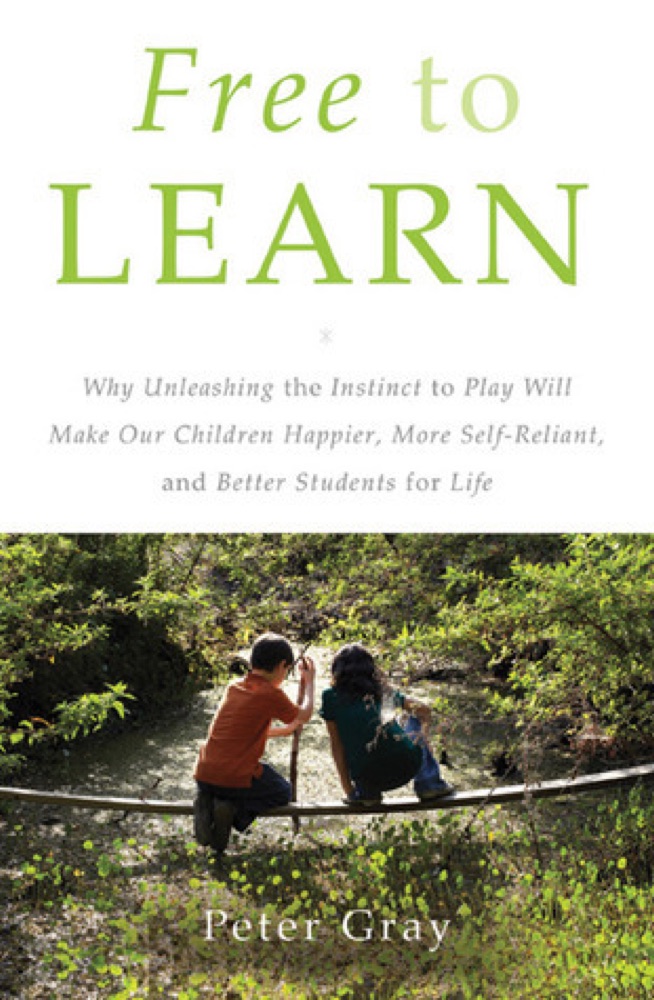
Our children spend their days being passively instructed, and made to sit still and take tests—often against their will. We call this imprisonment schooling, yet wonder why kids become bored and misbehave. Even outside of school children today seldom play and explore without adult supervision, and are afforded few opportunities to control their own lives. The result: anxious, unfocused children who see schooling—and life—as a series of hoops to struggle through.
In Free to Learn, developmental psychologist Peter Gray argues that our children, if free to pursue their own interests through play, will not only learn all they need to know, but will do so with energy and passion. Children come into this world burning to learn, equipped with the curiosity, playfulness, and sociability to direct their own education. Yet we have squelched such instincts in a school model originally developed
Book details
- First published
- 2013
- Author
- Peter O. Gray
- Genre
- Nonfiction
- Goodreads rating
- 4.24 (4k ratings)
Keep reading
How Children Fail
 Dumbing Us Down: The Hidden Curriculum of Compulsory Education
 The Core
 The Vanishing American Adult: Our Coming-of-Age Crisis—and How to Rebuild a Culture of Self-Reliance
 The Absorbent Mind
 The Gift of Failure: How the Best Parents Learn to Let Go So Their Children Can Succeed
 How Children Learn
 The Brave Learner: Finding Everyday Magic in Homeschool, Learning, and Life
 The Collapse of Parenting: How We Hurt Our Kids When We Treat Them Like Grown-Ups
 How to Raise an Adult: Break Free of the Overparenting Trap and Prepare Your Kid for Success
 Deschooling Society
 Montessori from the Start: The Child at Home, from Birth to Age Three
 Punished by Rewards: The Trouble with Gold Stars, Incentive Plans, A's, Praise and Other Bribes
 The Smartest Kids in the World: And How They Got That Way
 Creative Schools: The Grassroots Revolution That's Transforming Education
 All Joy and No Fun: The Paradox of Modern Parenthood
 The Social Animal: The Hidden Sources of Love, Character, and Achievement
 Simplicity Parenting: Using the Extraordinary Power of Less to Raise Calmer, Happier, and More Secure Kids
 The Element: How Finding Your Passion Changes Everything
 The Lost Tools of Learning
 The Four-Hour School Day: How You and Your Kids Can Thrive in the Homeschool Life
 Summerhill: A Radical Approach to Child Rearing
 The Anxious Generation: How the Great Rewiring of Childhood Caused an Epidemic of Mental Illness
 Emile or On Education
 The Danish Way of Parenting: What the Happiest People in the World Know About Raising Confident, Capable Kids
 Experience and Education
 For Your Own Good: Hidden Cruelty in Child-Rearing and the Roots of Violence
 Between Parent and Child
 The Boy Who Was Raised as a Dog: And Other Stories from a Child Psychiatrist's Notebook
 NurtureShock: New Thinking About Children
 A Beautiful Day in the Neighborhood: The Poetry of Mister Rogers
 The Death and Life of the Great American School System: How Testing and Choice Are Undermining Education
 Boundaries with Kids: How Healthy Choices Grow Healthy Children
 Walden Two
 The Read-Aloud Handbook
 Parent Effectiveness Training: The Proven Program for Raising Responsible Children
 Not for Profit: Why Democracy Needs the Humanities
 How We Learn: Why Brains Learn Better Than Any Machine . . . for Now
 Playful Parenting: An Exciting New Approach to Raising Children That Will Help You Nurture Close Connections, Solve Behavior Problems, and Encourage Confidence
 Excellent Sheep: The Miseducation of the American Elite and the Way to a Meaningful Life
 The Coddling of the American Mind: How Good Intentions and Bad Ideas Are Setting up a Generation for Failure
 Coming Apart: The State of White America, 1960-2010
 Shop Class as Soulcraft: An Inquiry Into the Value of Work
 The Geeks Shall Inherit the Earth: Popularity, Quirk Theory and Why Outsiders Thrive After High School
 Shepherding a Child's Heart
 How to Talk So Little Kids Will Listen: A Survival Guide to Life with Children Ages 2-7
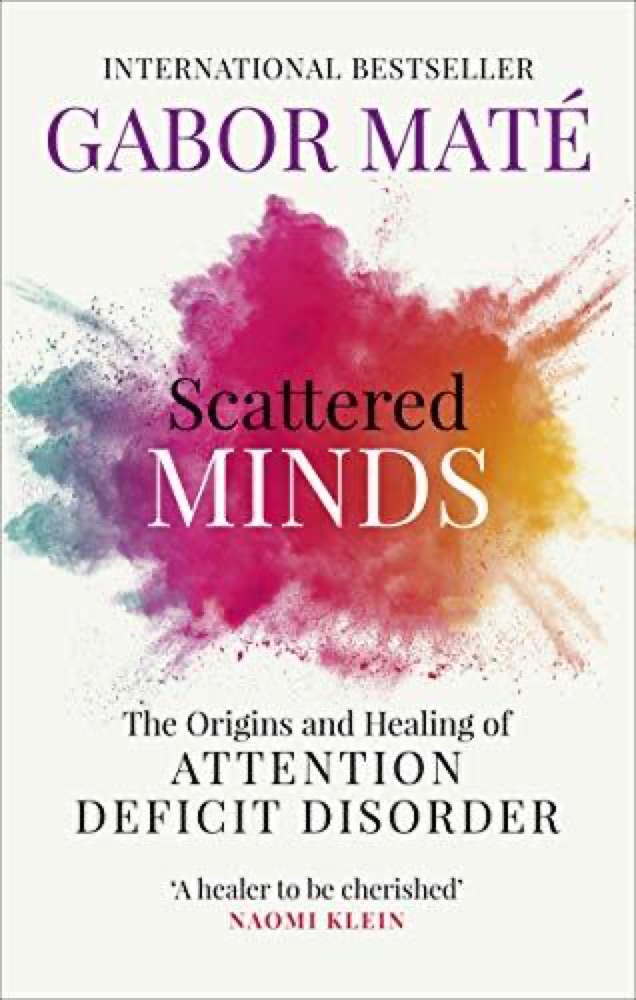 Scattered Minds: The Origins and Healing of Attention Deficit Disorder
 Mastery
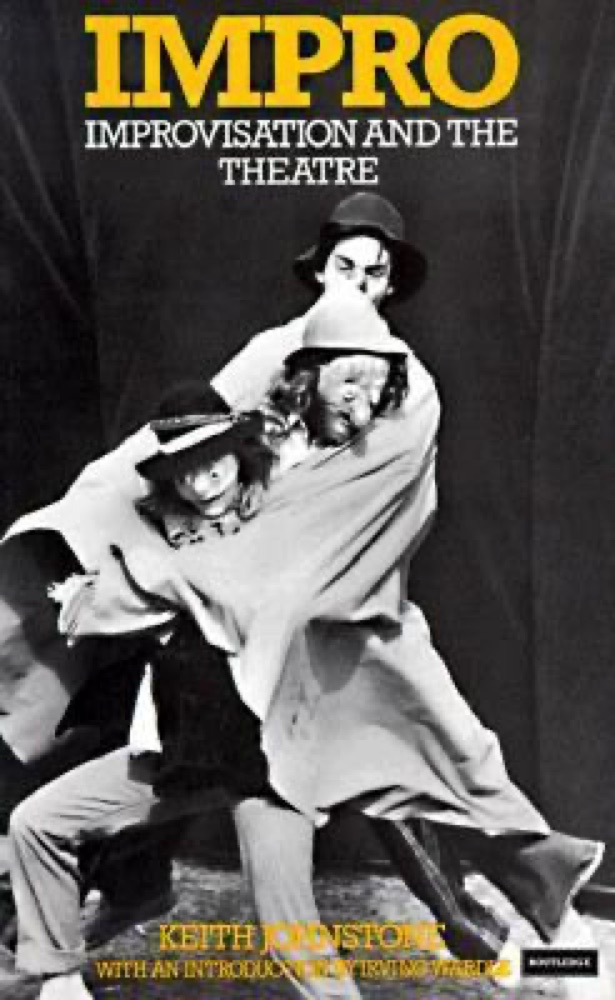 Impro: Improvisation and the Theatre
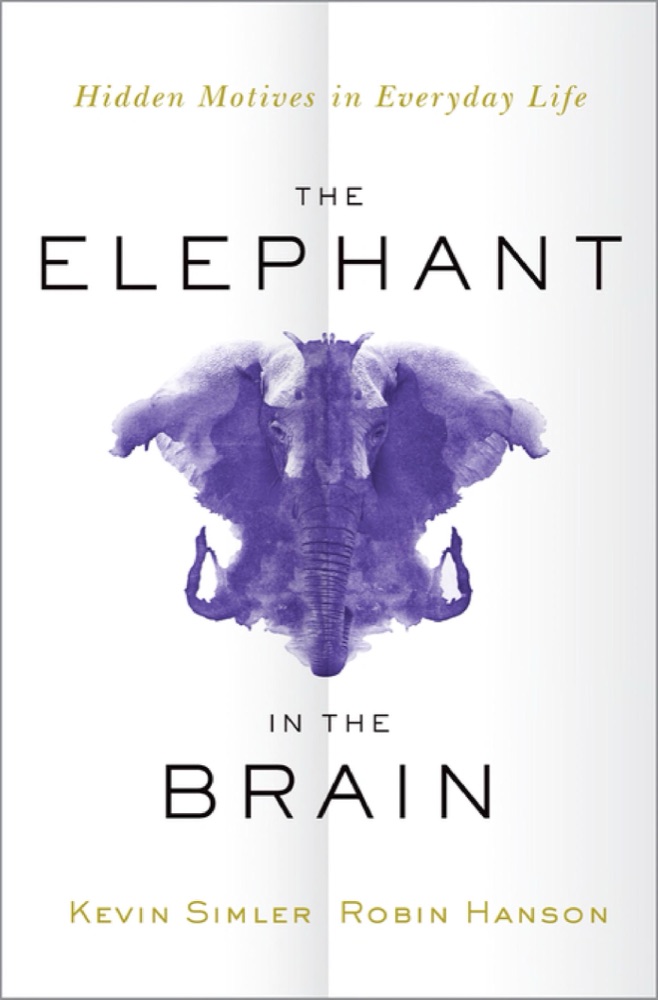 The Elephant in the Brain: Hidden Motives in Everyday Life
 The Read-Aloud Family: Making Meaningful and Lasting Connections with Your Kids
 Drive: The Surprising Truth About What Motivates Us
 Flow: The Psychology of Optimal Experience
 The Wild and Free Family: Forging Your Own Path to a Life Full of Wonder, Adventure, and Connection
 Finding Flow: The Psychology of Engagement with Everyday Life
 We Make the Road by Walking: Conversations on Education and Social Change
 The Blessing of a Skinned Knee: Using Jewish Teachings to Raise Self-Reliant Children
 Kids These Days: Human Capital and the Making of Millennials