
 The Anxious Generation: How the Great Rewiring of Childhood Caused an Epidemic of Mental Illness
Quotes from the Book
Kids need to learn that you need to feel bad sometimes. We learn through experience, and we learn especially through bad experiences.
8
iGen is on the verge of the most severe mental health crisis for young people in decades. On the surface, though, everything is fine.
5
Yet GenX'er teens didn't slow down--they were just as likely to drive, drink alcohol, and date as their Boomer peers and more likely to have sex and get pregnant as teens. But then they waited longer to reach full adulthood with careers and children. So GenX'ers managed to lengthen adolescence beyond all previous limits: they started becoming adults earlier and finished becoming adults later.
4
All in all, in-person social interaction is much better for mental health than electronic communication.
4
Wanting to feel safe all of the time can also lead to wanting to protect against emotional upset—the concern with “emotional safety” somewhat unique to iGen. That can include preventing bad experiences, sidestepping situations that might be uncomfortable, and avoiding people with ideas different from your own. That’s where things get dicey—both for iGen and for the older generations struggling to understand them.
4
Another study of adults found the same thing: the more people used Facebook, the lower their mental health and life satisfaction at the next assessment.
4
Adolescence--the time when teens begin to do things adults do--now happens later. Thirteen-year-olds--and even 18-year-olds-- are less likely to act like adults and spend their time like adults. They are more likely, instead, to act like children--not by being immature, necessarily, but by postponing the usual activities of adults. Adolescence is now an extension of childhood rather than the beginning of adulthood.
3
Nearly 40% of iGen high school seniors in 2016 had never tried alcohol at all, and the number of 8th graders who have tried alcohol has been cut nearly in half.
2
Fewer teens having sex is one of the reasons behind what many see as one of the most positive youth trends in recent years: the teen birthrate hit an all-time low in 2015, cut by more than half since its modern peak in the early 1990s.
2
iGen’ers are more likely than any generation before them to be raised by religiously unaffiliated parents.
2
In the three years I spent working on this book, making dozens of line graphs, reading campus newspapers, and listening to the stories and opinions of young people during in-depth interviews, I’ve realized this: iGen’ers are scared, maybe even terrified. Growing up slowly, raised to value safety, and frightened by the implications of income inequality, they have come to adolescence in a time when their primary social activity is staring at a small rectangular screen that can like them or reject them. The devices they hold in their hands have both extended their childhoods and isolated them from true human interaction. As a result, they are both the physically safest generation and the most mentally fragile.
1
If an activity involves a screen, it’s linked to less happiness and more depression. If it doesn’t—particularly if it involves in-person social interaction or exercise—it’s linked to more happiness and less depression.
1
Many teens communicate with their friends electronically far more than they do face-to-face, with as-yet-unknown consequences for their budding social skills. We already know that depression and anxiety have risen at an unprecedented rate and that twice as many young teens commit suicide as just a few years ago. It seems abundantly clear that screen time needs to be cut.
1
many tech CEOs strictly regulate their own children’s technology use. When New York Times reporter Nick Bilton talked to Apple cofounder and CEO Steve Jobs in late 2010, he asked Jobs if his kids loved the iPad. “They haven’t used it,” Jobs said. “We limit how much technology our kids use at home.” Bilton was shocked, but he later found that many other tech experts also limited their children’s screen time, from the cofounder of Twitter to the former editor of Wired magazine. So even people who love technology—and make a living off it—are cautious about their kids using it too much. As Adam Alter put it in his book Irresistible, “It seemed as if the people producing tech products were following the cardinal rule of drug dealing: Never get high on your own supply.
1
iGen’ers are addicted to their phones, and they know it. Many also know it’s not entirely a good thing. It’s clear that most teens (and adults) would be better off if they spent less time with screens. “Social media is destroying our lives,” one teen told Nancy Jo Sales in her book American Girls. “So why don’t you go off it?” Sales asked. “Because then we would have no life,” the girl said.
1
The embrace of safety and protection now extends to course readings, which must be sanitized to remove anything that might offend someone. In his piece “I’m a Liberal Professor, and My Liberal Students Terrify Me,” Edward Schlosser noted that many faculty members have changed their syllabi for fear of being fired if students complain about offensive material in the course readings. One adjunct professor, he noted, was let go when “students complained that he exposed them to ‘offensive’ texts written by Edward Said and Mark Twain. His response, that the texts were meant to be a little upsetting, only fueled the students’ ire and sealed his fate.” The focus, he says, is now on students’ emotional state rather than on their intellectual development, sacrificing challenging discussions for the possibility that a student might feel upset.
1
Many iGen’ers are so addicted to social media that they find it difficult to put down their phones and go to sleep when they should. “I stay up all night looking at my phone,” admits a 13-year-old from New Jersey in American Girls. She regularly hides under her covers at night, texting, so her mother doesn’t know she’s awake. She wakes up tired much of the time, but, she says, “I just drink a Red Bull.” Thirteen-year-old Athena told me the same thing: “Some of my friends don’t go to sleep until, like, two in the morning. “I assume just for summer?” I asked. “No, school, too,” she said. “And we have to get up at six forty-five.” Smartphone use may have decreased teens’ sleep time: more teens now sleep less than seven hours most nights (see Figure 4.12). Sleep experts say that teens should get about nine hours of sleep a night, so a teen who is getting less than seven hours a night is significantly sleep deprived. Fifty-seven percent more teens were sleep deprived in 2015 than in 1991. In just the three years between 2012 and 2015, 22% more teens failed to get seven hours of sleep.
1
Teens are physically safer than ever and are making less risky choices than generations past. It’s part of a larger picture of growing up more slowly rather than an overall shift toward responsibility, but it is still undeniably good that they are safer. Other trends are more troubling: How can we protect our kids from anxiety, depression, and loneliness in our digital age? What can parents and colleges do to ease the transition from high school to college when fewer students have experienced independence
1
The trends that have shaped iGen are the usual mix of good and bad, with a healthy amount of “it depends” thrown in.
1
By 2014, more 18- to 34-year-olds were living with their parents than with a spouse or romantic partner.
1
iGen’ers’ drumbeats of growing up slowly, individualism, and safety all manifest themselves in their exceedingly cautious attitude toward relationships.
1
Some suggest that this cocoon mentality is behind recent campus trends such as "trigger warnings" to alert students that a reading or lecture material might be disturbing and "safe spaces" where students can go if they are upset by a campus speaker's message. One safe space, for example, featured coloring books and videos of frolicking puppies, neatly connecting the idea of safe spaces with that of childhood.
1
No matter what the cause, the result is the same: iGen teens are less likely to experience the freedom of being out of the house without their parents--those first tantalizing tastes of the independence of being an adult, those times when teens make their own decisions, good or bad.
1
Managers who can give them some security, along with some nurturance, may well find themselves with the hardest-working group of young people to come along in a decade or even two.
1
We protect children from danger, real and imaginary, and are then surprised when they go to college and create safe spaces designed to repel the real world.
1
...social media is not real life. Her photos, which looked like casual snaps, actually took several hours to set up and up to a hundred attempts to get right...
1
only 28% of 12th graders in 2015 attended services once a week, down from 40% in 1976.
1
A stunning 31% more 8th and 10th graders felt lonely in 2015 than in 2011, along with 22% more 12th graders
1
In the next decade we may see more young people who know just the right emoji for a situation—but not the right facial expression.
1
iGen idea: the world is an inherently dangerous place because every social interaction carries the risk of being hurt. You never know what someone is going to say, and there’s no way to protect yourself from it.
1
Watch on YouTube
About Jean M. Twenge
We have collected 30 quotes from 1 book by Jean M. Twenge on BookQuoters.
More about the author →About the book
A highly readable and entertaining first look at how today’s members of iGen—the children, teens, and young adults born in the mid-1990s and later—are vastly different from their Millennial predecessors, and from any other generation, from the renowned psychologist and author of Generation Me .
With generational divides wider than ever, parents, educators, and employers have an urgent need to understand today’s rising generation of teens and young adults. Born in the mid-1990s to the mid-2000s and later, iGen is the first generation to spend their entire adolescence in the age of the smartphone. With social media and texting replacing other activities, iGen spends less time with their friends in person—perhaps why they are experiencing unprecedented levels of anxiety, depression, and loneliness.
But technology is not the only thing that makes iGen distinct from every generation before
Book details
- First published
- 2017
- Author
- Jean M. Twenge
- Genre
- Nonfiction
- Goodreads rating
- 3.78 (6k ratings)
Keep reading
The Anxious Generation: How the Great Rewiring of Childhood Caused an Epidemic of Mental Illness
 What Made Maddy Run: The Secret Struggles and Tragic Death of an All-American Teen
 Why We Can't Sleep: Women's New Midlife Crisis
 Kids These Days: Human Capital and the Making of Millennials
 The Vanishing American Adult: Our Coming-of-Age Crisis—and How to Rebuild a Culture of Self-Reliance
 NurtureShock: New Thinking About Children
 How to Raise an Adult: Break Free of the Overparenting Trap and Prepare Your Kid for Success
 The Collapse of Parenting: How We Hurt Our Kids When We Treat Them Like Grown-Ups
 American Girls: Social Media and the Secret Lives of Teenagers
 The Coddling of the American Mind: How Good Intentions and Bad Ideas Are Setting up a Generation for Failure
 Irreversible Damage: The Transgender Craze Seducing Our Daughters
 The Geeks Shall Inherit the Earth: Popularity, Quirk Theory and Why Outsiders Thrive After High School
 All Joy and No Fun: The Paradox of Modern Parenthood
 The Gift of Failure: How the Best Parents Learn to Let Go So Their Children Can Succeed
 Troubled: A Memoir of Foster Care, Family, and Social Class
 The Defining Decade: Why Your Twenties Matter—And How to Make the Most of Them Now
 The 57 Bus
 Irresistible: The Rise of Addictive Technology and the Business of Keeping Us Hooked
 One in a Millennial: On Friendship, Feelings, Fangirls, and Fitting In
 Coming Apart: The State of White America, 1960-2010
 A Hunter-Gatherer's Guide to the 21st Century: Evolution and the Challenges of Modern Life
 Do Hard Things: A Teenage Rebellion Against Low Expectations
 Passages: Predictable Crises of Adult Life
 Life Reimagined: The Science, Art, and Opportunity of Midlife
 The Danish Way of Parenting: What the Happiest People in the World Know About Raising Confident, Capable Kids
 The Boy Who Was Raised as a Dog: And Other Stories from a Child Psychiatrist's Notebook
 Elderhood: Redefining Aging, Transforming Medicine, Reimagining Life
 The Unseen Terrorist
 Different, Not Less: A Neurodivergent's Guide to Embracing Your True Self and Finding Your Happily Ever After
 Overwhelmed: Work, Love, and Play When No One Has the Time
 Free-Range Kids: Giving Our Children the Freedom We Had Without Going Nuts With Worry
 The Social Animal: The Hidden Sources of Love, Character, and Achievement
 Generation X: Tales for an Accelerated Culture
 How to Break Up with Your Phone: The 30-Day Plan to Take Back Your Life
 Social: Why Our Brains Are Wired to Connect
 Simplicity Parenting: Using the Extraordinary Power of Less to Raise Calmer, Happier, and More Secure Kids
 Late Bloomers: The Power of Patience in a World Obsessed with Early Achievement
 Where Am I Now?
 The Element: How Finding Your Passion Changes Everything
 Lost Connections: Uncovering the Real Causes of Depression - and the Unexpected Solutions
 The Age of Magical Overthinking: Notes on Modern Irrationality
 A Mother's Reckoning: Living in the Aftermath of Tragedy
 Rant
Rant
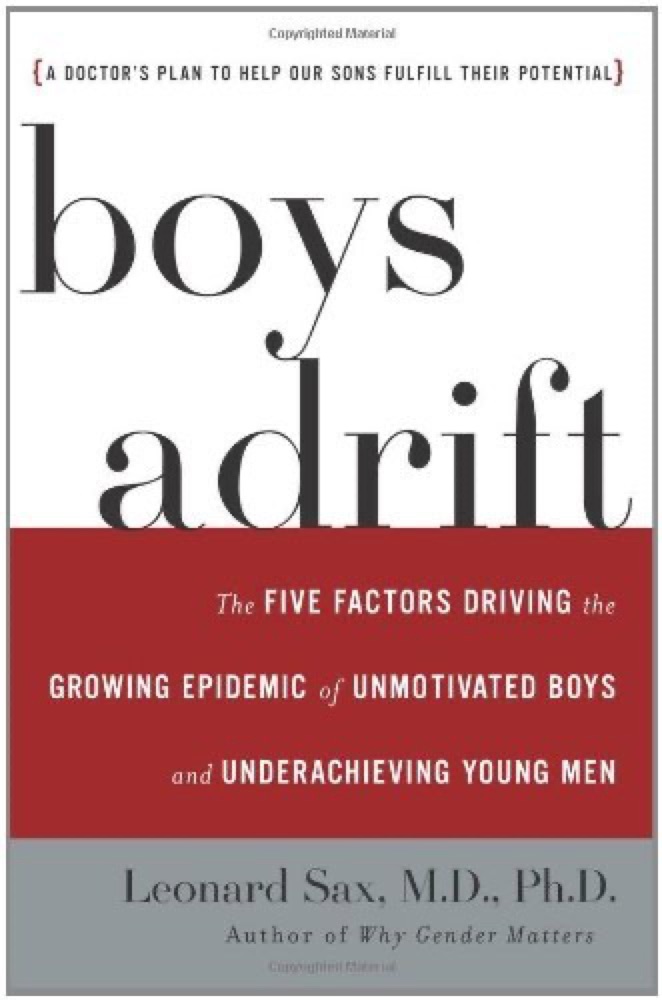 Boys Adrift: The Five Factors Driving the Growing Epidemic of Unmotivated Boys and Underachieving Young Men
 Scattered Minds: The Origins and Healing of Attention Deficit Disorder
 The Rosie Effect
 Little Victories: Perfect Rules for Imperfect Living
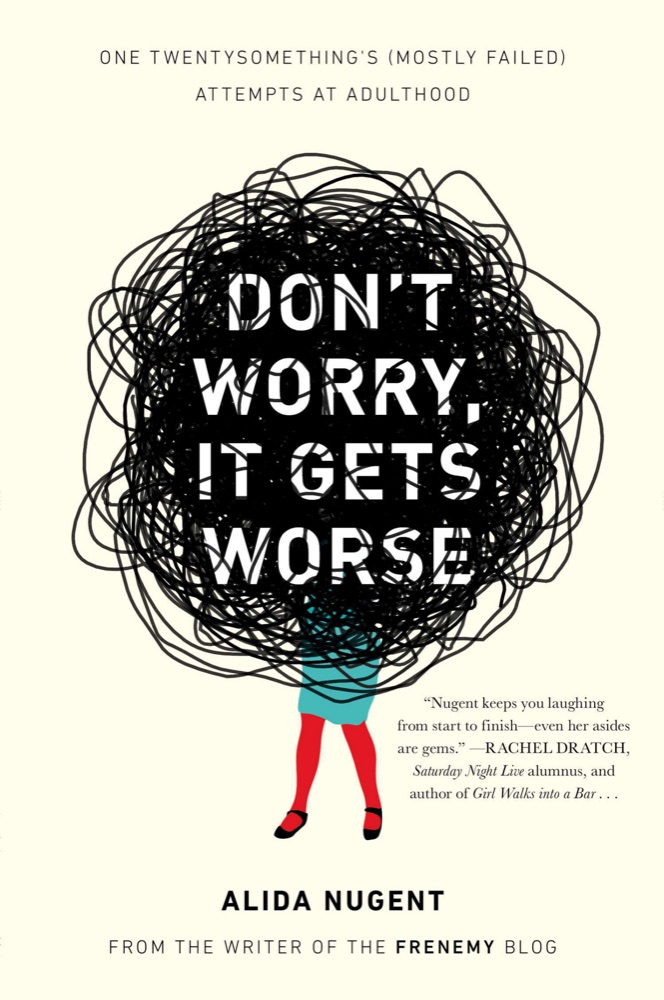 Don't Worry, It Gets Worse: One Twentysomething's (Mostly Failed) Attempts at Adulthood
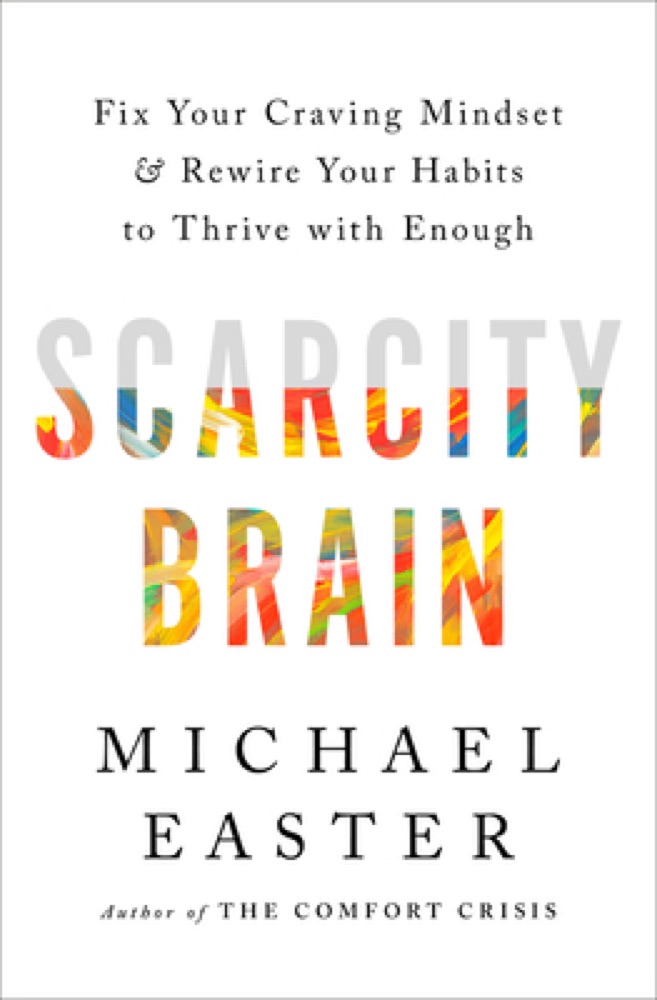 Scarcity Brain: Fix Your Craving Mindset and Rewire Your Habits to Thrive with Enough
 White
White
 Excellent Sheep: The Miseducation of the American Elite and the Way to a Meaningful Life
 The 7 Habits Of Highly Effective Teens
 Orient
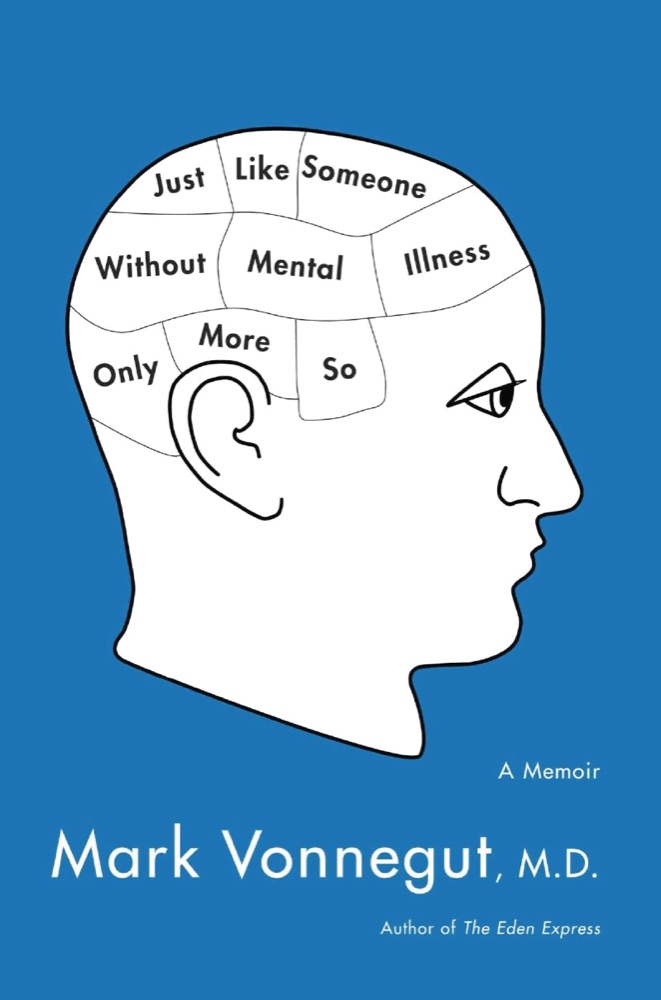 Just Like Someone Without Mental Illness Only More So
 Antifragile: Things That Gain from Disorder
 There Are No Grown-ups: A Midlife Coming-of-Age Story
 Free to Learn: Why Unleashing the Instinct to Play Will Make Our Children Happier, More Self-Reliant, and Better Students for Life