
 The Drama of the Gifted Child: The Search for the True Self
Quotes from the Book
Perhaps there is more understanding and beauty in life when the glaring sunlight is softened by the patterns of shadows. Perhaps there is more depth in a relationship that has weathered some storms. Experience that never disappoints or saddens or stirs up feeling is a bland experience with little challenge or variation of color. Perhaps it's when we experience confidence and faith and hope that we see materialize before our eyes this builds up within us a feeling of inner strength, courage, and security. We are all personalities that grow and develop as a result of our experiences, relationships, thoughts, and emotions. We are the sum total of all the parts that go into the making of a life.
45
Sometimes it is very difficult to keep in mind the fact that the parents, too, have reasons for what they do-- have reasons, locked in the depths of their personalities, for their inability to love, to understand, to give of themselves to their children.
11
What are the purposes of examinations anyhow? Are they to increase our educational attainment? Or are they instruments used to bring suffering and humiliation and deep hurt to a person who is trying so hard to succeed?
6
A child is only confused by questions that have been answered by someone else before he is asked.
2
I attempted to keep my comments in line with his activity, trying not to say anything that would indicate any desire on my part that he do any particular thing, but rather to communicate, understandingly and simply, recognition in line with his frame of reference.
1
child is only confused by questions that have been answered by someone else before he is asked.
1
research is a fascinating combination of hunches, speculation, subjectivity, imagination, hopes, and dreams blended precisely with objectively gathered facts ties down to the reality of a mathematical science
1
Understanding grows from personal experience that enables a person to see and feel im ways so varied and so full of changeable meanings that one’s self-awareness is the determining factor.
1
They left together - a little boy who had the opprtunity to state himself through his play and who had emerged a happy, capable child, and a mother who had grown in understanding and appreciation for her very gifted child. A child, given the opportunity, has the gift of honest, forthright communication. A mother who is respected and accepted with dignity can also be sincerely expressive when she knows that she will not be criticized and blamed.
1
He had learned to understand his feelings. He had learned how to cope with them and to control them. Dibs was no longer submerged under his feelings of fear, anger, hatred and guilt. He had become a person in his own right. He found a sense of dignity and self-respect.
1
What would ultimately help Dibs the most was not the sand mountain, not the powerful, little plastic duck, but the feeling of security and adequacy that they symbolized in the creation he had built last week. Now, faced with the disappearance of the concrete symbols, I hoped that he could experience within himself confidence and adequacy as he coped now with his disappointment and realization that things outside ourselves change - and many times we have little control over those elements, but if we learn to utilize our inner resources, we carry our security around with us.
1
the important things are what we remember after we have forgotten everything else.
1
the realization that things outside ourselves change — and many times we have little control over those elements, but if we learn to utilize our inner resources, we carry our security around with us.
I didn’t say that I would see him next week, because I had not yet completed the plans with his mother. This child had been hurt enough without my introducing promises that might not materialize. I didn’t ask him if he had had a good time. Why
I wanted him to take the initiative in building up this relationship. Too often, this is done for a child by some eager adult.
Too often those terms are only convenient labels tied on as alibis to excuse our ignorance. We must avoid clichés, quick, ready-made interpretations and explanations. If we want to get closer to the truth we must look deeper into the reasons for our behavior.
didn’t ask him if he wanted to go. There was no real choice for him to make. I didn’t ask him if he would like to come back again. He might not want to commit himself. Besides, that decision was not up to him to make. I didn’t say that I would see him next week, because I had not yet completed the plans with his mother. This child had been hurt enough without my introducing promises that might not materialize. I didn’t ask him if he had had a good time. Why should he be pinned down to an evaluation of the experience he had just had? If a child’s play is his natural way of expressing himself, why should we cast it in a rigid mold of a stereotyped response? A child is only confused by questions that have been answered by someone else before he is asked.
As I went down the East River Drive, I thought of many children I had known — children who were unhappy, each frustrated in the attempt to achieve a selfhood he could claim with dignity — children not understood, but striving again and again to become persons in their own right. Out of projected feelings, thoughts, fantasies, dreams, and hopes, new horizons grew in each child.
If you understand why you do and feel certain ways, many people believe, then you can change your ways.
I didn’t ask him if he had had a good time. Why should he be pinned down to an evaluation of the experience he had just had? If a child’s play is his natural way of expressing himself, why should we cast it in a rigid mold of a stereotyped response?
No one who reads this book with understanding can ever again think that human psychological growth, success in a schoolroom, or the acquisition of a complex skill can be achieved merely by overt repetition or by the reinforcement of simple patterns of response.
The feelings of hostility and revenge that he expressed towards still flared up briefly, but they did not burn with hatred or fear.
His search for self was a tedious troubled experience that brought him increasing awareness of his feelings, attitudes and relationship with those around him. There were many feelings that Dibs had not dug out of his past and flung out in his play to know and understand and control better.
He was exchanging his anger and fear and anxiety for hope and confidence and gladness.
Now that he had encountered concrete evidence of is changing world it would be important to work with his reactions to it- not with reassurance, not with lengthy explanations or apologies, not with words, words, words, thrown at him as a substitute, but with the experience he might now have to take a measure of his own ability to cope with a changing world.
Perhaps he felt safer in manipulating intellectual concepts about things, rather than probing any deeper feelings about himself that he could not accept with ease.
There are things far more important in this world than a show of authority and power, more important than revenge and punishment and hurt. As educators, you must unlock the door of ignorance and prejudice and meanness.
It would have been so easy to take him in my arms and console him, to extend the hour, to try overtly to give him a demonstration of affection and sympathy. But of what value would it have been to add additional emotional problems to this child’s life?
Watch on YouTube
About Virginia M. Axline
About the book
The classic of child therapy. Dibs will not talk. He will not play. He has locked himself in a very special prison. And he is alone. This is the true story of how he learned to reach out for the sunshine, for life . . . how he came to the breathless discovery of himself that brought him back to the world of other children.
Book details
- First published
- 1964
- Author
- Virginia M. Axline
- Genre
- Nonfiction
- Goodreads rating
- 4.24 (15k ratings)
Keep reading
The Drama of the Gifted Child: The Search for the True Self
 The Examined Life: How We Lose and Find Ourselves
 All Is Not Forgotten
 Children of the Mind
 Leonard and Hungry Paul
 If You Meet the Buddha on the Road, Kill Him! The Pilgrimage of Psychotherapy Patients
 The Corrections
 The Art of Being
 Tell Me More: Stories About the 12 Hardest Things I'm Learning to Say
 The Story of a New Name
 The Story of the Lost Child
 Never Have Your Dog Stuffed: And Other Things I've Learned
 Ordinary People
 Mister Pip
 Seven Types of Ambiguity
 Outline
 The Post-Birthday World
 Transit
 The Adolescent
 To Paradise
 Too Much Happiness: Stories
 The Son
 The Measure of a Man: A Spiritual Autobiography
 The Giver
 Hold Tight
 Chances Are...
 Somebody's Daughter
 Riding the Elephant: A Memoir of Altercations, Humiliations, Hallucinations, and Observations
 Tempted
 Hush
Hush
 Stories of Your Life and Others
 So Long, See You Tomorrow
 Look Me in the Eye
 Life Will Be the Death of Me: . . . and you too!
 For Your Own Good: Hidden Cruelty in Child-Rearing and the Roots of Violence
 Defending Jacob
 Of Human Bondage
 Varina
 The Nix
 The Shock of the Fall
 False Memory
 The Gift of Rain
 A Way of Being
 The Year of Magical Thinking
 The Human Stain
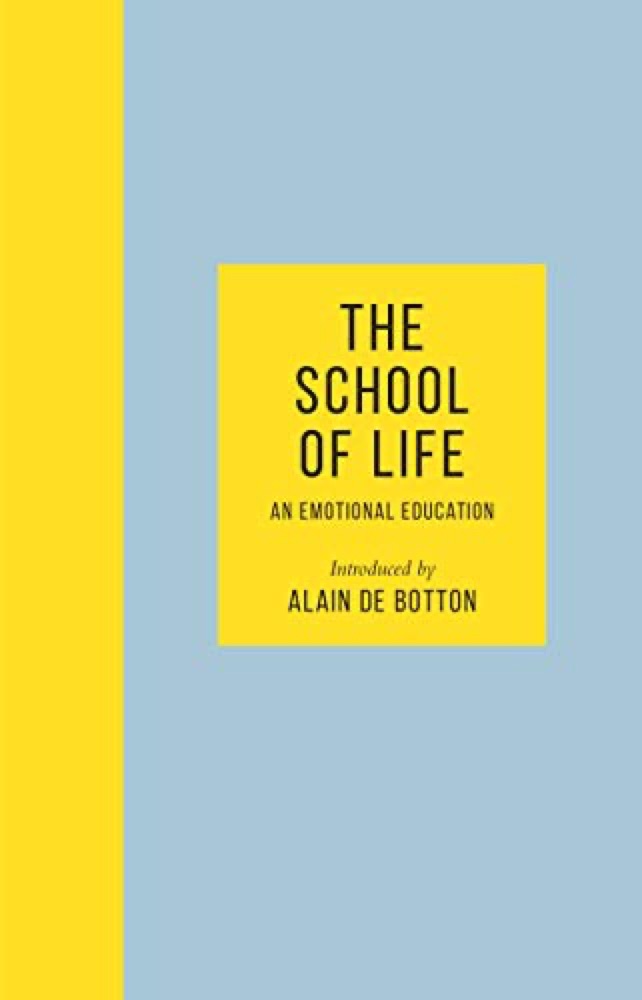 The School of Life: An Emotional Education
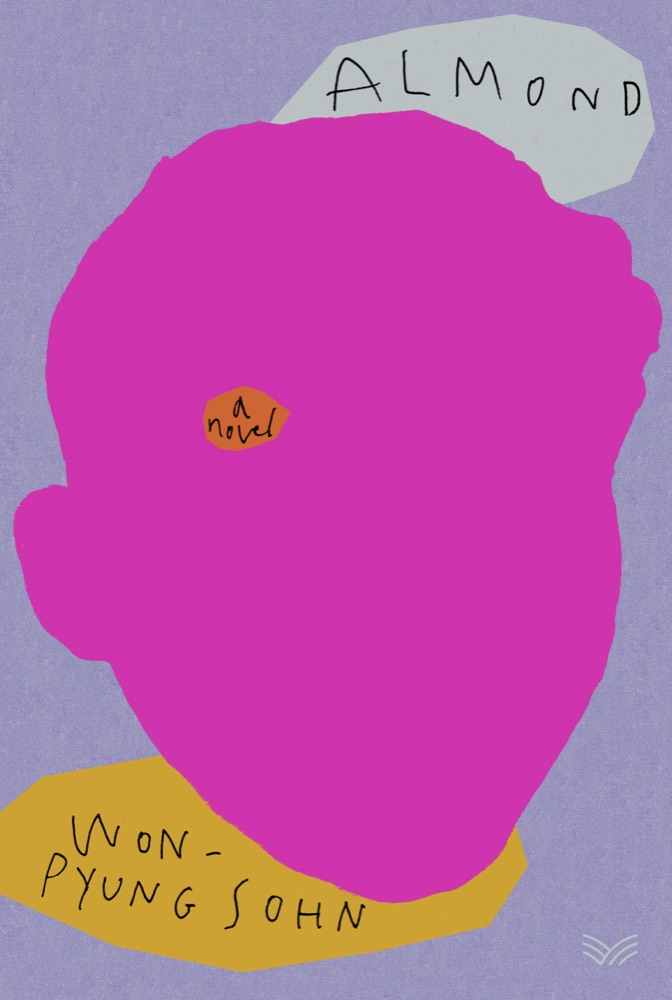 Almond
 Educated
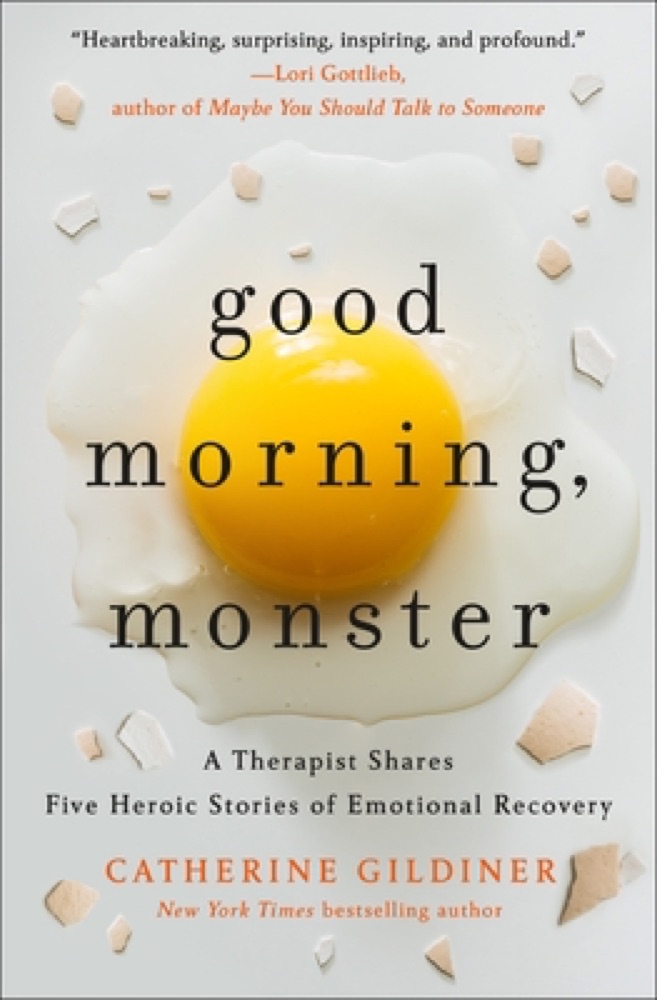 Good Morning, Monster: A Therapist Shares Five Heroic Stories of Emotional Recovery
 About a Boy
 Maybe You Should Talk to Someone: A Therapist, Her Therapist, and Our Lives Revealed
 The Nest
 A Fraction of the Whole
 A Circle of Quiet
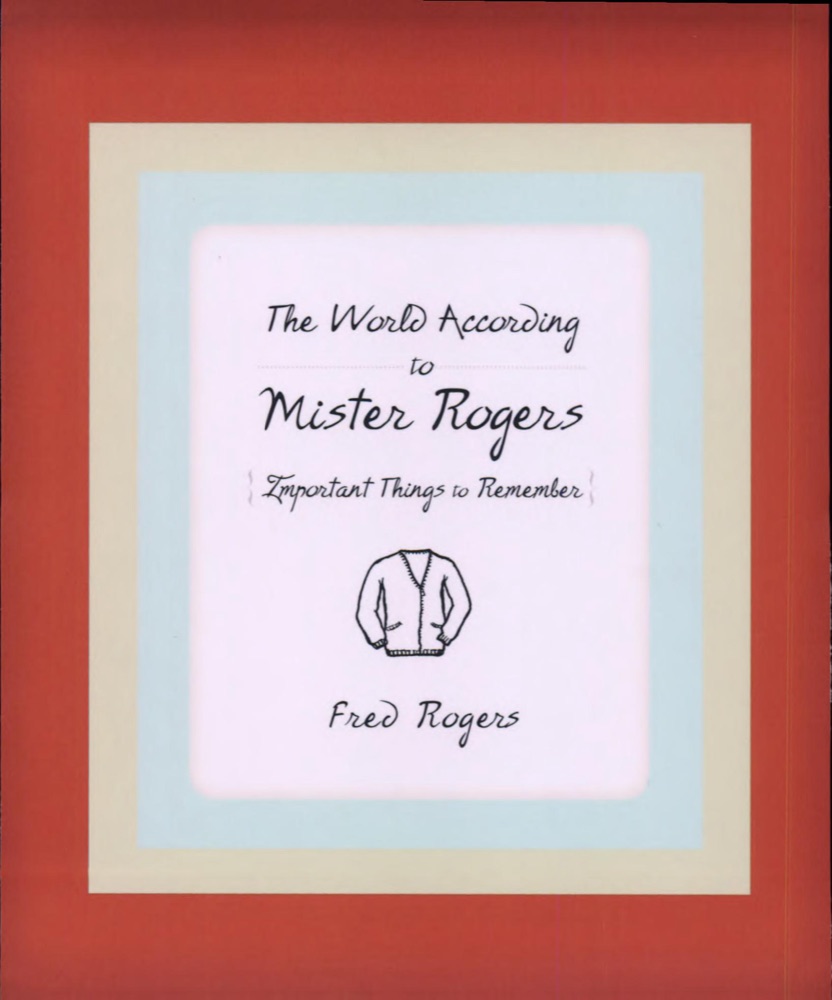 The World According to Mister Rogers: Important Things to Remember
 A Little Life
 Where Things Come Back