
 A Jane Austen Education: How Six Novels Taught Me About Love, Friendship, and the Things That Really Matter
Quotes from the Book
Life is more than a job; jobs are more than a paycheck; and a country is more than its wealth. Education is more than the acquisition of marketable skills, and you are more than your ability to contribute to your employer’s bottom line or the nation’s GDP, no matter what the rhetoric of politicians or executives would have you think. To ask what college is for is to ask what life is for, what society is for—what people are for. Do students ever hear this? What they hear is a constant drumbeat, in the public discourse, that seeks to march them in the opposite direction. When policy makers talk about higher education, from the president all the way down, they talk exclusively in terms of math and science. Journalists and pundits—some of whom were humanities majors and none of whom are nurses or engineers—never tire of lecturing the young about the necessity of thinking prudently when choosing a course of study, the naïveté of wanting to learn things just because you’re curious about them.
28
But there is something that’s a great deal more important than parental approval: learning to do without it. That’s what it means to become an adult.
25
You won’t be able to recognize the things you really care about until you have released your grip on all the things that you’ve been taught to care about.
20
You’re told that you’re supposed to go to college, but you’re also told that you are being self-indulgent if you actually want to get an education. As opposed to what? Going into consulting isn’t self-indulgent? Going into finance isn’t self-indulgent? Going into law, like most of the people who do, in order to make yourself rich, isn’t self-indulgent? It’s not okay to study history, because what good does that really do anyone, but it is okay to work for a hedge fund. It’s selfish to pursue your passion, unless it’s also going to make you a lot of money, in which case it isn’t selfish at all.
15
And speaking of options ,these kids [the ones who attend elite universities] have all been told that theirs are limitless. Once you commit to something, though, that ceases to be true. A former student sent me an essay he wrote, a few years after college, called "The Paradox of Potential." Yale students, he said, are like stem cells. They can be anything in the world, so they try to delay for as long as possible the moment when they have to become just one thing in particular. Possibility, paradoxically, becomes limitation.
15
If you grow up with less, you are much better able to deal with having less. That is itself a kind of freedom.
15
College, after all, as those who like to denigrate it often say, is "not the real world." But that is precisely its strength. College is an opportunity to stand outside the world for a few years, between the orthodoxy of your family and the exigencies of career, and contemplate things from a distance.
13
The system manufactures students who are smart and talented and driven, yes, but also anxious, timid, and lost, with little intellectual curiosity and a stunted sense of purpose: trapped in a bubble of privilege, heading meekly in the same direction, great at what they’re doing but with no idea why they’re doing it. In
12
You want to make it to the top? There is no top. However high you climb, there is always somebody above you. Mailer wanted to be Hemingway, Hemingway wanted to be Joyce, and Joyce was painfully aware he’d never be another Shakespeare.
11
A real reader creates her own canon, for it consists precisely of those books that she has used to create herself.
10
The purpose of college, to put this all another way, is to turn adolescents into adults. You needn't go to school for that, but if you're going to be there anyway, then that's the most important thing to get accomplished. That is the true education: accept no substitutes. The idea that we should take the first four years of young adulthood and devote them to career preparation alone, neglecting every other part of life, is nothing short of an obscenity. If that's what people had you do, then you were robbed. And if you find yourself to be the same person at the end of college as you were at the beginning - the same beliefs, the same values, the same desires, the same goals for the same reasons - then you did it wrong. Go back and do it again.
10
What’s the return on investment of college? What’s the return on investment of having children, spending time with friends, listening to music, reading a book? The things that are most worth doing are worth doing for their own sake. Anyone who tells you that the sole purpose of education is the acquisition of negotiable skills is attempting to reduce you to a productive employee at work, a gullible consumer in the market, and a docile subject of the state. What’s at stake, when we ask what college is for, is nothing less than our ability to remain fully human.
9
But the compulsive overachievement of today's elite college students - the sense that they need to keep running as fast as they can - is not the only thing that keeps them from forming the deeper relationships that might relieve their anguish. Something more insidious is operating, too: a resistance to vulnerability, a fear of looking like the only one who isn't capable of handling the pressure. These are young people who have always succeeded at everything, in part by projecting the confidence that they always will. Now, as they get to college, the stakes are higher and the competition fiercer. Everybody thinks that they are the only one who's suffering, so nobody says anything, so everybody suffers. Everyone feels like a fraud; everybody thinks that everybody else is smarter than they are.
7
I have heard from many high-achieving students who have asked me whether it wasn’t possible to be invested both in learning for its own sake and in being at the top. No, I’ve said, it isn’t possible. Learning for its own sake means exactly what it says: learning is the only reason that you’re doing it, because learning is what matters.
7
We inherited a strong and flourishing country, and instead of making the investments - that is, the sacrifices - to maintain it, we chose to suck it dry and stick our children with the bill. If you want to see who is to blame for student debt, just look in the mirror. And if parents find themselves supporting kids beyond their college years, that is only, in the aggregate, a form of compensatory justice: the intergenerational transfer of wealth that should have been effected through taxation.
6
That's how envy works: the better things are, the worse they are, because they don't belong to you.
6
Moral courage can be lonely indeed. People don’t mind being trapped, as long as no one else is free. But stage a break, and everybody else begins to panic.
5
[...] art instills the fundamental moral lesson: That you aren't the center of the universe. That others weren't created for your benefit. That they are just as real as you, with equal claimes to dignity and understanding.
5
To say that the humanities can be a path to truth itself is to challenge one of our most closely held beliefs. We live not only in a scientific world, but also in a scientistic one: a world that thinks that science - empirical, objective, quantifiable - is the exclusive form of knowledge, and that other methods of inquiry are valid only insofar as they approximate its methods. But the humanities and science face in opposite directions. They don't just work in different ways; they work on different things.
5
In 1971, 73 percent of incoming freshmen said that it is essential or very important to “develop a meaningful philosophy of life,” 37 percent to be “very well-off financially” (not well-off, note, but very well-off). By 2011, the numbers were almost reversed, 47 percent and 80 percent, respectively. For well over thirty years, we’ve been loudly announcing that happiness is money, with a side order of fame. No wonder students have come to believe that college is all about getting a job.
5
A man never rises so high as when he knows not whither he is going.” The desire to eliminate uncertainty eliminates life.
5
Fortunately, our colleges and universities are fully cognizant of the problems I have been delineating and take concerted action to address them. Curricula are designed to give coherence to the educational experience and to challenge students to develop a strong degree of moral awareness. Professors, deeply involved with the enterprise of undergraduate instruction, are committed to their students' intellectual growth and insist on maintaining the highest standards of academic rigor. Career services keep themselves informed about the broad range of postgraduate options and make a point of steering students away from conventional choices. A policy of noncooperation with U.S. News has taken hold, depriving the magazine of the data requisite to calculate its rankings. Rather than squandering money on luxurious amenities and exorbitant administrative salaries, schools have rededicated themselves to their core missions of teaching and the liberal arts. I'm kidding, of course.
4
Depression means self-loathing, self-disgust, and the kind of emotional numbness that feels like psychic death.
4
For that is one of the greatest curses of the high-achieving mentality: the envy that it forces on you - the desperation, not simply to be loved, but to be loved, as Auden says, alone.
4
Colleges should remember that selecting students by GPA more often benefits the faithful drudge than the original mind.
4
Autodidacts tend to be cranks, obtuse and self-enclosed. A professor’s most important role is to make you think with rigor: precisely, patiently, responsibly, remorselessly, and not only about your “deepest ingrained presuppositions,” as my own mentor, Karl Kroeber, once wrote, but also about your “most exhilarating new insights, most of which turn out to be fallacious.
4
Every A is a fix that temporarily quells the anxiety of failure, the terror of falling short.
4
I was also missing something else: the joy that comes when you stop feeling threatened by other people's accomplishments and let yourself be open to the beauty that they bring into the world. For that is one of the greatest curses of the high-achieving mentality: the envy that it forces on you - the desperation, not simply to be loved, but to be loved, as Auden says, alone.
3
Self-esteem" is a balloon that must be kept perpetually inflated by the hot air of approval ("valued," not "valuable"), and it collapses at the first contact with reality.
3
The problem is that students have been taught that that is all that education is: doing your homework, getting the answers, acing the test. Nothing in their training has endowed them with the sense that something larger is at stake. They've learned to "be a student," not to use their minds.
3
Watch on YouTube
About William Deresiewicz
We have collected 43 quotes from 2 books by William Deresiewicz on BookQuoters.
More about the author →More by William Deresiewicz
A Jane Austen Education: How Six Novels Taught Me About Love, Friendship, and the Things That Really Matter
About the book
As a professor at Yale, Bill Deresiewicz saw something that troubled him deeply. His students, some of the nation’s brightest minds, were adrift when it came to the big questions: how to think critically and creatively, and how to find a sense of purpose.Excellent Sheep takes a sharp look at the high-pressure conveyor belt that begins with parents and counselors who demand perfect grades and culminates in the skewed applications Deresiewicz saw firsthand as a member of Yale’s admissions committee. As schools shift focus from the humanities to "practical" subjects like economics and computer science, students are losing the ability to think in innovative ways. Deresiewicz explains how college should be a time for self-discovery, when students can establish their own values and measures of success, so they can forge their own path. He addresses parents, students, educators, and anyone who'
Book details
- First published
- 2014
- Author
- William Deresiewicz
- Genre
- Nonfiction
- Goodreads rating
- 3.87 (7k ratings)
Keep reading
 The Vanishing American Adult: Our Coming-of-Age Crisis—and How to Rebuild a Culture of Self-Reliance
 The Element: How Finding Your Passion Changes Everything
 The Social Animal: The Hidden Sources of Love, Character, and Achievement
 Shop Class as Soulcraft: An Inquiry Into the Value of Work
 Mastery
 Coming Apart: The State of White America, 1960-2010
 Troubled: A Memoir of Foster Care, Family, and Social Class
 Barking Up the Wrong Tree: The Surprising Science Behind Why Everything You Know About Success Is (Mostly) Wrong
 Emile or On Education
 What Made Maddy Run: The Secret Struggles and Tragic Death of an All-American Teen
 You Learn by Living: Eleven Keys for a More Fulfilling Life
 Unscripted: Life, Liberty, and the Pursuit of Entrepreneurship
 A Circle of Quiet
 My Beloved World
 The Second Mountain
 Late Bloomers: The Power of Patience in a World Obsessed with Early Achievement
 Consider the Lobster and Other Essays
 The Algebra of Happiness: Notes on the Pursuit of Success, Love, and Meaning
 Tribe Of Mentors: Transformative Wisdom From Icons and Innovators to Help You Navigate Life's Challenges
 Very Good Lives: The Fringe Benefits of Failure and the Importance of Imagination
 What the Dog Saw and Other Adventures
 Walden Two
 David and Goliath: Underdogs, Misfits, and the Art of Battling Giants
 Status Anxiety
 The Freedom Manifesto
 How to Raise an Adult: Break Free of the Overparenting Trap and Prepare Your Kid for Success
 Hocus Pocus
 Rich Dad Poor Dad
 Dumbing Us Down: The Hidden Curriculum of Compulsory Education
 Independent Study
 The Closing of the American Mind
 Bright-Sided: How the Relentless Promotion of Positive Thinking Has Undermined America
 Creativity: Flow and the Psychology of Discovery and Invention
 The Spinoza Problem
 The Socrates Express: In Search of Life Lessons from Dead Philosophers
 The Art of Thinking Clearly
 How to Fail at Almost Everything and Still Win Big: Kind of the Story of My Life
 The Defining Decade: Why Your Twenties Matter—And How to Make the Most of Them Now
 Finding Flow: The Psychology of Engagement with Everyday Life
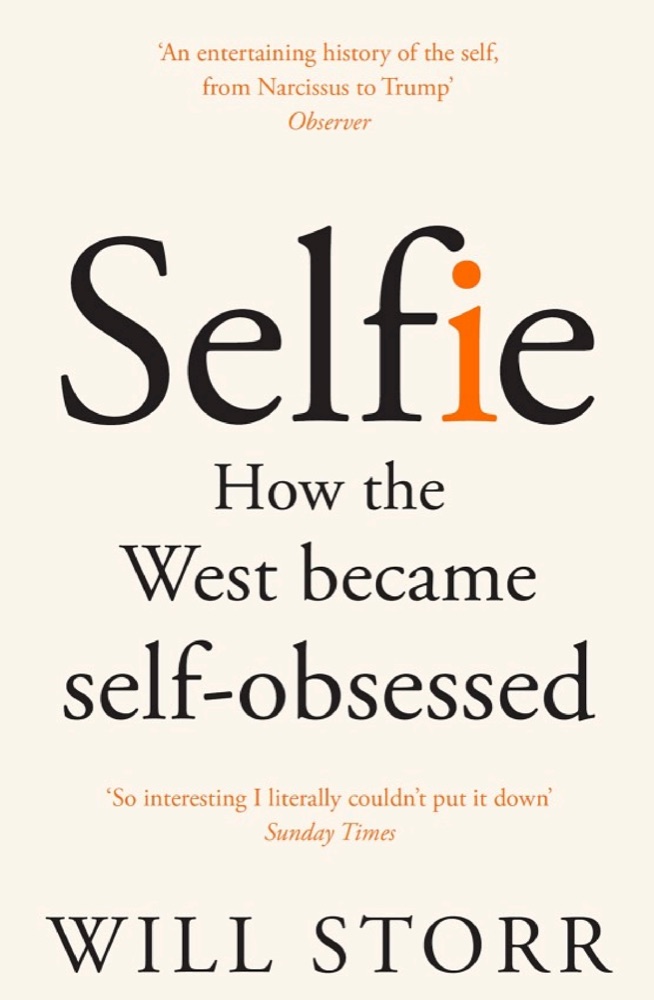 Selfie: How the West Became Self-Obsessed
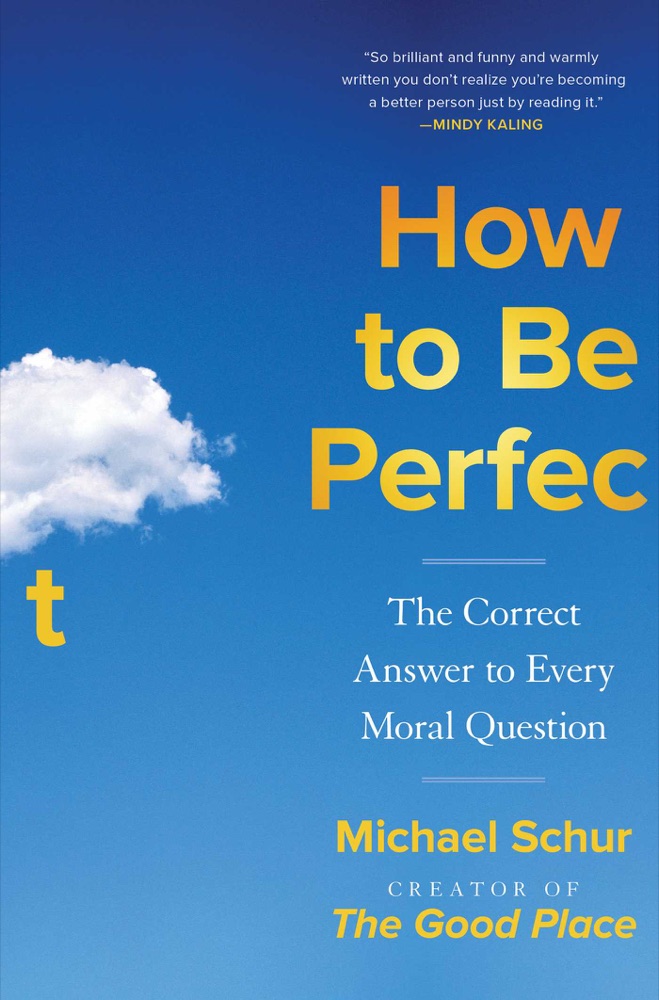 How to Be Perfect: The Correct Answer to Every Moral Question
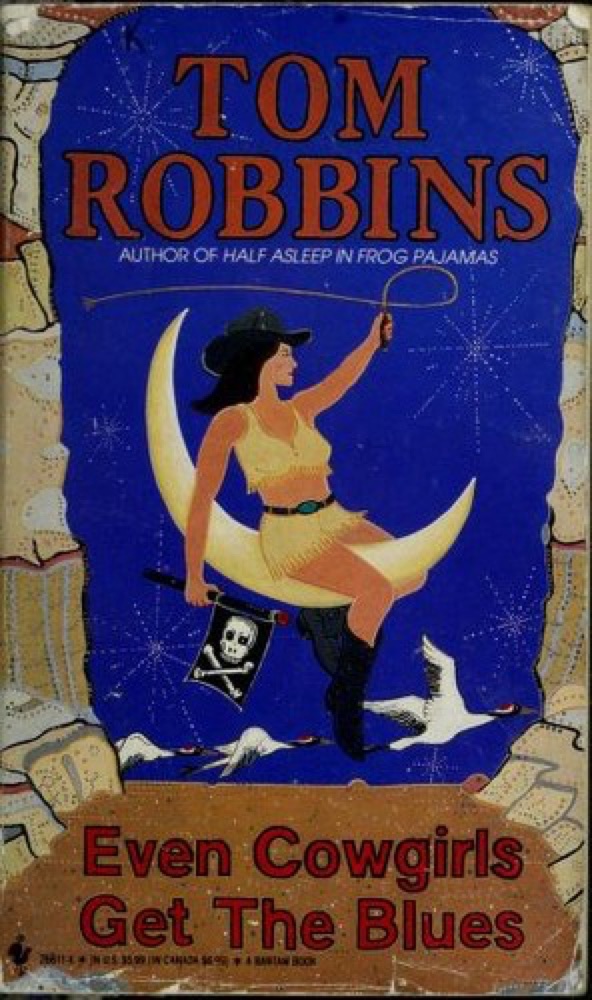 Even Cowgirls Get the Blues
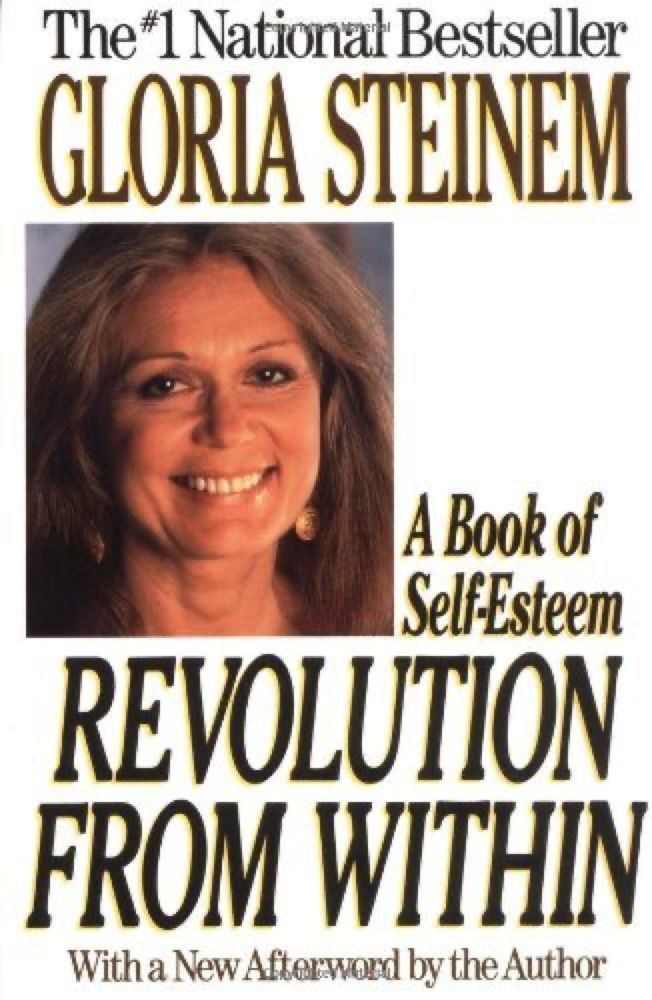 Revolution from Within: A Book of Self-Esteem
 Antifragile: Things That Gain from Disorder
 The Measure of a Man: A Spiritual Autobiography
 The Algebra of Wealth: A Simple Formula for Financial Security
 We Make the Road by Walking: Conversations on Education and Social Change
 Twilight of the Idols
 Punished by Rewards: The Trouble with Gold Stars, Incentive Plans, A's, Praise and Other Bribes
 Asymmetry
 The Autobiography of Eleanor Roosevelt
 The 7 Habits Of Highly Effective Teens
 No Time To Spare: Thinking About What Matters
 A Funny Thing Happened on the Way to the Future...
 Think Like a Freak
 This Is Water: Some Thoughts, Delivered on a Significant Occasion, about Living a Compassionate Life
 In the Light of What We Know
 The Last Lecture