

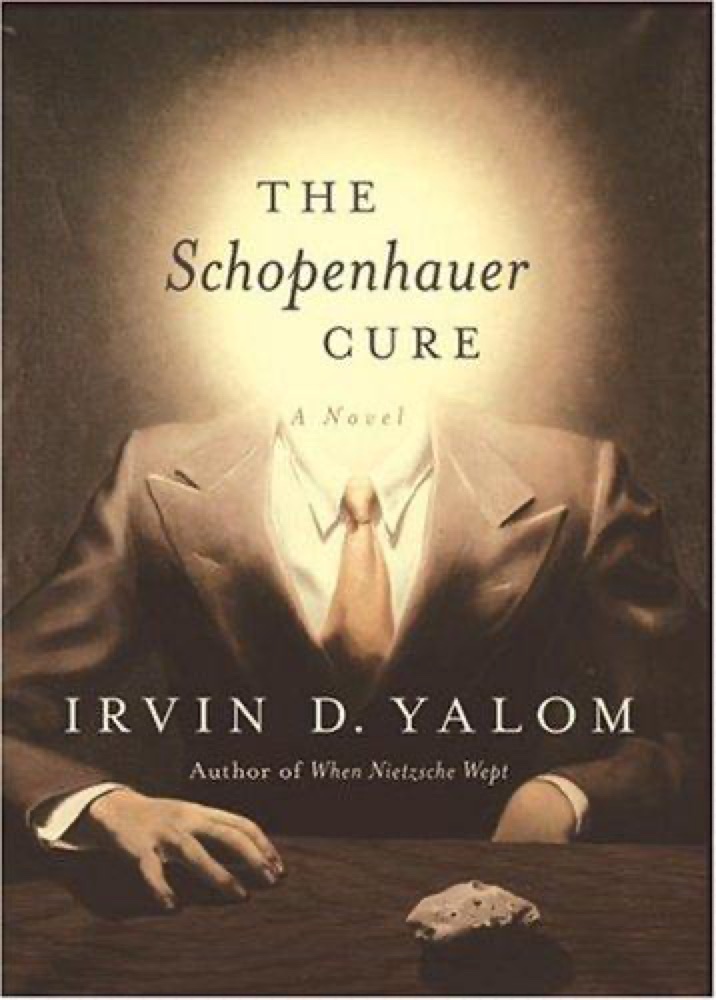
 The Schopenhauer Cure
Quotes from the Book
Though the physicality of death destroys us, the idea of death may save us.
70
Life as a therapist is a life of service in which we daily transcend our personal wishes and turn our gaze toward the needs and growth of the other. We take pleasure not only in the growth of our patient but also in the ripple effect—the salutary influence our patients have upon those whom they touch in life.
59
love obsession often serves as a distraction, keeping the individual’s gaze from more painful thoughts.
49
Sometimes I simply remind patients that sooner or later they will have to relinquish the goal of having a better past.
45
As long as he denies his own agency, real change is unlikely because his attention will be directed toward changing his environment rather than himself.
42
I often feel caught in a dilemma: on the one hand I wish to be more natural with you and yet, on the other hand, because I feel that you’re easily wounded and that you give my comments inordinate power, I feel I must consider my wording very, very carefully.
36
If you make a mistake, admit it. Any attempt at cover-up will ultimately backfire. At some level the patient will sense you are acting in bad faith, and therapy will suffer. Furthermore, an open admission of error is good model-setting for patients and another sign that they matter to you.
30
Look out the other’s window. Try to see the world as your patient sees it.
28
The establishment of an authentic relationship with patients, by its very nature, demands that we forego the power of the triumvirate of magic, mystery, and authority.
25
We humans appear to be meaning-seeking creatures who have had the misfortune of being thrown into a world devoid of intrinsic meaning. One of our major tasks is to invent a meaning sturdy enough to support a life and to perform the tricky maneuver of denying our personal authorship of this meaning. Thus we conclude instead that it was "out there" waiting for us. Our ongoing search for substantial meaning systems often throws us into crises of meaning.
24
if we hope for more significant therapeutic change, we must encourage our patients to assume responsibility—that is, to apprehend how they themselves contribute to their distress.
23
The path to decision may be hard because it leads into the territory of both finiteness and groundlessness—domains soaked in anxiety.
21
Psychotherapy is a demanding vocation, and the successful therapist must be able to tolerate the isolation, anxiety, and frustration that are inevitable in the work.
18
Abraham Lincoln is reputed to have said that if he had eight hours to cut down a tree, he’d spend several of these hours sharpening his ax.
17
The therapist's worldview is in itself isolating. Seasoned therapists view relationships differently, they sometimes lose patience with social ritual and bureaucracy, they cannot abide the fleeting shallow encounters and small talk of many social gatherings.
15
Friendship between therapist and patients is a necessary condition in the process of therapy - necessary, but not, however, sufficient. Psychotherapy is not a substitute for life but a dress rehearsal for life, In other words, though psychotherapy requires a close relationship, the relationship is not an end - it is a means to an end.
11
Beginning therapists must learn that there are times to sit in silence, sometimes in silent communion, sometimes simply while waiting for patients' thoughts to appear in a form that they may be expressed.
11
We cannot avoid this responsibility, this freedom.
9
Perhaps the real therapy occurred at the deathbed scene, when they moved into honesty with the revelation that they were fellow travelers, both simply human, all too human.
9
Heidegger spoke of two modes of existence: the everyday mode and the ontological mode. In the everyday mode we are consumed with and distracted by material surroundings - we are filled with wonderment about how things are in the world. In the ontological mode we are focused on being per se - that is, we are filled with wonderment that things are in the world.
8
I often urge patients to project themselves into the future and to consider how they can live now so that five years hence they will be able to look back upon life without regret sweeping over them anew.
7
Perhaps you can help me locate some of my own blind spots.” This is another one of those phrases that have taken up lodging in my mind and that I often make use of in my clinical work.)
6
[T]echnique has a different meaning for the novice than for the expert. One needs technique in learning to play the piano but eventually, if one is to make music, one must transcend learned technique and trust one's spontaneous moves.
6
I believe "technique" is facilitative when it emanates from the therapist's unique encounter with the patient. [E]very course of therapy consists of small and large spontaneously generated responses or techniques that are impossible to program in advance.
6
We need to go even further: the therapist must strive to create a new therapy for each patient.
5
It is sad to think of being together with others for so long and yet never to have let them matter enough to be influenced and changed by them. I urge you to let your patients matter to you, to let them enter your mind, influence you, change you—and not to conceal this from them.
5
Given this, the act of revealing oneself fully to another and still being accepted may be the major vehicle of therapeutic help. Others may avoid intimacy because of fears of exploitation, colonization, or abandonment; for them, too, the intimate and caring therapeutic relationship that does not result in the anticipated catastrophe becomes a corrective emotional experience. Hence, nothing takes precedence over the care and maintenance of my relationship to the patient, and I attend carefully to every nuance of how we regard each other.
5
When I was finding my way as a young psychotherapy student, the most useful book I read was Karen Horney’s Neurosis and Human Growth. And the single most useful concept in that book was the notion that the human being has an inbuilt propensity toward self-realization. If obstacles are removed, Horney believed, the individual will develop into a mature, fully realized adult, just as an acorn will develop into an oak tree. “Just as an acorn develops into an oak …” What a wonderfully liberating and clarifying image! It forever changed my approach to psychotherapy by offering me a new vision of my work: My task was to remove obstacles blocking my patient’s path. I did not have to do the entire job; I did not have to inspirit the patient with the desire to grow, with curiosity, will, zest for life, caring, loyalty, or any of the myriad of characteristics that make us fully human. No, what I had to do was to identify and remove obstacles. The rest would follow automatically, fueled by the self-actualizing forces within the patient.
5
Watch on YouTube
About Irvin D. Yalom
We have collected 227 quotes from 11 books by Irvin D. Yalom on BookQuoters.
More about the author →More by Irvin D. Yalom
The Schopenhauer Cure
 Lying on the Couch
 The Spinoza Problem
 Love's Executioner and Other Tales of Psychotherapy
About the book
Anyone interested in psychotherapy or personal growth will rejoice at the publication of The Gift of Therapy, a masterwork from one of today's most accomplished psychological thinkers. From his thirty-five years as a practicing psychiatrist and as an award-winning author, Irvin D. Yalom imparts his unique wisdom in The Gift of Therapy. This remarkable guidebook for successful therapy is, as Yalom remarks, "an idiosyncratic mÉlange of ideas and techniques that I have found useful in my work. These ideas are so personal, opinionated, and occasionally original that the reader is unlikely to encounter them elsewhere. I selected the eighty-five categories in this volume randomly guided by my passion for the task rather than any particular order or system." At once startlingly profound and irresistibly practical, Yalom's insights will help enrich the therapeutic process for a new generation of
Book details
- First published
- 2002
- Author
- Irvin D. Yalom
- Genre
- Nonfiction
- Goodreads rating
- 4.32 (31k ratings)
Keep reading
Love's Executioner and Other Tales of Psychotherapy
 On Being a Therapist
 In Shock: My Journey from Death to Recovery and the Redemptive Power of Hope
 Maybe You Should Talk to Someone: A Therapist, Her Therapist, and Our Lives Revealed
 If You Meet the Buddha on the Road, Kill Him! The Pilgrimage of Psychotherapy Patients
 On Becoming a Person: A Therapist's View of Psychotherapy
 Advice Not Given: A Guide to Getting Over Yourself
 A Way of Being
 Toward a Psychology of Being
 Existential Psychotherapy
 Good Morning, Monster: A Therapist Shares Five Heroic Stories of Emotional Recovery
 A General Theory of Love
 The Will to Meaning: Foundations and Applications of Logotherapy
 Kitchen Table Wisdom: Stories that Heal
 The Examined Life: How We Lose and Find Ourselves
 Creatures of a Day: And Other Tales of Psychotherapy
 The Silent Patient
 Many Lives, Many Masters: The True Story of a Prominent Psychiatrist, His Young Patient, and the Past Life Therapy That Changed Both Their Lives
 The Tools: Transform Your Problems into Courage, Confidence, and Creativity
 The Art of Being
 The Center Cannot Hold: My Journey Through Madness
 The School of Life: An Emotional Education
 All Is Not Forgotten
 How to Stay Sane
 Thoughts Without A Thinker: Psychotherapy From A Buddhist Perspective
 What It Takes to Heal: How Transforming Ourselves Can Change the World
 Orbiting the Giant Hairball: A Corporate Fool's Guide to Surviving with Grace
 Us: Getting Past You and Me to Build a More Loving Relationship
 Finding Meaning in the Second Half of Life: How to Finally, Really Grow Up
 Going to Pieces without Falling Apart: A Buddhist Perspective on Wholeness
 Six Pillars of Self-Esteem
 Natural Causes: An Epidemic of Wellness, the Certainty of Dying, and Killing Ourselves to Live Longer
 On Connection
 Social Intelligence: The New Science of Human Relationships
 How to Know a Person: The Art of Seeing Others Deeply and Being Deeply Seen
 Between Two Kingdoms: A Memoir of a Life Interrupted
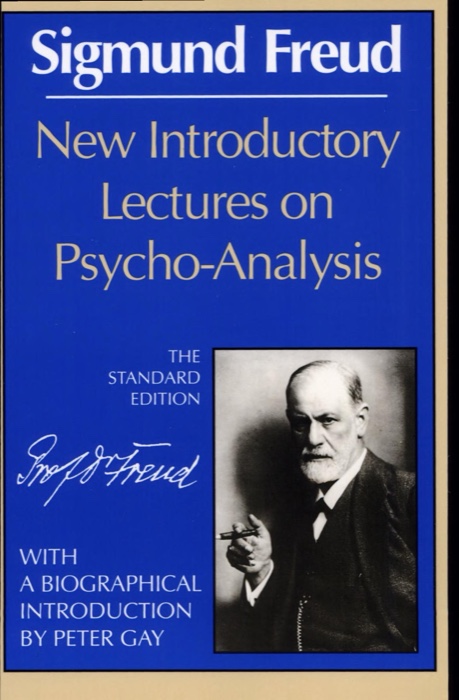 Introductory Lectures on Psychoanalysis
 When Breath Becomes Air
 The Man Who Mistook His Wife for a Hat and Other Clinical Tales
 How to See Yourself As You Really Are
 Tell Me More: Stories About the 12 Hardest Things I'm Learning to Say
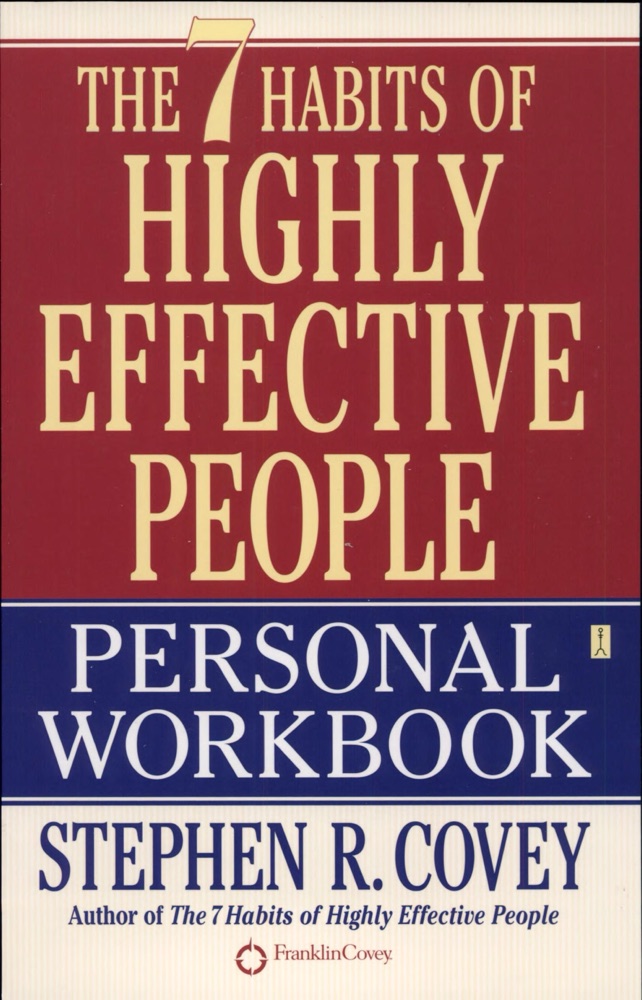 The 7 Habits of Highly Effective People: Personal Workbook
 Let Your Life Speak: Listening for the Voice of Vocation
 Mastery
 Do No Harm: Stories of Life, Death and Brain Surgery
 Letting Go: The Pathway To Surrender
 The Tenth Insight: Holding the Vision
 Option B: Facing Adversity, Building Resilience, and Finding Joy
 The Dance of Connection: How to Talk to Someone When You're Mad, Hurt, Scared, Frustrated, Insulted, Betrayed, or Desperate
 Ethics for the New Millennium
 The Laws of Human Nature
 The Buddha Walks into a Bar . . .: A Guide to Life for a New Generation
 Passages: Predictable Crises of Adult Life
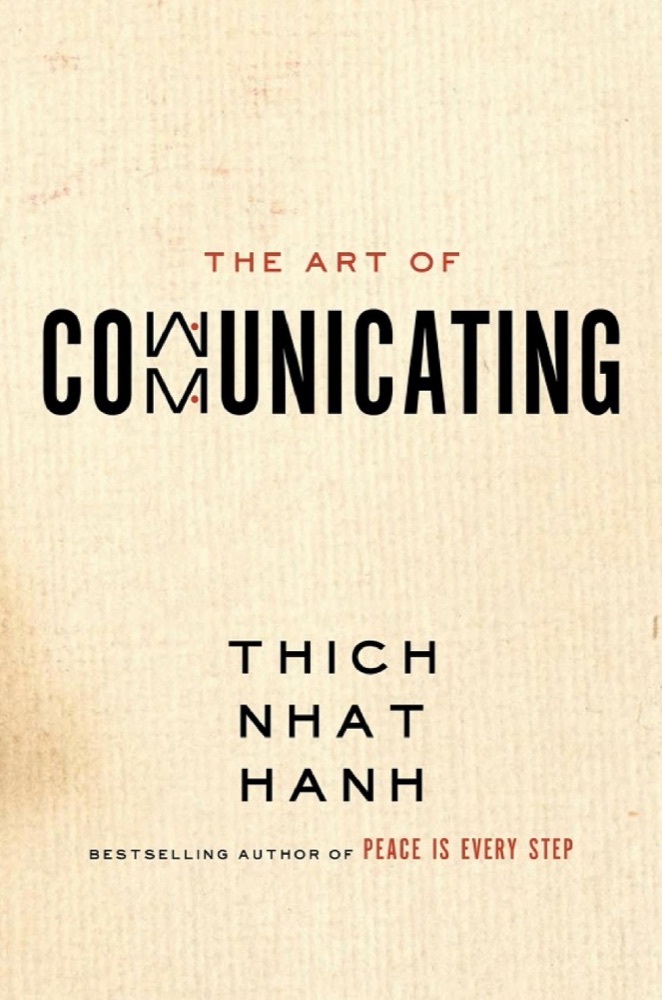 The Art of Communicating
 In an Unspoken Voice: How the Body Releases Trauma and Restores Goodness
 When Things Fall Apart: Heart Advice for Difficult Times
 Full Catastrophe Living: Using the Wisdom of Your Body and Mind to Face Stress, Pain, and Illness
 The Book of Awakening: Having the Life You Want by Being Present to the Life You Have
 Anatomy of the Spirit: The Seven Stages of Power and Healing