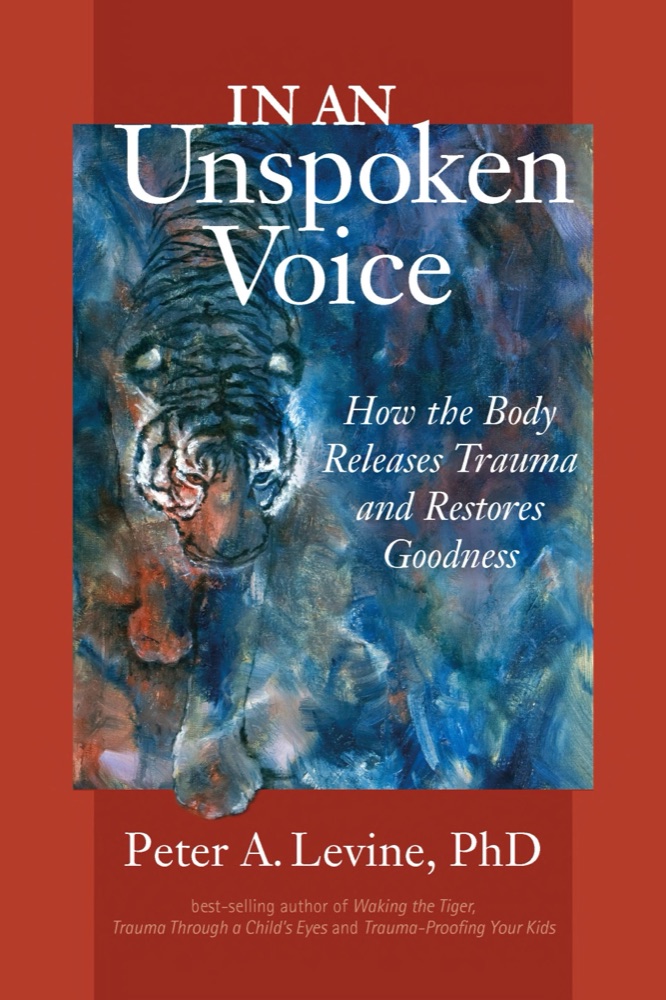

 Waking the Tiger: Healing Trauma
Quotes from the Book
Highly traumatized and chronically neglected or abused individuals are dominated by the immobilization/shutdown system. On the other hand, acutely traumatized people (often by a single recent event and without a history of repeated trauma, neglect or abuse) are generally dominated by the sympathetic fight/flight system. They tend to suffer from flashbacks and racing hearts, while the chronically traumatized individuals generally show no change or even a decrease in heart rate. These sufferers tend to be plagued with dissociative symptoms, including frequent spacyness, unreality, depersonalization, and various somatic and health complaints. Somatic symptoms include gastrointestinal problems, migraines, some forms of asthma, persistent pain, chronic fatigue, and general disengagement from life.
11
We may not be responsible for the world that created our minds, but we can take responsibility for the mind with which we create our world. – Gabor Maté
6
Trauma is the great masquerader and participant in many maladies and “dis-eases” that afflict sufferers. It can perhaps be conjectured that unresolved trauma is responsible for a majority of the illnesses of modern mankind.
5
When we fight against and/or hide from unpleasant or painful sensations and feelings, we generally make things worse. The more we avoid them, the greater is the power they exert upon our behavior and sense of well-being. What is not felt remains the same or is intensified, generating a cascade of virulent and corrosive emotions. This forces us to fortify our methods of defense, avoidance and control. This is the vicious cycle created by trauma.
5
As I feel less overwhelmed, my fear softens and begins to subside. I feel a flicker of hope, then a rolling wave of fiery rage. My body continues to shake and tremble. It is alternately icy cold and feverishly hot. A burning red fury erupts from deep within my belly: How could that stupid kid hit me in a crosswalk? Wasn’t she paying attention? Damn her! A blast of shrill sirens and flashing red lights block out everything. My belly tightens, and my eyes again reach to find the woman’s kind gaze. We squeeze hands, and the knot in my gut loosens. I hear my shirt ripping. I am startled and again jump to the vantage of an observer hovering above my sprawling body. I watch uniformed strangers methodically attach electrodes to my chest. The Good Samaritan paramedic reports to someone that my pulse was 170. I hear my shirt ripping even more. I see the emergency team slip a collar onto my neck and then cautiously slide me onto a board. While they strap me down, I hear some garbled radio communication. The paramedics are requesting a full trauma team. Alarm jolts me. I ask to be taken to the nearest hospital only a mile away, but they tell me that my injuries may require the major trauma center in La Jolla, some thirty miles farther. My heart sinks.
5
The door suddenly jerks open. A wide-eyed teenager bursts out. She stares at me in dazed horror. In a strange way, I both know and don’t know what has just happened. As the fragments begin to converge, they convey a horrible reality: I must have been hit by this car as I entered the crosswalk. In confused disbelief, I sink back into a hazy twilight. I find that I am unable to think clearly or to will myself awake from this nightmare. A man rushes to my side and drops to his knees. He announces himself as an off-duty paramedic. When I try to see where the voice is coming from, he sternly orders, “Don’t move your head.” The contradiction between his sharp command and what my body naturally wants—to turn toward his voice—frightens and stuns me into a sort of paralysis. My awareness strangely splits, and I experience an uncanny “dislocation.” It’s as if I’m floating above my body, looking down on the unfolding scene. I am snapped back when he roughly grabs my wrist and takes my pulse. He then shifts his position, directly above me. Awkwardly, he grasps my head with both of his hands, trapping it and keeping it from moving. His abrupt actions and the stinging ring of his command panic me; they immobilize me further. Dread seeps into my dazed, foggy consciousness: Maybe I have a broken neck, I think. I have a compelling impulse to find someone else to focus on. Simply, I need to have someone’s comforting gaze, a lifeline to hold onto. But I’m too terrified to move and feel helplessly frozen.
5
The paradox of trauma is that it has both the power to destroy and the power to transform and resurrect.
3
The right way to wholeness is made up of fateful detours and wrong turnings. —C. G. Jung
3
Recently, a young Iraq veteran took issue with calling his combat anguish PTSD and, instead, poignantly referred to his pain and suffering as PTSI—the “I” designating “injury.” What he wisely discerned is that trauma is an injury, not a disorder like diabetes, which can be managed but not healed. In contrast, posttraumatic stress injury is an emotional wound, amenable to healing attention and transformation.
3
Most of the time we have solely our thoughts as meager substitutes for our instinctual drives. We not only put a lot of energy into our thoughts, but we also frequently confuse them with reality; we come to believe erroneously, as did Descartes, that we are our thoughts. Thoughts, unfortunately, are poor surrogates for experienced aliveness, and when disconnected from feelings, they result in corrosive rumination, fantasy, delusion and excessive worry. Such perseveration is not really surprising, as the paranoid tendency toward concern for potential threat in the face of ambiguity might have had a significant adaptive advantage in earlier times. Now, however, it is the currency of our judgmental, negativistic “superegos.” On the other hand, when we are informed by clear body sensations and feelings, worry is diminished, while creativity and a sense of purpose are enhanced.
1
wild animal would following a frightful encounter with a predator. What ethologists call tonic immobility—the paralysis and physical/emotional shutdown that characterize the universal experience of helplessness in the face of mortal danger—comes to dominate the person’s life and functioning.
1
help to create an environment of relative safety, an atmosphere that conveys refuge, hope and possibility.
1
The power of goodness—in this case, the organism’s innate capacity to restore itself to health and balance—is encouraged by a bystander, an empathetic witness who helps to prevent trauma by embodying kindness and acceptance.
1
The “talking cure” for trauma survivors should give way to the unspoken voice of the silent, but strikingly powerful, bodily expressions as they surface to “sound off” on behalf of the wisdom of the deeper self.
1
This shows up as symptoms of alexithymia (the inability to describe or elaborate feelings due to a deficiency in emotional awareness), depression and somatization.
1
A person who is deeply feeling is not a person who is habitually venting anger
When Bull studied the patterns of elation
Contrary to what both Darwin and James thought
Nothing that feels bad is ever the last step.” This experiential process involves the capacity to hold the emotion in abeyance
If your everyday practice is to open to your emotions
the “neurotic” personality creates and perpetuates its symptoms through an unconscious constricting (hypertonicity) or collapsing (hypotonicity) of the musculature.‖ It is only through building a refined awareness and allowing the muscles and viscera spontaneous expression that we can begin to dissolve the “neurotic” and traumatic (split off) parts of ourselves and lay claim to a deeper
The degree to which we cannot deeply feel our body’s interior is the degree to which we crave excessive external stimulation.
The constriction of sensation obliterates shades and textures in our feelings. It is the unspoken hell of traumatization. In order to intimately relate to others and to feel that we are vital
Our relationship with others is utterly dependent upon a mutual exchange of sensory data
Along with the method I have described throughout this book were the conjoined twin sisters of embodiment and awareness. This asset
I feel alternating waves of fear and sorrow. (20. This discharge in waves allows for the natural experience of pendulation—expansions/contraction as discussed in Step 3 in Chapter 5—and softens the feelings of sorrow and fear.)
Watch on YouTube
About Peter A. Levine
We have collected 56 quotes from 2 books by Peter A. Levine on BookQuoters.
More about the author →More by Peter A. Levine
Waking the Tiger: Healing Trauma
About the book
Unraveling Trauma in the Body, Brain and Mind—a Revolution in TreatmentIn this culmination of his life’s work, Peter A. Levine draws on his broad experience as a clinician, a student of comparative brain research, a stress scientist and a keen observer of the naturalistic animal world to explain the nature and transformation of trauma in the body, brain and psyche. In an Unspoken Voice is based on the idea that trauma is neither a disease nor a disorder, but rather an injury caused by fright, helplessness and loss that can be healed by engaging our innate capacity to self-regulate high states of arousal and intense emotions. Enriched with a coherent theoretical framework and compelling case examples, the book elegantly blends the latest findings in biology, neuroscience and body-oriented psychotherapy to show that when we bring together animal instinct and reason, we can become more whol
Book details
- First published
- 2010
- Author
- Peter A. Levine
- Genre
- Nonfiction
- Goodreads rating
- 4.34 (3k ratings)
Keep reading
Waking the Tiger: Healing Trauma
 When the Body Says No: The Cost of Hidden Stress
 Letting Go: The Pathway To Surrender
 The Wisdom of Your Body: Finding Healing, Wholeness, and Connection through Embodied Living
 Good Morning, Monster: A Therapist Shares Five Heroic Stories of Emotional Recovery
 Complex PTSD: From Surviving to Thriving
 What Happened To You?: Conversations on Trauma, Resilience, and Healing
 In Shock: My Journey from Death to Recovery and the Redemptive Power of Hope
 What My Bones Know
 The Boy Who Was Raised as a Dog: And Other Stories from a Child Psychiatrist's Notebook
 Social Intelligence: The New Science of Human Relationships
 Be Not Afraid of Love: Lessons on Fear, Intimacy, and Connection
 When Things Fall Apart: Heart Advice for Difficult Times
 In the Realm of Hungry Ghosts: Close Encounters with Addiction
 Descartes' Error: Emotion, Reason and the Human Brain
 Love's Executioner and Other Tales of Psychotherapy
 A General Theory of Love
 Untangle Your Emotions: Naming What You Feel and Knowing What to Do About It
 My Stroke of Insight: A Brain Scientist's Personal Journey
 Anatomy of the Spirit: The Seven Stages of Power and Healing
 Heartbreak: A Personal and Scientific Journey
 Atlas of the Heart: Mapping Meaningful Connection and the Language of Human Experience
 True Refuge: Finding Peace and Freedom in Your Own Awakened Heart
 Living Beautifully with Uncertainty and Change
 The Examined Life: How We Lose and Find Ourselves
 Unfuck Your Brain: Using Science to Get Over Anxiety, Depression, Anger, Freak-Outs, and Triggers
 The Wise Heart: A Guide to the Universal Teachings of Buddhist Psychology
 Advice Not Given: A Guide to Getting Over Yourself
 Full Catastrophe Living: Using the Wisdom of Your Body and Mind to Face Stress, Pain, and Illness
 Why Zebras Don't Get Ulcers
 Mindsight: The New Science of Personal Transformation
 Why Has Nobody Told Me This Before?
 Eastern Body, Western Mind: Psychology and the Chakra System as a Path to the Self
 The Politics of Experience/The Bird of Paradise
 Healing Back Pain: The Mind-Body Connection
 Clarity & Connection
 Option B: Facing Adversity, Building Resilience, and Finding Joy
 The Wild Edge of Sorrow: Rituals of Renewal and the Sacred Work of Grief
 Letting Go of the Person You Used to Be: Lessons on Change, Loss, and Spiritual Transformation
 The Man Who Mistook His Wife for a Hat and Other Clinical Tales
 On Connection
 Maps of Meaning: The Architecture of Belief
 Toward a Psychology of Being
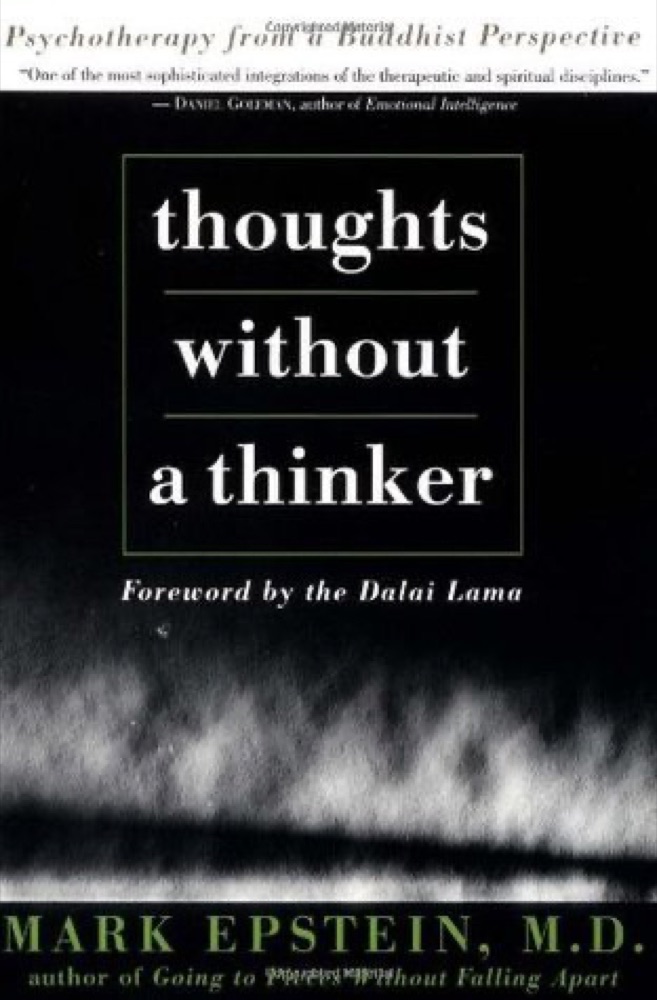 Thoughts Without A Thinker: Psychotherapy From A Buddhist Perspective
 Nonviolent Communication: A Language of Life
 Love and Will
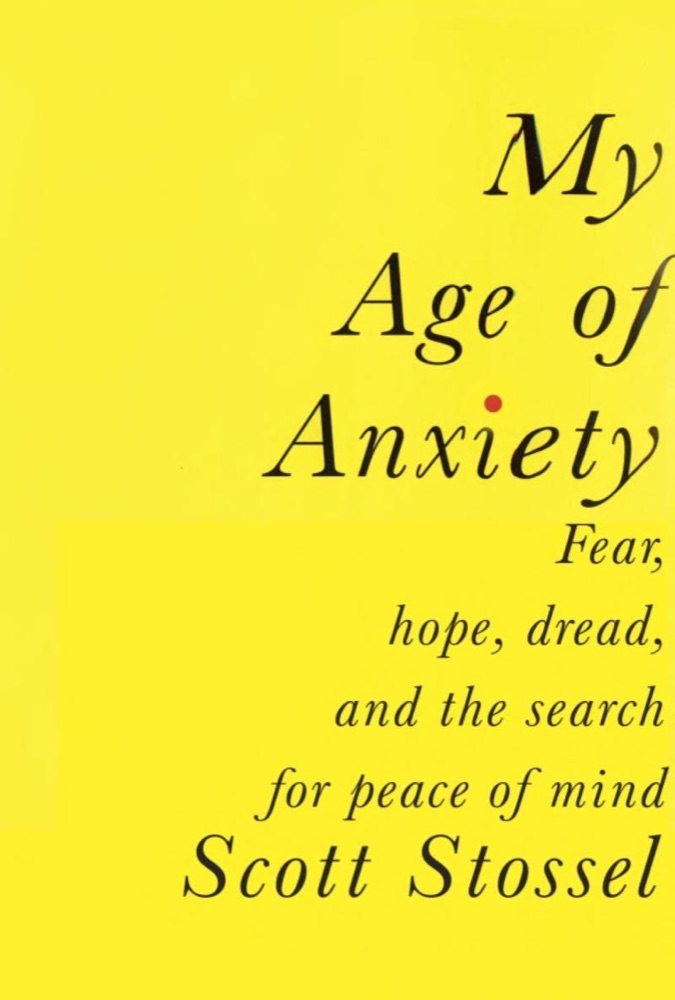 My Age of Anxiety: Fear, Hope, Dread, and the Search for Peace of Mind
 All Is Not Forgotten
 The Places That Scare You: A Guide to Fearlessness in Difficult Times
 The Empathy Exams
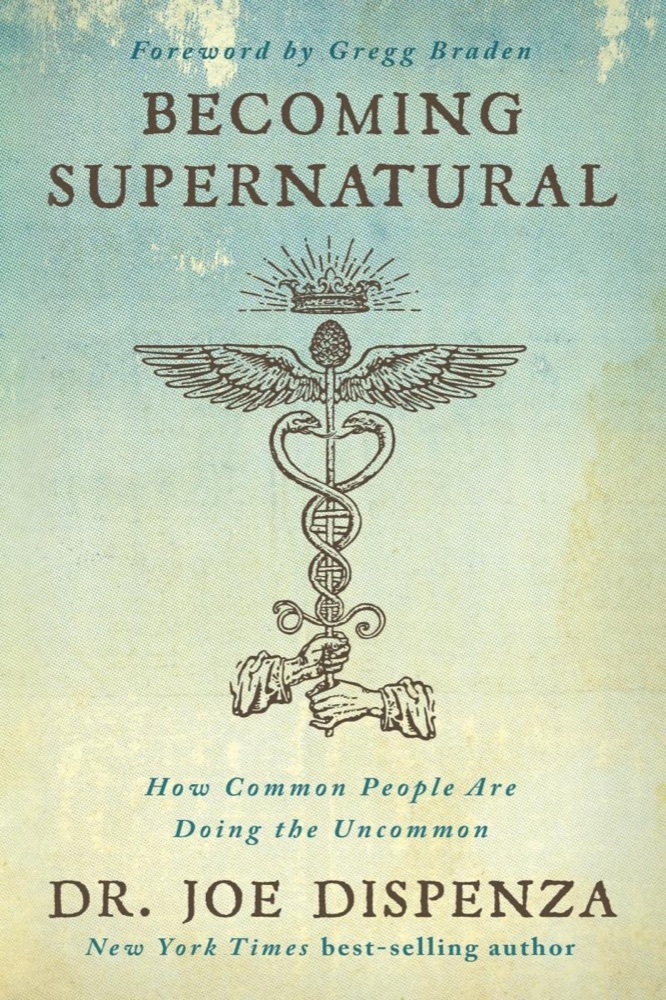 Becoming Supernatural: How Common People are Doing the Uncommon
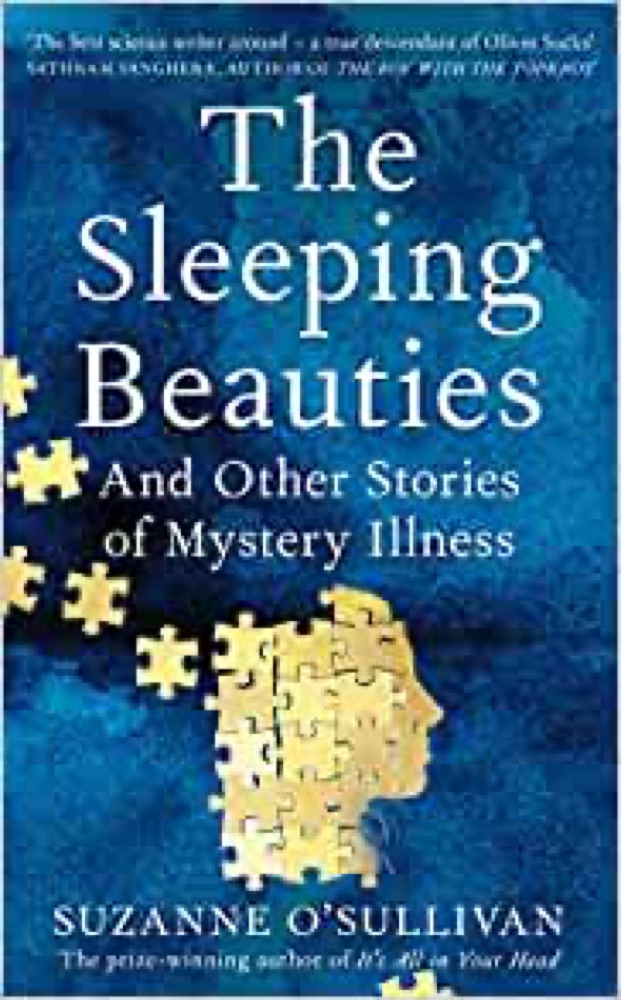 The Sleeping Beauties: And Other Stories of Mystery Illness
 The Tools: Transform Your Problems into Courage, Confidence, and Creativity
 An Unquiet Mind: A Memoir of Moods and Madness
 The Center Cannot Hold: My Journey Through Madness
 It Didn't Start with You: How Inherited Family Trauma Shapes Who We Are and How to End the Cycle
 Maybe You Should Talk to Someone: A Therapist, Her Therapist, and Our Lives Revealed
 What It Takes to Heal: How Transforming Ourselves Can Change the World
 Radical Acceptance: Embracing Your Life With the Heart of a Buddha