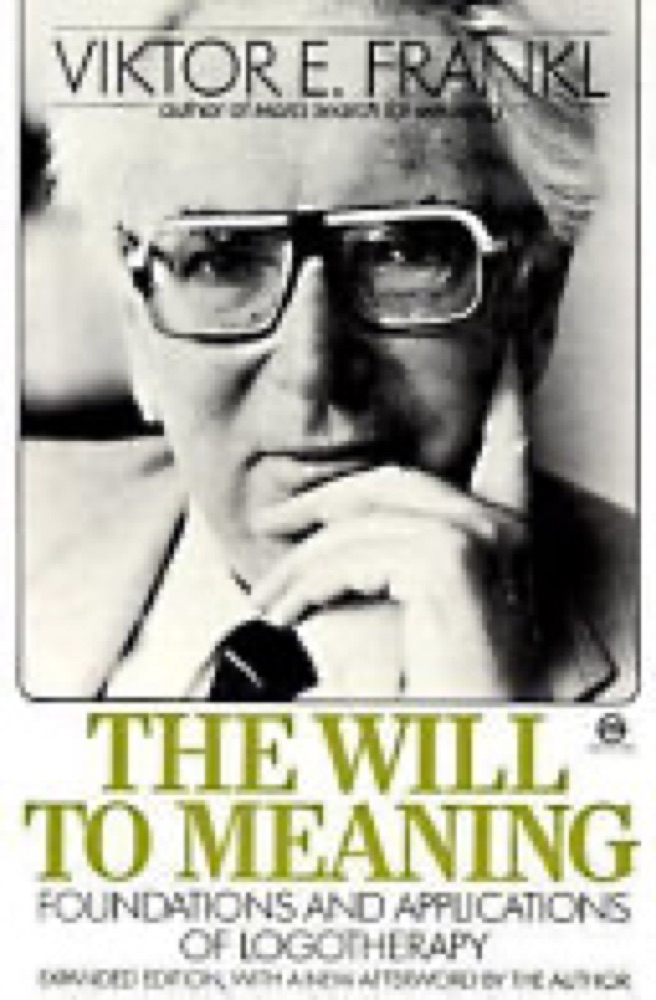
 Man's Search for Meaning
Quotes from the Book
But does the danger really lie in the lack of universality? Doesn't it rather lurk in the pretense of totality? What is dangerous is the attempt of a man who is an expert, say, in the field of biology, to understand and explain human beings exclusively in terms of biology. The same is true of psychology and sociology as well. At the moment at which totality is claimed, biology becomes biologism, psychology becomes psychologism, and sociology becomes sociologism. In other words, at that moment science is turned into ideology. What we have to deplore, I would say, is not that scientists are specializing, but that the specialists are generalizing. We are familiar with that type called terrible simplificateurs. Now we become acquainted with a type I would like to call terrible generalisateurs. I mean those who cannot resist the temptation to make overgeneralized statements on the grounds of limited findings.
18
Normally pleasure is never the goal of human strivings but rather is, and must remain, an effect, more specifically, the side effect of attaining a goal. Attaining the goal constitutes a reason for being happy. In other words, if there is a reason for happiness, happiness ensues, automatically and spontaneously, as it were. And that is why one need not pursue happiness, one need not care for it once there is a reason for it. Figure 3 But, even more, one cannot pursue it. To the extent to which one makes happiness the objective of his motivation, he necessarily makes it the object of his attention. But precisely by so doing he loses sight of the reason for happiness, and happiness itself must fade away.
12
What I had done was nothing so extraordinary. I had simply taken [the prisoners] as human beings and not mistaken them for mechanisms to repair. I had interpreted them in the same way they had interpreted themselves all along, that is to say, as free and responsible. I had not offered them a cheap escape from guilt feelings by conceiving of them as victims of biological, psychological, or sociological conditioning processes. Nor had I taken them as helpless pawns on the battleground of id, ego, and superego.
8
By [anticipatory anxiety] I mean that the patient reacts to an event with a fearful expectation of its recurrence. However, fear tends to make happen precisely that which one fears, and so does anticipatory anxiety. Thus a vicious circle is established. A symptom evokes a phobia and the phobia provokes the symptom. The recurrence of the symptom then reinforces the phobia. The patient is caught in a cocoon. […] [Obsessive-compulsives] fear the potential effects or the potential cause of the strange thoughts. The phobic pattern of flight from fear is paralleled by the obsessive-compulsive pattern. Obsessive-compulsive neurotics also display fear. But theirs is not 'fear of fear' but rather fear of themselves, and their response is to fight against obsessions and compulsions. But the more the patients fight, the stronger their symptoms become. In other words, alongside the circle formation built up by anticipatory anxiety in phobic cases, there is another feedback mechanism which we encounter in the obsessive-compulsive neurotic. Pressure induces counter-pressure, and counter-pressure, in turn, increases pressure. If one succeeds in making the patient stop fighting his obsessions and compulsions -- and this may well be accomplished by paradoxical intention -- these symptoms soon diminish and finally atrophy.
6
In contrast to most of the existentialist schools of thought, logotherapy is in no way pessimistic; but it is realistic in that it faces the tragic triad of human existence: pain, death, and guilt.
5
In the case of guilt, however, the stand one takes is a stand to one's self. What is even more important, fate cannot be changed; otherwise it would not be fate. Man, however, may well change himself, otherwise he would not be man. It is a prerogative of being human, and a constituent of human existence, to be capable of shaping and reshaping oneself. In other words, it is a privilege of man to become guilty, and his responsibility to overcome guilt. [...] As Max Scheler also pointed out, man has a right to be considered guilty and to be punished. Once we deal with man as the victim of circumstances and their influences, we not only cease to treat him as a human being but also lame his will to change.
4
I answered that as a neurologist and a psychiatrist, of course, I am fully aware of the extent to which man is not at all free from conditions. But I added that along with being a professor in two fields (neurology and psychiatry) I am a survivor of four camps (that is, concentration camps), and as such I also bear witness to the unexpected extent to which man is, and always remains, capable of resisting and braving even the worst conditions. To detach oneself from even the worst conditions is a uniquely human capability. [...] By virtue of this capacity man is capable of detaching himself not only from a situation but also from himself. He is capable of choosing his attitude toward himself. By doing so he really takes a stand toward his own somatic and psychic conditions and determinants. Understandably this is a crucial issue for psychotherapy and psychiatry, education and religion. For, seen in this light, a person is free to shape his own character, and man is responsible for what he may have made out of himself.
4
To be sure, the term, will to power, was coined by Nietzsche rather than Adler, and the term, will to pleasure—standing for Freud’s pleasure principle—is my own and not Freud’s.
2
It goes without saying that meaning and purpose in life cannot be prescribed like a drug. It is not the job of a doctor to give meaning to the patient’s life. But it may well be his task, through an existential analysis, to enable the patient to find meaning in life.
1
would say, reification has become the original sin of psychotherapy. But a human being is no thing. This no-thingness, rather than nothingness, is the lesson to learn from existentialism.
1
In an age such as ours, in which traditions are on the wane, psychiatry must see its principal assignment in equipping man with the ability to find meaning. In an age in which the Ten Commandments seem to many people to have lost their unconditional validity, man must learn to listen to the ten thousand commandments implied in the ten thousand situations of which his life consists. In this respect I hope the reader will find that logotherapy speaks to the needs of the hour. VIKTOR E. FRANKL, M.D., PH.D. Vienna, Austria
1
Instead, either he wishes to do what other people do (conformism), or he does what other people wish him to do (totalitarianism).
1
A famous American Freudian, commenting on a paper I had read, reported that he just had returned from Moscow. There, he said, he had found a lower frequency of neurosis as compared with the United States. He added that this might be traced to the fact that in Communist countries, as he felt, people are more often confronted with a task to complete. 'This speaks in favor of your theory,' he concluded, 'that meaning direction and task orientation are important in terms of mental health.' A year later, some Polish psychiatrists asked me to give a paper on logotherapy, and when I did so I quoted the American psychoanalyst. 'You are less neurotic than the Americans because you have more tasks to complete,' I told them. And they smugly smiled. 'But do not forget,' I added, 'that the Americans have retained their freedom also to choose their tasks, a freedom which sometimes seems to me to be denied to you.' They stopped smiling. How fine it would be to synthesize East and West, to blend tasks with freedom. Freedom then could fully develop. It really is a negative concept which requires a positive complement. And the positive complement is responsibleness. [...] Freedom threatens to degenerate into mere arbitrariness unless it is lived in terms of responsibleness. I like to say that the Statue of Liberty on the East Coast should be supplemented by a Statue of Responsibility on the West Coast.
1
If heaven ever accepts a prayer, it will hide this behind a sequence of natural facts.
Man is pushed by drives but pulled by values.
Watch on YouTube
About Viktor E. Frankl
We have collected 61 quotes from 3 books by Viktor E. Frankl on BookQuoters.
More about the author →More by Viktor E. Frankl
Man's Search for Meaning
 Man's Search for Ultimate Meaning
About the book
From the author of Man's Search for Meaning, one of the most influential works of psychiatric literature since Freud."Perhaps the most significant thinker since Freud and Adler," said The American Journal of Psychiatry about Europe's leading existential psychologist, the founder of logotherapy.
Book details
- First published
- 1969
- Author
- Viktor E. Frankl
- Genre
- Nonfiction
- Goodreads rating
- 4.23 (4k ratings)
Keep reading
 Toward a Psychology of Being
Man's Search for Ultimate Meaning
Toward a Psychology of Being
Man's Search for Ultimate Meaning
 The Sane Society
 Man and His Symbols
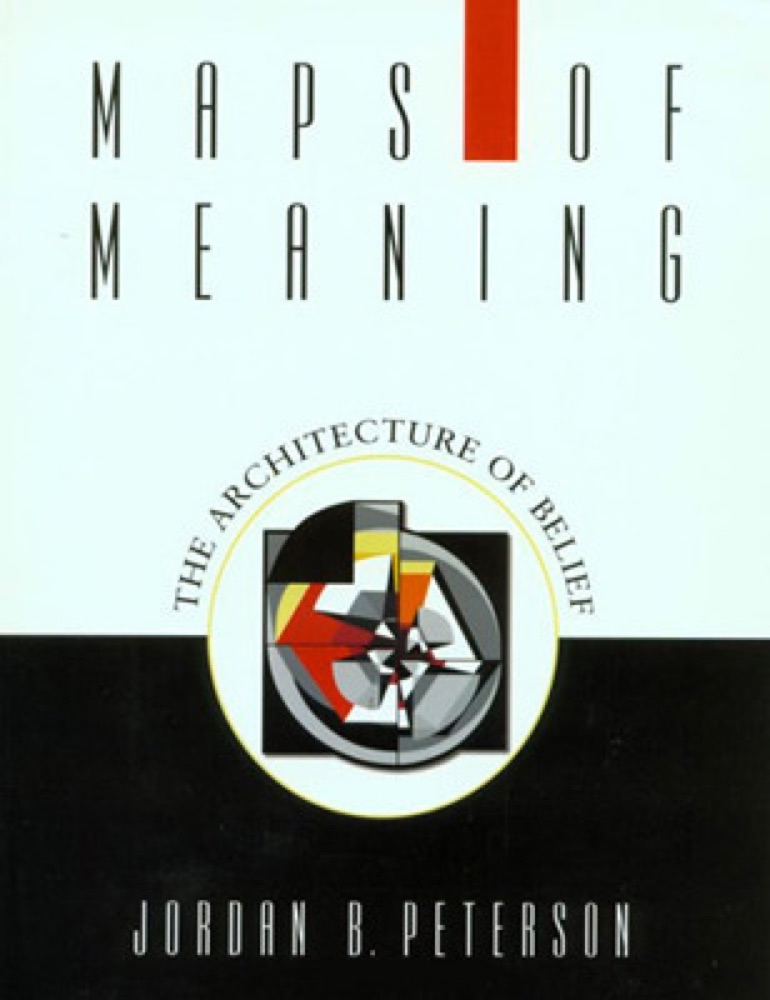 Maps of Meaning: The Architecture of Belief
 The Divided Self: An Existential Study in Sanity and Madness
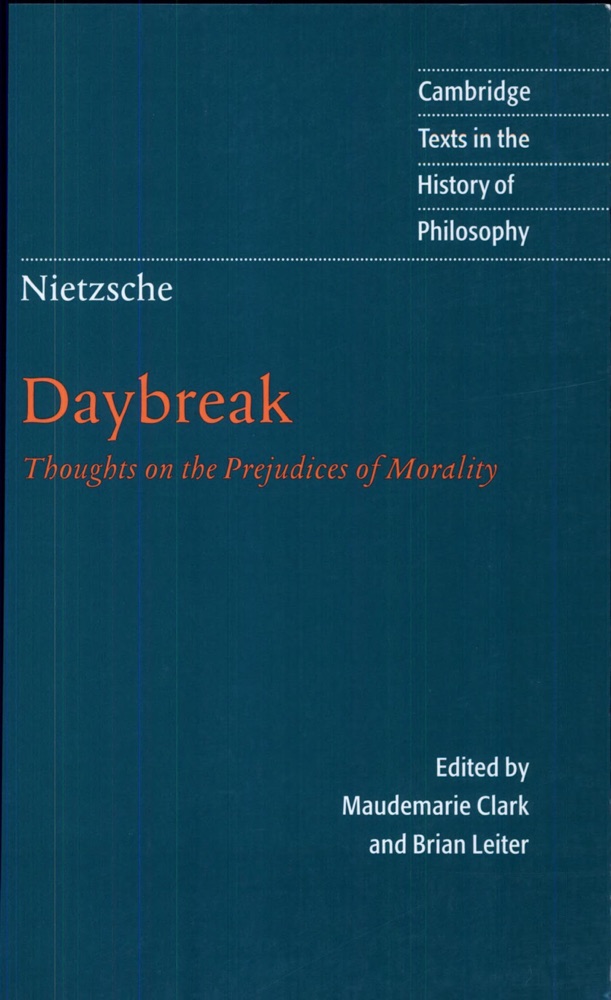 Daybreak: Thoughts on the Prejudices of Morality
 Escape from Freedom
Man's Search for Meaning
Escape from Freedom
Man's Search for Meaning
 Love's Executioner and Other Tales of Psychotherapy
 Existential Psychotherapy
 The Varieties of Religious Experience
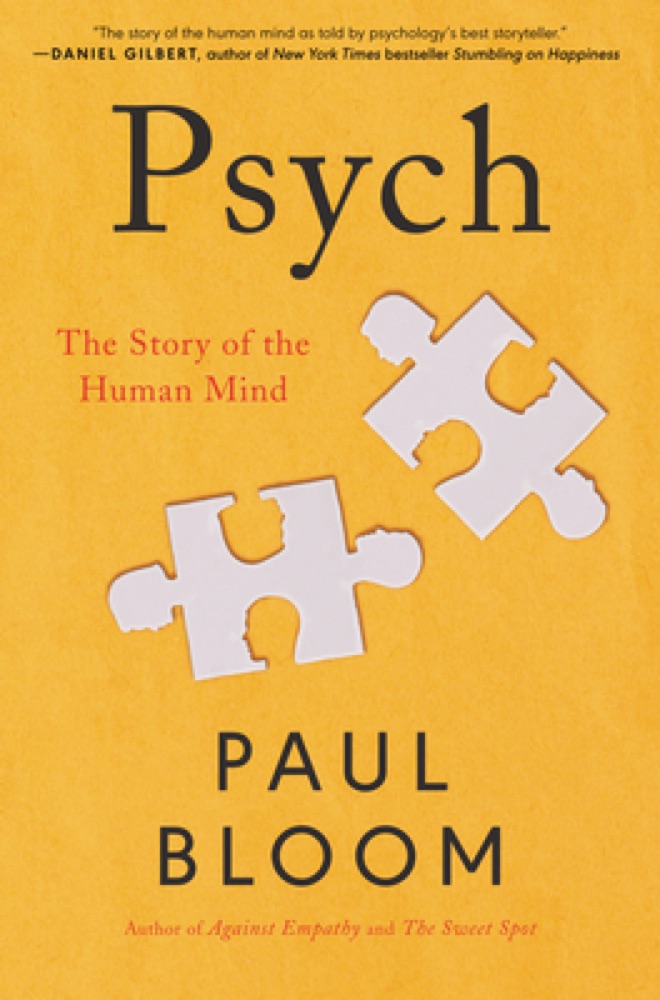 Psych: The Story of the Human Mind
 If You Meet the Buddha on the Road, Kill Him! The Pilgrimage of Psychotherapy Patients
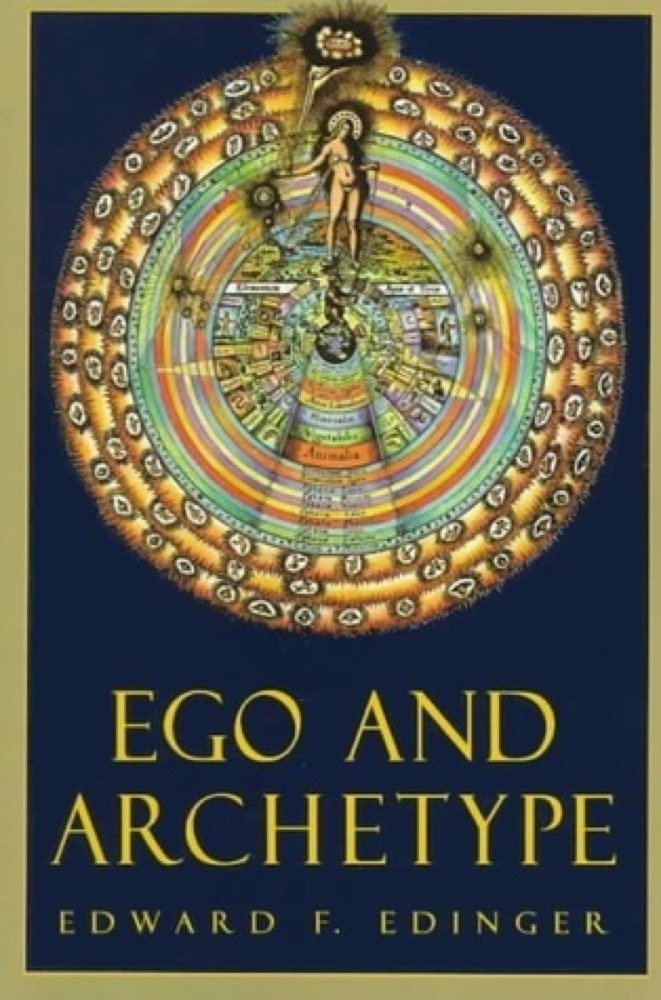 Ego and Archetype: Individuation and the Religious Function of the Psyche
 Anti-Oedipus: Capitalism and Schizophrenia
 The Art of Being
 The Man Who Mistook His Wife for a Hat and Other Clinical Tales
 The Politics of Experience/The Bird of Paradise
 The Denial of Death
 The Wisdom of Insecurity: A Message for an Age of Anxiety
 Modern Man in Search of a Soul
 12 Rules for Life: An Antidote to Chaos
 Beyond the Pleasure Principle
 Myths to Live By
 Natural Causes: An Epidemic of Wellness, the Certainty of Dying, and Killing Ourselves to Live Longer
 The Blank Slate: The Modern Denial of Human Nature
 Introductory Lectures on Psychoanalysis
 A First-Rate Madness: Uncovering the Links Between Leadership and Mental Illness
 The Schopenhauer Cure
 The Age of Absurdity: Why Modern Life makes it Hard to be Happy
 The Ethics of Ambiguity
 Think: A Compelling Introduction to Philosophy
 The Occult
 Love and Will
 A Language Older Than Words
 The Fourth Way
 The Myth of Sisyphus
 Man's Search for Himself
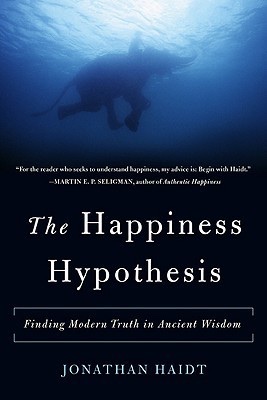 The Happiness Hypothesis: Finding Modern Truth in Ancient Wisdom
 At the Existentialist Café
 The Man Without Qualities
 The Will to Power
 Living on Your Own Terms: What Is Real Rebellion?
 Solitude: A Return to the Self
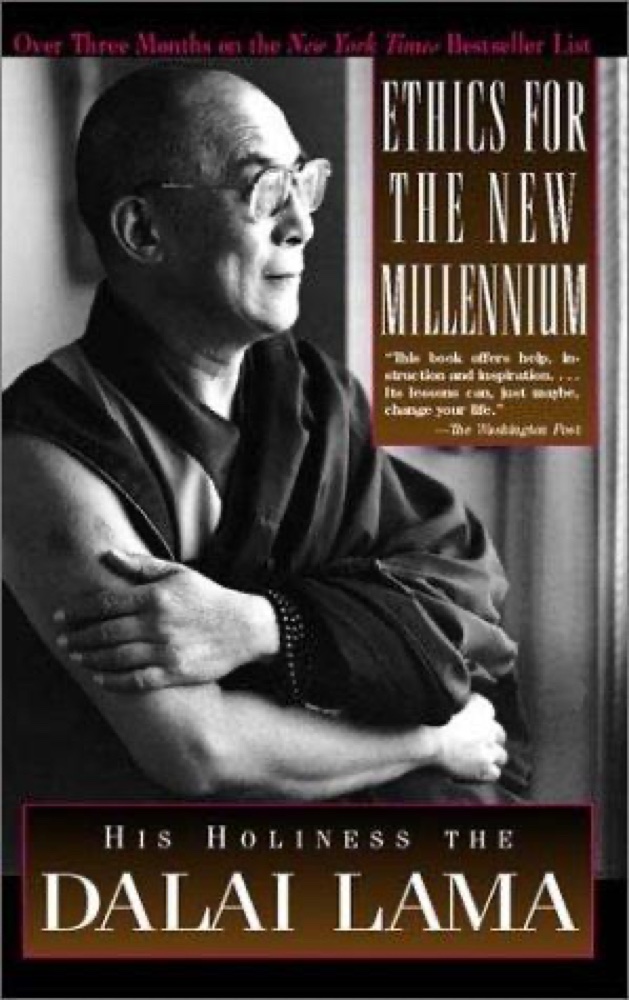 Ethics for the New Millennium
 Untimely Meditations
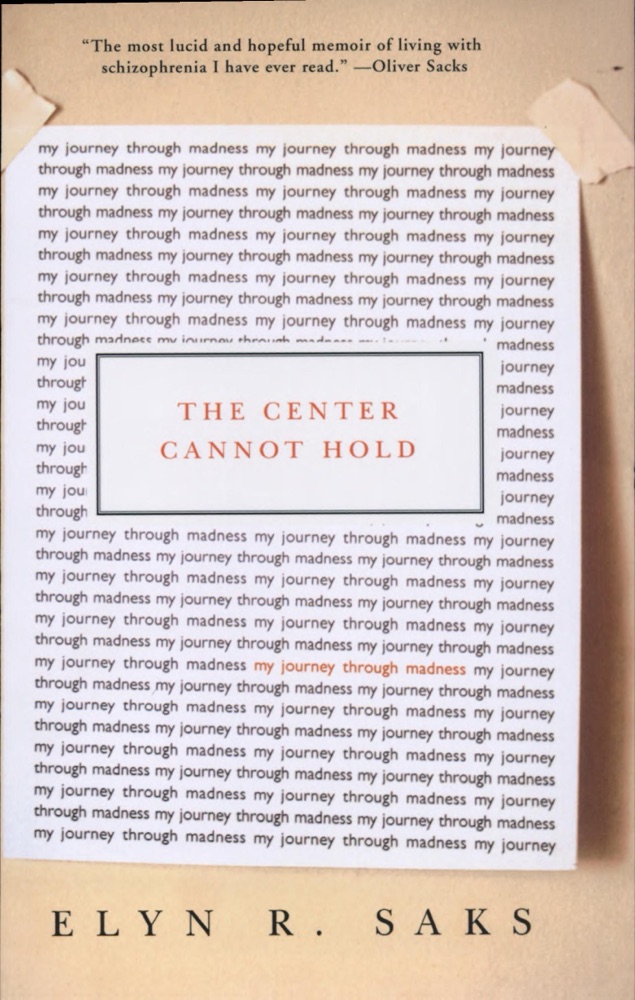 The Center Cannot Hold: My Journey Through Madness
 The Dice Man
 No Self, No Problem: How Neuropsychology Is Catching Up to Buddhism
 Finding Meaning in the Second Half of Life: How to Finally, Really Grow Up
 The Perennial Philosophy
 Total Freedom: The Essential Krishnamurti
 A Way of Being
 The Way of Zen
 Correction
 Walden Two
 The Conspiracy Against the Human Race