
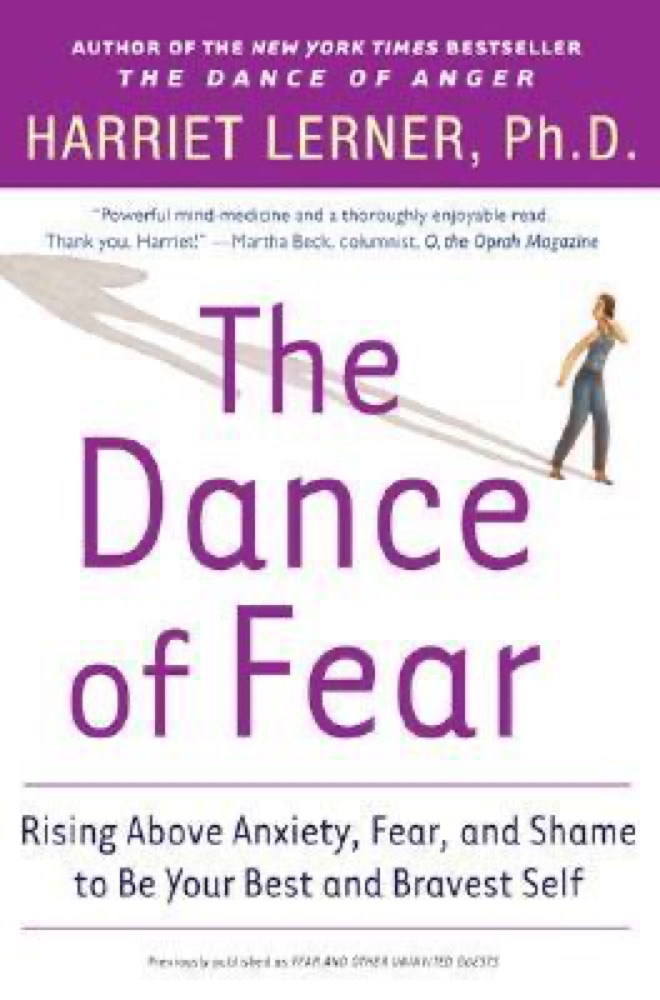
 The Dance of Fear: Rising Above Anxiety, Fear, and Shame to Be Your Best and Bravest Self
Quotes from the Book
Differences don’t just threaten and divide us. They also inform, enrich, and enliven us.
31
But therein lies the paradox: Speaking out and being “real” are not necessarily virtues. Sometimes voicing our thoughts and feelings shuts down the lines of communication, diminishes or shames another person, or makes it less likely that two people can hear each other or even stay in the same room. Nor is talking always a solution. We know from personal experience that our best intentions to process a difficult issue can move a situation from bad to worse. We can also talk a particular subject to death, or focus on the negative in a way that draws us deeper into it, when we’d be better off distracting ourselves and going bowling.
20
We can influence the other person through our words and silence, but we can never control the outcome.
14
Of course, adult life is not always so simple. Some issues need to be revisited—not dropped—and talk is essential to this process. We need words to begin to heal betrayals, inequalities, and ruptured connections. Our need for language, conversation, and definition goes beyond the wish to put things right. Through words we come to know the other person—and to be known. This knowing is at the heart of our deepest longings for intimacy and connection with others. How relationships unfold with the most important people in our lives depends on courage and clarity in finding voice. This is equally true for our relationship with our self.
14
We diminish people when we don’t allow them to help us, or when we act like we don’t need anything from them and they have nothing to offer us. We also diminish them when we allow them to go on and on, even after we’ve exceeded our capacity to pay attention.
13
We all long to have a relationship so relaxed and intimate that we can share anything and everything without first thinking about it. Who wants to hide out in a relationship in which we can’t allow ourselves to be known? Speaking in our own voice, not in someone else’s, is an undeniably good idea. I’ve yet to meet the person who aspires to be phony or invisible in her closest relationships. The dictate “Be yourself” is a cultural ideal touted everywhere, and luckily, no one else is as qualified for the job.
13
Indeed, in many situations wisdom lies in being strategic rather than spontaneous. This is especially true when we’re dealing with a difficult person, a hot issue, or a tense situation. The enormous challenge is to make wise decisions about how and when to say what to whom, and even before that, to know what we really want to say and what we hope to accomplish by saying it.
12
But an honorable relationship, she reminds us, is one in which “we are trying, all the time, to extend the possibilities of truth between us…of life between us.” When we are not able to speak authentically, our relationships spiral downward, as does our sense of integrity and self-regard.
11
Truth is, nothing you say can ensure that the other person will get it, or respond the way you want. You may never exceed his threshold of deafness. She may never love you, not now or ever. And if you are courageous in initiating, extending, or deepening a difficult conversation, you may feel even more anxious and uncomfortable, at least in the short run.
7
We need to listen carefully to the wisdom of our symptoms and to try to decode their meaning, because some of us have learned to settle, to fall silent; to deny that unfair circumstances exist or matter, and then to call our compromises “life.” But our bodies, our deeper unconscious selves, remain harder to fool.
6
Having and authentic voice means that: - We can openly share competence as well as problems and vulnerability. - We can warm things up and calm them down. - We can listen and ask questions that allow us to truly know the other person and to gather information about anything that may affect us. - We can say what we think and feel, state differences, and allow the other person to do the same. - We can define our values, convictions, principles, and priorities, and do our best to act in accordance with them. - We can define what we feel entitled to in a relationship, and we can clarify the limits of what we will tolerate or accept in another’s behavior. - We can leave (meaning that we can financially and emotionally support ourselves), if necessary.
5
All the assertiveness training and communication skills in the world can’t prevent a relationship from becoming fertile ground for silence and stonewalling, or for anger and frustration, or for just plain hard times. No book or expert can protect us from the range of painful emotions that make us human. We can influence the other person through our words and silence, but we can never control the outcome. That said, what we can
5
Why must they share their uncensored reactions?” She was referring to the corrosive criticism that wears couples down as they selectively attend to what bothers them in a partner rather than speaking to what they appreciate and admire. And she was referring to the raw, unbridled emotional exchanges that, when unchecked, erode intimacy and connection in family relationships.
5
We cannot survive when our identity is defined by or limited to our worst behavior. Every human must be able to view the self as complex and multidimensional. When this fact is obscured, people will wrap themselves in layers of denial in order to survive. How can we apologize for something we are, rather than something we did?
4
I feel calmed and relieved when my husband knocks at my study door in the middle of a fight, puts his arms around me, and says, “I love you. This is stupid. Let’s just drop it.” Like two kids in the sandbox, we’re suddenly light and playful again.
4
Our first family: where we learned (not) to speak.
4
The challenge in all intimate relationships is to preserve both the “I” and the “we” without losing either when the going gets tough. If we’re faced with a choice, we need to choose speech over silence, keep our behavior in line with our stated values and beliefs—and save ourselves first.
4
Moving in this direction requires us to clarify—to ourselves and others—what’s important to us. Having an authentic voice means that: We can openly share competence as well as problems and vulnerability. We can warm things up and calm them down. We can listen and ask questions that allow us to truly know the other person and to gather information about anything that may affect us. We can say what we think and feel, state differences, and allow the
4
Surely human consciousness would take a big leap forward if our wish to hear and understand were as great as our wish to be heard and understood.
3
real life is complicated, messy, unquantifiable, contextual, full of paradoxes and contradictions.
3
Likewise, the other person has a right to know us accurately, to consider the relationship and make plans for the future based on facts, not fantasies or projections.
3
experience of our self and the other person becomes fixed and small. My goal is to challenge us to engage in novel conversations that will create a larger, more empowering view of who we are and what is truly possible.
3
Working to restore our voice with members of our first family can be a terrific learning experience. We didn't choose these difficult folks, but, as adults, how we talk to them is up to us. Observing and changing our part in family conversations is one royal road to change. In other words, if you can learn to speak clearly and to respond in a new way with your difficult mother or sister, then other relationships will be a piece of cake.
2
I've seen any number of devastated men in therapy who tell me their wives left them out of the blue. The women, however, claim to have voiced their anger and discontent for a long time. Both are right; he hasn't listened well enough; she hasn't shared her thoughts about leaving clearly enough or early enough in the process. Often one person doesn't make a serious issue of divorce until she's finally made up her mind to leave. Any changes her partner then agrees to make are too little, too late. In the end, neither spouse has had the opportunity to test the potential for change in their marriage.
2
It’s an act of maturity to not take things personally and to understand that the other person’s response may have more to do with them than with us.
1
In a sad paradox, the more important and enduring a relationship (say, with a partner or relative), the more we tend to participate in narrow, habitual conversations where our experience of our self and the other person becomes fixed and small. My goal is to challenge us to engage in novel conversations that will create a larger, more empowering view of who we are and what is truly possible.
1
You know, Dad,” Ben said matter-of-factly, “as we get closer and closer to home, I can just feel the layers of maturity peeling off me.
1
We can operate from a solid position of self, even when the other person won’t speak to us at all.
1
Getting older brings the comforting knowledge that the things we consider most shameful and weird about ourselves are actually pretty universal—or if not, that other folks have their own shameful and weird stuff. This growing realization that we’re not so unique makes it easier to share who we really are and how we got there.
1
Watch on YouTube
About Harriet Lerner
We have collected 74 quotes from 3 books by Harriet Lerner on BookQuoters.
More about the author →More by Harriet Lerner
The Dance of Fear: Rising Above Anxiety, Fear, and Shame to Be Your Best and Bravest Self
About the book
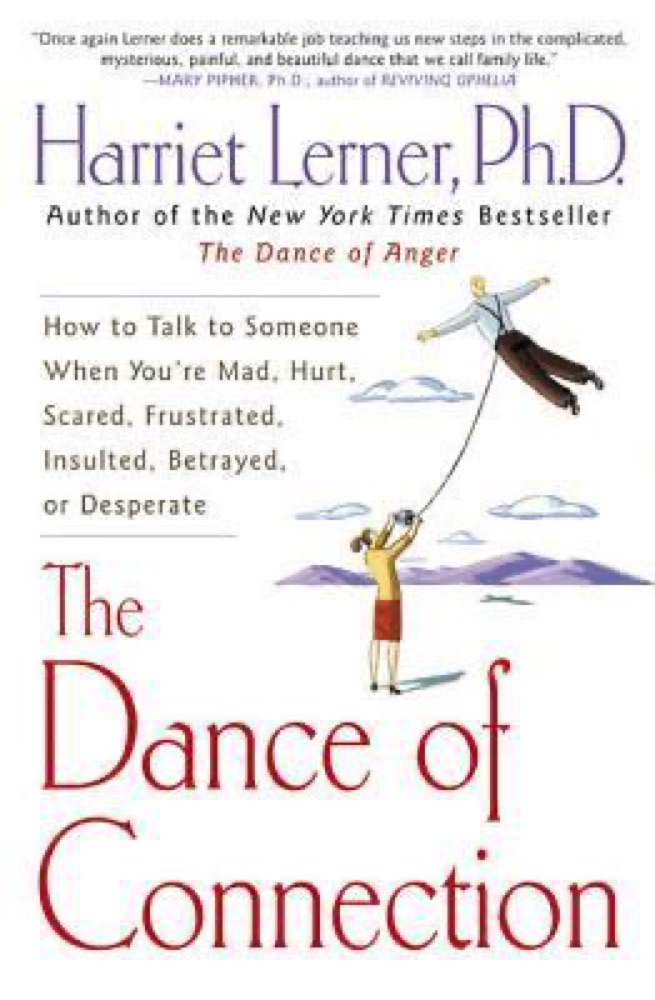
In her most affirming and life-changing book yet, Dr. Harriet Lerner teaches us how to restore love and connection with the people who matter the most. In The Dance of Connection we learn what to say (and not say) when:
- We need an apology, and the person who has harmed us won't apologize or be accountable. - We don't know how to take a conversation to the next level when we feel desperate. - We feel worn down by the other person's criticism, negativity, or irresponsible behavior. - We have been rejected or cut off, and the other person won't show up for the conversation. - We are struggling with staying or leaving, and we don't know our "bottom line." - We are convinced that we've tried everything -- and nothing changes.
Filled with compelling personal stories and case examples, Lerner outlines bold new "voice lessons" that show us how to speak with honor and personal integr
Book details
- First published
- 2001
- Author
- Harriet Lerner
- Genre
- Nonfiction
- Goodreads rating
- 4.06 (4k ratings)
Keep reading
 Difficult Conversations: How to Discuss What Matters Most
 Us: Getting Past You and Me to Build a More Loving Relationship
 Fierce Love: Creating a Love that Lasts―One Conversation at a Time
 Crucial Conversations: Tools for Talking When Stakes are High
 Platonic: How the Science of Attachment Can Help You Make—and Keep—Friends
 Atlas of the Heart: Mapping Meaningful Connection and the Language of Human Experience
 The Art of Communicating
 Drama Free: A Guide to Managing Unhealthy Family Relationships
 How to Know a Person: The Art of Seeing Others Deeply and Being Deeply Seen
 Bonds That Make Us Free: Healing Our Relationship, Coming to Ourselves
 The World According to Mister Rogers: Important Things to Remember
 Maybe You Should Talk to Someone: A Therapist, Her Therapist, and Our Lives Revealed
 If the Buddha Dated: A Handbook for Finding Love on a Spiritual Path
 The Light We Carry: Overcoming in Uncertain Times
 Nonviolent Communication: A Language of Life
 Supercommunicators: How to Unlock the Secret Language of Connection
 Tell Me More: Stories About the 12 Hardest Things I'm Learning to Say
 We Can Do Hard Things: Answers to Life's 20 Questions
 If I Understood You, Would I Have This Look on My Face?: My Adventures in the Art and Science of Relating and Communicating
 Changes That Heal: How to Understand the Past to Ensure a Healthier Future
 See No Stranger: A Memoir and Manifesto of Revolutionary Love
 Clarity & Connection
 Untamed
 The Laws of Human Nature
 Passionate Marriage: Keeping Love and Intimacy Alive in Committed Relationships
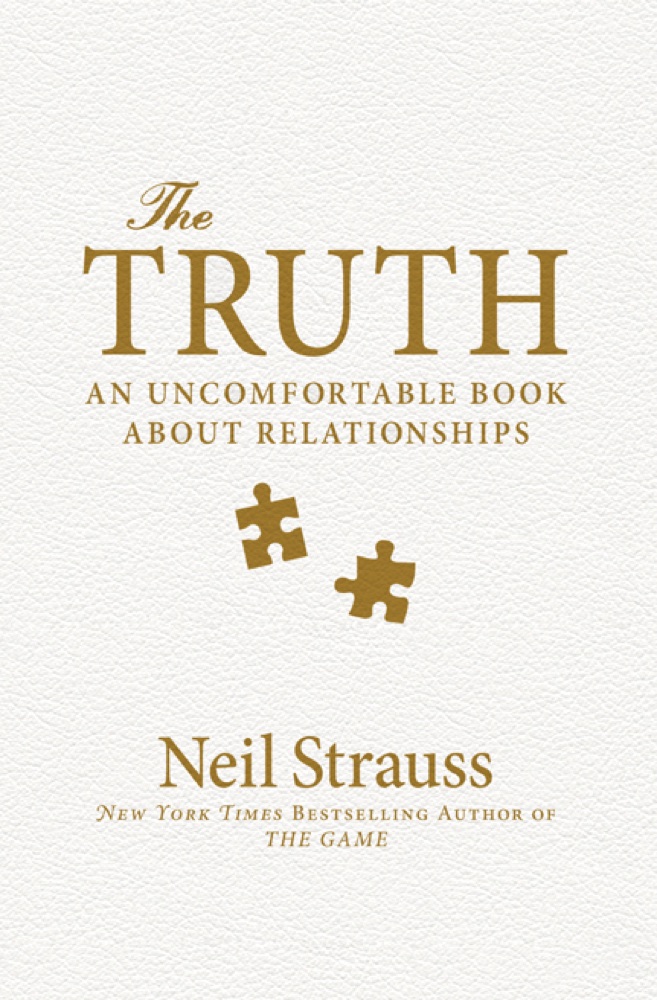 The Truth: An Uncomfortable Book About Relationships
 On Connection
 The Four Agreements: A Practical Guide to Personal Freedom
 The 5 Love Languages: The Secret to Love that Lasts
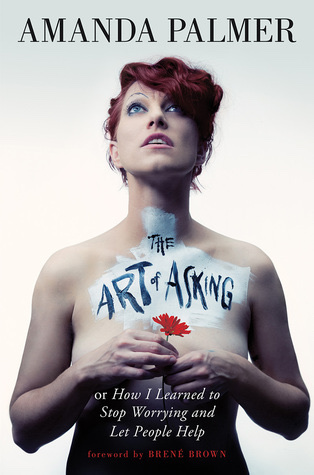 The Art of Asking; or, How I Learned to Stop Worrying and Let People Help
 Dear Dolly
 The School of Life: An Emotional Education
 Sister Outsider: Essays and Speeches
 The Course of Love
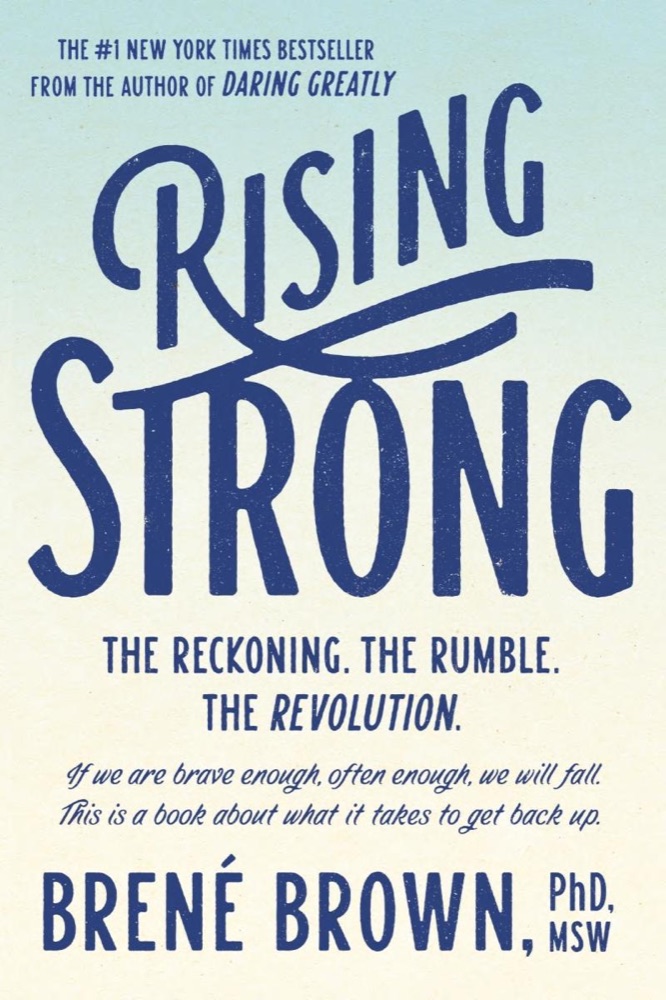 Rising Strong
 Conversations on Love
 What It Takes to Heal: How Transforming Ourselves Can Change the World
 How to Be an Adult in Relationships: The Five Keys to Mindful Loving
 All Is Not Forgotten
 How to Stay Sane in an Age of Division
 More Than Two: A Practical Guide to Ethical Polyamory
 Dare to Lead
 Life Will Be the Death of Me: . . . and you too!
 Good Morning, Monster: A Therapist Shares Five Heroic Stories of Emotional Recovery
 The Relationship Cure: A 5 Step Guide to Strengthening Your Marriage, Family, and Friendships
 8 Rules of Love: How to Find It, Keep It, and Let It Go
 Kitchen Table Wisdom: Stories that Heal
 A Way of Being
 The Argonauts
 In the Dream House
 The Things You Can See Only When You Slow Down: How to Be Calm in a Busy World
 Radical Honesty : How to Transform Your Life by Telling the Truth
 Codependent No More: How to Stop Controlling Others and Start Caring for Yourself
 Never Broken: Songs Are Only Half the Story
 How to Fight
 Professional Troublemaker: The Fear-Fighter Manual
![[Don't] Call Me Crazy](/i/book/g/b2/dont-call-me-crazy.jpg) [Don't] Call Me Crazy
[Don't] Call Me Crazy
 We Learn Nothing
 Surrounded by Idiots
 Social Intelligence: The New Science of Human Relationships