

 The Collected Schizophrenias: Essays
Quotes from the Book
My good fortune is not that I've recovered from mental illness. I have not, nor will I ever. My good fortune lies in having found my life.
55
in my experience, the words “now just calm down” almost inevitably have the opposite effect on the person you are speaking to.
33
Dropping in and out of your own life (for psychotic breaks, or treatment in a hospital) isn’t like getting off a train at one stop and later getting back on at another. Even if you can get back on (and the odds are not in your favor), you’re lonely there. The people you boarded with originally are far, far ahead of you, and now you’re stuck playing catch-up.
30
If you are walking on a path thick with brambles and rocks, a path that abruptly twists and turns, it's easy to get lost, or tired, or discouraged. You might be tempted to give up entirely. But if a kind and patient person comes along and takes your hand, saying, "I see you're having a hard time- here, follow me, I'll help you find your way," the path becomes manageable, the journey less frightening.
29
All my life, books had been the life raft, the safe haven, the place I ran to when nothing else worked.
26
The humanity we all share is more important than the mental illnesses we may not
19
some truths that were too difficult and frightening to know.
14
Don’t focus on it,” she said. “Don’t define yourself in terms of something which even many highly trained and gifted professionals do not fully understand.
13
I needed to put two critical ideas together: that I could both be mentally ill and lead a rich and satisfying life.
11
If you are a person with mental illness, the challenge is to find the life that's right for you. But in truth, isn't that the challenge for all of us, mentally ill or not? My good fortune is not that I've recovered from mental illness. I have not, nor will I ever. My good fortune lies in having found my life.
10
So the grades I earned were the only objective signal I ever received about how I was doing in the world. The task of setting and achieving academic goals operated as a sort of adhesive; I needed it to hold myself together. Failing (or, at least in this case, failing my own expectations) tore that adhesive off and further splintered my fragile sense of self.
8
How many times, I wondered, would I have to deal with the betrayal of this mass of nerves and blood vessels and muscle and skin?
8
Or try this: Place yourself in the middle of the room. Turn on the stereo, the television, and a beeping video game, and then invite into the room several small children with ice cream cones. Crank up the volume on each piece of electrical equipment, then take away the children’s ice cream. Imagine these circumstances existing every day and night of your life. What would you do?
8
What I rather wish to say is that the humanity we all share is more important than the mental illness we may not. With proper treatment, someone who is mentally ill can lead a full and rich life. What makes life wonderful--good friends, a satisfying job, loving relationships--is just as valuable for those of us who struggle with schizophrenia as for anyone else.
7
But explaining what I’ve come to call “disorganization” is a different challenge altogether. Consciousness gradually loses its coherence. One’s center gives way. The center cannot hold. The “me” becomes a haze, and the solid center from which one experiences reality breaks up like a bad radio signal.
7
That was when I learned that for all my good intentions, I could be simultaneously on the receiving and giving end of the stigma that goes along with mental illness.
5
Nothing I can do. There will be raging fires, and hundreds, maybe thousands of people lying dead in the streets. And it will all—all of it—be my fault.
5
Schizophrenia rolls in like a slow fog, becoming imperceptibly thicker as time goes on. At first, the day is bright enough, the sky is clear, the sunlight warms your shoulders. But soon, you notice a haze beginning to gather around you, and the air feels not quite so warm. After a while, the sun is a dim lightbulb behind a heavy cloth. The horizon has vanished into a gray mist, and you feel a thick dampness in your lungs as you stand, cold and wet, in the afternoon dark.
3
A mental illness diagnosis does not automatically sentence you to a bleak and painful life, devoid of pleasure or joy or accomplishment. I also wanted to dispel the myths held by many mental-health professionals themselves—that people with a significant thought disorder cannot live independently, cannot work at challenging jobs, cannot have true friendships, cannot be in meaningful, sexually satisfying love relationships, cannot lead lives of intellectual, spiritual, or emotional richness.
3
Different bodies respond differently to different medication; finding the magic potion is pretty much hit-and-miss. This seems obvious, even simplistic, but it's the only consistently true fact in treating mental illness.
3
Law is based on a theory of personhood; that is, the concept of someone who can make choices and suffer consequences, and who understands the threat of sanction. The doctrine of informed consent (indeed, most of American political theory) presumes that we are not just subjects to be directed, but rather autonomous beings capable of making independent decisions.
3
Who was I, at my core? Was I primarily a schizophrenic? Did that illness define me? Or was it an “accident” of being—and only peripheral to me rather than the “essence” of me? It’s been my observation that mentally ill people struggle with these questions perhaps even more than those with serious physical illnesses, because mental illness involves your mind and your core self as well. A woman with cancer isn’t Cancer Woman; a man with heart disease isn’t Diseased Heart Guy; a teenager with a broken leg isn’t The Broken Leg Kid. But if, as our society seemed to suggest, good health was partly mind over matter, what hope did someone with a broken mind have?
2
Ironically, the more I accepted I had a mental illness, the less the illness defined me—at which point the riptide set me free.
2
psychoanalysis asks fundamental questions: Why do people do what they do? When can people be held responsible for their actions? Is unconscious motivation relevant to responsibility? And what renders a person not capable of making choices?
1
You might also strive to make your life as predictable and orderly as possible—to literally control the various ingredients that make up your life—so that you knew ahead of time what was expected of you, what was going to happen, and how to prepare for it. Your basic goal would be to eliminate surprises. Slowly, painstakingly, you would rebuild your own internal regulator, with structure and predictability. What you lose in the way of spontaneity, you gain by way of sanity.
1
Immediately, every sight, every sound, every smell coming at you carries equal weight; every thought, feeling, memory, and idea presents itself to you with an equally strong and demanding intensity.
1
Taking off your clothes can feel like taking off armor; revealing vulnerability feels dangerous. And even the sanest person has to admit that the physical experience of orgasm is disorienting, even somewhat hallucinogenic—for me, that letting-go, falling-through-space feeling hadn’t always been good. When space looks suspiciously like an abyss, and “losing yourself” can equal psychosis, ceding control can be terrifying.
1
I was afraid the staff would laugh at me—and as frightened as I was, the thought of derision frightened me even more. In retrospect, it was a life-threatening deception, somewhat along the lines of hiding recurrent chest pains from one’s cardiologist from embarrassment. Nearly
1
A central tenet of both classical and Kleinian analysis is that the treater must remain fairly anonymous to her patient—she does not answer questions about herself
Watch on YouTube
About Elyn R. Saks
We have collected 29 quotes from 1 book by Elyn R. Saks on BookQuoters.
More about the author →About the book
Elyn Saks is a success by any measure: she's an endowed professor at the prestigious University of Southern California Gould School of Law. She has managed to achieve this in spite of being diagnosed as schizophrenic and given a "grave" prognosis—and suffering the effects of her illness throughout her life.
Saks was only eight, and living an otherwise idyllic childhood in sunny 1960s Miami, when her first symptoms appeared in the form of obsessions and night terrors. But it was not until she reached Oxford University as a Marshall Scholar that her first full-blown episode, complete with voices in her head and terrifying suicidal fantasies, forced her into a psychiatric hospital.
Saks would later attend Yale Law School where one night, during her first term, she had a breakdown that left her singing on the roof of the law school library at midnight. She was taken to the emergency ro
Book details
- First published
- 2007
- Author
- Elyn R. Saks
- Genre
- Nonfiction
- Goodreads rating
- 4.33 (24k ratings)
Keep reading
The Collected Schizophrenias: Essays
 Just Like Someone Without Mental Illness Only More So
 An Unquiet Mind: A Memoir of Moods and Madness
 Hello I Want to Die Please Fix Me: Depression in the First Person
![[Don't] Call Me Crazy](/i/book/g/b2/dont-call-me-crazy.jpg) [Don't] Call Me Crazy
[Don't] Call Me Crazy
 Brain on Fire: My Month of Madness
 The Eden Express: A Memoir of Insanity
 Committed: On Meaning and Madwomen
 Shoot the Damn Dog: A Memoir of Depression
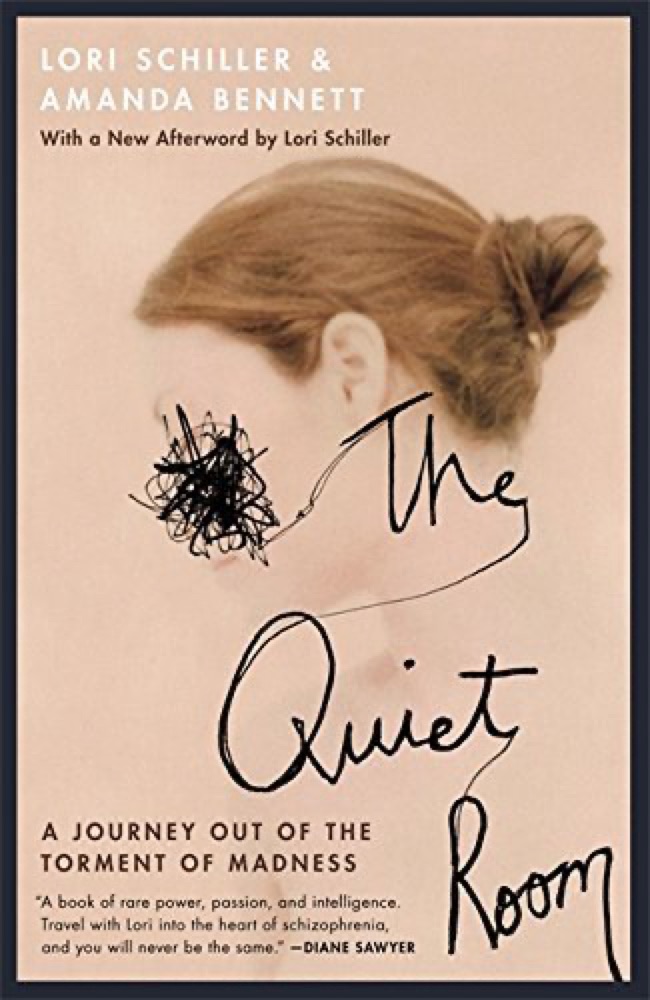 The Quiet Room: A Journey Out of the Torment of Madness
 Get Me Out of Here: My Recovery from Borderline Personality Disorder
 Words on Bathroom Walls
 The Noonday Demon: An Atlas of Depression
 Girl, Interrupted
 Loud in the House of Myself: Memoir of a Strange Girl
 Underground: The Tokyo Gas Attack and the Japanese Psyche
 Natural Causes: An Epidemic of Wellness, the Certainty of Dying, and Killing Ourselves to Live Longer
 More, Now, Again: A Memoir of Addiction
 The Asylum for Wayward Victorian Girls
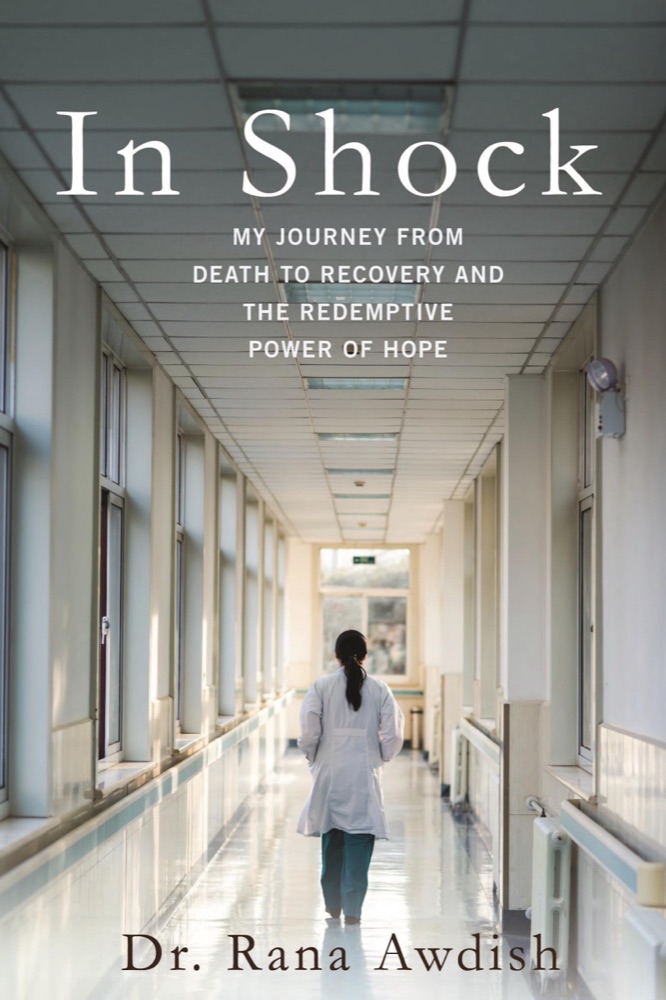 In Shock: My Journey from Death to Recovery and the Redemptive Power of Hope
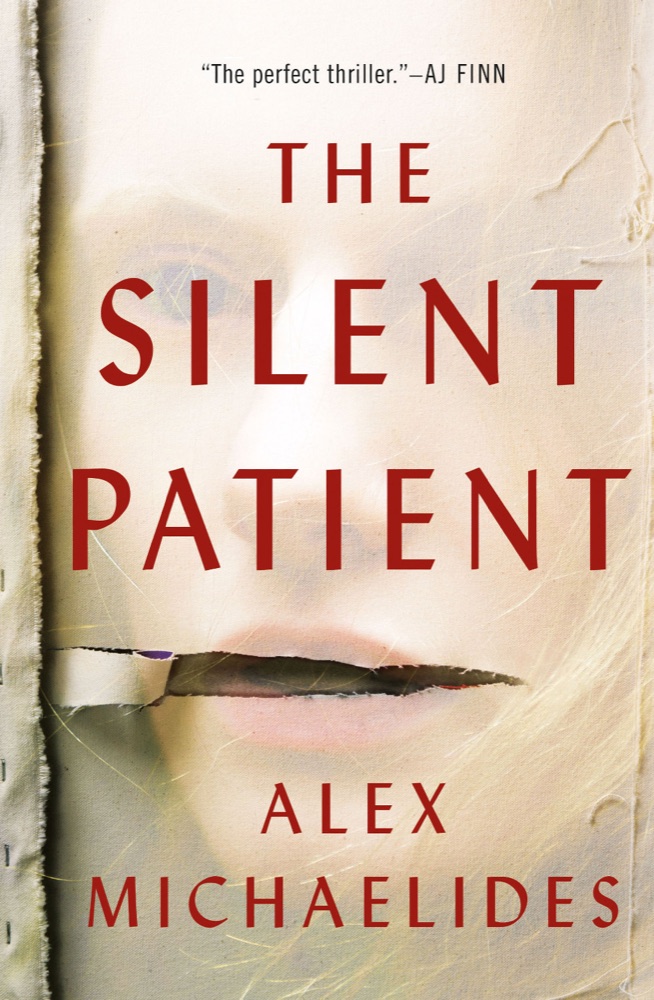 The Silent Patient
 Madness: A Bipolar Life
 Suspect
 Feeling Good: The New Mood Therapy
 The Divided Self: An Existential Study in Sanity and Madness
 Good Morning, Monster: A Therapist Shares Five Heroic Stories of Emotional Recovery
 Monkey Mind: A Memoir of Anxiety
 Prozac Nation
 Stella Maris
 Infinite Jest
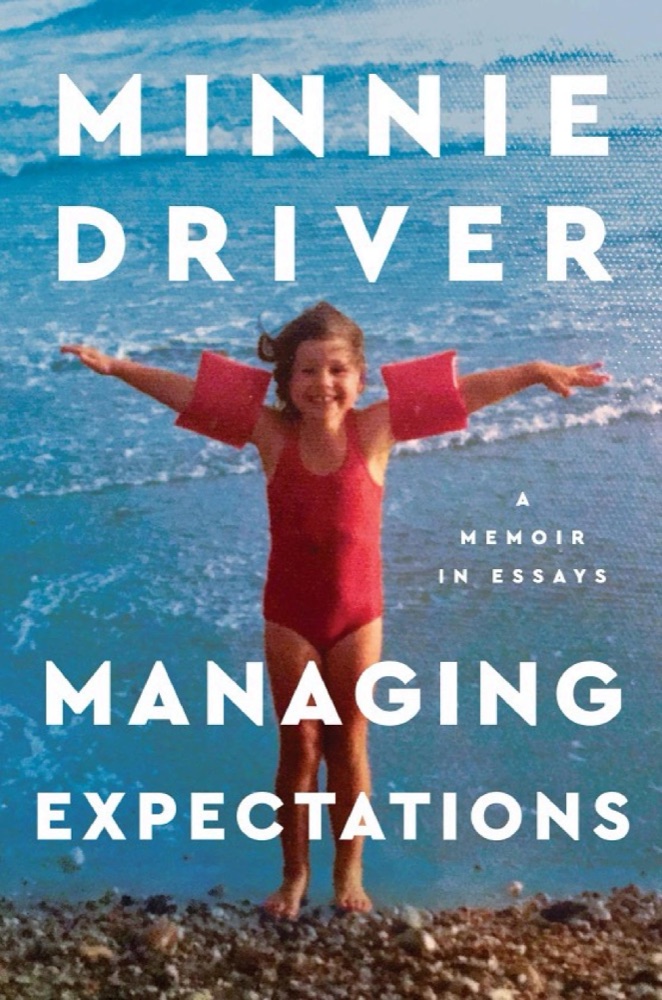 Managing Expectations: A Memoir in Essays – A Poignant Collection of Personal Stories on Acting, Failure, and Motherhood's Joy
 All Is Not Forgotten
 The Hilarious World of Depression
 Heart Berries
 Ten Steps to Nanette
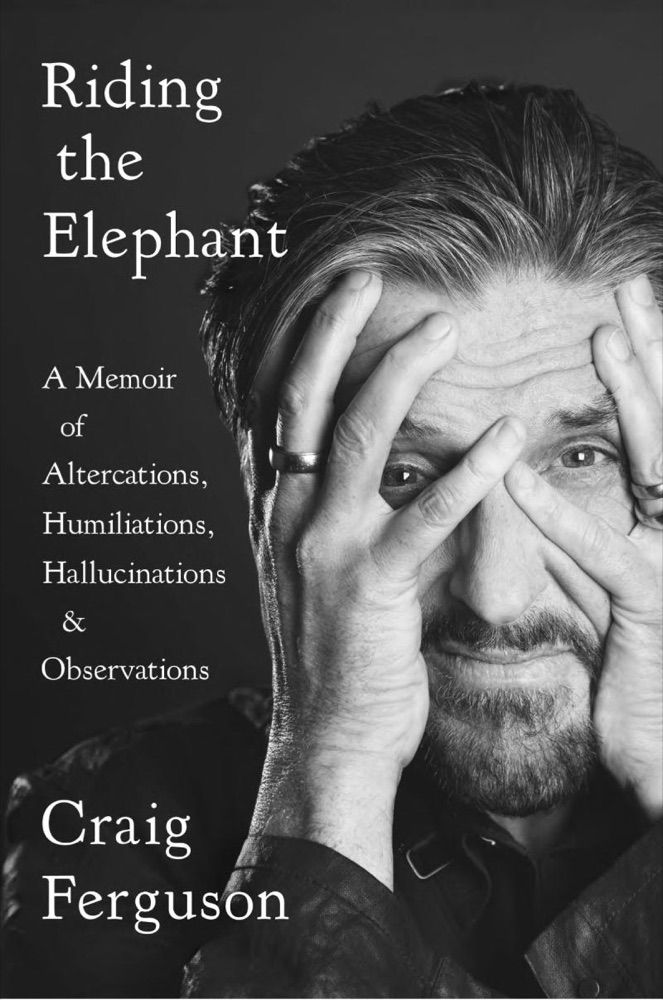 Riding the Elephant: A Memoir of Altercations, Humiliations, Hallucinations, and Observations
 Paperweight
 The Opposite of Butterfly Hunting: The Tragedy and The Glory of Growing Up
 Into the Magic Shop: A Neurosurgeon's Quest to Discover the Mysteries of the Brain and the Secrets of the Heart
 Very Good Lives: The Fringe Benefits of Failure and the Importance of Imagination
 Imagine Me Gone
 The Girl in the Castle
 Reasons to Stay Alive
 Wasted: A Memoir of Anorexia and Bulimia
 The Story of the Lost Child
 In The Blood
 Why Be Happy When You Could Be Normal?
 Almost Everything: Notes on Hope
 Wishful Drinking
 The Color of Everything: A Journey to Quiet the Chaos Within
 Oranges Are Not the Only Fruit
 Unbearable Lightness: A Story of Loss and Gain
 Legion
 Scar Tissue
 Maybe You Should Talk to Someone: A Therapist, Her Therapist, and Our Lives Revealed
 Sliver of Truth
 Dyscalculia: A Love Story of Epic Miscalculation
 Under Rose-Tainted Skies
![It's Not OK to Feel Blue [and other lies]](/i/book/g/ed/its-not-ok-to-feel-blue-and-other-lies.jpg) It's Not OK to Feel Blue [and other lies]
It's Not OK to Feel Blue [and other lies]