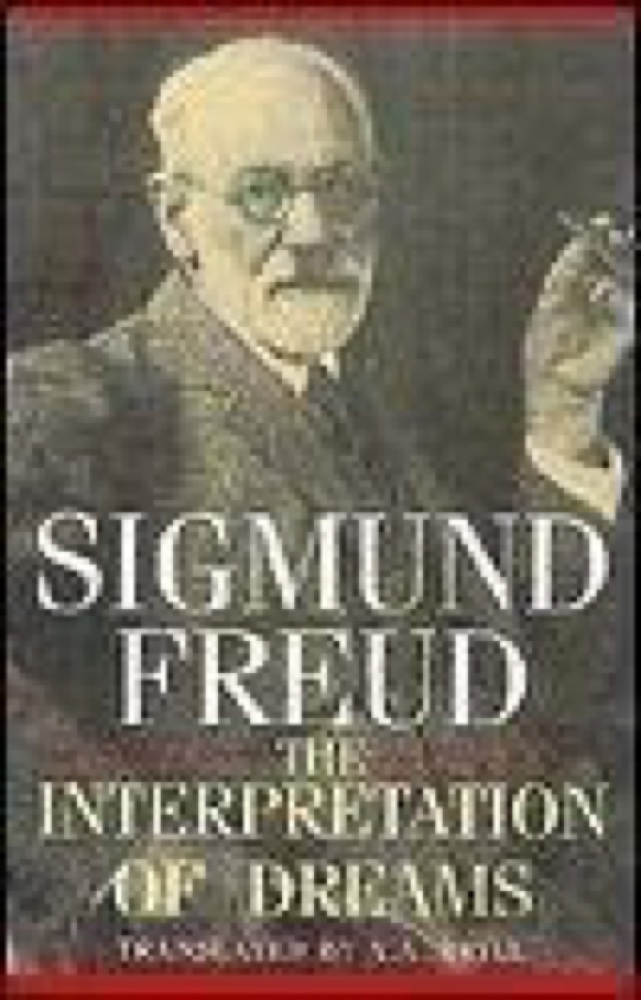
 The Interpretation of Dreams
Quotes from the Book
He that has eyes to see and ears to hear may convince himself that no mortal can keep a secret. If his lips are silent, he chatters with his fingertips; betrayal oozes out of him at every pore.
654
Loneliness and darkness have just robbed me of my valuables.
128
It is a predisposition of human nature to consider an unpleasant idea untrue, and then it is easy to find arguments against it.
79
Words and magic were in the beginning one and the same thing, and even today words retain much of their magical power.
60
Humanity has in the course of time had to endure from the hands of science two great outrages upon its naive self-love. The first was when it realized that our earth was not the center of the universe, but only a tiny speck in a world-system of a magnitude hardly conceivable; this is associated in our minds with the name of Copernicus, although Alexandrian doctrines taught something very similar. The second was when biological research robbed man of his peculiar privilege of having been specially created, and relegated him to a descent from the animal world, implying an ineradicable animal nature in him: this transvaluation has been accomplished in our own time upon the instigation of Charles Darwin, Wallace, and their predecessors, and not without the most violent opposition from their contemporaries. But man's craving for grandiosity is now suffering the third and most bitter blow from present-day psychological research which is endeavoring to prove to the ego of each one of us that he is not even master in his own house, but that he must remain content with the veriest scraps of information about what is going on unconsciously in his own mind. We psycho-analysts were neither the first nor the only ones to propose to mankind that they should look inward; but it appears to be our lot to advocate it most insistently and to support it by empirical evidence which touches every man closely.
57
Words were originally magic, and the word retains much of its old magical power even to-day. With words one man can make another blessed, or drive him to despair; by words the teacher transfers his knowledge to the pupil; by words the speaker sweeps his audience with him and determines its judgments and decisions. Words call forth effects and are the universal means of influencing human beings.
38
For there is a way back from imagination to reality and that is—art.
22
With words one man can make another blessed, or drive him to despair;
13
Everyone of us who can look back over a longer or shorter life experience will probably say that he might have spared himself many disappointments and painful surprises if he had found the courage and decision to interpret as omens the little mistakes which he made in his intercourse with people, and to consider them as indications of the intentions which were still being kept secret. As
5
One must be humble, one must keep personal preferences and antipathies in the background, if one wishes to discover the realities of the world.
4
Therefore, let us not undervalue small signs; perhaps by means of them we will succeed in getting on the track of greater things.
3
We are astonished to hear declarations by married women and girls which bear witness to a quite particular attitude to the therapeutic problem: they had always known, they say, that they could only be cured by love.
3
The uneducated relatives of our patients—persons who are impressed only by the visible and tangible, preferably by such procedure as one sees in the moving picture theatres—never miss an opportunity of voicing their scepticism as to how one can "do anything for the malady through mere talk." Such thinking, of course, is as shortsighted as it is inconsistent. For these are the very persons who know with such certainty that the patients "merely imagine" their symptoms. Words
3
But it is a predisposition of human nature to consider an unpleasant idea untrue, and then it is easy to find arguments against it. Society thus brands what is unpleasant as untrue, denying the conclusions of psychoanalysis with logical and pertinent arguments. These arguments originate from affective sources, however, and society holds to these prejudices against all attempts at refutation.
3
Words call forth effects and are the universal means of influencing human beings.
3
Yet we see, on the contrary, that many acts are most successfully carried out when they are not the objects of particularly concentrated attention, and that the mistakes occur just at the point where one is most anxious to be accurate—where a distraction of the necessary attention is therefore surely least permissible. One could then say that this is the effect of the "excitement," but we do not understand why the excitement does not intensify the concentration of attention on the goal that is so much desired.
3
What else does psychoanalysis do here but confirm the old saying of Plato, that the good people are those who content themselves with dreaming what the others, the bad people, really do?
2
The story is told of a famous German chemist that his marriage did not take place, because he forgot the hour of his wedding and went to the laboratory instead of to the church. He was wise enough to be satisfied with a single attempt and died at a great age unmarried
2
WE think we have advanced too rapidly. Let us go back a little. Before our last attempt to overcome the difficulties of dream distortion through our technique, we had decided that it would be best to avoid them by limiting ourselves only to those dreams in which distortion is either entirely absent or of trifling importance, if there are such. But here again we digress from the history of the evolution of our knowledge, for as a matter of fact we become aware of dreams entirely free of distortion only after the consistent application of our method of interpretation and after complete analysis of the distorted dream.
2
One can make a compound formation of events and of places in the same way as of people, provided always that the single events and localities have something in common which the latent dream emphasizes. It is a sort of new and fleeting concept of formation, with the common element as its kernel. This jumble of details that has been fused together regularly results in a vague indistinct picture, as though you had taken several pictures on the same film.
2
woman who has just been delivered of a child, "Her oven has caved in.
1
The female genital is symbolically represented by all those objects which share its peculiarity of enclosing a space capable of being filled by something—viz., by pits, caves, and hollows, by pitchers and bottles, by boxes and trunks, jars, cases, pockets, etc. Theship, too, belongs in this category.
1
The interfering intention in the tongue slip may stand in a significant relation to the intention interfered with, and then the former contains a contradiction of the latter, correcting or supplementing it. Or, to take a less intelligible and more interesting case, the interfering intention has nothing to do with the intention interfered with.
1
An analytic treatment demands from both doctor and patient the accomplishment of serious work, which is employed in lifting internal resistances. Through the overcoming of these resistances the patient's mental life is permanently changed, is raised to a higher level of development and remains protected against fresh possibilities of falling ill.
1
Dans le travail scientifique, il est plus rationnel de s'attaquer à ce qu'on a devant soi, à des objets qui s'offrent d'eux-mêmes à notre investigation.
1
Watch on YouTube
About Sigmund Freud
We have collected 145 quotes from 8 books by Sigmund Freud on BookQuoters.
More about the author →More by Sigmund Freud
The Interpretation of Dreams
 Civilization and Its Discontents
 The Future of an Illusion
 Totem and Taboo
About the book
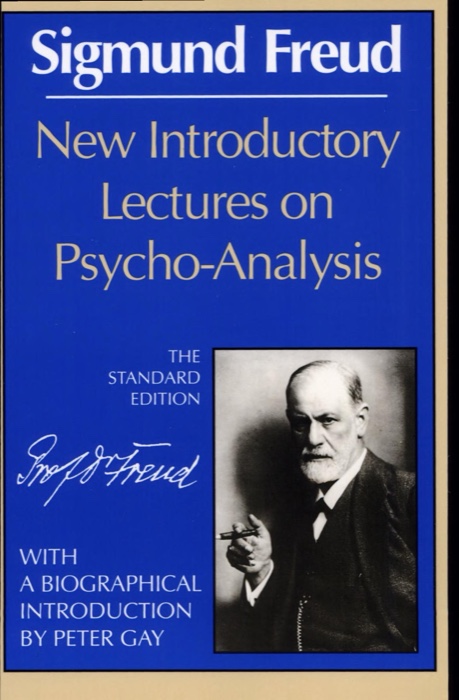
These lectures were delivered by Freud during World War I. Never before, in the course of 30 years of lecturing at the University of Vienna, had he deliberately set down, with a view to publication, the full range of his theories and observations. This series, therefore, represents a stock-taking of psychoanalysis as it stood after the secession of Adler and Jung.
Book details
- First published
- 1917
- Author
- Sigmund Freud
- Genre
- Nonfiction
- Goodreads rating
- 3.79 (12k ratings)
Keep reading
 Stories of Your Life and Others
 The Magic Mountain
 Human, All Too Human
 Modern Man in Search of a Soul
 Man and His Symbols
 A Treatise of Human Nature
 An Essay Concerning Human Understanding
 The Doors of Perception & Heaven and Hell
 The Fall of Babel
 Daybreak: Thoughts on the Prejudices of Morality
 Time Regained
 An Enquiry Concerning Human Understanding
 The Schopenhauer Cure
 The Interpretation of Murder
 The Guermantes Way
 Foundation and Empire
 The Master and His Emissary: The Divided Brain and the Making of the Western World
 Maps of Meaning: The Architecture of Belief
 The Varieties of Religious Experience
 The Man Without Qualities
 The Elementary Particles
 The Stories of Vladimir Nabokov
 The Art of Seduction
 An Instance of the Fingerpost
 The Empusium
 Zeno's Conscience
 Love's Executioner and Other Tales of Psychotherapy
 Sodom and Gomorrah
 Elizabeth Finch
 The Atrocity Exhibition
 The Consolations of Philosophy
 The Screwtape Letters
 The Blue Flower
 Aphorisms on Love and Hate
 The Story of the Lost Child
 Trust
Trust
 Anti-Oedipus: Capitalism and Schizophrenia
 Daniel Deronda
 The Rebel Angels
 Eyeless in Gaza
 The Story of My Experiments With Truth
 The Man Who Mistook His Wife for a Hat and Other Clinical Tales
 Children of Dune
 That Hideous Strength
 Saturday
 Cultural Amnesia: Necessary Memories from History and the Arts
 Illuminations: Essays and Reflections
 Fall of Man in Wilmslow
 The Art of Being
 Genesis
 The Occult
 Selected Stories
 Complete Works of Oscar Wilde
 Humboldt's Gift
 The Essays of Ralph Waldo Emerson
 Awakenings
 Gaudy Night
 Erewhon
 The Doors of Perception