
 Lying on the Couch
Quotes from the Book
Life is a miserable thing. I have decided to spend my life thinking about it.
Religion has everything on its side: revelation, prophecies, government protection, the highest dignity and eminence. . . and more than this, the invaluable prerogative of being allowed to imprint its doctrines on the mind at a tender age of childhood, whereby they become almost innate ideas.
Live right, he reminded himself, and have faith that good things will flow from you even if you never learn of them.
The flower replied: You fool! Do you imagine I blossom in order to be seen? I blossom for my own sake because it pleases me, and not for the sake of others. My joy consists in my being and my blossoming.
If we look at life in its small details, how ridiculous it all seems. It is like a drop of water seen through a microscope, a single drop teeming with protozoa. How we laugh as they bustle about so eagerly and struggle with one another. Whether here, or in the little span of human life, this terrible activity produces a comic effect
A person of high, rare mental gifts who is forced into a job which is merely useful is like a valuable vase decorated with the most beautiful painting and then used as a kitchen pot.
He who would be everything cannot be anything.”)
It has often been noted that three major revolutions in thought have threatened the idea of human centrality. First, Copernicus demonstrated that Earth was not the center about which all celestial bodies revolved. Next, Darwin showed us that we were not central in the chain of life but, like all other creatures, had evolved from other life-forms. Third, Freud demonstrated that we are not masters in our own house-that much of our behavior is governed by forced outside of our consciousness. There is no doubt that Freud’s unacknowledged co-revolutionary was Arthur Schopenhauer, who, long before Freud’s birth, had posited that we are governed by deep biological forced and then delude ourselves into thinking that we consciously choose our activities.
And what is the most terrible thing about boredom? Why do we rush to dispel it? Because it is a distraction-free state which soon enough reveals underlying unpalatable truths about existence—our insignificance, our meaningless existence, our inexorable progression to deterioration and death.
We should treat with indulgence every human folly, failing, and vice, bearing in mind that what we have before us are simply our own failings, follies, and vices. For they are just the failings of mankind to which we also belong and accordingly we have all the same failings buried within ourselves. We should not be indignant with others for these vices simply because they do not appear in us at the moment.
Nietzsche’s message to us was to live life in such a way that we would be willing to repeat the same life eternally.
When, at the end of their lives, most men look back they will find that they have lived throughout ad interim. They will be surprised to see that the very thing they allowed to slip by unappreciated and unenjoyed was just their life. And so a man, having been duped by hope, dances into the arms of death.
The freedom of an unscheduled afternoon brought confusion rather than joy. Julius had always been focused. When he was not seeing patients, other important projects and activities-writing, teaching, tennis, research-clamored for his attention. But today nothing seemed important. He suspected that nothing had ever been important, that his mind had arbitrarily imbued projects with importance and then cunningly covered its traces. Today he saw through the ruse of a lifetime. Today there was nothing important to do, and he ambled aimlessly down Union Street.
The greatest wisdom is to make the enjoyment of the present the supreme object of life because that is the only reality; all else being the play of thought. But it might as well be our greatest folly because that which exists only a moment and vanishes as a dream can never be worth a serious effort.
At the end of his life, no man, if he be sincere and in possession of his faculties, would ever wish to go though it again. Rather than this, he will much prefer to choose complete nonexistence.
marriage a debt that is contracted in youth and paid in old age….
Could we foresee it, there are times when children might seem like innocent prisoners condemned not to death but to life and as yet all too unconscious of what their sentence means. Nevertheless every man desires to reach old age…a state of life of which it may be said “it is bad today, and every day it will get worse, until the worst of all happens.
Some said living with cancer had made them wiser, more self-realized, while others had reordered their priorities in life, grown stronger, learned to say no to activities they no longer valued and yes to things that really mattered—such as loving their family and friends, observing the beauty about them, savoring the changing seasons.
(...) Arthur ne aminteşte adesea (şi lui însuşi) că emoţia are puterea de a ascunde şi de a falsifica cunoaşterea; că lumea întreagă capătă un aspect senin atunci când avem motive să ne bucurăm şi unul întunecat şi posomorât atunci când ne copleşeşte părerea de rău
Absolutely, bring any kind of carrot cake you wish.
One cold winter’s day a number of porcupines huddled together quite closely in order, through their mutual warmth, to prevent themselves from being frozen. But they soon felt the effects of their quills on one another, which made them again move apart. Now, when the need for warmth once again brought them together, the drawback of the quills was repeated so they were tossed between two evils, until they discovered the proper distance from which they could best tolerate one another. Thus the needs for society, which springs from the emptiness and monotony of men’s lives, drives them together but their many unpleasant and repulsive qualities once more drive them apart.
No rose without a thorn. But many a thorn without a rose.
Trăiește cum trebuie și ai încredere că vei da celorlalți lucruri bune, chiar dacă tu nu vei afla niciodată asta.
Were you really, truly, helpful to your patients? Maybe you've just learned to pick patients who were going to improve on their own anyway.
This world is supposed to have been made by a God? No, much better by a devil!
Watch on YouTube
About Irvin D. Yalom
We have collected 227 quotes from 11 books by Irvin D. Yalom on BookQuoters.
More about the author →More by Irvin D. Yalom
Lying on the Couch
 The Spinoza Problem
 Love's Executioner and Other Tales of Psychotherapy
 Momma and the Meaning of Life: Tales of Psychotherapy
Book details
- Author
- Irvin D. Yalom
- Genre
- Literature
- Goodreads rating
- 4.28 (32k ratings) →
Keep reading
 The Consolation of Philosophy
 When Nietzsche Wept
 Zeno's Conscience
 The Gay Science
 The World as Will and Representation, Vol 1
 Point Counter Point
 The Man Without Qualities
 The Wisdom of Life
 Twilight of the Idols
 On the Suffering of the World
 The Magic Mountain
 The Consolations of Philosophy
 The Fall
 The Myth of Sisyphus
 The Screwtape Letters
 Beyond Good and Evil
 Eyeless in Gaza
 Man's Search for Meaning
 East of Eden
 Cancer Ward
 The Myth of Sisyphus and Other Essays
 The Idiot
 If You Meet the Buddha on the Road, Kill Him! The Pilgrimage of Psychotherapy Patients
 Ethics
 The Varieties of Religious Experience
 Correction
 The Magus
 The First Circle
 Either/Or: A Fragment of Life
 The Elementary Particles
 Oblomov
 Creatures of a Day: And Other Tales of Psychotherapy
The Spinoza Problem
Creatures of a Day: And Other Tales of Psychotherapy
The Spinoza Problem
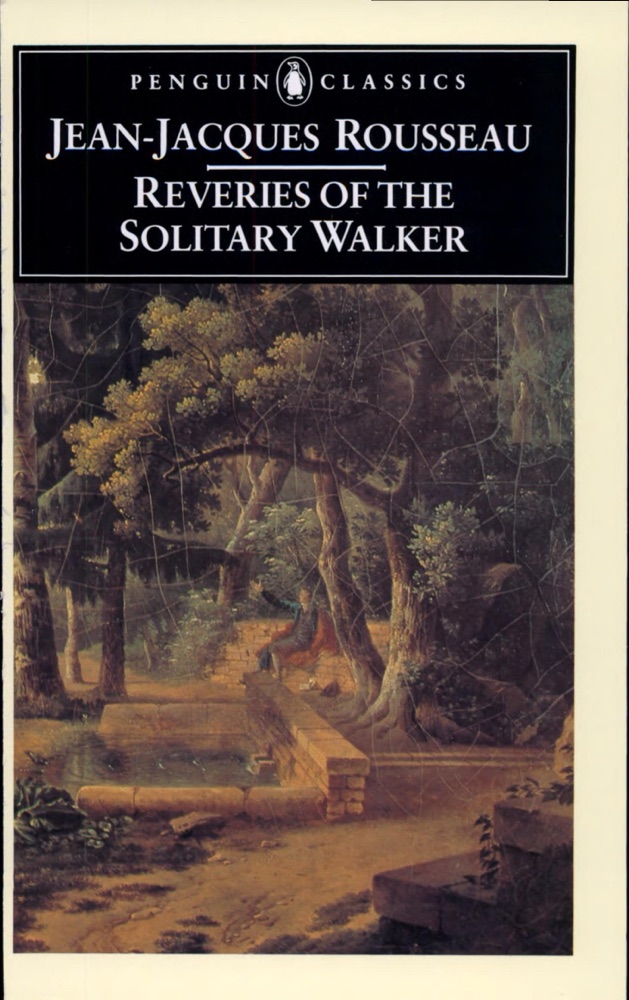 Reveries of the Solitary Walker
 The Ides of March
 Memories, Dreams, Reflections
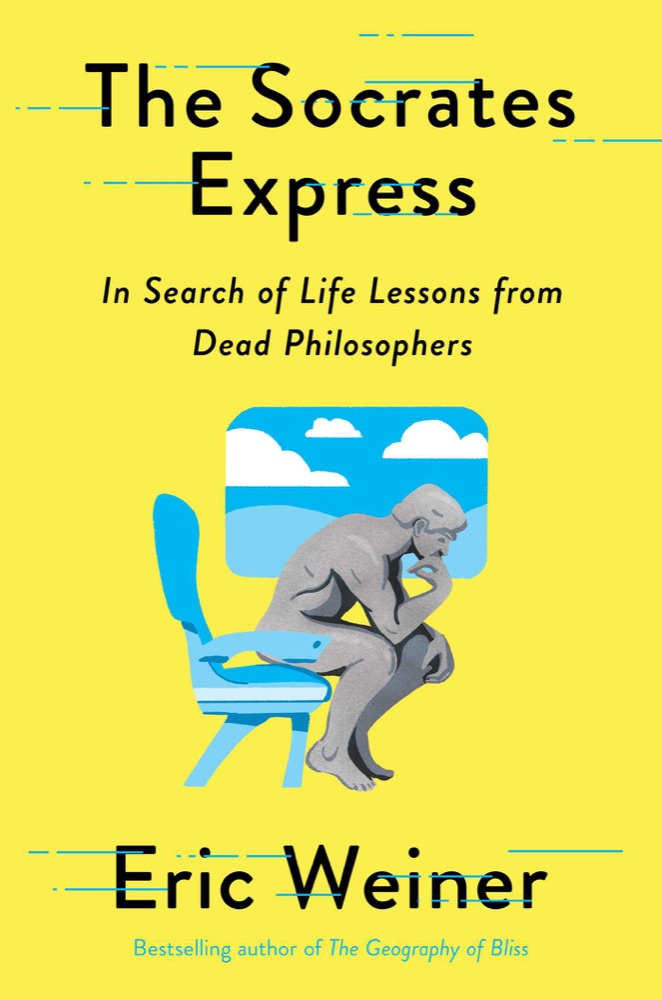 The Socrates Express: In Search of Life Lessons from Dead Philosophers
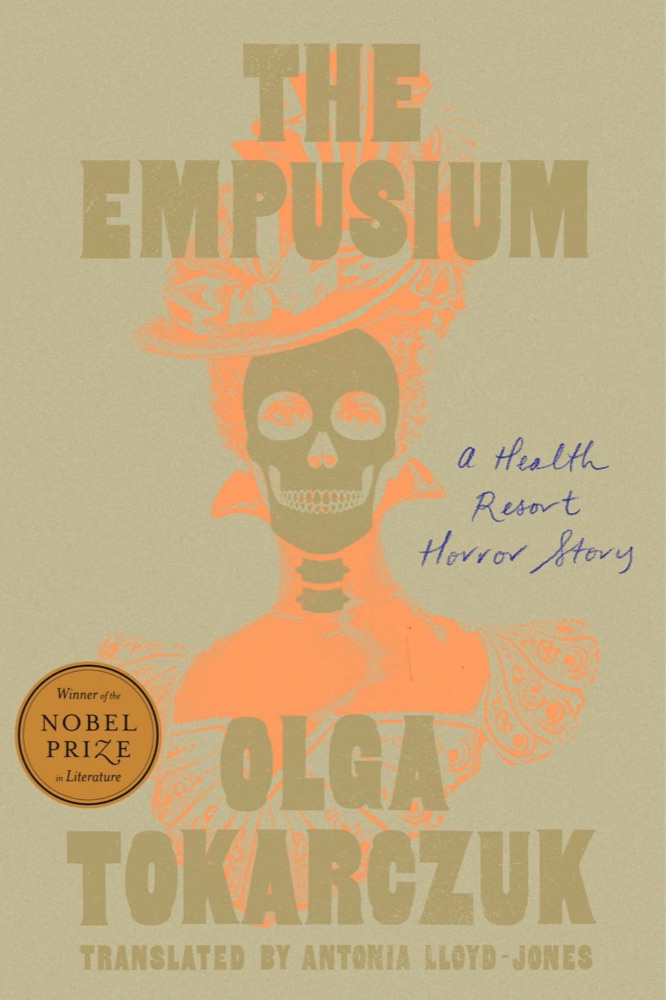 The Empusium
 Daniel Deronda
 Embers
 Humboldt's Gift
 Heretics
 The Count of Monte Cristo
 The Story of My Experiments With Truth
 Demons
 The Dice Man
 Pensées
 Of Human Bondage
 The Fountainhead
 The Philosopher and the Wolf
 Doctor Zhivago
 A Calendar of Wisdom: Daily Thoughts to Nourish the Soul
 Emile or On Education
 The Once and Future King
 The Guermantes Way
 The Fall of Babel
 Hiking with Nietzsche: On Becoming Who You Are
 How to Live: A Life of Montaigne in One Question and Twenty Attempts at an Answer
 Foucault's Pendulum