
 In the Realm of Hungry Ghosts: Close Encounters with Addiction
Quotes from the Book
The paradox is that hedonism, the pursuit of pleasure for it's own sake, leads to anhedonia. Which is the inability to enjoy pleasure of any kind.
61
Lessons of the balance. 1. The relentless pursuit of pleasure and avoidance of pain, leads to pain. 2. Recovery begins with abstinence 3. Abstinence rests the brains reward pathway and with it our capacity to take joy and simpler pleasures. 4. Self-binding creates literal and metacognitive space between desire and consumption, a modern necessity in our dopamine overloaded world. 5. Medications can restore homeostasis, but consider what we lose by medicating away our pain. 6. Pressing on the pain side, resets our balance to the side of pleasure. 7. Beware of getting addicted to pain. 8. Radical honesty promotes awareness, enhances intimacy and fosters a plenty mindset. 9. Prosocial shame affirms that we belong to the human tribe. 10. Instead of running away from the world, we can find escape by immersing ourselves in it.
59
I urge you to find a way to immerse yourself fully in the life that you’ve been given. To stop running from whatever you’re trying to escape, and instead to stop, and turn, and face whatever it is. Then I dare you to walk toward it. In this way, the world may reveal itself to you as something magical and awe-inspiring that does not require escape. Instead, the world may become something worth paying attention to. The rewards of finding and maintaining balance are neither immediate nor permanent. They require patience and maintenance. We must be willing to move forward despite being uncertain of what lies ahead. We must have faith that actions today that seem to have no impact in the present moment are in fact accumulating in a positive direction, which will be revealed to us only at some unknown time in the future. Healthy practices happen day by day. My patient Maria said to me, “Recovery is like that scene in Harry Potter when Dumbledore walks down a darkened alley lighting lampposts along the way. Only when he gets to the end of the alley and stops to look back does he see the whole alley illuminated, the light of his progress.
52
Because we’ve transformed the world from a place of scarcity to a place of overwhelming abundance: Drugs, food, news, gambling, shopping, gaming, texting, sexting, Facebooking, Instagramming, YouTubing, tweeting . . . the increased numbers, variety, and potency of highly rewarding stimuli today is staggering. The smartphone is the modern-day hypodermic needle, delivering digital dopamine 24/7 for a wired generation.
39
The reason we’re all so miserable may be because we’re working so hard to avoid being miserable.
28
We’re all running from pain. Some of us take pills. Some of us couch surf while binge-watching Netflix. Some of us read romance novels. We’ll do almost anything to distract ourselves from ourselves. Yet all this trying to insulate ourselves from pain seems only to have made our pain worse.
23
[E]mpathy without accountability is a shortsighted attempt to relieve suffering.
17
Beyond extreme examples of running from pain, we’ve lost the ability to tolerate even minor forms of discomfort. We’re constantly seeking to distract ourselves from the present moment, to be entertained.
16
As the neuroscientist, Daniel Freedman, who studies the foraging practices of Red Harvester ants, once remarked to me: "The world is sensory rich and causal poor". That is to say, we know the donut tastes good in the moment, but we are less aware that eating a donut every day for a month, adds 5 pounds to our waistline.
15
By protecting our children from adversity, have we made them deathly afraid of it? By bolstering their self-esteem with false praise and a lack of real-world consequences, have we made them less tolerant, more entitled, and ignorant of their own character defects? By giving in to their every desire, have we encouraged a new age of hedonism?
14
But, there is a cost to medicating away every type of human suffering, and as we shall see, there is an alternative path that might work better: embracing pain.
14
Pleasure and pain are co-located. In addition to the discovery of dopamine, neuro-scientists have determined that pleasure and pain are processed in overlapping brain regions, and work via an opponent processing mechanism. Another way to say this is pleasure and pain work like a balance. Imagine our brains contains a balance, a scale with a fulcrum in the centre. When nothing is on the balance it's level with the ground. When we experience pleasure, dopamine is released in our reward pathway and the balance tips to the side of pleasure. The more our balance tips and the faster it tips, the more pleasure we feel. But here's the important thing about the balance. It wants to remain level! that is, in equilibrium. It does not want to be tipped for very long, to one side or another. Hence, everytime the balance tips towards pleasure, powerful self-regulating mechanisms kick into action to bring it level again. These self-regulating mechanisms do not require conscious thought or an act of will, they just happen like a reflex.
13
I suggested she try walking to class without listening to anything and just letting her own thoughts bubble to the surface. She looked at me both incredulous and afraid. “Why would I do that?” she asked, openmouthed. “Well,” I ventured, “it’s a way of becoming familiar with yourself. Of letting your experience unfold without trying to control it or run away from it. All that distracting yourself with devices may be contributing to your depression and anxiety. It’s pretty exhausting avoiding yourself all the time. I wonder if experiencing yourself in a different way might give you access to new thoughts and feelings, and help you feel more connected to yourself, to others, and to the world.” She thought about that for a moment. “But it’s so boring,” she said. “Yes, that’s true,” I said. “Boredom is not just boring. It can also be terrifying. It forces us to come face-to-face with bigger questions of meaning and purpose. But boredom is also an opportunity for discovery and invention. It creates the space necessary for a new thought to form, without which we’re endlessly reacting to stimuli around us, rather than allowing ourselves to be within our lived experience.
10
70% of the world global deaths are attributable to modifial behavioural risk factors like smoking, physical inactivity and diet. The leading global risks for mortality are high blood pressure 13%, tobacco use 9%, high blood sugar 6%, physical inactivity 6% and obesity 5%. In 2013, an estimated 2.1 billion adults were overweight, compared with 857 million in 1980. There are now more people world-wide, except in sub-Saharan parts of Africa and Asia who are obese, than who are underweight.
10
The smartphone is the modern-day hypodermic needle, delivering digital dopamine 24/7 for a wired generation
9
Practicing mindfulness is something like observing the Milky Way. It demands that we see our thoughts and emotions as separate from us, and yet, simultaneously apart of us. Also the brain can do some pretty weird things, some of which are embarrassing, thus the importance of being without judgement. Reserving judgement is important to the practice of mindfulness because as soon as we start condemning what our brain is doing, eww, why would I be thinking about that, I'm a loser, I'm a freak - We stop being able to observe. Staying in the observer position is essential to getting to know our brains and ourselves in a new way.
9
With prolonged and repeated exposure to pleasurable stimuli, our capacity to tolerate pain decreases, and our threshold for experiencing pleasure increases.
8
Once we get the anticipated reward, brain dopamine firing increases well above tonic baseline, but if the reward we anticipated doesn't materialise, dopamine levels fall well below baseline. Which is to say, if we get the expected reward, we get an even bigger spike, if we don't get the expected reward, we experience an even bigger plunge. We've all experienced the letdown of unmet expectations. An expected reward that failed to materialise is worse than a reward that was never anticipated in the first place. How does cue-induced craving translate to our pleasure-pain balance? The balance tips to the side of pleasure, a dopamine mini spike, in anticipation of future reward. Immediately followed by a tip to the side of pain, a dopamine mini defecit, in the aftermath of the cue. The dopamine defecit is craving and drives drug seeking behaviour.
8
Our brains are not evolved for this world of plenty. As Dr. Tom Finucane, who studies diabetes in the setting of chronic sedentary feeding, said, “We are cacti in the rain forest.” And like cacti adapted to an arid climate, we are drowning in dopamine.
6
Exercise increases many of the neurotransmitters involved in positive mood regulation: dopamine, serotonin, norepinephrine, epinephrine, endocannabinoids, and endogenous opioid peptides (endorphins). Exercise contributes to the birth of new neurons and supporting glial cells. Exercise even reduces the likelihood of using and getting addicted to drugs.
6
The victim narrative reflects a wider societal trend in which we’re all prone to seeing ourselves as the victims of circumstance and deserving of compensation or reward for our suffering. Even when people have been victimized, if the narrative never moves beyond victimhood, it’s difficult for healing to occur.
6
I tend to imagine the self-regulating system like little gremlins hoping on the pain side of the balance to counteract the weight on the pleasure side. The gremlins represent the work of homeostasis, the tendency of any living system to maintain physiologic equilibrium. Once the balance is level, it keeps going, tipping an equal and opposite amount to the side of pain. In the 1970s social scientists Richard Solomon and John Corbett called this reciprocal relationship between pleasure and pain "The Opponent Process Theory". Any prolonged or repeated departure from hedonic or adaptive neutrality has a cost. That cost is an after-reaction, that is opposite in value to the stimulus, or as the old saying goes: "What goes up, must come down".
6
Shame makes us feel bad about ourselves as people, whereas guilt makes us feel bad about our actions while preserving a positive sense of self.
4
With intermittent exposure to pain, our natural hedonic set point gets weighted to the side of pleasure, such that we become less vulnerable to pain and more able to feel pleasure over time.
4
Binding ourselves is a way to be free.
4
Experiments show that a free rat will instinctively work to free another rat trapped inside a plastic bottle. But once that free rat has been allowed to self-administer heroin, it is no longer interested in helping out the caged rat, presumably too caught up in an opioid haze to care about a fellow member of its species.
4
That’s because the evidence is indisputable: Exercise has a more profound and sustained positive effect on mood, anxiety, cognition, energy, and sleep than any pill I can prescribe.
3
Watch on YouTube
About Anna Lembke
We have collected 27 quotes from 1 book by Anna Lembke on BookQuoters.
More about the author →About the book
This book is about pleasure. It's also about pain. Most important, it's about how to find the delicate balance between the two, and why now more than ever finding balance is essential. We're living in a time of unprecedented access to high-reward, high-dopamine stimuli: drugs, food, news, gambling, shopping, gaming, texting, sexting, Facebooking, Instagramming, YouTubing, tweeting... The increased numbers, variety, and potency is staggering. The smartphone is the modern-day hypodermic needle, delivering digital dopamine 24/7 for a wired generation. As such we've all become vulnerable to compulsive overconsumption.
In Dopamine Nation, Dr. Anna Lembke, psychiatrist and author, explores the exciting new scientific discoveries that explain why the relentless pursuit of pleasure leads to pain...and what to do about it. Condensing complex neuroscience into easy-to-understand metaphors, Lemb
Book details
- First published
- 2021
- Author
- Anna Lembke
- Genre
- Nonfiction
- Goodreads rating
- 3.88 (94k ratings)
The buzz
- Kirkus ReviewsReview in Kirkus Reviewsprofessional review (via Book Marks)
- Publishers WeeklyReview in Publishers Weeklyprofessional review (via Book Marks)
- New York Journal of BooksReview in New York Journal of Booksprofessional review (via Book Marks)
Keep reading
In the Realm of Hungry Ghosts: Close Encounters with Addiction
 Scarcity Brain: Fix Your Craving Mindset and Rewire Your Habits to Thrive with Enough
 Good Reasons for Bad Feelings: Insights from the Frontier of Evolutionary Psychiatry
 Social: Why Our Brains Are Wired to Connect
 Why Zebras Don't Get Ulcers
 Letting Go: The Pathway To Surrender
 Natural Causes: An Epidemic of Wellness, the Certainty of Dying, and Killing Ourselves to Live Longer
 Social Intelligence: The New Science of Human Relationships
 Irresistible: The Rise of Addictive Technology and the Business of Keeping Us Hooked
 The Upward Spiral: Using Neuroscience to Reverse the Course of Depression, One Small Change at a Time
 Unfuck Your Brain: Using Science to Get Over Anxiety, Depression, Anger, Freak-Outs, and Triggers
 When the Body Says No: The Cost of Hidden Stress
 Healing Back Pain: The Mind-Body Connection
 Behave: The Biology of Humans at Our Best and Worst
 Burnout: The Secret to Unlocking the Stress Cycle
 First, We Make the Beast Beautiful: A New Story About Anxiety
 Everything Is F*cked: A Book About Hope
 The Subtle Art of Not Giving a F*ck: A Counterintuitive Approach to Living a Good Life
 Descartes' Error: Emotion, Reason and the Human Brain
 Why Has Nobody Told Me This Before?
 The Burnout Society
 Why We Get Sick: The New Science of Darwinian Medicine
 The Wisdom of Your Body: Finding Healing, Wholeness, and Connection through Embodied Living
 Quit Like a Woman: The Radical Choice to Not Drink in a Culture Obsessed with Alcohol
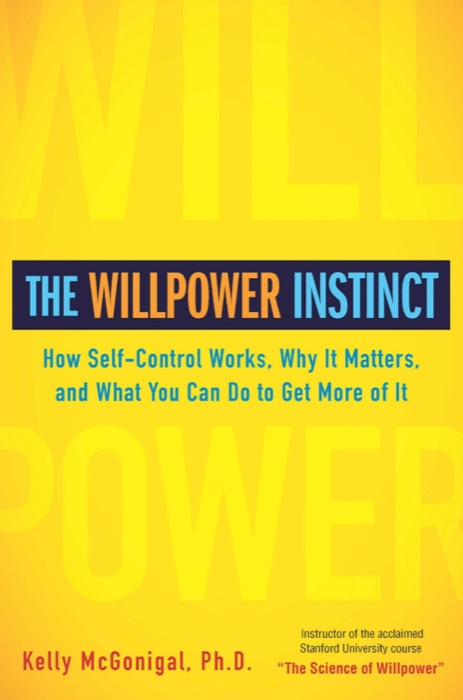 The Willpower Instinct: How Self-Control Works, Why It Matters, and What You Can Do to Get More of It
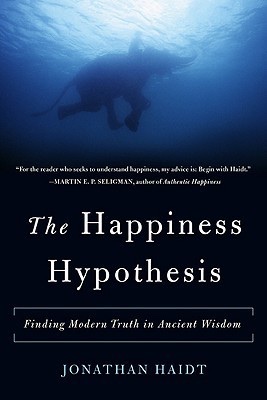 The Happiness Hypothesis: Finding Modern Truth in Ancient Wisdom
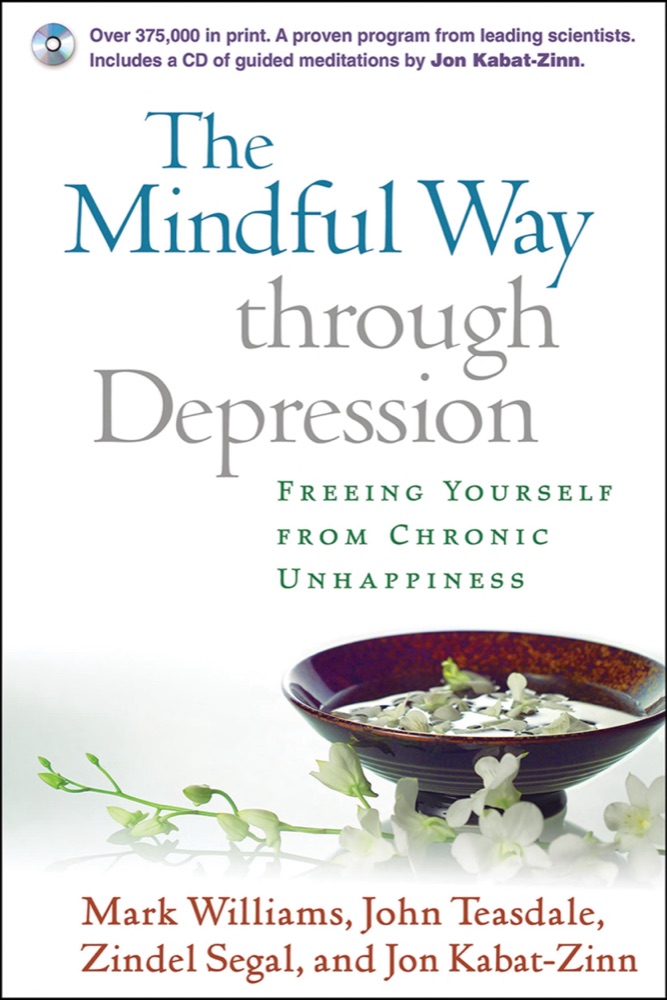 The Mindful Way through Depression: Freeing Yourself from Chronic Unhappiness
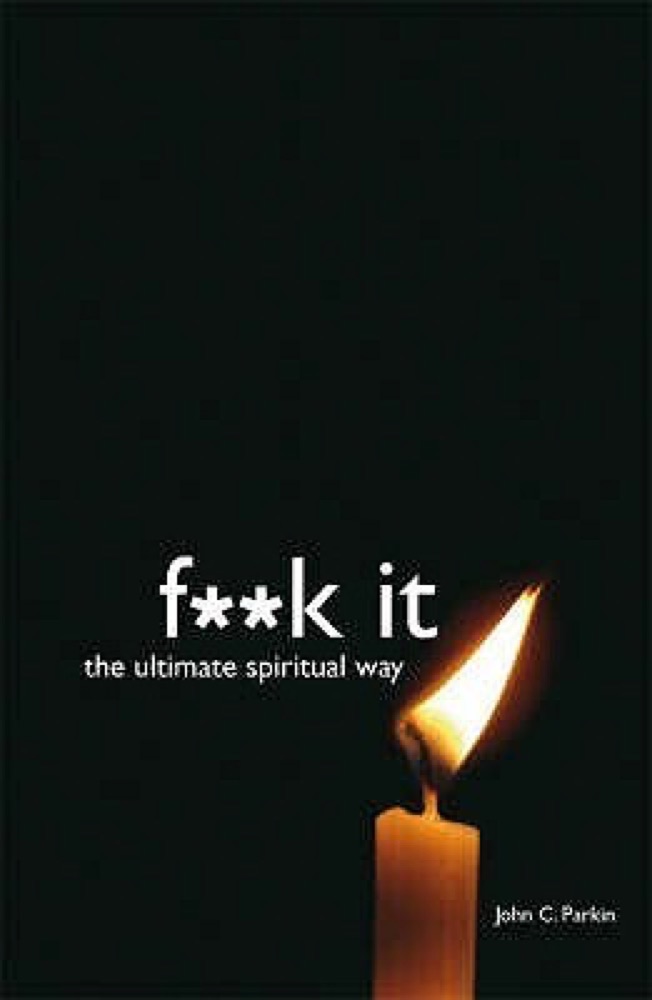 F**k It: The Ultimate Spiritual Way
 What Doesn't Kill Us: How Freezing Water, Extreme Altitude, and Environmental Conditioning Will Renew Our Lost Evolutionary Strength
 Lost Connections: Uncovering the Real Causes of Depression - and the Unexpected Solutions
 Feeling Good: The New Mood Therapy
 Flow: The Psychology of Optimal Experience
 The Anxious Generation: How the Great Rewiring of Childhood Caused an Epidemic of Mental Illness
 The Brain That Changes Itself: Stories of Personal Triumph from the Frontiers of Brain Science
 When Things Fall Apart: Heart Advice for Difficult Times
 A User's Guide to the Brain: Perception, Attention, and the Four Theaters of the Brain
 Finding Flow: The Psychology of Engagement with Everyday Life
 A General Theory of Love
 The Antidote: Happiness for People Who Can't Stand Positive Thinking
 Come as You Are: The Surprising New Science that Will Transform Your Sex Life
 The Tools: Transform Your Problems into Courage, Confidence, and Creativity
 In an Unspoken Voice: How the Body Releases Trauma and Restores Goodness
 The Boy Who Was Raised as a Dog: And Other Stories from a Child Psychiatrist's Notebook
 Scattered Minds: The Origins and Healing of Attention Deficit Disorder
 Buddha's Brain: The Practical Neuroscience of Happiness, Love, and Wisdom
 What Happened To You?: Conversations on Trauma, Resilience, and Healing
 Psych: The Story of the Human Mind
 Living Beautifully with Uncertainty and Change
 Antifragile: Things That Gain from Disorder
 Notes on a Nervous Planet
 Becoming Supernatural: How Common People are Doing the Uncommon
 The Age of Magical Overthinking: Notes on Modern Irrationality
 You Are the Placebo: Making Your Mind Matter
 Full Catastrophe Living: Using the Wisdom of Your Body and Mind to Face Stress, Pain, and Illness
 How We Decide
 Nonviolent Communication: A Language of Life
 The Freedom Manifesto
 Waking Up: A Guide to Spirituality Without Religion
 Stolen Focus: Why You Can't Pay Attention— and How to Think Deeply Again