
 War
War
Quotes from the Book
Humans don’t mind hardship, in fact they thrive on it; what they mind is not feeling necessary. Modern society has perfected the art of making people not feel necessary. It's time for that to end.
128
human beings need three basic things in order to be content: they need to feel competent at what they do; they need to feel authentic in their lives; and they need to feel connected to others. These values are considered "intrinsic" to human happiness and far outweigh "extrinsic" values such as beauty, money and status.
98
The public is often accused of being disconnected from its military, but frankly it's disconnected from just about everything. Farming, mineral extraction, gas and oil production, bulk cargo transport, logging, fishing, infrastructure construction—all the industries that keep the nation going are mostly unacknowledged by the people who depend on them most.
37
In this sense, littering is an exceedingly petty version of claiming a billion-dollar bank bailout or fraudulently claiming disability payments. When you throw trash on the ground, you apparently don’t see yourself as truly belonging to the world that you’re walking around in. And when you fraudulently claim money from the government, you are ultimately stealing from your friends, family, and neighbors—or somebody else’s friends, family, and neighbors. That diminishes you morally far more than it diminishes your country financially.
37
What would you risk dying for—and for whom—is perhaps the most profound question a person can ask themselves. The vast majority of people in modern society are able to pass their whole lives without ever having to answer that question, which is both an enormous blessing and a significant loss.
36
How do you become an adult in a society that doesn’t ask for sacrifice? How do you become a man in a world that doesn’t require courage?
31
Humans don't mind hardship, in fact they thrive on it; what they mind is not feeling necessary. Modern society has perfected the art of making people not feel necessary.
26
When people are actively engaged in a cause their lives have more purpose... with a resulting improvement in mental health,
23
Unlike criticism, contempt is particularly toxic because it assumes a moral superiority in the speaker. Contempt is often directed at people who have been excluded from a group or declared unworthy of its benefits. Contempt is often used by governments to provide rhetorical cover for torture or abuse. Contempt is one of four behaviors that, statistically, can predict divorce in married couples. People who speak with contempt for one another will probably not remain united for long. The
18
Today's veterans often come home to find that, although they're willing to die for their country, they're not sure how to live for it.
16
In effect, humans have dragged a body with a long hominid history into an overfed, malnourished, sedentary, sunlight-deficient, sleep-deprived, competitive, inequitable, and socially-isolating environment with dire consequences.” The
16
If you want to make a society work, then you don’t keep underscoring the places where you’re different—you underscore your shared humanity,
15
A modern soldier returning from combat---or a survivor of Sarajevo---goes from the kind of close-knit group that humans evolved for, back into a society where most people work outside the home, children are educated by strangers, families ae isolated from wider communities, and personal gain almost completely eclipses collective good. Even if he or she is part of a family, that is not the same as belonging to a group that shares resources and experiences almost everything collectively. Whatever the technological advances of modern society---and they're nearly miraculous---the individualized lifestyles that those technologies spawn seem to be deeply brutalizing to the human spirit.
13
An earthquake achieves what the law promises but does not in practice maintain," one of the survivors wrote. "The equality of all men".
13
When you throw trash on the ground, you apparently don't see yourself as truly belonging to the world that you're walking in.
12
Because modern society has almost completely eliminated trauma and violence from everyday life, anyone who does suffer those things is deemed to be extraordinarily unfortunate. This gives people access to sympathy and resources but also creates an identity of victimhood that can delay recovery.
11
It may be worth considering whether middle-class American life—for all its material good fortune—has lost some essential sense of unity that might otherwise discourage alienated men from turning apocalyptically violent.
11
The most alarming rhetoric comes out of the dispute between liberals and conservatives, and it’s a dangerous waste of time because they’re both right. ... If you want to make a society work, then you don’t keep underscoring the places where you’re different—you underscore your shared humanity,
10
What I had was classic short-term PTSD. From an evolutionary perspective, it’s exactly the response you want to have when your life is in danger: you want to be vigilant, you want to avoid situations where you are not in control, you want to react to strange noises, you want to sleep lightly and wake easily, you want to have flashbacks and nightmares that remind you of specific threats to your life, and you want to be, by turns, angry and depressed. Anger keeps you ready to fight, and depression keeps you from being too active and putting yourself in more danger. Flashbacks also serve to remind you of the danger that’s out there—a “highly efficient single-event survival-learning mechanism,” as one researcher termed it. All humans react to trauma in this way, and most mammals do as well. It may be unpleasant, but it’s preferable to getting killed. Like
10
I know what coming back to America from a war zone is like because I’ve done it so many times. First, there’s a kind of shock at the comfort and affluence that we enjoy, but that is followed by the dismal realization that we live in a society that is basically at war with itself. People speak with incredible contempt about, depending on their views: the rich, the poor, the educated, the foreign born, the President, or the entire US government. It is a level of contempt that is usually reserved for enemies in wartime except that now it is applied to our fellow citizens. Unlike criticism, contempt is particularly toxic because it assumes a moral superiority in the speaker. Contempt is often directed at people who have been excluded from a group or declared unworthy its benefits. Contempt is often used by governments to provide rhetorical cover for torture or abuse. Contempt is one of four behaviors that, statistically, can predict divorce in married couples. People who speak with contempt for one another will probably not remain united for long.
9
As affluence and urbanization rise in a society, rates of depression and suicide tend to go up rather than down.
9
Modern society has perfected the art of making people not feel necessary.
8
The United States is so powerful that the only country capable of destroying her might be the United States herself, which means that the ultimate terrorist strategy would be to just leave the country alone. That way, America’s ugliest partisan tendencies could emerge unimpeded by the unifying effects of war. The ultimate betrayal of tribe isn’t acting competitively—that should be encouraged—but predicating your power on the excommunication of others from the group.
7
Disasters, he proposed, create a "community of sufferers" that allow individuals to experience an immensely reassuring connection to others
7
The beauty and the tragedy of the modern world is that it eliminates many situations that require people to demonstrate a commitment to the collective good.
7
Women tend to act heroically within their own moral universe, regardless of whether anyone else knows about it - donating more kidneys to nonrelatives than men do, for example. Men, on the other hand, are far more likely to risk their lives at a moment's notice, and that reaction is particularly strong when others are watching, or when they are part of a group.
6
A wealthy person who never had to rely on help and resources from his community is leading a privileged life that falls way outside more than a million years of human experience. Financial independence can lead to isolation, and isolation can put people at a greatly increased risk of depression and suicide. This might be a fair trade for a generally wealthier society- but a trade it is.
5
The economic and marketing forces of modern society have engineered an environment… that maximize[s] consumption at the long-term cost of well-being,
5
in keeping with something called self-determination theory, which holds that human beings need three basic things in order to be content: they need to feel competent at what they do; they need to feel authentic in their lives; and they need to feel connected to others.
5
Watch on YouTube
About Sebastian Junger
We have collected 89 quotes from 4 books by Sebastian Junger on BookQuoters.
More about the author →More by Sebastian Junger
About the book
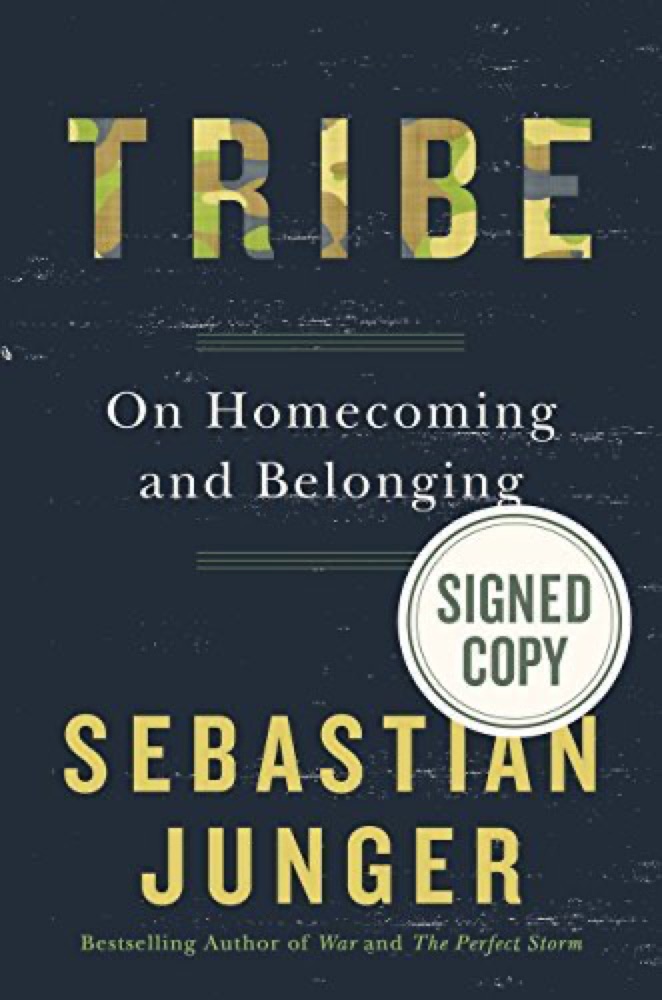
Sebastian Junger, the bestselling author of War and The Perfect Storm, takes a critical look at post-traumatic stress disorder and the many challenges today’s returning veterans face in modern society.
There are ancient tribal human behaviors-loyalty, inter-reliance, cooperation-that flare up in communities during times of turmoil and suffering. These are the very same behaviors that typify good soldiering and foster a sense of belonging among troops, whether they’re fighting on the front lines or engaged in non-combat activities away from the action. Drawing from history, psychology, and anthropology, bestselling author Sebastian Junger shows us just how at odds the structure of modern society is with our tribal instincts, arguing that the difficulties many veterans face upon returning home from war do not stem entirely from the trauma they’ve suffered, but also from the individualis
Book details
- First published
- 2016
- Author
- Sebastian Junger
- Genre
- Nonfiction
- Goodreads rating
- 4.02 (51k ratings)
The buzz
- The New York TimesReview in The New York Timesprofessional review (via Book Marks)
- The Washington PostReview in The Washington Postprofessional review (via Book Marks)
- The Wall Street JournalReview in The Wall Street Journalprofessional review (via Book Marks)
- The GuardianReview in The Guardianprofessional review (via Book Marks)
- Washington Independent Review of BooksReview in Washington Independent Review of Booksprofessional review (via Book Marks)
- Star TribuneReview in Star Tribuneprofessional review (via Book Marks)
Keep reading
 Humankind: A Hopeful History
 Coming Apart: The State of White America, 1960-2010
 Freedom
 Mutual Aid: Building Solidarity in This Crisis
 The Sane Society
 Toward a Psychology of Being
 Bright-Sided: How the Relentless Promotion of Positive Thinking Has Undermined America
 Let Us Dream: The Path to a Better Future
 United: Thoughts on Finding Common Ground and Advancing the Common Good
 The Second Mountain
 A Paradise Built in Hell: The Extraordinary Communities That Arise in Disaster
 Endgame, Vol. 1: The Problem of Civilization
 Escape from Freedom
 Civilized to Death: What Was Lost on the Way to Modernity
 Social: Why Our Brains Are Wired to Connect
 Walden Two
 Creation Lake
 Enlightenment Now: The Case for Reason, Science, Humanism, and Progress
 Nonviolent Communication: A Language of Life
 This Is What Inequality Looks Like
 Strangers Drowning: Grappling with Impossible Idealism, Drastic Choices, and the Overpowering Urge to Help
 You Can't Be Neutral on a Moving Train: A Personal History of Our Times
 The Freedom Manifesto
 The Lucifer Effect: Understanding How Good People Turn Evil
 The View From Flyover Country: Essays by Sarah Kendzior
 The Blank Slate: The Modern Denial of Human Nature
 The Heart and the Fist: The Education of a Humanitarian, the Making of a Navy SEAL
 The Coddling of the American Mind: How Good Intentions and Bad Ideas Are Setting up a Generation for Failure
 Upheaval: Turning Points for Nations in Crisis
 Life at the Bottom: The Worldview That Makes the Underclass
 The Soul of Man Under Socialism
 Revolution
 Civilization and Its Discontents
 The Bee Sting
 Devolution: A Firsthand Account of the Rainier Sasquatch Massacre
 Everything Is F*cked: A Book About Hope
 Homo Deus: A History of Tomorrow
 The Source of Self-Regard: Selected Essays, Speeches, and Meditations
 Even Cowgirls Get the Blues
 Troubled: A Memoir of Foster Care, Family, and Social Class
 What It is Like to Go to War
 Selfie: How the West Became Self-Obsessed
 12 Rules for Life: An Antidote to Chaos
 World War Z: An Oral History of the Zombie War
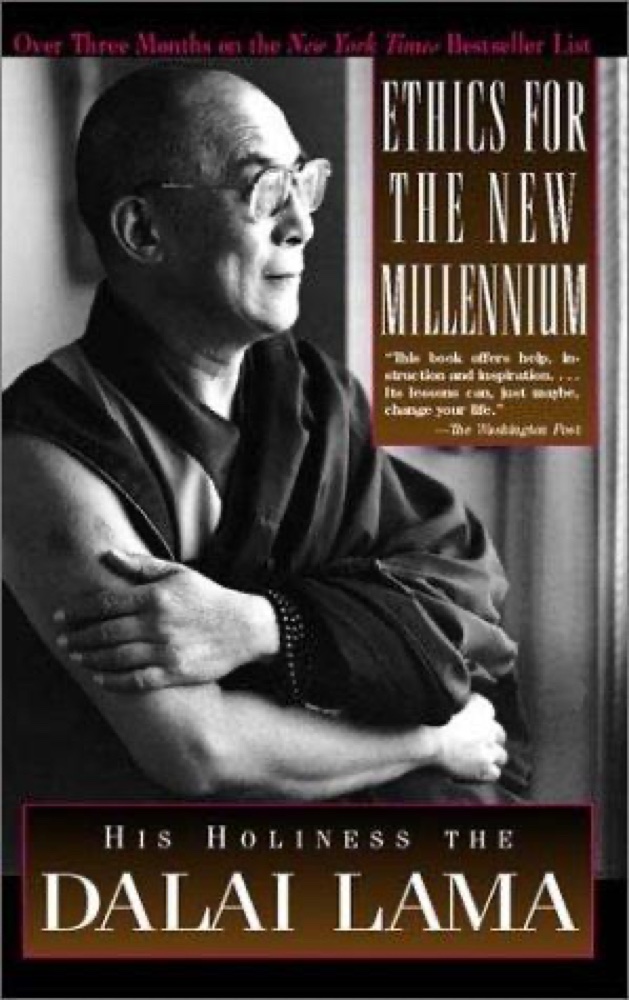 Ethics for the New Millennium
 How Long 'til Black Future Month?
 The World-Ending Fire: The Essential Wendell Berry
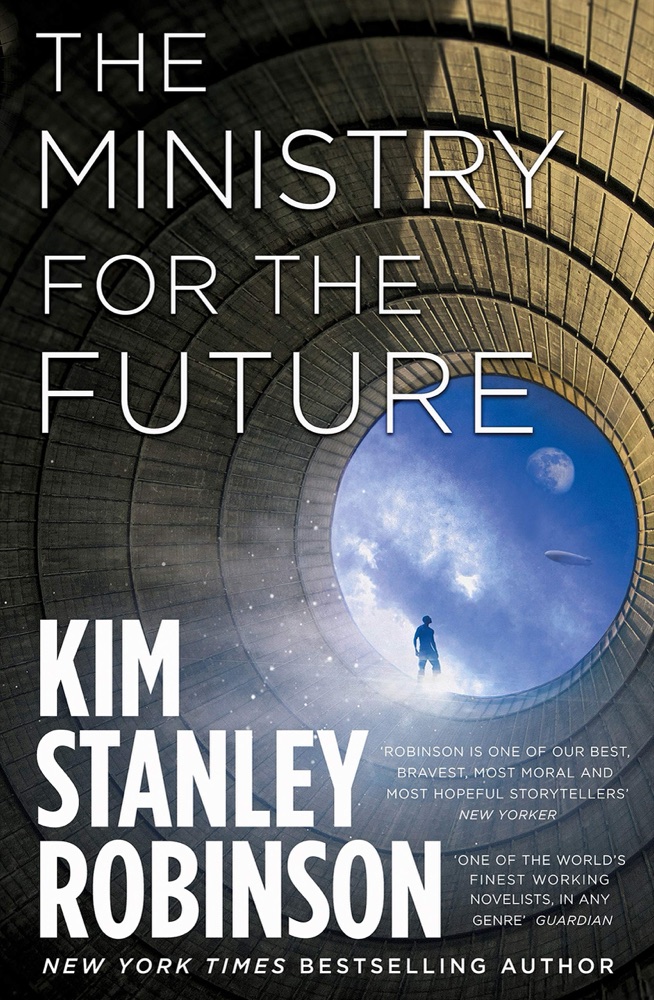 The Ministry for the Future
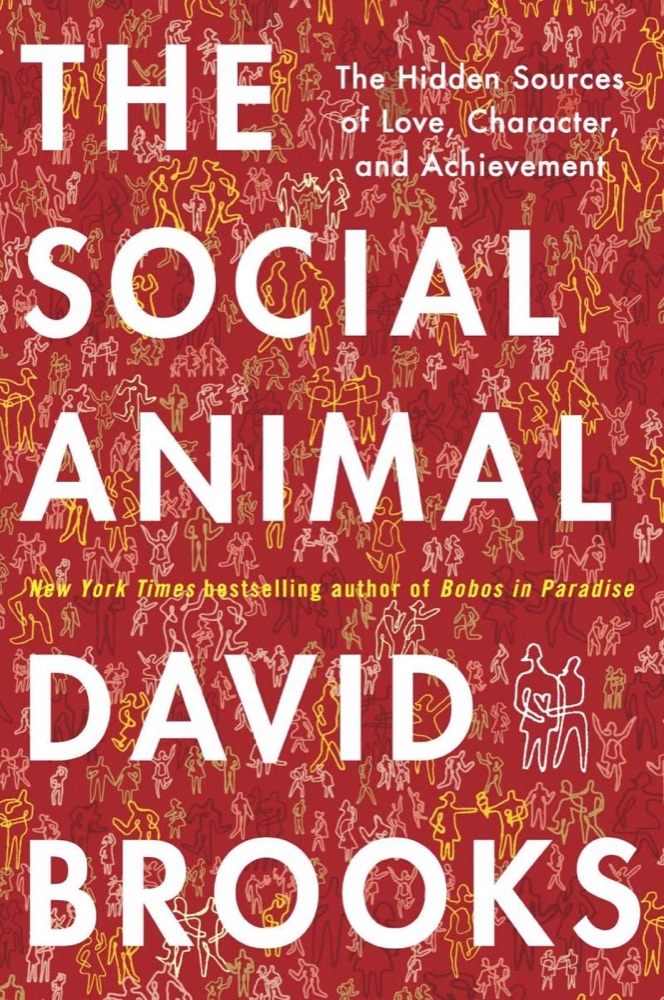 The Social Animal: The Hidden Sources of Love, Character, and Achievement
 How to Stay Sane in an Age of Division
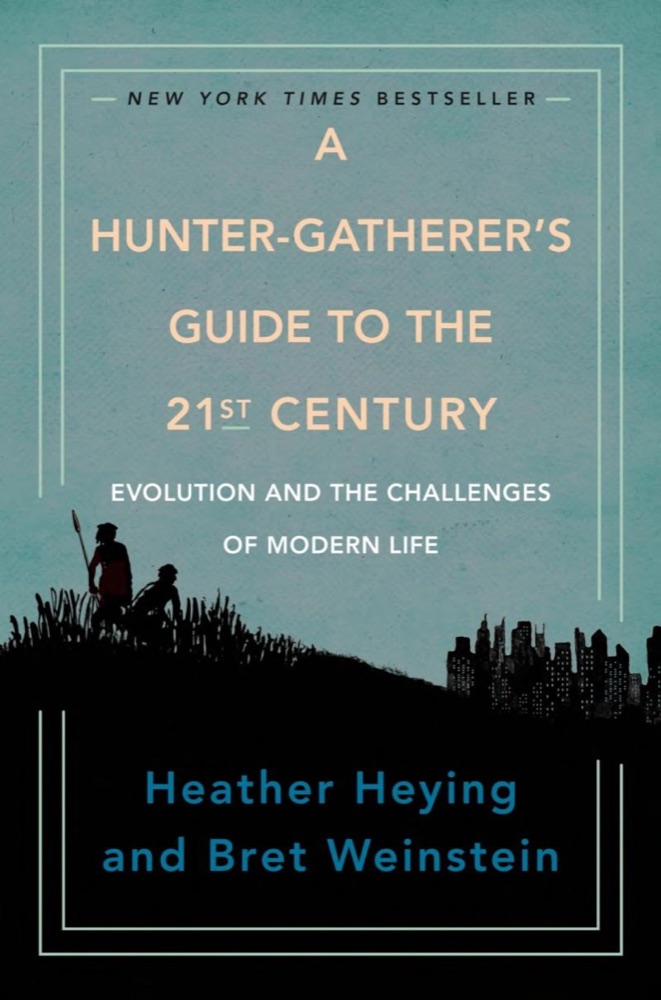 A Hunter-Gatherer's Guide to the 21st Century: Evolution and the Challenges of Modern Life
 Man's Search for Himself
 The Vanishing American Adult: Our Coming-of-Age Crisis—and How to Rebuild a Culture of Self-Reliance
 The Spirit Level: Why More Equal Societies Almost Always Do Better
 The School of Life: An Emotional Education
 The Measure of a Man: A Spiritual Autobiography
 Social Intelligence: The New Science of Human Relationships
 Underground: The Tokyo Gas Attack and the Japanese Psyche
 Parable of the Talents
 My Life on the Road