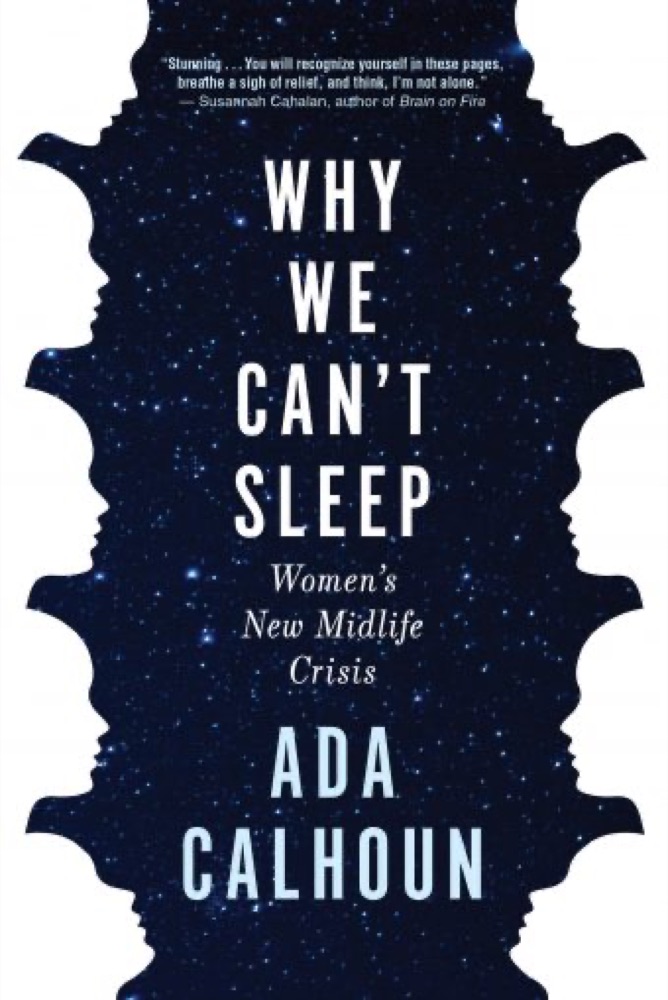

 Wedding Toasts I'll Never Give
Quotes from the Book
One of the main problems in making dreams come true? They cost money.
5
We’re the first women raised from birth hearing the tired cliché “having it all” — then discovering as adults that it is very hard to have even some of it.
4
Gen Xers are in 'the prime of their lives' at a particularly dangerous and divisive moment,' Boomer marketing expert Faith Popcorn told me. 'They have been hit hard financially and dismissed culturally. They have tons of debt. They're squeezed on both sides by children and aging parents. The grim state of adulthood is hitting them hard. If they're exhausted and bewildered, they have every reason to feel that way.
4
My expectations are way lower. I no longer believe that at this age I should have rock-hard abs, a perfectly calm disposition, or a million dollars in the bank. It helps to surround myself with women my age who speak honestly about their lives.
3
We kept hearing again and again that we could be anything we wanted to be. We had supportive mothers insisting we would accomplish more than they had. Title IX made sure our after-school classes were as good as the boys’. We saw women on television who had families and fun careers. So, if we happened to fail, why was that? The only thing left to blame was ourselves.
3
In my experience, Gen X women spend lots of time minimizing the importance of their uncomfortable or confusing feelings. They often tell me that they are embarrassed to even bring them up. Some of the unhappiest women I spoke with, no matter how depressed or exhausted they were, apologized for “whining.” Almost every one of them also described herself as “lucky.
2
Generation X women, who as children lacked cell phones and helicopter parents, came up relying on our own wits. To keep ourselves safe, we took control. We worked hard and made lists and tried to do everything all at once for a very long time without much help. We took responsibility for ourselves--and later we also took responsibility for our work or partners or children or parents. We should be proud of ourselves.
2
Generation X marks the end of the American dream of ever-increasing prosperity. We are downwardly mobile, with declining job stability. It used to be that each generation could expect to do better than their parents. New research confirms that Generation X won’t.
2
It should be plenty to raise children or to have a career- or, frankly, just not to become a serial killer. Yet somehow for this generation of women, the belief that girls could do anything morphed into a directive that they must do everything.
1
Taking your seat at the table doesn’t work out so well when no one wants you there and you are vastly outnumbered.
1
If our generation has been told for decades that we have so much freedom, so many choices, such opportunities, the question women with young children face is: how free are we to reach for the stars in midlife if we have someone else depending on us? Especially when our concept of good parenting involves so much more brain space and such higher costs than it did for our mothers and grandmothers? And when we expect ourselves to be excellent, highly engaged parents while also being excellent, highly engaged employees?
1
One of the goals she encourages women to pursue is what’s known as “radical acceptance”—finding a way to take life as it is, not as you thought it would be. “It’s one of the hardest things,” Chafin says, “to radically accept what’s in front of you.
1
Maybe the Generation X story need not be: We're broke. We're unstable. We're alone. Maybe it can be: We've had a hard row to hoe. We've been one big experiment. And yet, look at us: we've accomplished so much.
1
Gen X straddles the pre- and post-internet worlds. The youngest Gen Xers belonged to the last graduating class to finish college pre–social media.2 Facebook was invented in 2004. The iPhone came out in 2007. How fitting that many younger Gen Xers and older Millennials were introduced to computing by the bleak Oregon Trail—which frequently ended with you and all your friends dying from dysentery.3 Personally, I loved the game. Again, again! Maybe this time we’ll get cholera!
1
Johann Hari’s 2018 book Lost Connections argues that our culture has come to medicate depression first and ask questions later, without recognizing that some discomforts are not medical emergencies. He tells the story of how when he begged for antinausea medication in a jungle hospital in Vietnam, the doctors said, “You need your nausea. It is a message, and we must listen to the message. It will tell us what is wrong with you.
1
Gen X women often try to exert control over their bodies at midlife only to find that the middle-aged body is remarkably resistant.
1
It’s a strange state of vacillating between having our shit together and feeling less and less like we give a damn about what the rest of the world thinks.
1
We bear financial responsibilities that men had in the old days while still saddled with traditional caregiving duties. We generally incur this double whammy precisely while hitting peak stress in both our careers and child-raising--in our forties, at an age when most of our mothers and grandmothers were already empty nesters.
1
Generation X women keep many lists: grocery lists, chore lists, deadline lists, schools-to-apply-to lists, holiday-card lists. Some are on paper and some on smartphones or sticky notes or whiteboards, but they can also seem to loop on a scroll behind the women’s eyes.
1
What I see in my Gen X patients is total exhaustion. They feel guilty for complaining, because it’s wonderful to have had choices that our mothers didn’t have, but choices don’t make life easier. Possibilities create pressure.
1
In their 1991 book Generations, William Strauss and Neil Howe made some predictions about our generation, which they called 13ers, because we are the thirteenth generation since the founding of the United States—and also because, like the number thirteen, we seem unlucky. In the years 2004–2025, they wrote, the Gen X demographic would be “entering midlife in a crisis era.” Gen X would look at the graying Boomers in charge and “appreciate that whatever bad hand history dealt them, they at least grew up with clear heads.”410 Eerily, Strauss and Howe predicted a 2020 crisis brought about by Boomers, one for which Gen X will “provide able on-site managers and behind-the-scenes facilitators, the ones whose quick decisions could spell the difference between triumph and tragedy . . . In an age of rising social intolerance, the very incorrigibility of midlife 13ers will at times be a national blessing.
Maybe the Generation X story need not be: We’re broke. We’re unstable. We’re alone. Maybe it can be: We’ve had a hard row to hoe. We’ve been one big experiment. And yet, look at us: we’ve accomplished so much. Generation X women, who as children lacked cell phones and helicopter parents, came up relying on our own wits. To keep ourselves safe, we took control. We worked hard and made lists and tried to do everything all at once for a very long time and without much help. We took responsibility for ourselves—and later we also took responsibility for our work or partners or children or parents. We should be proud of ourselves. I keep thinking about the 1980s–90s TV show Double Dare,401 in which child contestants had to find orange flags among obstacles such as mountains of slime. That, I think, is an excellent analogy for our generation in midlife: we’ve been glopped with slime, but somewhere in the mess there’s that little orange flag.
You come to this place, midlife. You don’t know how you got here, but suddenly you’re staring fifty in the face. When you turn and look back down the years, you glimpse the ghosts of other lives you might have led. All your houses are haunted by the person you might have been. —Hilary Mantel, Giving Up the Ghost
In my experience, there is only one thing worse for a woman’s mental health than trying to be a superhero, and that is being told to “chill”—especially since any efforts to do so incur swift blowback.
It should be plenty to raise children or to have a career—or, frankly, just not to become a serial killer. Yet somehow for this generation of women, the belief that girls could do anything morphed into a directive that they must do everything.
Gen X women had sky-high expectations for themselves. The contrast between our “you can be anything” indoctrination and the stark realities encountered in midlife—when you might, despite your best efforts, not be able to find a partner or get pregnant or save for retirement or own your own home or find a job with benefits—has made us feel like failures at the exact moment when we most require courage. It takes our bodies longer to recover from a night of drinking and it takes our spirits longer to bounce back from rejection. We may wind up asking questions like the one my friend posed to me the other night: “Do you think my life is ever going to be good again?
A middle-aged woman’s midlife crisis does, I know, pose a dramaturgical problem. In my observation—and as many experts I’ve spoken with have affirmed—women’s crises tend to be quieter than men’s. Sometimes a woman will try something spectacular—a big affair, a new career, a “she shed” in the backyard—but more often she sneaks her suffering in around the edges of caretaking and work.
Readers told me that they now saw the book as a kind of prequel to the pandemic horror—an explanation not just of why midlife can be rough for us but also for why our generation was at once so logistically vulnerable to and yet also so psychologically prepared for the devastation.
When the tough things happen—parents get sick, relationships go sour, careers stall—we might ask ourselves if the situation is a prison or a school: a place to escape or one in which to learn.
On women and high ACE scores see, for example: Donna Jackson Nakazawa, Childhood Disrupted: How Your Biography Becomes Your Biology, and How You Can Heal (New York: Atria Books, 2015). You can check your own ACE score at AcesTooHigh.com.
Watch on YouTube
About Ada Calhoun
We have collected 60 quotes from 2 books by Ada Calhoun on BookQuoters.
More about the author →More by Ada Calhoun
Wedding Toasts I'll Never Give
About the book
When Ada Calhoun found herself in the throes of a midlife crisis, she thought that she had no right to complain. She was married with children and a good career. So why did she feel miserable? And why did it seem that other Generation X women were miserable, too?
Calhoun decided to find some answers. She looked into housing costs, HR trends, credit card debt averages, and divorce data. At every turn, she saw a pattern: sandwiched between the Boomers and the Millennials, Gen X women were facing new problems as they entered middle age, problems that were being largely overlooked.
Speaking with women across America about their experiences as the generation raised to “have it all,” Calhoun found that most were exhausted, terrified about money, under-employed, and overwhelmed. Instead of being heard, they were told instead to lean in, take “me-time,” or make a chore chart to get their l
Book details
- First published
- 2020
- Author
- Ada Calhoun
- Genre
- Nonfiction
- Goodreads rating
- 3.69 (9k ratings)
The buzz
- The New York TimesReview in The New York Timesprofessional review (via Book Marks)
- The Washington PostReview in The Washington Postprofessional review (via Book Marks)
- The Wall Street JournalReview in The Wall Street Journalprofessional review (via Book Marks)
- Kirkus ReviewsReview in Kirkus Reviewsprofessional review (via Book Marks)
- Publishers WeeklyReview in Publishers Weeklyprofessional review (via Book Marks)
- Star TribuneReview in Star Tribuneprofessional review (via Book Marks)
Keep reading
 Passages: Predictable Crises of Adult Life
 The Defining Decade: Why Your Twenties Matter—And How to Make the Most of Them Now
 MILF: Motherhood, Identity, Love and F*ckery
 An Experiment in Love
 Ladyparts
 Life Reimagined: The Science, Art, and Opportunity of Midlife
 The Vanishing American Adult: Our Coming-of-Age Crisis—and How to Rebuild a Culture of Self-Reliance
 Joan Is Okay
 How to Raise an Adult: Break Free of the Overparenting Trap and Prepare Your Kid for Success
 iGen: Why Today’s Super-Connected Kids Are Growing Up Less Rebellious, More Tolerant, Less Happy--and Completely Unprepared for Adulthood--and What That Means for the Rest of Us
 The Anxious Generation: How the Great Rewiring of Childhood Caused an Epidemic of Mental Illness
 What Made Maddy Run: The Secret Struggles and Tragic Death of an All-American Teen
 Trick Mirror: Reflections on Self-Delusion
 Outrageous Acts and Everyday Rebellions
 You'll Grow Out of It
 Kids These Days: Human Capital and the Making of Millennials
 Troubled: A Memoir of Foster Care, Family, and Social Class
 My Life on the Road
 How Do We Know We're Doing It Right: & Other Essays on Modern Life
 Overwhelmed: Work, Love, and Play When No One Has the Time
 What Fresh Hell Is This?: Perimenopause, Menopause, Other Indignities, and You
 One in a Millennial: On Friendship, Feelings, Fangirls, and Fitting In
 All Fours
 Don't Worry, It Gets Worse: One Twentysomething's (Mostly Failed) Attempts at Adulthood
 All Joy and No Fun: The Paradox of Modern Parenthood
 To Throw Away Unopened
 More Than Enough: Claiming Space for Who You Are
 The Change
 Generation X: Tales for an Accelerated Culture
 Where Am I Now?
 On Our Best Behavior: The Seven Deadly Sins and the Price Women Pay to Be Good
 Old Babes in the Wood: Stories
 The Feminine Mystique
 The Rules Do Not Apply
 Late Bloomers: The Power of Patience in a World Obsessed with Early Achievement
 The Husbands
 Life Will Be the Death of Me: . . . and you too!
 Make Trouble: Standing Up, Speaking Out, and Finding the Courage to Lead
 Motherhood
 Becoming
 Nine Perfect Strangers
 The Truth Will Set You Free, But First It Will Piss You Off!: Thoughts on Life, Love, and Rebellion
 The Soul of a Woman
 Fair Play: A Game-Changing Solution for When You Have Too Much to Do
 I Can Barely Take Care of Myself: Tales From a Happy Life Without Kids
 No One Tells You This
 There Are No Grown-ups: A Midlife Coming-of-Age Story
 Lean In: Women, Work, and the Will to Lead
 Dear Girls: Intimate Tales, Untold Secrets, & Advice for Living Your Best Life
 Jeneration X: One Reluctant Adult's Attempt to Unarrest Her Arrested Development; Or, Why It's Never Too Late for Her Dumb Ass to Learn Why Froot Loops Are Not for Dinner
 Animal: The Autobiography of a Female Body
 I'm Laughing Because I'm Crying
 Spinster: Making a Life of One's Own
 Detransition, Baby
 Men Explain Things to Me
 Feminist Fight Club: An Office Survival Manual for a Sexist Workplace
 The Mother of All Questions
 The Cost of Living: A Working Autobiography
 Attempting Normal
 They Call Her Dirty Sally