
 The Scent of Time: A Philosophical Essay on the Art of Lingering
Quotes from the Book
The complaint of the depressive individual, “Nothing is possible,” can only occur in a society that thinks, “Nothing is impossible.
138
The acceleration of contemporary life also plays a role in this lack of being. The society of laboring and achievement is not a free society. It generates new constraints. Ultimately, the dialectic of master and slave does not yield a society where everyone is free and capable of leisure, too. Rather, it leads to a society of work in which the master himself has become a laboring slave. In this society of compulsion, everyone carries a work camp inside. This labor camp is defined by the fact that one is simultaneously prisoner and guard, victim and perpetrator. One exploits oneself. It means that exploitation is possible even without domination.
119
If sleep represents the high point of bodily relaxation, deep boredom is the peak of mental relaxation. A purely hectic rush produces nothing new. It reproduces and accelerates what is already available.
68
Today’s society is no longer Foucault’s disciplinary world of hospitals, madhouses, prisons, barracks, and factories. It has long been replaced by another regime, namely a society of fitness studios, office towers, banks, airports, shopping malls, and genetic laboratories. Twenty-first-century society is no longer a disciplinary society, but rather an achievement society [Leistungsgesellschaft]. Also, its inhabitants are no longer “obedience-subjects” but “achievement-subjects.” They are entrepreneurs of themselves.
64
In social networks, the function of "friends" is primarily to heighten narcissism by granting attention, as consumers, to the ego exhibited as a commodity.
56
Depression—which often culminates in burnout—follows from overexcited, overdriven, excessive self-reference that has assumed destructive traits. The exhausted, depressive achievement-subject grinds itself down, so to speak. It is tired, exhausted by itself, and at war with itself. Entirely incapable of stepping outward, of standing outside itself, of relying on the Other, on the world, it locks its jaws on itself; paradoxically, this leads the self to hollow and empty out. It wears itself out in a rat race it runs against itself.
40
The violence of positivity does not deprive, it saturates; it does not exclude, it exhausts.
36
From a pathological standpoint, the incipient twenty-first century is determined neither by bacteria nor by viruses, but by neurons. Neurological illnesses such as depression, attention deficit hyperactivity disorder (ADHD), borderline personality disorder (BPD), and burnout syndrome mark the landscape of pathology at the beginning of the twenty-first century. They are not infections, but infarctions; they do not follow from the negativity of what is immunologically foreign, but from an excess of positivity. Therefore, they elude all technologies and techniques that seek to combat what is alien.
29
What proves problematic is not individual competition per se, but rather its self-referentiality, which escalates into absolute competition. That is, the achievement-subject competes with itself; it succumbs to the destructive compulsion to outdo itself over and over, to jump over its own shadow. This self-constraint, which poses as freedom, has deadly results.
26
Today, everyone is an auto-exploiting labourer in his or her own enterprise. People are now master and slave in one. Even class struggle has transformed into an inner struggle against oneself.
24
Every age has its signature afflictions. Thus, a bacterial age existed; at the latest, it ended with the discovery of antibiotics. Despite widespread fear of an influenza epidemic, we are not living in a viral age. Thanks to immunological technology, we have already left it behind. From a pathological standpoint, the incipient twenty-first century is determined neither by bacteria nor by viruses, but by neurons. Neurological illnesses such as depression, attention deficit hyperactivity disorder (ADHD), borderline personality disorder (BPD), and burnout syndrome mark the landscape of pathology at the beginning of the twenty-first century.
15
Culture presumes an environment in which deep attention is possible. Increasingly, such immersive reflection is being displaced by an entirely different form of attention: hyperattention.
15
Depression severs all attachments. Mourning differs from depression above all through its strong libidinal attachment to an object. In contrast, depression is objectless and therefore undirected. It is important to distinguish depression from melancholy. Melancholy is preceded by the experience of loss. Therefore it still stands in a relation - namely, negative relation - to the absent thing or party. In contrast, depression is cut off from all relation and attachment. It utterly lacks gravity.
13
First and foremost, depression is creative fatigue and exhausted ability.
10
According to Ehrenberg, depression spreads when the commandments and prohibitions of disciplinary society yield to self-responsibility and initiative. In reality, it is not the excess of responsibility and initiative that makes one sick, but the imperative to achieve: the new commandment of late-modern labor society.
9
Today we live in a world that is very poor in interruption; “betweens” and “between-times” are lacking.
8
Nietzsche already observed that, after the death of God, health rose to divine status. If a horizon of meaning extended beyond bare life, the cult of health would not be able to achieve this degree of absoluteness.
7
The late-modern achievement-subject does not pursue works of duty. Its maxims are not obedience, law, and the fulfillment of obligation, but rather freedom, pleasure, and inclination. Above all, it expects the profits of enjoyment from work. It works for pleasure and does not act at the behest of the Other. Instead, it hearkens mainly to itself. After all, it must be a self-starting entrepreneur
7
The achievement-subject stands free from any external instance of domination [Herrschaftsinstanz] forcing it to work, much less exploiting it. It is lord and master of itself. Thus, it is subject to no one—or, as the case may be, only to itself. It differs from the obedience-subject on this score. However, the disappearance of domination does not entail freedom. Instead, it makes freedom and constraint coincide. Thus, the achievement-subject gives itself over to compulsive freedom—that is, to the free constraint of maximizing achievement.3 Excess work and performance escalate into auto-exploitation. This is more efficient than allo-exploitation, for the feeling of freedom attends it. The exploiter is simultaneously the exploited. Perpetrator and victim can no longer be distinguished. Such self-referentiality produces a paradoxical freedom that abruptly switches over into violence because of the compulsive structures dwelling within it. The psychic indispositions of achievement society are pathological manifestations of such a paradoxical freedom.
5
Love of self is still determined by negativity insofar as it devalues and wards off the Other in favor of the Own.
5
Deep tiredness loosens the strictures of identity. Things flicker, twinkle, and vibrate at the edges. They grow less determinate and more porous and lose some of their resolution. This particular in-difference lends them an aura of friendliness. Rigid delimitation with respect to one’s surroundings is suspended:
5
In the course of general acceleration and hyperactivity we are also losing the capacity for rage. Rage has a characteristic temporality incompatible with generalized acceleration and hyperactivity, which admit no breadth of time. The future shortens into a protracted present. It lacks all negativity, which would permit one to look at the Other. In contrast, rage puts the present as a whole into question. It presupposes an interrupting pause in the present... The general distraction afflicting contemporary society does not allow the emphasis nd energy of rage to arise.
4
«primera enseñanza preliminar para la espiritualidad». Según Nietzsche, uno tiene que aprender a «no responder inmediatamente a un impulso, sino a controlar los instintos que inhiben y ponen término a las cosas». La vileza y la infamia consisten en la «incapacidad de oponer resistencia a un impulso», de oponerle un No. Reaccionar
4
A la vida desnuda, convertida en algo totalmente efímero, se reacciona justo con mecanismos como la hiperactividad, la histeria del trabajo y la producción. También la actual aceleración está ligada a esa falta de Ser. La sociedad de trabajo y rendimiento no es ninguna sociedad libre. Produce nuevas obligaciones. La dialéctica del amo y el esclavo no conduce finalmente a aquella sociedad en la que todo aquel que sea apto para el ocio es un ser libre, sino más bien a una sociedad de trabajo, en la que el amo mismo se ha convertido en esclavo del trabajo. En
4
Depression began its ascent when the disciplinary model for behaviors, the rules of authority and observance of taboos that gave social classes as well as both sexes a specific destiny, broke against norms that invited us to undertake personal initiative by enjoining us to be ourselves. . . . The depressed individual is unable to measure up; he is tired of having to become himself.
3
Watch on YouTube
About Byung-Chul Han
We have collected 69 quotes from 3 books by Byung-Chul Han on BookQuoters.
More about the author →More by Byung-Chul Han
The Scent of Time: A Philosophical Essay on the Art of Lingering
 Psychopolitics: Neoliberalism and New Technologies of Power
About the book
Our competitive, service-oriented societies are taking a toll on the late-modern individual. Rather than improving life, multitasking, "user-friendly" technology, and the culture of convenience are producing disorders that range from depression to attention deficit disorder to borderline personality disorder. Byung-Chul Han interprets the spreading malaise as an inability to manage negative experiences in an age characterized by excessive positivity and the universal availability of people and goods. Stress and exhaustion are not just personal experiences, but social and historical phenomena as well. Denouncing a world in which every against-the-grain response can lead to further disempowerment, he draws on literature, philosophy, and the social and natural sciences to explore the stakes of sacrificing intermittent intellectual reflection for constant neural connection.
Book details
- First published
- 2010
- Author
- Byung-Chul Han
- Genre
- Philosophy
- Goodreads rating
- 3.84 (34k ratings)
Keep reading
 The Culture of Narcissism: American Life in An Age of Diminishing Expectations
 The Sane Society
 The Age of Absurdity: Why Modern Life makes it Hard to be Happy
 Toward a Psychology of Being
 In the Realm of Hungry Ghosts: Close Encounters with Addiction
 Social Intelligence: The New Science of Human Relationships
 Natural Causes: An Epidemic of Wellness, the Certainty of Dying, and Killing Ourselves to Live Longer
 Maps of Meaning: The Architecture of Belief
 Man's Search for Himself
 Lost Connections: Uncovering the Real Causes of Depression - and the Unexpected Solutions
 Untimely Meditations
 Bright-Sided: How the Relentless Promotion of Positive Thinking Has Undermined America
 The Second Mountain
 In Praise of Idleness and Other Essays
 The Freedom Manifesto
 The Politics of Experience/The Bird of Paradise
 Mastery
Psychopolitics: Neoliberalism and New Technologies of Power
Mastery
Psychopolitics: Neoliberalism and New Technologies of Power
 12 Rules for Life: An Antidote to Chaos
 Anti-Oedipus: Capitalism and Schizophrenia
 Ethics for the New Millennium
 The Blank Slate: The Modern Denial of Human Nature
 Homo Deus: A History of Tomorrow
 Tribe: On Homecoming and Belonging
 The Social Animal: The Hidden Sources of Love, Character, and Achievement
 Understanding Media: The Extensions of Man
 Walden Two
 The Art of Being
 Selfie: How the West Became Self-Obsessed
 The Will to Meaning: Foundations and Applications of Logotherapy
 Solitude: A Return to the Self
 Everything Is F*cked: A Book About Hope
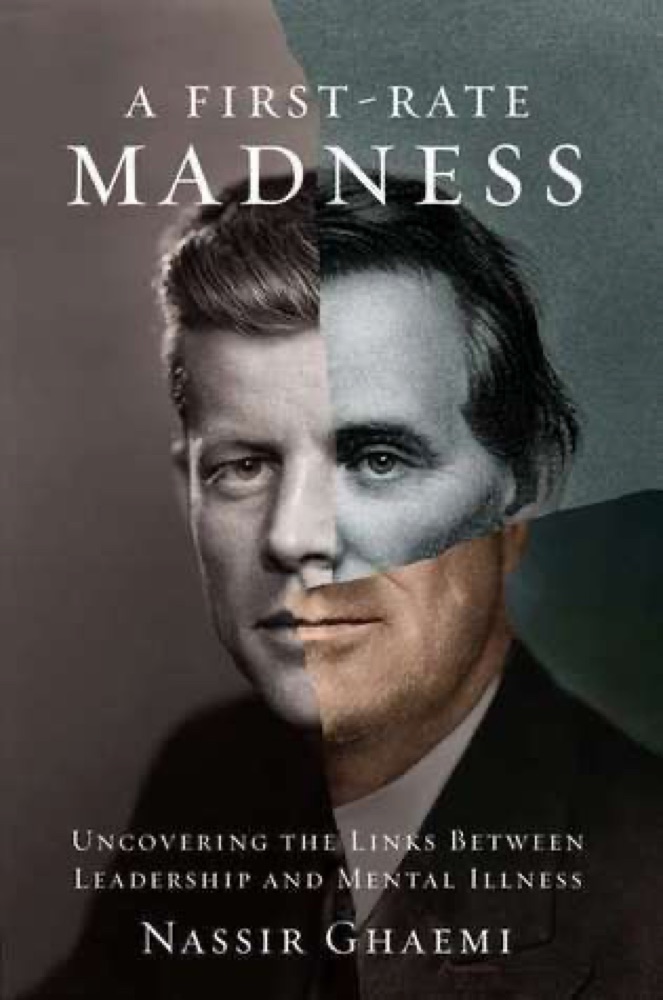 A First-Rate Madness: Uncovering the Links Between Leadership and Mental Illness
 Love's Executioner and Other Tales of Psychotherapy
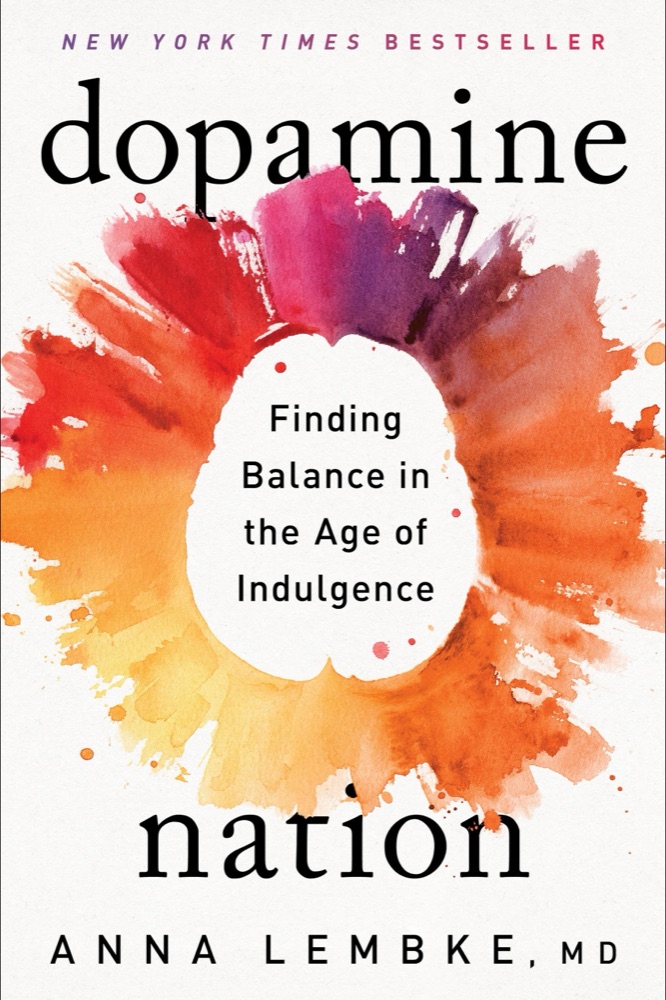 Dopamine Nation: Finding Balance in the Age of Indulgence
 Power vs. Force
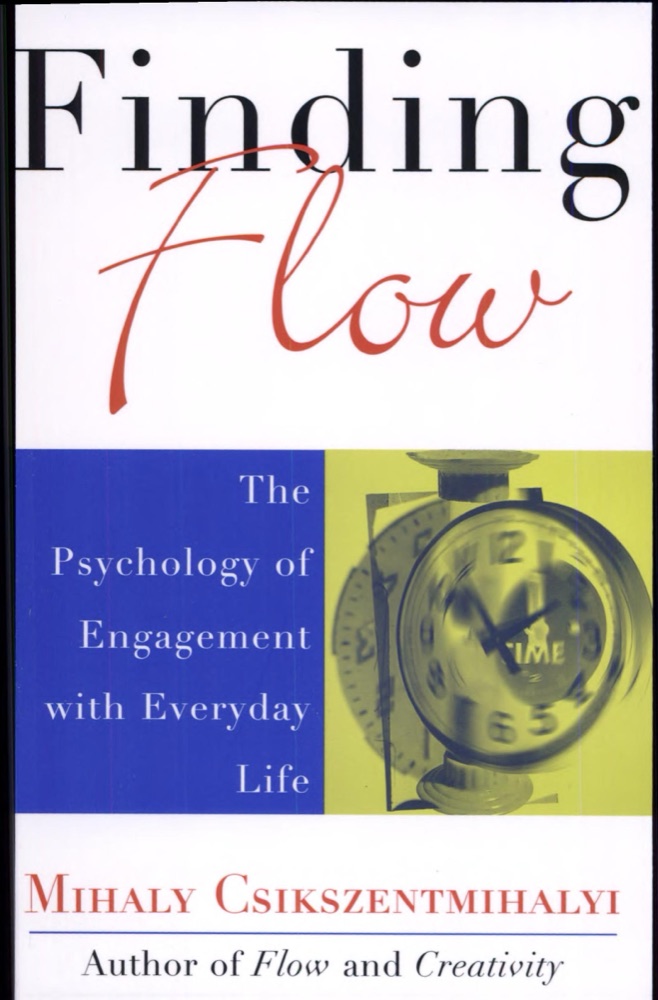 Finding Flow: The Psychology of Engagement with Everyday Life
 Escape from Freedom
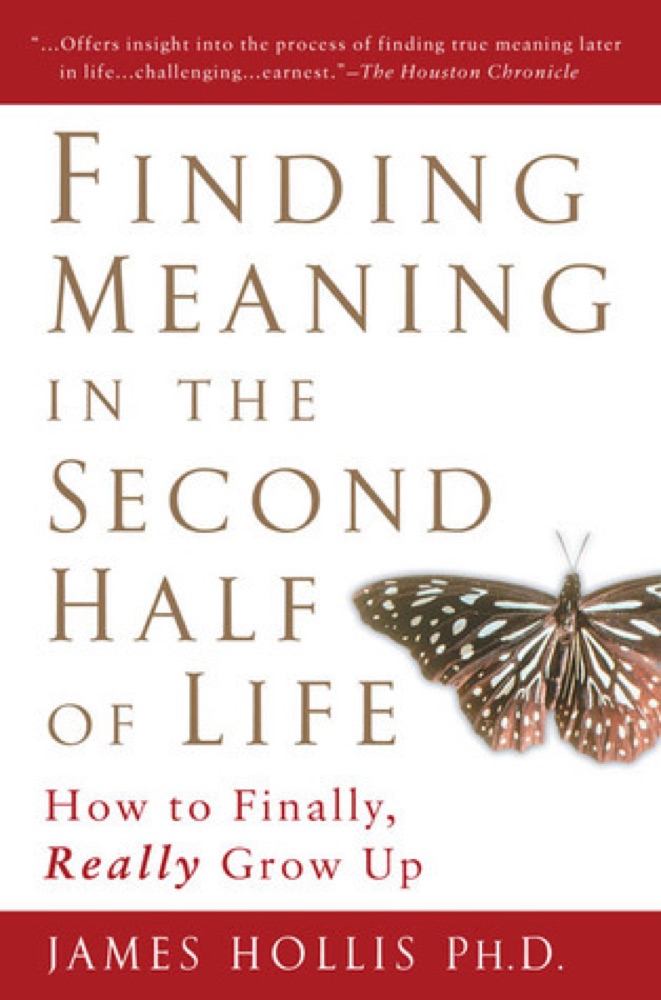 Finding Meaning in the Second Half of Life: How to Finally, Really Grow Up
 Civilization and Its Discontents
 Daybreak: Thoughts on the Prejudices of Morality
 A General Theory of Love
 Good Reasons for Bad Feelings: Insights from the Frontier of Evolutionary Psychiatry
 The Human Condition
 The Book: On the Taboo Against Knowing Who You Are
 Dialectic of Enlightenment: Philosophical Fragments
 Minima Moralia: Reflections on a Damaged Life
 Descartes' Error: Emotion, Reason and the Human Brain
 The Soul of Man Under Socialism
 Why Zebras Don't Get Ulcers
 Psych: The Story of the Human Mind
 The Noonday Demon: An Atlas of Depression
 Humankind: A Hopeful History
 Correction
 Overwhelmed: Work, Love, and Play When No One Has the Time
 Flow: The Psychology of Optimal Experience
 Shop Class as Soulcraft: An Inquiry Into the Value of Work
 Status Anxiety
 Antifragile: Things That Gain from Disorder
 The Doors of Perception & Heaven and Hell