 Appalachian Elegy: Poetry and Place
Quotes from the Book
It is necessary to remember, as we think critically about domination, that we all have the capacity to act in ways that oppress, dominate, wound (whether or not that power is institutionalized). It is necessary to remember that it is first the potential oppressor within that we must resist – the potential victim within that we must rescue – otherwise we cannot hope for an end to domination, for liberation.
60
When liberal whites fail to understand how they can and/or do embody white supremacist values and beliefs even though they may not embrace racism as prejudice or domination (especially domination that involves coercive control), they cannot recognize the ways their actions support and affirm the very structure of racist domination and oppression that they wish to see eradicated.
50
…“white supremacy” is a much more useful term for understanding the complicity of people of color in upholding and maintaining racial hierarchies that do not involve force (i.e slavery, apartheid) than the term “internalized racism”- a term most often used to suggest that black people have absorbed negative feelings and attitudes about blackness. The term “white supremacy” enables us to recognize not only that black people are socialized to embody the values and attitudes of white supremacy, but we can exercise “white supremacist control” over other black people.
36
Often black people, especially non-gay folk, become enraged when they hear a white person who is gay suggest homosexuality is synonymous with the suffering people experience as a consequence of racial exploitation and oppression. The need to make gay experience and black experience of oppression synonymous seems to be one that surfaces much more in the minds of white people. Too often it is a way of minimizing or diminishing the particular problems people of color face in a white supremacist society, especially the problems ones encounter because they do not have white skin. Many of us have been in discussions where a non-white person – a black person – struggles to explain to white folks that while we can acknowledge that gay people of all colors are harassed and suffer exploitation and domination, we also recognize that there is a significant difference that arises because of the visibility of dark skin. Often homophobic attacks on gay people of all occur in situations where knowledge of sexual preference is established – outside of gay bars, for example. While it in no way lessens the severity of such suffering for gay people, or the fear that it causes, it does mean that in a given situation the apparatus of protection and survival may be simply not identifying as gay. In contrast, most people of color have no choice. No one can hide, change or mask dark skin color. White people, gay and straight, could show greater understanding of the impact of racial oppression on people of color by not attempting to make these oppressions synonymous, but rather by showing the ways they are linked and yet differ. Concurrently, the attempt by white people to make synonymous experience of homophobic aggression with racial oppression deflects attention away from the particular dual dilemma that non-white gay people face, as individuals who confront both racism and homophobia.
36
Even in the face of powerful structures of domination, it remains possible for each of us, especially those of us who are members of oppressed and/or exploited groups as well as those radical visionaries who may have race, class, and sex privilege, to define and determine alternative standards, to decide on the nature and extent of compromise.
31
I write these words to bear witness to the primacy of resistance struggle in any situation of domination (even within family life); to the strength and power that emerges from sustained resistance and the profound conviction that these forces can be healing, can protect us from dehumanization and despair.
17
Feminist effort to end patriarchal domination should be of primary concern precisely because it insists on the eradication of exploitation and oppression in the family context and in all other intimate relationships. It is that political movement which most radically addresses the person – the personal – citing the need for the transformation of self, of relationships, so that we might be better able to act in a revolutionary manner, challenging and resisting domination, transforming the world outside the self.
16
…there is not a day of my life that I am not critiquing myself to see if my politics are borne out in the way that I live and the way that I talk and present myself.
14
Our struggle is also a struggle of memory against forgetting.
11
Individual members of certain churches in black communities should protest when worship services become a platform for teaching anti-gay sentiments. Often individuals sit and listen to preachers raging against gay people and think the views expressed are amusing and outmoded, and dismiss them without challenge. But if homophobia is to be eradicated in black communities, such attitudes must be challenged.
11
All efforts at self-transformation challenge us to engage in on-going, critical self-examination and reflection about feminist practice, and about how we live in the world. This individual commitment, when coupled with engagement in collective discussion, provides a space for critical feedback which strengthens our efforts to change and make ourselves anew.
10
Maintaining connections with family and community across class boundaries demands more than just summary recall of where one’s roots are, where one comes from. It requires knowing, naming, and being ever-mindful of those aspects of one’s past that have enabled and do enable one’s self-development in the present, that sustain and support, that enrich. One must also honestly confront barriers that do exist, aspects of that past that do diminish.
9
Individuals who speak languages other than English, who speak patois as well as standard English, find it a necessary aspect of self-affirmation not to feel compelled to chose one voice over another, not to claim one as more authentic but rather to construct social realities that celebrate, acknowledge and affirm differences, variety.
6
Moving from silence into speech is for the oppressed, the colonized, the exploited, and those who stand and struggle side by side a gesture of defiance that heals, that makes new life and new growth possible.
5
…move from emphasis on personal lifestyle issues toward creating political paradigms and radical models of social change that emphasize collective as well as individual change.
5
Madness, not just physical abuse, was the punishment for too much talk if you were female. Yet even as this fear of madness haunted me, hanging over my writing like a monstrous shadow, I could not stop the words making thought, writing speech. For this terrible madness which I feared, which I was sure was the destiny of daring women born to intense speech (after all, the authorities emphasized this point daily), was not as threatening as imposed silence, as suppressed speech.
4
There are times when so much talk or writing, so many ideas seem to stand in the way, to block the awareness that for the oppressed, the exploited, the dominated, domination is not just a subject for radical discourse, for books. It is about pain – the pain of hunger, the pain of over-work, the pain of degradation and dehumanization, the pain of loneliness, the pain of loss, the pain of isolation, the pain of exile... Even before the words, we remember the pain.
2
We make the revolutionary history, telling the past as we have learned it mouth-to-mouth, telling the present as we see, know, and feel it in our heats and with our words.
2
… coming to voice is an act of resistance. Speaking becomes both a way to engage in active self-transformation and a rite of passage where one moves from being object to being subject. Only as subjects can we speak. As objects, we remain voiceless-our beings defined and interpreted by others.
1
When Audre Lorde made that much quoted yet often misunderstood cautionary statement warning us that "the master's tools will never dismantle the master's house," she was urging us to remember that we must engage in a process of visionary thinking that transcends the ways of knowing privileged by the oppressive powerful if we are to truly make revolutionary change.
1
Speaking becomes both a way to engage in active self-transformation and a rite of passage where one moves from being object to being subject. Only as subjects can we speak. As objects, we remain voiceless—our beings defined and interpreted by others.
1
I was taught that it was important to speak but to talk a talk that was in itself a silence.
1
I was a young girl buying bubble gum at the corner store when I first really heard the full name bell hooks. I had just 'talked back' to a grown person. Even now I can recall the surprised look, the mocking tones that informed me I must be kin to bell hooks - a sharp-tongued woman, a woman who spoke her mind, a woman who was not afraid to talk back. I claimed this legacy of defiance, of will, of courage, affirming my link to my female ancestors who were bold and daring in their speech.
1
Certainly, for black women, our struggle has not been to emerge from silence into speech but to change the nature and direction of our speech, to make a speech that compels listeners, one that is heard.
1
I have had the pain of fragmentation deeply impressed upon my consciousness. The alienation felt by many people who are concerned about domination – the struggle we have even to make of our words a language that can be shared, understood.
1
… every liberatory struggle initiated by groups of people who have been seen as objects begins with a revolutionary process wherein they assert that they are subjects. It is this process that Paulo Freire stresses: "we cannot enter the struggle as objects in order later to become subjects." Oppressed people resist by identifying themselves as subjects, by defining their reality, shaping their new identity, naming their history, telling their story.
For our efforts to end white supremacy to be truly effective, individual struggle to change consciousness must be fundamentally linked to collective effort to transform those structures that reinforce and perpetuate white supremacy.
Feminism, as liberation struggle, must exist apart from and as a part of the larger struggle to eradicate domination in all its forms. We must understand that patriarchal domination shares an ideological foundation with racism and other forms of group oppression, that there is no hope that it can be eradicated while these systems remain intact.
Watch on YouTube
About bell hooks
We have collected 246 quotes from 11 books by bell hooks on BookQuoters.
More about the author →More by bell hooks
Appalachian Elegy: Poetry and Place
 We Real Cool: Black Men and Masculinity
 All About Love: New Visions
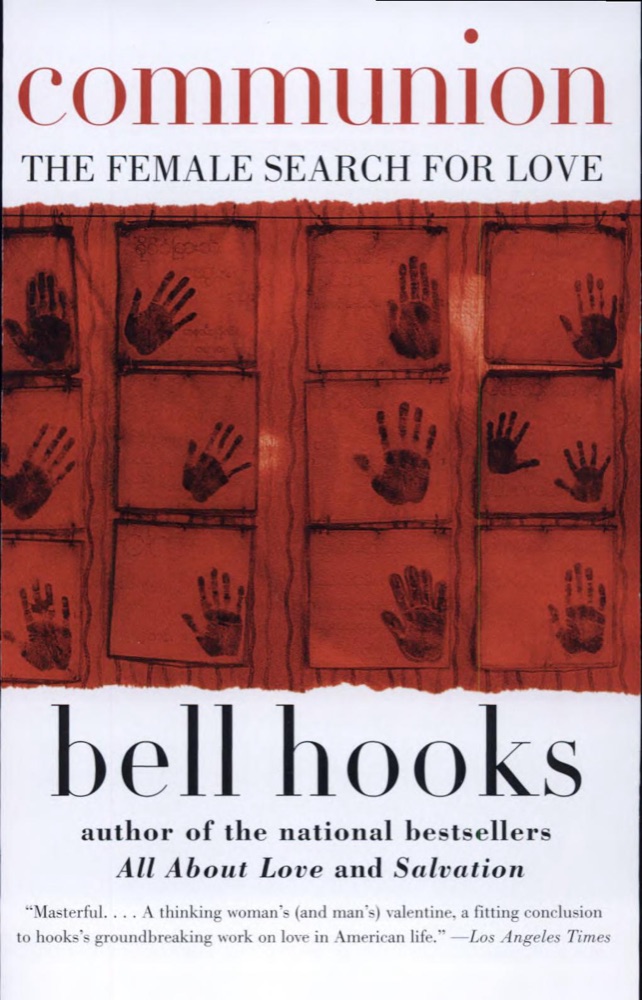 Communion: The Female Search for Love
About the book
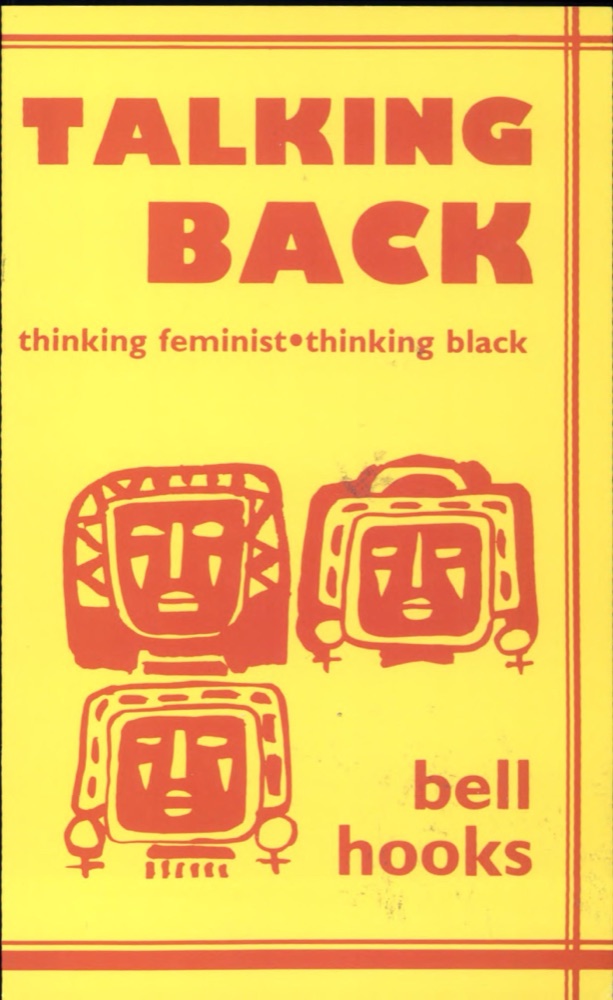
bell hooks writes about the meaning of feminist consciousness in daily life and about self-recovery, about overcoming white and male supremacy, and about intimate relationships, exploring the point where the public and private meet.
Book details
- First published
- 1989
- Author
- bell hooks
- Genre
- Nonfiction
- Goodreads rating
- 4.37 (3k ratings)
Keep reading
 Sister Outsider: Essays and Speeches
 This Bridge Called My Back: Writings by Radical Women of Color
 The Master's Tools Will Never Dismantle the Master's House
 Just Us: An American Conversation
 Feminist Theory: From Margin to Center
 Black Feminist Thought: Knowledge, Consciousness, and the Politics of Empowerment
 A Burst of Light
 Living a Feminist Life
 Pedagogy of the Oppressed
 The Source of Self-Regard: Selected Essays, Speeches, and Meditations
 Why Are All The Black Kids Sitting Together in the Cafeteria?
 Skin: Talking About Sex, Class And Literature
 You Are Your Best Thing: Vulnerability, Shame Resilience, and the Black Experience
 I Hope We Choose Love: A Trans Girl's Notes from the End of the World
 In Search of Our Mothers' Gardens: Womanist Prose
 Opinions: A Decade of Arguments, Criticism, and Minding Other People’s Business
 I'm Still Here: Black Dignity in a World Made for Whiteness
 It's Not About the Burqa
 The Mother of All Questions
 What White People Can Do Next: From Allyship to Coalition – An Empowering Guide to Interrogating Whiteness and Creating Justice
 On Freedom: Four Songs of Care and Constraint
 Girl, Woman, Other
 Emergent Strategy: Shaping Change, Changing Worlds
 Between the World and Me
 Becoming
 The Argonauts
 Against White Feminism: Notes on Disruption
 Headscarves and Hymens: Why the Middle East Needs a Sexual Revolution
 How to Stay Sane in an Age of Division
 Across That Bridge: A Vision for Change and the Future of America
 This Here Flesh: Spirituality, Liberation, and the Stories That Make Us
 Redefining Realness: My Path to Womanhood, Identity, Love & So Much More
 Ain't I a Woman: Black Women and Feminism
 Well-Read Black Girl: Finding Our Stories, Discovering Ourselves
 On the Other Side of Freedom: The Case for Hope
 Undoing Gender
 A Mind Spread Out on the Ground
 Let This Radicalize You: Organizing and the Revolution of Reciprocal Care
Communion: The Female Search for Love
Let This Radicalize You: Organizing and the Revolution of Reciprocal Care
Communion: The Female Search for Love
 Feminism, Interrupted: Disrupting Power
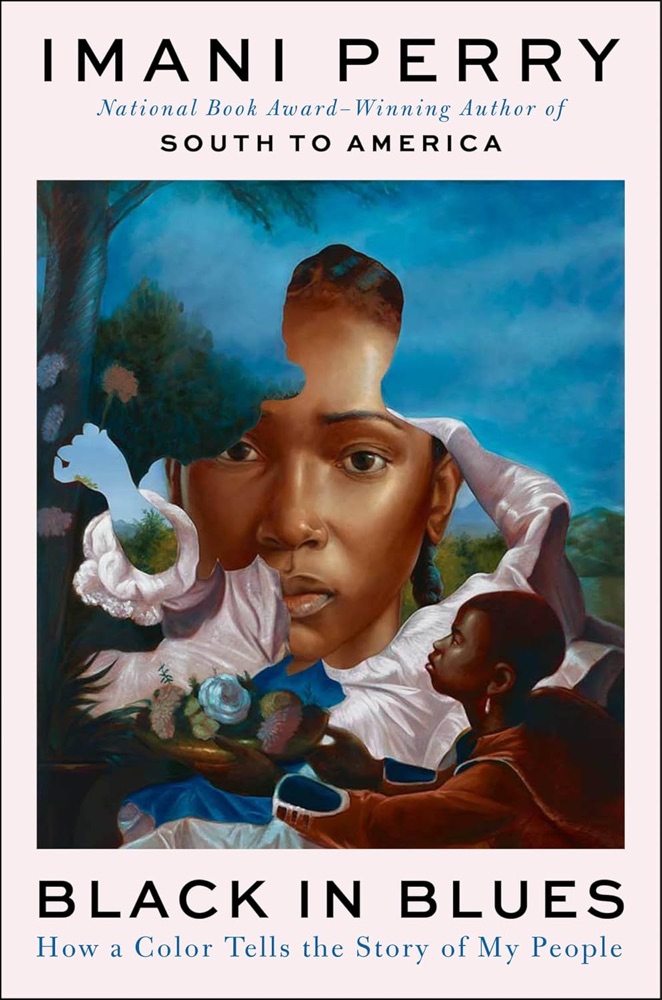 Black in Blues: How a Color Tells the Story of My People
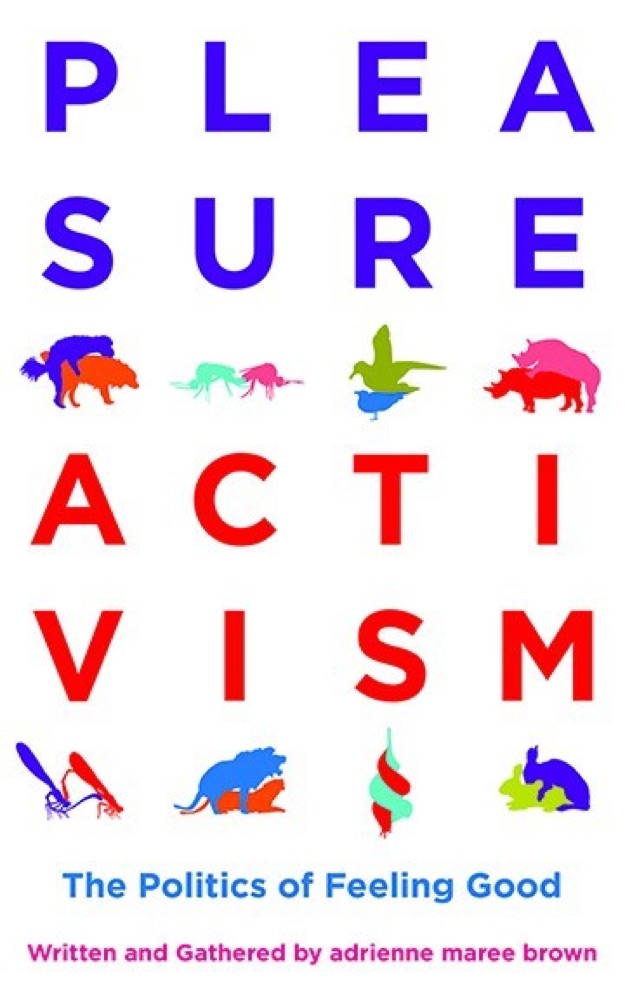 Pleasure Activism: The Politics of Feeling Good
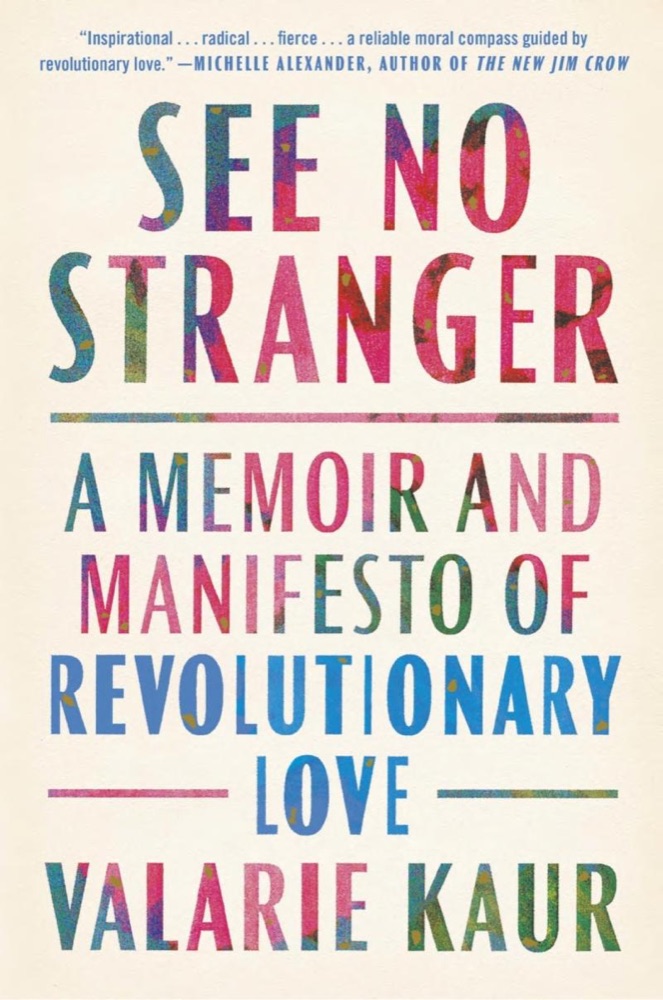 See No Stranger: A Memoir and Manifesto of Revolutionary Love
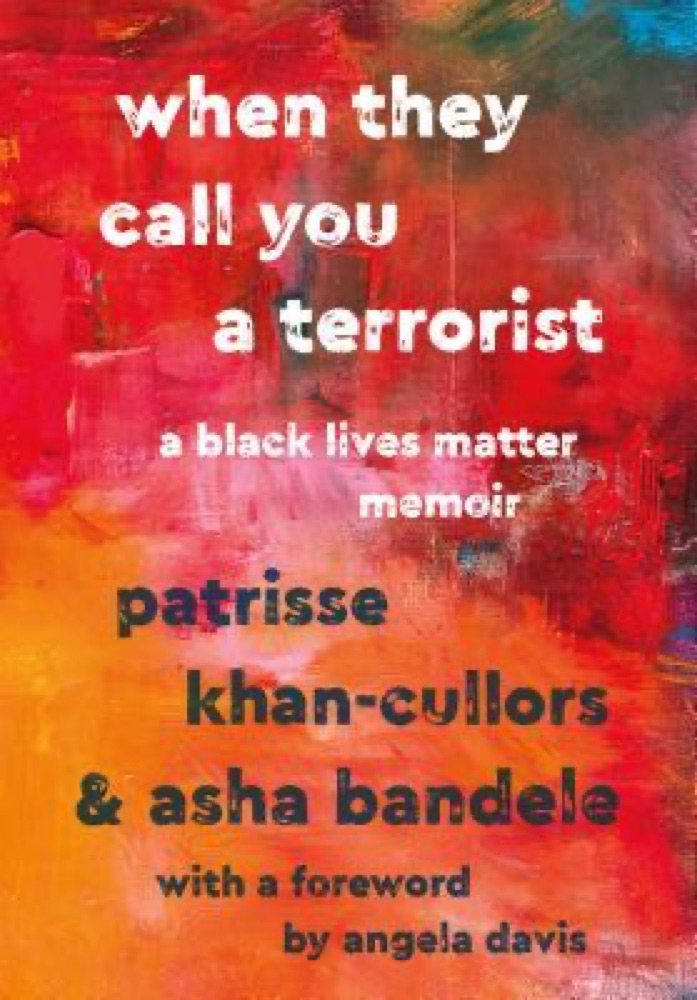 When They Call You a Terrorist: A Black Lives Matter Memoir
 White Like Me: Reflections On Race From A Privileged Son
 Why I Am Not a Feminist: A Feminist Manifesto
 Aftershocks
 Whose Story Is This? Old Conflicts, New Chapters
 Lead from the Outside: How to Build Your Future and Make Real Change
 Things I've Been Silent About
 Feminists Don't Wear Pink (And Other Lies): Amazing Women on What the F-Word Means to Them
 Revolution from Within: A Book of Self-Esteem
 On Connection
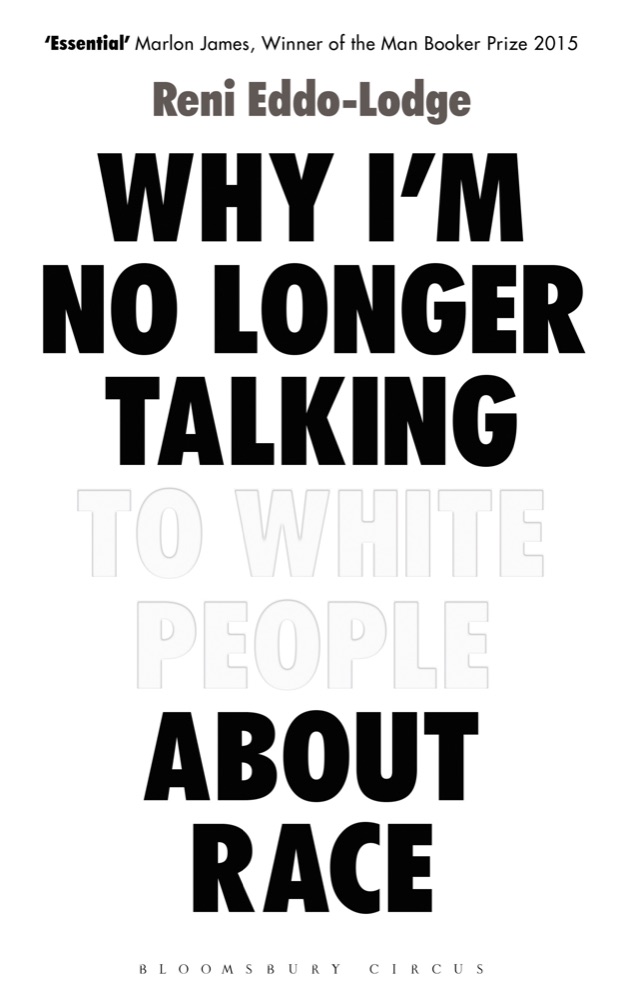 Why I'm No Longer Talking to White People About Race
 When Women Were Birds: Fifty-Four Variations on Voice
 Thick: And Other Essays
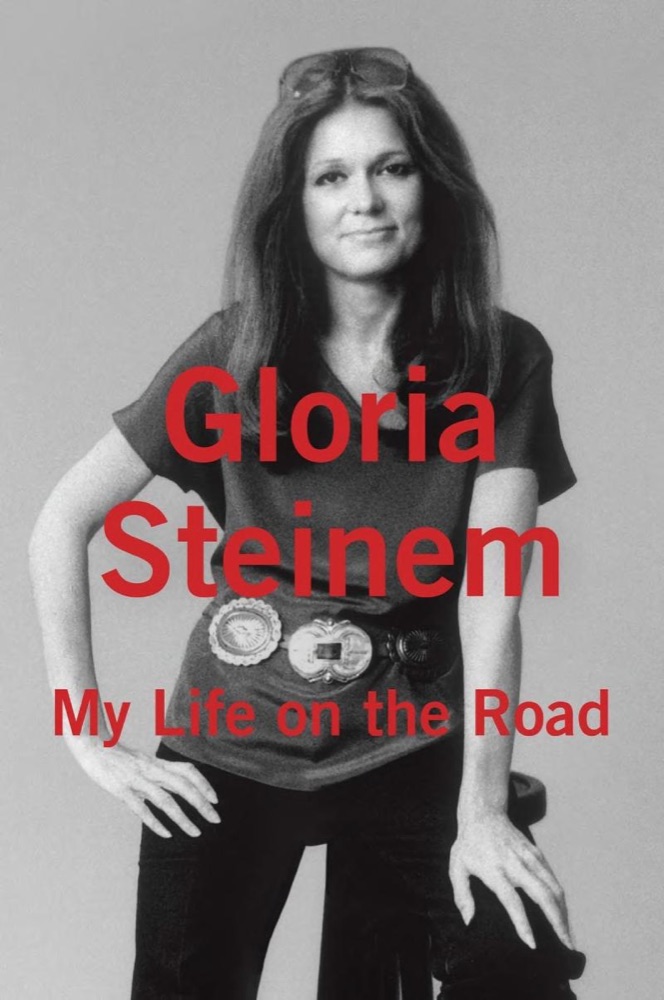 My Life on the Road
 Black Skin, White Masks
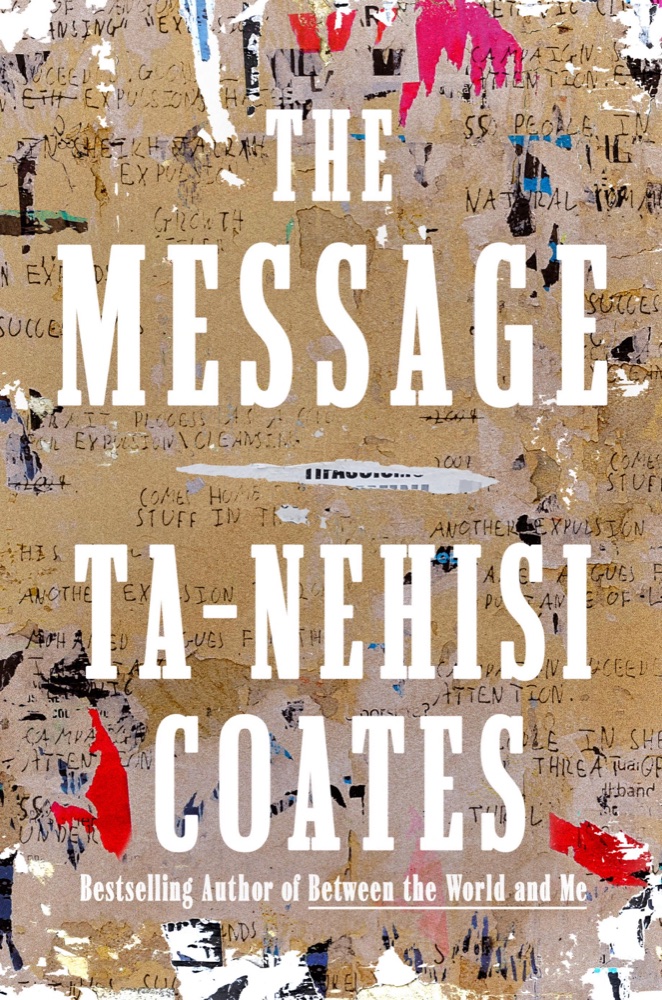 The Message
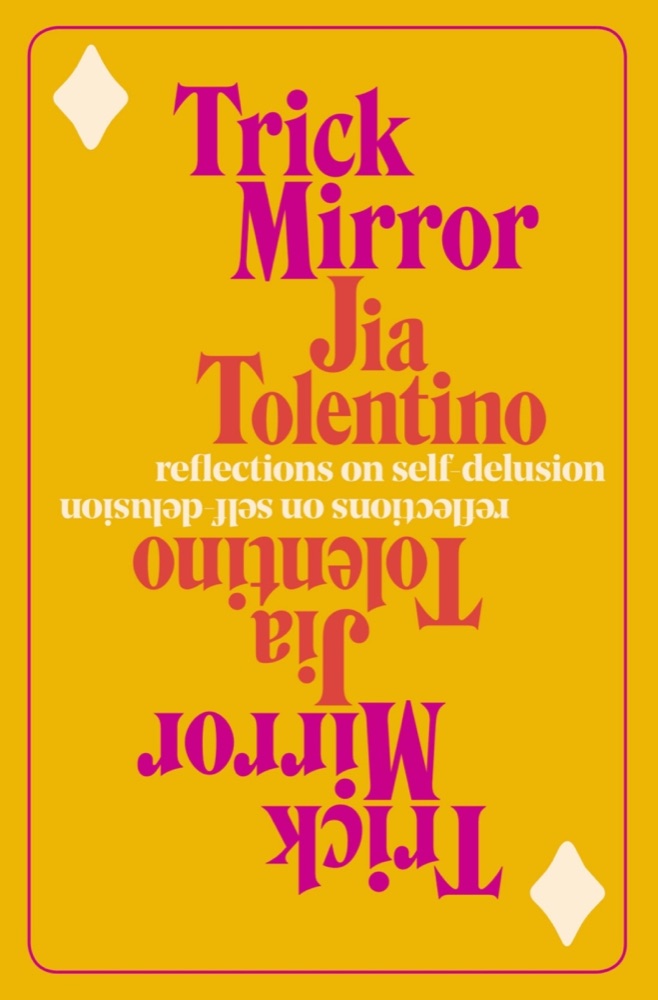 Trick Mirror: Reflections on Self-Delusion