
 Appalachian Elegy: Poetry and Place
Quotes from the Book
When we face pain in relationships our first response is often to sever bonds rather than to maintain commitment.
1.1k
All too often women believe it is a sign of commitment, an expression of love, to endure unkindness or cruelty, to forgive and forget. In actuality, when we love rightly we know that the healthy, loving response to cruelty and abuse is putting ourselves out of harm's way.
729
But many of us seek community solely to escape the fear of being alone. Knowing how to be solitary is central to the art of loving. When we can be alone, we can be with others without using them as a means of escape.
566
To return to love, to get the love we always wanted but never had, to have the love we want but are not prepared to give, we seek romantic relationships. We believe these relationships, more than any other, will rescue and redeem us. True love does have the power to redeem but only if we are ready for redemption. Love saves us only if we want to be saved.
537
the wounded child inside many males is a boy who, when he first spoke his truths, was silenced by paternal sadism, by a patriarchal world that did not want him to claim his true feelings. The wounded child inside many females is a girl who was taught from early childhood that she must become something other than herself, deny her true feelings, in order to attract and please others. When men and women punish each other for truth telling, we reinforce the notion that lies are better. To be loving we willingly hear the other’s truth, and most important, we affirm the value of truth telling. Lies may make people feel better, but they do not help them to know love.
481
The practice of love offers no place of safety. We risk loss, hurt, pain. We risk being acted upon by forces outside our control.
436
Individuals who want to believe that there is no fulfillment in love, that true love does not exist, cling to these assumptions because this despair is actually easier to face than the reality that love is a real fact of life but is absent from their lives.
389
One of the best guides to how to be self-loving is to give ourselves the love we are often dreaming about receiving from others. There was a time when I felt lousy about my over-forty body, saw myself as too fat, too this, or too that. Yet I fantasized about finding a lover who would give me the gift of being loved as I am. It is silly, isn't it, that I would dream of someone else offering to me the acceptance and affirmation I was withholding from myself. This was a moment when the maxim "You can never love anybody if you are unable to love yourself" made clear sense. And I add, "Do not expect to receive the love from someone else you do not give yourself.
371
To love well is the task in all meaningful relationships, not just romantic bonds.
324
Contrary to what we may have been taught to think, unnecessary and unchosen suffering wounds us but need not scar us for life. It does mark us. What we allow the mark of our suffering to become is in our own hands.
274
Honesty and openness is always the foundation of insightful dialogue.
268
Giving generously in romantic relationships, and in all other bonds, means recognizing when the other person needs our attention. Attention is an important resource.
244
A generous heart is always open, always ready to receive our going and coming. In the midst of such love we need never fear abandonment. This is the most precious gift true love offers - the experience of knowing we always belong.
239
We fear that evaluating our needs and then carefully choosing partners will reveal that there is no one for us to love. Most of us prefer to have a partner who is lacking than no partner at all. What becomes apparent is that we may be more interested in finding a partner than in knowing love.
213
Relationships are treated like Dixie cups. They are the same. They are disposable. If it does not work, drop it, throw it away, get another. Committed bonds (including marriage) cannot last when this is the prevailing logic. Most of us are unclear about what to do to protect and strengthen caring bonds when our self-centered needs are not being met.
209
It still took years for me to let go of learned pattern's of behavior that negated my capacity to give and receive love. One pattern that made the practice of love especially difficult was my constantly choosing to be with men who were emotionally wounded, who were not that interested in loving, even though they desired to be loved. I wanted to know love but was afraid to be intimate. By choosing men who were not interested in being loving, I was able to practice giving love but always within an unfufilling context. Naturally, my need to receive love was not met. I got what I was accustomed to getting. Care and affection, usually mingled with a degree of unkindness, neglect, and on some occasions, out right cruelty.
205
If you do not know what you feel, then it is difficult to choose love; it is better to fall. Then you do not have to be responsible for your actions.
203
How different things might be if, rather than saying "I think I'm in love," we were saying "I've connected with someone in a way that makes me think I'm on the way to knowing love." Or if instead of saying "I am in love" we say "I am loving" or "I will love." Our patterns around romantic love are unlikely to change if we do not change our language.
177
To truly love we must learn to mix various ingredients - care, affection, recognition, respect, commitment, and trust, as well as honest and open communication.
172
The growing number of gated communities in our nation is but one example of the obsession with safety. With guards at the gate, individuals still have bars and elaborate internal security systems. Americans spend more than thirty billion dollars a year on security. When I have stayed with friends in these communities and inquired as to whether all the security is in response to an actual danger I am told “not really," that it is the fear of threat rather than a real threat that is the catalyst for an obsession with safety that borders on madness. Culturally we bear witness to this madness every day. We can all tell endless stories of how it makes itself known in everyday life. For example, an adult white male answers the door when a young Asian male rings the bell. We live in a culture where without responding to any gesture of aggression or hostility on the part of the stranger, who is simply lost and trying to find the correct address, the white male shoots him, believing he is protecting his life and his property. This is an everyday example of madness. The person who is really the threat here is the home owner who has been so well socialized by the thinking of white supremacy, of capitalism, of patriarchy that he can no longer respond rationally. White supremacy has taught him that all people of color are threats irrespective of their behavior. Capitalism has taught him that, at all costs, his property can and must be protected. Patriarchy has taught him that his masculinity has to be proved by the willingness to conquer fear through aggression; that it would be unmanly to ask questions before taking action. Mass media then brings us the news of this in a newspeak manner that sounds almost jocular and celebratory, as though no tragedy has happened, as though the sacrifice of a young life was necessary to uphold property values and white patriarchal honor. Viewers are encouraged feel sympathy for the white male home owner who made a mistake. The fact that this mistake led to the violent death of an innocent young man does not register; the narrative is worded in a manner that encourages viewers to identify with the one who made the mistake by doing what we are led to feel we might all do to “protect our property at all costs from any sense of perceived threat. " This is what the worship of death looks like.
154
When we feel deeply drawn to someone, we cathect them; that is, we invest feelings or emotion in them. That process of investment wherein a loved one becomes important to us is called "cathexis". I his book Peck rightly emphasizes that most of us "confuse cathecting with loving." We all know how often individuals of cathecting insist that they love the other person even if they are hurting of neglecting them. Since their feiling is that of cathexis, they insist that what they feel is love. When we understand love as the will to nurture our own and another's spiritual growth, it becomes clear that we cannot claim to love if we are hurtful and abusive.
103
Young people are cynical about love. Ultimately, cynicism is the great mask of the disappointed and betrayed heart.
100
Abuse and neglect negate love. Care and affirmation, the opposite of abuse and humiliation, are the foundation of love. No one can rightfully claim to be loving when behaving abusively.
95
In our culture privacy is often confused with secrecy. Open, honest, truth-telling individuals value privacy. We all need spaces where we can be alone with thoughts and feelings - where we can experience healthy psychological autonomy and can choose to share when we want to. Keeping secrets is usually about power, about hiding and concealing information.
92
Our hearts connect with lots of folks in a lifetime but most of us will go to our graves with no experience of true love.
79
In patriarchal culture men are especially inclined to see love as something they should receive without expending effort. More often than not they do not want to do the work that love demands. When the practice of love invites us to enter a place of potential bliss that is at the same time a place of critical awakening and pain, many of us turn our backs on love.
77
Choosing to be honest is the first step in the process of love. There is no practitioner of love who deceives. Once the choice has been made to be honest, then the next step on love's path is communication.
75
schools for love do not exist. everyone assumes that we will know how to love instinctively. despite overwhelming evidence to the contrary, we still accept that the family is the primary school for love. those of us who do not learn how to love among family are expected to experience love in romantic relationships. however this love often eludes us.
72
Only love can heal the wounds of the past. However, the intensity of our woundedness often leads to a closing of the heart, making it impossible for us to give or receive the love that is given to us.
70
Women are often belittled for trying to resurrect these men and bring them back to life and to love. They are in a world that would be even more alienated and violent if caring women did not do the work of teaching men who have lost touch with themselves how to love again. This labor of love is futile only when the men in question refuse to awaken, refuse growth. At this point it is a gesture of self-love for women to break their commitment and move on.
68
Did you know?
- The book is the first volume in bell hooks's "Love Song to the Nation" trilogy, followed by "Salvation: Black People and Love" (2001) and "Communion: The Female Search for Love" (2002).
- hooks builds much of her argument around a definition of love adapted from psychiatrist M. Scott Peck, framing love as an act of will rather than a feeling.
- More than two decades after publication, the book returned to the New York Times bestseller list, with sales rising sharply in the early 2020s.
- bell hooks was the pen name of Gloria Jean Watkins, deliberately stylized in lowercase letters.
- The book is organized into thirteen thematic chapters, each examining a different dimension of love.
About bell hooks
bell hooks (1952-2021) was the pen name of Gloria Jean Watkins, an American author, feminist theorist, and cultural critic known for her writing on race, gender, class, and love. She published more than thirty books, including "Ain't I a Woman?" and "Feminist Theory: From Margin to Center," and stylized her pen name in lowercase to keep attention on her ideas rather than herself.
More about the author →More by bell hooks
Appalachian Elegy: Poetry and Place
 We Real Cool: Black Men and Masculinity
 Communion: The Female Search for Love
 Feminism Is for Everybody: Passionate Politics
About the book
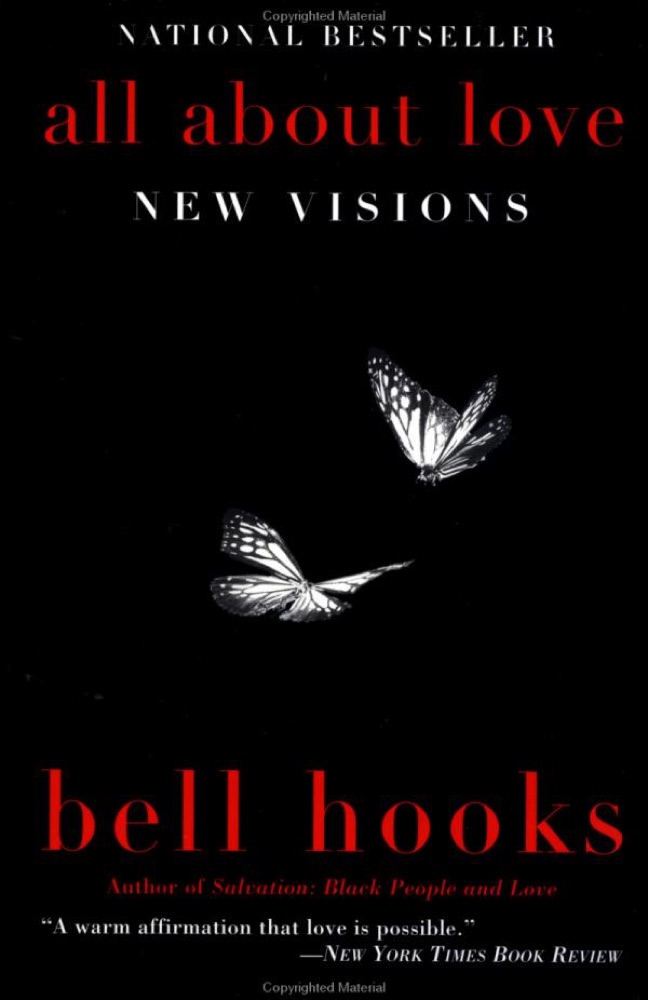
In "All About Love: New Visions," cultural critic and feminist theorist bell hooks sets out to answer a deceptively simple question: what is love? Drawing on a definition adapted from psychiatrist M. Scott Peck, she argues that love is not a feeling but an action and a choice, "the will to extend one's self for the purpose of nurturing one's own or another's spiritual growth." Across thirteen thematic chapters she contends that contemporary culture has confused love with desire, possession, and cathexis, and offers a framework for reclaiming it as a practice grounded in care, commitment, knowledge, responsibility, respect, and trust.
Blending memoir, social criticism, and self-help, hooks explores how love operates across many domains of life, including family, friendship, romantic partnership, community, and the self. Recurring themes include the corrosive effects of patriarchy and a culture of domination on our capacity to love, the inseparability of love and justice, the necessity of honesty and clarity, and the link between love and spiritual growth. She insists that there can be no love without justice, and that learning to love is essential not only to individual healing but to collective social change.
First published by William Morrow at the end of 1999, the book opened what hooks called her "Love Song to the Nation" trilogy, followed by "Salvation: Black People and Love" and "Communion: The Female Search for Love." It became one of her most widely read works and saw a dramatic resurgence decades later, returning to bestseller lists in the 2020s as new generations of readers embraced it. It is frequently cited as a touchstone for conversations about love, ethics, and feminist thought.
Book details
- First published
- 1999
- Length
- 240 pages
- Series
- Love Song to the Nation #1
- Reading time
- 4 hours
- Author
- bell hooks
- Genre
- Nonfiction
- Goodreads rating
- 4.00 (147k ratings)
Critical reception
- The book spent an extended period on the New York Times bestseller list and is regarded as one of hooks's most popular works.
- It experienced a major resurgence in the 2020s, with annual sales climbing well above their earlier levels as new readers discovered it.
- It is widely cited in discussions of love, ethics, and feminist thought and has become a frequently recommended introduction to bell hooks's writing.
Keep reading
 How to Be an Adult in Relationships: The Five Keys to Mindful Loving
 The Art of Loving
 8 Rules of Love: How to Find It, Keep It, and Let It Go
 Love, Freedom, and Aloneness: The Koan of Relationships
 The 5 Love Languages: The Secret to Love that Lasts
 Conversations on Love
 The Five Love Languages for Singles
 The Mastery of Love: A Practical Guide to the Art of Relationship: A Toltec Wisdom Book
 A Return to Love: Reflections on the Principles of "A Course in Miracles"
 If the Buddha Dated: A Handbook for Finding Love on a Spiritual Path
 See No Stranger: A Memoir and Manifesto of Revolutionary Love
 Changes That Heal: How to Understand the Past to Ensure a Healthier Future
 How to Love
Communion: The Female Search for Love
How to Love
Communion: The Female Search for Love
 Messages from the Masters: Tapping into the Power of Love
 On Love
 The Course of Love
 The Truth: An Uncomfortable Book About Relationships
 Mating in Captivity: Reconciling the Erotic and the Domestic
 The Road Less Travelled
 The Love Dare
 The Ethical Slut: A Guide to Infinite Sexual Possibilities
 True Love: A Practice for Awakening the Heart
 The Meaning of Marriage: Facing the Complexities of Commitment with the Wisdom of God
 More Than Two: A Practical Guide to Ethical Polyamory
 The State of Affairs: Rethinking Infidelity
 Becoming Human
 Dear Dolly
 The World According to Mister Rogers: Important Things to Remember
 Works of Love
 The Gifts of Imperfection
 Love for Imperfect Things: How to Accept Yourself in a World Striving for Perfection
 The Way to Love: The Last Meditations of Anthony de Mello
 Fierce Love: Creating a Love that Lasts―One Conversation at a Time
 The Forty Rules of Love
 Love and Responsibility
 Before Us
 Love and Will
 Committed: A Skeptic Makes Peace with Marriage
 It Begins with You: The 9 Hard Truths About Love That Will Change Your Life
 Us: Getting Past You and Me to Build a More Loving Relationship
 Real Love: The Art of Mindful Connection
 The Art of Communicating
 Love Stories
 Intimacy: Trusting Oneself and the Other
 Lovingkindness: The Revolutionary Art of Happiness
 Passionate Marriage: Keeping Love and Intimacy Alive in Committed Relationships
 The Secret Life of Prince Charming
 The Shack
 The Buddha Walks into a Bar . . .: A Guide to Life for a New Generation
 Kitchen Table Wisdom: Stories that Heal
 Atlas of the Heart: Mapping Meaningful Connection and the Language of Human Experience
 Shantaram
 So Much More
 101 Essays That Will Change The Way You Think
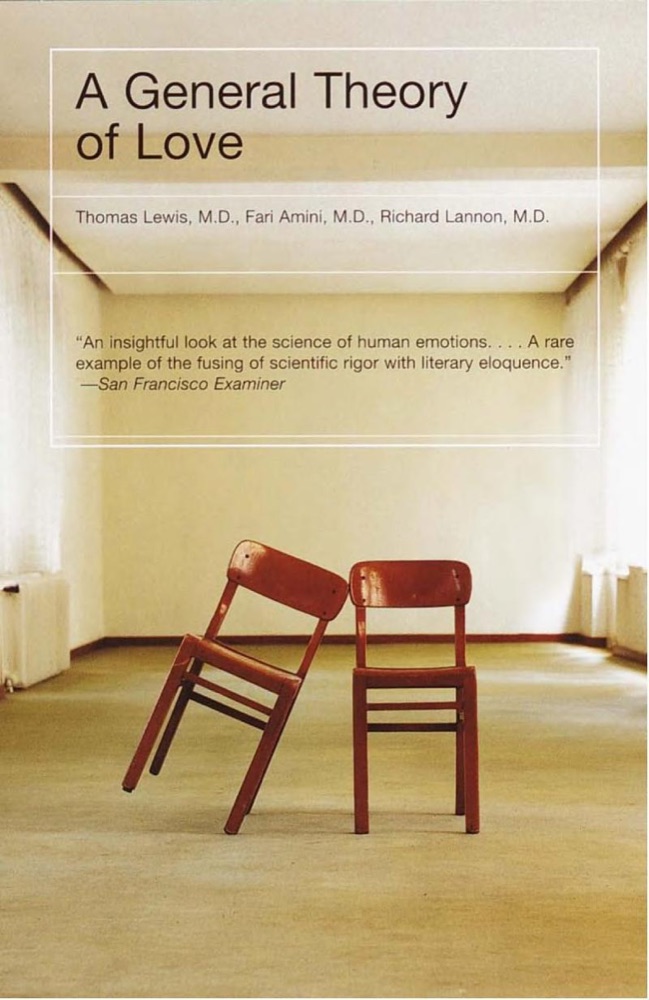 A General Theory of Love
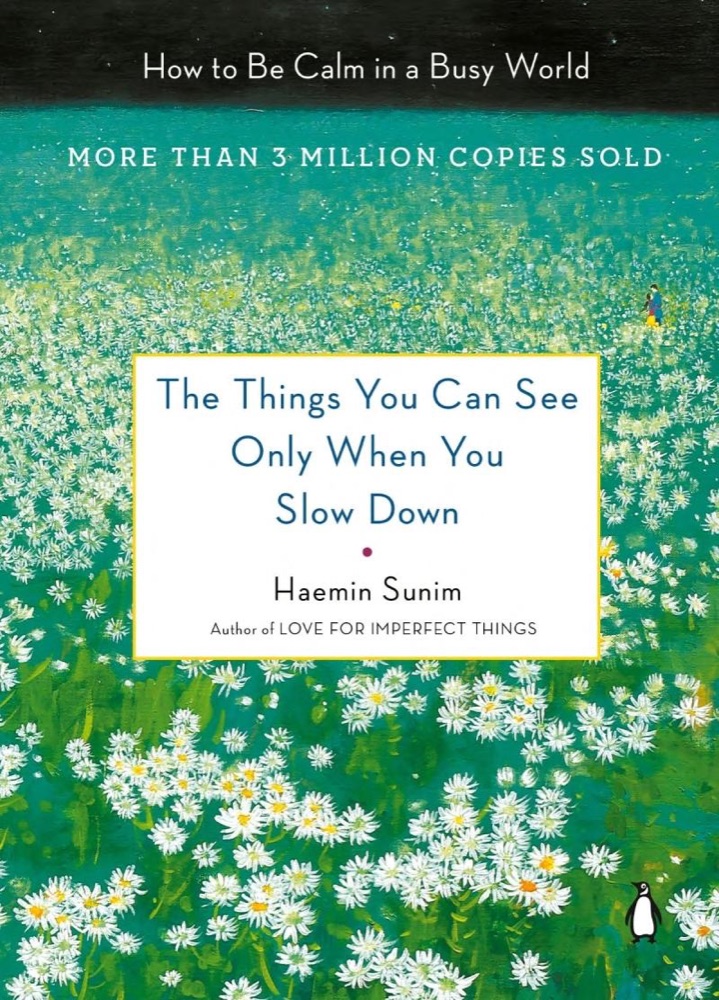 The Things You Can See Only When You Slow Down: How to Be Calm in a Busy World
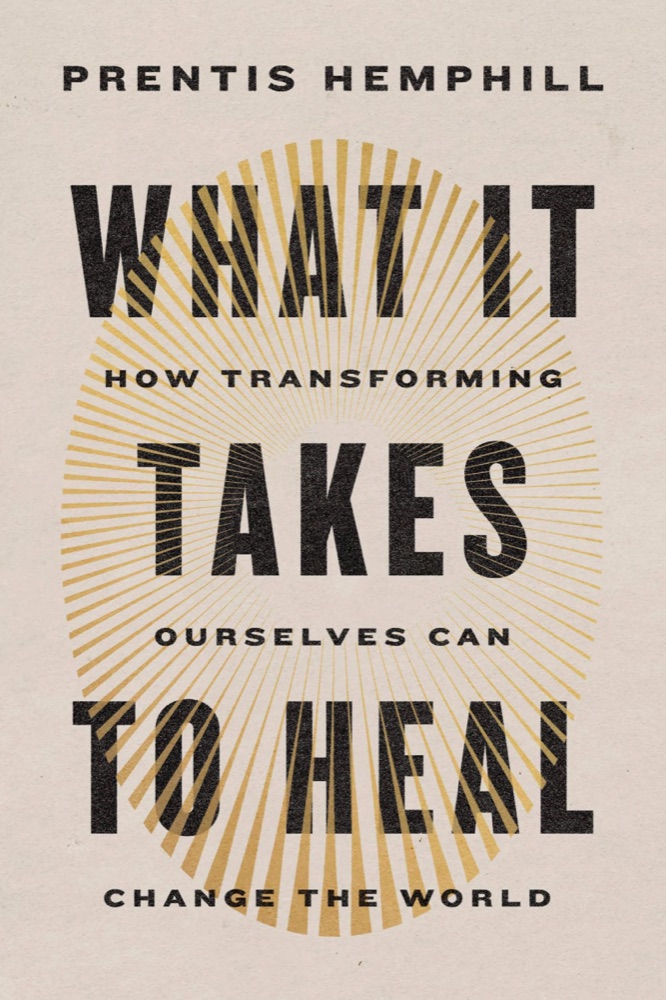 What It Takes to Heal: How Transforming Ourselves Can Change the World
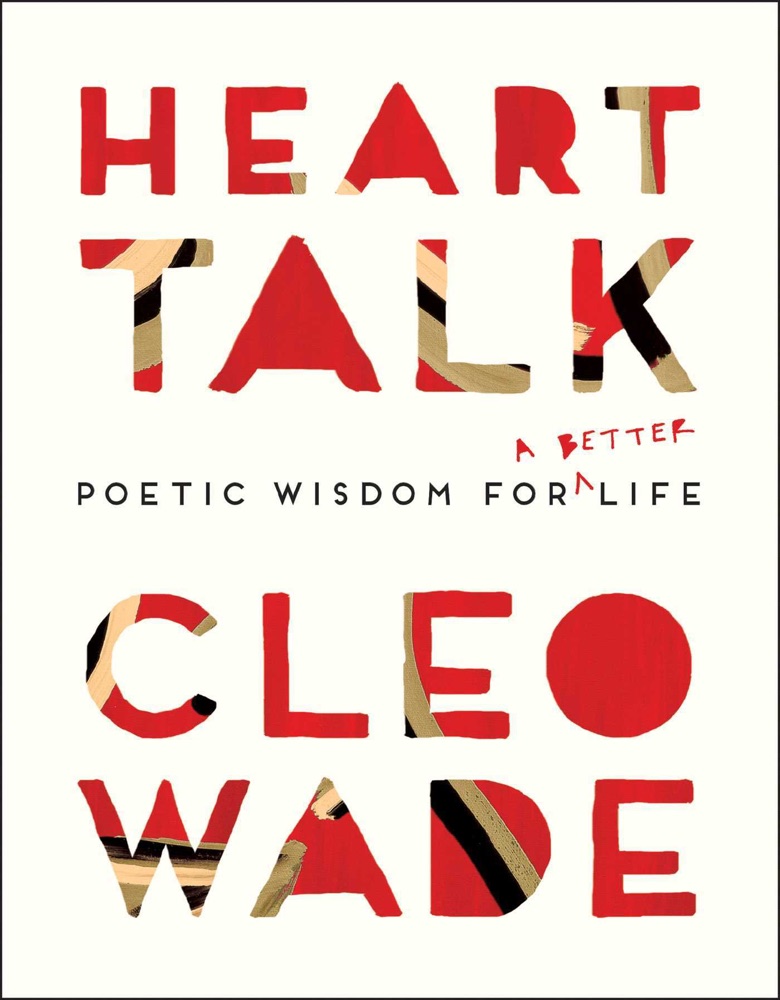 Heart Talk: Poetic Wisdom for a Better Life
 Panenka