
 Of Mess and Moxie: Wrangling Delight Out of This Wild and Glorious Life
Quotes from the Book
To be human in an aching world is to know our dignity and become people who safeguard the dignity of everything around us.
31
In lament, our task is never to convince someone of the brokenness of this world; it is to convince them of the world’s worth in the first place. True lament is not born from that trite sentiment that the world is bad but rather from a deep conviction that it is worthy of goodness.
25
I don't want to make it to the promised land if it means I forget the wilderness.
14
Those who believe love is a scarcity are less likely to give it away freely.
13
Seeing a person or piece of creation trampled should always disrupt something in us. It should always do something to the soul. And when you trace that trampling back across generations and systems and powers, a quiet sorrow is born in you.
13
I’ve accepted that the whole of my life will be a pilgrimage toward the sound of the genuine in me. This may sound troubling to those who’ve been conditioned to believe that our journey is to God and God alone, but I say the two paths are one. My journey to the truth of God cannot be parsed from my journey to the truth of who I am. A fidelity to the true self is a fidelity to truth. I won’t apologize for this.
10
Audre Lorde said, “I cannot hide my anger to spare you guilt, nor hurt feelings…. Guilt is not a response to anger; it is a response to one’s own actions or lack of action. If it leads to change then it can be useful, since it is then no longer guilt but the beginning of knowledge.
10
The chasm between the spiritual and the physical is no greater than that between a thought and a word. They cannot be disconnected. And it is difficult to tell where one ends and the other begins, perhaps because there is no such place.
10
How boring to spend the whole of my vocational energy trying to figure out if I am choosing the right work. It is of much greater interest to me to talk about how I’m going to do the work with integrity. How am I going to protect dignity as I work? And what truths are calling out to me as I work?
10
It takes time to undo the whiteness of God. When I speak of whiteness, I am referring not to the mere existence of a person in a particular body; I am referring to the historic, systemic, and sociological patterns that have oppressed, killed, abducted, abused, and discredited those who do not exist in a particular body. Whiteness is a force.
9
And as a Black woman, I am disinterested in any call to spirituality that divorces my mind from my body, voice, or people.
8
The land I live on is not mine to have, but mine to nurture.
6
Wonder then is a force of liberation, it makes sense of what our souls inherently know we were meant for. Every mundane glimpse is salve on a wound, instructions for how to set the bone right again. If you really want to get free, find God on the subway, find God in the soap bubble. Me, I meet God in the taste of my grandmas chicken, I hear God in the raspy leather of Nina Simones voice, I see the face of God in the boney teenager bagging my groceries and why shouldn't I? My faith is held together by wonder, by ever defined commitment to presence and paying attention.
6
I have to believe that if we didn't need to protect ourselves, we wouldn't be so prone to avoiding rest. When fear enters the story, something changes. In response to the risk and need around us, we have constructed systems around labor that leave even the hardest workers vulnerable, in deficit. Labor is no longer a gift. How could it be when one is withering from hunger? Labor instead becomes a means to an end, not an avenue for flourishing but a transaction for survival. This is a grim human development, for no one wants to spend their days merely surviving. And this transaction is nearly always incongruent with the amount of labor one does. You can work, as my gramma did in California, for a full month just to be able to finally move from the shelter into low-income housing. Meanwhile, the powerful convince us that there is not enough while their pocket spill out in the open. They distract us from this by dangling opportunity in the opposite direction. They appear as rescuers, demanding ceaseless labor from us but presenting it as a gift. We are expected to feel deeply lucky and even indebted to a society that allows us to work, even if that work cannot satisfy our most basic needs.
6
Isn't it something that in Genesis, God makes a home for things before God makes the thing? Not the fish first but the sea. Not the bird first but the sky. Not the human first but the garden. I like to think of God hunched over in the garden, fingernails hugging the brown soil, mighty hands cradling mud like it's the last flame in a windstorm. A God who says, Not out of my own womb but out of this here dust will I make you. Place has always been the thing that made us. We cannot escape being formed by it.
4
Did you know that birds do not land because they're tired? It is a rememberance. They know and have always known that their liberation depends on their ability to recall the ground.
4
These are spiritual afflictions in and of themselves, but in religious communities, when whiteness becomes inseparable from the character of God, you’ll find customs such as evangelism equated with conquering, but admissible under the guise of “love.” You’ll find guilt-driven spirituality, which is obsessed with alleviating guilt and becoming “clean”—for whiteness always carries the memory of what it has done to those in bodies of color, and guilt is its primary tormentor. The irony, of course, is that this guilt cannot be relieved save by a rending of whiteness from the image of God (which the force of whiteness will never do). In order to rend whiteness from the face of God, we must do more than make new images.
4
We are a people much more concerned with ruling than loving. This is a mistake that positions us in places where we are no longer close enough to another person or thing to perceive its pain or need. To be human in an aching world is to know our dignity and become people who safeguard the dignity of everything around us. To protect everything may seem like too great a call. But we will not survive without it. Everything should be called by its name. So let justice roll down and twist and juke like a movement. Let it march into your bones, into seas of charred cane. Wash the earth in justice and watch what rises to the surface. Curses can't breathe underwater.
3
When we wonder, we loosen the cords that restrain our love. And the people most in love with a thing are prone to become its fiercest protectors.
3
Our situation today shows that beauty demands for itself at least as much courage and decision as do truth and goodness, and she will not allow herself to be separated and banned from her two sisters without taking them along with herself in an act of mysterious vengeance. We can be sure that whoever sneers at her name as if she were the ornament of a bourgeois past—whether he admits it or not—can no longer pray and soon will no longer be able to love.
3
How will we make space to hold the memory of the collective? There are times when belonging is not cemented in the lived moment of an experience but in the lively or sombre retelling of the moment afterward. Which means we can transfer belonging to the next generation by welcoming them into memories that they (or we) have not lived but choose to steward. In many spaces, to foster collective memory well, we must habitually ask ourselves, Whose story gets told, whose story is believed, and who gets to tell it? If we surrender our individual egos, these questions can function as a pruning process, as we contend with accounts that don’t line up quite flush. This interrogation may reveal false memories.
2
I belong to a God capable of holding the ugliest parts of my anger.
2
People who truly know how to wonder don't expend a great deal of energy talking about it; they are off catching snowflakes on hot tongues. They're folding themselves in half to smell the sweet potatoes in the oven just one more time. I no longer try to convince someone of the delight of soup dumplings; I take them to Dim Sum Garden on Race Street in Philly and let them watch me slurp. I let the steaming miracle broth run down my face and lap it up in remembrance. I think awe is an exercise, both a doing and a being. It is a spiritual muscle of our humanity that we can only keep from atrophying if we exercise it habitually.
2
Forgiveness came to her, not in a dramatic flourish or sudden comprehension, rather it grew on her as slowly and fatefully as the fingernails crowning her hands. You participate in it. It comes from you, but it also is something that happens to you without you necessarily noticing. I don't think we have as much control over our forgiveness as we think. You can't force hair to grow faster than your body allows. I think this is okay.
2
My first prayer was into a purple plastic toy megaphone. I even went into the closet to do it in case God was shy like me.
2
When we grow accustomed to neglecting beauty, we eventually become creatures of hatred. We lose our imagination, a virtue to which wonder is helplessly tied. Why care for barren land? Why advocate for justice in a system predicated on injustice? We become so accustomed to that bitter taste that we can taste nothing else. Slowly, even mirrors feel like an oppression. We become unable to conceive of anything worthwhile in our own image until we empty ourselves of all beauty and turn against our own bodies in disgust.
2
Bravado tends to drown out the sound of wonder. Perhaps you've known that person who devours beauty as if it belongs to them. It is a possessive wonder. It eats not to delight, but to collect, trade, and boast. It consumes beauty to grow in ego, not in love. It climbs mountains to gain ownership, not to gain freedom.
2
We tend to assign a lesser social value to those whose doing cannot be enslaved into a given output. We should look to them as sacred guides out of the bondage of productivity. Instead, we withhold social status and capital, and we neglect to acknowledge that theirs is a liberation we can learn from.
2
I used to think that Christian contemplation was reserved for white men who leave copies of C.S. Lewis's letters strewn about and know a great deal about coffee and beard oils. If this is you, there is room for you here. But I am interested in reclaiming a contemplation that is not exclusive to whiteness, intellectualism, ableism, or mere hobby. And as a Black woman, I am disinterested in any call to spirituality that divorces my mind from my body, voice, or people. To suggest a form of faith that tells me to sit down alone and be quiet? It does not rest easy on the bones. It is a shadow of true contemplative life, and it would do violence to my Black-woman soul.
1
I am disinterested in any call to spirituality that divorces my mind from my body, voice, or people.
1
Watch on YouTube
About Cole Arthur Riley
We have collected 30 quotes from 1 book by Cole Arthur Riley on BookQuoters.
More about the author →About the book
In her stunning debut, the creator of Black Liturgies weaves stories from three generations of her family alongside contemplative reflections to discover the "necessary rituals" that connect us with our belonging, dignity, and liberation.
"From the womb, we must repeat with regularity that to love ourselves is to survive. I believe that is what my father wanted for me and knew I would so desperately need: a tool for survival, the truth of my dignity named like a mercy new each morning."
So writes Cole Arthur Riley in her unforgettable book of stories and reflections on discovering the sacred in her skin. In these deeply transporting pages, Arthur Riley reflects on the stories of her grandmother and father, and how they revealed to her an embodied, dignity-affirming spirituality, not only in what they believed but in the act of living itself. Writing memorably of her own childhood a
Book details
- First published
- 2022
- Author
- Cole Arthur Riley
- Genre
- Nonfiction
- Goodreads rating
- 4.59 (6k ratings)
Keep reading
Of Mess and Moxie: Wrangling Delight Out of This Wild and Glorious Life
 Kitchen Table Wisdom: Stories that Heal
 Belonging: Remembering Ourselves Home
 The Source of Self-Regard: Selected Essays, Speeches, and Meditations
 The Invitation
 Wild Mercy: Living the Fierce and Tender Wisdom of the Women Mystics
 Dust Tracks on a Road
 Hallelujah Anyway: Rediscovering Mercy
 Becoming Wise: An Inquiry into the Mystery and Art of Living
 Like Streams to the Ocean: Notes on Ego, Love, and the Things That Make Us Who We Are
 The Book of Awakening: Having the Life You Want by Being Present to the Life You Have
 Falling Back in Love with Being Human: Letters to Lost Souls
 A Burst of Light
 Tattoos on the Heart: The Power of Boundless Compassion
 The Red Book: Liber Novus
 A Hidden Wholeness: The Journey Toward an Undivided Life : Welcoming the soul and weaving community in a wounded world
 Letter to My Daughter
 Dusk, Night, Dawn: On Revival and Courage
 Let Your Life Speak: Listening for the Voice of Vocation
 Carry On, Warrior: Thoughts on Life Unarmed
 Faith, Hope and Carnage
 Refuge: An Unnatural History of Family and Place
 Blue Like Jazz: Nonreligious Thoughts on Christian Spirituality
 Barking to the Choir: The Power of Radical Kinship
 The Spiral Staircase: My Climb Out of Darkness
 Wholehearted Faith
 A Return to Love: Reflections on the Principles of "A Course in Miracles"
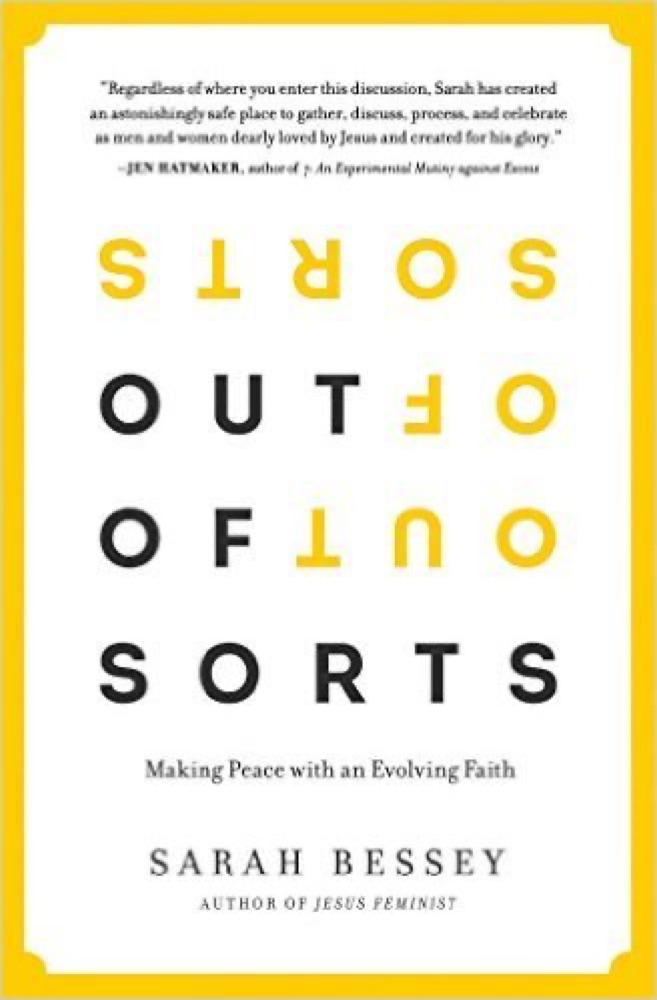 Out of Sorts: Making Peace with an Evolving Faith
 Aftershocks
 The Gay Science
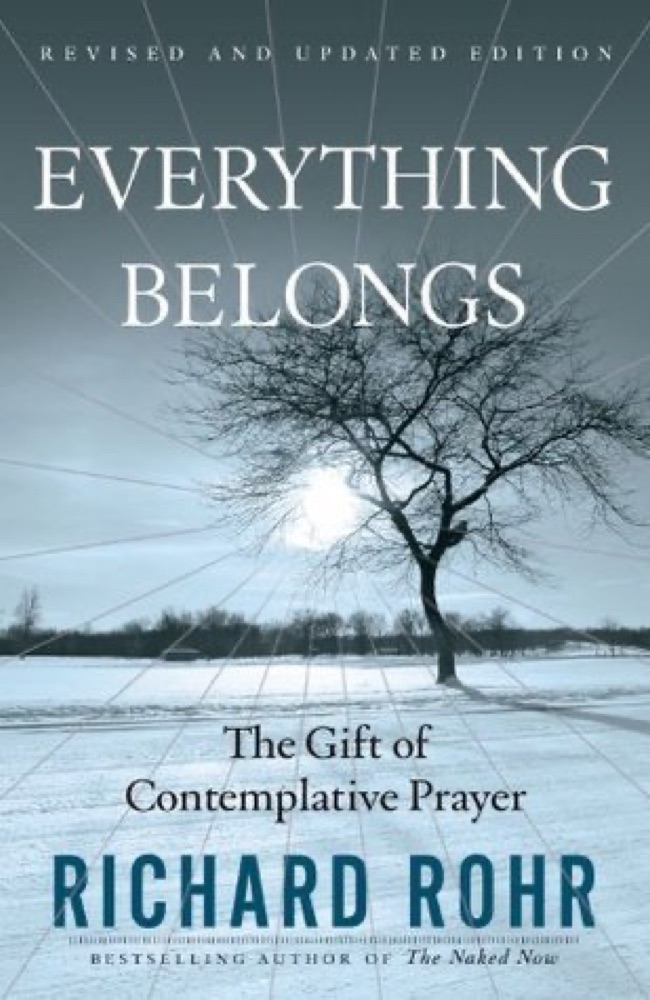 Everything Belongs: The Gift of Contemplative Prayer
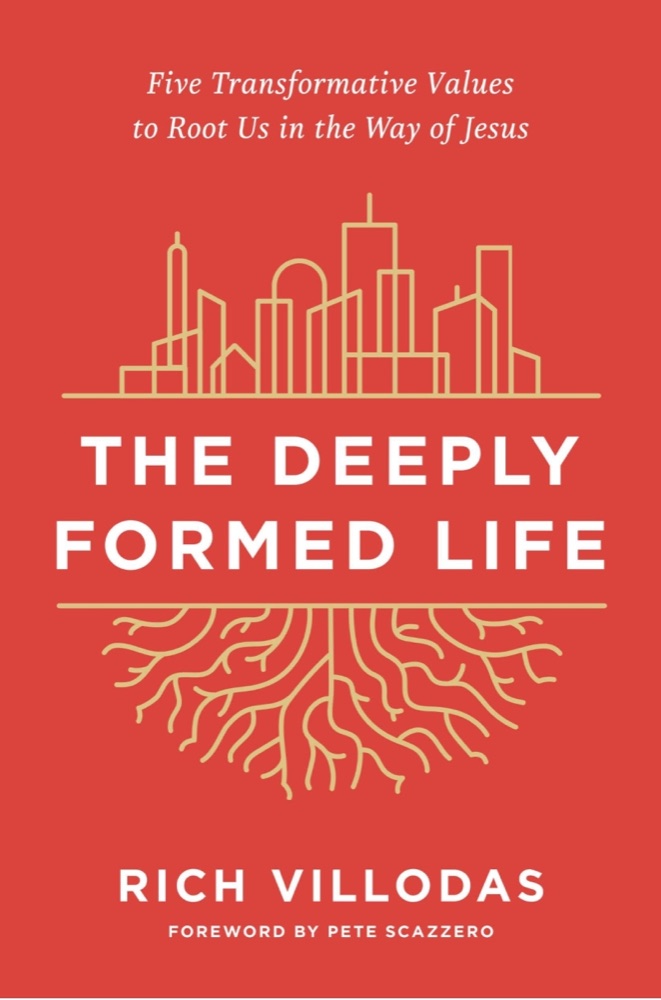 The Deeply Formed Life: Five Transformative Values to Root Us in the Way of Jesus
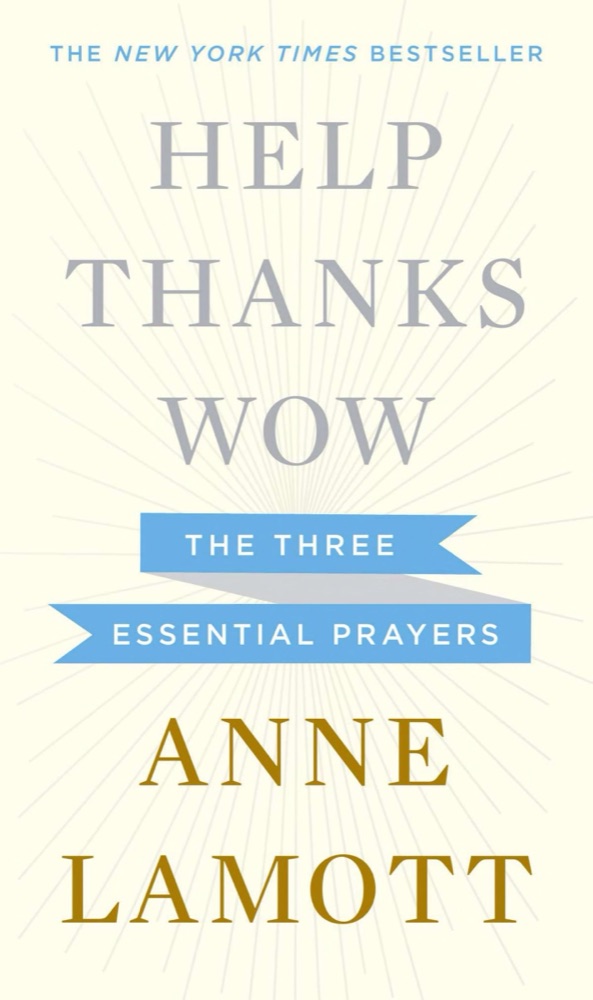 Help Thanks Wow: The Three Essential Prayers
 The Journey Home
 I Guess I Haven't Learned That Yet: Discovering New Ways of Living When the Old Ways Stop Working
 Yoga Bitch: One Woman's Quest to Conquer Skepticism, Cynicism, and Cigarettes on the Path to Enlightenment
 Sister Outsider: Essays and Speeches
 We Are the Luckiest: The Surprising Magic of a Sober Life
 The Seven Storey Mountain
 On Connection
 Untamed
 The Cloister Walk
 Just as I Am
 Dear Senthuran: A Black Spirit Memoir
 Present Over Perfect: Leaving Behind Frantic for a Simpler, More Soulful Way of Living
 The Holy Longing: The Search for a Christian Spirituality
 The Story of My Experiments With Truth
 The Home and the World
 Prayer in the Night: For Those Who Work or Watch or Weep
 Demian
 See No Stranger: A Memoir and Manifesto of Revolutionary Love
 The Varieties of Religious Experience
 Parable of the Sower
 All My Knotted-Up Life: A Memoir
 Abba's Child: The Cry of the Heart for Intimate Belonging
 Rise Up and Salute the Sun: The Writings of Suzy Kassem
 Women Who Run With the Wolves
 Reclaim Your Heart: Personal Insights on Breaking Free from Life's Shackles
 Never Broken: Songs Are Only Half the Story