
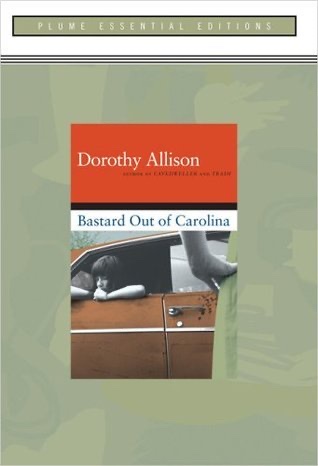
 Bastard Out of Carolina
Quotes from the Book
I wanted to start over completely, to begin again as new people with nothing of the past left over. I wanted to run away from who we had been seen to be, who we had been... It's the first thing I think of when trouble comes - the geographic solution. Change your name, leave town, disappear, make yourself over. What hides behind that impulse is the conviction that the life you have lived, the person you are, is valueless, better off abandoned, that running away is easier than trying to change things, that change itself is not possible.
45
I have lived my life in pursuit of the remade world... I believe in truth. I believe in truth denied any use of it can believe in it. I know its power. I know the threat it represents to a world constructed on lies. I know the myths of the family that thread through our society's literature, music, politics - and I know the reality. The reality is that for many of us family was as much the incubator of despair as the safe nurturing haven the myths promised... But I also believe in hope... The worst thing done to us in the name of a civilized society is to label the truth of our lives material outside the legitimate subject matter of serious writers... I need you to do more than survive. As writers, as revolutionaries, tell the truth, your truth in your own way. Do not buy into their system of censorship, imagining that if you drop this character or hide that emotion, you can slide through their blockades. Do not eat your heart out in the hope of pleasing them. The only hope you have, the only hope any of us has, is the remade life.
26
There is a place where we are always alone with our own mortality, where we must simply have something greater than ourselves to hold onto—God or history or politics or literature or a belief in the healing power of love, or even righteous anger.... A reason to believe, a way to take the world by the throat and insist that there is more to this life than we have ever imagined.
14
I tell myself that life is the long struggle to understand and love fully. That to keep faith with those who have literally saved my life and made it possible for me to imagine more than survival, I have to try constantly to understand more, love more fully, go more naked in order to make others as safe as I myself want to be. I want to live past my own death, as my mother does, in what I have made possible for others—my sisters, my son, my lover, my community—the people I believe in absolutely, men and women whom death does not stop, who honor the truth of each other’s stories.
9
The books still weren’t real, but maybe they were written about city women, television women, Yankee women—just about as strange as Zeus had always been and Jesus was getting to be.
8
You need to know that you are a real person, that this thing happening to you is not something you are making happen—because when I was a child I thought I was doing it. I thought that if only I were a little better, a little smarter, a little meaner, a little faster, or maybe even a better Christian, none of those terrible things would be happening.
8
Every time I sit down to write, I have a great fear that anything I write will reveal me as the monster I was always told I would be, but that fear is personal, something I must face in everything I do, every act I contemplate.
7
I became a feminist activist propelled in part by outrage and despair, and a stubborn determination to shape a life, and create a literature, that was not a lie.
7
Sex was dangerous, a trap, trashy as drinking whiskey in a paper cup or telling dirty stories in a loud whisper. Sex was a sure sign of having nothing better to hope for.
6
I do not want to claim a safe and comfortable life for myself that is purchased at the cost of some other woman’s needs or desires.
6
Maybe not for anyone else, but for me, the kind of person I am, writing meant an attempt to sneak up on the truth, to figure it out slowly through the characters on the page.
6
Look around you. Apartheid is being dismantled and Nelson Mandela walks the streets of South Africa. Until a few years ago, I could not imagine that happening. Russia is a new place, so is China. The communist bogeyman I was threatened with throughout my childhood is gone. The world is no less dangerous, and people are still dying for their origins, beliefs, color, and sexuality, but I find myself full of startled awe and hope. The rigid world into which I was born has been shaken profoundly.
6
The horror of class stratification, racism, and prejudice is that some people begin to believe that the security of their families and communities depends on the oppression of others, that for some to have good lives there must be others whose lives are truncated and brutal. It is a belief that dominates this culture. It is what makes the poor whites of the South so determinedly racist and the middle class so contemptuous of the poor.
6
I passed whole portions of my life—days, months, years—in pure directed progress, getting up every morning and setting to work, working so hard and so continually that I avoided examining in any way what I knew about my life. Busywork became a trance state. I ignored who I really was and how I became that person, continued in that daily progress, became an automaton who was what she did.
6
Romantic love continues the status quo in which we both are victimized and victimize each other.
5
I grew up poor, hated, the victim of physical, emotional, and sexual violence, and I know that suffering does not ennoble. It destroys.
5
By the time that poem became the story “River of Names,”* I had made the decision to reverse that process: to claim my family, my true history, and to tell the truth not only about who I was but about the temptation to lie.
5
What I have tried to do in my own life is refuse the language and categories that would reduce me to less than my whole complicated experience
5
I became convinced that to survive I would have to remake the world so that it came closer to matching its own ideals.
5
You got to hold still, I thought. Perfectly still. I concentrated, focused, felt my arms become rigid, stern and strong. I pulled back the trigger slowly, squeezing steadily. The bottle exploded, water shooting out in a wide fine spray. ‘Goddamn!’ Anne shouted. She was staring at me like I had stared at her earlier, her whole face open with pride and delight. Sexy, yeah. I pointed the barrel at the sky and let my mouth widen into a smile. ‘Goddamn,’ I said, and meant it with all my heart.
5
believe that sexual desire is a powerful emotion and a healthy one. I’m pretty sure that when anyone acknowledges and acts on their desire, it does us all some good—even if only by giving other people permission to act on their desire—that it is sexual repression that warps desire and hurts people.
4
The holy act of sex, my sex, done in your name, done for the only, the best reason. Because we want it.
4
Simple answers, reductionist politics, are the most prone to compromise, to saying we’re addressing the essential issue and all that other stuff can slide. It is, in reality, people who slide.
4
Essential political decisions are made not once, but again and again in a variety of situations, always against that pressure to compromise, to bargain
4
I had to say to her that it isn’t just men, and it isn’t just men “like that.” I had to talk to her about the women I had found after I left home, women who breathed out hatred as steadily as the worst man we had ever known. I had to say that the world is a bigger, meaner, more complicated place than anyone ever told us, and the tools for dealing with it are real, but we have to invent them for ourselves, make them up as we go along.
4
As I was finishing the copyediting of Bastard, I found myself thinking about all I had read when Kate Millett published Flying: her stated conviction that telling the truth was what feminist writers were supposed to do. That telling the truth—your side of it anyway, knowing that there were truths other than your own—was a moral act, a courageous act, an act of rebellion that would encourage other such acts.
4
Take them as letters from a battleground more mythic than remembered, and use them to figure out who you are and what you might become.
4
If we are forced to talk about our lives, our sexuality, and our work only in the language and categories of a society that despises us, eventually we will be unable to speak past our own griefs. We will disappear into those categories. What I have tried to do in my own life is refuse the language and categories that would reduce me to less than my whole complicated experience.
4
The things you hesitate to talk about,” Bertha repeated in her husky North Carolina accent, “those are the things you should be writing about.
3
About Dorothy Allison
We have collected 98 quotes from 4 books by Dorothy Allison on BookQuoters.
More about the author →More by Dorothy Allison
About the book
A fantastic collection of essays, autobiographical narratives, and performance pieces, including updated versions of earlier groundbreaking material with provocative new work by the lifelong feminist activist, controversial sex radical, and Southern expatriate writer with an attitude who brought us Bastard Out of Carolina, Trash, and The Women Who Hate Me. Funny, passionate, and compelling prose on what it means to be queer and happy about it in a world that is still arguing about what it means to be queer.
Book details
- First published
- 1994
- Author
- Dorothy Allison
- Genre
- Nonfiction
- Goodreads rating
- 4.27 (3k ratings)
Keep reading
 A History of My Brief Body
 A Burst of Light
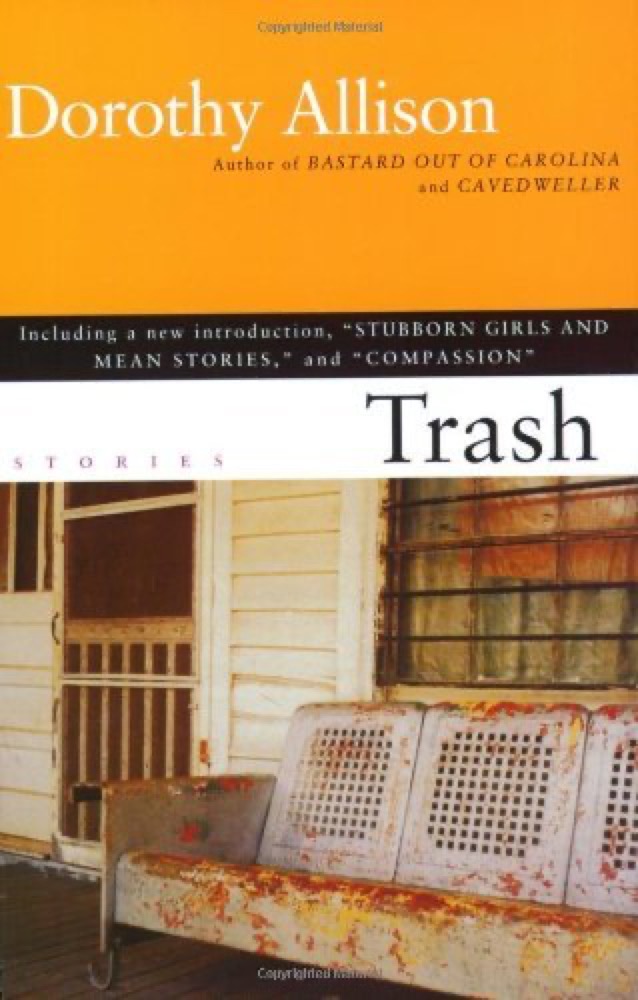 Trash
Trash
 The Argonauts
 Like Streams to the Ocean: Notes on Ego, Love, and the Things That Make Us Who We Are
 Body Work: The Radical Power of Personal Narrative
 The Cost of Living: A Working Autobiography
 The Chronology of Water
 Two or Three Things I Know for Sure
 In the Dream House
 This Bridge Called My Back: Writings by Radical Women of Color
 Blueberries: Essays Concerning Understanding
 Sister Outsider: Essays and Speeches
 The Journals of Sylvia Plath
 In Search of Our Mothers' Gardens: Womanist Prose
 Recollections of My Nonexistence: A Memoir
 The Golden Notebook
 Notes To Self
 The Cancer Journals
 Heavy
Heavy
 Dust Tracks on a Road
 The House of Hidden Meanings
 The Source of Self-Regard: Selected Essays, Speeches, and Meditations
 The Story of the Lost Child
 I Love Dick
 Heart Berries
 Where Am I Now?
 Close to the Knives: A Memoir of Disintegration
 How We Fight For Our Lives
 The Folded Clock: A Diary
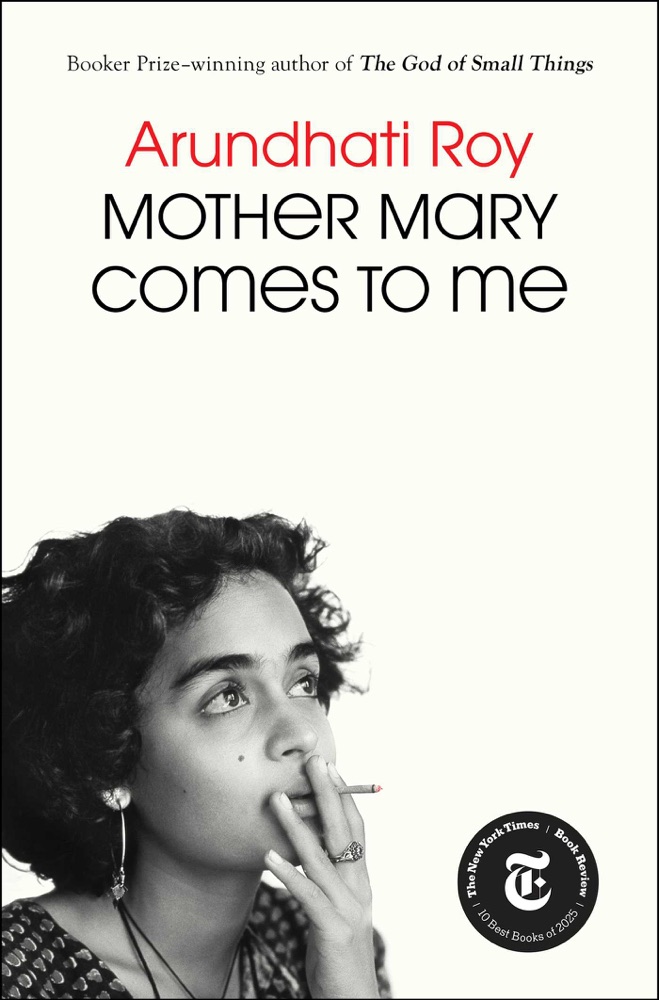 Mother Mary Comes to Me
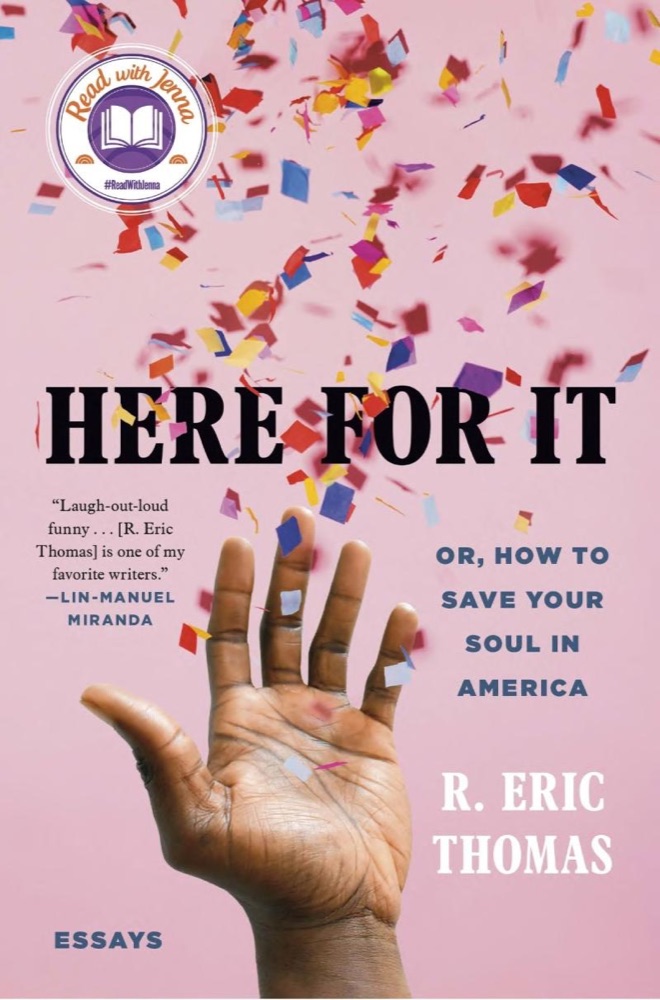 Here for It; Or, How to Save Your Soul in America: Essays
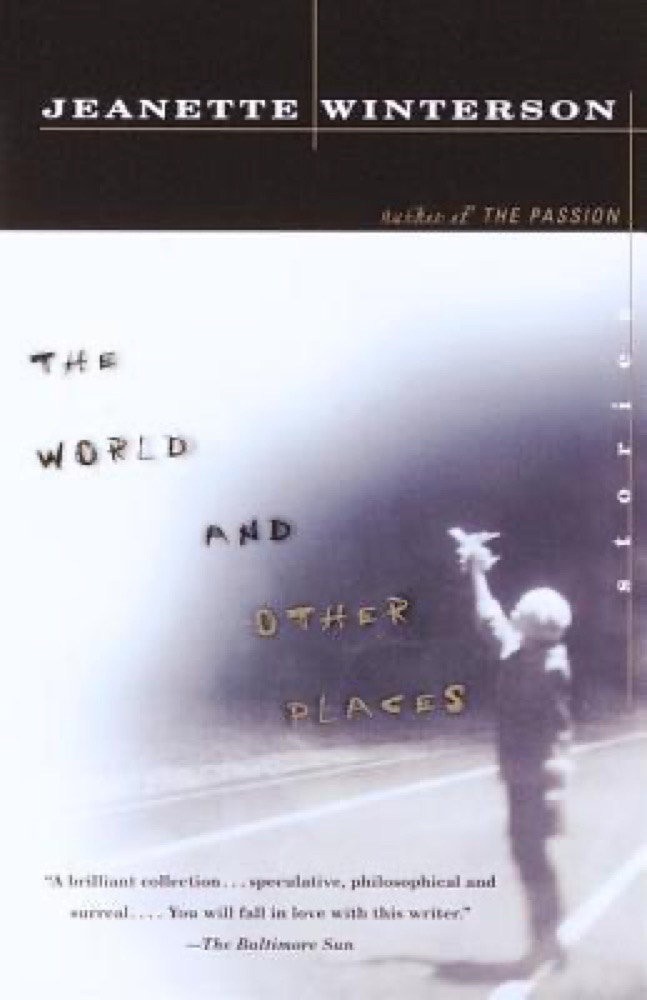 The World and Other Places: Stories
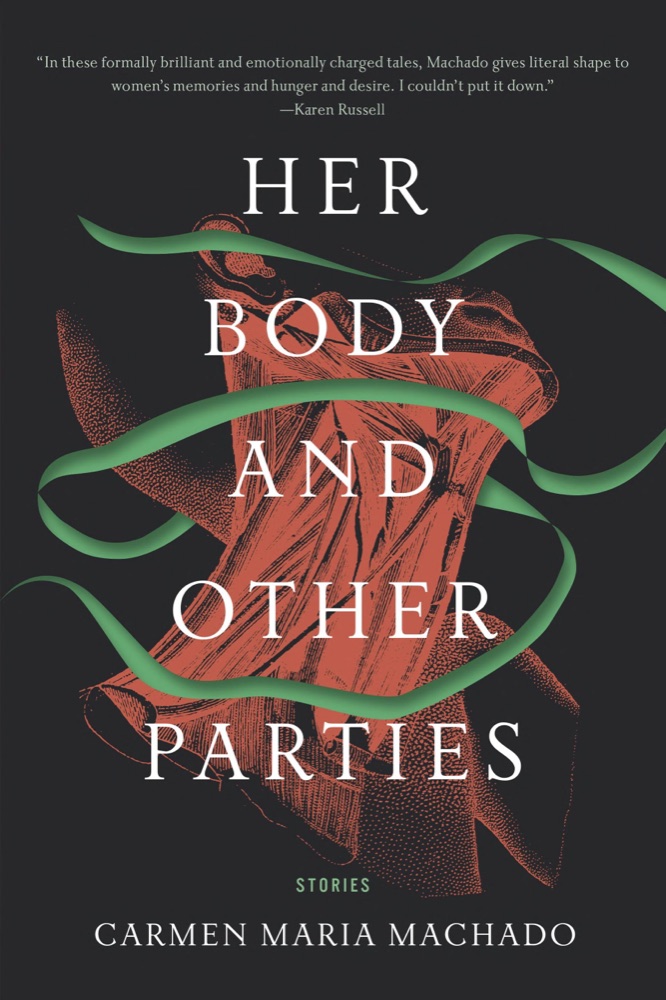 Her Body and Other Parties
 Girls Can Kiss Now: Essays
 Dear Senthuran: A Black Spirit Memoir
 The Girl Who Smiled Beads: A Story of War and What Comes After
 Stone Butch Blues
 Old Babes in the Wood: Stories
 White
White
 The Diary of Anaïs Nin, Vol. 1: 1931-1934
 All This Could Be Different
 All Fours
 The Confessions of Frannie Langton
 A Little Devil in America: Notes in Praise of Black Performance
 Fear of Flying
 One's Company
 Trick Mirror: Reflections on Self-Delusion
 Good Morning, Destroyer of Men's Souls: A Memoir of Women, Addiction, and Love
 How to Write an Autobiographical Novel
 Giving Up the Ghost
 Hot Milk
 The Crane Wife: A Memoir in Essays
 Make It Scream, Make It Burn
 All My Knotted-Up Life: A Memoir
 Notes of a Crocodile
 Unorthodox: The Scandalous Rejection of My Hasidic Roots
 Things I Don't Want to Know
 Things I've Been Silent About
 An Unnecessary Woman