
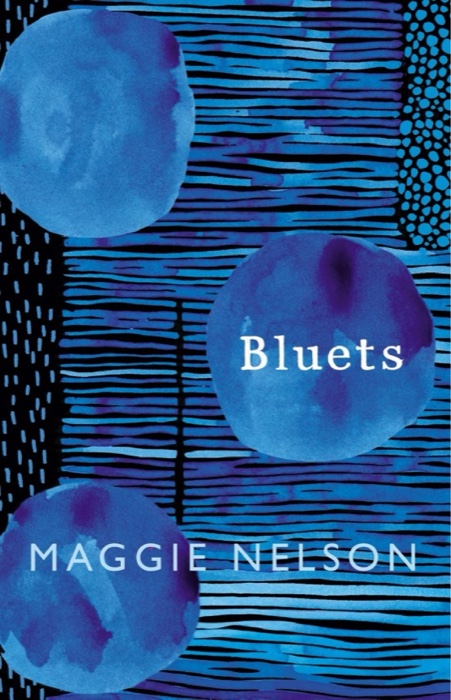
 Bluets
Quotes from the Book
…the world doesn’t exist to amplify or exemplify our own preexisting tastes, values, or predilections. It simply exists. We don’t have to like all of it, or remain mute in the face of our discontent. But there’s a difference between going to art with the hope that it will reify a belief or value we already hold, and feeling angry or punitive when it doesn’t, and going to art to see what it’s doing, what’s going on, treating it as a place to get “the real and irregular news of how others around [us] think and feel,” as Eileen Myles once put it.
3
Because we tend--often correctly--to associate unfreedom with the presence of oppressive circumstances that we can and should work to change, it makes sense that we might instinctively treat the knot of freedom and unfreedom as a source of perfidy and pain. To expose how domination disguises itself as liberation, we become compelled to pull the strands of the knot apart, aiming to extricate the emancipatory from the oppressive.
2
Philosophers of freedom were mainly, and understandably, concerned with how humans would escape the injustice, oppression, inequality, or even uniformity foisted on them by other humans or human-made systems. Geological time and the chronology of human histories remained unrelated. This distance between the two calendars, as we have seen, is what climate scientists now claim has collapsed. The period I have mentioned, from 1750 to now, is also the time when human beings switched from wood and other renewable fuels to large-scale use of fossil fuel—first coal and then oil and gas. The mansion of modern freedoms stands on an ever-expanding base of fossil-fuel use.
2
This is one of the things I’ve learned about happiness: when you feel it, it’s good to say so. That way, if and when you say later in depression or despair, “I’ve just never been happy,” there will be a trail of audible testimony in your wake indicating otherwise.
2
We live, after all, in the present: the present is inevitably the context for our reaction and response, and it matters. Yet one of art’s most compelling features is how it showcases the disjuncts between the time of composition, the time of dissemination, and the time of consideration—disjuncts that can summon us to humility and wonder. Such temporal amplitude understandably falls out of favor in politically polarized times, in which the pressure to make clear “which side you’re on” can be intense. New attentional technologies (aka the internet, social media) that feed on and foster speed, immediacy, reductiveness, reach, and negative affect (such as paranoia, anger, disgust, distress, fear, and humiliation) exacerbate this pressure.
2
{Freedom} is certainly not the right to own the economic, social, political, or cultural capital in order to dominate others and trade their happiness in a monopolistic market. Freedom is the process by which you develop a practice for being unavailable for servitude. -Avery F Gordon paraphrasing Toni Cade Bambara p.
2
Is what my son and I are doing part of that ending, even if it feels like a beginning to both of us? Is there any new beginning that doesn't already contain the seeds of its end? "When you give birth to a child, if you really want to cling to life, you should not cut the umbilical cord as he is born," writes Trungpa. "Either you are going to witness your child's death or the child is going to witness your death. Perhaps this is a very grim way of looking at life, but still it is true." Utterly unbearable, utterly ordinary.
1
Nearly every time we go to Travel Town together, I think, I've never been happier in all my life. Sometimes I say this aloud, be it to him or myself or the uncaring air. This is one of the things I've learned about happiness: when you feel it, it's good to say so. That way, if and when you say later in depression or despair, "I've just never been happy," there will be a trail of audible testimony in your wake indicating otherwise.
1
As we think, we might remember that it matters not only with whom and what we choose to think; it also matters what spirit we choose to think with.
1
Nothing stays avant-garde forever; you have to keep moving.
1
The reparative turn, as applied to art, is in many ways a continuation of the orthopedic aesthetic, with the difference being that the twentieth-century model imagined the audience as numb, constricted, and in need of being awakened and freed (hence, an aesthetics of shock), whereas the twenty-first-century model presumes the audience to be damaged, in need of healing, aid, and protection (hence, an aesthetics of care).
1
I’ve long had reservations about the emancipatory rhetoric of past eras, especially the kind that treats liberation as a one-time event or event horizon. Nostalgia for prior notions of liberation—many of which depend heavily upon mythologies of revelation, violent upheaval, revolutionary machismo, and teleological progress—often strikes me as not useful or worse in the face of certain present challenges, such as global warming.
1
...the history of psychology does not exactly fill me with faith in its teleological progress. p. 204
1
Even under the best of circumstances, sexual experience does not – indeed cannot – transfer in any simple fashion form one generation or one body to another. Each of us has our own particular body, mind, history, and soul to get to know, with all our particular kinks, confusions, traumas, aporias, legacies, orientations, sensitivities, abilities, and drives. We do not get to know these features in a single night, a year, or even a decade. Nor is whatever knowledge we gain likely to hold throughout the course of a life (or even a relationship, or a single encounter). None of us is born knowing how to manage our sexual drives and disappointments; none of us is born knowing how to content with the various limitations, persecutions, and allowances of sexual freedom society has prepared for us prior to our arrival. We can work against noxious norms and laws that curtail sexual and reproductive freedom; we can create generations of people less likely to be injured, persecuted, or driven to self-harm on account of gender or sexuality; we can educate each other about mutuality and communication, the location of the clitoris, and difference beyond a gender binary; we can challenge ourselves to accept “benign sexual variation”…: these are a few good starts. But each sexual exchange – particularly once performed with partners you haven't repeatedly had sex with, but even then – is going to resemble a certain wandering into the woods, because of the fundamental unknowability of ourselves and each other, and the open question of what any new interaction might summon.
The stakes of pitting disinhibition and freedom against inhibition and beauty extend far beyond the world of art. As I write, the alt-ring is waging what Wendy Brown has described as “a brilliant… campaign” to associate “anti-egalitarian, anti-immigrant, and anti-responsibility, sentiments with freedom and fun,” while casting “left and liberal commitments as repressive, regulatory, grim, and policing.” This campaign seduces its would-be converts with the promise of release from responsibilities of all kinds, be it “for the self, for others, for the world, for a social compact with others, for a social compact with the future, in the name of a certain kind of political and social disinhibition”. Brown’s warning – which has deepened in urgency over the time I've spent writing this book – is that the fusion of this libidinal “freedom and fun” with a “new authoritarian statism” has formidable velocity and power, with their particular capacity to appeal to “the young, the immature, the reckless and the wounded.” This fusion, Brown says, lands us in “deeper trouble than we knew,” and requires that we “think really hard about what strategies would most successfully counter” it. (quote from a March 2017b talk titled “Populism, Authoritarianism, and Making Fascism Fun Again”, Brown gave at the UCSD International Institute.
If the current reckoning underway in the art world about structural racism, inequitable opportunity, toxic philanthropy, art washing, community relations, restitution, and divestment is as thorough and transformative as it should be, a lot of people are going to feel – and be – disturbed and displaced. This seems right. My hope is that we can undertake such a reckoning while also remembering that we go to art – or, at least, many of us went to at some point – precisely to get away from the dead-end binaries of like/don't like, denunciation/coronation – what Sedgwick called the “good dog/bad dog rhetoric of puppy obedience school all too easily available.
Watch on YouTube
About Maggie Nelson
We have collected 99 quotes from 4 books by Maggie Nelson on BookQuoters.
More about the author →More by Maggie Nelson
About the book
Named a Most Anticipated/Best Book of the Month NPR * USA Today * Time * Washington Post * Vulture * Women’s Wear Daily * Bustle * LitHub * The Millions * Vogue * Nylon * Shondaland * Chicago Review of Books * The Guardian * Los Angeles Times * Kirkus * Publishers Weekly
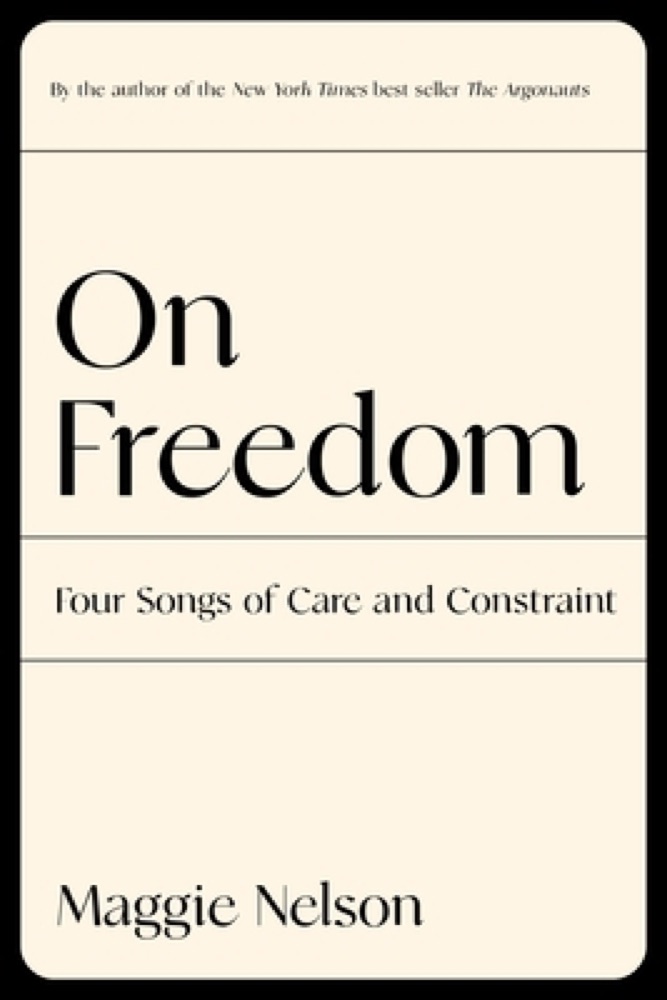
So often deployed as a jingoistic, even menacing rallying cry, or limited by a focus on passing moments of liberation, the rhetoric of freedom both rouses and repels. Does it remain key to our autonomy, justice, and well-being, or is freedom’s long star turn coming to a close? Does a continued obsession with the term enliven and emancipate, or reflect a deepening nihilism (or both)? On Freedom examines such questions by tracing the concept’s complexities in four distinct art, sex, drugs, and climate.
Drawing on a vast range of material, from critical theory to pop culture to the intimacies and plain exchanges of daily
Book details
- First published
- 2021
- Author
- Maggie Nelson
- Genre
- Nonfiction
- Goodreads rating
- 3.99 (3k ratings)
The buzz
- The New York TimesReview in The New York Timesprofessional review (via Book Marks)
- The Washington PostReview in The Washington Postprofessional review (via Book Marks)
- The GuardianReview in The Guardianprofessional review (via Book Marks)
- NPRReview in NPRprofessional review (via Book Marks)
- The Times Literary SupplementReview in The Times Literary Supplementprofessional review (via Book Marks)
- The Boston GlobeReview in The Boston Globeprofessional review (via Book Marks)
Keep reading
 The Source of Self-Regard: Selected Essays, Speeches, and Meditations
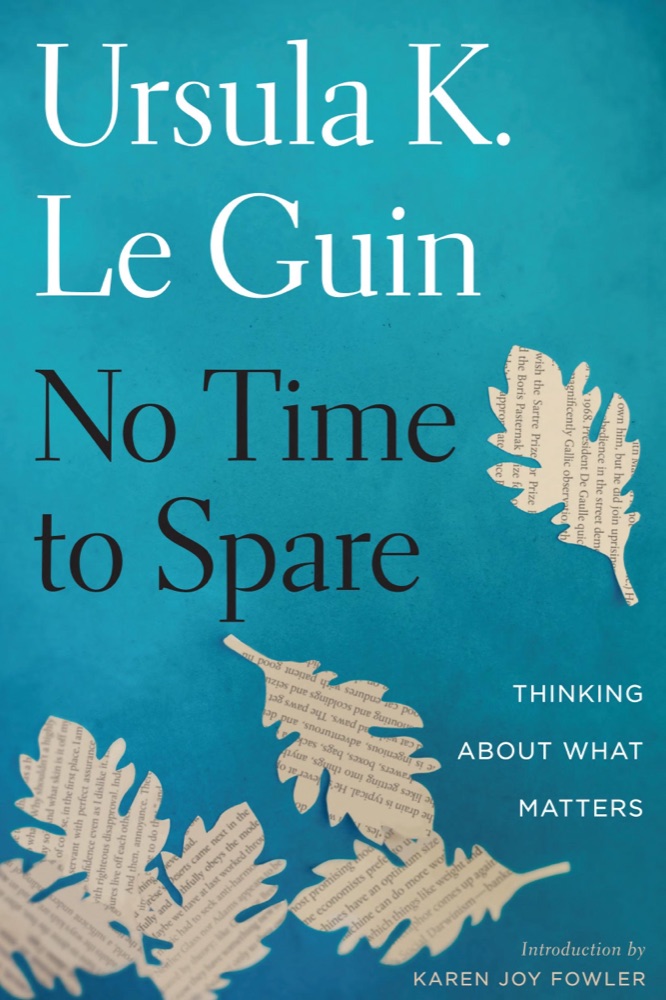 No Time To Spare: Thinking About What Matters
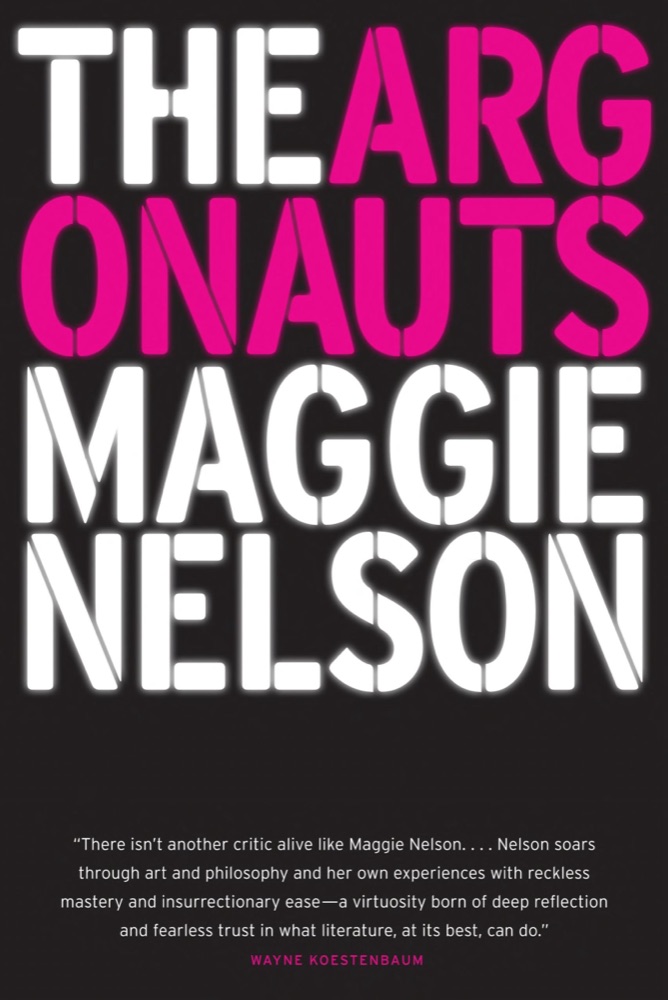 The Argonauts
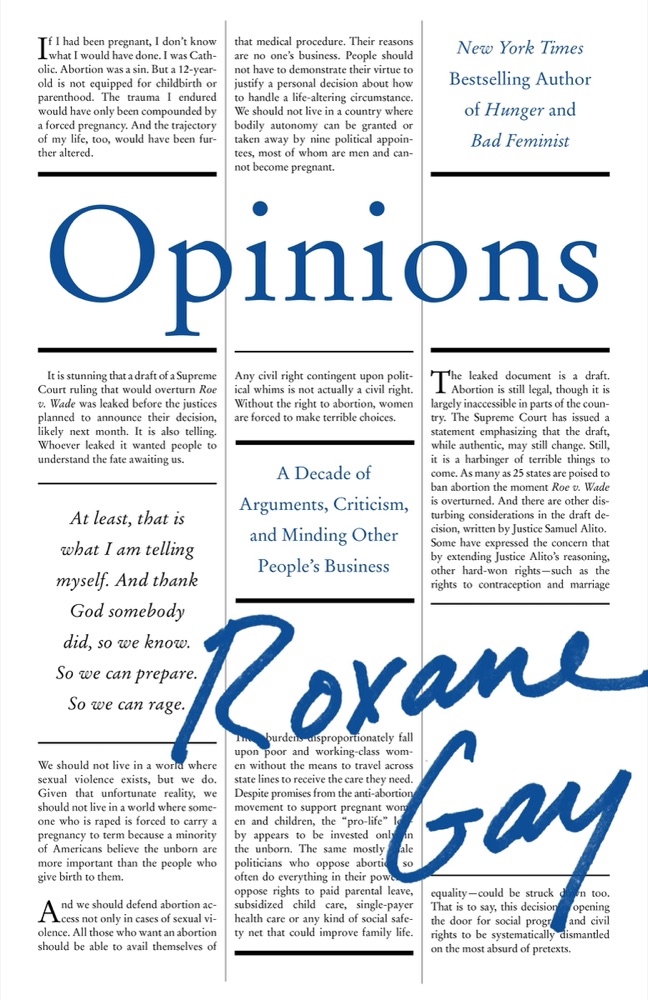 Opinions: A Decade of Arguments, Criticism, and Minding Other People’s Business
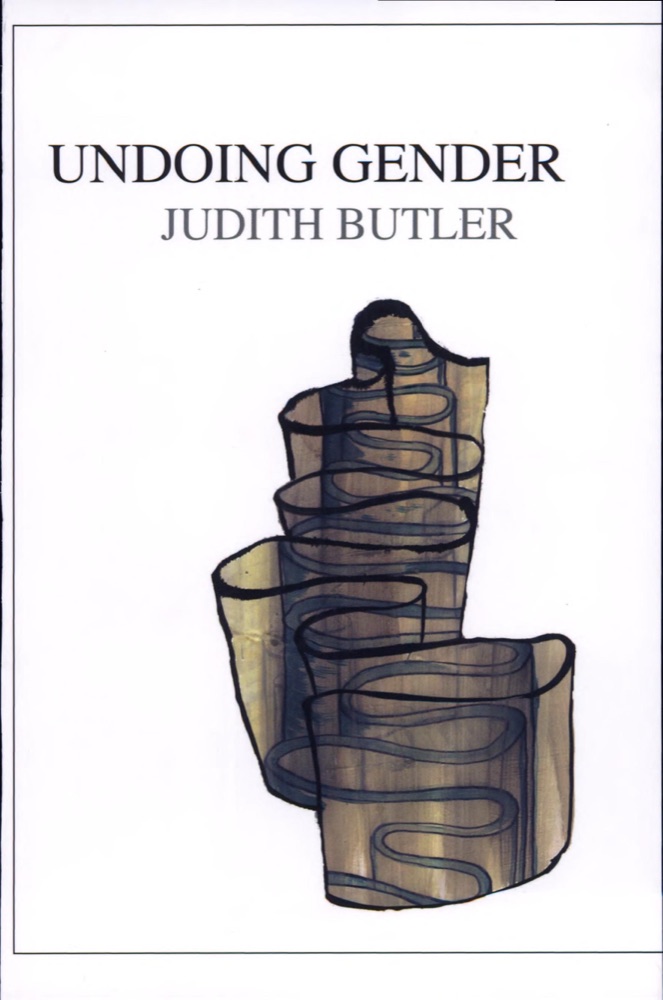 Undoing Gender
 The Courage to Create
 Emergent Strategy: Shaping Change, Changing Worlds
 On Connection
 How to Stay Sane in an Age of Division
 This Here Flesh: Spirituality, Liberation, and the Stories That Make Us
 Consider the Lobster and Other Essays
 Trick Mirror: Reflections on Self-Delusion
 Freedom from the Known
 Asymmetry
 The Wave in the Mind: Talks and Essays on the Writer, the Reader and the Imagination
 A Language Older Than Words
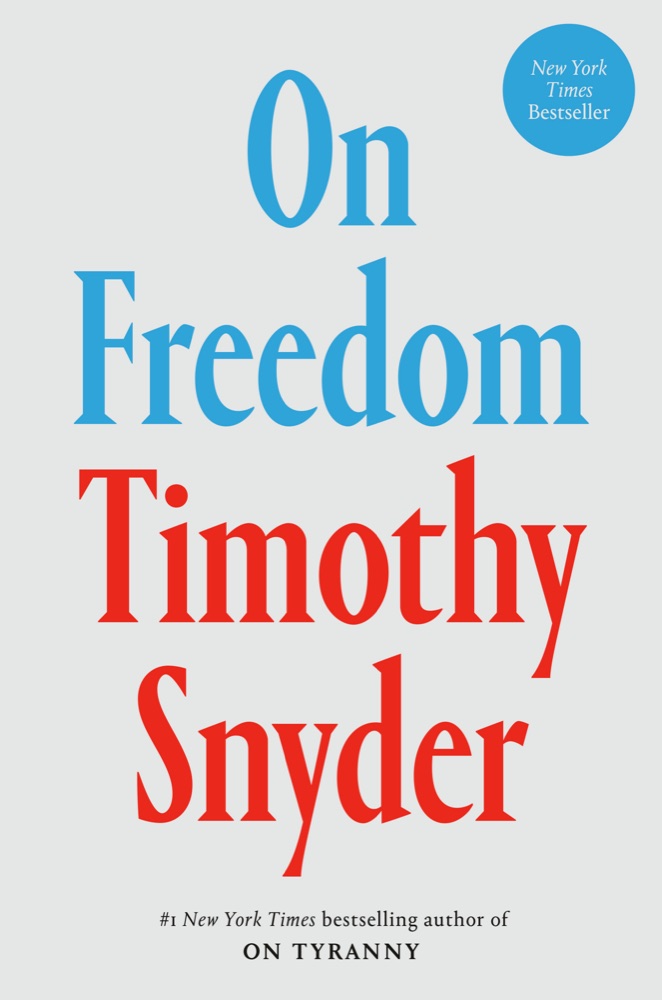 On Freedom
 The Wisdom of Insecurity: A Message for an Age of Anxiety
 Burning Questions: Essays and Occasional Pieces, 2004 to 2021
 When I Was a Child I Read Books
 On the Other Side of Freedom: The Case for Hope
 The Master's Tools Will Never Dismantle the Master's House
 Revolution
 Think: A Compelling Introduction to Philosophy
 What If This Were Enough?: Essays
 Becoming Wise: An Inquiry into the Mystery and Art of Living
 The Art of the Commonplace: The Agrarian Essays
 Stories of Your Life and Others
 Living on Your Own Terms: What Is Real Rebellion?
 Walden Two
 Anti-Oedipus: Capitalism and Schizophrenia
 Sister Outsider: Essays and Speeches
 The Mother of All Questions
 Saving Time: Discovering a Life Beyond the Clock
 Daybreak: Thoughts on the Prejudices of Morality
 Psych: The Story of the Human Mind
 Everything Is F*cked: A Book About Hope
 Living Beautifully with Uncertainty and Change
 At the Existentialist Café
 Finding Meaning in the Second Half of Life: How to Finally, Really Grow Up
 White
White
 A Circle of Quiet
 Total Freedom: The Essential Krishnamurti
 A Mind Spread Out on the Ground
 When Women Were Dragons
 Kitchen Table Wisdom: Stories that Heal
 Hope in the Dark: The Untold History of People Power
 Hourglass: Time, Memory, Marriage
 Why Be Happy When You Could Be Normal?
 Make It Scream, Make It Burn
 Untimely Meditations
 Silence: In the Age of Noise
 Inciting Joy: Essays
 Monsters: A Fan's Dilemma
 The Second Mountain
 Things I've Been Silent About
 The Color of Everything: A Journey to Quiet the Chaos Within
 Creativity: Flow and the Psychology of Discovery and Invention
 Girl with Curious Hair
 Maps of Meaning: The Architecture of Belief