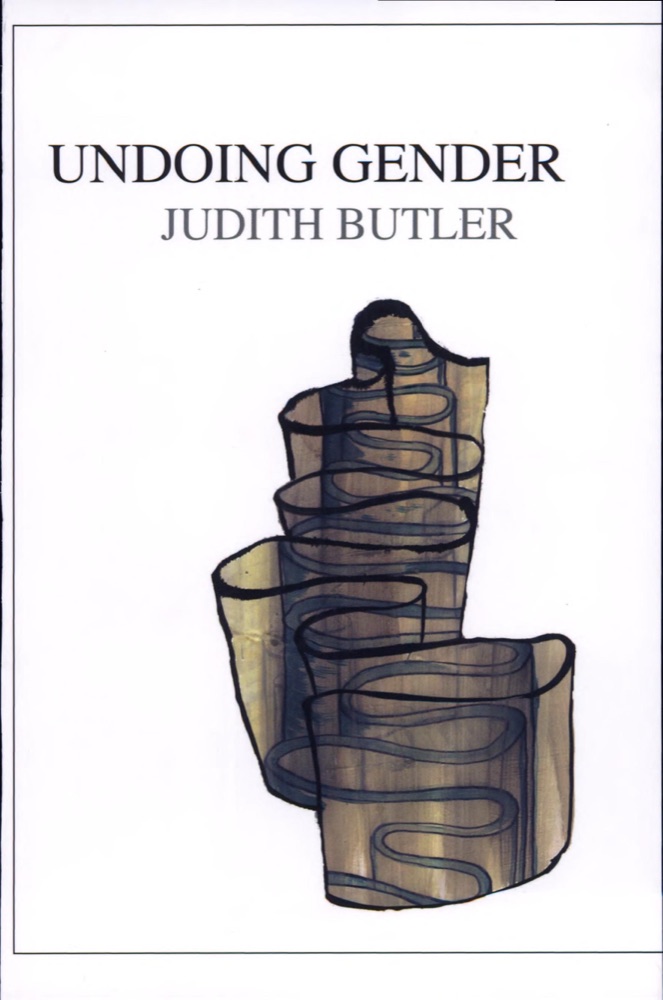

 Gender Trouble: Feminism and the Subversion of Identity
Quotes from the Book
Let's face it. We're undone by each other. And if we're not, we're missing something. If this seems so clearly the case with grief, it is only because it was already the case with desire. One does not always stay intact. It may be that one wants to, or does, but it may also be that despite one's best efforts, one is undone, in the face of the other, by the touch, by the scent, by the feel, by the prospect of the touch, by the memory of the feel. And so when we speak about my sexuality or my gender, as we do (and as we must), we mean something complicated by it. Neither of these is precisely a possession, but both are to be understood as modes of being dispossessed, ways of being for another, or, indeed, by virtue of another.
201
Possibility is not a luxury; it is as crucial as bread.
75
What is most important is to cease legislating for all lives what is liveable only for some, and similarly, to refrain from proscribing for all lives what is unlivable for some.
29
I'm no great fan of the phallus, and have made my own views known on this subject before, so I do not propose a return to a notion of the phallus as the third term in any and all relations of desire.
9
Let’s face it. We’re undone by each other. And if we’re not, we’re missing something. If this seems so clearly the case with grief, it is only because it was already the case with desire. One does not always stay intact. It may be that one wants to, or does, but it may also be that despite one’s best efforts, one is undone, in the face of the other, by the touch, by the scent, be the feel, by the prospect of the touch, by the memory of the feel.
9
To be called a copy, to be called unreal, is thus one way in which one can be oppressed. But consider that it is more fundamental than that. For to be oppressed means that you already exist as a subject of some kind, you are there as the visible and oppressed other for the master subject as a possible or potential subject. But to be unreal is something else again. For to be oppressed one must first become intelligible. To find that one is fundamentally unintelligible (indeed, that the laws of culture and of language find one to be an impossibility) is to find that one has not yet achieved access to the human. It is to find oneself speaking only and always as if one were human, but with the sense that one is not. It is to find that one's language is hollow, and that no recognition is forthcoming because the norms by which recognition takes place are not in one's favour.
5
I may feel that without some recognizability I cannot live. But I may also feel that the terms by which I am recognized make life unlivable. This is the juncture from which critique emerges, where critique is understood as an interrogation of the terms by which life is constrained in order to open up the possibility of different modes of living; in other words, not to celebrate difference as such but to establish more inclusive conditions for sheltering and maintaining life that resists models of assimilation.
3
Democracy does not speak in unison; its tunes are dissonant, and necessarily so. It is not a predictable process; it must be undergone, as a passion must be undergone. It may also be that life itself becomes foreclosed when the right way is decided in advance, or when we impose what is right for everyone, without finding a way to enter into community and discover the "right" in the midst of cultural translation. It may be that what is "right" and what is "good" consist in staying open to the tensions that beset the most fundamental categories we require, to know unknowingness at the core of what we know.
3
Moreover, fantasy is part of the articulation of the possible; it moves us beyond what is merely actual and present into a realm of possibility, the not yet actualized or the not actualizable. The struggle to survive is not really separable from the cultural life of fantasy, and the foreclosure of fantasy-through censorship, degradation, or other means-is one strategy for providing for the social death of persons. Fantasy is not the opposite of reality; it is what reality forecloses, and, as a result, it defines the limits of reality, constituting it as its constitutive outside. The critical promise of fantasy, when and where it exists, is to challenge the contingent limits of what will and will not be called reality. Fantasy is what allows us to imagine ourselves and others otherwise; it establishes the possible in excess of the real; it points elsewhere, and when it is embodied, it brings the elsewhere home.
2
An ethical query emerges in light of such an analysis: how might we encounter the difference that calls our grids of intelligibility into question without trying to foreclose the challenge that the difference delivers? What might it mean to learn to live in the anxiety of that challenge, to feel the surety of one’s epistemological and ontological anchor go, but to be willing, in the name of the human, to allow the human to become something other than what it is traditionally assumed to be? This means that we must learn to live and to embrace the destruction and rearticulation of the human in the name of a more capacious and, finally, less violent world, not knowing in advance what precise form our humanness does and will take. It means we must be open to its permutations, in the name of nonviolence. As Adriana Cavarero points out, paraphrasing Arendt, the question we pose to the Other is simple and unanswerable: “who are you?” The violent response is the one that does not ask, and does not seek to know. It wants to shore up what it knows, to expunge what threatens it with not-knowing, what forces it to reconsider the presuppositions of its world, their contingency, their malleability. The nonviolent response lives with its unknowingness about the Other in the face of the Other, since sustaining the bond that the question opens is finally more valuable than knowing in advance what holds us in common, as if we already have all the resources we need to know what defines the human, what its future life might be.
2
I don't think, for instance, that you can invoke a Protestant ethic when it comes to loss. You can't say, "Oh, I'll go through loss this way, and that will be the result, and I'll apply myself to the aks, and I'll endeavor to achieve the resolution of grief that is before me." I think that one is hit by waves, and that one starts out the day with an aim, a project, a plan, and one finds oneself foiled.
1
I am not sure I know when mourning is successful, or when one has fully mourned another human being. I'm certain, though, that it does not mean that one has forgotten the person, or that something comes to take [their] place. I don't think it works that way. I think instead that one mourns when one accepts the fact that the loss one undergoes will be one that changes you, changes you possibly forever, and that mourning has to do with you agreeing to undergo a transformation the full result of which you cannot know in advance. So there is losing, and there is the transformative effect of loss, and this latter cannot be charted or planned.
1
That my agency is riven with paradox does not mean it is impossible. It means only that paradox is the condition of its possibility.
1
El género no es exactamente lo que uno «es» ni tampoco precisamente lo que uno «tiene». El género es el aparato a través del cual tiene lugar la producción y la normalización de lo masculino y lo femenino
[...] we must learn to live and to embrace the destruction and rearticulation of the human in the name of a more capacious and, finally, less violent world, not knowing in advance what precise our form our humanness can and does take. It means we must be open to its permutations, in the name of nonviolence. [...] The necessity of keeping our notion of the human open to a future articulation is essential to the project of international human rights discourse and its politics.
Watch on YouTube
About Judith Butler
We have collected 44 quotes from 2 books by Judith Butler on BookQuoters.
More about the author →More by Judith Butler
Gender Trouble: Feminism and the Subversion of Identity
About the book
Undoing Gender constitutes Judith Butler's recent reflections on gender and sexuality, focusing on new kinship, psychoanalysis and the incest taboo, transgender, intersex, diagnostic categories, social violence, and the tasks of social transformation. In terms that draw from feminist and queer theory, Butler considers the norms that govern and fail to govern gender and sexuality as they relate to the constraints on recognizable personhood. The book constitutes a reconsideration of her earlier view on gender performativity from Gender Trouble. In this work, the critique of gender norms is clearly situated within the framework of human persistence and survival. And to "do" one's gender in certain ways sometimes implies "undoing" dominant notions of personhood. She writes about the "New Gender Politics" that has emerged in recent years, a combination of movements concerned with transgender,
Book details
- First published
- 2004
- Author
- Judith Butler
- Genre
- Nonfiction
- Goodreads rating
- 4.11 (3k ratings)
Keep reading
 The Source of Self-Regard: Selected Essays, Speeches, and Meditations
 The Argonauts
 On Freedom: Four Songs of Care and Constraint
 Living a Feminist Life
 Maps of Meaning: The Architecture of Belief
 I Hope We Choose Love: A Trans Girl's Notes from the End of the World
 Finite and Infinite Games: A Vision of Life as Play and Possibility
 Myths to Live By
 Emergent Strategy: Shaping Change, Changing Worlds
 Sister Outsider: Essays and Speeches
 The Master's Tools Will Never Dismantle the Master's House
Gender Trouble: Feminism and the Subversion of Identity
The Master's Tools Will Never Dismantle the Master's House
Gender Trouble: Feminism and the Subversion of Identity
 This Here Flesh: Spirituality, Liberation, and the Stories That Make Us
 Love's Executioner and Other Tales of Psychotherapy
 Love and Will
 The Madness of Crowds: Gender, Race and Identity
 Daybreak: Thoughts on the Prejudices of Morality
 The Human Condition
 Far from the Tree: Parents, Children, and the Search for Identity
 The Mother of All Questions
 Literary Theory: An Introduction
 The Perennial Philosophy
 Think: A Compelling Introduction to Philosophy
 Truth and Method
 Freedom from the Known
 After Virtue
 Kitchen Table Wisdom: Stories that Heal
 See No Stranger: A Memoir and Manifesto of Revolutionary Love
 Opinions: A Decade of Arguments, Criticism, and Minding Other People’s Business
 Redefining Realness: My Path to Womanhood, Identity, Love & So Much More
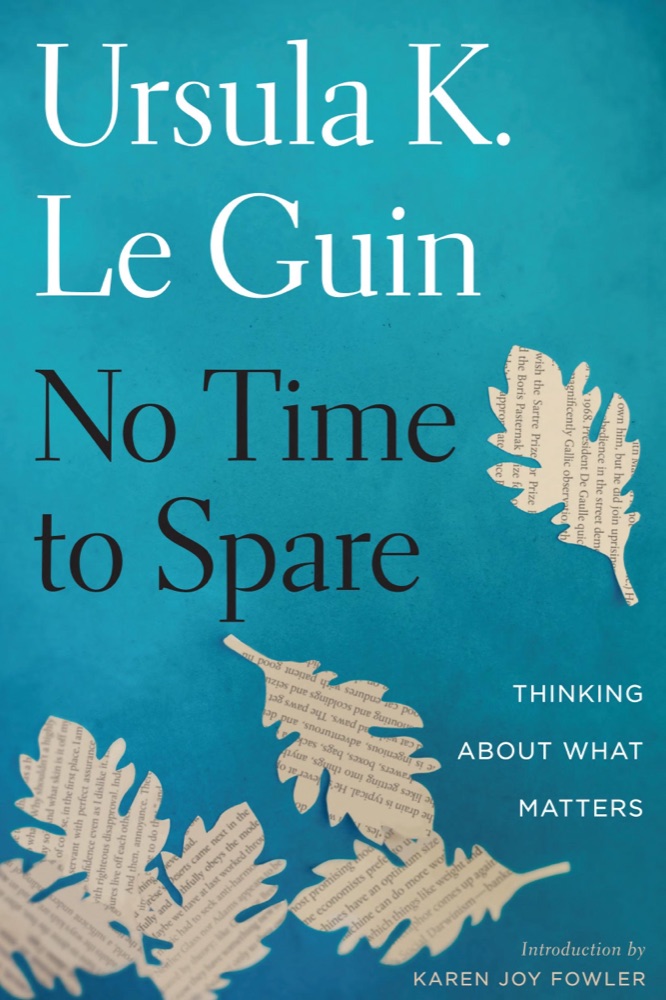 No Time To Spare: Thinking About What Matters
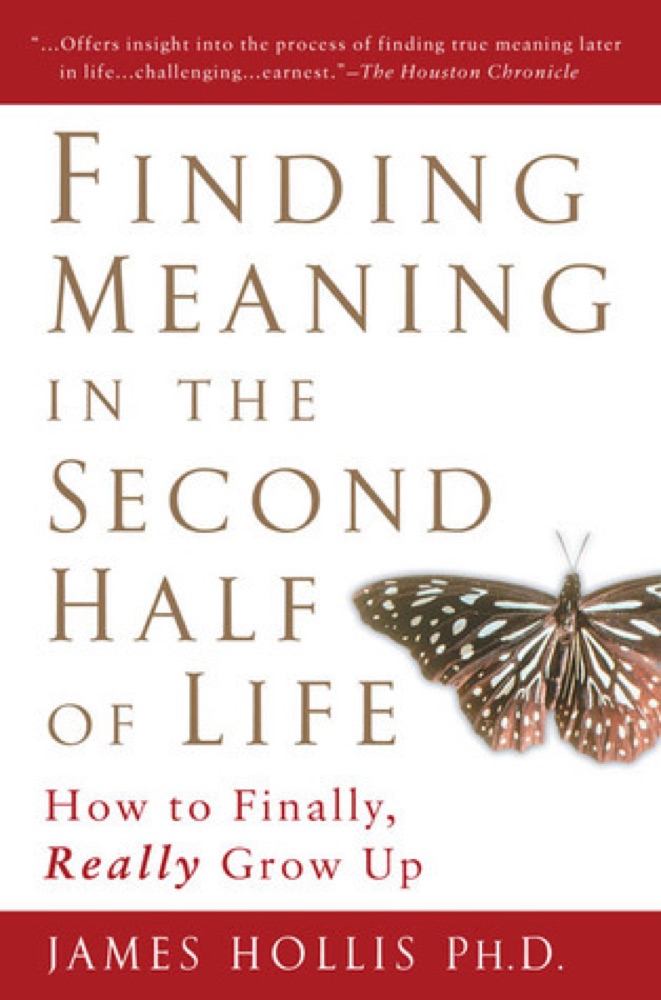 Finding Meaning in the Second Half of Life: How to Finally, Really Grow Up
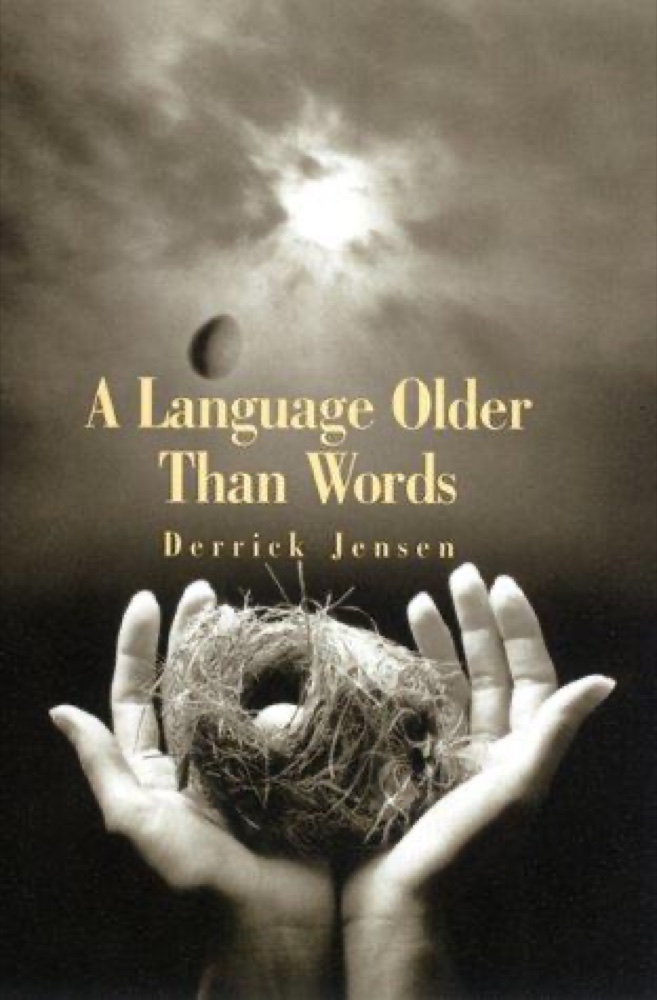 A Language Older Than Words
 Necessary Losses: The Loves, Illusions, Dependencies, and Impossible Expectations That All of Us Have to Give Up in Order to Grow
 The Fourth Way
 Total Freedom: The Essential Krishnamurti
 The Second Mountain
 The Varieties of Religious Experience
 The Will to Power
 The Wisdom of Insecurity: A Message for an Age of Anxiety
 Missing Out: In Praise of the Unlived Life
 The Art of the Commonplace: The Agrarian Essays
 The Ethics of Ambiguity
 Why I Am Not a Feminist: A Feminist Manifesto
 Identity
 Anti-Oedipus: Capitalism and Schizophrenia
 Twilight of the Idols/The Anti-Christ
 Toward a Psychology of Being
 The Sane Society
 On Connection
 Whose Story Is This? Old Conflicts, New Chapters
 Stories of Your Life and Others
 The Politics of Experience/The Bird of Paradise
 The Book: On the Taboo Against Knowing Who You Are
 The Art of Being
 The Divided Self: An Existential Study in Sanity and Madness
 Figuring
 Living on Your Own Terms: What Is Real Rebellion?
 Existential Psychotherapy