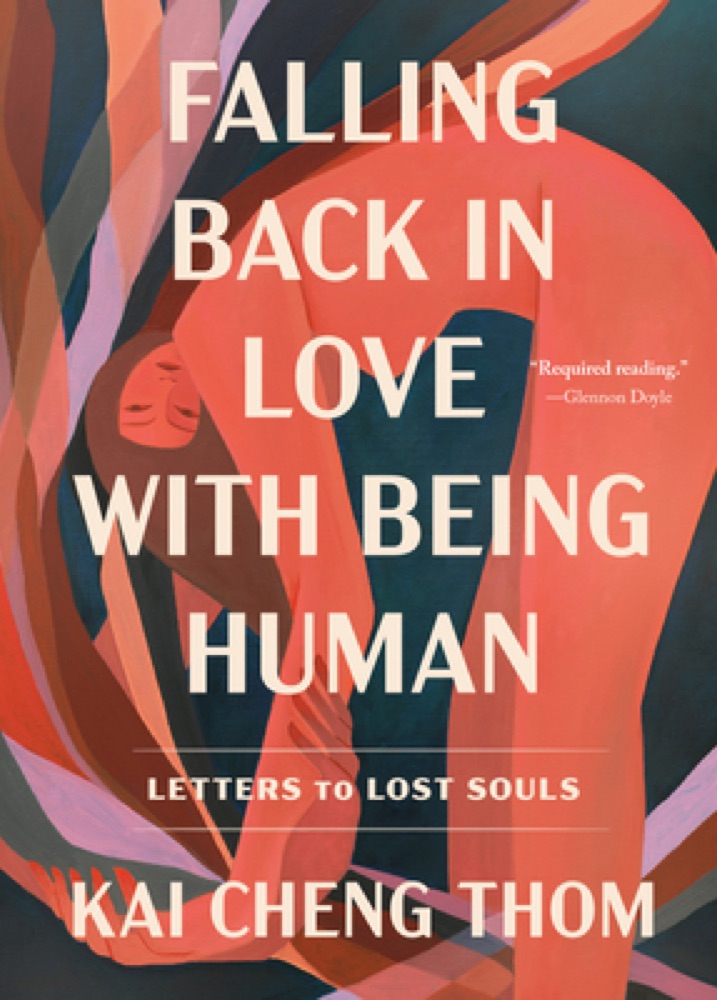
 Falling Back in Love with Being Human: Letters to Lost Souls
Quotes from the Book
Models of justice that centre punishment do not prevent abuse but only react to it, and they don't offer a pathway toward healing for either perpetrators or survivors. Nor do they acknowledge the dual reality that a great many perpetrators are themselves survivors.
7
When you're a child trapped in a situation of physical or psychological deprivation, you learn shame as an efficient, elegant mechanism of survival: shame simultaneously shields you from the reality that danger is our of your control (since the problem is not that you're unloved and deprived; it's that you're Bad) and prevents you from doing or saying anything challenging that might provoke a threat.
7
Safety is, I believe, an inherently classed, raced, and gendered experience that frequently runs the risk of being used for regressive ends—ironically, for restricting the freedoms of the vulnerable, those who are never really safe. Often, we see the call for safety actually reinforce the power of oppressive institutions, like the police and the prison system, in our lives. When we choose safety over liberation, our movements fail.
5
When you live in a community of queers, anarchists, & activists, crisis is the baseline and stability an outlier.
4
We need to ask ourselves: How does labelling depression a physical ailment absolve us as a society of culpability for suicide? How does immediately jumping into a medicalized dialogue around individual mental health allow us to avoid discussing the fact that we have created social environments that make us suicidal? Suicide is always a tragedy, but it is also often a message, a message that points to injustice and suffering in the world that has everything to do with the way we treat each other. When we look at anyone’s suicide and say, “That happened because of a mental illness. This person died of illness,” we are also saying that person did not die of abuse, of neglect, of isolation, of horrifying individual circumstances, of social oppression, of the fact that just living in this place and this time is very often an incredibly difficult thing.
3
This is why the concept of chosen family is woven so deeply into the fabric of queer community culture: where the bonds of blood have failed us time and again, we hope that our friends, lovers, and mentors will fill the void. We dream of relationships that stand against the test of time and gay drama, for better or worse, in sickness and in health. Shut out of the heteronormative institutions of marriage and the nuclear family for most of history, queers have traditionally turned to more daring and creative notions of kinship and sharing the future.
2
That in a loving place, I am able to hear a friend disagree with me and know that they still care for me. That I can receive their advice and know that I don't have to follow it. That there is enough trust between us. I don't want to be validated. I want to be loved.
1
Heteronormative society is pathogenic to queers and queer community because it hates us, it is violent to us, and it makes our stories invisible. Heteronormative society traumatizes us by demonizing our sexual expression—and so, we come to hate our sexual expression, our sexual identities, our sexual selves. We pass this hatred from one generation of queers to another in the form of unsafe and non-consensual sex practices, in slut-shaming and sex negativity and sexual aggression. Society sexually traumatizes us, so we sexually traumatize one another.
Transition is a fundamental right that all trans people, of all ages, should have access to. But I believe that transition, ideally, should be offered to us as one option of many for bodily autonomy and self-expression. It should not be something that we have to do to make ourselves more acceptable to others, or to hide our transness from the world.
I was not choosing between being trans and being Chinese. What I chose was the strength of my family’s values—loyalty, lineage, the fulfilment of duty, gratitude to one’s elders—and the magic of queerness: transformation, change, adaptation, and resiliency.
In the past, when I have said that I wanted to die, what I meant was that I wanted someone to offer me a way to have a different life.
When we lose faith in the things that matter, it is easy to turn to anger. Anger helps us survive when survival seems impossible.
It's hard to walk with ghosts on your shoulders, but when you learn to listen to what they're saying, you realize that they're telling the story of who you are.
I do not have much faith in justice, but I have no choice but to believe in it. The other option is nihilism--total lack of faith in humanity--which I reject. We must reject nihilism because that way lies fascism. We must reject despair and embrace healing, slow and imperfect though it may be, and turn instead to love--love strong enough to live without faith. I am trying to embrace my own healing. I am trying to love my own painful, wounded life. As adrienne maree brown suggests, I am trying to embrace growth and constant transformation, like a flower growing in poisonous radiation. I am trying to let love emerge from my traumatized body.
Oppression is rarely, if ever, overthrown through peaceful demonstration alone. Economic and social pressure, as well as direct action and violent protest are all essential parts of revolutionary movements.
When you’re a child trapped in a situation of physical or psychological deprivation, you learn shame as an efficient, elegant mechanism of survival: shame simultaneously shields you from the reality that danger is out of your control (since the problem is not that you’re unloved and deprived; it’s that you’re Bad) and prevents you from doing or saying anything challenging that might provoke a threat.
Watch on YouTube
About Kai Cheng Thom
We have collected 73 quotes from 3 books by Kai Cheng Thom on BookQuoters.
More about the author →More by Kai Cheng Thom
Falling Back in Love with Being Human: Letters to Lost Souls
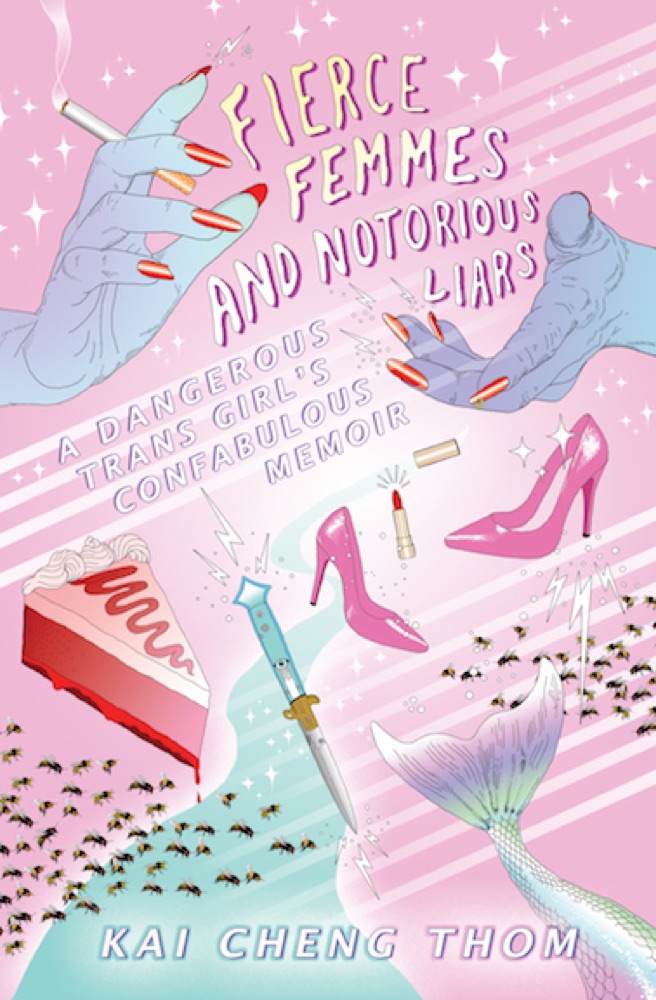 Fierce Femmes and Notorious Liars
About the book
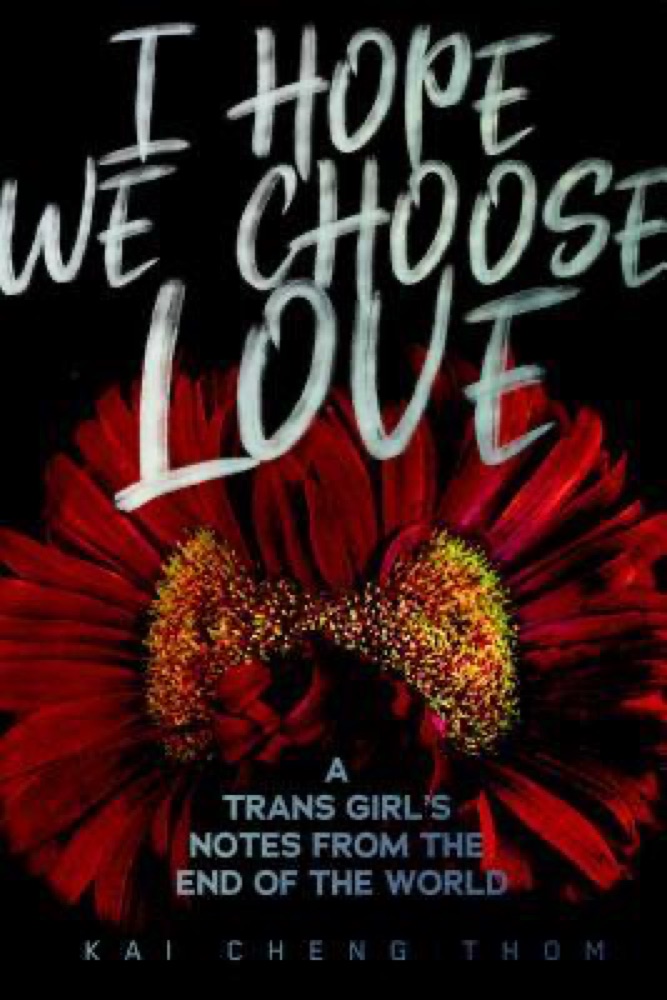
What can we hope for at the end of the world? What can we trust in when community has broken our hearts? What would it mean to pursue justice without violence? How can we love in the absence of faith?
In a heartbreaking yet hopeful collection of personal essays and prose poems, blending the confessional, political, and literary, Kai Cheng Thom dives deep into the questions that haunt social movements today. With the author's characteristic eloquence and honesty, I Hope We Choose Love proposes heartfelt solutions on the topics of violence, complicity, family, vengeance, and forgiveness. Taking its cues from contemporary thought leaders in the transformative justice movement such as adrienne maree brown and Leah Lakshmi Piepzna-Samarasinha, this provocative book is a call for nuance in a time of political polarization, for healing in a time of justice, and for love in an apocalypse.
Book details
- First published
- 2019
- Author
- Kai Cheng Thom
- Genre
- Nonfiction
- Goodreads rating
- 4.40 (3k ratings)
Keep reading
 See No Stranger: A Memoir and Manifesto of Revolutionary Love
 Far from the Tree: Parents, Children, and the Search for Identity
 You Are Your Best Thing: Vulnerability, Shame Resilience, and the Black Experience
 Opinions: A Decade of Arguments, Criticism, and Minding Other People’s Business
 A Burst of Light
 Undoing Gender
 Becoming Human
 On the Other Side of Freedom: The Case for Hope
 When They Call You a Terrorist: A Black Lives Matter Memoir
 Redefining Realness: My Path to Womanhood, Identity, Love & So Much More
 Atlas of the Heart: Mapping Meaningful Connection and the Language of Human Experience
 Sister Outsider: Essays and Speeches
 Emergent Strategy: Shaping Change, Changing Worlds
 This Here Flesh: Spirituality, Liberation, and the Stories That Make Us
 Tomorrow Will Be Different: Love, Loss, and the Fight for Trans Equality
 The Source of Self-Regard: Selected Essays, Speeches, and Meditations
 How to Stay Sane in an Age of Division
 Of Mess and Moxie: Wrangling Delight Out of This Wild and Glorious Life
 Skin: Talking About Sex, Class And Literature
 A History of My Brief Body
Falling Back in Love with Being Human: Letters to Lost Souls
A History of My Brief Body
Falling Back in Love with Being Human: Letters to Lost Souls
 The Mother of All Questions
 The Argonauts
 Miss Major Speaks: Conversations with a Black Trans Revolutionary
 The House of Hidden Meanings
 The Master's Tools Will Never Dismantle the Master's House
 A Mind Spread Out on the Ground
 In the Dream House
 On Freedom: Four Songs of Care and Constraint
 Changes That Heal: How to Understand the Past to Ensure a Healthier Future
 Nonviolent Communication: A Language of Life
 Here for It; Or, How to Save Your Soul in America: Essays
 Why Be Happy When You Could Be Normal?
 Braving the Wilderness
 Aftershocks
 Close to the Knives: A Memoir of Disintegration
 Option B: Facing Adversity, Building Resilience, and Finding Joy
 United: Thoughts on Finding Common Ground and Advancing the Common Good
 Disability Visibility: First-Person Stories from the Twenty-first Century
 Sissy: A Coming-of-Gender Story
 Like Streams to the Ocean: Notes on Ego, Love, and the Things That Make Us Who We Are
 This Bridge Called My Back: Writings by Radical Women of Color
 Talking Back: Thinking Feminist, Thinking Black
 Conflict Is Not Abuse: Overstating Harm, Community Responsibility, and the Duty of Repair
 Any Ordinary Day
 Born a Crime: Stories From a South African Childhood
 The Color of Everything: A Journey to Quiet the Chaos Within
 Kitchen Table Wisdom: Stories that Heal
 What It Takes to Heal: How Transforming Ourselves Can Change the World
 I'm Afraid of Men.
 The Girl Who Smiled Beads: A Story of War and What Comes After
 Living a Feminist Life
 The Art of Starving
 Faith, Hope and Carnage
 Stitches: A Handbook on Meaning, Hope, and Repair
 Dear Senthuran: A Black Spirit Memoir
 In The Blood
 The Light We Carry: Overcoming in Uncertain Times
 Everything Is F*cked: A Book About Hope
 What Happened To You?: Conversations on Trauma, Resilience, and Healing