
 Bluets
Quotes from the Book
Empirically speaking, we are made of star stuff. Why aren’t we talking more about that?
207
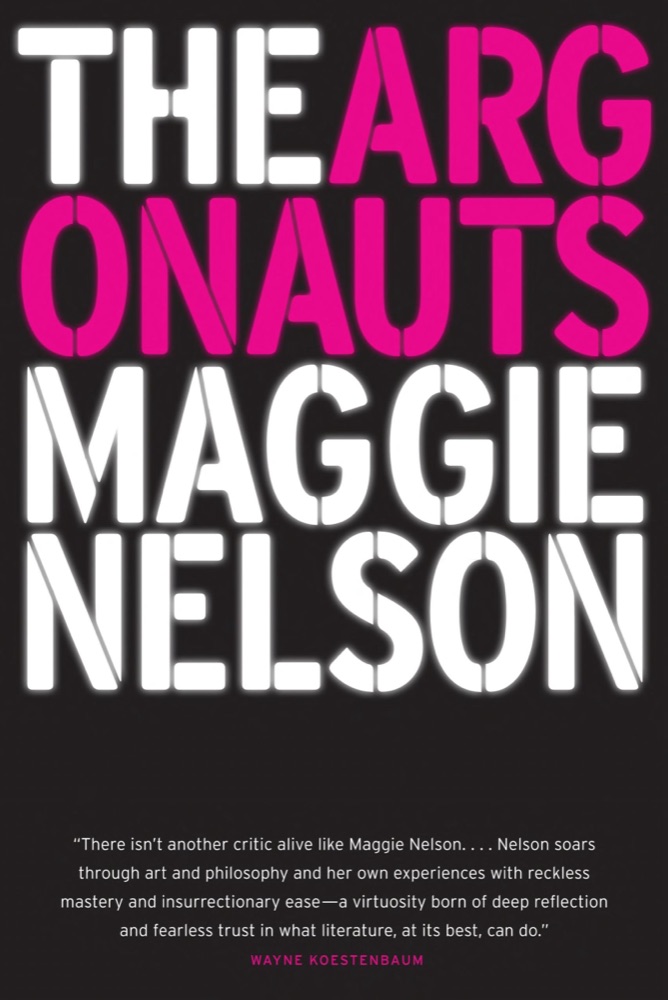
A day or two after my love pronouncement, now feral with vulnerability, I sent you the passage from Roland Barthes by Roland Barthes in which Barthes describes how the subject who utters the phrase “I love you” is like “the Argonaut renewing his ship during its voyage without changing its name.” Just as the Argo’s parts may be replaced over time but the boat is still called the Argo, whenever the lover utters the phrase “I love you,” its meaning must be renewed by each use, as “the very task of love and of language is to give to one and the same phrase inflections which will be forever new.
135
The moment of queer pride is a refusal to be shamed by witnessing the other as being ashamed of you.
89
I feel I can give you everything without giving myself away, I whispered in your basement bed. If one does one's solitude right, this is the prize.
86
I told you I wanted to live in a world in which the antidote to shame is not honor, but honesty.
83
But whatever sameness I’ve noted in my relationships with women is not the sameness of Woman, and certainly not the sameness of parts. Rather, it is the shared, crushing understanding of what it means to live in a patriarchy.
58
I know now that a studied evasiveness has its own limitations, its own ways of inhibiting certain forms of happiness and pleasure. The pleasure of abiding. The pleasure of insistence, of persistence. The pleasure of obligation, the pleasure of dependency. The pleasures of ordinary devotion. The pleasure of recognizing that one may have to undergo the same realizations, write the same notes in the margin, return to the same themes in one’s work, relearn the same emotional truths, write the same book over and over again—not because one is stupid or obstinate or incapable of change, but because such revisitations constitute a life.
56
That’s what we both hate about fiction, or at least crappy fiction—it purports to provide occasions for thinking through complex issues, but really it has predetermined the positions, stuffed a narrative full of false choices, and hooked you on them, rendering you less able to see out, to get out.
46
So far as I can tell, most worthwhile pleasures on this earth slip between gratifying another and gratifying oneself. Some would call that an ethics.
41
Sometimes one has to know something many times over. Sometimes one forgets, and then remembers. And then forgets, and then remembers. And then forgets again.
37
Whatever I am, or have since become, I know now that slipperiness isn’t all of it. I know now that a studied evasiveness has its own limitations, its own ways of inhibiting certain forms of happiness and pleasure. The pleasure of abiding. The pleasure of insistence, of persistence. The pleasure of obligation, the pleasure of dependency. The pleasures of ordinary devotion. The pleasure of recognizing that one may have to undergo the same realizations, write the same notes in the margin, return to the same themes in one’s work, relearn the same emotional truths, write the same book over and over again—not because one is stupid or obstinate or incapable of change, but because such revisitations constitute a life.
37
Evolution strikes me as infinitely more spiritually profound than Genesis.
37
There’s something truly strange about living in a historical moment in which the conservative anxiety and despair about queers bringing down civilization and its institutions (marriage, most notably) is met by the anxiety and despair so many queers feel about the failure or incapacity of queerness to bring down civilization and its institutions.
37
How does one get across the fact that the best way to find out how people feel about their gender or their sexuality—or anything else, really—is to listen to what they tell you, and to try to treat them accordingly, without shellacking over their version of reality with yours?
36
The freedom to be happy restricts human freedom if you are not free to be not happy.
30
You pass as a guy; I, as pregnant. Our waiter cheerfully tells us about his family, expresses delight in ours. On the surface, it may have seemed as though your body was becoming more and more “male,” mine, more and more “female.” But that’s not how it felt on the inside. On the inside, we were two human animals undergoing transformations beside each other, bearing each other loose witness. In other words, we were aging.
30
I beheld and still behold in anger and agony the eagerness of the world to throw piles of shit on those of us who want to savage or simply cannot help but savage the norms that so desperately need savaging.
29
Trans” may work well enough as shorthand, but the quickly developing mainstream narrative it evokes (“born in the wrong body,” necessitating an orthopedic pilgrimage between two fixed destinations) is useless for some—but partially, or even profoundly, useful for others? That for some, “transitioning” may mean leaving one gender entirely behind, while for others—like Harry, who is happy to identify as a butch on T—it doesn’t? I’m not on my way anywhere, Harry sometimes tells inquirers. How to explain, in a culture frantic for resolution, that sometimes the shit stays messy? I do not want the female gender that has been assigned to me at birth. Neither do I want the male gender that transsexual medicine can furnish and that the state will award me if I behave in the right way. I don’t want any of it. How to explain that for some, or for some at some times, this irresolution is OK—desirable, even (e.g., “gender hackers”)—whereas for others, or for others at some times, it stays a source of conflict or grief? How does one get across the fact that the best way to find out how people feel about their gender or their sexuality—or anything else, really—is to listen to what they tell you, and to try to treat them accordingly, without shellacking over their version of reality with yours?
26
Perhaps it’s the word radical that needs rethinking. But what could we angle ourselves toward instead, or in addition? Openness? Is that good enough, strong enough? You’re the only one who knows when you’re using things to protect yourself and keep your ego together and when you’re opening and letting things fall apart, letting the world come as it is—working with it rather than struggling against it. You’re the only one who knows. And the thing is, even you don’t always know.
24
[Yet] dependence is scorned even in intimate relationships, as though dependence were incompatible with self-reliance rather than the only thing that makes it possible.
21
that the notion of privilege as something to which one could “easily cop,” as in “cop to once and be done with,” is ridiculous. Privilege saturates, privilege structures.
21
That's enough. You can stop now: the phrase Sedgwick said she longed to hear whenever she was suffering. (Enough hurting, enough showing off, enough achieving, enough talking, enough trying, enough writing, enough living.)
21
You, reader, are alive today, reading this, because someone once adequately policed your mouth exploring.
20
Words change depending on who speaks them; there is no cure.
18
The mother of an adult child sees her work completed and undone at the same time.' If this holds true, I may have to withstand not only rage, but also my undoing. Can one prepare for one's undoing? How has my mother withstood mine? Why do I continue to undo her, when what I want to express above all else is that I lover her very much?
18
I’m not on my way anywhere, Harry sometimes tells inquirers. How to explain, in a culture frantic for resolution, that sometimes the shit stays messy? I do not want the female gender that has been assigned to me at birth. Neither do I want the male gender that transsexual medicine can furnish and that the state will award me if I behave in the right way. I don’t want any of it. How to explain that for some, or for some at some times, this irresolution is OK—desirable, even (e.g., “gender hackers”)—whereas for others, or for others at some times, it stays a source of conflict or grief?
17
This slice of truth, offered in the final hour, ended up beginning a new chapter of my adulthood, the one in which I realized that age doesn’t necessarily bring anything with it, save itself. The rest is optional.
17
You’re looking for sexual tidbits as a female child, and the only ones that present themselves depict child rape or other violations (all my favorite books in my preteen years: I Know Why the Caged Bird Sings, Clan of the Cave Bear, The World According to Garp, as well as the few R-rated movies I was allowed to see—Fame, most notably, with its indelible scene of Irene Cara being asked to take her shirt off and suck her thumb by a skeezy photographer who promises to make her a star), then your sexuality will form around that fact. There is no control group. I don’t even want to talk about “female sexuality” until there is a control group. And there never will be.
15
To devote yourself to someone else’s pussy can be a means of devoting yourself to your own.
15
A becoming in which one never becomes, a becoming whose rule is neither evolution nor asymptote but a certain turning, a certain turning inward, turning into my own / turning on in / to my own self / at last / turning out of the / white cage, turning out of the / lady cage / turning at last.
14
Watch on YouTube
About Maggie Nelson
We have collected 99 quotes from 4 books by Maggie Nelson on BookQuoters.
More about the author →More by Maggie Nelson

About the book
An intrepid voyage out to the frontiers of the latest thinking about love, language, and family.
Maggie Nelson's The Argonauts is a genre-bending memoir, a work of "autotheory" offering fresh, fierce, and timely thinking about desire, identity, and the limitations and possibilities of love and language. At its center is a romance: the story of the author's relationship with the artist Harry Dodge. This story, which includes Nelson's account of falling in love with Dodge, who is fluidly gendered, as well as her journey to and through a pregnancy, offers a firsthand account of the complexities and joys of (queer) family-making.
Writing in the spirit of public intellectuals such as Susan Sontag and Roland Barthes, Nelson binds her personal experience to a rigorous exploration of what iconic theorists have said about sexuality, gender, and the vexed institutions of marriage and child
Book details
- First published
- 2015
- Author
- Maggie Nelson
- Genre
- Nonfiction
- Goodreads rating
- 4.01 (58k ratings)
The buzz
- The New York TimesReview in The New York Timesprofessional review (via Book Marks)
- The New YorkerReview in The New Yorkerprofessional review (via Book Marks)
- The GuardianReview in The Guardianprofessional review (via Book Marks)
- NPRReview in NPRprofessional review (via Book Marks)
- Los Angeles TimesReview in Los Angeles Timesprofessional review (via Book Marks)
- The Boston GlobeReview in The Boston Globeprofessional review (via Book Marks)
Keep reading
 The Summer Without Men
 Make It Scream, Make It Burn
 Girl with Curious Hair
 The Mother of All Questions
 Sexing the Cherry
 Stories of Your Life and Others
 The Golden Notebook
 I Love Dick
 No Time To Spare: Thinking About What Matters
 In the Dream House
 Anthropology of an American Girl
 Asymmetry
 Tell Me More: Stories About the 12 Hardest Things I'm Learning to Say
 Trick Mirror: Reflections on Self-Delusion
 Elizabeth Finch
 When Women Were Dragons
 Like Streams to the Ocean: Notes on Ego, Love, and the Things That Make Us Who We Are
 On Connection
 Here for It; Or, How to Save Your Soul in America: Essays
 Managing Expectations: A Memoir in Essays – A Poignant Collection of Personal Stories on Acting, Failure, and Motherhood's Joy
 Skin: Talking About Sex, Class And Literature
 The Crane Wife: A Memoir in Essays
 The Reader
 Untamed
 The Cost of Living: A Working Autobiography
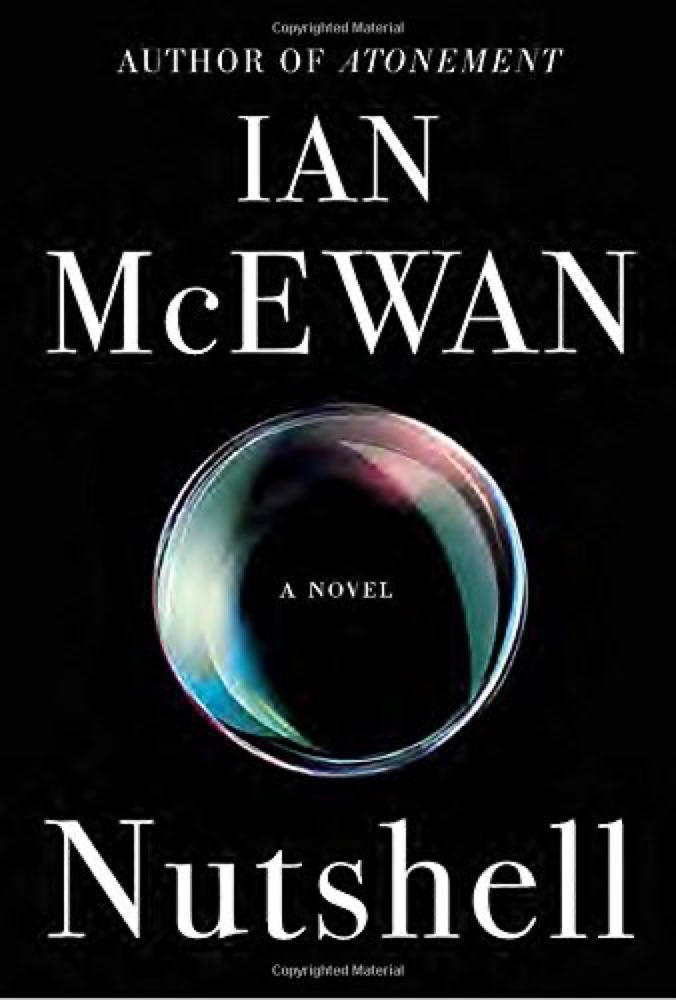 Nutshell
 The Joke
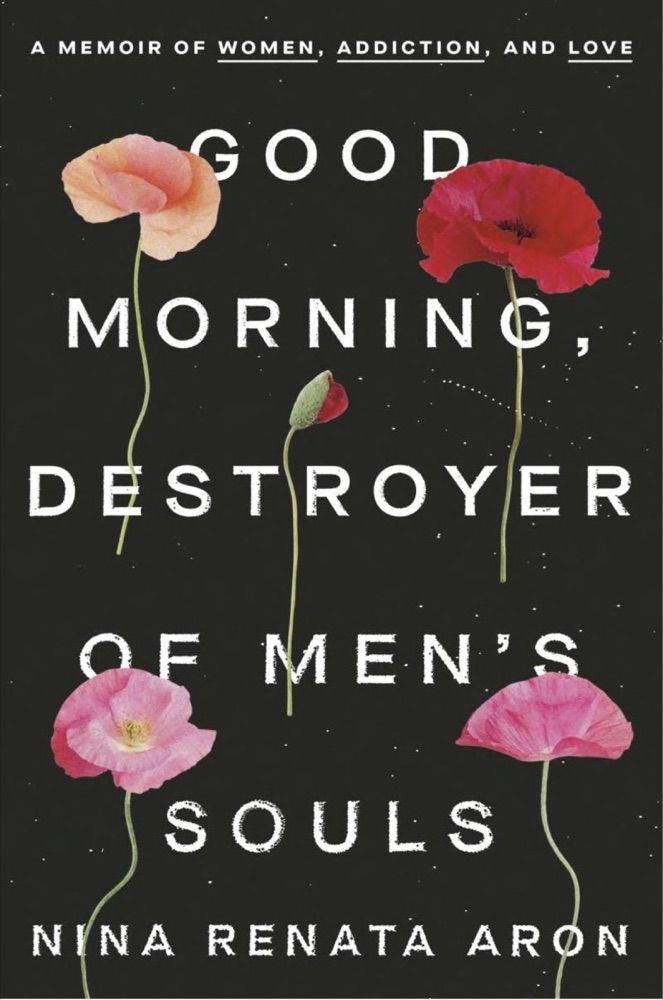 Good Morning, Destroyer of Men's Souls: A Memoir of Women, Addiction, and Love
 My Life on the Road
 This Is Not a Book About Benedict Cumberbatch: The Joy of Loving Something--Anything--Like Your Life Depends On It
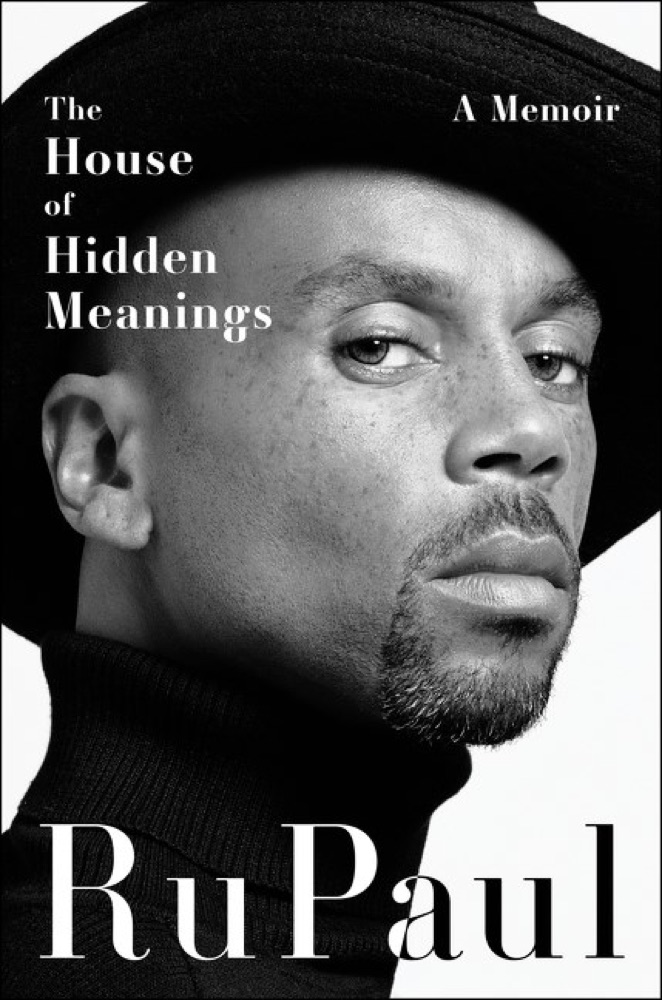 The House of Hidden Meanings
 Sexus
Sexus
 The Folded Clock: A Diary
 Brief Interviews with Hideous Men
 NW
NW
 Hourglass: Time, Memory, Marriage
 Children of the Mind
 The Source of Self-Regard: Selected Essays, Speeches, and Meditations
 The Fall
 Monsters: A Fan's Dilemma
 Aftermath: On Marriage and Separation
 They're Going to Love You
 Lost in Translation: A Life in a New Language
 A History of My Brief Body
 The Truth: An Uncomfortable Book About Relationships
 Identity
 Far from the Tree: Parents, Children, and the Search for Identity
 Ayoade on Top
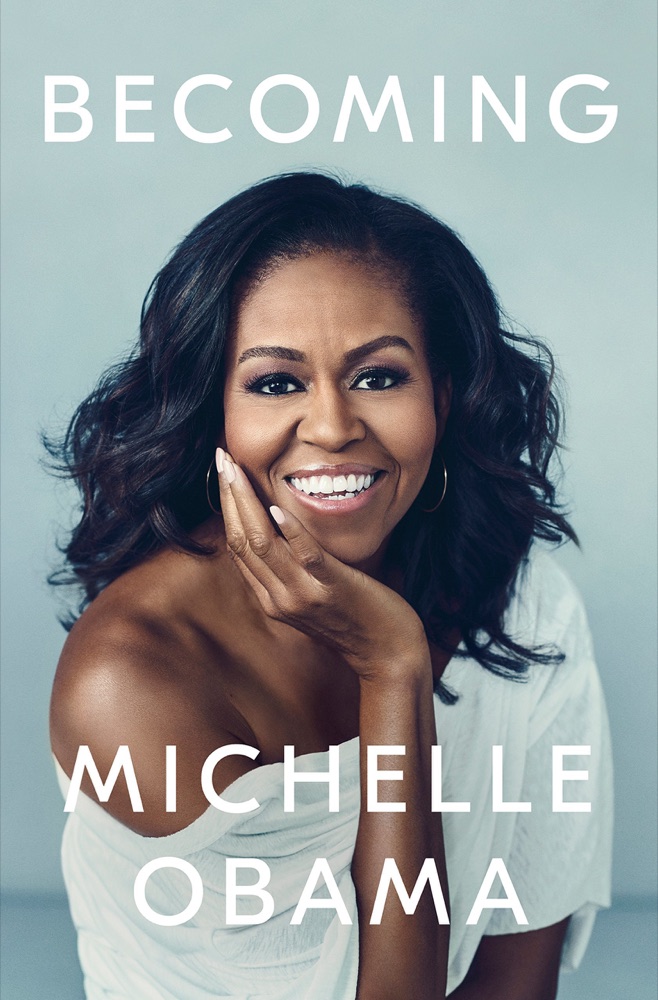 Becoming
 The Post-Birthday World
 Outline
 Dream Count
 A Certain Hunger
 Oranges Are Not the Only Fruit
 Sixty Stories
 No One Writes Back
 Consider the Lobster and Other Essays
 The Tsar of Love and Techno
 The Razor's Edge
 On Beauty