 Being Peace
Quotes from the Book
In true love, you attain freedom.
176
I am determined to practice deep listening. I am determined to practice loving speech.
115
Being rich is an obstacle to loving. When you are rich, you want to continue to be rich, and so you end up devoting all your time, all your energy, in your daily life to stay rich.
61
Life is available only in the present. That is why we should walk in such a way that every step can bring us to the here and the now.
34
This is the nonduality principle of Buddhism: there is nothing to throw away. If a person has never suffered, he or she will never be able to know happiness. If a person does not know what hunger is, he or she will never know the joy of eating every day. Thus pain and suffering are a necessary condition of our understanding, of our happiness.
18
To love is to recognize ; to be loved is to be recognized by the other
16
In true love, you attain freedom. When you love, you bring freedom to the person you love. If the opposite is true, it is not true love. You must love in such a way that the person you love feels free. (p.4, Shambhala Publications)
14
The Buddha said this: "The object of your practice should first of all be yourself. Your love for the other, your ability to love another person, depends on your ability to love yourself." If you are not able to take care of yourself, if you are not able to accept yourself, how could you accept another person and how could you love him or her?
11
Thinking prevents us from touching life deeply. I think, therefore I am really not there.
8
The third element of love is mudita, joy. True love always brings joy to ourselves and to the one we love. If our love does not bring joy to both of us, it is not true love.
7
be there is the first step, and recognizing the presence of the other is the second step. To love is to recognize; to be loved is to be recognized by the other.
6
The object of your practice should first of all be yourself. Your love for the other, your ability to love another person, depends on your ability to love yourself.
3
The most precious gift you can give someone to the one you love is your true presence
2
Buddhist meditation is based on the principle of nonduality. This means that if we are mindfulness, if we are love, we are also ignorance, we are also suffering, and there is no reason to suppress anything at all.
2
ACCORDING TO BUDDHISM, THERE ARE four elements of true love. The first is maitri, which can be translated as lovingkindness or benevolence. Loving-kindness is not only the desire to make someone happy, to bring joy to a beloved person; it is the ability to bring joy and happiness to the person you love, because even if your intention is to love this person, your love might make him or her suffer. Training is needed in order to love properly; and to be able to give happiness and joy, you must practice deep looking directed toward the person you love. Because if you do not understand this person, you cannot love properly. Understanding is the essence of love. If you cannot understand, you cannot love. That is the message of the Buddha. If a husband, for example, does not understand his wife’s deepest troubles, her deepest aspirations, if he does not understand her suffering, he will not be able to love her in the right way. Without understanding, love is an impossible thing. What must we do in order to understand a person? We must have time; we must practice looking deeply into this person. We must be there, attentive; we must observe, we must look deeply. And the fruit of this looking deeply is called understanding. Love is a true thing if it is made up of a substance called understanding. The second element of true love is compassion, karuna. This is not only the desire to ease the pain of another person, but the ability to do so. You must practice deep looking in order to gain a good understanding of the nature of the suffering of this person, in order to be able to help him or her to change. Knowledge and understanding are always at the root of the practice. The practice of understanding is the practice of meditation. To meditate is to look deeply into the heart of things. The third element of true love is joy, mudita. If there is no joy in love, it is not true love. If you are suffering all the time, if you cry all the time, and if you make the person you love cry, this is not really love—it is even the opposite. If there is no joy in your love, you can be sure that it is not true love.
2
With our eyes in good condition, a paradise of forms and colors is available to us. There are people who have lost their sight, and they live in darkness. And they think, they very profoundly believe, that if anybody could help them get their sight back, this would be like entering paradise, the paradise of forms and colors. And we do have our eyes in good functioning order and we really are in a paradise of forms and colors. But without mindfulness, we forget that. Your eyes are already one of the basic conditions of your happiness, and mindfulness helps you to touch one of those conditions.
2
When we talk about the theology of 'God is Dead,' this means that the notion of God must be dead in order for God to reveal himself as a reality. The theologians, if they only use concepts, and not direct experience, are not very helpful. The same goes for nirvana, which is something to be touched and lived and not discussed and described. We have notions that distort truth, reality. A Zen master said the following to a large assembly: 'My friends, every time I use the word Buddha, I suffer. I am allergic to it. Every time I do it, I have to go to the bathroom and rinse my mouth three times in succession.' He said this in order to help his disciples not to get caught up in the notion of Buddha. The Buddha is one thing, but the notion of Buddha is another.
2
I think, therefore I am really not there.
1
Caring for yourself, reestablishing peace in yourself, is the basic condition for helping someone else. So that the other can stop being a bomb, a source of pain for ourselves and others, you really have to help him to defuse the bomb. To be able to provide help, we have to have a little calm, a little joy, a little compassion in ourselves.
1
we are joy, but we are also pain; we are understanding, but we are also ignorance
1
mindfulness is not something that is only done in a meditation hall; it is also done in the kitchen, in the garden, when we are on the telephone, when we are driving a car, when we are doing the dishes.
1
Fear is born from our ignorance, from our concepts regarding life, death, being, and nonbeing. If we are able to get rid of all these concepts by touching the reality within ourselves, then nonfear will be there and the greatest relief will become possible. For the Buddhist it is necessary to transcend the notions of birth and death because those notions do not apply to reality. This is equally true with regard to the notions of being and nonbeing. For the Buddhist, to be or not to be is not really the question. The true question is whether we have enough concentration, enough mindfulness, enough practice to touch the foundation of being that is nirvana.
To love is to recognize; to be loved is to be recognized by the other. If you love someone and you continue to ignore his or her presence, this is not true love. Perhaps your intention is not to ignore this person, but the way you act, look, and speak does not manifest the desire to recognize the presence of the other. When we are loved, we wish the other to recognize our presence, and this is a very important practice. You must do whatever is necessary to be able to do this: recognize the presence of the person you love several times each day.
In Buddhism we talk about a bodhisattva called Avalokiteshvara, the one who has the ability to listen and to understand the suffering of others. If we evoke his name, it is in order to learn to listen.
According to Buddhism, we are dealing with samyojana, the lump of suffering within us that is translated as an “internal formation.” When you say something that makes another person suffer, that person develops an “internal formation.
You must always check things out by going to the person in question and asking for his or her help: “Dear one, I am suffering so much, help me please.
This is real meditation. In this particular meditation, all at once there is love, compassion, joy, and freedom—the four constituents of the true love of which the Buddha speaks.
Watch on YouTube
About Thich Nhat Hanh
We have collected 629 quotes from 23 books by Thich Nhat Hanh on BookQuoters.
More about the author →
About the book
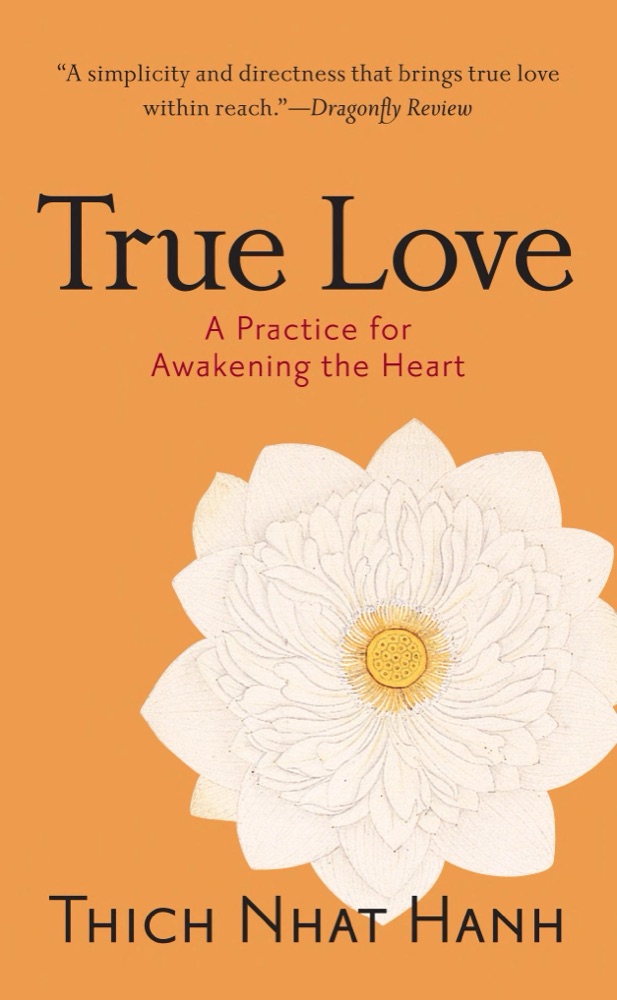
In this little treasure, Thich Nhat Hanh, the renowned Zen monk, offers timeless insight into the nature of real love. With simplicity, warmth, and directness, he explores the four key aspects of love as described in the Buddhist tradition: lovingkindness, compassion, joy, and freedom—explaining how to experience them in our day-to-day lives. He also emphasizes that in order to love in a real way, we must first learn how to be fully present in our lives, and he offers simple techniques from the Buddhist tradition that anyone can use to establish the conditions of love. Thich Nhat Hanh, a Vietnamese Zen Buddhist monk, is an internationally known author, poet, scholar, and peace activist who was nominated for the Nobel Peace Prize by Martin Luther King Jr.
Book details
- First published
- 2004
- Author
- Thich Nhat Hanh
- Genre
- Nonfiction
- Goodreads rating
- 4.27 (8k ratings)
Keep reading
 How to Love
 How to Be an Adult in Relationships: The Five Keys to Mindful Loving
 Lovingkindness: The Revolutionary Art of Happiness
 Love, Freedom, and Aloneness: The Koan of Relationships
 The Art of Communicating
 Living Buddha, Living Christ
 The Art of Loving
 A Return to Love: Reflections on the Principles of "A Course in Miracles"
 Messages from the Masters: Tapping into the Power of Love
 The Mastery of Love: A Practical Guide to the Art of Relationship: A Toltec Wisdom Book
 The Wise Heart: A Guide to the Universal Teachings of Buddhist Psychology
 If the Buddha Dated: A Handbook for Finding Love on a Spiritual Path
 Comfortable with Uncertainty: 108 Teachings on Cultivating Fearlessness and Compassion
 My Spiritual Journey: Personal Reflections, Teachings, and Talks
 Everyday Zen: Love & Work
 The Way to Love: The Last Meditations of Anthony de Mello
 Awakening the Buddha Within
 The Book of Joy: Lasting Happiness in a Changing World
 How to See Yourself As You Really Are
 Practicing the Power of Now: Essential Teachings, Meditations, and Exercises from the Power of Now
 Buddha's Brain: The Practical Neuroscience of Happiness, Love, and Wisdom
 The Book of Secrets: Unlocking the Hidden Dimensions of Your Life
 All About Love: New Visions
 Against the Stream: A Buddhist Manual for Spiritual Revolutionaries
 True Refuge: Finding Peace and Freedom in Your Own Awakened Heart
 The Road Less Travelled
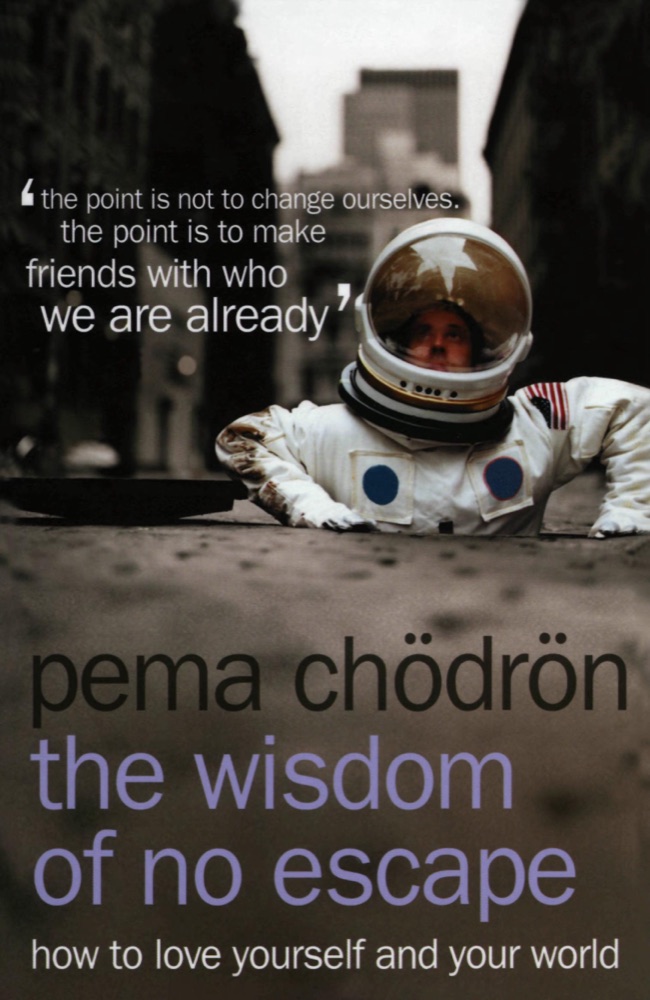 The Wisdom of No Escape: How to Love Yourself and Your World
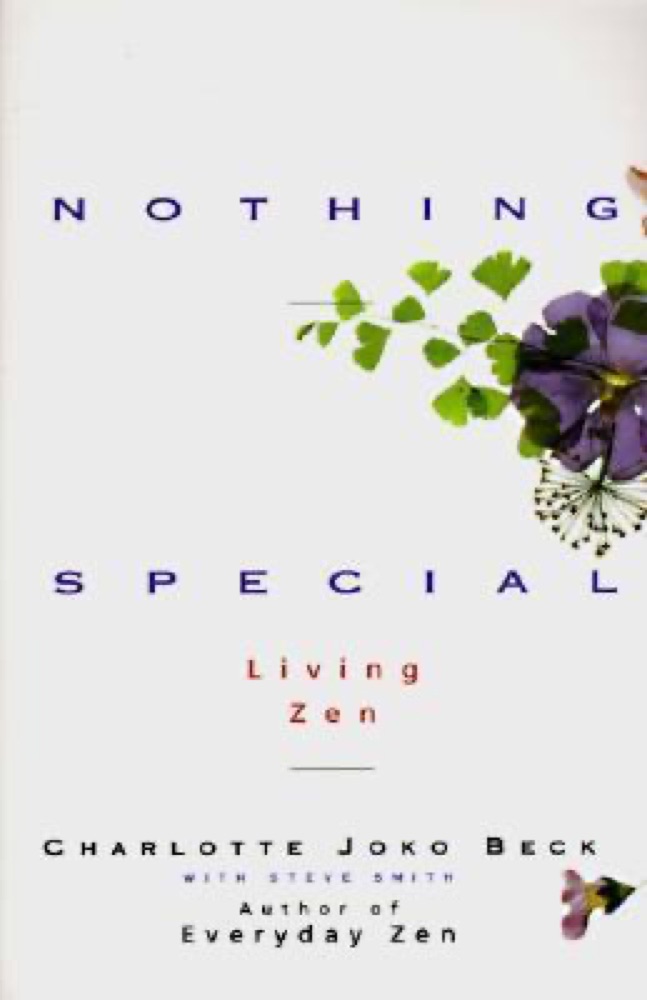 Nothing Special: A Zen Buddhist Guide to Awakening Through Daily Life's Feelings, Relationships, and Work
 Meditation
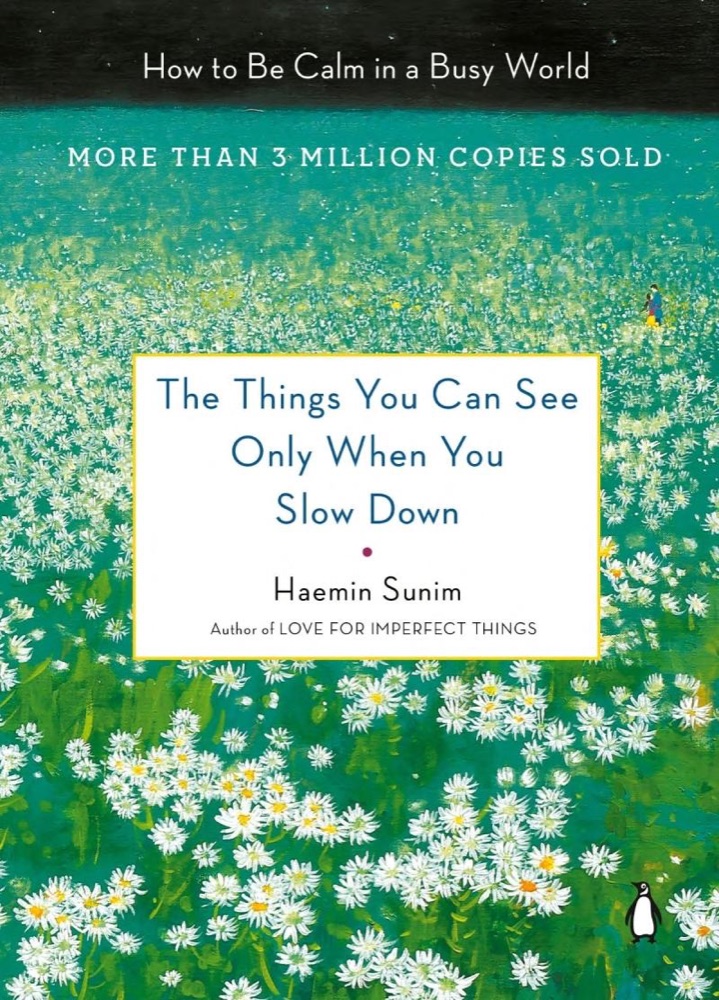 The Things You Can See Only When You Slow Down: How to Be Calm in a Busy World
 Love for Imperfect Things: How to Accept Yourself in a World Striving for Perfection
 Living Beautifully with Uncertainty and Change
 The Buddha Walks into a Bar . . .: A Guide to Life for a New Generation
 The Dalai Lama's Cat and the Power of Meow
 The Book of Wisdom
 The Power of Now: A Guide to Spiritual Enlightenment
 Meditation for Beginners
 The Tibetan Book of Living and Dying
 See No Stranger: A Memoir and Manifesto of Revolutionary Love
 Becoming Wise: An Inquiry into the Mystery and Art of Living
 Awareness: Conversations with the Masters
 Living Untethered: Beyond the Human Predicament
 The Five Love Languages for Singles
 Mindfulness in Plain English
 The Yoga Sutras of Patanjali
 Changes That Heal: How to Understand the Past to Ensure a Healthier Future
 In Love with the World: A Monk's Journey Through the Bardos of Living and Dying
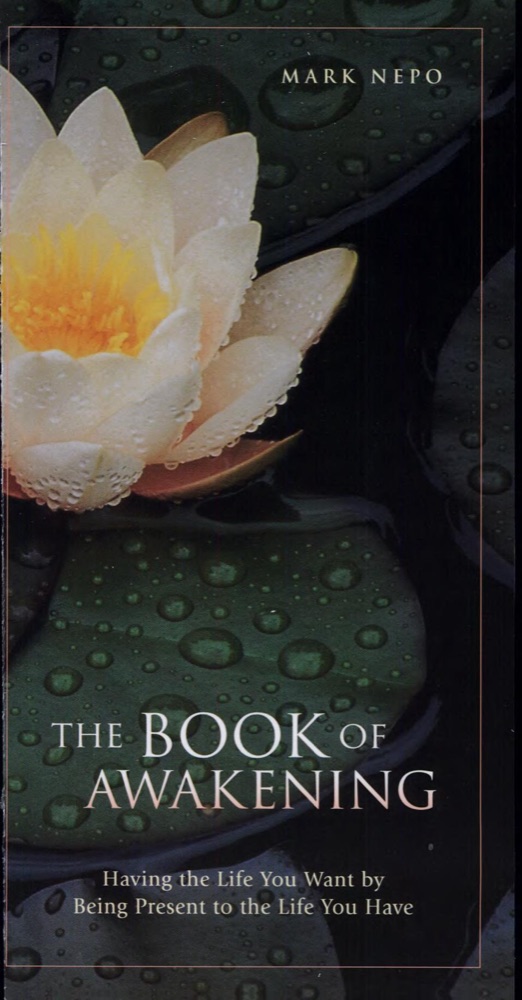 The Book of Awakening: Having the Life You Want by Being Present to the Life You Have
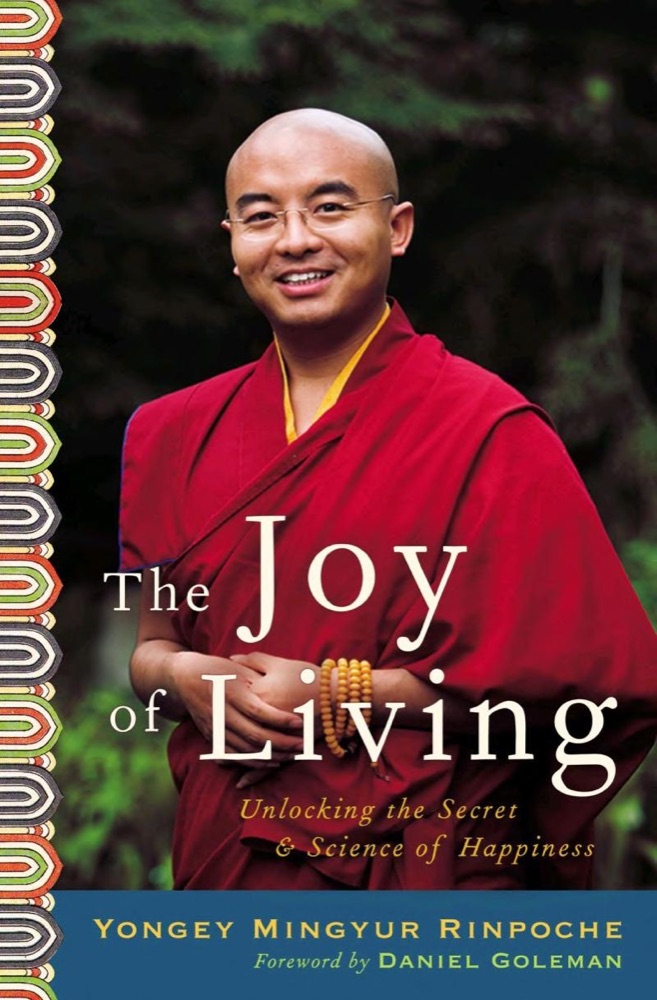 The Joy of Living: Unlocking the Secret and Science of Happiness
 Awakening Inner Guru
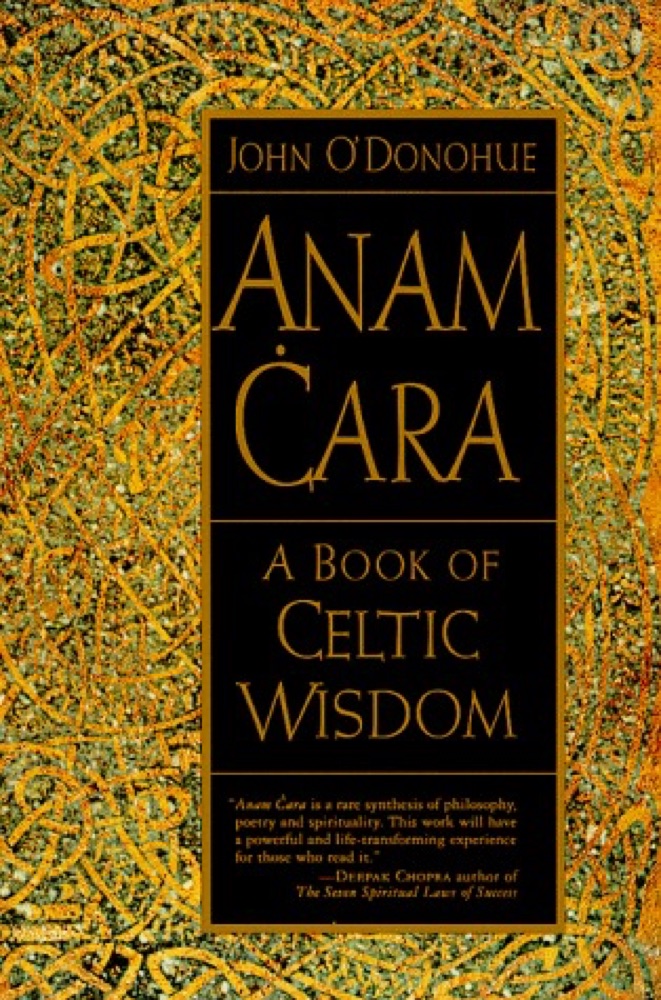 Anam Cara: A Book of Celtic Wisdom
 Full Catastrophe Living: Using the Wisdom of Your Body and Mind to Face Stress, Pain, and Illness
 Conversations on Love
 Works of Love
 8 Rules of Love: How to Find It, Keep It, and Let It Go
 Buddhism Plain & Simple: The Practice of Being Aware, Right Now, Every Day
 Conversations with God: An Uncommon Dialogue, Book 1
 Loving What Is: Four Questions That Can Change Your Life
 The Yoga Sutras of Pantanjali