
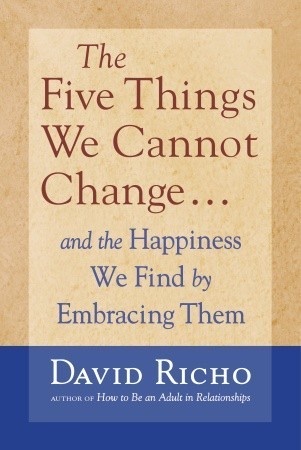
 The Five Things We Cannot Change: And the Happiness We Find by Embracing Them
Quotes from the Book
Self-actualization is not a sudden happening or even the permanent result of long effort. The eleventh-century Tibetan Buddhist poet-saint Milarupa suggested: "Do not expect full realization; simply practice every day of your life." A healthy person is not perfect but perfectible, not a done deal but a work in progress. Staying healthy takes discipline, work, and patience, which is why our life is a journey and perforce a heroic one.
45
At every stage of life, our inner self requires the nurturance of loving people attuned to our feelings and responsive to our needs who can foster our inner resources of personal power, lovability, and serenity. Those who love us understand us and are available to us with an attention, appreciation, acceptance, and affection we can feel. They make room for us to be who we are.
27
Most people think of love as a feeling but love is not so much a feeling as a way of being present.
20
We don’t fear physical closeness because we fear proximity itself. Most of us earnestly want physical contact with those who love us. Rather we fear what we will feel when we get too close. The real fear, then, is of ourselves. This fear is not something to rebuke ourselves for. It is our deepest vulnerability, the very quality that makes us most lovable.
19
Real love does not come off the rack; it is uniquely tailored by the lover to the beloved. Part of the pain of letting go of someone who really loved you is letting go of being loved in that special way.
19
Once we love ourselves, people no longer look good to us unless they are good for us.
15
Our identity is like a kaleidoscope. With each turn we reset it not to a former or final state but to a new one that reflects the here-and-now positions of the pieces we have to work with. The design is always new because the shifts are continual. That is what makes kaleidoscopes, and us, so appealing and beautiful.
13
Bread takes the effort of kneading but also requires sitting quietly while the dough rises with a power all its own.
13
there is nothing to take over if you are not putting up any resistance.
12
When I see I am nothing, that is wisdom. When I see I am everything, that is love. My life is a movement between these two. —NISARGADATTA MAHARAJ
11
spirituality. In healthy intimate relationships we do not seek more than 25 percent of our nurturance from a partner; we learn to find the rest within ourselves.
11
Thus, we strive for intimacy with the whole universe, not just with one person.
11
It is not that practice makes perfect but that practice is perfect, combining effort with an openness to grace.
10
In pain with you, and yet I could not go. I stayed since nothing better came along. I loved you by default or just for show, My life a whistled flat unechoed song. I groped for notches in our dun abyss, And looked for more in lonely only less. I shunned the path adorned with signs to bliss, And stood the loyal ground of wait or guess. It took the tender you to shift the scene, Bold arsonist beneath our tinder stage! I then in friendly fire to earth careen And from our props and ashes disengage. I begged you long with such a silent ache In fear of, wish for mercy for my sake. What Love Feels Like
8
We feel loved when we receive attention, acceptance, appreciation, and affection, and when we are allowed the freedom to live in accord with our own deepest needs and wishes. These
7
Mindfulness is an ancient meditation mode in which we let go of our fears, our attachments to control and being right, our expectations and entitlements, and our judgments of others.
6
We hear with our ears; we listen with our intution and our heart.
6
If you use sarcasm, ridicule, teasing, pinching, tickling, or barbed kidding at times, make a commitment to cease using these passive-aggressive weapons against your partner or anyone.
6
Attention from others leads to self-respect. Acceptance engenders a sense of being inherently a good person. Appreciation generates a sense of self-worth. Affection makes us feel lovable. Allowing gives us the freedom to pursue our own deepest needs, values, and wishes.
5
Love is experienced differently by each of us, but for most of us five aspects of love stand out. We feel loved when we receive attention, acceptance, appreciation, and affection, and when we are allowed the freedom to live in accord with our own deepest needs and wishes.
5
As long as you hold onto wanting something from the outside, you will be dissatisfied because there is a part of you that you are still not totally owning. . . . How can you be complete and fulfilled if you believe that you cannot own this part [of yourself ] until somebody else does something? . . . If it is conditional, it is not totally yours. —A. H. ALMAAS
5
We cannot attune if we assume certain feelings are right and others wrong. To attune to someone, we need neutrality toward all feelings, moods, and inner states and the fearless openness of mindfulness.
3
engaging with our grief is a form of self-nurturance and liberation from neediness. Paradoxically, to enter our wounded feelings fully places us on the path to healthy intimacy.
3
My greatest joy is in the realization that I can still love. That capacity remained intact despite all the blows. That the love made it through means that I made it through.
2
I appreciate the ways others love me, no matter how limited. I am letting go of expecting - or demanding - that they love me exactly as I want them to. At the same time, I can always ask for the kind of love that I long for.
2
Part of the pain of letting go of someone who really loved you is letting go of being loved in that certain way.
2
Beings as complex as ourselves need retreats from others to explore the depths of our character and our destiny. We need regular periods of solitude to replenish ourselves, to locate new sources of creativity and self-knowledge, and to discover possibilities in our souls that are invisible when we are with others.
2
There is a connection between freedom and self-confidence: When you are kept from expressing your deepest needs and wishes, you lose trust in their validity and in your own judgement. You survive by finding out the rules and following them, thus hiding what you really want. You make it your purpose in life to please others rather than to affirm yourself.
1
We do not allow others to control us, but we do understand and feel their pain when we realize that their controlling manner is a compulsion. Most controlling people cannot help themselves; they are not in control of the controlling. They are not insulting us by trying to control us; rather, they automatically take charge and dominate people and situations. They do this because of a chilling fear that they cannot handle letting the chips fall where they may. It takes a spiritual program to be liberated from the compulsion to be controlling - and to become compassionate toward controlling people.
1
Watch on YouTube
About David Richo
We have collected 50 quotes from 2 books by David Richo on BookQuoters.
More about the author →More by David Richo
The Five Things We Cannot Change: And the Happiness We Find by Embracing Them
About the book
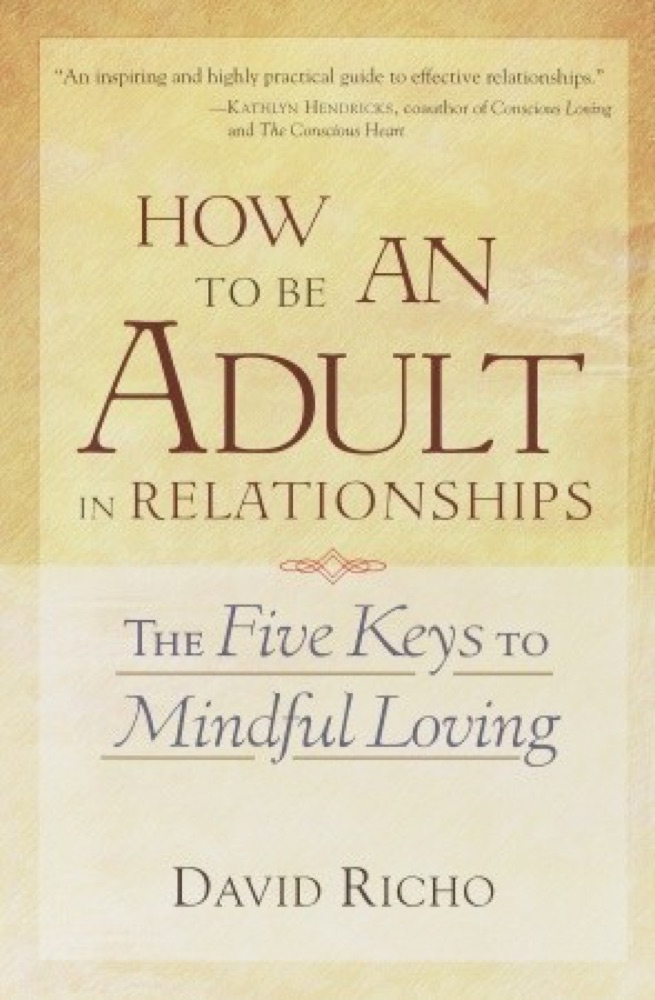
"Most people think of love as a feeling," says David Richo, "but love is not so much a feeling as a way of being present." In this book, Richo offers a fresh perspective on love and relationships—one that focuses not on finding an ideal mate, but on becoming a more loving and realistic person. Drawing on the Buddhist concept of mindfulness, How to Be an Adult in Relationships explores five hallmarks of mindful loving and how they play a key role in our relationships throughout life:
1. Attention to the present moment; observing, listening, and noticing all the feelings at play in our relationships. 2. Acceptance of ourselves and others just as we are. 3. Appreciation of all our gifts, our limits, our longings, and our poignant human predicament. 4. Affection shown through holding and touching in respectful ways. 5. Allowing life and love to be just as they are, with
Book details
- First published
- 2002
- Author
- David Richo
- Genre
- Nonfiction
- Goodreads rating
- 4.10 (8k ratings)
Keep reading
 If the Buddha Dated: A Handbook for Finding Love on a Spiritual Path
 8 Rules of Love: How to Find It, Keep It, and Let It Go
 How to Love
 All About Love: New Visions
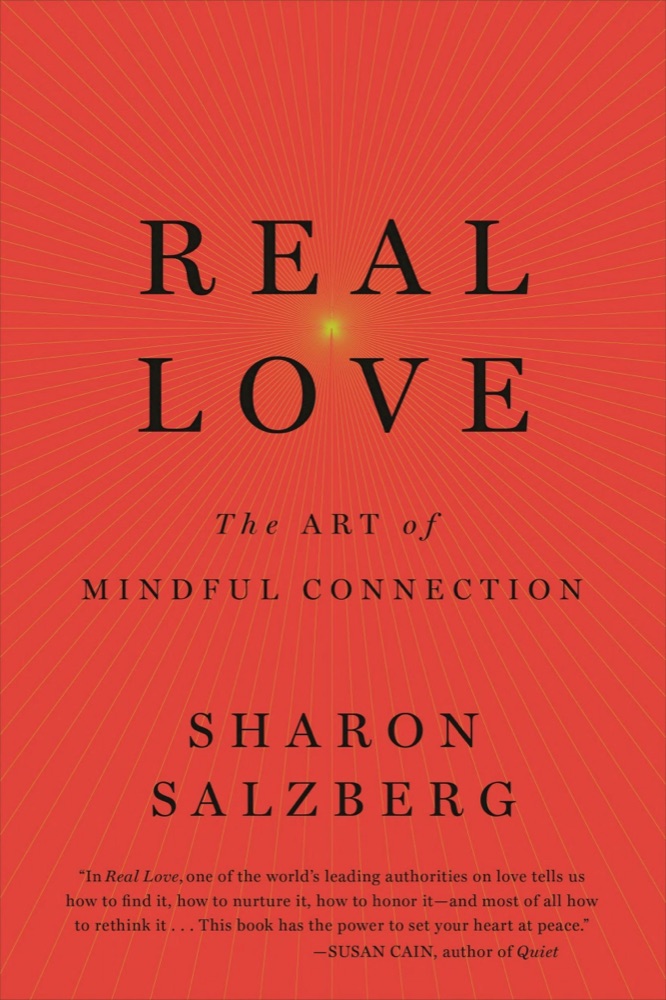 Real Love: The Art of Mindful Connection
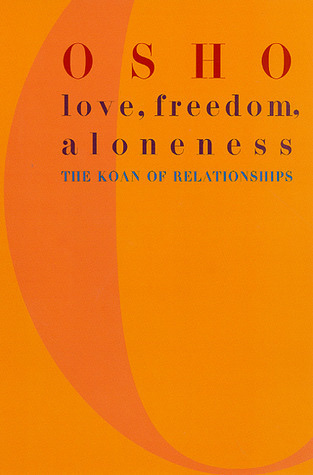 Love, Freedom, and Aloneness: The Koan of Relationships
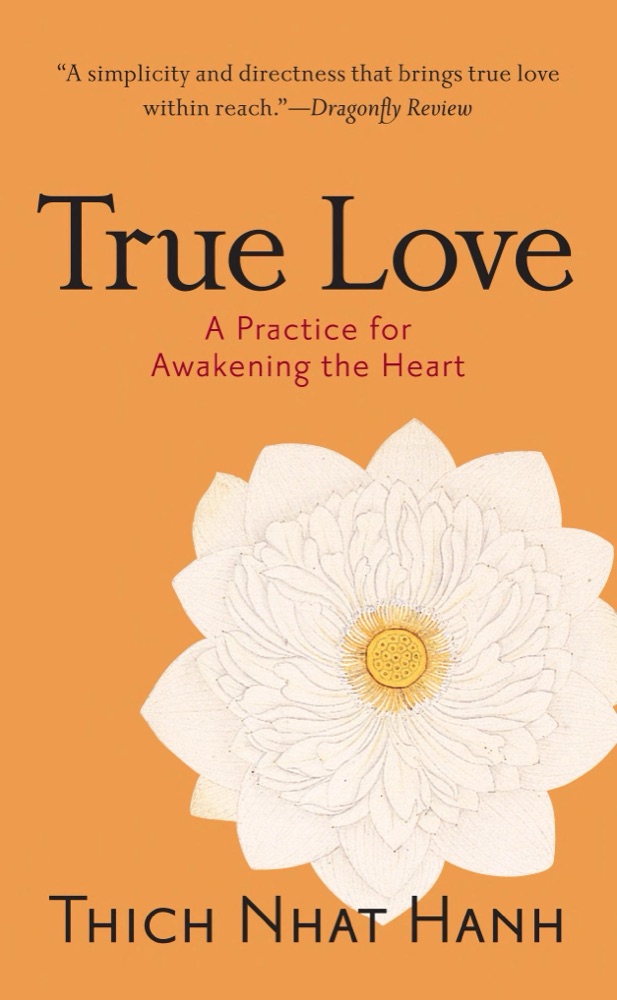 True Love: A Practice for Awakening the Heart
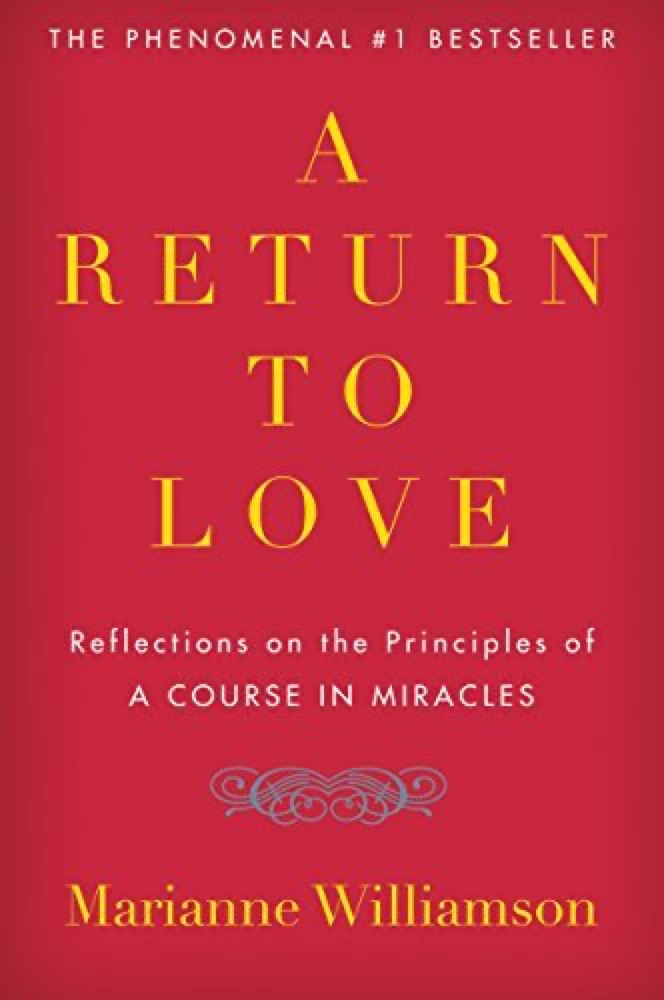 A Return to Love: Reflections on the Principles of "A Course in Miracles"
 Changes That Heal: How to Understand the Past to Ensure a Healthier Future
 Conversations on Love
 Lovingkindness: The Revolutionary Art of Happiness
 The Art of Loving
 The Mastery of Love: A Practical Guide to the Art of Relationship: A Toltec Wisdom Book
 Messages from the Masters: Tapping into the Power of Love
 The Road Less Travelled
 The Art of Communicating
 Love for Imperfect Things: How to Accept Yourself in a World Striving for Perfection
 Clarity & Connection
 The World According to Mister Rogers: Important Things to Remember
 The 5 Love Languages: The Secret to Love that Lasts
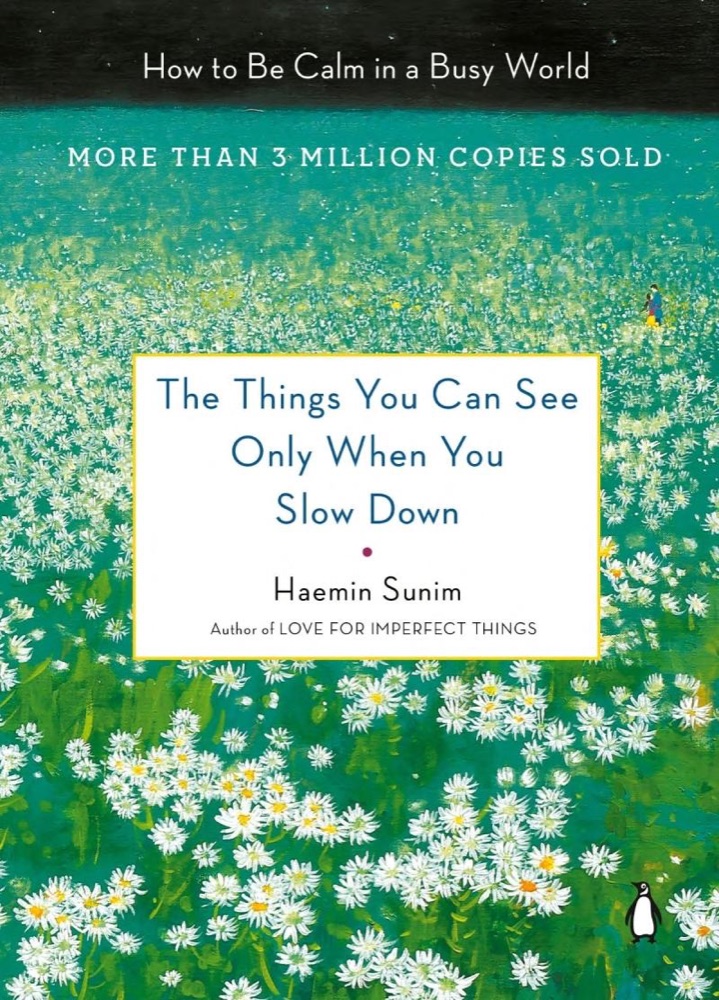 The Things You Can See Only When You Slow Down: How to Be Calm in a Busy World
 Heart Talk: Poetic Wisdom for a Better Life
 The Five Love Languages for Singles
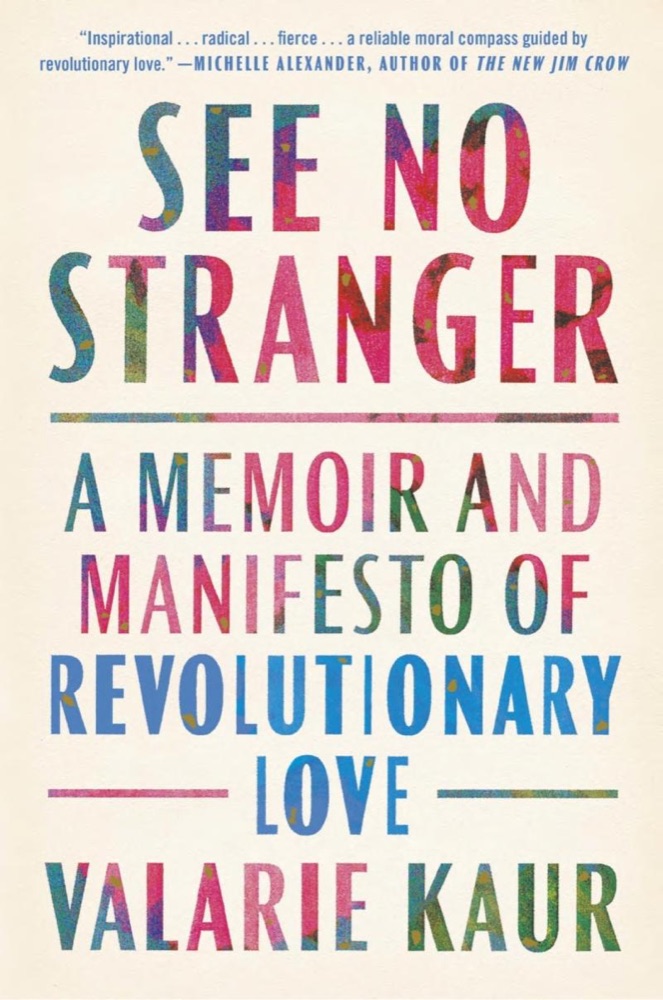 See No Stranger: A Memoir and Manifesto of Revolutionary Love
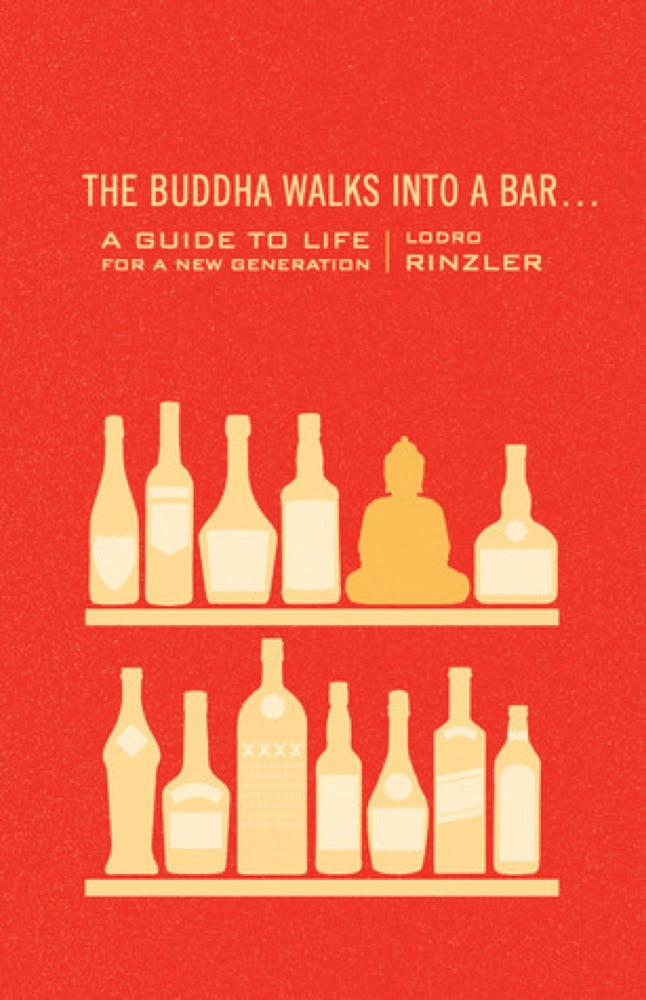 The Buddha Walks into a Bar . . .: A Guide to Life for a New Generation
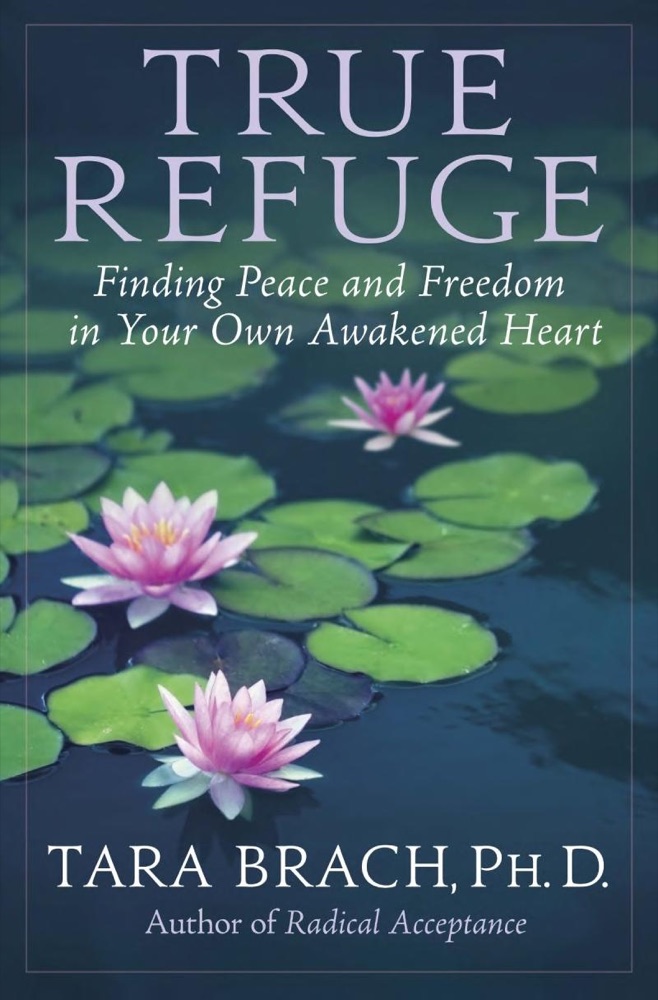 True Refuge: Finding Peace and Freedom in Your Own Awakened Heart
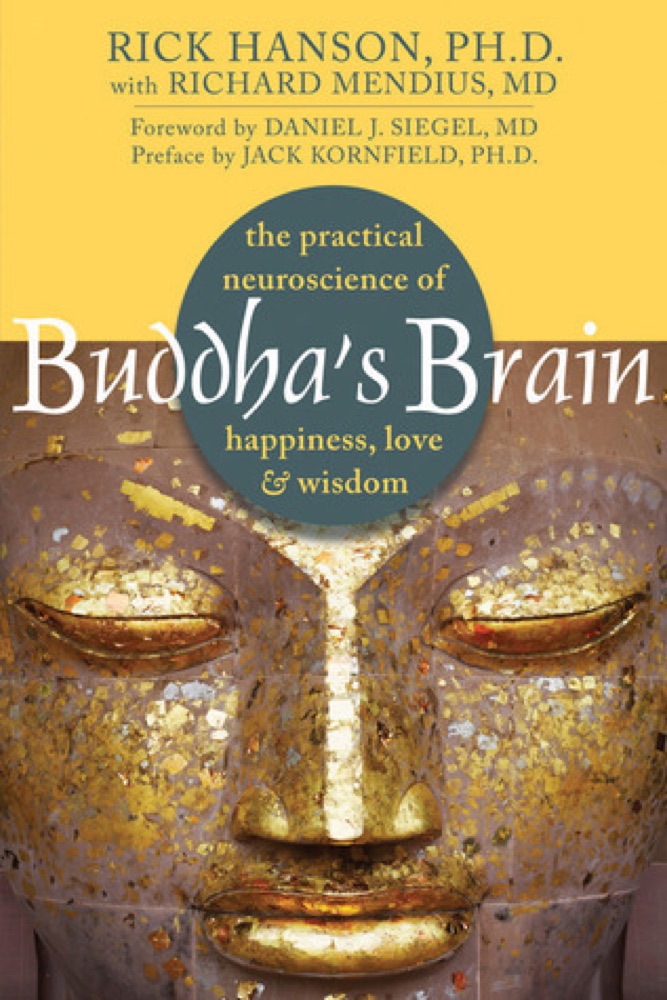 Buddha's Brain: The Practical Neuroscience of Happiness, Love, and Wisdom
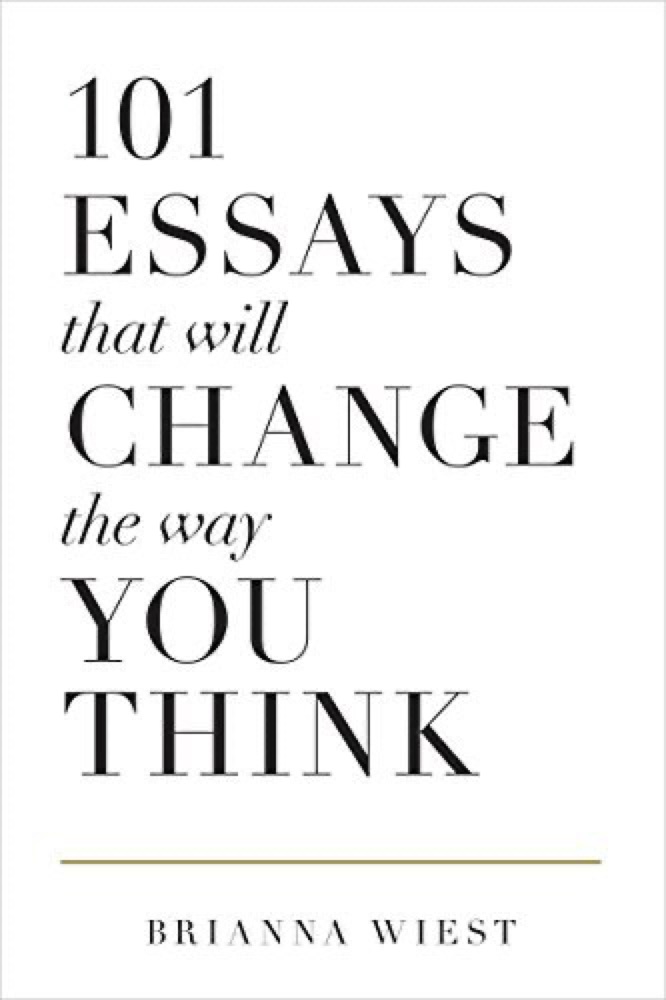 101 Essays That Will Change The Way You Think
 The Way to Love: The Last Meditations of Anthony de Mello
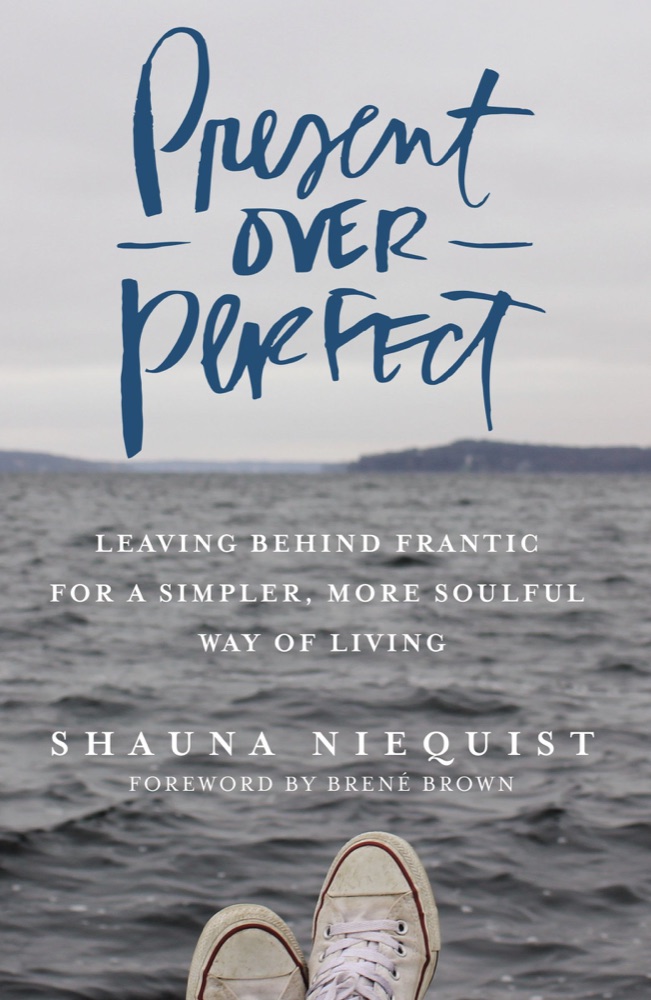 Present Over Perfect: Leaving Behind Frantic for a Simpler, More Soulful Way of Living
 It Begins with You: The 9 Hard Truths About Love That Will Change Your Life
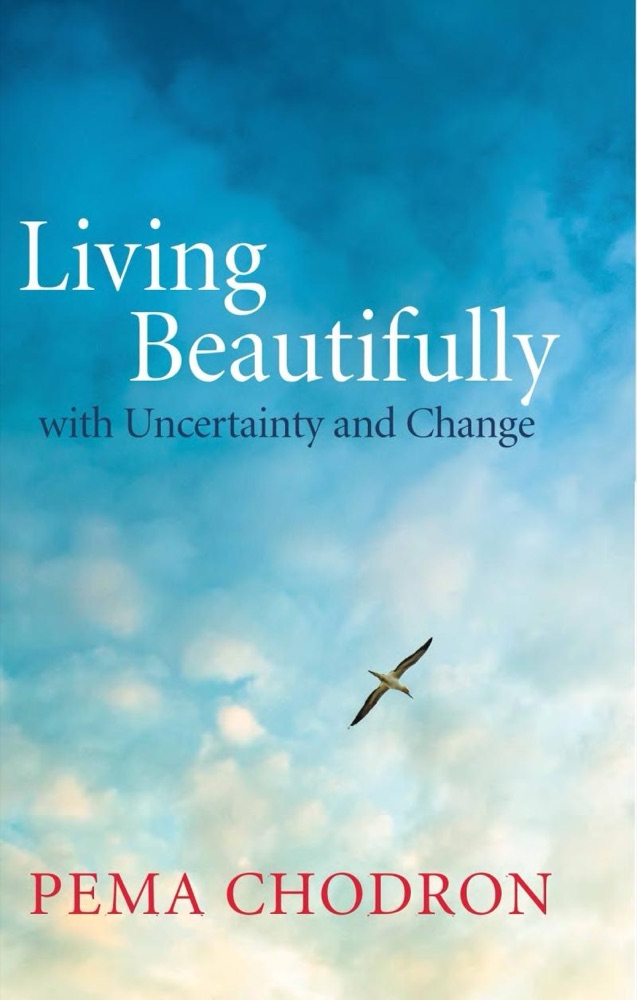 Living Beautifully with Uncertainty and Change
 The Gifts of Imperfection
 Us: Getting Past You and Me to Build a More Loving Relationship
 The Book of Awakening: Having the Life You Want by Being Present to the Life You Have
 Comfortable with Uncertainty: 108 Teachings on Cultivating Fearlessness and Compassion
 The Book of Joy: Lasting Happiness in a Changing World
 Radical Acceptance: Embracing Your Life With the Heart of a Buddha
 Kitchen Table Wisdom: Stories that Heal
 The Four Agreements: A Practical Guide to Personal Freedom
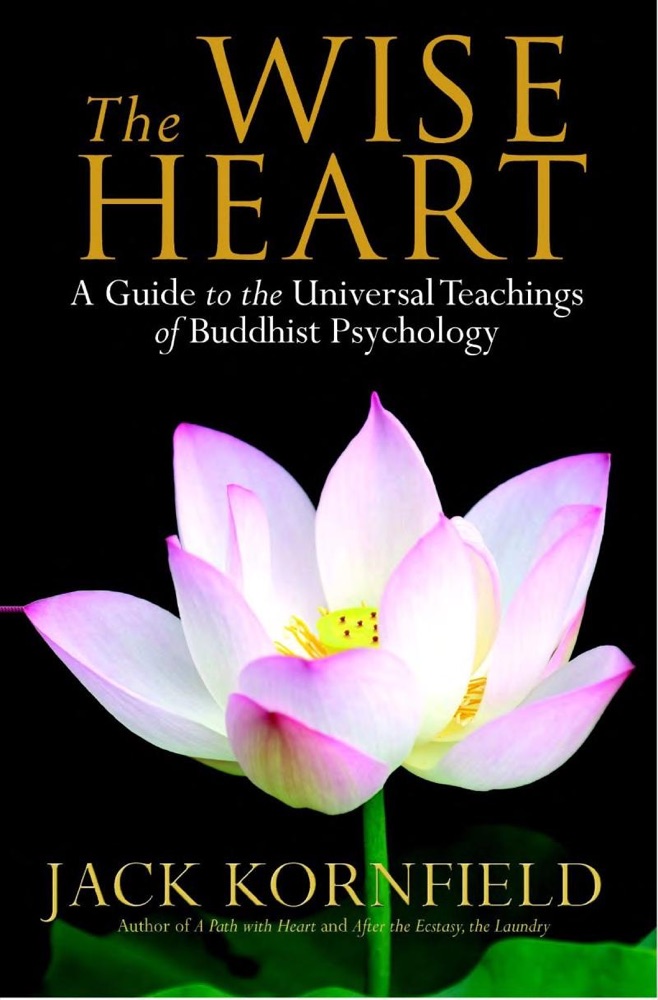 The Wise Heart: A Guide to the Universal Teachings of Buddhist Psychology
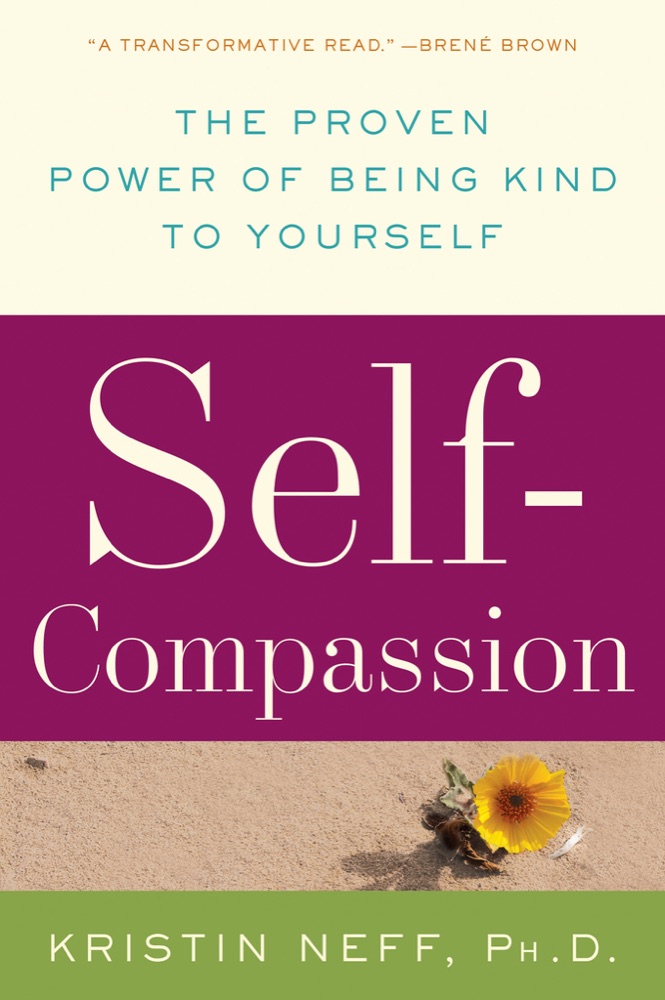 Self-Compassion: The Proven Power of Being Kind to Yourself
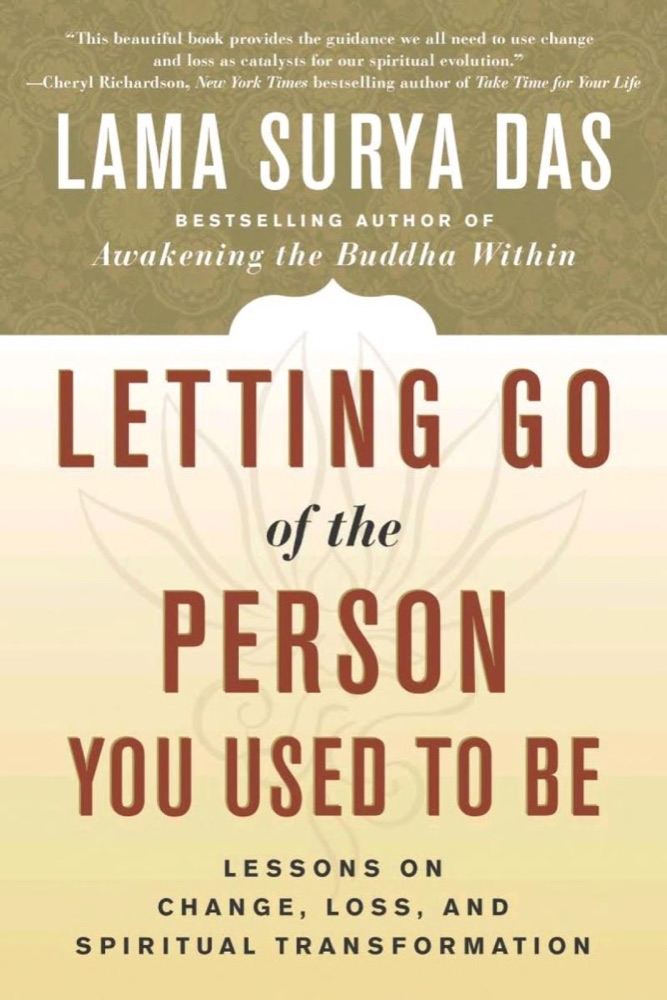 Letting Go of the Person You Used to Be: Lessons on Change, Loss, and Spiritual Transformation
 The Places That Scare You: A Guide to Fearlessness in Difficult Times
 Inward
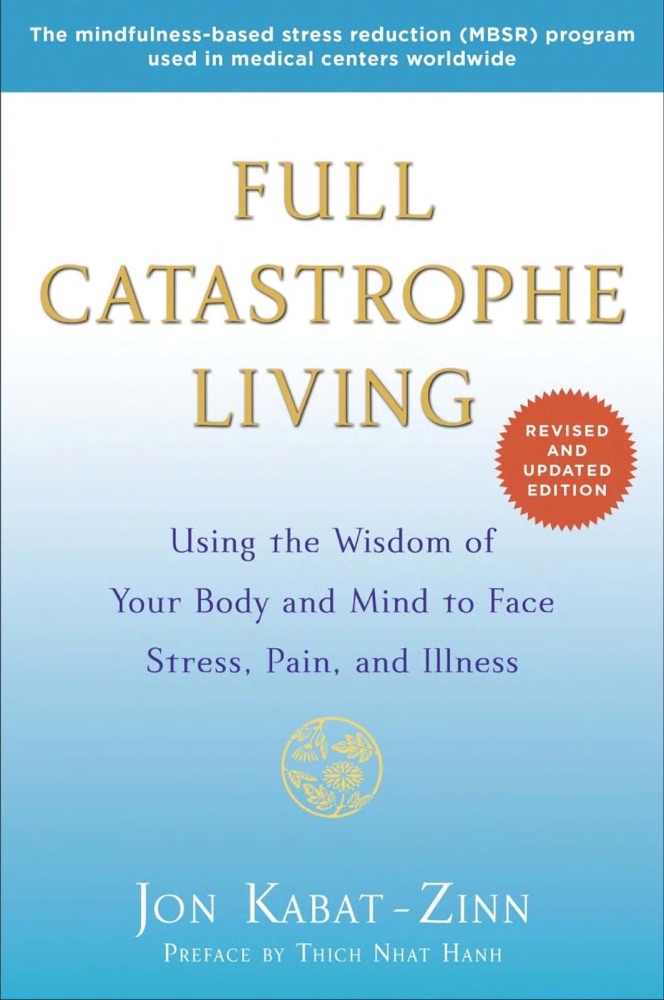 Full Catastrophe Living: Using the Wisdom of Your Body and Mind to Face Stress, Pain, and Illness
 Advice Not Given: A Guide to Getting Over Yourself
 Going to Pieces without Falling Apart: A Buddhist Perspective on Wholeness
 Maybe You Should Talk to Someone: A Therapist, Her Therapist, and Our Lives Revealed
 Meditation for Beginners
 Everyday Zen: Love & Work
 Brave Enough
 Buy Yourself the Damn Flowers: The Self-Love Guide to Growing, Healing and Learning to Put Yourself First
 Mating in Captivity: Reconciling the Erotic and the Domestic
 The Book of Secrets: Unlocking the Hidden Dimensions of Your Life
 You Can Heal Your Life
 The Vortex: Where the Law of Attraction Assembles All Cooperative Relationships
 Build the Life You Want: The Art and Science of Getting Happier