

 When Things Fall Apart: Heart Advice for Difficult Times
Quotes from the Book
Compassion is not a relationship between the healer and the wounded. It's a relationship between equals. Only when we know our own darkness well can we be present with the darkness of others. Compassion becomes real when we recognize our shared humanity.
816
Rejoicing in ordinary things is not sentimental or trite. It actually takes guts. Each time we drop our complaints and allow everyday good fortune to inspire us, we enter the warrior's world.
108
In meditation we discover our inherent restlessness. Sometimes we get up and leave. Sometimes we sit there but our bodies wiggle and squirm and our minds go far away. This can be so uncomfortable that we feel’s it’s impossible to stay. Yet this feeling can teach us not just about ourselves but what it is to be human…we really don’t want to stay with the nakedness of our present experience. It goes against the grain to stay present. These are the times when only gentleness and a sense of humor can give us the strength to settle down…so whenever we wander off, we gently encourage ourselves to “stay” and settle down. Are we experiencing restlessness? Stay! Are fear and loathing out of control? Stay! Aching knees and throbbing back? Stay! What’s for lunch? Stay! I can’t stand this another minute! Stay!
99
We insist on being Someone, with a capital S. We get security from defining ourselves as worthless or worthy, superior or inferior. We waste precious time exaggerating or romanticizing or belittling ourselves with a complacent surety that yes, that’s who we are. We mistake the openness of our being—the inherent wonder and surprise of each moment—for a solid, irrefutable self. Because of this misunderstanding, we suffer.
74
When we touch the center of sorrow, when we sit with discomfort without trying to fix it, when we stay present to the pain of disapproval or betrayal and let it soften us, these are times that we connect with bohdichitta.
71
It is possible to move through the drama of our lives without believing so earnestly in the character that we play. That we take ourselves so seriously, that we are so absurdly important in our own minds, is a problem for us. We feel justified in being annoyed with everything. We feel justified in denigrating ourselves or in feeling that we are more clever than other people. Self-importance hurts us, limiting us to the narrow world of our likes and dislikes. We end up bored to death with ourselves and our world. We end up never satisfied.
60
The essence of bravery is being without self-deception.
55
It's hard to know whether to laugh or to cry at the human predicament. Here we are with so much wisdom and tenderness, and—without even knowing it—we cover it over to protect ourselves from insecurity. Although we have the potential to experience the freedom of a butterfly, we mysteriously prefer the small and fearful cocoon of ego.
54
Things are as bad and as good as they seem. There's no need to add anything extra.
33
Rather than going after these walls and barriers with a sledgehammer, we pay attention to them. With gentleness and honesty, we move closer to those walls. We touch them, and smell them and get to know them well. We become familiar with the strategies and beliefs we use to build these walls: what are the stories we tell ourselves? What repels me and what attracts me? Without calling what we see right or wrong, we simply look as objectively as we can. We can observe ourselves with humor, not getting overly serious, moralistic or uptight about the investigation. Year after year, we train in remaining open and receptive to whatever arises. Slowly, very slowly, the cracks in the walls seem to widen and, as if by magic, bodhichitta is able to flow freely.
29
Only when we know our own darkness well can we be present with the darkness of others. Compassion becomes real when we recognize our shared humanity.
28
Patience is the training in abiding with the restlessness of our energy and letting things evolve at their own speed.
27
Acknowledging that we are all churned up is the first and most difficult step in any practice. Without compassionate recognition that we are stuck, it’s impossible to liberate ourselves from confusion. ‘Doing something different’ is anything that interrupts our ancient habit of indulging in our emotions. We do anything to cut the strong tendency to spin out… Anything that’s non-habitual will do—even sing and dance or run around the block. We do anything that doesn’t reinforce our crippling habits. The third most difficult practice is to then remember that this is not something we do just once or twice. Interrupting our destructive habits and awakening our heart is the work of a lifetime.
26
Throughout my life, until this very moment, whatever virtue I have accomplished, including any benefit that may come from this book, I dedicate to the welfare of all beings. May the roots of suffering diminish. May warfare, violence, neglect, indifference, and addiction also decrease. May the wisdom and compassion of all beings increase, now and in the future. May we clearly see all the barriers we erect between ourselves and others to be as insubstantial as our dreams. May we appreciate the great perfection of all phenomena. May we continue to open our hearts and minds, in order to work ceaselessly for the benefit of all beings. May we go to the places that scare us. May we lead the life of a warrior.
26
we can let the circumstances of our lives harden us so that we become increasingly resentful and afraid, or we can let them soften us and make us kinder and more open to what scares us. We always have this choice.
24
Interrupting our destructive habits and awakening our heart is the work of a lifetime.
18
That nothing is static or fixed, that all is fleeting and impermanent, is the first mark of existence. It is the ordinary state of affairs. Everything is in process. Everything—every tree, every blade of grass, all the animals, insects, human beings, buildings, the animate and the inanimate—is always changing, moment to moment. We don’t have to be mystics or physicists to know this. Yet at the level of personal experience, we resist this basic fact. It means that life isn’t always going to go our way. It means there’s loss as well as gain.
15
Each moment is an opportunity to make a fresh start.
14
Live your life as an experiment.
14
Transformation occurs only when we remember, breath by breath, year after year, to move toward our emotional distress without condemning or justifying our experience.
14
I dedicate the merit of the occasion to all beings. This gesture of universal friendship has been likened to a drop of fresh spring water. If we put it on a rock in the sunshine, it will soon evaporate. If we put it in the ocean, however, it will never be lost. Thus the wish is made that we not keep the teachings to ourselves but to use them to benefit others.
14
A human being is a part of the whole called by us “the universe,” a part limited in time and space. He experiences himself, his thoughts and feelings, as something separate from the rest—a kind of optical delusion of consciousness. This delusion is a kind of prison for us, restricting us to our personal desires and affection for a few persons nearest to us. Our task must be to free ourselves from this prison by widening the circle of understanding and compassion to embrace all living creatures and the whole of nature in its beauty. —ALBERT EINSTEIN
13
Compassion practice is daring. It involves learning to relax and allow ourselves to move gently toward what scares us. The trick to doing this is to stay with emotional distress without tightening into aversion, to let fear soften us rather than harden into resistance.
10
As the twelfth-century Tibetian yogi Milarepa said when he heard of his student Gampopa's peak experiences, 'They are neither good nor bad. Keep meditating.'
10
The Buddha’s principal message that day was that holding on to anything blocks wisdom. Any conclusion that we draw must be let go. The only way to fully understand the bodhichitta teachings, the only way to practice them fully, is to abide in the unconditional openness of the prajna, patiently cutting through all our tendencies to hang on.
10
This is a good time to remember that when we harden our heart against anyone, we hurt ourselves. The fear habit, the anger habit, the self-pity habit—all are strengthened and empowered when we continue to buy into them. The most compassionate thing we can do is to interrupt these habits. Instead of always pulling back and putting up walls, we can do something unpredictable and make a compassionate aspiration. We can visualize this difficult person’s face and say his name if it helps us. Then we say the words: “May this person who irritates me be free of suffering and the roots of suffering.” By doing this, we start to dissolve our fear.
9
A warrior accepts that we can never know what will happen to us next. We can try to control the uncontrollable by looking for security and predictability, always hoping to be comfortable and safe. But the truth is that we can never avoid uncertainty. This not knowing is part of the adventure, and it’s also what makes us afraid.
9
Laziness is not particularly terrible or wonderful. Rather it has a basic living quality that deserves to be experienced just as it is. Perhaps we’ll find an irritating, pulsating quality in laziness. We might feel it as dull and heavy or as vulnerable and raw. Whatever we discover, as we explore it further, we find nothing to hold on to, nothing solid, only groundless, wakeful energy. This process of experiencing laziness directly and nonverbally is transformative. It unlocks a tremendous energy that is usually blocked by our habit of running away. This is because when we stop resisting laziness, our identity as the one who is lazy begins to fall apart completely. Without the blinders of ego, we connect with a fresh outlook, a greater vision. This is how laziness—or any other demon—introduces us to the compassionate life.
8
The central question of a warrior’s training is not how we avoid uncertainty and fear but how we relate to discomfort. How do we practice with difficulty, with our emotions, with the unpredictable encounters of an ordinary day?
7
We can begin anything we do—start our day, eat a meal, or walk into a meeting—with the intention to be open, flexible, and kind. Then we can proceed with an inquisitive attitude. As my teacher Chögyam Trungpa Rinpoche used to say, “Live your life as an experiment.
6
Watch on YouTube
About Pema Chödrön
We have collected 206 quotes from 8 books by Pema Chödrön on BookQuoters.
More about the author →More by Pema Chödrön
When Things Fall Apart: Heart Advice for Difficult Times
 The Pocket Pema Chodron
 Living Beautifully with Uncertainty and Change
 The Wisdom of No Escape: How to Love Yourself and Your World
About the book
We always have a choice, Pema Chodron teaches: We can let the circumstances of our lives harden us and make us increasingly resentful and afraid, or we can let them soften us and make us kinder. Here Pema provides the tools to deal with the problems and difficulties that life throws our way. This wisdom is always available to us, she teaches, but we usually block it with habitual patterns rooted in fear. Beyond that fear lies a state of openheartedness and tenderness. This book teaches us how to awaken our basic goodness and connect with others, to accept ourselves and others complete with faults and imperfections, and to stay in the present moment by seeing through the strategies of ego that cause us to resist life as it is.
Book details
- First published
- 2002
- Author
- Pema Chödrön
- Genre
- Nonfiction
- Goodreads rating
- 4.23 (22k ratings)
Keep reading
 Comfortable with Uncertainty: 108 Teachings on Cultivating Fearlessness and Compassion
Living Beautifully with Uncertainty and Change
The Pocket Pema Chodron
Comfortable with Uncertainty: 108 Teachings on Cultivating Fearlessness and Compassion
Living Beautifully with Uncertainty and Change
The Pocket Pema Chodron
 The Wise Heart: A Guide to the Universal Teachings of Buddhist Psychology
 True Refuge: Finding Peace and Freedom in Your Own Awakened Heart
 Fear: Essential Wisdom for Getting Through the Storm
 Buddha's Brain: The Practical Neuroscience of Happiness, Love, and Wisdom
 Full Catastrophe Living: Using the Wisdom of Your Body and Mind to Face Stress, Pain, and Illness
 Everyday Zen: Love & Work
 Letting Go of the Person You Used to Be: Lessons on Change, Loss, and Spiritual Transformation
 Radical Acceptance: Embracing Your Life With the Heart of a Buddha
 The Heart of the Buddha's Teaching: Transforming Suffering into Peace, Joy, and Liberation
 Against the Stream: A Buddhist Manual for Spiritual Revolutionaries
 Nothing Special: A Zen Buddhist Guide to Awakening Through Daily Life's Feelings, Relationships, and Work
 The Book of Awakening: Having the Life You Want by Being Present to the Life You Have
 Shambhala: The Sacred Path of the Warrior
 Kitchen Table Wisdom: Stories that Heal
 Reconciliation: Healing the Inner Child
 Advice Not Given: A Guide to Getting Over Yourself
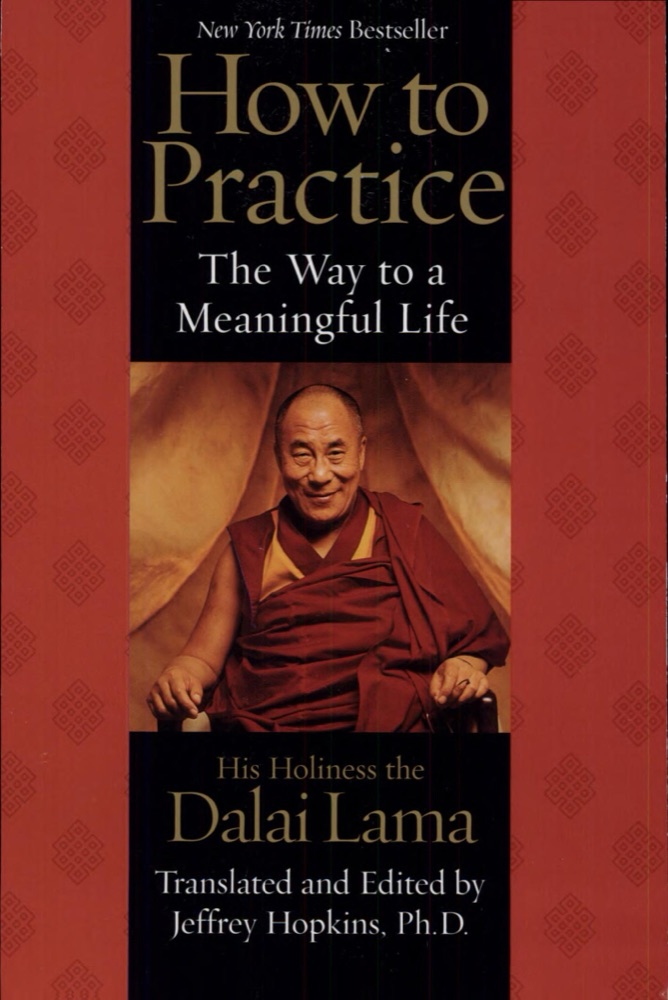 How to Practice: The Way to a Meaningful Life
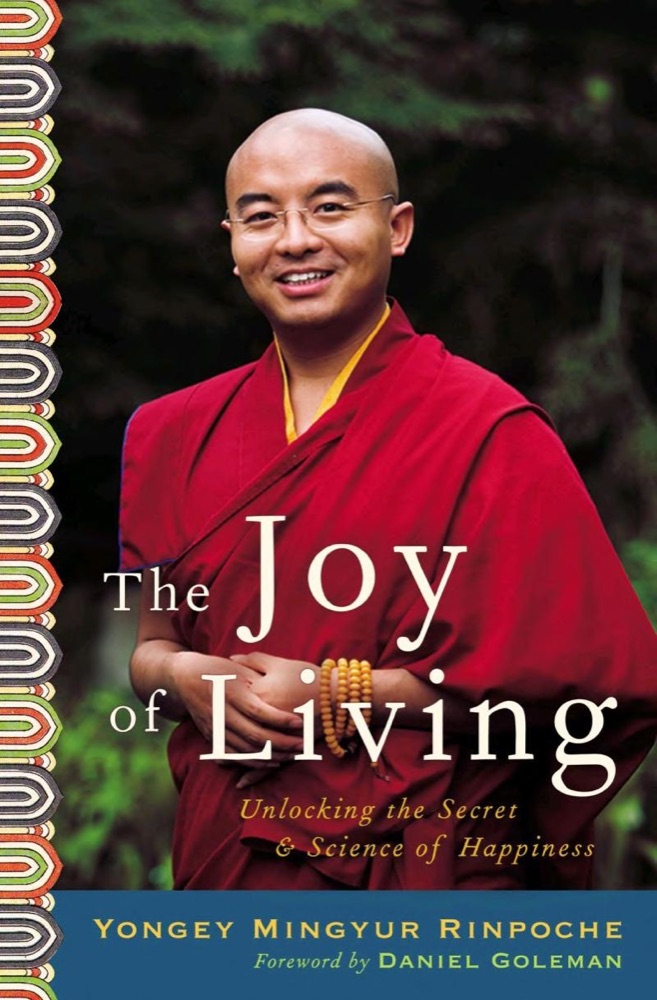 The Joy of Living: Unlocking the Secret and Science of Happiness
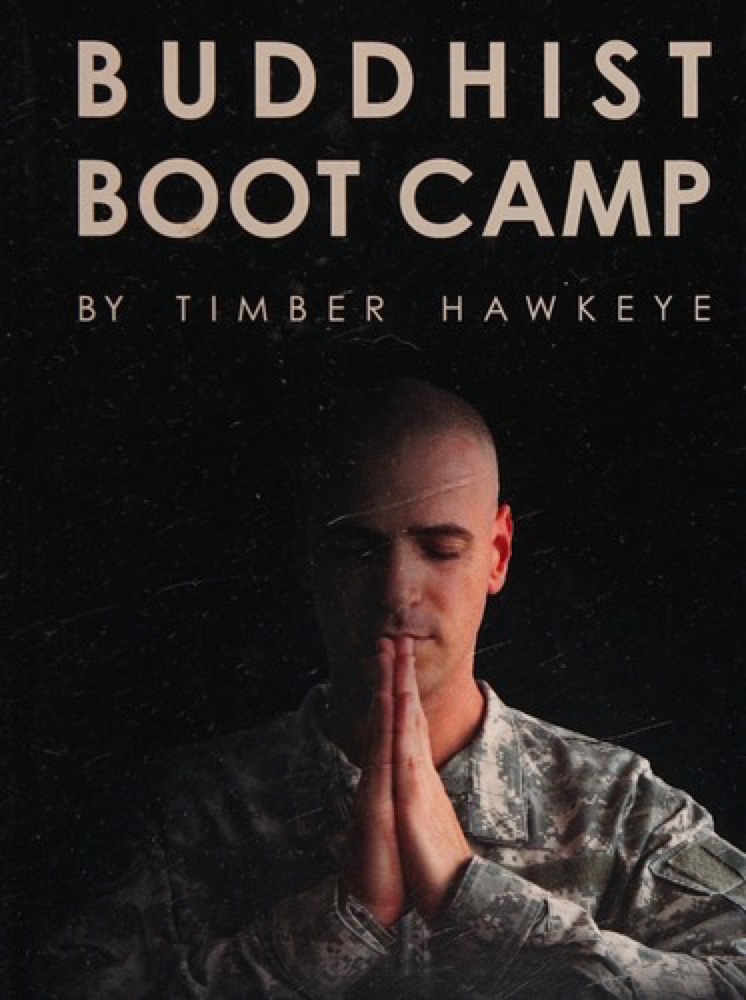 Buddhist Boot Camp
 The Dalai Lama's Cat and the Power of Meow
 The Book of Secrets: Unlocking the Hidden Dimensions of Your Life
 The Book of Joy: Lasting Happiness in a Changing World
 The Tibetan Book of Living and Dying
 Carry On, Warrior: Thoughts on Life Unarmed
 Self-Compassion: The Proven Power of Being Kind to Yourself
 Living Untethered: Beyond the Human Predicament
 The Buddha Walks into a Bar . . .: A Guide to Life for a New Generation
 Awakening the Buddha Within
 The Light We Carry: Overcoming in Uncertain Times
 Meditation for Beginners
 Mindfulness in Plain English
 Happiness: A Guide to Developing Life's Most Important Skill
 You Can Heal Your Life
 365 Tao: A Study of Taoist Wisdom for Daily Life
 Going to Pieces without Falling Apart: A Buddhist Perspective on Wholeness
 Cutting Through Spiritual Materialism
 Lovingkindness: The Revolutionary Art of Happiness
 My Spiritual Journey: Personal Reflections, Teachings, and Talks
 Letting Go: The Pathway To Surrender
 The Things You Can See Only When You Slow Down: How to Be Calm in a Busy World
 A Return to Love: Reflections on the Principles of "A Course in Miracles"
 Wherever You Go, There You Are: Mindfulness Meditation in Everyday Life
 The Gifts of Imperfection
 Waking Up: A Guide to Spirituality Without Religion
 Stillness Is the Key
 Real Happiness: A 28-Day Program to Realize the Power of Meditation
 How to Be an Adult in Relationships: The Five Keys to Mindful Loving
 Buddhism Plain & Simple: The Practice of Being Aware, Right Now, Every Day
 The Power of Now: A Guide to Spiritual Enlightenment
 In Love with the World: A Monk's Journey Through the Bardos of Living and Dying
 The Tools: Transform Your Problems into Courage, Confidence, and Creativity
 Be Water, My Friend: The Teachings of Bruce Lee
 How to Stop Worrying and Start Living
 Practicing the Power of Now: Essential Teachings, Meditations, and Exercises from the Power of Now
 Rising Strong