 The Book of Joy: Lasting Happiness in a Changing World
Quotes from the Book
True change is within; leave the outside as it is.
187
My earnest request is that you practice love and kindness whether you believe in a religion or not.
8
more dangerous than guns or bombs are hatred, lack of compassion, and lack of respect for the rights of others. As long as hatred dwells in the human mind, real peace is impossible.
4
If with a warm heart and patience we can consider the views of others, and exchange ideas in calm discussion, we will find points of agreement.
3
To train the mind, you must exercise the patience and determination it takes to shape that steel.
3
He told me that while he was in a Chinese Communist gulag for almost eighteen years, he faced danger on a few occasions. I thought he was referencing a threat to his own life. But when I asked, "What danger?" he answered, "Losing compassion toward the Chinese.
3
Though my own knowledge is limited and my experience is also very poor, I have tried my best to help you understand the full breadth of the Buddha’s teaching. Please implement whatever in these pages appears to be helpful. If you follow another religion, please adopt whatever might assist you. If you do not think it would be helpful, just leave it alone.
2
Real compassion is based on reason. Ordinary compassion or love is limited by desire or attachment.
2
Enemies provide us some of the best opportunities to practice patience, tolerance, and compassion.
2
Rather, spend more on health and education for poor people. This is not forced socialism but voluntary compassion.
2
In fact ants, to cite just one example, work unselfishly for the community; we humans sometimes do not look good by comparison. We are supposed to be higher beings, so we must act according to our higher selves.
2
I accept everyone as a friend. In truth, we already know one another, profoundly, as human beings who share the same basic goals: We all seek happiness and do not want suffering.
2
As long as the sky exists And as long as there are sentient beings, May I remain to help Relieve them of all their pain.
2
In the frenzy of modern life we lose sight of the real value of humanity. People become the sum total of what they produce. Human beings act like machines whose function is to make money. This is absolutely wrong. The purpose of making money is the happiness of humankind, not the other way round. Humans are not for money, money is for humans. We need enough to live, so money is necessary, but we also need to realize that if there is too much attachment to wealth, it does not help at all. As the saints of India and Tibet tell us, the wealthier one becomes, the more suffering one endures.
2
Neither a space station nor an enlightened mind can be realized in a day.
2
By helping one another, with concern and respect, we can solve many problems easily. Harmony cannot thrive in a climate of mistrust, cheating, bullying and mean-spirited competition. Success through intimidation and violence is temporary at best; its trifling gains only create new problems.
1
May all the ill deeds, obstructions, and sufferings of beings Be transferred to me, without exception, at this moment, And my happiness and merit be sent to others. May all creatures be imbued with happiness! Just
1
Shantideva’s prayer: As long as the sky exists And as long as there are sentient beings, May I remain to help Relieve them of all their pain.
1
For a practitioner of love and compassion, an enemy is one of the most important teachers. Without an enemy you cannot practice tolerance, and without tolerance you cannot build a sound basis of compassion. So in order to practice compassion, you should have an enemy.
1
Under no circumstances should you lose hope. Hopelessness is a real cause of failure. Remember, you can overcome any problem.
1
Of course, I fail sometimes. Sometimes I get irritated. Occasionally I use a harsh word, but when I do, immediately I feel “Oh, this is wrong.
1
On every level—as individuals, and as members of a family, a community, a nation, and a planet—the most mischievous troublemakers we face are anger and egoism.
1
When I was young and living high above the city of Lhasa in the Potala Palace, I frequently looked at the life of the city through a telescope. I also learned a lot from the gossip of the sweepers in the palace. They were like my newspaper, relating what the Regent was doing, and what corruption and scandals were going on. I was always happy to listen, and they were proud to be telling the Dalai Lama about what was happening in the streets. The harsh events that unfolded after the invasion in 1950 forced me to become directly involved in issues that otherwise would have been kept at a distance. As a result I have come to prefer a life of committed social action in this world of suffering.
Your mind itself turns into a still more subtle, vividly black state; nothing else appears. This is called “near-attainment” because you are close to manifesting the mind of clear light. The mind of black vastness is like a moonless, very dark sky just after dusk when no stars are seen. In the beginning of this phase you are aware, but then you lose awareness as you slip into even thicker darkness. 8. When the mind of black appearance ceases, your mind itself turns into the fully aware mind of clear light. Called the fundamental innate mind of clear light, this is the most subtle, profound, and powerful level of consciousness. It is like the sky’s natural state at dawn (not sunrise)—without moonlight, sunlight, or darkness. The passage through to the mind of clear light can be fast or slow. Some people remain in the final stage, the mind of clear light of death, for only several minutes; others stay for as long as a week or two. Since the mind of clear light is so powerful, it is valuable to practice, so many Tibetan practitioners rehearse these stages of dying on a daily basis. I myself practice them six times daily by imagining the eight levels of mind one by one (without, of course, the physical changes in the first four stages). The eight levels of mind are: 1. mirage 2. smoke 3. fireflies 4. flame of a candle 5. vivid white sky-mind 6. vivid red or orange sky-mind 7. vivid black sky-mind 8. clear light
Analyze. Think, think, think. When you do you will recognize that our ordinary way of life is almost meaningless. Do not be discouraged. It would be very foolish to give up now. On those occasions when you feel most hopeless, you must make a powerful effort. We are so accustomed to faulty states of mind that it is difficult to change with just a little practice. Just a drop of something sweet cannot change a taste that is powerfully bitter. We must persist in the face of failure. In difficult personal circumstances the best recourse is to try to remain as honest and sincere as possible. Otherwise, by responding harshly or selfishly, you simply make matters worse. This is especially apparent in painful family situations. You should realize that difficult present circumstances are entirely due to your own past undisciplined actions, so when you experience a difficult period, do your best to avoid behavior that will add to your burden later on. It is important to diminish undisciplined states of mind, but it is even more important to meet adversity with a positive attitude. Keep this in mind: By greeting trouble with optimism and hope, you are undermining worse troubles down the line. Beyond that, imagine that you are easing the burden of everyone suffering problems of that kind. This practice--imagining that by accepting your pain you are using up the negative karma of everyone destined to feel such pain--is very helpful.
The purpose of making money is the happiness of humankind, not the other way round. Humans are not for money, money is for humans. We need enough to live, so money is necessary, but we also need to realize that if there is too much attachment to wealth, it does not help at all.
On those occasions when you feel most hopeless, you must make a powerful effort. We are so accustomed to faulty states of mind that it is difficult to change with just a little practice. Just a drop of something sweet cannot change a taste that is powerfully bitter. We must persist in the face of failure.
I believe that the practice of compassion and love—a genuine sense of brotherhood and sisterhood—is the universal religion. It does not matter whether you are Buddhist or Christian, Moslem or Hindu, or whether you practice religion at all. What matters is your feeling of oneness with humankind.
Form is Emptiness, Emptiness is Form.
Watch on YouTube
About Dalai Lama XIV
We have collected 244 quotes from 9 books by Dalai Lama XIV on BookQuoters.
More about the author →More by Dalai Lama XIV
The Book of Joy: Lasting Happiness in a Changing World
 The Universe in a Single Atom: The Convergence of Science and Spirituality
 The Art of Happiness
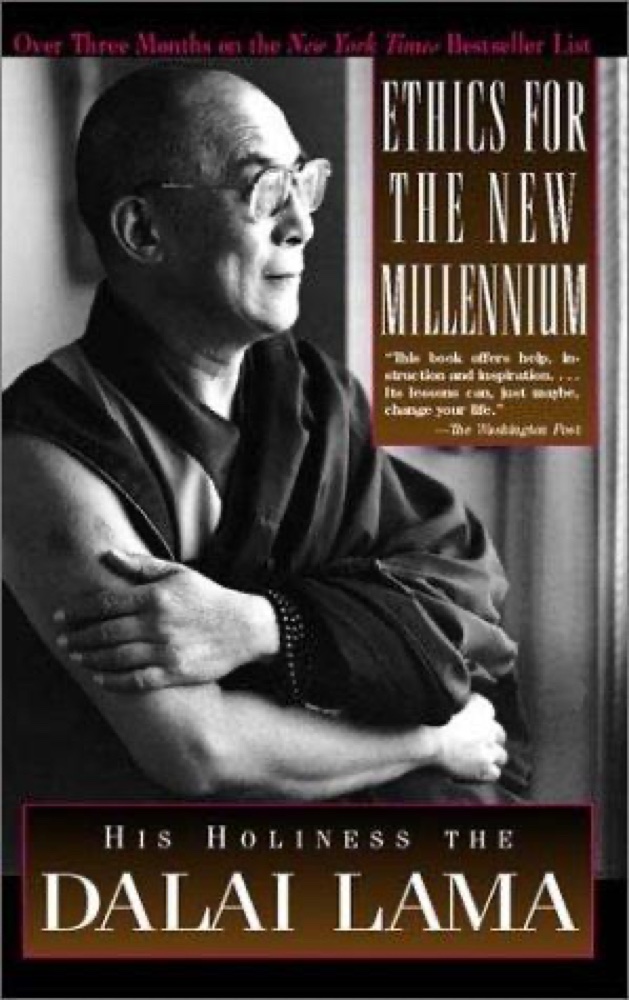 Ethics for the New Millennium
About the book
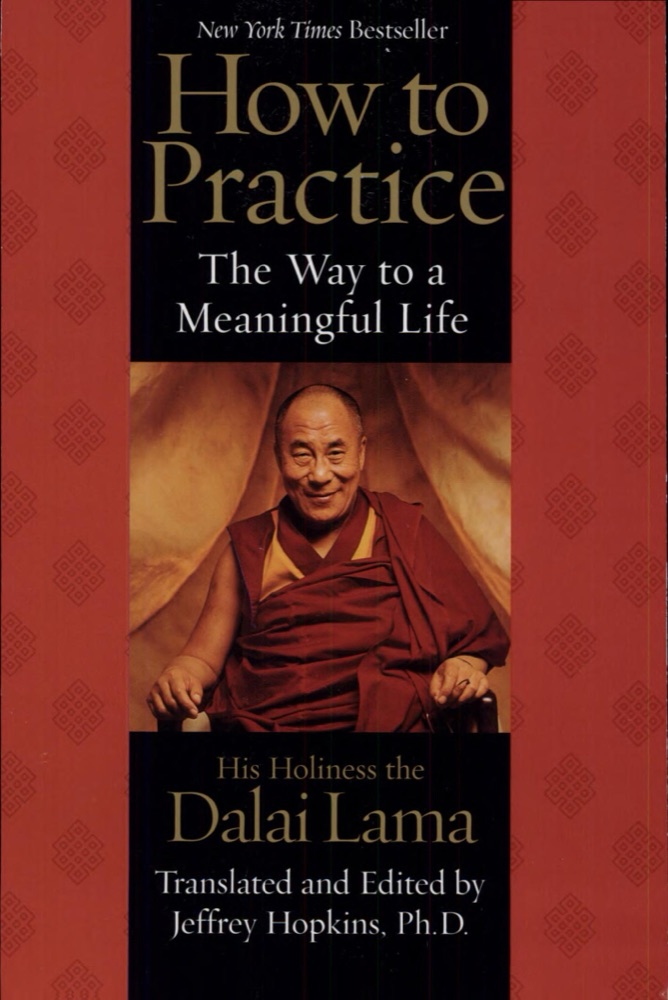
As human beings, we all share the desire for happiness and meaning in our lives. According to His Holiness the Dalai Lama, the ability to find true fulfillment lies within each of us. In this very special book, the spiritual and temporal leader of Tibet, Nobel Prize winner, and bestselling author helps readers embark upon the path to enlightenment with a stunning illumination of the timeless wisdom and an easy-access reference for daily practice. Divided into a series of distinct steps that will lead spiritual seekers toward enlightenment, How to Practice is a constant companion in the quest to practice morality, meditation, and wisdom. This accessible book will guide you toward opening your heart, refraining from doing harm, and maintiaining mentaltranquility as the Dalai Lama shows you how to overcome everyday obstacles, from feelings of anger and mistrust to jealousy, insecurity, and
Book details
- First published
- 2002
- Author
- Dalai Lama XIV
- Genre
- Nonfiction
- Goodreads rating
- 4.08 (10k ratings)
Keep reading
 How to See Yourself As You Really Are
 The Wise Heart: A Guide to the Universal Teachings of Buddhist Psychology
 My Spiritual Journey: Personal Reflections, Teachings, and Talks
 Being Peace
 The Heart of the Buddha's Teaching: Transforming Suffering into Peace, Joy, and Liberation
The Book of Joy: Lasting Happiness in a Changing World
The Heart of the Buddha's Teaching: Transforming Suffering into Peace, Joy, and Liberation
The Book of Joy: Lasting Happiness in a Changing World
 Zen and the Art of Saving the Planet
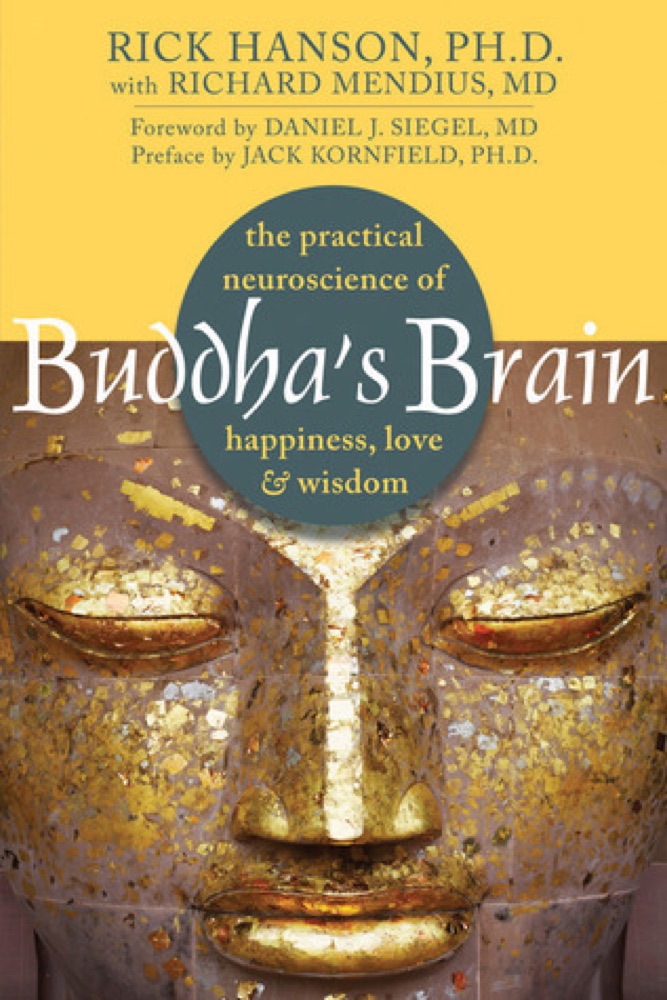 Buddha's Brain: The Practical Neuroscience of Happiness, Love, and Wisdom
 The Places That Scare You: A Guide to Fearlessness in Difficult Times
 The Way of the Bodhisattva
 Twelve Steps to a Compassionate Life
 Everyday Zen: Love & Work
 Against the Stream: A Buddhist Manual for Spiritual Revolutionaries
 Buddhist Boot Camp
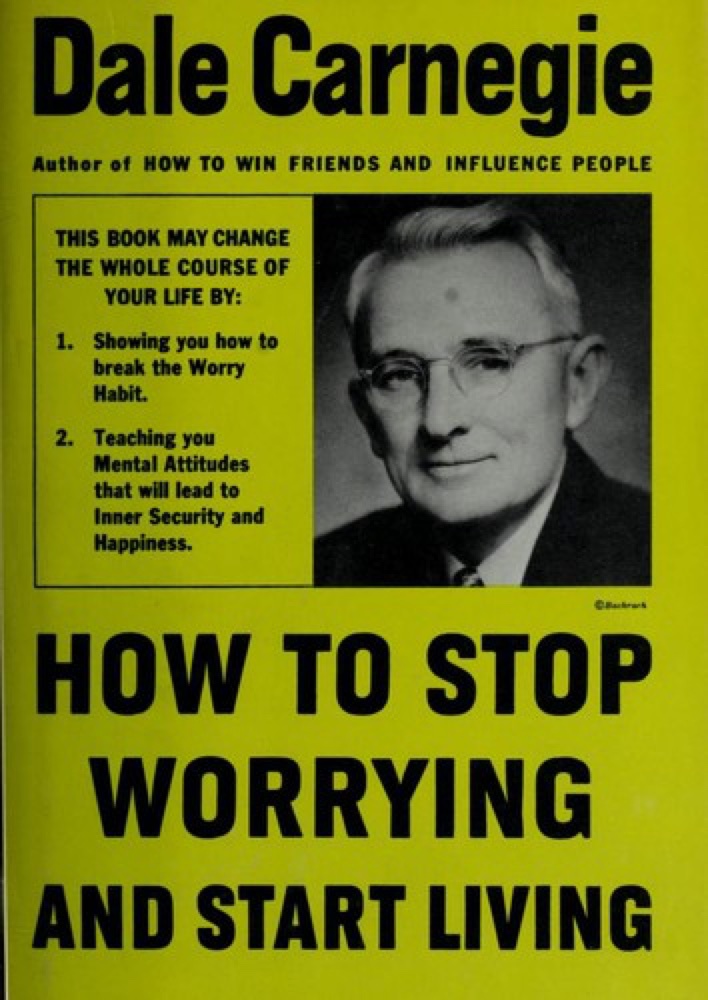 How to Stop Worrying and Start Living
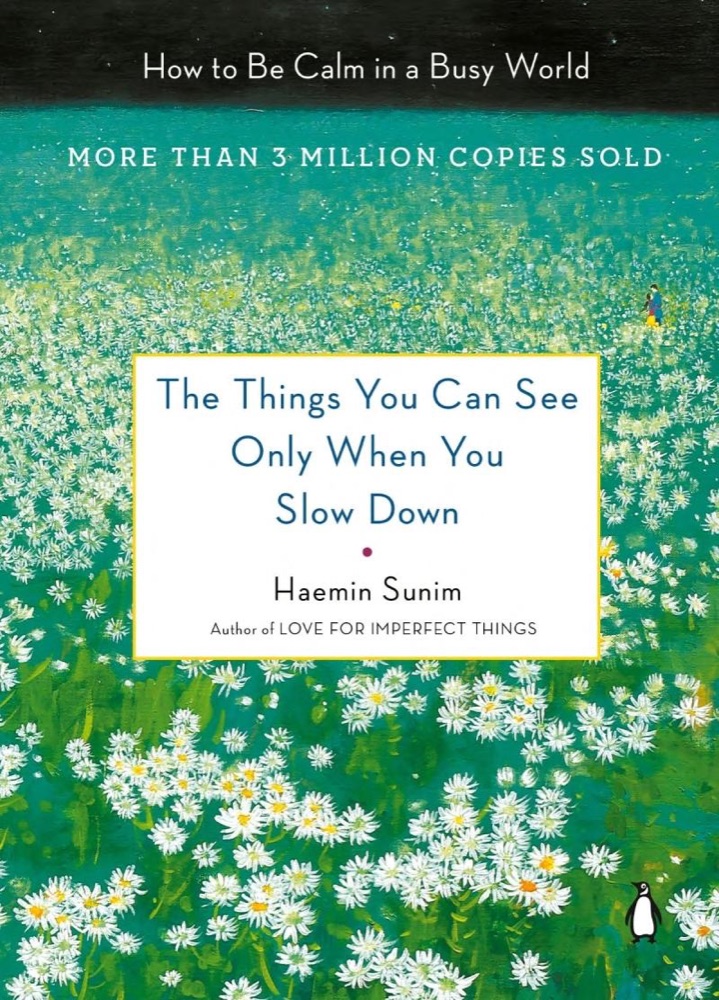 The Things You Can See Only When You Slow Down: How to Be Calm in a Busy World
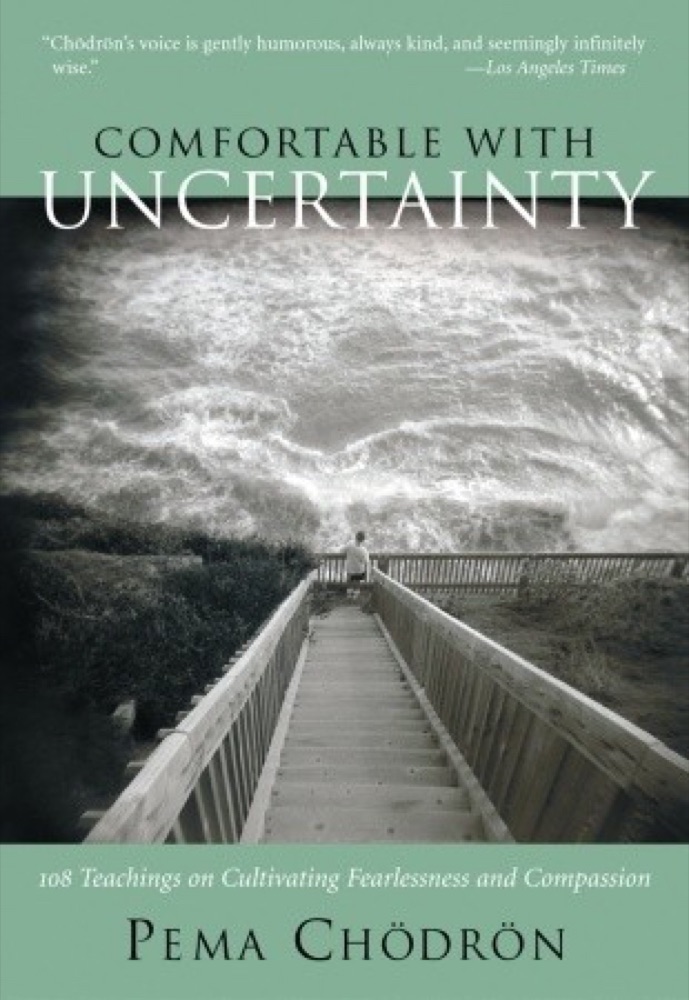 Comfortable with Uncertainty: 108 Teachings on Cultivating Fearlessness and Compassion
 Awakening the Buddha Within
 A Calendar of Wisdom: Daily Thoughts to Nourish the Soul
 Happiness: A Guide to Developing Life's Most Important Skill
 The Dalai Lama's Cat and the Power of Meow
 The Wisdom of No Escape: How to Love Yourself and Your World
 Awareness: Conversations with the Masters
 365 Tao: A Study of Taoist Wisdom for Daily Life
 How to Be Perfect: The Correct Answer to Every Moral Question
 The Journey Home
 Total Freedom: The Essential Krishnamurti
 Happiness Becomes You: A Guide to Changing Your Life for Good
 Lovingkindness: The Revolutionary Art of Happiness
 Carry On, Warrior: Thoughts on Life Unarmed
 Sacred Journey of the Peaceful Warrior
 The Art of Living: The Classical Manual on Virtue, Happiness and Effectiveness
 The Gay Science
 Love for Imperfect Things: How to Accept Yourself in a World Striving for Perfection
 A Return to Love: Reflections on the Principles of "A Course in Miracles"
 Change Your Thoughts - Change Your Life: Living the Wisdom of the Tao
 The Buddha Walks into a Bar . . .: A Guide to Life for a New Generation
 12 Rules for Life: An Antidote to Chaos
 The Four Agreements: A Practical Guide to Personal Freedom
 Kitchen Table Wisdom: Stories that Heal
 The Book of Awakening: Having the Life You Want by Being Present to the Life You Have
 The Tibetan Book of Living and Dying
 Be Water, My Friend: The Teachings of Bruce Lee
 Tattoos on the Heart: The Power of Boundless Compassion
 If You Meet the Buddha on the Road, Kill Him! The Pilgrimage of Psychotherapy Patients
 Wings of Fire: An Autobiography
 The Art of Being
 When Nietzsche Wept
 Mindfulness in Plain English
 Almost Everything: Notes on Hope
 True Refuge: Finding Peace and Freedom in Your Own Awakened Heart
 Letting Go of the Person You Used to Be: Lessons on Change, Loss, and Spiritual Transformation
 The Book of Wisdom
 Waking Up: A Guide to Spirituality Without Religion
 The Story of My Experiments With Truth
 The Yoga Sutras of Pantanjali
 Rise Up and Salute the Sun: The Writings of Suzy Kassem
 Nonviolence: The Transforming Power