 This Is Your Brain on Music
Quotes from the Book
Fending off Alzheimer’s, he says, involves five key components: a diet rich in vegetables and good fats, oxygenating the blood through moderate exercise, brain training exercises, good sleep hygiene, and a regimen of supplements individually tailored to each person’s own needs, based on blood and genetic testing.
3
APPENDIX REJUVENATING YOUR BRAIN Don’t retire. Don’t stop being engaged with meaningful work. Look forward. Don’t look back. (Reminiscing doesn’t promote health.) Exercise. Get your heart rate going. Preferably in nature. Embrace a moderated lifestyle with healthy practices. Keep your social circle exciting and new. Spend time with people younger than you. See your doctor regularly, but not obsessively. Don’t think of yourself as old (other than taking prudent precautions). Appreciate your cognitive strengths—pattern recognition, crystallized intelligence, wisdom, accumulated knowledge. Promote cognitive health through experiential learning: traveling, spending time with grandchildren, and immersing yourself in new activities and situations. Do new things.
2
This is how memory works in the brain—as soon as you retrieve a memory, it becomes editable, just like a text document; it enters a vulnerable state and can get rewritten without your intent, consent, or knowledge. Often, a memory is rewritten by new information that gets colored in during one recollection, and then that new information gets grafted onto and stored with the old, all seamlessly, without your conscious awareness. This process can happen over and over again until the original memory in your brain has been replaced with subsequent interpretations, impressions, and recollections.
1
Spend time with people who encourage you to grow, to explore new things, and who take joy in your successes.
1
In one experiment people who forced a smile actually felt happier than people who forced a frown, just because that muscle was engaged. It turns out that the nervous system is bidirectional. It doesn’t matter whether the brain makes the mouth smile or the mouth makes the brain smile. So smile, think positive thoughts, and try new things. If you’re not feeling good, act as if you are. A cheerful, positive, optimistic outlook—even if it starts out fake—can end up becoming real.
1
Remember also that memory is mood-state dependent. If you're in a bad mood, you tend to have easier access to memories of other times you were in a bad mood or were sad, or times when things didn't go right, and it's easy to fall into a despondency cycle of "this pain is just going to get worse and worse...this always happens to me." If you're in a good mood, your mind tends to recall happy events, and you predict a more positive future. This good mood can lead to a virtuous cycle in which the positive-mood neurochemicals help with healing and you do actually get better more quickly. p228
A long-standing theory attributed to Paul Ekman is that there are six such basic emotions, cultural universals, meaning that they exist independent of culture: fear, anger, happiness, sadness, disgust and surprise. According to this theory, the hundreds of other emotions we describe, such as vexation, winsomeness, regret, and hope, may be culturally dependent, or cognitive constructions. The theory is controversial and the evidence for it is mixed- even those six may not be truly universal; we just don't know yet. There may be more, including emerging evidence that we should add spite the the list. (That''ll show 'em!) p150
Gardner's intelligences are: 1. musical-rhythmic, 2. visual-spatial, 3. verbal-linguistic, 5. bodily-kinesthetic (athleticism, dancing, acting), 6. interpersonal (or "social" intelligence), 7. intrapersonal (or self-knowledge), 8. spiritual (think Moses, Jesus, Mohammed, Buddha, for example), 9. moral (ability to solve problems within a moral and ethical frame, think King Solomon), and 10. naturalistic (knowledge of nature, plants, animals, and the sorts of things one might need to know to survive in the wilderness). p124
We need to somehow separate out the learning experiences a person has had- knowledge acquisition- from their innate ability to use whatever information they have. Scientists call the things you've already learned crystallized intelligence, and they call your potential to learn fluid intelligence. There's also a third intelligence I call acquisitional intelligence- that's the speed and ease with which you can acquire new information (if given the right opportunity). Think of it as coming before both crystallized and fluid intelligence: You can't amass a store of learned information quickly without acquisitional intelligence. p122
Before traveling east, start advancing your body clock as many days before your trip as the number of time zones you’ll be crossing. Get into sunlight early in the day, or use a sunlight lamp. Once you’re on the plane eastbound, wear eyeshades to cover your eyes two hours or so before sunset in your destination city, to acclimate yourself to the new “dark” time.
Curiosity, Openness, Associations (as in sociability), Conscientiousness, and Healthy practices are the five lifestyle choices that have
Following a stroke, nearly one-third of people experience hemispatial neglect, also known as unilateral neglect. This causes the stroke survivor to ignore one side of their body or visual field and to be unaware that they have a deficit. As you can imagine, it is a leading cause of falls and other injuries. A reliable way to treat hemispatial neglect is through the use of prismatic glasses that gradually shift the patient’s attention toward the side that is neglected.
A reliable way to treat hemispatial neglect is through the use of prismatic glasses that gradually shift the patient’s attention toward the side that is neglected.
Relieved of all these stressors, including the pressure of actually being evaluated, and fears that they might come up short, the older adults performed as well as younger controls.
What are the determinants in how we age? The different systems in our brains age at different rates. Some systems decline as others actually increase in efficiency and effectiveness. The basic message
A large part of people who manage to stay young, in spite of their chronological age, relates to synaptic plasticity - the ability of the brain to make and form new connections. As we've seen, plasticity is influenced by your genetic makeup, your lifetime of experiences, and the culture in which you live. It is also influenced by your daily routines, especially as you get older. Astrocytes, a type of brain cell, serve as suppliers of that energy. A mounting body of evidence shows that physical activity increases the effectiveness of astrocytes and thereby enhances synaptic plasticity, memory, and overall cognition.
Herman Pontzer, an evolutionary anthropologist at Duke, studies health among hunter-gatherer societies whose lifestyles are similar to those of our ancestors. He found that they generally exhibit excellent health in spite of following a wide range of diets. It doesn't matter if they get 80% of their calories from carbohydrates, or from animal fat, or from nuts and berries - almost all eat more fiber than the average American, but that is about the only difference. (This takes the wind out of the paleo diet.) Interestingly, they don't shun sugar, consuming it in the form of honey. Notably they don't have access to processed foods of or deep-fried foods.
Collaborating with someone you disagree with represents a scientific ideal. When two or more researchers who are pursuing different theories, and who disagree with one another, decide to work together, the results can transform a field. Today many consider Lew the father of the Big Five personality categories. There have been cross-cultural replications in dozens of languages and cultures, including Chinese, German, Hebrew, Japanese, Korean, Portuguese, and Turkish. As you might expect, some minor differences emerge in disparate cultures, but the Big Five remain the best description. The Big Five dimensions are: I. Extraversion II. Agreeableness III. Conscientiousness IV. Emotional Stability versus Neuroticism V. Openness to Experience + Intellect (also called Imagination). Each of these categories includes many dozens of individual traits. As you can see, there has been some controversy around what to call the last one, but don't let that bother you- it is a well-defined dimension that includes a number of traits that cohere in real life.
The Greek physicians Herophilus and Erasistratus discovered the nervous system in 322 BC, placing the seat of thought in the brain. It might be fair to say that they were the first neuroscientists. Previously, Aristotle and others thought the brain's function was simply to cool the blood, due to it's many folds and creases.
The prefrontal cortex is what we use to se goals, make plans, divide a large project up into smaller pieces, exercise impulse control, and decide what we're going to pay attention to. As I mentioned earlier, the prefrontal cortex is the last region to develop in childhood and doesn't fully mature until well after puberty - into the late twenties. Because of it's involvement in impulse control, there have been several cases in which defense attorneys argued that eighteen-to-twenty-year-olds shouldn't be held responsible for law-breaking acts because they lack an adult like, mature prefrontal cortex that would allow them to exercise adult-like impulse control. The prefrontal cortex is also the first cortical region to show wear and tear as we get older. "That is why one of the most significant problems in older adults is the ability to keep track of thoughts and prevent stray ones from interfering," says Art Shimamura. "Brain fitness as we age depends significantly on maintaining a healthy and active prefrontal cortex. The more we engage this brain region during daily activities, the better we will be able to control our thoughts and think flexibly.
Booker T. Washington wrote that "character, not circumstances", makes the person. Ralph Waldo Emerson wrote, "No change of circumstances can repair a defect of character." While character makes for a good story or poem, in reality we are less shaped by character traits than we think, and more than we realize by the circumstances that life deals us - and our responses to those circumstances.
Anger, hatred, and fear are very bad for our health. . . . Passing through life, progressing to old age and eventually death, it is not sufficient to just take care of the body. We need to take care of our emotions as well.
An adjustable noise machine or even a hearing aid can be programmed to provide stimulation at the precise frequency of the tinnitus, thus giving those orphaned neurons some stimulation, which causes them to calm down and, voilà, the tinnitus disappears.
Spend time with people younger than you. See your doctor regularly, but not obsessively. Don’t think of yourself as old (other than taking prudent precautions). Appreciate your cognitive strengths—pattern recognition, crystallized intelligence, wisdom, accumulated knowledge. Promote cognitive health through experiential learning: traveling, spending time with grandchildren, and immersing yourself in new activities and situations. Do new things.
Don’t retire. Don’t stop being engaged with meaningful work. Look forward. Don’t look back. (Reminiscing doesn’t promote health.) Exercise. Get your heart rate going. Preferably in nature. Embrace a moderated lifestyle with healthy practices. Keep your social circle exciting and new. Spend time with people younger than you. See your doctor regularly, but not obsessively. Don’t think of yourself as old (other than taking prudent precautions). Appreciate your cognitive strengths—pattern recognition, crystallized intelligence, wisdom, accumulated knowledge. Promote cognitive health through experiential learning: traveling, spending time with grandchildren, and immersing yourself in new activities and situations. Do new things.
Watch on YouTube
About Daniel J. Levitin
We have collected 89 quotes from 3 books by Daniel J. Levitin on BookQuoters.
More about the author →More by Daniel J. Levitin
This Is Your Brain on Music
 The Organized Mind: Thinking Straight in the Age of Information Overload
About the book
Debunks the idea that aging inevitably brings infirmity and unhappiness and instead offers a trove of practical, evidence-based guidance for living longer and better.--Daniel H. Pink, author of When and Drive SUCCESSFUL AGING delivers powerful insights: - Debunking the myth that memory always declines with age - Confirming that health span--not life span--is what matters - Proving that sixty-plus years is a unique and newly recognized developmental stage - Recommending that people look forward to joy, as reminiscing doesn't promote health
Levitin looks at the science behind what we all can learn from those who age joyously, as well as how to adapt our culture to take full advantage of older people's wisdom and experience. Throughout his exploration of what aging really means, using research from developmental neuroscience and the psychology of individual differences, Levitin reveals
Book details
- First published
- 2020
- Author
- Daniel J. Levitin
- Genre
- Nonfiction
- Goodreads rating
- 3.93 (4k ratings)
The buzz
- Kirkus ReviewsReview in Kirkus Reviewsprofessional review (via Book Marks)
- BooklistReview in Booklistprofessional review (via Book Marks)
- BookPageReview in BookPageprofessional review (via Book Marks)
Keep reading
 The Brain That Changes Itself: Stories of Personal Triumph from the Frontiers of Brain Science
 A User's Guide to the Brain: Perception, Attention, and the Four Theaters of the Brain
 Life Reimagined: The Science, Art, and Opportunity of Midlife
 Outlive: The Science & Art of Longevity
 Behave: The Biology of Humans at Our Best and Worst
 The Upward Spiral: Using Neuroscience to Reverse the Course of Depression, One Small Change at a Time
 Mindsight: The New Science of Personal Transformation
 My Stroke of Insight: A Brain Scientist's Personal Journey
 Good Reasons for Bad Feelings: Insights from the Frontier of Evolutionary Psychiatry
 Rewire Your Brain: Think Your Way to a Better Life
 Evolve Your Brain: The Science of Changing Your Mind
 The Future of the Mind: The Scientific Quest to Understand, Enhance, and Empower the Mind
 The Happiness Hypothesis: Finding Modern Truth in Ancient Wisdom
 Why Zebras Don't Get Ulcers
 You Are the Placebo: Making Your Mind Matter
 When the Body Says No: The Cost of Hidden Stress
 Descartes' Error: Emotion, Reason and the Human Brain
 Spark: The Revolutionary New Science of Exercise and the Brain
 Social Intelligence: The New Science of Human Relationships
 The Social Animal: The Hidden Sources of Love, Character, and Achievement
 Natural Causes: An Epidemic of Wellness, the Certainty of Dying, and Killing Ourselves to Live Longer
 Breaking the Habit of Being Yourself: How to Lose Your Mind and Create a New One
 Emotional Design: Why We Love (or Hate) Everyday Things
 The Tale of the Dueling Neurosurgeons: The History of the Human Brain as Revealed by True Stories of Trauma, Madness, and Recovery
 The Boy Who Was Raised as a Dog: And Other Stories from a Child Psychiatrist's Notebook
 Buddha's Brain: The Practical Neuroscience of Happiness, Love, and Wisdom
 Remember: The Science of Memory and the Art of Forgetting
 Livewired: The Inside Story of the Ever-Changing Brain
The Organized Mind: Thinking Straight in the Age of Information Overload
Livewired: The Inside Story of the Ever-Changing Brain
The Organized Mind: Thinking Straight in the Age of Information Overload
 Scarcity Brain: Fix Your Craving Mindset and Rewire Your Habits to Thrive with Enough
 How We Decide
 Why We Get Sick: The New Science of Darwinian Medicine
 Burnout: The Secret to Unlocking the Stress Cycle
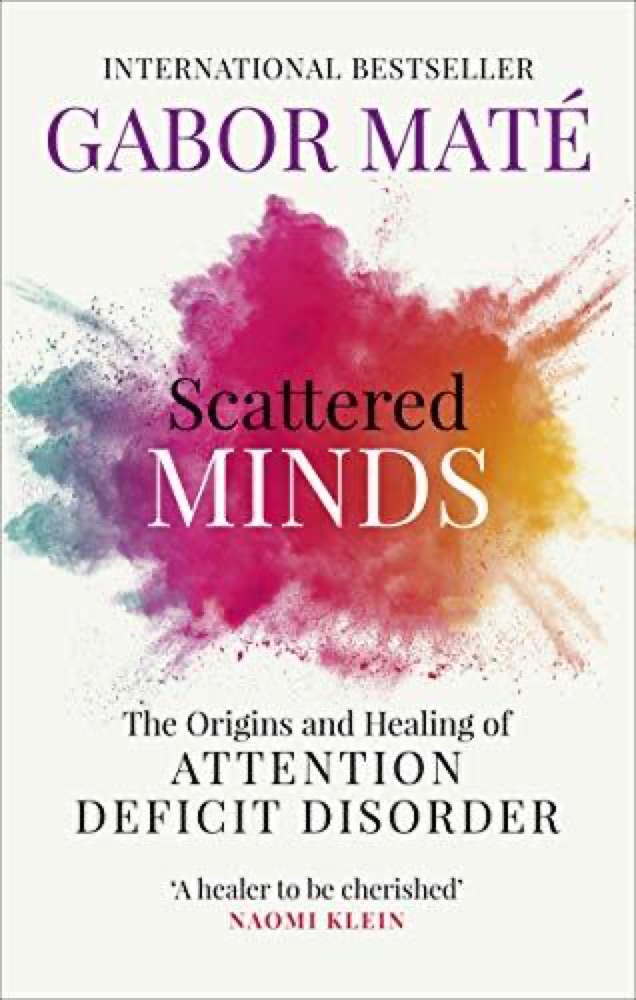 Scattered Minds: The Origins and Healing of Attention Deficit Disorder
 How to Stay Sane
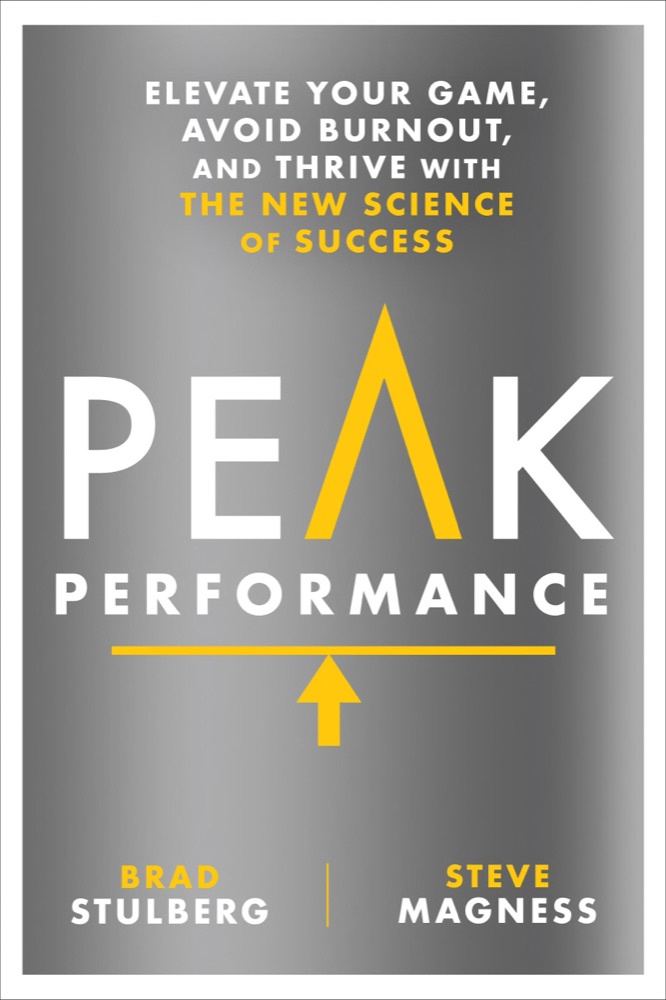 Peak Performance: Elevate Your Game, Avoid Burnout, and Thrive with the New Science of Success
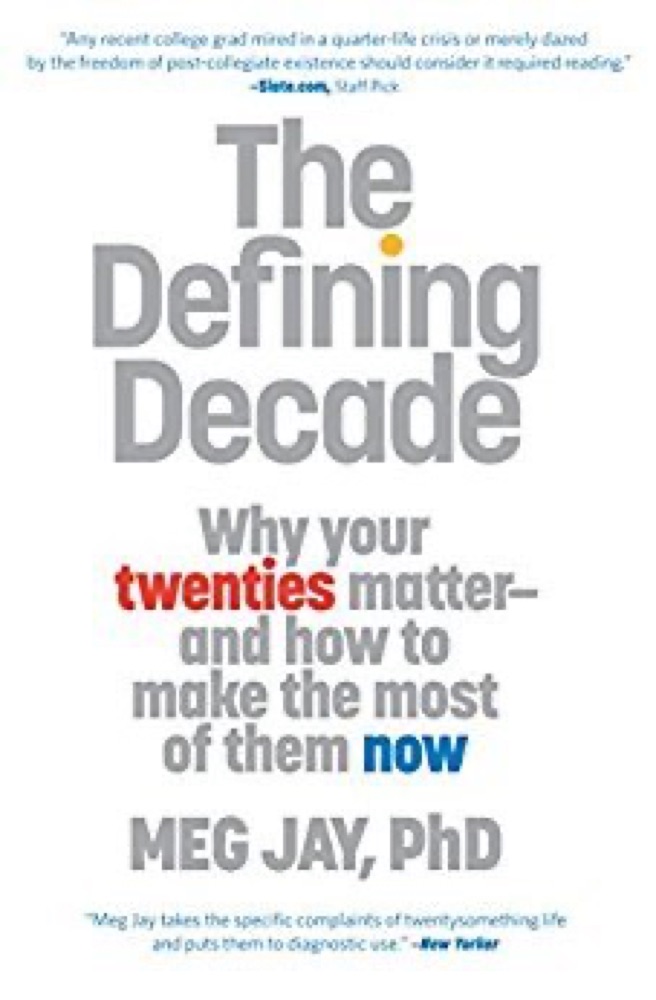 The Defining Decade: Why Your Twenties Matter—And How to Make the Most of Them Now
 How the Mind Works
 Drunk: How We Sipped, Danced, and Stumbled Our Way to Civilization
 Elderhood: Redefining Aging, Transforming Medicine, Reimagining Life
 The New Psycho-Cybernetics: The Original Science of Self-Improvement and Success That Has Changed the Lives of 30 Million People
 Finding Flow: The Psychology of Engagement with Everyday Life
 What Doesn't Kill Us: How Freezing Water, Extreme Altitude, and Environmental Conditioning Will Renew Our Lost Evolutionary Strength
 The Willpower Instinct: How Self-Control Works, Why It Matters, and What You Can Do to Get More of It
 Healing Back Pain: The Mind-Body Connection
 The Highly Sensitive Person: How to Thrive When the World Overwhelms You
 Brain Energy: A Revolutionary Breakthrough in Understanding Mental Health—and Improving Treatment for Anxiety, Depression, OCD, PTSD, and More
 A General Theory of Love
 Why Has Nobody Told Me This Before?
 Peak: Secrets from the New Science of Expertise
 How to Change Your Mind: The New Science of Psychedelics
 Smarter Faster Better: The Secrets of Being Productive in Life and Business
 How We Learn: Why Brains Learn Better Than Any Machine . . . for Now
 A Thousand Brains: A New Theory of Intelligence
 The Art of Impossible: A Peak Performance Primer
 What Happened To You?: Conversations on Trauma, Resilience, and Healing
 Many Lives, Many Masters: The True Story of a Prominent Psychiatrist, His Young Patient, and the Past Life Therapy That Changed Both Their Lives
 Moonwalking with Einstein: The Art and Science of Remembering Everything
 Psycho-Cybernetics