
 Social Intelligence: The New Science of Human Relationships
Quotes from the Book
In a very real sense we have two minds, one that thinks and one that feels
A belligerent samurai, an old Japanese tale goes, once challenged a Zen master to explain the concept of heaven and hell. The monk replied with scorn, "You're nothing but a lout - I can't waste my time with the likes of you!" His very honor attacked, the samurai flew into a rage and, pulling his sword from its scabbard, yelled "I could kill you for your impertinence." "That," the monk calmly replied, "is hell." Startled at seeing the truth in what the master pointed out about the fury that had him in its grip, the samurai calmed down, sheathed his sword, and bowed, thanking the monk for the insight. "And that,"said the monk "is heaven." The sudden awakening of the samurai to his own agitated state illustrates the crucial difference between being caught up in a feeling and becoming aware that you are being swept away by it. Socrates's injunction "Know thyself" speaks to the keystone of emotional intelligence: awareness of one's own feelings as they occur.
Anyone can become angry —that is easy. But to be angry with the right person, to the right degree, at the right time, for the right purpose, and in the right way —this is not easy. ARISTOTLE, The Nicomachean Ethics
people's emotions are rarely put into words , far more often they are expressed through other cues. the key to intuiting another's feelings is in the ability to read nonverbal channels , tone of voice , gesture , facial expression and the like
Emotional self-control-- delaying gratification and stifling impulsiveness- underlies accomplishment of every sort
Our emotional mind will harness the rational mind to its purposes, for our feelings and reactions-- rationalizations-- justifying them in terms of the present moment, without realizing the influence of our emotional memory.
But the rational mind usually doesn't decide what emotions we "should" have !
Feelings are self-justifying, with a set of perceptions and "proofs" all their own.
emotional self-awareness is the building block of the next fundamental emotional intelligence: being able to shake off a bad mood
Life is a comedy for those who think and a tragedy for those who feel. HORACE WALPOLE
Benjamin Franklin put it well: “Anger is never without a reason, but seldom a good one.
Leadership is not domination, but the art of persuading people to work toward a common goal.
There is perhaps no psychological skill more fundamental than resisting impulse.
When we are in the grip of craving or fury, head-over-heals in love our recoiling in dread, it is the limbic system that has us in its grip.
Fear, in evolution, has a special prominence: perhaps more than any other emotion it is crucial for survival.
People with well-developed emotional skills are also more likely to be content and effective in their lives, mastering the habits of mind that foster their own productivity; people who cannot marshal some control over their emotional life fight inner battles that sabotage their ability for focused work and clear thought.
A child's readiness for school depends on the most basic of all knowledge, how to learn. The report lists the seven key ingredients of this crucial capacity—all related to emotional intelligence:6 1. Confidence. A sense of control and mastery of one's body, behavior, and world; the child's sense that he is more likely than not to succeed at what he undertakes, and that adults will be helpful. 2. Curiosity. The sense that finding out about things is positive and leads to pleasure. 3. Intentionality. The wish and capacity to have an impact, and to act upon that with persistence. This is related to a sense of competence, of being effective. 4. Self-control. The ability to modulate and control one's own actions in age-appropriate ways; a sense of inner control. 5. Relatedness. The ability to engage with others based on the sense of being understood by and understanding others. 6. Capacity to communicate. The wish and ability to verbally exchange ideas, feelings, and concepts with others. This is related to a sense of trust in others and of pleasure in engaging with others, including adults. 7. Cooperativeness. The ability to balance one's own needs with those of others in group activity. Whether or not a child arrives at school on the first day of kindergarten with these capabilities depends greatly on how much her parents—and preschool teachers—have given her the kind of care that amounts to a "Heart Start," the emotional equivalent of the Head Start programs.
Helping people better manage their upsetting feelings—anger, anxiety, depression, pessimism, and loneliness—is a form of disease prevention. Since the data show that the toxicity of these emotions, when chronic, is on a par with smoking cigarettes, helping people handle them better could potentially have a medical payoff as great as getting heavy smokers to quit.
Life is a comedy for those who think and a tragedy for those who feel.
The guiding visionary behind Project Spectrum is Howard Gardner, a psychologist at the Harvard School of Education.7 “The time has come,” Gardner told me, “to broaden our notion of the spectrum of talents. The single most important contribution education can make to a child’s development is to help him toward a field where his talents best suit him, where he will be satisfied and competent. We’ve completely lost sight of that. Instead we subject everyone to an education where, if you succeed, you will be best suited to be a college professor. And we evaluate everyone along the way according to whether they meet that narrow standard of success. We should spend less time ranking children and more time helping them to identify their natural competencies and gifts, and cultivate those. There are hundreds and hundreds of ways to succeed, and many, many different abilities that will help you get there.
People’s beliefs about their abilities have a profound effect on those abilities. Ability is not a fixed property; there is a huge variability in how you perform. People who have a sense of self-efficacy bounce back from failures; they approach things in terms of how to handle them rather than worrying about what can go wrong.
many people with IQs of 160 work for people with IQs of 100, if the former have poor intrapersonal intelligence and the latter have a high one.
For better or worse, intelligence can come to nothing when the emotions hold sway.
Once when I was about 13, in an angry fit, I walked out of the house vowing I would never return. It was a beautiful summer day, and I walked far along lovely lanes, till gradually the stillness and beauty calmed and soothed me, and after some hours I returned repentant and almost melted. Since then when I am angry, I do this if I can, and find it the best cure.
If there is a remedy, I feel it must lie in how we prepare our young for life.
The neocortex allows for the subtlety and complexity of emotional life, such as the ability to have feelings about our feelings.
We transmit and catch moods from each other in what amounts to a subterranean economy of the psyche in which some encounters are toxic, some nourishing.
goal-directed self-imposed delay of gratification" is perhaps the essence of emotional self-regulation: the ability to deny impulse in the service of a goal, whether it be building a business, solving an algebraic equation, or pursuing the Stanley Cup. His finding underscores the role of emotional intelligence as a meta-ability, determining how well or how poorly people are able to use their other mental capacities.
Watch on YouTube
About Daniel Goleman
We have collected 54 quotes from 2 books by Daniel Goleman on BookQuoters.
More about the author →More by Daniel Goleman
Social Intelligence: The New Science of Human Relationships
Book details
- Author
- Daniel Goleman
- Genre
- Nonfiction
- Goodreads rating
- 4.06 (139k ratings) →
Keep reading
 Emotional Intelligence 2.0: With Access Code
Social Intelligence: The New Science of Human Relationships
Emotional Intelligence 2.0: With Access Code
Social Intelligence: The New Science of Human Relationships
 Descartes' Error: Emotion, Reason and the Human Brain
 Flow: The Psychology of Optimal Experience
 The School of Life: An Emotional Education
 The Social Animal: The Hidden Sources of Love, Character, and Achievement
 How We Decide
 Mastery
 The Laws of Human Nature
 Why Has Nobody Told Me This Before?
 The Happiness Advantage: The Seven Principles of Positive Psychology That Fuel Success and Performance at Work
 The New Psycho-Cybernetics: The Original Science of Self-Improvement and Success That Has Changed the Lives of 30 Million People
 A General Theory of Love
 Atlas of the Heart: Mapping Meaningful Connection and the Language of Human Experience
 Nonviolent Communication: A Language of Life
 When the Body Says No: The Cost of Hidden Stress
 Letting Go: The Pathway To Surrender
 The Subtle Art of Not Giving a F*ck: A Counterintuitive Approach to Living a Good Life
 Mama's Last Hug: Animal Emotions and What They Tell Us about Ourselves
 The Happiness Hypothesis: Finding Modern Truth in Ancient Wisdom
 The Antidote: Happiness for People Who Can't Stand Positive Thinking
 Mindsight: The New Science of Personal Transformation
 Blink: The Power of Thinking Without Thinking
 Stumbling on Happiness
 Six Pillars of Self-Esteem
 The 7 Habits of Highly Effective People: Personal Workbook
 Psycho-Cybernetics
 Feeling Good: The New Mood Therapy
 Be a People Person
 Maybe You Should Talk to Someone: A Therapist, Her Therapist, and Our Lives Revealed
 The Consolations of Philosophy
 Toward a Psychology of Being
 All Is Not Forgotten
 The Examined Life: How We Lose and Find Ourselves
 The World According to Mister Rogers: Important Things to Remember
 Emotional Design: Why We Love (or Hate) Everyday Things
 The Art of Happiness
 Untangle Your Emotions: Naming What You Feel and Knowing What to Do About It
 The Gift of Fear: Survival Signals That Protect Us from Violence
 Psych: The Story of the Human Mind
 Thinking, Fast and Slow
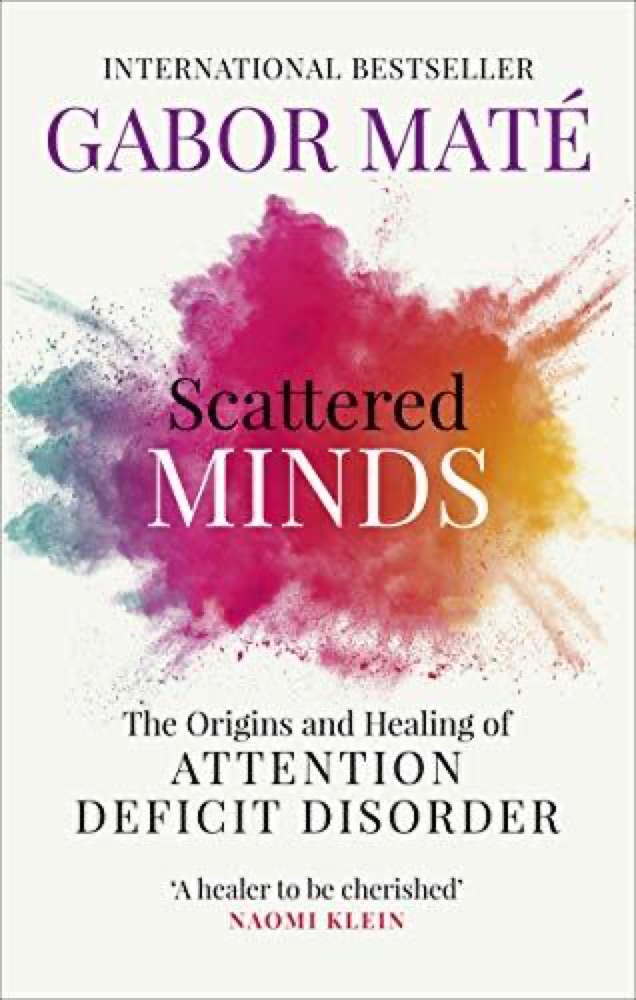 Scattered Minds: The Origins and Healing of Attention Deficit Disorder
 The Relationship Cure: A 5 Step Guide to Strengthening Your Marriage, Family, and Friendships
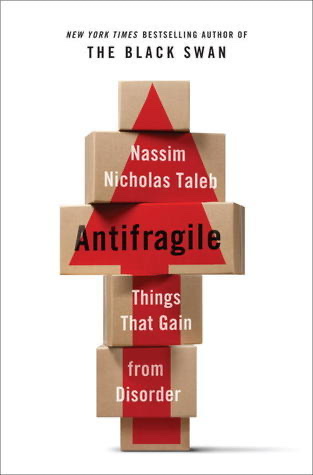 Antifragile: Things That Gain from Disorder
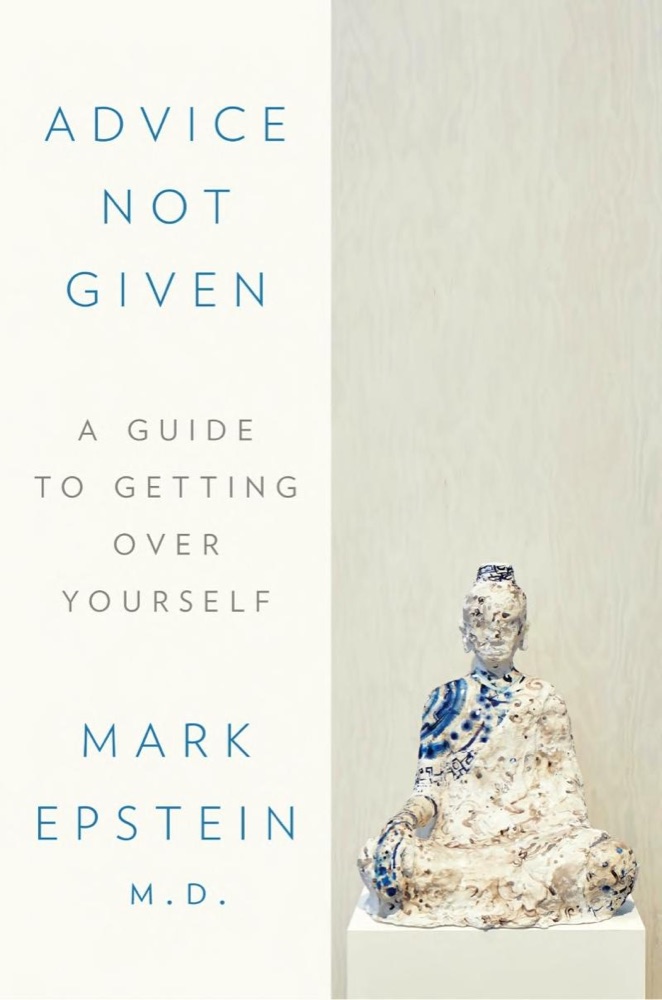 Advice Not Given: A Guide to Getting Over Yourself
 The Wise Heart: A Guide to the Universal Teachings of Buddhist Psychology
 The Element: How Finding Your Passion Changes Everything
 Social: Why Our Brains Are Wired to Connect
 David and Goliath: Underdogs, Misfits, and the Art of Battling Giants
 Happiness: A Guide to Developing Life's Most Important Skill
 Ethics for the New Millennium
 Awaken The Giant Within
 Finding Flow: The Psychology of Engagement with Everyday Life
 In an Unspoken Voice: How the Body Releases Trauma and Restores Goodness
 The Art of Thinking Clearly
 Behave: The Biology of Humans at Our Best and Worst
 Mindwise: How We Understand What Others Think, Believe, Feel, and Want
 Stillness Is the Key
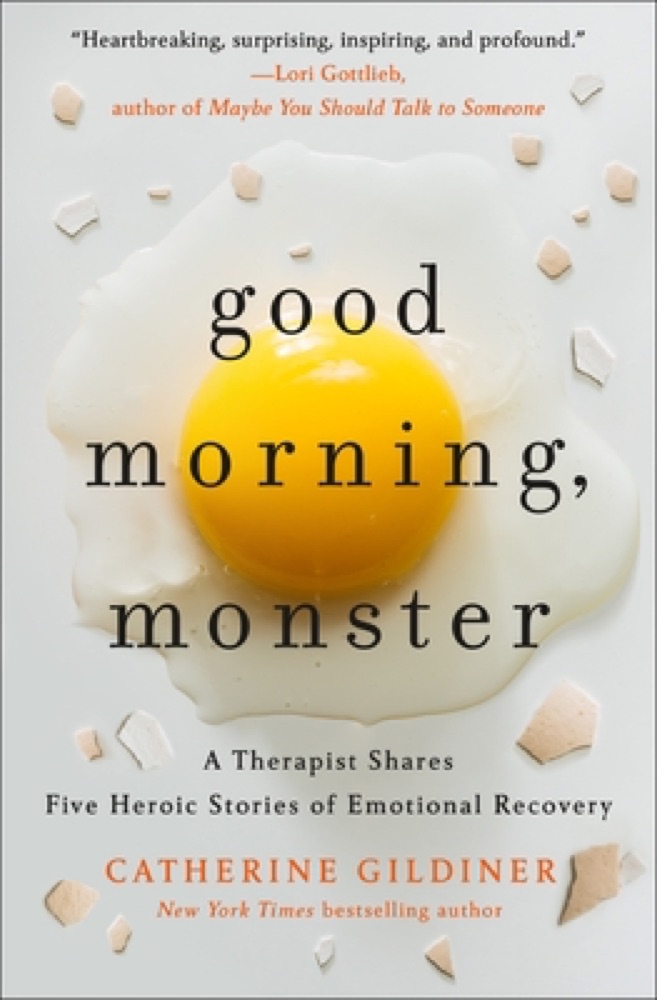 Good Morning, Monster: A Therapist Shares Five Heroic Stories of Emotional Recovery