

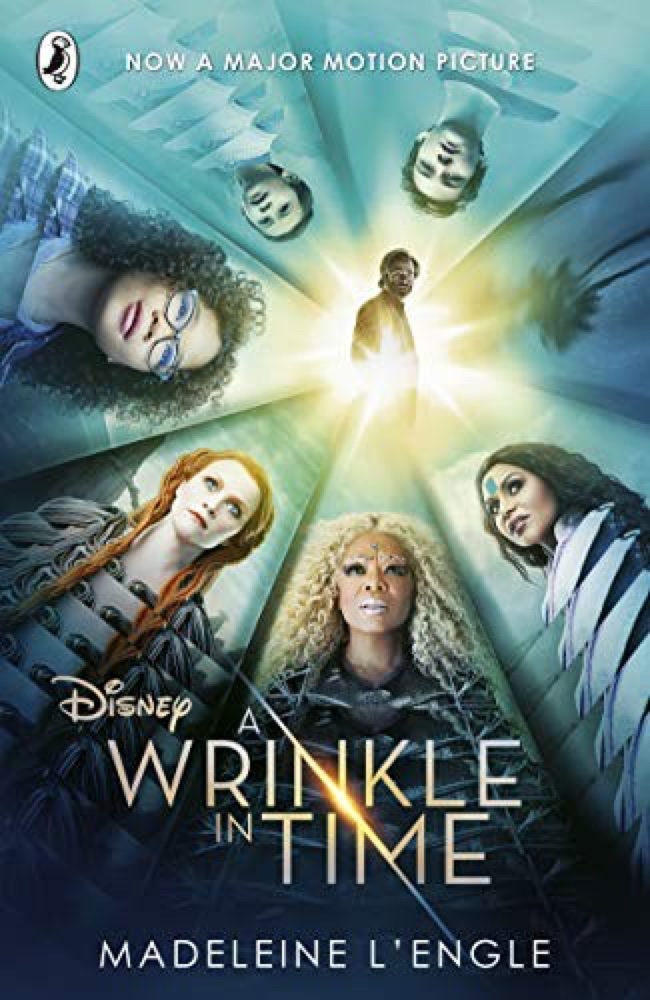
 A Wrinkle in Time
Quotes from the Book
A self is not something static, tied up in a pretty parcel and handed to the child, finished and complete. A self is always becoming.
2k
I'm apt to get drunk on words...Ontology: the word about the essence of things; the word about being.
141
We can surely no longer pretend that our children are growing up into a peaceful, secure, and civilized world. We've come to the point where it's irresponsible to try to protect them from the irrational world they will have to live in when they grow up. The children themselves haven't yet isolated themselves by selfishness and indifference; they do not fall easily into the error of despair; they are considerably braver than most grownups. Our responsibility to them is not to pretend that if we don't look, evil will go away, but to give them weapons against it.
113
An infinite question is often destroyed by finite answers. To define everything is to annihilate much that gives us laughter and joy.
96
The minute we begin to think we have all the answers, we forget the questions.
70
One cannot be humble and aware of oneself at the same time.
68
It is ... through the world of the imagination which takes us beyond the restrictions of provable fact, that we touch the hem of truth.
50
Two people whose opinion I respect told me that the word "Christian" would turn people off. This certainly says something about the state of Christianity today. I wouldn't mind if to be a Christian were accepted as being the dangerous thing which it is; I wouldn't mind if, when a group of Christians meet for bread and wine, we might well be interrupted and jailed for subversive activities; I wouldn't mind if, once again, we were being thrown to the lions. I do mind, desperately, that the word "Christian" means for so many people smugness, and piosity, and holier-than-thouness. Who today can recognize a Christian because of "how those Christians love one another?
42
When I start a new seminar I tell my students that I will undoubtedly contradict myself, and that I will mean both things. But an acceptance of contradiction is no excuse for fuzzy thinking. We do have to use our minds as far as they will take us, yet acknowledge that they cannot take us all the way.
33
In the final exam in the Chaucer course we were asked why he used certain verbal devices, certain adjectives, why he had certain characters behave in certain ways. And I wrote, 'I don't think Chaucer had any idea why he did any of these things. That isn't the way people write.' I believe this as strongly now as I did then. Most of what is best in writing isn't done deliberately.
31
The best way to guide children without coercion is to be ourselves.
28
Almost all the joyful things of life are outside the measure of IQ tests.
26
But where, after we have made the great decision to leave the security of childhood and move on into the vastness of maturity, does anybody ever feel completely at home?
26
If it's not good enough for adults, it's not good enough for children. If a book that is going to be marketed for children does not interest me, a grownup, then I am dishonoring the children for whom the book is intended, and I am dishonoring books. And words.
24
Now wonder our youth is confused and in pain; they long for God, for the transcendent, and they are offered, far too often, either piosity or sociology, neither of which meets their needs, and they are introduced to churches which have become buildings that are a safe place to go to escape the awful demands of God.
24
I am encouraged as I look at some of those who have listened to their "different drum": Einstein was hopeless at school math and commented wryly on his inadequacy in human relations. Winston Churchill was an abysmal failure in his early school years. Byron, that revolutionary student, had to compensate for a club foot; Demosthenes for a stutter; and Homer was blind. Socrates couldn't manage his wife, and infuriated his countrymen. And what about Jesus, if we need an ultimate example of failure with one's peers? Or an ultimate example of love?
23
An infinite question is often destroyed by finite answers...To define everything is to annihilate much that gives us laughter and joy...If I try self consciously to become a person, I will never be one. The most real people, those who are able to forget their selfish selves, who have true compassion, are usually the most distinct individuals
23
And joy is always a promise.
23
So my hope, each day as I grow older, is that this will never be simply chronological aging . . . but that I will also grow into maturity, where the experience which can be acquired only through chronology will teach me how to be more aware, open, unafraid to be vulnerable, involved, committed, to accept disagreement without feeling threatened (repeat and underline this one), to understand that I cannot take myself seriously until I stop taking myself seriously - to be, in fact, a true adult. To be.
22
A winter ago I had an after-school seminar for high-school students and in one of the early sessions Una, a brilliant fifteen-year-old, a born writer who came to Harlem from Panama five years ago, and only then discovered the conflict between races, asked me, "Mrs. Franklin, do you really and truly believe in God with no doubts at all?" "Oh, Una, I really and truly believe in God with all kinds of doubts." But I base my life on this belief.
19
Love can't be pinned down by a definition, and it certainly can't be proved, any more than anything else important in life can be proved.
17
I knew that the moment I started worrying about whether or not I was good enough for the job, I wouldn't be able to do it.
16
Compassion is nothing one feels with the intellect alone. Compassion is particular; it is never general.
15
We lived on 82nd Street and the Metropolitan Museum was my short cut to Central Park. I wrote: "I go into the museum and look at all the pictures on the walls. Instead of feeling my own insignificance I want to go straight home and paint." A great painting, or symphony, or play, doesn't diminish us, but enlarges us, and we, too, want to make our own cry of affirmation to the power of creation behind the universe. This surge of creativity has nothing to do with competition, or degree of talent. When I hear a superb pianist, I can't wait to get to my own piano, and I play about as well now as I did when I was ten. A great novel, rather than discouraging me, simply makes me want to write. This response on the part of any artist is the need to make incarnate the new awareness we have been granted through the genius of someone else.
15
There is nothing that makes me happier than sitting around the dinner table and talking until the candles are burned down.
14
We turn to stories and pictures and music because they show us who and what and why we are, and what our relationship is to life and death, what is essential, and what, despite the arbitrariness of falling beams, will not burn.
14
Western man has tried for too many centuries to fool himself that he lives in a rational world. No. There's a story about a man who, while walking along the street, was almost hit on the head and killed by an enormous falling beam. This was his moment of realization that he did not live in a rational world but a world in which men's lives can be cut off by a random blow on the head, and the discovery shook him so deeply that he was impelled to leave his wife and children, who were the major part of his old, rational world. My own response to the wild unpredictability of the universe has been to write stories, to play the piano, to read, listen to music, look at paintings - not that the world may become explainable and reasonable but that I may rejoice in the freedom which unaccountability gives us.
14
I can't think of one great human being in the arts, or in history generally, who conformed, who succeeded, as educational experts tell us children must succeed, with his peer group...If a child in their classrooms does not succeed with his peer group, then it would seem to many that both child and teacher have failed. Have they? If we ever, God forbid, manage to make each child succeed with his peer group, we will produce a race of bland and faceless nonentities, and all poetry and mystery will vanish from the face of the earth.
13
Our country in general assumes that "the pursuit of happiness" really means "the pursuit of pleasure" and that therefore pleasure is the greatest good.
12
Watch on YouTube
About Madeleine L'Engle
We have collected 193 quotes from 11 books by Madeleine L'Engle on BookQuoters.
More about the author →More by Madeleine L'Engle
All books by Madeleine L'Engle →
About the book
This journal shares fruitful reflections on life and career prompted by the author's visit to her personal place of retreat near her country home.
Book details
- First published
- 1971
- Author
- Madeleine L'Engle
- Genre
- Biography
- Goodreads rating
- 4.21 (7k ratings)
Keep reading
 Surprised by Joy: The Shape of My Early Life
 No Time To Spare: Thinking About What Matters
 Asymmetry
 Like Streams to the Ocean: Notes on Ego, Love, and the Things That Make Us Who We Are
 Winter Hours: Prose, Prose Poems, and Poems
 The Magic Mountain
 The Story of My Life
 When I Was a Child I Read Books
 Journal of a Solitude
 Small Wonder
 Children of the Mind
 Letter to My Daughter
 The Varieties of Religious Experience
 Finding Meaning in the Second Half of Life: How to Finally, Really Grow Up
 Wide Awake
 When Women Were Dragons
 Either/Or: A Fragment of Life
 Dust Tracks on a Road
 Upstream: Selected Essays
 Crossing to Safety
 This Is the Story of a Happy Marriage
 These Precious Days: Essays
 The Bassoon King: My Life in Art, Faith, and Idiocy
 What If This Were Enough?: Essays
 The Golden Notebook
 Knife: Meditations After an Attempted Murder
 To Shake the Sleeping Self: A Journey from Oregon to Patagonia, and a Quest for a Life with No Regret
 Gilead
 Twilight of the Idols
 The Spinoza Problem
 The Intellectual Life: Its Spirit, Conditions, Methods
 Kitchen Table Wisdom: Stories that Heal
 Surrender: 40 Songs, One Story
 Plan B: Further Thoughts on Faith
 A Sudden Light
 Even Cowgirls Get the Blues
 The World and Other Places: Stories
 My Friends
 The Manticore
 Let Your Life Speak: Listening for the Voice of Vocation
 For Small Creatures Such as We: Rituals for Finding Meaning in Our Unlikely World
 Stories of Your Life and Others
 Tell Me More: Stories About the 12 Hardest Things I'm Learning to Say
 The Socrates Express: In Search of Life Lessons from Dead Philosophers
 Demian
 The Elegance of the Hedgehog
 The Fall of Babel
 The Wisdom of Insecurity: A Message for an Age of Anxiety
 Becoming Wise: An Inquiry into the Mystery and Art of Living
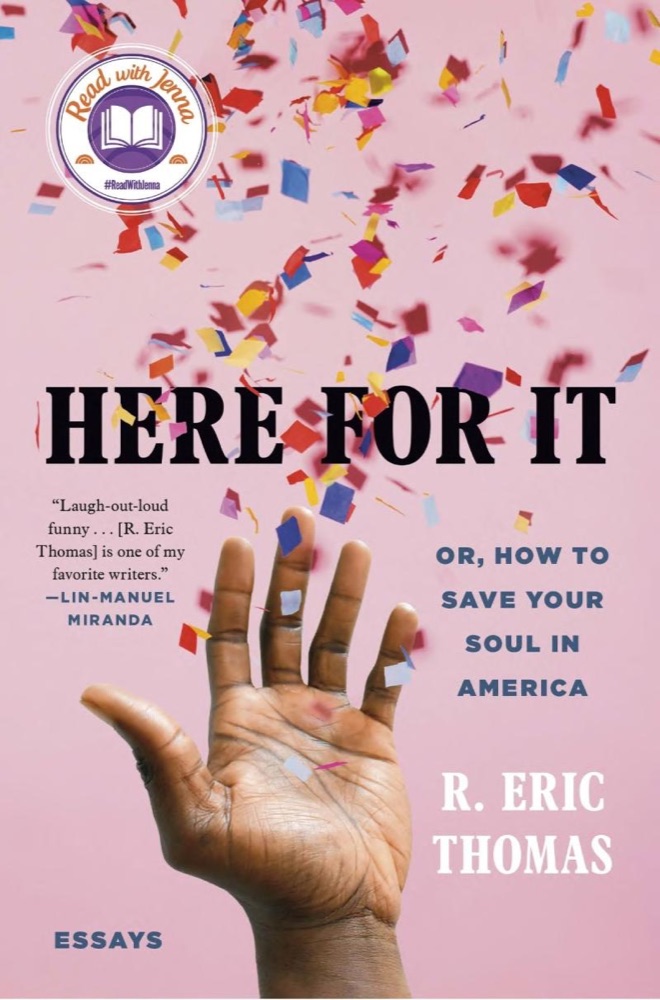 Here for It; Or, How to Save Your Soul in America: Essays
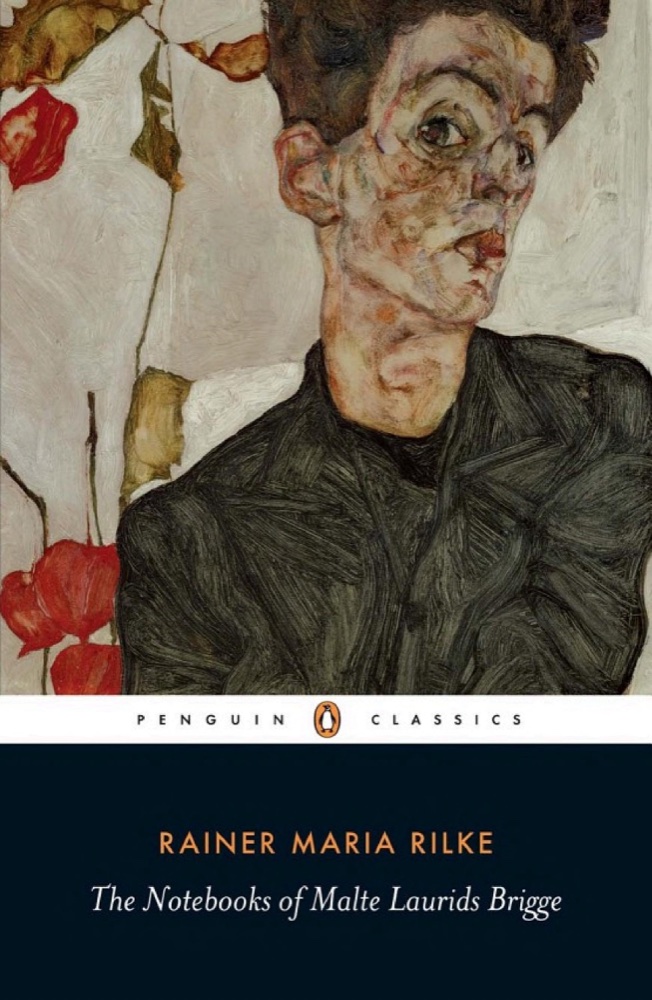 The Notebooks of Malte Laurids Brigge
 The Pilgrimage
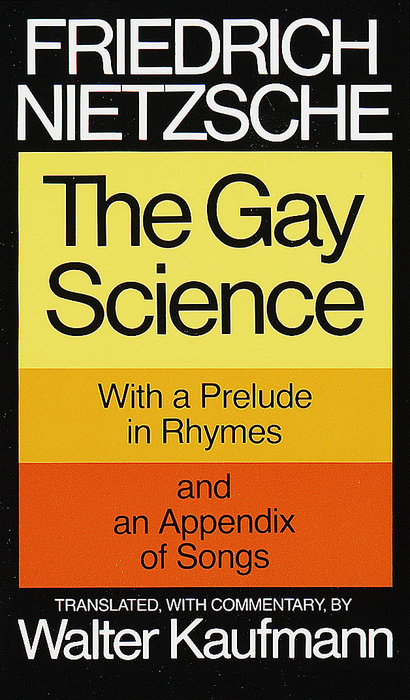 The Gay Science
 Almost Everything: Notes on Hope
 A Room Called Earth
 Big Sur and the Oranges of Hieronymus Bosch
 The Story of My Experiments With Truth
 Have a Little Faith: a True Story
 The Rebel Angels
 Hard-Boiled Wonderland and the End of the World