
 The Geography of Bliss: One Grump's Search for the Happiest Places in the World
Quotes from the Book
Knowledge is knowing that a tomato is a fruit. Wisdom is not putting it in a fruit salad.
9
The person attuned to beauty will find it in a garbage dump while “the fault-finder will find fault even in paradise.
8
Set clear goals and channel all your energies into reaching them, the self-help books advise. This approach assumes we’ve identified our destination before beginning our journey. Life doesn’t work that way. Sometimes you don’t know where you’re going until you start moving. So move. Start where you are. Make a single brushstroke and see where it leads.
7
Happiness is a by-product, never an objective. It’s an unexpected windfall from a life lived well.
6
Consider the parable of the Chinese farmer. One day, the farmer’s horse ran away. That evening, the neighbors stopped by to offer their sympathies. “So sorry to hear your horse ran away,” they said. “That’s too bad.” “Maybe,” the farmer said. “Maybe not.” The next day the horse returned, bringing seven wild horses with it. “Oh, isn’t that lucky,” said the neighbors. “Now you have eight horses. What a great turn of events.” “Maybe,” said the farmer. “Maybe not.” The next day the farmer’s son was training one of these horses when he was thrown and broke his leg. “Oh dear, that’s too bad,” said the neighbors. “Maybe,” said the farmer. “Maybe not.” The following day, conscription officers came to the village to recruit young men for the army, but they rejected the farmer’s son because he had a broken leg. And all the neighbors said, “Isn’t that great!” “Maybe,” said the farmer. “Maybe not.” We lead telephoto lives in a wide-angle world. We never see the big picture. The only sane response is, like the Chinese farmer, to adopt a philosophy of maybe-ism.
5
Respond to adversity, real or imagined, not with self-pity or hand-wringing, but simply by starting over. Viewed this way, life no longer feels like a narrative gone awry, or a botched ending. None of that is real. There are no endings. Only an infinite chain of beginnings.
5
The Porcupine’s Dilemma, as it’s now known, is our dilemma, too. We need others to survive, but others can hurt us. Relationships demand constant course corrections, and even the most skilled navigators get pricked now and then.
4
For Socrates, philosophy and conversation were virtually synonymous.
4
No wonder so many philosophers walked. Socrates, of course, liked nothing more than strolling in the agora. Nietzsche regularly embarked on spirited two-hour jaunts in the Swiss Alps, convinced “all truly great thoughts are conceived by walking.” Thomas Hobbes had a walking stick custom made with a portable inkwell attached so he could record his thoughts as he ambled. Thoreau regularly took four-hour treks across the Concord countryside, his capacious pockets overflowing with nuts, seeds, flowers, Indian arrowheads, and other treasures. Immanuel Kant, naturally, maintained a highly regimented walking routine. Every day, he’d eat lunch at 12:45 p.m., then depart for a one-hour constitutional — never more, never less — on the same boulevard in Königsberg, Prussia (now Russia). So unwavering was Kant’s routine that the people of Königsberg set their watches by his perambulations.
3
Don’t pay attention to be more productive, a better worker or parent. Pay attention because it is the morally correct course of action, the right thing to do.
3
It is the absence of anxiety rather than the presence of anything that leads to contentment.
3
Good walkers, all of them. None, though, compares with Rousseau. He’d regularly walk twenty miles in a single day.
3
Corollary Number Two: The unexamined life may not be worth living, but neither is the overexamined one.
3
Arriving at answers of the heart demands not only patience but a willingness to sit with your ignorance. Staying with the doubt, the mystery, rather than rushing to solve the problem, to check off another item on your endless to-do list.
3
Bertrand Russell, who lived until the age of ninety-seven, suggests expanding the circle of your interests, making them “wider and more impersonal, until bit by bit the walls of the ego recede, and your life becomes increasingly merged in the universal life.
2
Like the Japanese, the Stoics know “all things everywhere are perishable.” They see this fact as cause for neither sadness, like many of us, nor celebration, like the Japanese, but merely a fact of life. Rationally there is nothing we can do about it, so best not to worry. Marcus reminds us that all we cherish will one day disappear like leaves on a tree so we must “beware lest delight in them leads you to cherish them so dearly that their loss would destroy your peace of mind.
2
He was articulating the Stoic notion of “the View from Above.” Imagine yourself hovering high above the earth, looking down at your puny world: the inconsequential traffic and dirty dishes and petty arguments and lost notebooks. Indifferents, all of them. You are nothing. You are everything.
2
No wonder Nietzsche calls Eternal Recurrence “the heaviest burden.” Nothing is weightier than eternity. If everything recurs infinitely, then there are no light moments, no trivial ones. Every moment, no matter how inconsequential, possesses the same weight and mass as others. “All actions are equally great and small.
2
Take heart, says Epicurus. Nature has you covered. She has made the necessary desires easy to obtain and the unnecessary ones difficult
2
Schopenhauer was an Idealist. In the philosophical sense, an Idealist is not someone with high ideals. It is someone who believes that everything we experience is a mental representation of the world, not the world itself. Physical objects only exist when we perceive them. The world is my idea.
2
Read the journals. Leslie Wilson’s words lodge in my brain like a bad Top 40 song you can’t shake. Thoreau kept a journal most of his adult life, some two million words spanning fourteen volumes.
2
Every institution and social form we have is devoted either to solving problems or providing pleasure,” Needleman says.
2
Fighting, done properly, is productive. Both sides can arrive not only at a win-win solution but something more: a solution that neither would have found had they not fought in the first place.
2
If you do not annoy anyone, you are not a philosopher,” says Peter Kreeft.
2
Duty comes from inside, obligation from outside. When we act out of a sense of duty, we do so voluntarily to lift ourselves, and others, higher. When we act out of obligation, we do so to shield ourselves, and only ourselves, from repercussions.
2
As the British musician Miles Kington said: “Knowledge is knowing that a tomato is a fruit. Wisdom is not putting it in a fruit salad.” Knowledge knows. Wisdom sees.
2
Joyful Stoic” is not an oxymoron, says William Irvine, a professor of philosophy at Wright State University and a practicing Stoic. He explains: “Our practice of Stoicism has made us susceptible to little outbursts of joy. We will, out of the blue, feel delighted to be the person we are, living the life we are living, in the universe we happen to inhabit.” I confess: that sounds appealing.
1
When you wake in the morning, tell yourself: the people you deal with today will be meddling, ungrateful, arrogant, jealous, and surly.
1
Sometimes you don’t know where you’re going until you start moving. So move. Start where you are. Make a single brushstroke and see where it leads.
1
Watch on YouTube
About Eric Weiner
We have collected 96 quotes from 4 books by Eric Weiner on BookQuoters.
More about the author →More by Eric Weiner
The Geography of Bliss: One Grump's Search for the Happiest Places in the World
 The Geography of Genius: A Search for the World's Most Creative Places from Ancient Athens to Silicon Valley
 Man Seeks God: My Flirtations with the Divine
About the book
The New York Times bestselling author of The Geography of Bliss embarks on a rollicking intellectual journey, following in the footsteps of history’s greatest thinkers and showing us how each—from Epicurus to Gandhi, Thoreau to Beauvoir—offers practical and spiritual lessons for today’s unsettled times.We turn to philosophy for the same reasons we to see the world from a different perspective, to unearth hidden beauty, and to find new ways of being. We want to learn how to embrace wonder. Face regrets. Sustain hope.Eric Weiner combines his twin passions for philosophy and global travel in a pilgrimage that uncovers surprising life lessons from great thinkers around the world, from Rousseau to Nietzsche, Confucius to Simone Weil. Traveling by train (the most thoughtful mode of transport), he journeys thousands of miles, making stops in Athens, Delhi, Wyoming, Coney Island, Frankfurt, an
Book details
- First published
- 2020
- Author
- Eric Weiner
- Genre
- Philosophy
- Goodreads rating
- 4.14 (4k ratings)
The buzz
- The Washington PostReview in The Washington Postprofessional review (via Book Marks)
- NPRReview in NPRprofessional review (via Book Marks)
- Kirkus ReviewsReview in Kirkus Reviewsprofessional review (via Book Marks)
- Publishers WeeklyReview in Publishers Weeklyprofessional review (via Book Marks)
- New York Journal of BooksReview in New York Journal of Booksprofessional review (via Book Marks)
- BooklistReview in Booklistprofessional review (via Book Marks)
Keep reading
 How to Be Perfect: The Correct Answer to Every Moral Question
 Stoicism and the Art of Happiness
 The Happiness Hypothesis: Finding Modern Truth in Ancient Wisdom
 Travels with Epicurus: A Journey to a Greek Island in Search of a Fulfilled Life
 The Philosopher and the Wolf
 The Daily Stoic: 366 Meditations on Wisdom, Perseverance, and the Art of Living
 Twilight of the Idols
 The Consolations of Philosophy
 How to Live: A Life of Montaigne in One Question and Twenty Attempts at an Answer
 Stillness Is the Key
 Way of the Peaceful Warrior: A Book That Changes Lives
 The Happiness Equation: Want Nothing + Do Anything = Have Everything
 Finding Flow: The Psychology of Engagement with Everyday Life
 The Schopenhauer Cure
 Zen and the Art of Motorcycle Maintenance
 The Spinoza Problem
 How to Use Your Enemies
 A Calendar of Wisdom: Daily Thoughts to Nourish the Soul
 The Art of Happiness
 Tribe Of Mentors: Transformative Wisdom From Icons and Innovators to Help You Navigate Life's Challenges
 The Tao of Pooh
 The Wisdom of Life
 The Art of Living: The Classical Manual on Virtue, Happiness and Effectiveness
 A Circle of Quiet
 A Guide to the Good Life: The Ancient Art of Stoic Joy
 12 Rules for Life: An Antidote to Chaos
 The Story of Philosophy: The Lives and Opinions of the World's Greatest Philosophers
 The Obstacle Is the Way: The Timeless Art of Turning Trials into Triumph
 365 Tao: A Study of Taoist Wisdom for Daily Life
 How to Stop Worrying and Start Living
 The Intellectual Life: Its Spirit, Conditions, Methods
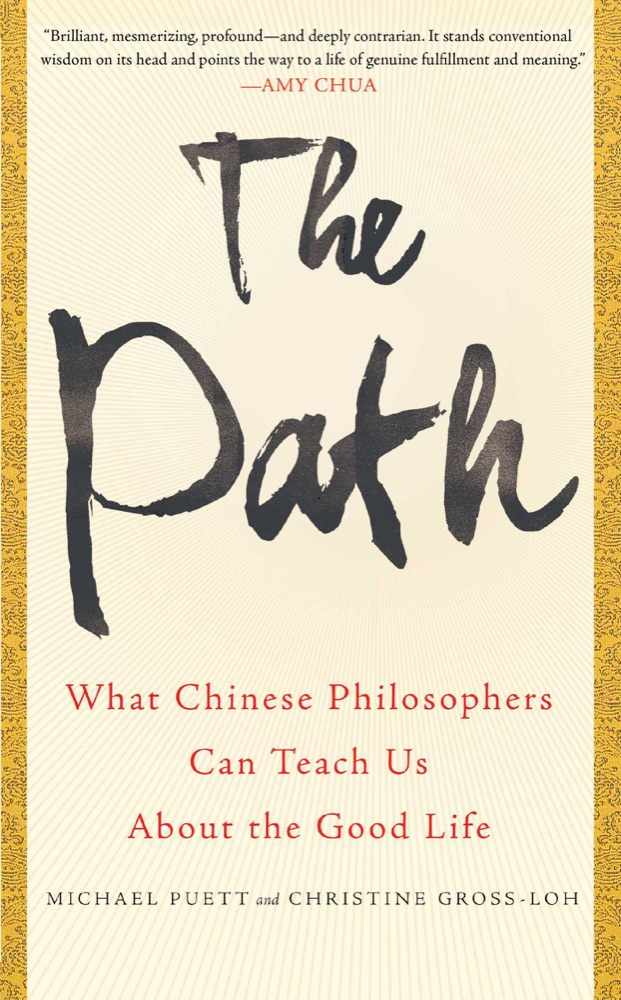 The Path: What Chinese Philosophers Can Teach Us About the Good Life
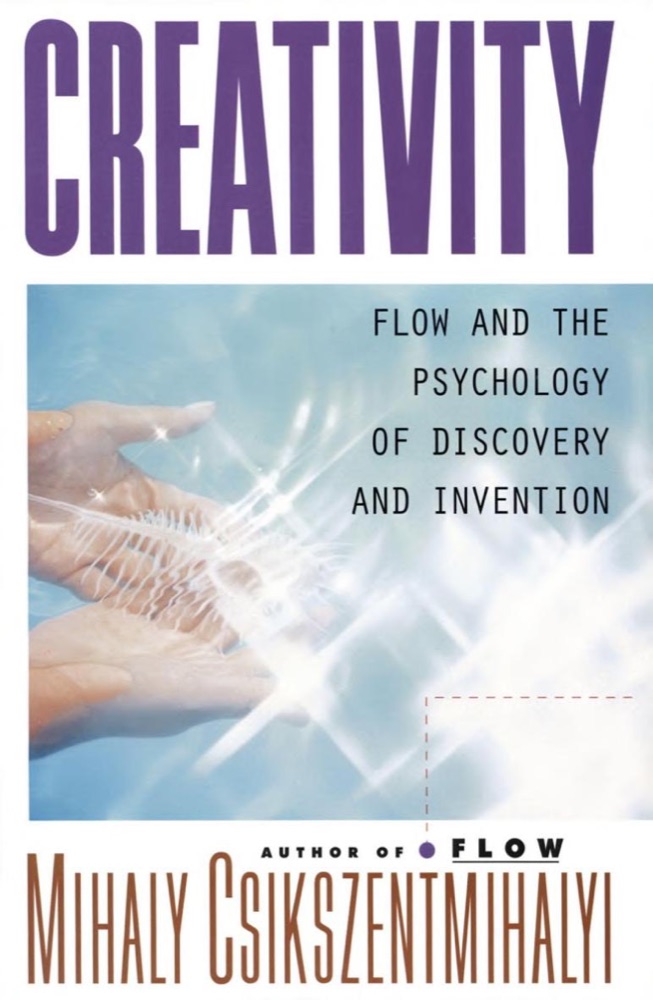 Creativity: Flow and the Psychology of Discovery and Invention
 The Book of Chuang Tzu
 A Joseph Campbell Companion: Reflections on the Art of Living
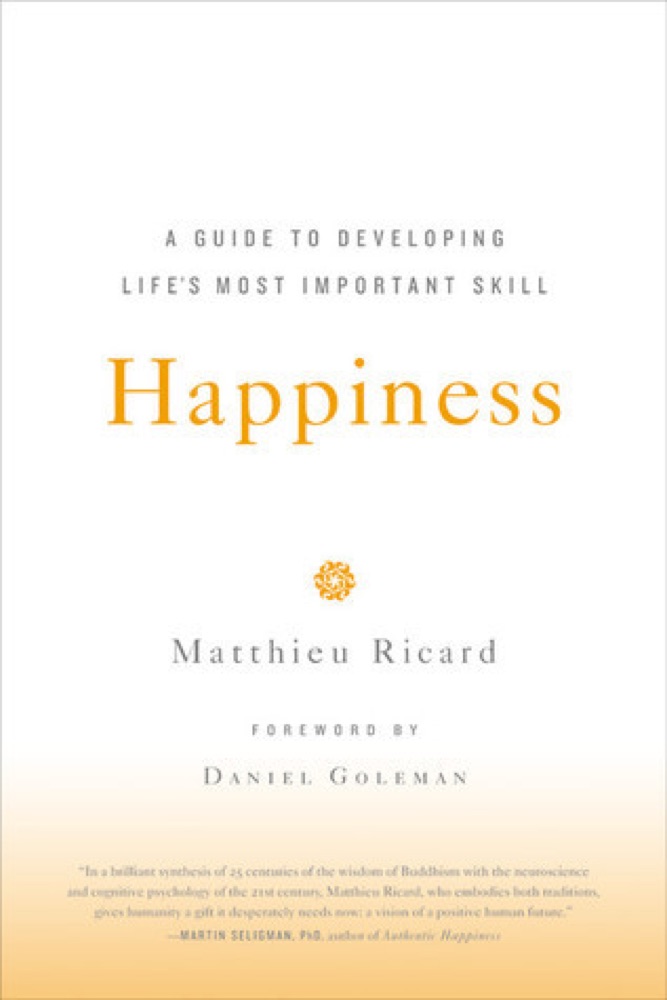 Happiness: A Guide to Developing Life's Most Important Skill
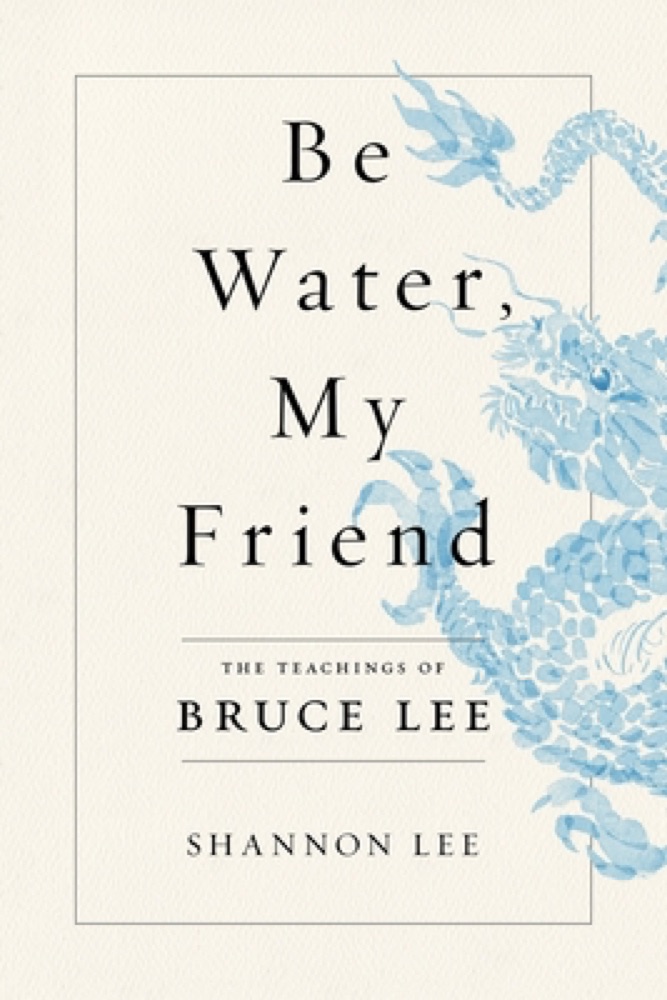 Be Water, My Friend: The Teachings of Bruce Lee
 The Myth of Sisyphus
 Change Your Thoughts - Change Your Life: Living the Wisdom of the Tao
 Asymmetry
 The Things You Can See Only When You Slow Down: How to Be Calm in a Busy World
 Emile or On Education
 Psych: The Story of the Human Mind
 Letters from a Stoic
 The Book of Wisdom
 Think: A Compelling Introduction to Philosophy
 Drive Your Plow Over the Bones of the Dead
 You Learn by Living: Eleven Keys for a More Fulfilling Life
 Will
Will
 The Way of Zen
 The Gay Science
 The Age of Absurdity: Why Modern Life makes it Hard to be Happy
 Total Freedom: The Essential Krishnamurti
 Untimely Meditations
 The Social Animal: The Hidden Sources of Love, Character, and Achievement
 When Nietzsche Wept
 Striking Thoughts: Bruce Lee's Wisdom for Daily Living
 Atlas Shrugged