
 An Enquiry Concerning Human Understanding
Quotes from the Book
How you think about what you are doing affects how you do it, or whether you do it at all.
15
There are always people telling us what we want, how they will provide it, and what we should believe. Convictions are infectious, and people can make others convinced of almost anything.
6
Reflection opens the avenue to criticism, and the folkways may not like criticism. In this way, ideologies become closed circles, primed to feel outraged by the questioning mind.
4
Others may want to stand upon the ‘politics of identity’, or in other words the kind of identification with a particular tradition, or group, or national or ethnic identity that invites them to turn their back on outsiders who question the ways of the group. They will shrug off criticism: their values are ‘incommensurable’ with the values of outsiders. They are to be understood only by brothers and sisters within the circle. People like to retreat to within a thick, comfortable, traditional set of folkways, and not to worry too much about their structure, or their origins, or even the criticisms that they may deserve. Reflection opens the avenue to criticism, and the folkways may not like criticism. In this way, ideologies become closed circles, primed to feel outraged by the questioning mind.
4
Imagination abandoned by reason produces impossible monsters: united with her, she is the mother of the arts and the source of her wonders.
4
Reflection matters because it is continuous with practice. How you think about what you are doing affects how you do it, or whether you do it at all.
2
A system of thought is something we live in, just as much as a house, and if our intellectual house is cramped and confined, we need to know what better structures are possible. The
2
To process thoughts well is a matter of being able to avoid confusion, detect ambiguities, keep things in mind one at a time, make reliable arguments, become aware of alternatives, and so on.
2
Science similarly contains within itself the devices for correcting the illusions of science. That is its crowning glory. When we come upon intellectual endeavours that contain no such devices—one might cite psychoanalysis, grand political theories, ‘new age’ science, creationist science—we need not be interested.
2
the unexamined life is not worth living. It has insisted on the power of rational reflection to winnow out bad elements in our practices, and to replace them with better ones.
2
Convictions are infectious, and people can make others convinced of almost anything. We are typically ready to believe that our ways, our beliefs, our religion, our politics are better than theirs, or that our God-given rights trump theirs or that our interests require defensive or pre-emptive strikes against them. In the end, it is ideas for which people kill each other. It is because of ideas about what the others are like, or who we are, or what our interests or rights require, that we go to war, or oppress others with a good conscience, or even sometimes acquiesce in our own oppression by others. When these beliefs involve the sleep of reason, critical awakening is the antidote.
1
He who begins by loving Christianity better than truth, will proceed by loving his own sect or Church better than Christianity, and end in loving himself better than all.
1
An argument is valid when there is no way—meaning no possible way—that the premises, or starting points, could be true without the conclusion being true
1
I cannot climb out onto the nature of your mind. So how then do I know anything about your mental life? How do I know, for instance, that you see the colour blue the way that I do? Might it be that some of us feel pain more, but make less fuss about it, or that others feel pain less, but make more fuss?
1
The time we take out, whether it is to do mathematics or music, or to read Plato or Jane Austen, is time to be cherished.
1
So the middle-ground answer reminds us that reflection is continuous with practice, and our practice can go worse or better according to the value of our reflections.
1
Internalizing’ a set of values is very close to internalizing the gaze or voice of others. Recognizing that they have a complaint against you is regarding yourself as having fallen short in their eyes, and to have internalized their voice means finding that itself weighing with you.
The first reaction is that one of the premises is untrue. The second is that the reasoning is invalid. Of course, an argument may be subject to both criticisms: its premises are untrue, and the reasoning from them is invalid. But the two criticisms are distinct (and the two words, untrue and invalid, are well kept for the distinction).
In particular, if ‘God’s goodness’ is not to be understood in the same terms as what we think of as good (so that, for instance, it might be ‘good’ of God in this different sense to unleash bubonic plague on defenceless infants) then it has no implications for how I am to live my life.
His idea was that the argument starts off from the premise ‘everything has a [distinct, previous] cause’, but ends with the conclusion that there must be something that has no distinct, previous cause, but ‘carries the reason of his existence in himself. Then the conclusion denies what the premise asserts.
Thoughts are strange things. They have ‘representational’ powers: a thought typically represents the world as being one way or another.
Wittgenstein said: Always get rid of the idea of the private object in this way: assume that it constantly changes, but that you do not notice the change because your memory constantly deceives you.
It is good, then, to remember four options in epistemology (the theory of knowledge). There is rational foundationalism, as attempted by Descartes. There is natural foundationalism, as attempted in Hume. There is coherentism. And brooding over all of them, there is scepticism, or the view that there is no knowledge. Each of these has had distinguished defenders. Whichever the reader prefers, he or she will find good philosophical company. One might think that Descartes got almost everything right, or that he got almost everything wrong. The baffling thing is to defend whichever answer commends itself.
Peopleare sometimes largely powerless, politically, or even psychologically (because we are not flexible, but are indeed brainwashed, or in the grip of strange obsessions that we cannot shake). When we are powerless, fatalism may be a natural frame of mind into which to relapse. If our best efforts come to nothing often enough, we need consolation, and thoughts of unfolding, infinite destiny, or karma, are sometimes consoling.
For the last two thousand years the philosophical tradition has been the enemy of this kind of cosy complacency. It has insisted that the unexamined life is not worth living. It has insisted on the power of rational reflection to winnow out bad elements in our practices, and to replace them with better ones. It has identified critical self-reflection with freedom, the idea being that only when we can see ourselves properly can we obtain control over the direction in which we would wish to move. It is only when we can see our situation steadily and see it whole that we can start to think what to do about it.
It is one thing to be the common-or-garden villain who says, "I don't care if I have wronged you by breaking my word or stealing your goods." But it is another to achieve the rather extraordinary pitch of villainy, which says, "I don't even recognize that you have a complaint." A society in which people are incapable of recognizing others as having a complaint, whatever they do, would be one without an ethic - but for that very reason, it would be hard to recognize it as a society at all.
For he has found that even his senses deceive him, and it is "prudent never to trust completely those who have deceived us even once". He puts to himself the objection that only madmen ("who say that they are dressed in purple when they are naked, or that their heads are made of earthenware, or that they are pumpkins or made of glass" -- madmen were evidently pretty colorful in the seventeenth century) deny the very obvious evidence of their senses.
Human beings can grow to make killing fields, and they can grow to make gardens.
Goya believed that many of the follies of mankind resulted from the ‘sleep of reason’. There are always people telling us what we want, how they will provide it, and what we should believe. Convictions are infectious, and people can make others convinced of almost anything. We are typically ready to believe that our ways, our beliefs, our religion, our politics are better than theirs, or that our God-given rights trump theirs or that our interests require defensive or pre-emptive strikes against them. In the end, it is ideas for which people kill each other. It is because of ideas about what the others are like, or who we are, or what our interests or rights require, that we go to war, or oppress others with a good conscience, or even sometimes acquiesce in our own oppression by others. When these beliefs involve the sleep of reason, critical awakening is the antidote. Reflection enables us to step back, to see our perspective on a situation as perhaps distorted or blind, at the very least to see if there is argument for preferring our ways, or whether it is just subjective. Doing this properly is doing one more piece of conceptual engineering.
Watch on YouTube
About Simon Blackburn
We have collected 29 quotes from 1 book by Simon Blackburn on BookQuoters.
More about the author →About the book
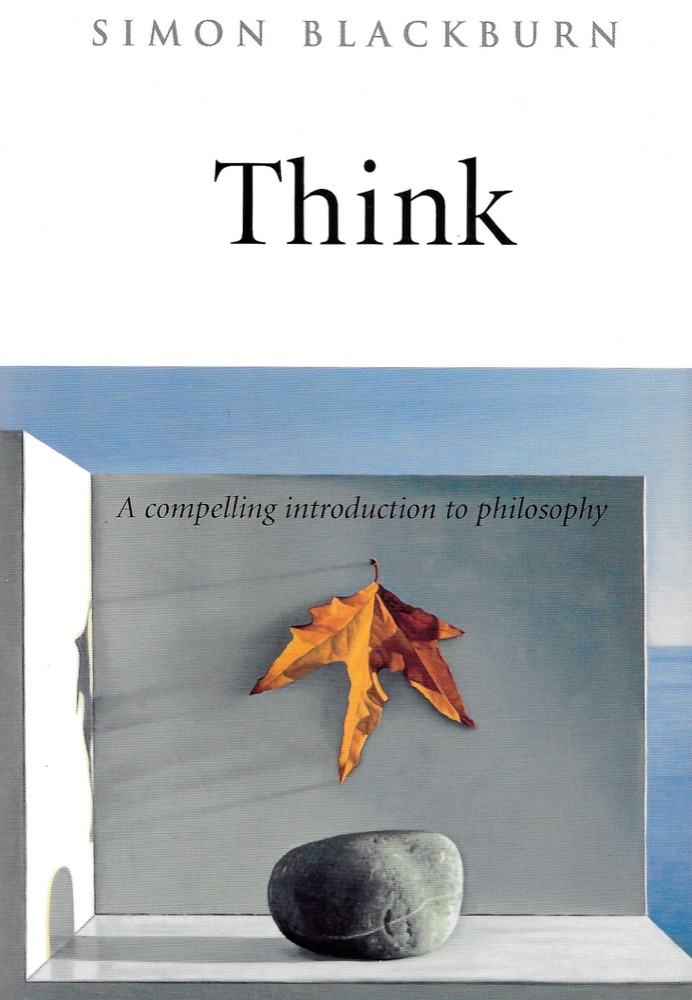
Here at last is a coherent, unintimidating introduction to the challenging and fascinating landscape of Western philosophy. Written expressly for "anyone who believes there are big questions out there, but does not know how to approach them," Think provides a sound framework for exploring the most basic themes of philosophy, and for understanding how major philosophers have tackled the questions that have pressed themselves most forcefully on human consciousness.
Book details
- First published
- 1999
- Author
- Simon Blackburn
- Genre
- Philosophy
- Goodreads rating
- 3.73 (6k ratings)
Keep reading
An Enquiry Concerning Human Understanding
 An Essay Concerning Human Understanding
 Critique of Pure Reason
 Rationality: From AI to Zombies
 The Wisdom of Insecurity: A Message for an Age of Anxiety
 Daybreak: Thoughts on the Prejudices of Morality
 Genesis
 Maps of Meaning: The Architecture of Belief
 The Perennial Philosophy
 The Master and His Emissary: The Divided Brain and the Making of the Western World
 Discourse on Method and Meditations on First Philosophy
 Twilight of the Idols
 Myths to Live By
 The Meaning of It All: Thoughts of a Citizen-Scientist
 The Varieties of Religious Experience
 The Mind of the Maker: Dorothy L. Sayers' Witty Classic on the Trinity, Christianity, and Human Creativity
 The Consolations of Philosophy
 God's Debris: A Thought Experiment
 A History of Western Philosophy
 Freedom from the Known
 Why People Believe Weird Things: Pseudoscience, Superstition, and Other Confusions of Our Time
 A Treatise of Human Nature
 The Problems of Philosophy
 Truth and Method
 Zen and the Art of Motorcycle Maintenance
 Breaking the Spell: Religion as a Natural Phenomenon
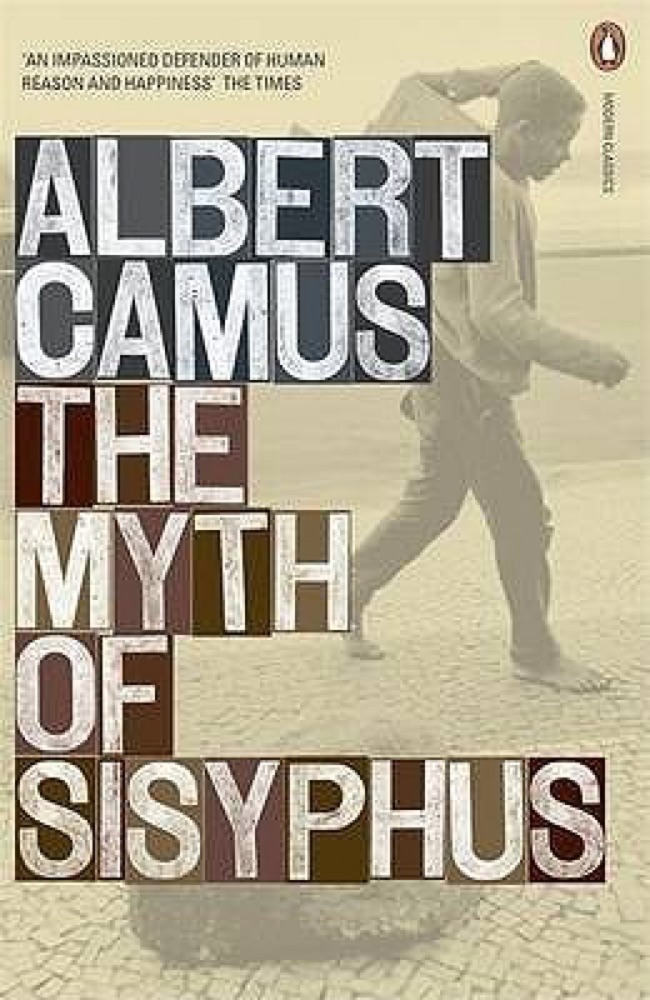 The Myth of Sisyphus
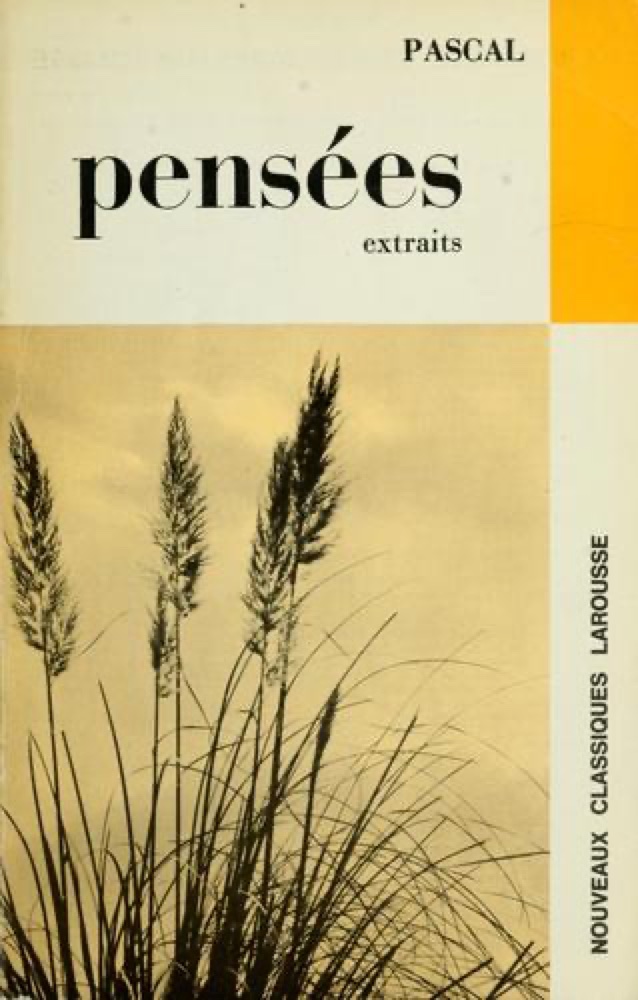 Pensées
 The Fourth Way
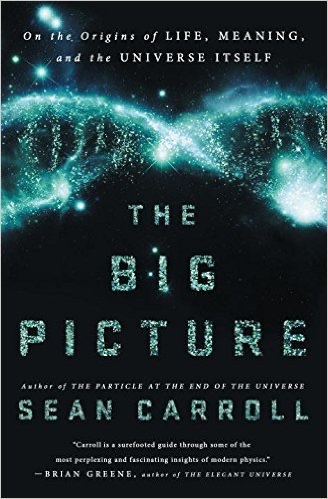 The Big Picture: On the Origins of Life, Meaning, and the Universe Itself
 Psych: The Story of the Human Mind
 But What If We're Wrong? Thinking About the Present As If It Were the Past
 Total Freedom: The Essential Krishnamurti
 The Abolition of Man
 Science and Sanity: An Introduction to Non-Aristotelian Systems and General Semantics
 The Art of Being
 Foucault's Pendulum
 The Wisdom of Life
 A Language Older Than Words
 The Story of Philosophy: The Lives and Opinions of the World's Greatest Philosophers
 The Intellectual Life: Its Spirit, Conditions, Methods
 What I Believe
 The Occult
 Philosophy: Who Needs It
 Untimely Meditations
 Orthodoxy
 Heretics
 What Do You Care What Other People Think?
 The Way of Zen
 Being Wrong: Adventures in the Margin of Error
 The Closing of the American Mind
 The Spinoza Problem
 The Socrates Express: In Search of Life Lessons from Dead Philosophers
 The Blank Slate: The Modern Denial of Human Nature
 Philosophical Investigations
 The Art of Thinking Clearly
 Stories of Your Life and Others
 The Source of Self-Regard: Selected Essays, Speeches, and Meditations
 When I Was a Child I Read Books