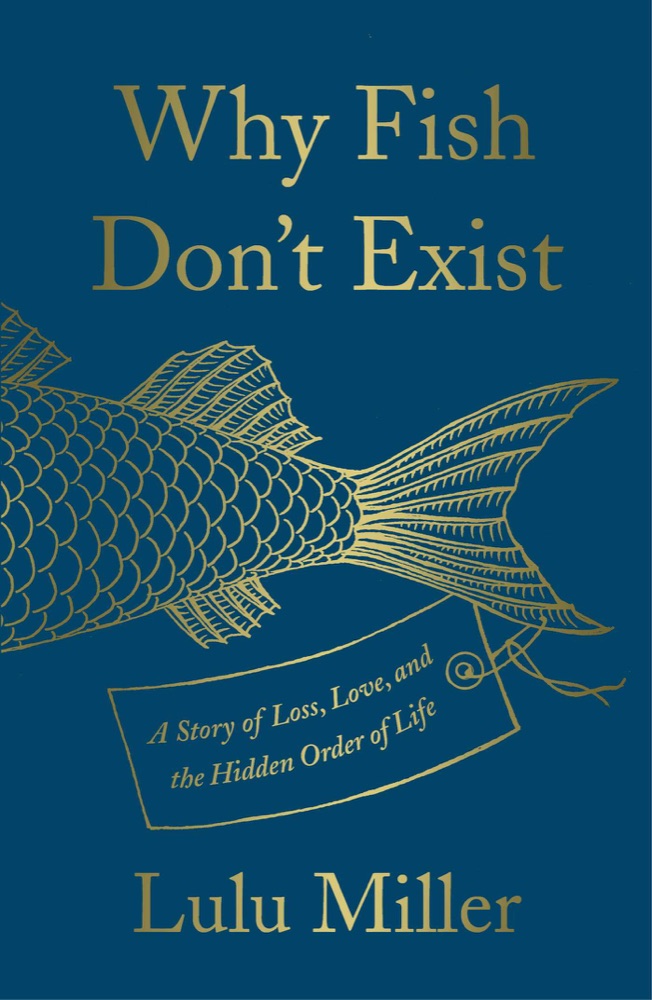

 Small Wonder
Quotes from the Book
When I give up the fish, I get, at long last, that thing I had been searching for: a mantra, a trick, a prescription for hope. I get the promise that there are good things in store. Not because I deserve them. Not because I worked for them. But because they are as much a part of Chaos as destruction and loss. Life, the flip side of death. Growth, of rot.
63
It was the dandelion principle! To some people a dandelion might look like a weed, but to others that same plant can be so much more. To an herbalist, it’s a medicine—a way of detoxifying the liver, clearing the skin, and strengthening the eyes. To a painter, it’s a pigment; to a hippie, a crown; a child, a wish. To a butterfly, it’s sustenance; to a bee, a mating bed; to an ant, one point in a vast olfactory atlas.
60
I have come to believe that it is our life's work to tear down this order, to keep tugging at it, trying to unravel it, to set free the organisms trapped underneath. That it is our life's work work to mistrust our measures. Especially those about moral and mental standing. To remember that behind every ruler there is a Ruler. To remember that a category is at best a proxy; at worst, a shackle.
46
Nowhere is the sky so blue, the grass so green, the sunshine so bright, the shade so welcome, as right here, now, today.
38
This was what Darwin was trying so hard to get his readers to see: that there is never just one way of ranking nature's organisms. To get stuck on a single hierarchy is to miss the bigger picture, the messy truth of nature, the "whole machinery of life." The work of good science is to try and peer beyond the "convenient" lines we draw over nature. To peer beyond intuition where something wilder lives. To know that in every organism at which you gaze, there is complexity you will never comprehend.
34
Perhaps the greatest gift ever bestowed upon us by evolution is the ability to believe we are more powerful than we are . . . You walk around with the fundamental belief that the world is uncaring, that no matter how hard you work there is no promise of success, that you are competing against billions, that you are vulnerable to the elements, and that everything you ever love will eventually be destroyed. A little lie can take the edge off, can help you keep charging forward into the gauntlet of life, where you sometimes, accidentally, prevail.
33
Ignorance is the most delightful science in the world because it is acquired without labor or pains and keeps the mind from melancholy.
29
There is grandeur in this view of life. ....if you can’t see, shame on you.
26
Growing up," she told me, "is learning to stop believing people's words about you.
24
...we barely know the world around us, even the simplest things under our feet..we have been wrong before and we will be wrong again...the true path to progress is paved not with certainty but doubt, with being "open to revision.
23
But perhaps the most damning argument came from nature herself. Had David followed his own advice to look to nature for truth, he would have seen it. This dazzling, feathery, squawking, gurgling mound of counterevidence. Animals can outperform humans on nearly every measure supposedly associated with our superiority. There are crows that have better memories than us, chimps with better pattern-recognition skills, ants that rescue their wounded, and blood flukes with higher rates of monogamy. When you actually examine the range of life on Earth, it takes a lot of acrobatics to sort it into a single hierarchy with humans at the top. We don’t have the biggest brain or the best memory. We’re not the fastest or the strongest or the most prolific. We’re not the only ones that mate for life, that show altruism, use tools, language. We don’t have the most copies of genes in circulation. We aren’t even the newest creation on the block.
21
Scientists have discovered, it's true, that employing positive illusions will help you achieve your goals. But I have slowly come to believe that far better things await outside of the tunnel vision of your goals.
19
How lonely it can feel inside a head with ideas you can’t figure out how to spit out.
17
Slowly, it came into focus. This small web of people keeping one another afloat. All these minuscule interactions- a friendly wave, a pencil sketch, some plastic beads strung up a nylon cord- they might not look like much from the outside, but for the people caught inside that web? They might be everything, the very tethers that keep one bound to this planet.
17
Kafka calls it the Indestructible—the thing at the bottom of each individual that keeps going whether they feel like going or not.
13
The true path to progress is paved not with certainty but with doubt, with being 'open to revision.
11
And then there was that key point in On the Origin of Species. That crucial point that somehow both David and before him Francis Galton had missed. What does Darwin say is the best way of building a strong species, of allowing it to endure into the future, to withstand the blows of Chaos in all her mighty forms—flood, drought, rising sea levels, fluctuating temperatures, invasions of competitors, predators, pests? Variation. Variation in genes, and hence in behavior and physical traits. Homogeneity is a death sentence. To rid a species of its mutants and outliers is to make that species dangerously vulnerable to the elements.
11
[David Starr Jordan] claims that salvation lies in the electricity of our bodies. “Happiness comes from doing, helping, working, loving, fighting, conquering,” he writes in a syllabus from around the same time, “from the exercise of functions; from self-activity.” Don’t overthink it, I think, is his point. Enjoy the journey. Savor the small things. The “luscious” taste of a peach, the “lavish” colors of tropical fish, the rush from exercise that allows one to experience “the stern joy which warriors feel.
11
She said she had sympathy for the fish, then. Sympathy for the idea that once you name something, you tend to stop looking at it.
10
The longer we examine our world, the stranger it proves to be.
9
the problem with spending one’s time pondering the futility of it all is that you divert that precious electricity gifted to you by evolution—those sacred ions that could make you feel so many wonderful sensations and think so many wonderful ideas—and you flush it all down the drain of existential inquiry, causing you to literally “die while the body is still alive.
8
The work of good science is to try to peer beyond the "convenient" lines we draw over nature. To peer beyond intuition, where something wilder lives. To know that in every organism at which you gaze, there is complexity you will never comprehend.
7
I am reminded to do as Darwin did: to wonder about the reality waiting behind our assumption.
7
The best way of ensuring you don't miss them(the good things in store), these gifts, the trick that has helped me squint at the bleakness and see them more clearly, is to admit, with every breath, that you have no idea what you are looking at. To examine each object in the avalanche of Chaos with curiosity, with doubt.
7
In plainer terms", Baumeister and Bushman write, "it is not so much the people who regard themselves as superior beings who are the most dangerous but, rather those who have a strong desire to regard themselves as superior beings....People who are preoccupied with validating a grandiose self-image apparently find criticism highly upsetting and lash out against the source of it.
7
While other people don’t matter, either, treat them like they do.
7
there are good things in store. Not because I deserve them. Not because I worked for them. But because they are as much a part of Chaos as destruction and loss.
6
When people have this feeling of personal inefficiency, compulsive collecting helps them in feeling better.
6
Watch on YouTube
About Lulu Miller
We have collected 28 quotes from 1 book by Lulu Miller on BookQuoters.
More about the author →About the book
A wondrous debut from an extraordinary new voice in nonfiction, Why Fish Don’t Exist is a dark and astonishing tale of love, chaos, scientific obsession, and—possibly—even murder. David Starr Jordan was a taxonomist, a man possessed with bringing order to the natural world. In time, he would be credited with discovering nearly a fifth of the fish known to humans in his day. But the more of the hidden blueprint of life he uncovered, the harder the universe seemed to try to thwart him. His specimen collections were demolished by lightning, by fire, and eventually by the 1906 San Francisco earthquake—which sent more than a thousand of his discoveries, housed in fragile glass jars, plummeting to the floor. In an instant, his life’s work was shattered. Many might have given up, given in to despair. But Jordan? He surveyed the wreckage at his feet, found the first fish he recognized, and confi
Book details
- First published
- 2020
- Author
- Lulu Miller
- Genre
- Nonfiction
- Goodreads rating
- 4.13 (61k ratings)
Keep reading
Small Wonder
 The Fifth Science
 Drive Your Plow Over the Bones of the Dead
 Bewilderment
 The Anthropocene Reviewed: Essays on a Human-Centered Planet
 The Abundance
 The Stone Gods
 Figuring
 Genesis
 The Big Picture: On the Origins of Life, Meaning, and the Universe Itself
 Jeremy Fink and the Meaning of Life
 Stories of Your Life and Others
 The Humans
 The Gay Science
 The Empusium
 Living with a Wild God: A Nonbeliever's Search for the Truth about Everything
 The Magic Mountain
 The Myth of Sisyphus
 Even Cowgirls Get the Blues
 The Shape of Water
 Blindsight
 All Our Wrong Todays
 The Log from the Sea of Cortez
 When Women Were Dragons
 The Future
 A Sudden Light
 A Language Older Than Words
 Zen and the Art of Motorcycle Maintenance
 The Book: On the Taboo Against Knowing Who You Are
 The Consolations of Philosophy
 The Conspiracy Against the Human Race
 The Lost World
 How High We Go in the Dark
 Unweaving the Rainbow: Science, Delusion and the Appetite for Wonder
 Notes on a Nervous Planet
 The Book of Hope: A Survival Guide for Trying Times
 East of Eden
 A Devil's Chaplain: Reflections on Hope, Lies, Science, and Love
 Sea of Rust
 Hard-Boiled Wonderland and the End of the World
 The Pleasure of Finding Things Out: The Best Short Works of Richard P. Feynman
 Jurassic Park
 No Time To Spare: Thinking About What Matters
 Kafka on the Shore
 To Be Taught, If Fortunate
 The Nix
 For Small Creatures Such as We: Rituals for Finding Meaning in Our Unlikely World
 High Tide in Tucson
 Vesper Flights
 To Sleep in a Sea of Stars
 The Man in the High Castle
 The Meaning of It All: Thoughts of a Citizen-Scientist
 The Goldfinch
 Dune
Dune
 False Memory
 Deep Creek: Finding Hope in the High Country
 The Fall of Babel
 Psych: The Story of the Human Mind
 Winter
 The Bee Sting