 The Way of Zen
Quotes from the Book
The idea of Zen is to catch life as it flows. There is nothing extraordinary or mysterious about Zen. I raise my hand ; I take a book from the other side of the desk ; I hear the boys playing ball outside my window; I see the clouds blown away beyond the neighbouring wood: — in all these I am practising Zen, I am living Zen. No wordy discussions is necessary, nor any explanation. I do not know why — and there is no need of explaining, but when the sun rises the whole world dances with joy and everybody’s heart is filled with bliss. If Zen is at all conceivable, it must be taken hold of here.
41
If there is anything Zen strongly emphasizes it is the attainment of freedom; that is, freedom from all unnatural encumbrances. Meditation is something artificially put on; it does not belong to the native activity of the mind. Upon what do the fowls of the air meditate? Upon what do the fish in the water meditate? They fly; they swim. Is not that enough? Who wants to fix his mind on the unity of God and man, or on the nothingness of life? Who wants to be arrested in the daily manifestations of his life-activity by such meditations as the goodness of a divine being or the everlasting fire of hell?
17
We teach ourselves; Zen merely points the way.
16
When a thing is denied, the very denial involves something not denied.
13
The way to ascend unto God is to descend into one's self"; -- these are Hugo's words. "If thou wishest to search out the deep things of God, search out the depths of thine own spirit";
10
the finger pointing at the moon remains a finger and under no circumstances can it be changed into the moon itself.
10
Taking it all in all, Zen is emphatically a matter of personal experience; if anything can be called radically empirical, it is Zen. No amount of reading, no amount of teaching, no amount of contemplation will ever make one a Zen master. Life itself must be grasped in the midst of its flow; to stop it for examination and analysis is to kill it, leaving its cold corpse to be embraced.
9
Zen has nothing to do with letters, words, or sutras.
9
In Zen there must be satori; there must be a general mental upheaval which destroys the old accumulations of intellection and lays down the foundation for a new life; there must be the awakening of a new sense which will review the old things from a hitherto undreamed-of angle of observation.
7
Zen professes itself to be the spirit of Buddhism, but in fact it is the spirit of all religions and philosophies. When Zen is thoroughly understood, absolute peace of mind is attained, and a man lives as he ought to live.
7
The basic idea of Zen is to come in touch with the inner workings of our being, and to do so in the most direct way possible, without resorting to anything external or superadded.
7
How hard, then, and yet how easy it is to understand Zen! Hard because to understand it is not to understand it; easy because not to understand it is to understand it.
7
Zen perceives and feels, and does not abstract and meditate. Zen penetrates and is finally lost in the immersion. Meditation, on the other hand, is outspokenly dualistic and consequently inevitably superficial.
7
In Christianity we seem to be too conscious of God, though we say that in him we live and move and have our being. Zen wants to have this last trace of God-consciousness, if possible, obliterated. That is why Zen masters advise us not to linger where the Buddha is, and to pass quickly away where he is not.
5
Is satori something that is not at all capable of intellectual analysis? Yes, it is an experience which no amount of explanation or argument can make communicable to others unless the latter themselves had it previously. If satori is amenable to analysis in the sense that by so doing it becomes perfectly clear to another who has never had it, that satori will be no satori. For a satori turned into a concept ceases to be itself; and there will no more be a Zen experience.
4
The idea of Zen is to catch lie as it flows. There is nothing extraordinary or mysterious about Zen. [...]. No wordy discussion is necessary, nor any explanation. I do not know why—and there is no need of explaining, but when the sun rises the whole world dances with joy and everybody's heart is filled with bliss. If Zen is at all conceivable, it must be taken hold of here.
4
There is something rejuvenating in the possession of Zen. The spring flowers look prettier, and the mountain stream runs cooler and more transparent. The subjective revolution that brings about this state of things cannot be called abnormal. When life becomes more enjoyable and its expense broadens to include the universe itself, there must be something in *satori* that is quite precious and well worth one's striving after.
4
All the causes, all the conditions of satori are in the mind; they are merely waiting for the maturing. [...] From the very beginning nothing has been kept from you, all that you wished to see has been there all the time before you, it was only yourself that closed the eye to the fact. Therefore, there is in Zen nothing to explain, nothing to teach, that will add to your knowledge. Unless it grows out of yourself no knowledge is really yours, it is only a borrowed plumage.
3
[W]e must remember that the finger pointing at the moon remains a finger and under no circumstances can it be changed into the moon itself. Danger always lurks where the intellect slyly creeps in and takes the index for the moon itself.
3
They justly compare Zen to lightning. The rapidity, however, does not constitute Zen; its naturalness, its freedom from artificialities, its being expressive of life itself, its originality—these are the essential characteristics of Zen.
3
Copying is slavery. The letter must never be followed, only the spirit is to be grasped. Higher affirmations live in the spirit. And where is the spirit? Seek it in your everyday experience, and therein lies abundance of proof for all you need.
3
In the study of Zen, the power of an all-illuminating insight must go hand in hand with a deep sense of humility and meekness of heart.
2
This acquiring of a new viewpoint in Zen is called *satori* (*wu* in Chinese) and its verb form is *satoru*. Without it there is no Zen, for the life of Zen begins with the "opening of *satori*". *Satori* may be defined as intuitive looking-into, in contradistinction to intellectual and logical understanding. Whatever the definition, *satori* means the unfolding of a new world hitherto unperceived in the confusion of the dualistic mind.
2
Personal experience, therefore, is everything in Zen. No ideas are intelligible to those who have no backing of experience.
1
Jesus said, "When thou doest alms, let not thy left hand know what thy right hand doeth; that thine alms may be in secret." This is the "secret virtue" of Buddhism. But when the account goes on to say that "Thy Father who seeth in secret shall recompense thee", we see a deep cleavage between Buddhism and Christianity. As long as there is any thought of anybody, be he God or devil, knowing of our doings and making recompense, Zen would say, "You are not yet one of us." Deeds that are the product of such thought leave "traces" and "shadows". If a spirit is tracing your doings, he will in no time get hold of you and make you account for what you have done; Zen will have none of it. The perfect garment shows no seams, inside and outside; it is one complete piece and nobody can tell where the work began, or how it was woven. In Zen, therefore, no traces of self-conceit or self-glorification are to be left behind even after the doing of good, much less the thought of recompense, even by God.
1
When Tanka (Tan-hsia) of the T'ang dynasty stopped at Yerinji in the Capital, it was severely cold; so taking down one of the Buddha images enshrined there, he made a fire of it and warmed himself. The keeper of the shrine, seeing this, was greatly incensed, and exclaimed: "How dare you burn my wooden image of the Buddha?" Tanka began to search in the ashes as if he were looking for something, and said: "I am gathering the holy sariras* from the burnt ashes." "How," said the keeper, "can you get sariras from a wooden Buddha?" Tanka retorted, "If there are no sariras to be found in it, may I have the remaining two Buddhas for my fire?" * Sarira (shari in J. and she-li in C.) literally means the "body", but in Buddhism it is a kind of mineral deposit found in the human body after cremation. The value of such deposits is understood by the Buddhists to correspond to the saintliness of life.
1
Zen attempts to take hold of life in its act of living; to stop the flow of life and to look into it is not the business of Zen. [...] Satori is attained in the midst of this activity and not by suppressing it[.]
1
Here lies the value of the Zen discipline, as it gives birth to the unshakable conviction that there is something indeed going beyond mere intellection. The wall of koan once broken through and the intellectual obstructions well cleared off, you come back, so to speak, to your everyday relatively constructed consciousness. [...] Zen is now the most ordinary thing in the world. A field that we formerly supposed to lie far beyond is now found to be the very field in which we walk, day in, day out. When we come out of satori we see the familiar world with all its multitudinous objects and ideas together with their logicalness, and pronounce them "good".
1
Watch on YouTube
About D.T. Suzuki
We have collected 28 quotes from 1 book by D.T. Suzuki on BookQuoters.
More about the author →About the book
One of the world’s leading authorities on Zen Buddhism, D. T. Suzuki was the author of more than a hundred works on the subject in both Japanese and English, and was most instrumental in bringing the teachings of Zen Buddhism to the attention of the Western world. Written in a lively, accessible, and straightforward manner, An Introduction to Zen Buddhism is illuminating for the serious student and layperson alike. Suzuki provides a complete vision of Zen, which emphasizes self-understanding and enlightenment through many systems of philosophy, psychology, and ethics. With a foreword by the renowned psychiatrist Dr. Carl Jung, this volume has been generally acknowledged a classic introduction to the subject for many years. It provides, along with Suzuki’s Essays and Manual of Zen Buddhism, a framework for living a balanced and fulfilled existence through Zen.
Book details
- First published
- 1934
- Author
- D.T. Suzuki
- Genre
- Philosophy
- Goodreads rating
- 3.94 (5k ratings)
Keep reading
The Way of Zen
 The Three Pillars of Zen
 Everyday Zen: Love & Work
 Buddhism Plain & Simple: The Practice of Being Aware, Right Now, Every Day
 What the Buddha Taught
 Tao: The Watercourse Way
 Hardcore Zen: Punk Rock, Monster Movies and the Truth about Reality
 Zen Flesh, Zen Bones: A Collection of Zen and Pre-Zen Writings
 Confession of a Buddhist Atheist
 The Yoga Sutras of Patanjali
 Cutting Through Spiritual Materialism
 The Book of Wisdom
 Meditation
 Awakening the Buddha Within
 Tibetan Book of the Dead
 The Book of Secrets
 Buddhism: A Very Short Introduction
 Myths to Live By
 The Yoga Sutras of Pantanjali
 Nothing Special: A Zen Buddhist Guide to Awakening Through Daily Life's Feelings, Relationships, and Work
 The Heart Sutra
 In Love with the World: A Monk's Journey Through the Bardos of Living and Dying
 The Joy of Living: Unlocking the Secret and Science of Happiness
 Total Freedom: The Essential Krishnamurti
 The World's Religions
 Striking Thoughts: Bruce Lee's Wisdom for Daily Living
 The Tibetan Book of Living and Dying
 How to Know Higher Worlds: A Modern Path of Initiation
 The Mind Illuminated: A Complete Meditation Guide Integrating Buddhist Wisdom and Brain Science
 Chuang Tzu: Basic Writings
 The Art of Power
 The Wise Heart: A Guide to the Universal Teachings of Buddhist Psychology
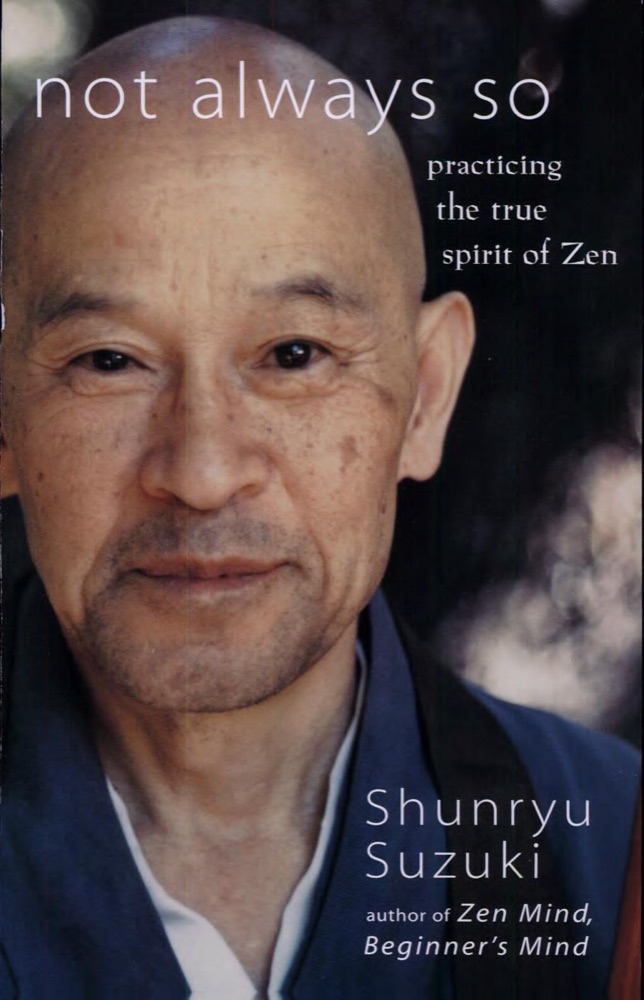 Not Always So: Practicing the True Spirit of Zen – The Final Teachings of Shunryu Suzuki to Empower Your Freedom
 The Art Of Living
 Living Buddha, Living Christ
 Thoughts Without A Thinker: Psychotherapy From A Buddhist Perspective
 The Upanishads
 The Book of Chuang Tzu
 Mindfulness in Plain English
 Going to Pieces without Falling Apart: A Buddhist Perspective on Wholeness
 The Wisdom of No Escape: How to Love Yourself and Your World
 Tao of Jeet Kune Do
 Raja-Yoga
 The Book of Secrets: Unlocking the Hidden Dimensions of Your Life
 The Lady and the Monk: Four Seasons in Kyoto
 Comfortable with Uncertainty: 108 Teachings on Cultivating Fearlessness and Compassion
 Zen and the Art of Motorcycle Maintenance
 Waking Up: A Guide to Spirituality Without Religion
 The I Ching or Book of Changes
 Eastern Body, Western Mind: Psychology and the Chakra System as a Path to the Self
 The Perennial Philosophy
 Freedom from the Known
 How to Meditate: A Practical Guide to Making Friends with Your Mind
 My Spiritual Journey: Personal Reflections, Teachings, and Talks
 The Middle Length Discourses of the Buddha: A Translation of the Majjhima Nikaya
 Why Buddhism Is True: The Science and Philosophy of Meditation and Enlightenment
 The Power of Now: A Guide to Spiritual Enlightenment
 Advice Not Given: A Guide to Getting Over Yourself