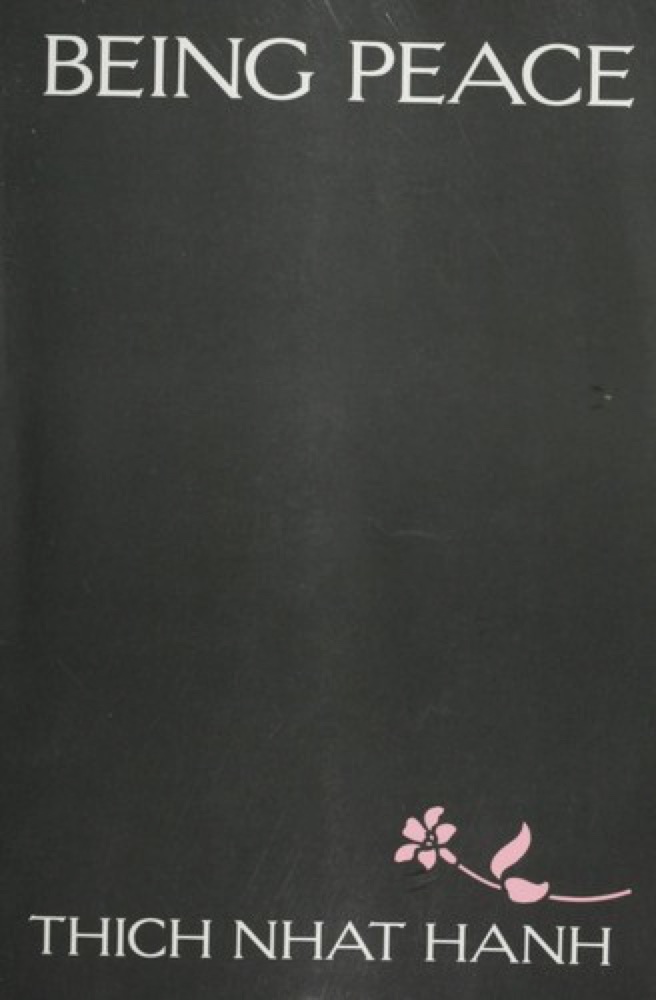
 Being Peace
Quotes from the Book
Breathing in, I see all my ancestors in me: my mineral ancestors, plant ancestors, mammal ancestors, and human ancestors. My ancestors are always present, alive in every cell of my body, and I play a part in their immortality.
23
I don’t exercise to get fit or be healthier; I do it to enjoy being alive.
18
I am of the nature to grow old. There is no way to escape growing old. I am of the nature to have ill health. There is no way to escape ill health. I am of the nature to die. There is no way to escape death. All that is dear to me and everyone I love are of the nature to change. There is no way to escape being separated from them. My actions are my only true belongings. I cannot escape the consequences of my actions. They are the ground upon which I stand. To
17
You carry your mother in every cell of your body. You have to look deeply to see that she is in fact always with you. Her hand is still in your hand. If your parents have already passed away and you practice looking deeply like this, you can have an even closer relationship with your parents than that of someone whose parents are still alive but who cannot communicate easily with them. You may like to take a moment now to look at your hand. Can you see your mother’s hand in your hand? Or your father’s? Look deeply into your hand. With this insight, and with all the love and care of your parents, bring your hand up to your forehead and feel the hand of your mother or father touching your forehead. Allow yourself to be cared for by your parents in you. They are always with you
12
Whether this moment is happy or not depends on you. It`s you who makes the moment happy, not the moment that makes you happy. With mindfulness, concentration, and insight, any moment can become a happy moment.
12
Aimlessness does not mean doing nothing. It means not putting something in front of you to chase after. When we remove the objects of our craving and desires, we discover that happiness and freedom are available to us right here in the present moment.
12
I see that this body—made of the four elements—is not really me, and I am not limited by this body. I am the whole of the river of life, of blood ancestors and spiritual ancestors, that has been continuously flowing for thousands of years and flows on for thousands of years into the future. I am one with my ancestors and my descendants. I am life manifesting in countless different forms. I am one with all people and all species, whether they are peaceful and joyful or suffering and afraid. At this very moment I am present everywhere in this world. I have been present in the past and will be there in the future. The disintegration of this body does not touch me, just as when the petals of the plum blossom fall it does not mean the end of the plum tree. I see that I am like a wave on the surface of the ocean. I see myself in all the other waves, and I see all the other waves in me. The manifestation or the disappearance of the wave does not lessen the presence of the ocean. My Dharma body and spiritual life are not subject to birth or death. I am able to see my presence before this body manifested and after this body disintegrates. I am able to see my presence outside this body, even in the present moment. Eighty or ninety years is not my life span. My life span, like that of a leaf or of a buddha, is immeasurable. I am able to go beyond the idea that I am a body separate from all other manifestations of life, in time and in space.
12
Death is essential to making life possible. Death is transformation. Death is continuation. When we die, something else is born, even if it takes time to reveal itself or for us to be able to recognize it.
10
We are children of the Earth, made of all the same elements and minerals. We contain mountains, rivers, stars, and black holes. In every moment of our life the cosmos is going through us, renewing us, and we are returning ourselves to the cosmos. We are breathing the atmosphere, eating the earth’s food, creating new ideas, and experiencing new feelings. And we are emitting energy back into the cosmos, in our thinking, speech, and actions, in our out-breath, in our body’s warmth, and in releasing everything we have consumed and digested. In this very moment many parts of us are returning to the earth. We don’t return to the earth and cosmos only when our body disintegrates. We are already inside the earth, and the earth is inside us.
9
If we continue to hold on to a dream for something in the future, we lose the present moment. And if we lose the present, we lose everything.
8
Your dream can be realized right in the present moment. You live your life in such a way that every step in the right direction and every breath along the way becomes the realization of your dream. Your dream does not take you away from the present; on the contrary, your dream becomes reality in the present moment.
8
If we want peace, we have to be peace. Peace is a practice and not a hope.
7
Throughout our life we produce energy. We say things and do things, and every thought, every word, and every act carries our signature. What we produce as thoughts, as speech, as action, continues to influence the world, and that is our continuation body. Our actions carry us into the future. We are like stars whose light energy continues to radiate across the cosmos millions of years after they become extinct.
7
To practice aimlessness is to identify what it is you’re looking for, waiting for, or running after, and let it go. By removing these objects of seeking that are pulling you away from the here and now, you will discover that everything you want is already right here in the present moment. You don’t need to “be someone” or do something in order to be happy and free.
6
Our quality of being determines our quality of doing.
6
Our suffering is impermanent, and that is why we can transform it. And because happiness is impermanent, that is why we have to nourish it.
5
We are the continuation of all our ancestors. Thanks to impermanence, we have a chance to transform our inheritance in a beautiful direction.
5
Emptiness means to be full of everything but empty of a separate existence.
4
We’re so close to Earth that sometimes we forget how beautiful it is. Seen from space, our blue planet is remarkably alive— a living paradise suspended in a vast and hostile cosmos. On the first trip to the moon, astronauts were stunned to see Earth rise above the moon’s desolate horizon. We know that on the moon there are no trees, rivers, or birds. No other planet has yet been found to have life as we know it. It is reported that astronauts orbiting high up in space stations spend most of their free time contemplating the breathtaking sight of Earth far below. From a distance, it looks like one giant living, breathing organism. Seeing its beauty and wonder, astronauts feel great love for the whole Earth. They know billions of people are living out their lives on this little planet, with all their joy, happiness, and suffering. They see violence, wars, famine, and environmental destruction. At the same time, they see clearly that this wonderful little blue planet, so fragile and precious, is irreplaceable. As one astronaut put it, “We went to the moon as technicians; we returned as humanitarians.
4
I think (too much), therefore I am (not there to live my life).
3
The insight of interbeing helps us touch this wisdom of non-discrimination. It sets us free. We no longer want to belong just to one geographical area or cultural identity. We see the presence of the whole cosmos in us.
3
We disregard the wonders of the present moment, thinking that heaven and the ultimate are for later, not for now.
3
There is a Zen story about a student who felt he hadn’t really received the deepest essence of his master’s teaching, and so he went to question him. His master replied, “On your way here, did you see the cypress in the courtyard?” Perhaps the student was not yet very mindful. The master was saying that if, on the way to see our teacher, we go past a cypress tree or a beautiful plum tree in blossom and we don’t really see it, then when we arrive in front of our teacher, we won’t see our teacher either. We shouldn’t miss any opportunity to really see our cypress tree. There are wonders of life we walk past every day, and yet we haven’t truly seen them. What is the cypress tree on the path you take to work every day? If you cannot even see the tree, how can you see your loved ones? How can you see God?
3
In our sangha, we have a porch we call, Listening to the Rain Veranda. We made it specially for that purpose— so we could sit there and listen to the rain and not need to think about anything. Listening to the rain can help the mind come to stillness.
3
Whatever views we hold, we should be careful not to get caught up in thinking that our view is the “best” and that only we have the truth.
2
Spirituality is not religion. It is a path for us to generate happiness, understanding, and love, so we can live deeply each moment of our life. Having a spiritual dimension in our lives does not mean escaping life or dwelling in a place of bliss outside this world but discovering ways to handle life’s difficulties and generate peace, joy, and happiness right where we are, on this beautiful planet.
2
The whole planet is one giant, living, breathing cell, with all its working parts linked in symbiosis.
1
It’s the quality of our life that is important, not how long we live.
1
We just need to live a simple, authentic life. Our true person, our true self, doesn’t need a particular job or position. Our true self doesn’t need money, fame, or status. Our true self doesn’t need to do anything. We just live our life deeply in the present moment.
1
Watch on YouTube
About Thich Nhat Hanh
We have collected 629 quotes from 23 books by Thich Nhat Hanh on BookQuoters.
More about the author →
About the book
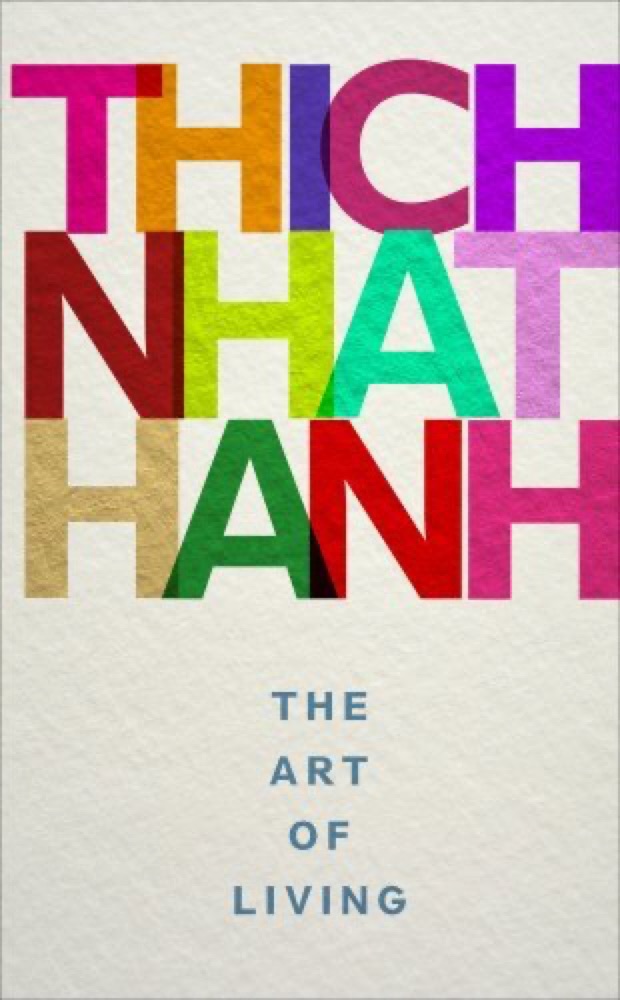
Master the art of living from one of the world’s most revered spiritual leaders.
Thich Nhat Hanh, the world’s most renowned Zen master, turns his mindful attention to the most important subject of all – the art of living.
The bestselling author of The Miracle of Mindfulness presents, for the first time, seven transformative meditations that open up new perspectives on our lives, our relationships and our interconnectedness with the world around us. He reveals an art of living in mindfulness that helps us answer life's deepest questions, experience the happiness and freedom we desire and face ageing and dying with curiosity and joy instead of fear.
Stimulating and inspiring, this book teaches us the importance of looking inside ourselves and developing compassion, before we can turn to our relationships at home and in the wider world. Full of remarkable stories from Thich Nhat Ha
Book details
- First published
- 2017
- Author
- Thich Nhat Hanh
- Genre
- Nonfiction
- Goodreads rating
- 4.44 (12k ratings)
Keep reading
 No Death, No Fear: Comforting Wisdom for Life
 You Are Here: Discovering the Magic of the Present Moment
 The Art of Power
 The Book of Secrets: Unlocking the Hidden Dimensions of Your Life
 365 Tao: A Study of Taoist Wisdom for Daily Life
 Everyday Zen: Love & Work
 Waking Up: A Guide to Spirituality Without Religion
 The Power of Now: A Guide to Spiritual Enlightenment
 The Tibetan Book of Living and Dying
 Awakening the Buddha Within
 Buddhism Plain & Simple: The Practice of Being Aware, Right Now, Every Day
 A Joseph Campbell Companion: Reflections on the Art of Living
 Nothing Special: A Zen Buddhist Guide to Awakening Through Daily Life's Feelings, Relationships, and Work
 Living Untethered: Beyond the Human Predicament
 Way of the Peaceful Warrior: A Book That Changes Lives
 Full Catastrophe Living: Using the Wisdom of Your Body and Mind to Face Stress, Pain, and Illness
 The Book: On the Taboo Against Knowing Who You Are
 The Wise Heart: A Guide to the Universal Teachings of Buddhist Psychology
 Conversations with God: An Uncommon Dialogue, Book 1
 The Seven Spiritual Laws of Success: A Practical Guide to the Fulfillment of Your Dreams
 Practicing the Power of Now: Essential Teachings, Meditations, and Exercises from the Power of Now
 Striking Thoughts: Bruce Lee's Wisdom for Daily Living
 The Book of Awakening: Having the Life You Want by Being Present to the Life You Have
 Against the Stream: A Buddhist Manual for Spiritual Revolutionaries
 Happiness: A Guide to Developing Life's Most Important Skill
 In Love with the World: A Monk's Journey Through the Bardos of Living and Dying
 Living Beautifully with Uncertainty and Change
 The Yoga Sutras of Pantanjali
 The Wisdom of No Escape: How to Love Yourself and Your World
 Be Water, My Friend: The Teachings of Bruce Lee
 The Book of Wisdom
 Meditation
 My Spiritual Journey: Personal Reflections, Teachings, and Talks
 Tibetan Book of the Dead
 How to See Yourself As You Really Are
 Total Freedom: The Essential Krishnamurti
 The Path: What Chinese Philosophers Can Teach Us About the Good Life
 Seth Speaks: The Eternal Validity of the Soul
 The Way of Zen
 Hardcore Zen: Punk Rock, Monster Movies and the Truth about Reality
 Many Lives, Many Masters: The True Story of a Prominent Psychiatrist, His Young Patient, and the Past Life Therapy That Changed Both Their Lives
 The Dalai Lama's Cat and the Power of Meow
 The Things You Can See Only When You Slow Down: How to Be Calm in a Busy World
 Becoming Wise: An Inquiry into the Mystery and Art of Living
 The Upanishads
 The Yoga Sutras of Patanjali
 Wherever You Go, There You Are: Mindfulness Meditation in Everyday Life
 Kitchen Table Wisdom: Stories that Heal
 Happiness Becomes You: A Guide to Changing Your Life for Good
 The Pocket Pema Chodron
 Finding Flow: The Psychology of Engagement with Everyday Life
 Change Your Thoughts - Change Your Life: Living the Wisdom of the Tao
 Awareness: The Key to Living in Balance
 True Refuge: Finding Peace and Freedom in Your Own Awakened Heart
 A Return to Love: Reflections on the Principles of "A Course in Miracles"
 Be Here Now
 How to Practice: The Way to a Meaningful Life