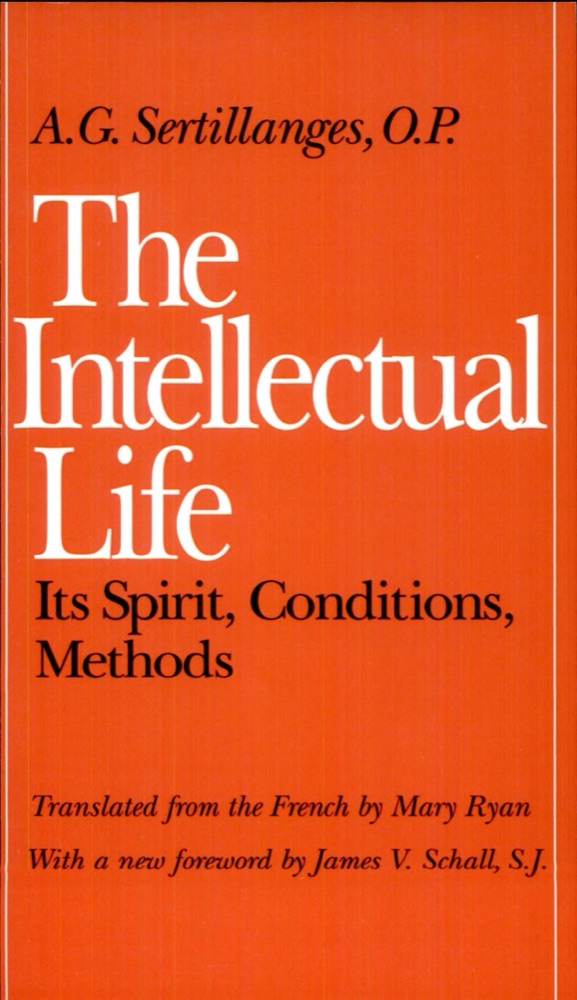
 The Intellectual Life: Its Spirit, Conditions, Methods
Quotes from the Book
Feelings are for the soul what food is for the body.
42
Whoever seeks higher knowledge must create it for himself. He must instill it into his soul. It cannot be done by study; it can only be done through life. Whoever, therefore, wishes to become a student of higher knowledge must assiduously cultivate this inner life of devotion. Everywhere in his environment and his experiences he must seek motives of admiration and homage. If I meet a man and blame him for his shortcomings, I rob myself of power to attain higher knowledge; but if I try to enter lovingly into his merits, I gather such power. The student must continually be intent upon following this advice. The spiritually experienced know how much they owe to the circumstance that in face of all things they ever again turn to the good, and withhold adverse judgement. But this must not remain an external rule of life; rather it must take possession of our innermost soul.
29
for even the wisest can learn incalculably much from children.
26
Some day, when I have grown sufficiently, I shall attain that which I am destined to attain,
22
All knowledge pursued merely for the enrichment of personal learning and the accumulation of personal treasure leads you away from the path; but all knowledge pursued for growth to ripeness within the process of human ennoblement and cosmic development brings you a step forward.
16
The heights of the spirit can only be climbed by passing through the portals of humility. You can only acquire right knowledge when you have learnt to esteem it. Man has certainly the right to turn his eyes to the light, but he must first acquire this right.
16
There slumber in every human being faculties by means of which he can acquire for himself a knowledge of higher worlds. Mystics, Gnostics, Theosophists — all speak of a world of soul and spirit which for them is just as real as the world we see with our physical eyes and touch with our physical hands.
16
It cannot be repeated too often that this transformation does not alienate him from the world. He will in no way be estranged from his daily tasks and duties, for he comes to realize that the most insignificant action he has to accomplish, the most insignificant experience which offers itself to him, stands in connection with cosmic beings and cosmic events. When once this connection is revealed to him in his moments of contemplation, he comes to his daily activities with a new, fuller power. For now he knows that his labor and his suffering are given and endured for the sake of a great, spiritual, cosmic whole. Not weariness, but strength to live springs from meditation.
13
The tranquility of the moments set apart will also affect everyday existence. In his whole being he will grow calmer; he will attain firm assurance in all his actions, and cease to be put out of countenance by all manner of incidents. By thus advancing he will gradually become more and more his own guide, and allow himself less and less to be led by circumstances and external influences. He will soon discover how great a source of strength is available to him in these moments thus set apart. He will begin no longer to get angry at things which formerly annoyed him; countless things he formerly feared cease to alarm him. He acquires a new outlook on life.
12
Truthfulness, uprightness, and honesty are in this connection creative forces, while mendacity, deceitfulness, and dishonesty are destructive forces.
10
Consider the following case. Someone is traveling by railway; his mind is busy with one thought; suddenly is thought diverges; he recollects an experience that befell him years ago and interweaves it with his present thought. He did not notice that in looking through the window he had caught sight of a person who resembled another intimately connected with the recollected experience. He remains conscious, not of what he saw, but of the effect it produced, and thus believes that it all came to him of its own accords. How much in life occurs in such a way! How great is the part played in our life by things we hear and learn, without our consciously realizing the connection! Someone, for instance, cannot bear a certain color, but does not realize that this is due to the fact that the schoolmaster who used to worry him many years ago wore a coat of that color. Innumerable illusions are based upon such associations. Many things leave their mark upon the soul while remaining outside the pale of consciousness.
9
There is, in truth, no difference between esoteric knowledge and all the rest of man's knowledge and proficiency. This esoteric knowledge is no more of a secret for the average human being than writing is a secret for those who have never learned it.
9
In an epoch of criticism ideals are lowered; other feelings take the place of veneration, respect, adoration, and wonder. Our own age thrusts these feelings further and further into the background, so that they can only be conveyed to man through his every-day life in a very small degree.
7
The possibility of acquiring the art of writing may be withheld from someone through poverty, or through the conditions of civilization into which he is born; but for the attainment of knowledge and proficiency in the higher worlds, there is no obstacle for those who earnestly seek them.
7
If I meet other people and criticize their weaknesses, I rob myself of higher cognitive power. But if I try to enter deeply and lovingly into another person's good qualities, I gather in that force.
5
Above all, it is imperative to extirpate the idea that any fantastic, mysterious practices are required for the attainment of higher knowledge. It must be clearly realized that a start has to be made with the thoughts and feelings with which we continually live, and that these feelings and thoughts must merely be given a new direction. Everyone must say to himself: “In my own world of thought and feeling the deepest mysteries lie hidden, only hitherto I have been unable to perceive them.
5
In ancient times, anterior to our history, the temples of the spirit were also outwardly visible; today, because our life has become so unspiritual, they are not to be found in the world visible to external sight; yet they are present spiritually everywhere, and all who seek may find them.
5
The teacher, as we know, can confer upon the pupil no powers which are not already latent within him, and his sole function is to assist in the awakening of slumbering faculties. But what he imparts out of his own experience is a pillar of strength for the one wishing to penetrate through darkness to light.
4
The student is told to set apart moments in his daily life in which to withdraw into himself, quietly and alone. He is not to occupy himself at such moments with the affairs of his own ego. This would result in the contrary of what is intended. He should rather let his experiences and the messages from the outer world re-echo within his own completely silent self. At such silent moments every flower, every animal, every action will unveil to him secrets undreamt of.
2
It does not matter if what I think differs from what the other person thinks. What matters is that, as a result of what I can contribute to the conversation, the other discovers what is right out of themselves.
1
The first is the faculty of discriminating in thoughts between truth and appearance or mere opinion. The second attribute is the correct estimation of what is inwardly true and real, as against what is merely apparent. The third rests in the practice of the six qualities already mentioned in the preceding pages: thought-control, control of actions, perseverance, tolerance, faith and equanimity. The fourthattribute is the love of inner freedom.
Recall to mind some person whom you may have observed when he was filled with desire for some object. Direct your attention to this desire. It is best to recall to memory that moment when the desire was at its height, and it was still uncertain whether the object of the desire would be attained. And now fill your mind with this recollection, and reflect on what you can thus observe. Maintain the utmost inner tranquillity. Make the greatest possible effort to be blind and deaf to everything that may be going on around you, and take special heed that through the conception thus evoked, a feeling should awaken in your soul. Allow this feeling to rise in your soul like a cloud on the cloudless horizon. As a rule, of course, your reflection will be interrupted, because the person whom it concerns, was not observed in this particular state of soul for a sufficient length of time. The attempt will most likely fail hundreds and hundreds of times. It is just a question of not losing patience. After many attempts you will succeed in experiencing a feeling in your soul corresponding to the state of soul of the person observed, and you will begin to notice that through this feeling, a power grows in your soul, that leads to spiritual insight into the state of soul of the other.
student can thus train himself to listen to the words of others quite selflessly, completely shutting down his own person and his opinions and way of feeling. When he practices listening without criticism, even when a completely contradictory opinion is advanced, when the most hopeless mistake is committed before him, he then learns, little by little, to blend himself with the being of another and become identified with it. Then he hears through the words into the soul of the other. Through continued exercise of this kind, sound becomes the right medium for the perception of soul and spirit. Of course it implies the very strictest self-discipline, but the latter leads to a high goal.
It is easy to decide what men ought to be; but the student works in the depths, not on the surface.
Have this thought deeply imprinted within you: One day when I am ready for it I shall receive what I am to receive.
Watch on YouTube
About Rudolf Steiner
We have collected 25 quotes from 1 book by Rudolf Steiner on BookQuoters.
More about the author →About the book
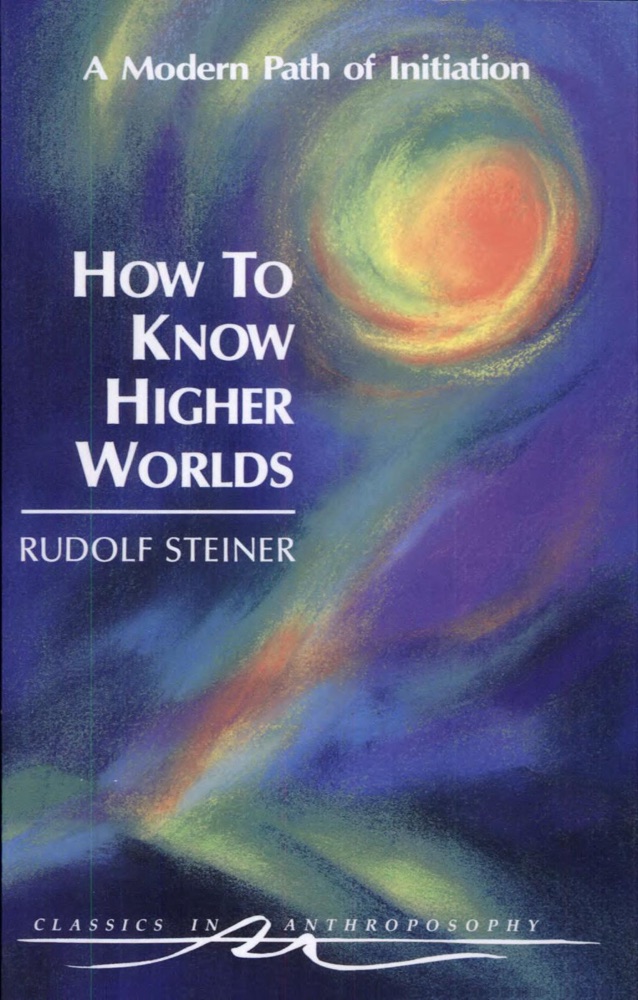
In this classic account of the Western esoteric path of initiation, Steiner leads the student from the cultivation of reverence and inner tranquility to the development of inner life through the stages of preparation, illumination, and initiation. Practical exercises in inner and outer observation and moral development are described.
By patiently and persistently following these suggestions, new "organs" of soul and spirit begin to form, revealing the contours of higher worlds that had been concealed from us. Here, Rudolf Steiner is available as teacher, counselor, and friend. His advice is practical, clear, and powerful.
Book details
- First published
- 1904
- Author
- Rudolf Steiner
- Genre
- Philosophy
- Goodreads rating
- 4.30 (2k ratings)
Keep reading
The Intellectual Life: Its Spirit, Conditions, Methods
 The Yoga Sutras of Patanjali
 Total Freedom: The Essential Krishnamurti
 The Perennial Philosophy
 The Upanishads
 Autobiography of a Yogi
 Complete Works of Swami Vivekananda, 9 Vols.
 The Glass Bead Game
 Myths to Live By
 Cutting Through Spiritual Materialism
 The Varieties of Religious Experience
 The Master Key System
 Many Lives, Many Masters: The True Story of a Prominent Psychiatrist, His Young Patient, and the Past Life Therapy That Changed Both Their Lives
 The World's Religions
 The Book of Wisdom
 The Wise Heart: A Guide to the Universal Teachings of Buddhist Psychology
 The I Ching or Book of Changes
 The Convoluted Universe, Book 1
 Modern Man in Search of a Soul
 The Gay Science
 Mastery
 The Joy of Living: Unlocking the Secret and Science of Happiness
 The Book: On the Taboo Against Knowing Who You Are
 Awakening the Buddha Within
 Seth Speaks: The Eternal Validity of the Soul
 Bhagavad-Gita As It Is
 The Book of Secrets: Unlocking the Hidden Dimensions of Your Life
 Tibetan Book of the Dead
 The Journey Home
 My Spiritual Journey: Personal Reflections, Teachings, and Talks
 The Yoga Sutras of Pantanjali
 The Essential Writings of Ralph Waldo Emerson
 Eastern Body, Western Mind: Psychology and the Chakra System as a Path to the Self
 Daybreak: Thoughts on the Prejudices of Morality
 The Occult
 Waking Up: A Guide to Spirituality Without Religion
 Man and His Symbols
 The Art of Living: The Classical Manual on Virtue, Happiness and Effectiveness
 Finding Meaning in the Second Half of Life: How to Finally, Really Grow Up
 365 Tao: A Study of Taoist Wisdom for Daily Life
 An Essay Concerning Human Understanding
 Phaedrus
 The Science of Mind
 The Wisdom of Life
 The Disappearance of the Universe: Straight Talk about Illusions, Past Lives, Religion, Sex, Politics, and the Miracles of Forgiveness
 The Spinoza Problem
 The Book of Secrets
 Raja-Yoga
 Twilight of the Idols
 The Book of Chuang Tzu
 In Love with the World: A Monk's Journey Through the Bardos of Living and Dying
 The Rosicrucian cosmo-conception: or, Mystic Christianity; an elementary treatise upon man's past evolution, present constitution and future development
 The Active Side of Infinity
 The Art of Being
 The Doors of Perception & Heaven and Hell
 Striking Thoughts: Bruce Lee's Wisdom for Daily Living
 Emile or On Education
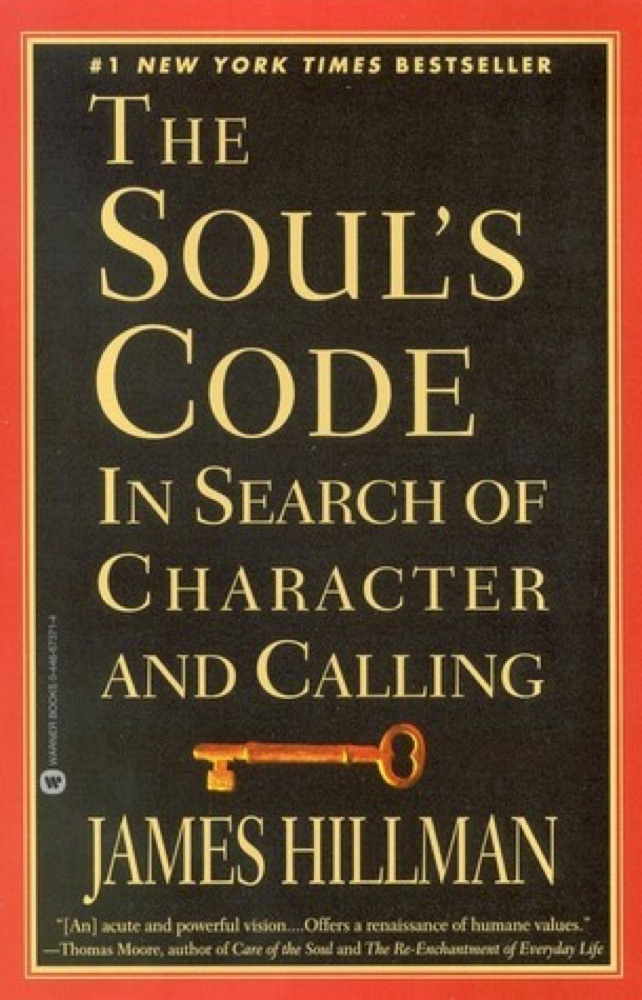 The Soul's Code: In Search of Character and Calling
 The Republic